Introduction/Overview
Abscisic acid (ABA), as a classic plant hormone, was first discovered during the abscission process of plants, hence its name. Its role as a regulator of plant growth and development has been widely studied, especially playing a key role in plant response to stress, seed dormancy, and stomatal regulation. In recent years, with the deepening of research, abscisic acid has not only been confirmed to exist in various fruits and vegetables as an endogenous substance in plants, but has also been found to be an endogenous hormone in mammals, involved in regulating metabolic homeostasis and inflammatory responses, demonstrating significant pharmacological activity and potential clinical application value.
Abscisic acid is an orally effective bioactive molecule, which has multiple biological functions such as regulating insulin sensitivity, anti-inflammatory and metabolic regulation. It has shown good potential in many metabolic and inflammatory related diseases such as diabetes, obesity, non-alcoholic fatty liver disease (NAFLD) and neurodegenerative diseases. Its main mechanism of action involves inhibition of proton pump (H+- ATPase), induction of Ca2+- dependent depolarization of the plasma membrane, and acting as a natural ligand for LANCL2 (Lanc like protein 2), activating multiple metabolic signaling pathways.
This article provides a systematic review of the chemical structure and physicochemical properties, plant sources, and extraction methods of abscisic acid. Combined with the latest pharmacological activity research, it delves into its mechanism of action and molecular targets, evaluates its pharmacological properties and pharmacokinetic characteristics, and looks forward to its clinical application prospects. The aim is to provide comprehensive and authoritative reference materials for researchers in the field of natural product pharmacology.
Chemical structure and physicochemical properties
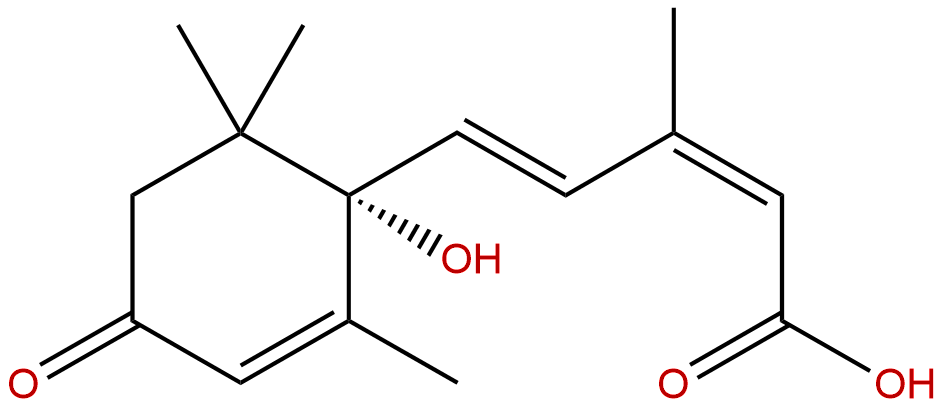
The chemical name of abscisic acid (CAS number: 21293-29-8) is (S) - (+) - abscisic acid, with a molecular formula of C15H20O4 and a molecular weight of 264.31. Its structure contains a five membered lactone ring and a carboxyl group, with strong polarity and a certain degree of hydrophobicity. The LogP value is about 1.87, indicating that it has moderate lipid solubility, which is conducive to membrane penetration. Its topological polar surface area (TPSA) is 74.6 Å ² and contains four hydrogen bond acceptors, exhibiting a certain hydrophilicity that facilitates binding to protein targets.
The structural characteristics of abscisic acid enable it to effectively regulate proton pump activity in plants, induce depolarization of the plasma membrane, and thereby affect cellular signal transduction. The chiral center of its molecular structure endows it with specificity for biological activity, and the (S) - configuration is the naturally occurring and most biologically active isomer.
From a medicinal chemistry perspective, abscisic acid is not easily able to pass through the blood-brain barrier (BBB), which is related to its high polarity and molecular weight, reducing its direct impact risk on the central nervous system. In vitro toxicological evaluation showed that abscisic acid has no significant hepatotoxicity, cardiotoxicity, or hERG channel inhibition effect, and has high safety. However, the Ames mutagenicity test results are not yet clear, and further research is needed to confirm its genetic toxicity risk.
Plant sources and extraction methods
Abscisic acid is widely present in various plants, especially in fruits, vegetables, and seeds with high levels. Its content is significantly affected by plant species, growth stage, and environmental stress conditions. Common abscisic acid rich plants include citrus, tomato, grape, and various leguminous plants.
Traditional extraction methods often use organic solvent extraction combined with liquid chromatography separation technology. The general steps include:
- Sample Pretreatment Fresh plant tissues are freeze-dried or stored at low temperatures and crushed into fine powder.
- Organic solvent extraction Commonly used polar solvents such as methanol, ethanol, or ethyl acetate are used for multiple extractions to extract abscisic acid and its precursors.
- Purification and Separation Purification of high-purity abscisic acid is achieved through liquid-liquid distribution, solid-phase extraction (SPE), and high-performance liquid chromatography (HPLC) to remove impurities.
- qualitative and quantitative analysis Use techniques such as mass spectrometry (MS), nuclear magnetic resonance (NMR), and ultraviolet spectroscopy (UV) to confirm the structure and determine the content.
In recent years, green and efficient technologies such as ultrasound assisted extraction, microwave-assisted extraction, and solid-phase microextraction have gradually been applied to the extraction of abscisic acid, significantly improving extraction efficiency and purity, reducing solvent usage and environmental pollution.
Pharmacological activity research
1. Physiological regulation of plants
Abscisic acid, as the main stress hormone in plants, participates in regulating plant responses to environmental stresses such as drought, salinity, and low temperature. It inhibits proton pump activity, triggers changes in intracellular Ca2+concentration, regulates stomatal opening and closing, reduces water transpiration, and enhances plant stress resistance. In addition, abscisic acid regulates seed dormancy and germination, promotes fruit ripening and abscission, and affects the entire process of plant growth and development.
2. Metabolic regulation and insulin sensitivity
In mammalian systems, abscisic acid has been found to be a natural ligand for LANCL2, activating the AMPK (5 'AMP activated protein kinase) signaling pathway, promoting glucose uptake and fatty acid oxidation, and improving insulin resistance. Research shows that abscisic acid can enhance insulin sensitivity and reduce blood sugar level, which has potential therapeutic value for patients with pre diabetes and type 2 diabetes.
In addition, abscisic acid participates in lipid metabolism and inflammatory response by regulating key targets such as PPAR gamma (peroxisome proliferator activated receptor gamma) and IRS-1 (insulin receptor substrate-1), inhibiting obesity related chronic low-grade inflammation and improving metabolic syndrome.
3. Anti inflammatory and immune regulatory effects
Abscisic acid exerts significant anti-inflammatory effects by inhibiting the NF - κ B signaling pathway, reducing the expression of pro-inflammatory factors TNF - α, IL-6, and COX-2. Its activation of LANCL2 also regulates immune cell function and alleviates the pathological progression of inflammatory diseases. Related studies have shown that abscisic acid exhibits good therapeutic potential in various inflammatory models such as rheumatoid arthritis and inflammatory bowel disease.
4. Neuroprotective effect
The research on abscisic acid in neurodegenerative diseases is gradually increasing. It activates the Nrf2 (nuclear factor E2 related factor 2) antioxidant pathway, reduces oxidative stress damage, inhibits BACE1 (β - secretase 1) activity, reduces β - amyloid production, and slows down the pathological progression of Alzheimer's disease. Meanwhile, the regulatory effect of abscisic acid on LANCL2 helps to suppress neuroinflammation and protect neuronal function.
5. Other potential effects
Some studies have also reported the potential of abscisic acid in cardiovascular protection, anti-tumor, and liver protection, suggesting its broad application prospects as a multi-target natural product.
Mechanism of action and molecular targets
The pharmacological effects of abscisic acid are mainly achieved through multi-target regulation, involving multiple signaling pathways:
- LANCL2 As a natural receptor for abscisic acid, LANCL2 mediates its activation of AMPK and PPAR signaling pathways, promoting metabolic regulation and anti-inflammatory response.
- AMPK(PRKAA1)Energy sensing enzyme, regulates cellular energy metabolism, activates AMPK with abscisic acid, promotes glucose uptake and fatty acid oxidation.
- PPARγ(PPARG)Regulating lipid metabolism and insulin sensitivity, abscisic acid improves metabolic abnormalities by modulating PPAR γ expression.
- NF-κB(NFKB1)The key inflammatory regulatory factor, abscisic acid, inhibits its activity and reduces the expression of inflammatory factors.
- SGLT2 Renal sodium glucose cotransporter protein is involved in glucose reabsorption, and abscisic acid may indirectly affect its function and regulate blood sugar.
- GCK (Glucokinase)Participate in glucose metabolism, and abscisic acid promotes glucose utilization by regulating GCK activity.
- BACE1 Alzheimer's disease-related enzymes, abscisic acid inhibits their activity and reduces neurotoxic protein deposition.
- TNF-α、IL-6、COX-2 Inflammatory mediators, abscisic acid inhibits its expression through multiple targets and exerts anti-inflammatory effects.
In addition, abscisic acid affects cell membrane potential by inhibiting proton pump (H+- ATPase), inducing Ca2+- dependent signaling, and regulating cellular function.
Evaluation of drug properties and pharmacokinetics
The molecular weight of abscisic acid is moderate (264.31 Da), with a LogP value of 1.87, indicating its good oral absorption potential. The TPSA is 74.6 Å ², which complies with Lipinski's rule and is conducive to membrane penetration. The number of hydrogen bond receptors is 4, which is moderate and conducive to the binding affinity with protein targets.
Toxicological evaluation shows that abscisic acid has no significant hepatotoxicity, cardiotoxicity, or hERG channel inhibition, and is relatively safe. The low permeability of the blood-brain barrier reduces the risk of central nervous system side effects, but the treatment of central nervous system diseases may be limited by this characteristic.
In terms of pharmacokinetics, abscisic acid has good oral bioavailability and is widely distributed in the body, mainly metabolized by the liver and excreted by the kidneys. Further systematic research is needed on its metabolites and half-life to clarify the dose-response relationship and optimize the dosing regimen.
At present, there is still limited preclinical pharmacokinetic and toxicological data on abscisic acid, and there is an urgent need for systematic ADME (absorption, distribution, metabolism, excretion) research and long-term safety evaluation.
Clinical application prospects and prospects
Abscisic acid, as a natural product, has dual roles as a plant hormone and an endogenous hormone in mammals, exhibiting multi-target and multi pathway pharmacological activities, especially in the field of metabolic diseases with broad application prospects.
-
Diabetes and metabolic syndrome
Abscisic acid can improve insulin resistance and reduce blood sugar by activating AMPK and regulating insulin signaling pathway, which shows the potential to treat type 2 diabetes and pre diabetes. Its regulation of lipid metabolism also helps to alleviate obesity and related metabolic abnormalities.
-
Non alcoholic fatty liver disease (NAFLD)
Abscisic acid is expected to become an effective intervention drug for NAFLD by regulating SREBP-1c, PPAR α, and AMPK signaling, inhibiting liver fat accumulation and inflammatory response.
-
Inflammatory diseases
Its ability to inhibit the expression of NF - κ B and inflammatory factors makes it have therapeutic potential in chronic inflammatory diseases such as rheumatoid arthritis and inflammatory bowel disease.
-
Neurodegenerative diseases
Abscisic acid may delay the progression of neurodegenerative diseases such as Alzheimer's disease by inhibiting antioxidant, anti-inflammatory, and neurotoxic protein accumulation.
-
Other potential applications
In the fields of cardiovascular protection, anti-tumor, and immune regulation, future research is expected to expand its indications.
Although abscisic acid has good pharmacological activity and safety, its clinical translation still faces certain challenges, such as pharmacokinetic properties, dose optimization, and long-term safety issues that urgently need systematic research. In addition, the design of derivatives based on abscisic acid structure and the development of nanocarrier delivery systems are expected to further enhance their bioavailability and targeting.
Conclusion
Abscisic acid, as a multifunctional natural product, has shown great potential in plant physiological regulation and mammalian metabolic disease treatment due to its unique chemical structure and extensive biological activity. It regulates metabolism, inflammation and neuroprotection through multiple targets and pathways, providing new treatment ideas for diabetes, obesity, non-alcoholic fatty liver and neurodegenerative diseases.
Future research should focus on the systematic pharmacokinetics, toxicological evaluation, and preclinical model validation of abscisic acid, combined with modern medicinal chemistry and drug delivery technologies, to promote its transition from laboratory to clinical applications. The in-depth study of abscisic acid not only enriches the theoretical system of natural product pharmacology, but also provides valuable natural molecular resources for the development of new multi-target therapeutic drugs.
In summary, abscisic acid, as a natural product with dual roles as a plant hormone and an endogenous mammalian hormone, has significant potential to become a new drug for the treatment of metabolic and inflammatory related diseases in the future. It deserves continuous attention and in-depth exploration in the fields of natural product pharmacology and drug development.