Introduction/Overview
Natural products, as an important source of drug discovery, play an irreplaceable role in the long history of human struggle against diseases. From ancient plant therapies to modern target based drug screening, the diverse secondary metabolites in nature continue to provide valuable lead compounds for the development of innovative drugs. Among the many plants with a long history of medicinal use, Salvia miltiorrhiza(Salvia miltiorrhiza Bunge is undoubtedly a shining pearl. As an essential "blood activating and stasis removing" medicine used in traditional Chinese medicine to treat cardiovascular diseases, the pharmacological activity of Danshen is closely related to its abundant water-soluble phenolic acid components. Salvianolic acid compounds, such as salvianolic acids A, B, C, etc., have been widely studied and proven to have multiple biological activities including antioxidant, anti-inflammatory, anti apoptotic, and cardiovascular protection.
Salvianolic acid E (SAE) is an important member of the salvianolic acid family, and its chemical structure was first elucidated in the early 1990s. Compared to the more in-depth studies of salvianolic acid A and salvianolic acid B, salvianolic acid E received relatively less attention in the early stages. However, with the advancement of separation technology and activity screening methods, the unique chemical structure and potential biological activity of salvianolic acid E, especially its role in myocardial protection, have gradually aroused the interest of researchers. Danshensu acid E belongs to polyphenolic acid compounds structurally, composed of multiple caffeic acid units connected by ester bonds. This complex polyphenolic structure endows it with strong antioxidant and free radical scavenging abilities, which is the basis for its various pharmacological effects.
In recent years, the incidence rate and mortality of cardiovascular diseases (CVDs) have continued to rise and have become a major global health threat. Pathological processes such as myocardial ischemia-reperfusion injury (MIRI), myocardial fibrosis, and heart failure seriously affect the prognosis and quality of life of patients. Although modern medicine has achieved great success in thrombolysis, interventional therapy, and other areas, how to effectively reduce reperfusion injury, inhibit myocardial remodeling, and protect myocardial cell function remains a pressing clinical challenge. As a natural product derived from traditional Chinese medicine, salvianolic acid E has the characteristics of multi-target and multi pathway effects, providing a highly promising candidate molecule for the development of new cardioprotective drugs. This article aims to systematically review the chemical structure, physicochemical properties, plant sources, extraction methods, pharmacological activity, mechanism of action, pharmacological evaluation, and clinical application prospects of salvianolic acid E, in order to provide comprehensive scientific basis for the in-depth research and development of this natural product.
Chemical structure and physicochemical properties
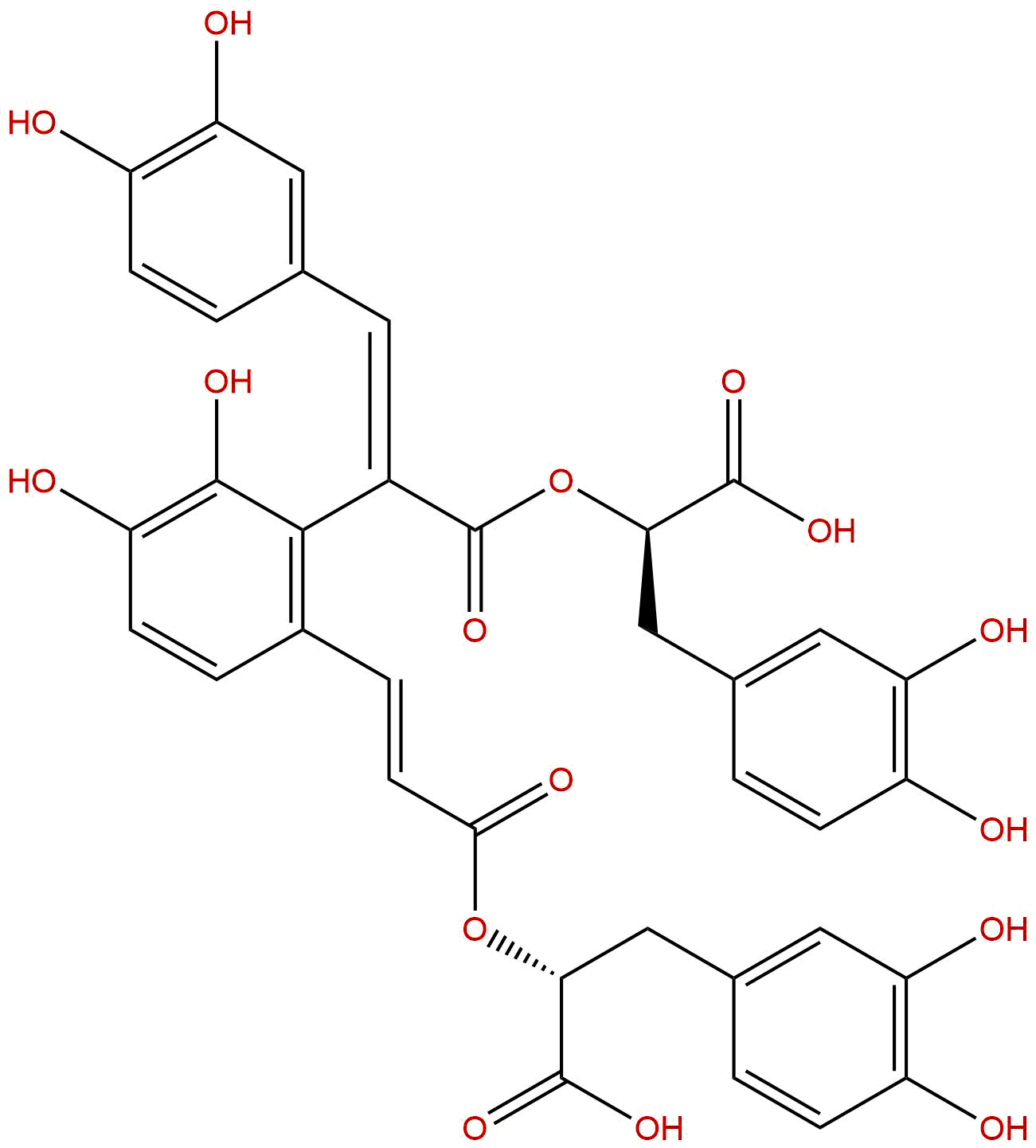
The chemical structure of salvianolic acid E is the basis of its biological activity. From a chemical classification perspective, it belongs to water-soluble phenolic acid compounds. Specifically, it is an oligomer composed of multiple phenylpropanoid units (mainly caffeic acid) connected by ester and ether bonds. Its molecular formula is C ∝₆ H ∝₀ O ₁₆, and its molecular weight is 718.62 g/mol. Structural analysis shows that the core skeleton of salvianolic acid E contains a dihydrobenzofuran structure, as well as multiple phenolic hydroxyl and carboxyl groups. The specific structural feature is that one Danshensu unit is connected to two caffeic acid units through a specific esterification method. This unique connection method distinguishes it structurally from salvianolic acid A (dimer) and salvianolic acid B (trimer). salvianolic acid E can actually be regarded as an isomer or degradation product of salvianolic acid B, and its structural complexity endows it with unique chemical properties and biological activity.
In terms of physicochemical properties, salvianolic acid E exhibits typical characteristics of polyphenolic compounds. Its molecular weight is relatively large (718.62), containing multiple polar groups (phenolic hydroxyl and carboxyl), resulting in strong polarity. The calculated lipid water partition coefficient (LogP) is 2.7838, indicating a certain degree of lipophilicity, but overall it still leans towards hydrophilicity. The topological polar surface area (TPSA) is as high as 289.04 Å ², far higher than the usual requirement of 140 Å ² for oral drugs, indicating poor transmembrane permeability and possibly low oral bioavailability. The water solubility data (0.0605 mg/mL) also confirms this, with limited solubility in water but better solubility in alkaline solutions or organic solvents such as methanol and ethanol. In addition, the chemical stability of salvianolic acid E is greatly affected by pH value, temperature, and light exposure. It is relatively stable under acidic conditions, but is prone to oxidation, hydrolysis, or polymerization reactions under alkaline or high temperature conditions, resulting in reduced activity. Therefore, special attention should be paid to controlling conditions such as low temperature, light avoidance, inert gas protection, and suitable pH environment during the extraction, separation, storage, and formulation development processes to maintain their chemical integrity and biological activity.
Plant sources and extraction methods
The main plant source of salvianolic acid E is Salvia miltiorrhiza, a plant of the Salvia genus in the Lamiaceae family(Salvia miltiorrhiza Bunge)。 The dried roots and rhizomes of Danshen are commonly used medicinal materials in traditional Chinese medicine, widely distributed in most parts of China, especially in Sichuan, Shandong, Henan and other regions as authentic production areas. Except for Danshen, other plants in the Salvia genus, such as Nandanshen(Salvia bowleyana)Ganxi Sage(Salvia przewalskii)Wait, it may also contain salvianolic acid E, but the content is usually lower than that of genuine Danshen. The content of salvianolic acid E in Danshen roots is influenced by various factors, including variety, origin, harvesting time, growth period, and processing method. Generally speaking, the content of salvianolic acid E in Danshen is much lower than that of salvianolic acid B, making it a relatively low content active ingredient.
For the extraction of salvianolic acid E, solvent extraction method is usually used, taking advantage of its solubility in alcohol and water. The traditional extraction methods include water decoction and ethanol reflux extraction. However, due to the heat sensitivity of salvianolic acid E, prolonged extraction at high temperatures can easily lead to its decomposition. Therefore, modern research tends to adopt mild and efficient extraction techniques.
-
Solvent extraction method The most commonly used method is to use different concentrations of ethanol (such as 50% -80%) for reflux extraction or percolation extraction. Before extraction, medicinal herbs usually need to be crushed to increase surface area. After vacuum concentration of the extraction solution, crude total phenolic acid extract was obtained. To improve the extraction rate of salvianolic acid E, extraction parameters such as ethanol concentration, solid-liquid ratio, extraction temperature, time, and frequency can be optimized. Research has shown that using acidic solvents (such as ethanol containing a small amount of hydrochloric acid or acetic acid) can inhibit the ionization of phenolic acids and improve extraction efficiency.
-
Modern assisted extraction technology In order to overcome the limitations of traditional methods, improve extraction efficiency and product purity, various modern technologies have been applied to the extraction of salvianolic acid E.
- Ultrasound assisted extraction (UAE)Utilizing the cavitation effect and mechanical vibration of ultrasound to accelerate cell wall rupture and component dissolution. This method has the advantages of short extraction time, low temperature, low solvent dosage, and high extraction rate, and is particularly suitable for the extraction of thermosensitive component salvianolic acid E.
- Microwave assisted extraction (MAE)By utilizing the penetrability and selective heating of microwaves, polar substances inside cells are rapidly heated up, leading to cell rupture. MAE also has the characteristics of high efficiency and speed, but attention should be paid to controlling microwave power and time to prevent local overheating and component degradation.
- Enzyme Assisted Extraction (EAE)Using biological enzymes such as cellulase and pectinase to destroy plant cell walls and promote the release of intracellular components. EAE conditions are mild and can effectively improve the extraction rate of target components while maintaining their structural stability.
-
Separation and purification Obtaining high-purity salvianolic acid E from crude extract requires a series of separation and purification steps. Common methods include:
- Liquid-liquid extraction Preliminary classification of total phenolic acids using different solvents such as ethyl acetate and n-butanol.
- Macroporous adsorption resin This is the most commonly used method for separating and purifying salvianolic acid components. By selecting appropriate resin models (such as HPD-100, D101, etc.) and elution conditions (ethanol water gradient elution), salvianolic acid E can be effectively enriched.
- Preparation type high performance liquid chromatography (Prep HPLC)Prep HPLC is an essential tool for obtaining high-purity (>98%) monomers of salvianolic acid E. Usually, a reverse phase C18 chromatographic column is used, with acetonitrile water (containing a small amount of formic acid or acetic acid) as the mobile phase for isocratic or gradient elution.
Pharmacological activity research
The pharmacological activity research of salvianolic acid E mainly focuses on the cardiovascular system, especially in terms of myocardial protection. In addition, its antioxidant, anti-inflammatory, and anti fibrotic activities are gradually being revealed.
-
Cardioprotective effect This is the core pharmacological activity of salvianolic acid E. Numerous in vitro and in vivo experiments have confirmed that salvianolic acid E has a significant protective effect on myocardial ischemia-reperfusion injury (MIRI).
- Reduce myocardial ischemia-reperfusion injury In the Langendorff model of ex vivo cardiac perfusion and animal in vivo myocardial ischemia-reperfusion models, administering salvianolic acid E in advance or during reperfusion can significantly reduce the myocardial infarction area, improve cardiac function indicators (such as left ventricular development pressure, ± dp/dtmax), and reduce the release of cardiac enzymes (such as creatine kinase CK-MB, lactate dehydrogenase LDH). Its protective effect is closely related to inhibiting oxidative stress, reducing calcium overload, and suppressing myocardial cell apoptosis.
- Inhibition of cardiomyocyte apoptosis Danshensu acid E can inhibit myocardial cell apoptosis by regulating the expression of apoptosis related proteins. Research has shown that it can upregulate the expression of anti apoptotic protein Bcl-2, downregulate the expression of pro apoptotic protein Bax, and inhibit the activation of Caspase-3, thereby blocking the mitochondrial mediated apoptotic pathway.
- Improve myocardial fibrosis In models of myocardial fibrosis induced by myocardial infarction or pressure overload, salvianolic acid E can inhibit the proliferation and transdifferentiation of cardiac fibroblasts, reduce the deposition of collagen (such as Collagen I, III), thereby delaying myocardial remodeling and improving cardiac compliance.
-
antioxidant activity The molecular structure of salvianolic acid E contains multiple phenolic hydroxyl groups, which are the structural basis for its strong antioxidant capacity. It can directly eliminate various free radicals, such as hydroxyl radicals (· OH), superoxide anions (O ₂⁻·), peroxynitrite (ONOO ⁻), etc., and chelate transition metal ions (such as Fe ² ⁺) to inhibit the Fenton reaction, thereby blocking the chain reaction of lipid peroxidation. In cell models, salvianolic acid E can significantly reduce the levels of reactive oxygen species (ROS) induced by oxidative stress, protecting cells from oxidative damage.
-
anti-inflammatory activity Inflammatory response plays a crucial role in the occurrence and development of myocardial ischemia-reperfusion injury and myocardial fibrosis. Danshensu E can downregulate the expression of various pro-inflammatory cytokines (such as TNF - α, IL-1 β, IL-6) and adhesion molecules (such as ICAM-1, VCAM-1) by inhibiting the activation of the nuclear factor kappa B (NF - κ B) signaling pathway. In addition, it can also inhibit the activity of inflammation related enzymes such as inducible nitric oxide synthase (iNOS) and cyclooxygenase-2 (COX-2), thereby reducing the inflammatory cascade reaction.
-
Antiplatelet aggregation and antithrombotic effects Consistent with the traditional "promoting blood circulation and removing blood stasis" effect of Danshen, Danshensu E also exhibits certain anti platelet aggregation activity. It can inhibit platelet aggregation induced by ADP, collagen, or arachidonic acid, and its mechanism may be related to the inhibition of elevated calcium ion concentration in platelets and the generation of thromboxane A2 (TXA2). This provides a basis for its application in the prevention and treatment of thrombotic diseases.
-
Other activities: The preliminary study also suggests that salvianolic acid E may have potential activities such as anti-tumor, neuroprotective, and anti diabetes complications, but these studies are still in the initial stage and need further exploration.
Mechanism of action and molecular targets
The pharmacological activity of salvianolic acid E is not the result of a single target action, but rather a complex network regulatory mechanism formed by regulating multiple signaling pathways and molecular targets. Especially in terms of myocardial protection, its mechanism of action involves precise regulation of calcium homeostasis, ion channels, oxidative stress, and cell survival signals.
-
Regulating calcium homeostasis and ion channels One of the core mechanisms of myocardial ischemia-reperfusion injury is calcium overload. Danshensu acid E maintains intracellular calcium homeostasis by acting on multiple targets related to calcium regulation.
- L-type calcium channel (CACNA1C)CACNA1C encodes the α 1C subunit of L-type calcium channels, which is a key channel for excitation contraction coupling in cardiomyocytes. Research has shown that salvianolic acid E can inhibit L-type calcium current (I-Ca, L), reduce the influx of calcium ions during early reperfusion, and thus alleviate calcium overload.
- Sodium calcium exchanger (SLC8A1, NCX)NCX is one of the main pathways for cardiac myocytes to excrete calcium ions, but under pathological conditions (such as elevated intracellular sodium ions), NCX may work in the opposite direction, pumping calcium ions into cells and exacerbating calcium overload. Danshensu acid E may regulate the activity of NCX, inhibit its reverse mode, and promote calcium ion efflux.
- Lanine receptor 2 (RYR2)RYR2 is a channel for releasing calcium ions from the sarcoplasmic reticulum. During ischemia-reperfusion, abnormal RYR2 function leads to diastolic calcium leakage, causing arrhythmia and systolic dysfunction. Danshensu acid E may stabilize RYR2, reduce calcium leakage, and maintain sarcoplasmic reticulum calcium homeostasis.
- Introverted rectifier potassium channel (KCNJ2, Kir2.1)KCNJ2 encodes inward rectifying potassium channels, maintaining the resting membrane potential of myocardial cells. Danshensu E may regulate Kir2.1 channels, stabilize membrane potential, and reduce the incidence of reperfusion arrhythmias.
-
Regulating vasoactive substances and receptors:
- Angiotensin converting enzyme (ACE) and angiotensin II receptor type 1 (AGTR1)Overactivation of the renin-angiotensin system (RAS) is an important driving force for myocardial injury and remodeling. Danshensu acid E has been shown to inhibit the activity of ACE and reduce the production of angiotensin II (Ang II). Meanwhile, it can also downregulate the expression of AGTR1, thereby blocking Ang II mediated vasoconstriction, pro fibrotic, and pro-inflammatory effects. This suggests that salvianolic acid E has partial effects similar to ACE inhibitors (ACEIs) and angiotensin receptor blockers (ARBs).
- Endothelial nitric oxide synthase (NOS3, eNOS)The nitric oxide (NO) produced by eNOS is crucial for maintaining vasodilation, inhibiting platelet aggregation, and myocardial protection. Danshensu E can activate the PI3K/Akt signaling pathway, promote phosphorylation of eNOS (Ser1177), increase NO production, and thus exert vascular protection and anti myocardial ischemia effects.
-
Regulating oxidative stress and cell survival signaling pathways:
- Antioxidant enzyme system Danshensu E not only directly clears ROS, but also upregulates the expression of a series of antioxidant enzymes such as superoxide dismutase (SOD), catalase (CAT), glutathione peroxidase (GPx), and heme oxygenase-1 (HO-1) by activating the nuclear factor E2 related factor 2 (Nrf2)/antioxidant response element (ARE) pathway, thereby enhancing the intracellular antioxidant defense ability.
- PI3K/Akt signaling pathway This is a classic cell survival pathway. Danshensu acid E can activate the PI3K/Akt pathway, phosphorylate and inhibit downstream pro apoptotic proteins Bad and Caspase-9, while activating eNOS, ultimately inhibiting cardiomyocyte apoptosis and promoting cell survival.
- MAPK signaling pathway Danshensu E has a bidirectional regulatory effect on the mitogen activated protein kinase (MAPK) pathway. It can inhibit stress-induced MAPK pathways activated by ischemia-reperfusion, such as p38 MAPK and JNK, thereby reducing inflammation and apoptosis; Meanwhile, it may activate the protective ERK1/2 pathway.
In summary, salvianolic acid E regulates hemodynamics and ion homeostasis by acting on targets such as ACE/AGTR1, CACNA1C/SLC8A1/RYR2/KCNJ2, and activates signaling pathways such as PI3K/Akt/eNOS and Nrf2/ARE to inhibit oxidative stress, inflammation, and apoptosis, thereby exerting its multi-target and multi-channel cardioprotective effects. This network regulation mode is its unique advantage over single target chemical drugs.
Evaluation of drug properties and pharmacokinetics
To advance salvianolic acid E from a natural product candidate molecule to a clinical drug, a systematic evaluation of its drug like and pharmacokinetic (ADME) properties is necessary.
-
Drugability assessment According to the classic "Lipinski Rule of Five", the molecular weight (718.62>500), LogP (2.78<5, compliant), number of hydrogen bond donors (phenolic hydroxyl and carboxyl groups,>5), and number of hydrogen bond acceptors (>10) of salvianolic acid E all have non compliant terms, especially with excessive molecular weight and hydrogen bond acceptors, indicating that its oral bioavailability may be poor. In addition, its extremely high TPSA (289.04 Å ²) strongly indicates poor membrane permeability. These physicochemical properties determine that salvianolic acid E is not an ideal candidate molecule for oral medication. However, the Lipinski rule mainly targets oral small molecule drugs and has relatively low restrictions on injection or local administration routes. In terms of toxicology prediction, the Ames test result was 0.0, indicating no significant mutagenicity; HERG inhibition prediction is' no ', indicating a low risk of cardiac toxicity. These are the positive factors in its medicinal properties.
-
Pharmacokinetic properties:
- absorb Due to its high molecular weight and polarity, the oral absorption of salvianolic acid E is extremely poor, with an absolute bioavailability typically below 5%. This is related to its poor water solubility and low intestinal permeability. In addition, salvianolic acid E may be metabolized or degraded by gut microbiota in the intestine, further reducing its amount reaching the systemic circulation. Therefore, oral administration is difficult to achieve effective blood drug concentrations. Intravenous injection is currently the most commonly used route of administration in research.
- distribution After intravenous injection, salvianolic acid E is rapidly distributed in the body, but its distribution volume is limited, mainly distributed in the blood and tissues with abundant blood flow (such as the heart, liver, and kidneys). Its binding rate with plasma proteins (especially albumin) is high (>90%), which may limit its free diffusion to tissues. The blood-brain barrier (BBB) penetration is predicted to be "low", which is consistent with the characteristics of large molecules and high polarity, indicating that it is difficult to enter the central nervous system. This is both an advantage (reducing central side effects) and a disadvantage (limiting its application in neurological diseases).
- Metabolism Danshensu acid E undergoes extensive metabolism in the body. The main metabolic pathways include hydrolysis under the action of esterases in the liver and plasma, producing small molecule phenolic acids such as danshensu and caffeic acid; Under the action of gut microbiota, reactions such as dehydroxylation and reduction occur; Perform phase II metabolism (such as glucuronidation and sulfation) in the liver. These metabolites may still have some biological activity, but typically lower than the prototype drug.
- excretion Danshensu acid E and its metabolites are mainly excreted through bile and urine. Due to its large molecular weight and high polarity, bile excretion is its main clearance pathway, and some metabolites can be reabsorbed through the enterohepatic circulation, prolonging their retention time in the body.
Pharmaceutical strategy Given the bottleneck of low oral bioavailability of salvianolic acid E, future research should focus on developing non oral delivery systems or structural modifications.
* Drug delivery system Develop new drug delivery carriers such as liposomes, nanoparticles, microemulsions, and phospholipid complexes to improve their solubility and membrane permeability, achieving targeted delivery and slow controlled release. For example, encapsulating it in liposomes can significantly improve its oral bioavailability and myocardial targeting.
* Structural modification Designing prodrugs for the phenolic hydroxyl and carboxyl groups of salvianolic acid E, such as preparing ester prodrugs, can improve its lipid solubility and intestinal permeability, and release the prototype drug after enzymatic hydrolysis in vivo. In addition, searching for simpler and more effective derivatives of salvianolic acid E is also an important research direction.
Clinical application prospects and prospects
Salvianolic acid E, as a kind of natural product with multi target myocardial protective activity, shows broad application prospects in the treatment and prevention of cardiovascular diseases, but also faces many challenges.
-
Clinical application prospects:
- Adjuvant therapy for acute myocardial infarction (AMI)On the basis of percutaneous coronary intervention (PCI) or thrombolytic therapy, the combined use of salvianolic acid E injection is expected to alleviate ischemia-reperfusion injury, further reduce myocardial infarction area, improve heart function, and reduce the incidence of malignant arrhythmia and heart failure. Its multi-target mechanism of action (anti calcium overload, antioxidant, anti apoptosis) complements existing therapeutic methods.
- Treatment of chronic heart failure The anti myocardial fibrosis and anti-inflammatory effects of salvianolic acid E make it a potential drug for treating chronic heart failure. Long term application may delay myocardial remodeling, improve cardiac diastolic and systolic function, and enhance patients' quality of life.
- Prevention and treatment of hypertension and myocardial hypertrophy By inhibiting ACE and blocking AGTR1, salvianolic acid E may exert certain antihypertensive and anti myocardial hypertrophy effects, and can be used as an adjuvant drug for the treatment of hypertension.
- Ischemic cardiomyopathy For severe coronary heart disease patients who are not suitable or unable to undergo revascularization, salvianolic acid E may exert therapeutic effects by improving microcirculation, promoting collateral circulation formation, and protecting myocardial cells.
-
Challenges and Prospects:
- Drug bottleneck As mentioned earlier, low oral bioavailability is the biggest obstacle to the clinical translation of salvianolic acid E. The future research focus should be on developing efficient and safe non oral drug delivery systems (such as injectable liposomes, targeted nanoparticles) or conducting rational prodrug design.
- In depth analysis of the mechanism of action Although multiple targets and pathways have been identified, the precise molecular mechanisms underlying their effects, particularly the synergistic relationships and network regulation between different targets, still require further research using methods such as systems biology, network pharmacology, and chemical biology. For example, whether salvianolic acid E directly binds to proteins such as ACE and CACNA1C, or indirectly regulates their functions, further target confirmation experiments are needed.
- Clinical translational research At present, research on salvianolic acid E mainly remains at the cellular and animal levels. It is urgent to conduct rigorously designed and sufficiently sampled clinical trials to verify their safety, efficacy, and optimal dosing regimen. Especially, it is necessary to develop high-purity salvianolic acid E raw materials and formulations that comply with GMP standards.
- Study on Structure Activity Relationship The complex structure of salvianolic acid E is the basis of its multi-target activity, but it also brings difficulties in synthesis and optimization. By comparing the activity differences between salvianolic acid E and its analogues (such as salvianolic acid A, B, C), elucidating its key pharmacophores, guidance can be provided for designing new derivatives with simpler structures, stronger activity, and better drug properties.
- Combination therapy strategy Exploring the synergistic effect of salvianolic acid E with existing cardiovascular drugs such as beta blockers, statins, and antiplatelet drugs, and developing compound formulations may achieve better therapeutic outcomes.
Conclusion
Danshensu acid E, as an important water-soluble phenolic acid active ingredient in Danshen, has shown significant potential in the field of myocardial protection due to its unique chemical structure and multi-target, multi pathway mechanism of action. It exerts a comprehensive effect of antioxidant, anti-inflammatory, anti apoptotic, anti fibrotic, and calcium homeostasis maintenance by regulating multiple targets closely related to cardiovascular function, such as ACE/AGTR1, CACNA1C, SLC8A1, RYR2, KCNJ2, NOS3, as well as key signaling pathways such as PI3K/Akt and Nrf2/ARE, effectively reducing myocardial ischemia-reperfusion injury and improving cardiac function.
However, the clinical translation of salvianolic acid E is not a smooth road. The inherent defects of high molecular weight, high polarity, and low oral bioavailability are the main obstacles to its drug development. Future research must focus on overcoming this bottleneck by developing advanced drug delivery systems or cleverly modifying structures to transform them into clinically applicable drugs. Meanwhile, in-depth exploration of its mechanism of action, systematic elucidation of its structure-activity relationship, and rigorous clinical evaluation will be key steps in promoting the transition of salvianolic acid E from laboratory to clinical use. Despite numerous challenges, as a natural lead compound derived from traditional Chinese medicine, salvianolic acid E's unique chemical space and excellent biological activity undoubtedly provide valuable molecular templates and new ideas for the development of new, efficient, and low toxicity cardiovascular protective drugs. With the development of modern pharmaceutical technology and life sciences, salvianolic acid E and its derivatives are expected to bring new treatment options for cardiovascular disease patients in the future.