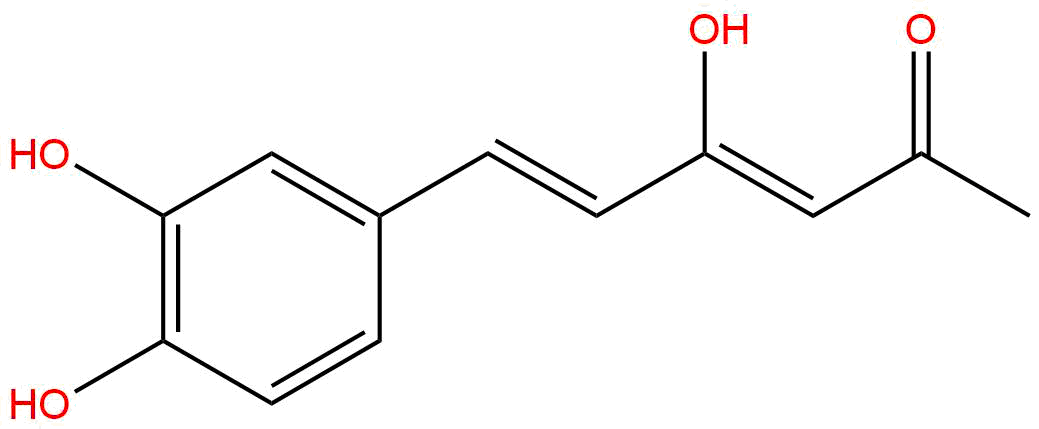


Product name: Hispolon
Synonym name: Hispolone
Catalogue No.: BP4816
Cas No.: 173933-40-9
Formula: C12H12O4
Mol Weight: 220.224
Botanical Source: Phellinus igniarius (L.ex Fr.) Quel.
Type of Compound: Phenols
Purity: 95%~99%
Analysis Method: HPLC-DAD or/and HPLC-ELSD
Identification Method: Mass, NMR
Packing: Brown vial or HDPE plastic bottle
Storage: Store in a well closed container, protected from air and light. Put into refrigerate or freeze for long term storage.
Whenever possible, you should prepare and use solutions on the same day. However, if you need to make up stock solutions in advance, we recommend that you store the solution as aliquots in tightly sealed vials at -20℃. Generally, these will be useable for up to two weeks.
The product could be supplied from milligrams to grams
Inquire for bulk scale.
For Reference Standard and R&D, Not for Human Use Directly.
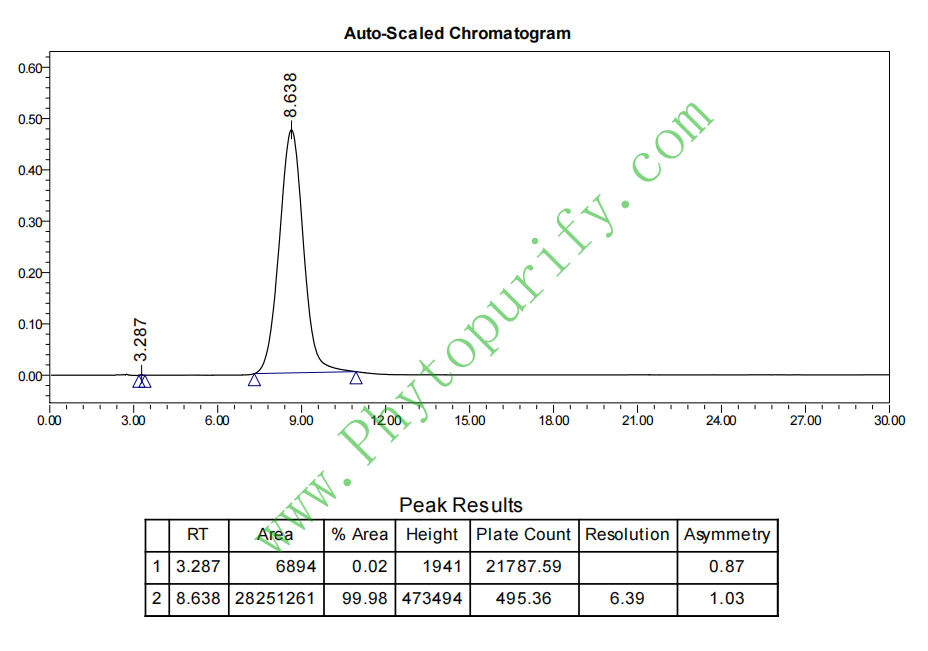
HPLC of Hispolon
Storage conditions:Short-term storage at 2~8℃, long-term storage at -20 ~ -80℃
77.7600
1.7068
1.5027
.8279
4.6165
8.0067
Low
79.8016
2.6117
Yes
Yes
Yes
No
Yes
No
0.0
Yes
Yes
Yes
Yes
Natural products, as an important source of drug discovery, play an irreplaceable role in the long history of human struggle against diseases. Fungi, especially large medicinal fungi, have attracted much attention due to their unique secondary metabolite libraries. Sanghuang(Phellinus linteus)As a rare medicinal fungus, it has a long history of medicinal use in East Asia (China, Japan, South Korea) and has traditionally been used to treat various diseases, including gastrointestinal disorders, inflammation, tumors, and enhance immunity. Modern pharmacological research has confirmed that Sanghuang is rich in various bioactive components such as polysaccharides, flavonoids, pyranone, sterols, and phenols. Among them, Hispolon A, as its characteristic active small molecule phenolic compound, has attracted extensive research interest from scholars at home and abroad in recent years.
Hispolon, also known as 6- (3,4-dihydroxyphenyl) -4-hydroxy-2H-pyran-2-one, is a polyphenolic compound with a unique styrene based pyran ketone skeleton. Since the first isolation and identification from Phellinus igniarius in the 1990s, Hispolon has been confirmed to have extensive and significant pharmacological activities, covering anti-tumor, anti-inflammatory, antioxidant, anti diabetes, anti-virus, liver protection and other fields. Its multi-target characteristics, especially its regulation of key signaling pathways in tumor development, make it a natural lead compound with great potential for development. This article aims to systematically review the chemical structure, plant origin, pharmacological activity, mechanism of action, pharmacological characteristics, and clinical application prospects of Hispolon, in order to provide comprehensive scientific basis for the in-depth research and development of this compound.
The chemical structure of Hispolon is the basis of its biological activity. Its chemical name is 6- (3,4-dihydroxyphenyl) -4-hydroxy-2H-pyran-2-one, with a molecular formula of C ₁₁ H ₈ O ₅ and a molecular weight of 220.2240 g/mol. Structurally, Hispolon belongs to the class of styrene based pyranone compounds, with its core skeleton consisting of a 2-pyranone (α - pyranone) ring and a catechol (catechol) group bridged by a vinyl group. Specifically, the C-4 position of the pyranone ring is connected to a hydroxyl group (- OH), while the C-6 position is connected to a 3,4-dihydroxyphenyl group through an vinyl group (- CH=CH -). This unique structure endows Hispolon with various chemical properties: the catechol group gives it strong antioxidant and metal chelating abilities; α. The β - unsaturated ketone structure (present in the pyranone ring) makes it a potential Michael addition receptor, capable of covalently binding to nucleophilic groups (such as cysteine thiol groups) in biomolecules, which may be one of the key mechanisms regulating the activity of various signaling proteins.
In terms of physicochemical properties, Hispolon exhibits typical drug like characteristics. Its lipid water partition coefficient (LogP) is 1.7068, indicating that it has moderate lipophilicity, which is conducive to transmembrane transport and hydrophobic pocket binding with target proteins. Its topological polar surface area (TPSA) is 77.7600 Å ², which is lower than the recommended upper limit for oral drugs (140 Å ²), indicating its good oral absorption potential. The water solubility parameter is 0.8279 mg/mL, which belongs to the category of slight solubility. This may affect its bioavailability to some extent, but it is expected to be improved through appropriate formulation techniques such as nanocarriers and cyclodextrin inclusion. It is worth noting that computer simulations predict that Hispolon has a lower ability to cross the blood-brain barrier (BBB), suggesting that its application in the treatment of central nervous system diseases may be limited. However, this also means that when it acts in the peripheral system, the risk of central nervous system side effects is relatively low. In addition, the hERG inhibition prediction was "no", and the Ames test prediction value was 0.0, indicating that Hispolon has a low risk of cardiac toxicity and genetic toxicity, providing favorable early evidence for its safety as a candidate drug.
Hispolo was originally a fungus from the Basidiomycota phylum and the Caryophyllaceae family - Sanghuang(Phellinus linteus)Separated from the fruiting body or mycelium. Sanghuang is a parasitic species found in mulberry trees(Morus alba)Perennial wood rot fungi found on broad-leaved trees have fruiting bodies that are horseshoe shaped or hemispherical, with cracked surfaces and colors ranging from yellow brown to dark brown. Except for P. linteus, Hispolo has also been reported to exist in other places Phellinus Fungi (such as P. igniarius, P. baumii)And a few other fungi (such as Inonotus Among them, Sanghuang is still its main and most classic source. Due to the scarcity and long growth cycle of wild Sanghuang resources, the mycelium and fruiting bodies of artificially cultivated Sanghuang have become the main source for obtaining Hispolon.
The extraction of Hispolon typically relies on classical natural product chemistry methods. Due to its moderate polarity as a polyphenolic compound, commonly used extraction solvents include methanol, ethanol, ethyl acetate, and their aqueous solutions. In order to improve extraction efficiency, modern extraction techniques such as ultrasound assisted extraction, microwave-assisted extraction, enzyme assisted extraction, etc. have also been widely used. The typical extraction process is as follows: the dried and crushed mulberry yellow fruiting body or mycelium powder is repeatedly soaked or percolated with a certain concentration of ethanol (such as 70% -95% ethanol) at room temperature or heating conditions for extraction. Combine the extracts and concentrate under reduced pressure to obtain the extract. Subsequently, the extract was dispersed in water and subjected to liquid-liquid extraction using petroleum ether, ethyl acetate, and n-butanol in sequence. Due to the polarity characteristic of Hispolon, it is usually enriched in the ethyl acetate extraction site. This part was purified by a variety of chromatographic separation technologies, including silica gel column chromatography, ODS (octadecylsilane bonded silica gel) reverse phase column chromatography, Sephadex LH-20 gel column chromatography and preparative high-performance liquid chromatography (Prep HPLC). The structure of the purified compound was identified by spectroscopic methods such as nuclear magnetic resonance spectroscopy (NMR) and mass spectrometry (MS), and it was ultimately confirmed to be Hispolon. In recent years, with the promotion of green chemistry concepts, some more environmentally friendly and efficient extraction methods, such as deep eutectic solvent extraction and supercritical fluid extraction, have also been explored and applied to the extraction of Hispolon, aiming to improve yield and reduce the use of organic solvents.
The pharmacological activity spectrum of Hispolon is very broad, covering multiple disease fields, among which anti-tumor activity is the most prominent and the research is also the most in-depth.
1. Antitumor activity
Hispolon has shown significant proliferation inhibition effect on a variety of human cancer cell lines, including breast cancer, prostate cancer, lung cancer, liver cancer, colorectal cancer, stomach cancer, melanoma, leukemia and osteosarcoma. Its mechanism of action is complex, involving inducing cell apoptosis, blocking the cell cycle, inhibiting tumor cell migration and invasion, and reversing multidrug resistance. For example, in breast cancer cells, Hispolon can induce apoptosis by inhibiting STAT3 signaling pathway and down regulating the expression of anti apoptotic proteins MCL1 and BCL2. In prostate cancer, it exerts anti-cancer effects by inhibiting androgen receptor signaling and activating apoptotic pathways. In addition, Hispolon has been found to inhibit the activity of DNA topoisomerases I and II (TOP1/TOP2A), interfere with DNA replication and transcription, which may be one of the important mechanisms of its cytotoxic effects.
2. Antioxidant activity
The catechol group in the molecular structure of Hispolon is the structural basis for its strong free radical scavenging ability. Numerous in vitro experiments have shown that Hispolon can effectively scavenge various free radicals, such as DPPH free radicals, ABTS cationic free radicals, hydroxyl free radicals, and superoxide anion free radicals. It can also significantly increase the activity of endogenous antioxidant enzymes in cells, such as superoxide dismutase (SOD), catalase (CAT), and glutathione peroxidase (GPx), and increase the level of reduced glutathione (GSH), thereby protecting cells from oxidative stress damage. This antioxidant activity is closely related to its anti-inflammatory, liver protective, and anti-aging effects.
3. Anti inflammatory activity
Hispolo has shown significant anti-inflammatory effects in various inflammatory models. It can inhibit the production of nitric oxide (NO), prostaglandin E2 (PGE2), and pro-inflammatory cytokines (such as TNF - α, IL-1 β, IL-6) in macrophages stimulated by lipopolysaccharide (LPS). The mechanism mainly involves the inhibition of nuclear factor kappa B (NF - κ B) and mitogen activated protein kinase (MAPK, such as MAPK1/ERK) signaling pathways. By blocking the activation of these key inflammatory signaling pathways, Hispolo can downregulate the expression of various inflammatory mediators at the transcriptional level.
4. Anti diabetes activity
Hispolon also shows potential in the treatment of diabetes and its complications. Research has shown that Hispolo can promote glucose uptake and improve insulin resistance by activating the AMP activated protein kinase (AMPK) signaling pathway. In the streptozotocin (STZ) - induced diabetes rat model, Hispolon administration can significantly reduce blood sugar levels, improve dyslipidemia, and alleviate kidney and liver damage caused by diabetes. Its anti diabetes effect may be synergistic with its antioxidant and anti-inflammatory activities.
5. Liver protective activity
Hispolon has a protective effect against various chemical liver injuries, such as carbon tetrachloride CCl ₄ and acetaminophen APAP induction. It can significantly reduce serum transaminase (ALT, AST) levels, alleviate liver tissue necrosis and inflammatory infiltration. Its liver protective mechanism is related to enhancing the liver's antioxidant defense ability, inhibiting the activation of hepatic stellate cells, and regulating the expression of apoptosis related proteins such as Bax and Bcl-2.
6. Antiviral activity
Hispolon has also been reported to have antiviral activity, including inhibitory effects on influenza virus, human immunodeficiency virus (HIV), and herpes simplex virus (HSV). Its antiviral mechanism may involve directly inactivating virus particles, inhibiting virus adsorption and entry into host cells, and interfering with virus genome replication and transcription.
The pharmacological activity of Hispolon is not derived from a single target, but is achieved through the synergistic action of multiple targets and pathways. The core of its mechanism of action can be summarized as follows:
1. Regulating cell apoptosis and survival signaling pathways
The most widely studied mechanism of action of Hispolon is its regulation of the apoptotic signaling pathway. It can act on both endogenous (mitochondrial) and exogenous (death receptor) apoptotic pathways simultaneously.
* Inhibition of STAT3 signaling pathway Hispolon can inhibit the phosphorylation and nuclear translocation of STAT3, thereby downregulating its downstream target genes, including anti apoptotic proteins MCL1 and BCL2. The high expression of MCL1 and BCL2 is a key mechanism for various tumor cells to escape apoptosis, and Hispolon's inhibition directly promotes tumor cell apoptosis.
* Regulating BCL2 family proteins In addition to inhibiting MCL1 and BCL2, Hispolon can also upregulate the expression of pro apoptotic protein Bax and promote the transfer of Bax from the cytoplasm to the mitochondrial membrane, leading to a decrease in mitochondrial membrane potential, release of cytochrome c, and activation of the Caspase cascade reaction (Caspase-9, Caspase-3), ultimately inducing cell apoptosis.
* Activate MAPK pathway Hispolon's regulation of MAPK pathways (such as MAPK1/ERK, p38, JNK) is cell and context dependent. In some cancer cells, it can continuously activate p38 and JNK, and the activation of these stress kinases is usually associated with pro apoptotic signals.
2. Inhibit tumor invasion and metastasis
Hispolon can effectively inhibit the migration and invasion ability of tumor cells, which is crucial for controlling tumor metastasis.
* Inhibition of matrix metalloproteinases (MMPs)Hispolo can significantly inhibit the expression and activity of MMP2 and MMP9. MMPs are key enzymes that degrade extracellular matrix, and their enhanced activity is a prerequisite for tumor cell invasion and metastasis. Hispolo blocks the process of tumor cells breaking through the basement membrane and spreading to surrounding tissues by inhibiting MMPs.
* Inhibition of HIF-1 αUnder hypoxic conditions, HIF1A (HIF-1 α) is stably expressed and promotes the transcription of angiogenesis related genes (such as VEGF). Hispolon has been found to inhibit the protein accumulation and transcriptional activity of HIF-1 α, thereby suppressing the formation of tumor neovascularization, cutting off the tumor's nutritional supply, and indirectly inhibiting tumor growth and metastasis.
3. Interference with cell cycle and DNA replication
Hispolon can arrest the tumor cell cycle in G1 or G2/M phase, thereby inhibiting cell proliferation.
* Inhibition of Topoisomerase Hispolon has been confirmed to be an inhibitor of DNA topoisomerases I (TOP1) and II (TOP2A). Topoisomerase plays a crucial role in DNA replication, transcription, and chromosome segregation. Hispolon can cleave complexes by stabilizing topoisomerase DNA, leading to DNA double strand breaks and triggering cell cycle checkpoints, resulting in cycle arrest and cell death. This mechanism is similar to many clinical anticancer drugs, such as camptothecin and etoposide.
* Regulating cell cycle proteins Hispolon can downregulate the expression of Cyclin D1 and cyclin dependent kinase 4/6, while upregulating the levels of CDK inhibitors p21 and p27, leading to cell cycle arrest.
4. The interweaving of anti-inflammatory and antioxidant mechanisms
The anti-inflammatory and antioxidant activities of Hispolon are closely related to its anti-cancer and liver protective effects.
* Inhibition of NF - κ B pathway Hispolon can inhibit the phosphorylation and degradation of I κ B α, thereby preventing the nuclear translocation of NF - κ B p65 subunit and suppressing its transcriptional activity. NF - κ B is a key transcription factor that regulates inflammatory response and cell survival, and its downstream target genes include various pro-inflammatory cytokines (TNF - α, IL-6) and anti apoptotic proteins.
* Activate Nrf2/ARE pathway The catechol structure of Hispolon can act as an electrophilic molecule, activating nuclear factor E2 related factor 2 (Nrf2). After entering the nucleus, Nrf2 binds to antioxidant response elements (ARE) and initiates the transcription of a series of antioxidant enzymes (such as SOD, CAT, HO-1) and detoxifying enzymes (such as GST, NQO1), thereby enhancing the cell's antioxidant defense ability. This mechanism is an important basis for its liver protection and cell protection effects.
In addition, Hispolon has also been found to play a role in hormone dependent tumors (such as breast cancer) by regulating the activities of estrogen receptor alpha (ESR1) and aromatase (CYP19A1). These diverse molecular targets and signaling pathways together form the complex pharmacological network of Hispolon.
To promote Hispolon from a natural product to a clinical candidate drug, a systematic evaluation of its pharmacological properties is required. As mentioned earlier, Hispolon exhibits certain advantages in physicochemical properties and preliminary toxicological predictions: small molecular weight (220 Da), moderate LogP, no risk of hERG inhibition, and no Ames mutagenicity. These features comply with most of the criteria of the "Five Rules for Similar Drugs", providing the possibility of oral administration.
However, the pharmacokinetic properties of Hispolon are the main challenge facing its drug development. At present, research on the pharmacokinetics of Hispolon in vivo is relatively limited, but previous studies have shown that its oral bioavailability may be low. This is mainly attributed to the following points:
1. First pass effect As a polyphenolic compound, Hispolon is prone to extensive phase II metabolism in the intestine and liver, mainly through glucuronidation and sulfation binding reactions. These metabolic processes significantly reduce the concentration of the prototype drug entering the systemic circulation.
2. Water solubility Although its water solubility (0.8279 mg/mL) is acceptable, it is still insufficient compared to ideal intravenous or high oral dosage requirements, which may limit its absorption.
3. Metabolic stability The phenolic hydroxyl groups and α, β - unsaturated ketone structures in its molecules are potential sites of action for metabolic enzymes such as cytochrome P450 enzymes and catechol-O-methyltransferase COMT, which may lead to rapid metabolic clearance in vivo.
Strategies to enhance the bioavailability of Hispolo are being explored in response to these challenges. For example, preparing it into nanoliposomes, polymer micelles, or phospholipid complexes can improve its solubility and membrane permeability, and protect it from gastrointestinal degradation. In addition, designing the prodrug of Hispolon, such as acetylating or phosphorylating its phenolic hydroxyl group, can temporarily "block" its metabolic sites, allowing it to be enzymatically hydrolyzed in the body and release the prototype drug, thereby improving oral absorption. The intravenous administration route can completely avoid first pass effects and is another feasible option, especially suitable for acute or severe treatment scenarios.
Based on the rich and precise pharmacological activity of Hispolon, it has shown broad prospects in clinical translation, mainly focusing on the following directions:
1. Anti tumor adjuvant therapy
Hispolon, as a multi-target natural anti-cancer compound, has the greatest advantage of being able to simultaneously act on multiple processes such as tumor cell proliferation, apoptosis, invasion, metastasis, and angiogenesis. It may be used as a chemotherapy sensitizer or detoxifier in combination with conventional chemotherapy drugs such as cisplatin, doxorubicin, and paclitaxel. For example, Hispolon can reverse tumor cell resistance to certain chemotherapy drugs by inhibiting the STAT3 and NF - κ B pathways. At the same time, its antioxidant and hepatoprotective activities may help alleviate side effects such as liver toxicity and nephrotoxicity caused by chemotherapy. The development of inhibitors targeting specific targets (such as MCL1, TOP1, HIF-1 α) is currently a hot topic in the research and development of anti-cancer drugs. Hispolon, as a natural inhibitor of these targets, can serve as a lead compound in terms of its structure. Through chemical modifications such as structural simplification and optimization of pharmacophores, derivatives with higher selectivity and stronger activity can be developed.
2. Management of metabolic diseases and chronic inflammation
Hispolon's anti diabetes, antioxidant and anti-inflammatory activities make it have potential in the treatment of type 2 diabetes and its complications (such as diabetes nephropathy, non-alcoholic fatty liver disease NAFLD). As a natural AMPK activator and Nrf2 inducer, Hispolon or its derivatives have the potential to be developed as a dietary supplement or functional food ingredient that improves insulin resistance, regulates lipid metabolism, and reduces oxidative stress. In chronic inflammatory diseases such as rheumatoid arthritis and inflammatory bowel disease, its anti-inflammatory effect by inhibiting the NF - κ B and MAPK pathways is also worth further exploration.
3. Liver protectants
Given its significant liver protective activity, Hispolon has the potential to be developed for the prevention and treatment of liver injury caused by various reasons, including drug-induced liver injury, alcoholic liver disease, and viral hepatitis. Its multi-target protective mechanism (antioxidant, anti-inflammatory, anti apoptotic) may give it an advantage over single target drugs in dealing with complex liver pathological processes.
Despite the bright prospects, the clinical translation of Hispolo still faces many challenges. Firstly, its poor pharmacokinetic properties in vivo are the biggest bottleneck, which needs to be overcome through advanced formulation technology or prodrug design. Secondly, the vast majority of current research still remains at the level of in vitro cell and animal models, lacking high-quality human clinical trial data to validate its effectiveness and safety. In addition, although Hispolon's multi-target properties bring widespread activity, they may also increase the risk of off target effects, and a more comprehensive evaluation of its long-term safety is needed.
As a natural polyphenol compound from the medicinal fungus Phellinus igniarius, Hispolon has shown remarkable potential in anti-tumor, anti-inflammatory, antioxidant, anti diabetes, liver protection and other disease fields by virtue of its unique styrylpyranone structure and multi-target pharmacological action characteristics. Its mechanism of action involves the regulation of multiple key signaling molecules and targets such as STAT3, NF - κ B, MAPK, Nrf2, topoisomerases, MMPs, and BCL2 family proteins, reflecting the advantage of the synergistic effect of natural products with multiple targets and pathways. Preliminary pharmacological evaluation shows that it has a good drug like basis, but low oral bioavailability is the core obstacle to its clinical translation.
Future research should focus on the following key directions: firstly, using medicinal chemistry methods, with Hispolon as the lead, to design and synthesize derivatives with higher metabolic stability and bioavailability; The second is to develop efficient drug delivery systems, such as nano formulations, to improve their pharmacokinetic properties; Thirdly, conduct more in-depth in vivo pharmacological research, especially in terms of synergistic effects and attenuation effects when combined with existing drugs; The fourth is to promote its entry into the standardized preclinical toxicology evaluation and clinical trial stage. With the continuous deepening of research and technological advancement, Hispolon and its derivatives are expected to become a new generation of candidate drugs for the treatment of major human diseases, providing another successful example for the development of natural product drugs.
