Introduction/Overview
Natural products, as an important source of drug discovery, play an irreplaceable role in the long struggle between humans and diseases. In the vast treasure trove of natural products, ecdysteroid compounds have attracted much attention due to their unique chemical structures and extensive biological activities. This type of steroid hormone, originally discovered in insects and responsible for regulating molting and metamorphosis processes, was later confirmed to be widely present in the plant kingdom and is known as plant molting hormone. Unlike insect molting hormones, plant molting hormones exhibit various beneficial pharmacological activities in mammals, such as promoting protein synthesis, regulating glucose and lipid metabolism, anti-inflammatory, antioxidant, and neuroprotective effects, with extremely low toxicity and significant potential for development.
Makisterone A is an important member of the plant ecdysone family, and its chemical structure belongs to the 28 carbon ecdysone. This compound was originally isolated and identified from Arhat plants, hence its name. It is worth noting that rosin sterone A is not only a product of the plant kingdom, but also confirmed to be a bee(Apis mellifera)The main free pupal molting hormone plays a crucial role in regulating the growth and development of insects. This discovery reveals the conservation and functional importance of the molecule in evolution, and provides a unique perspective for its cross species pharmacological research.
In recent years, with the in-depth study of hematopoietic regulation mechanism, the potential of rosiglitazone A in promoting hematopoiesis has gradually emerged. Research has shown that this compound can affect the proliferation, differentiation, and maturation of hematopoietic stem cells by regulating multiple key hematopoietic related targets, such as KIT, EPO, GATA1, SPI1, and MYB. This discovery provides new candidate molecules for the treatment of blood system diseases such as anemia and bone marrow suppression caused by various reasons. This article will systematically review the research progress of rosiglitazone A from the aspects of chemical structure, plant source, pharmacological activity, mechanism of action, pharmaceutical properties and clinical application prospects, in order to provide reference for the further development and utilization of this natural product.
Chemical structure and physicochemical properties
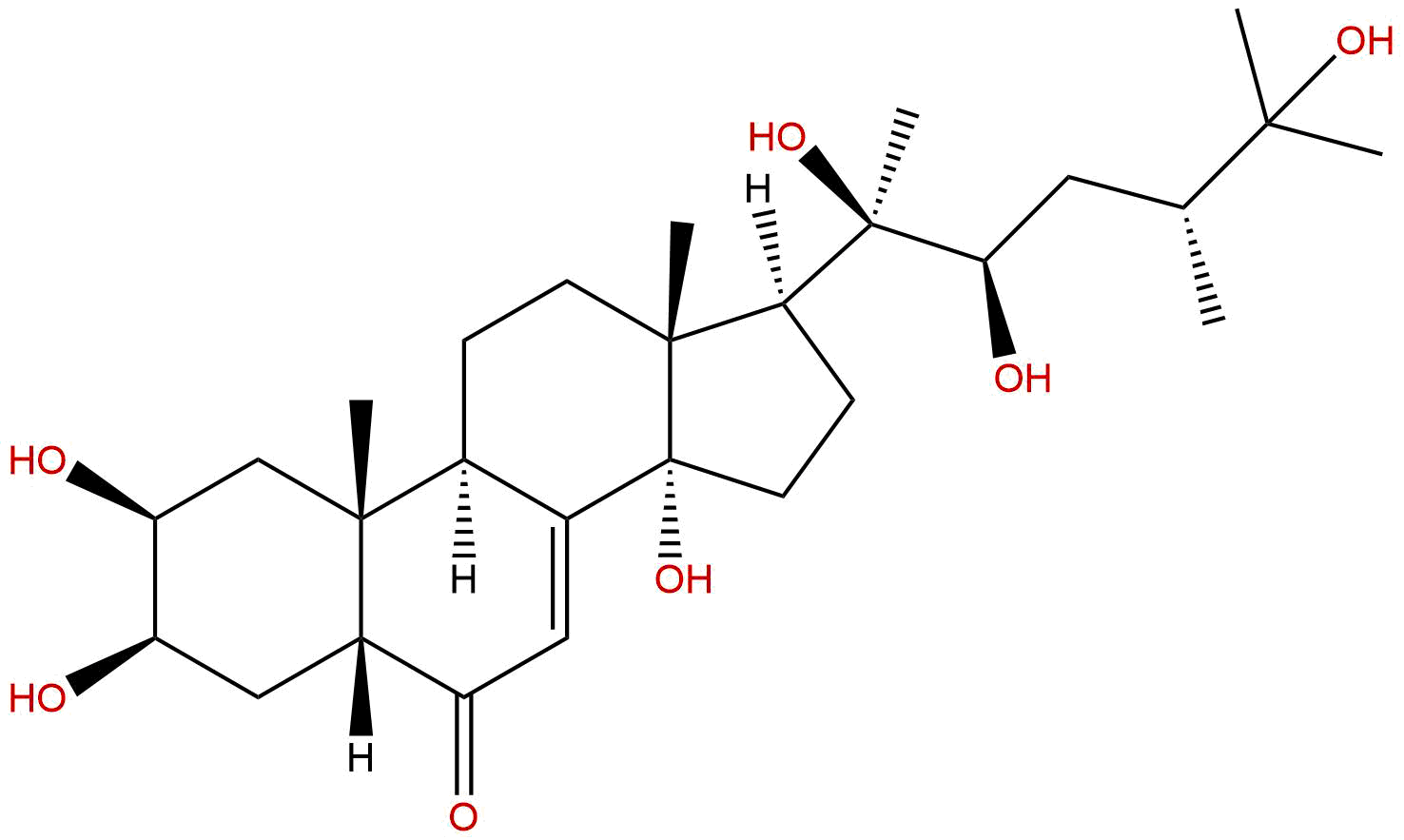
The chemical essence of rosiglitazone A is a 28 carbon ecdysone. Its core skeleton is the steroid mother nucleus, which has typical structural characteristics of ecdysone. Compared with the classical 27 carbon ecdysone (such as 20 hydroxyecdysterone), rosiglitazone A has one more carbon atom on the side chain, which belongs to the C28 ecdysone subclass. Its system is named: (2 β, 3 β, 5 β, 22R, 24S, 25S) -2,3,14,20,22,25-hexahydroxy-24-methylcholestan-7-en-6-one. This structure contains a conjugated system of 7-en-6-one, which is a key functional group for the UV absorption and biological activity of ecdysteroid compounds. In addition, the A/B ring is connected in a cis (5 β - H) configuration, while the C/D ring is connected in a trans configuration. The precise arrangement of hydroxyl groups at positions 2 β, 3 β, 14 α, 20R, 22R, and 25 forms the structural basis for its binding to the ecdysteroid receptor (EcR).
From the physical and chemical properties, the molecular formula of rosiglitazone A is C28H46O7, and the molecular weight is 494.6690 g/mol. The LogP of its lipid water partition coefficient is 1.9391, indicating that the compound has moderate lipophilicity, which can maintain a certain solubility in the aqueous phase and has the ability to penetrate biofilms. Its topological polar surface area (TPSA) is 138.45 Å ², which is a relatively high value mainly attributed to the presence of six hydroxyl groups and one carbonyl group in the molecule. High TPSA typically indicates poor membrane permeability, especially in terms of blood-brain barrier (BBB) penetration. In fact, the evaluation of patent parameters showed that the blood-brain barrier penetration ability of rosiglitazone A was "low", which suggested that its application in the treatment of central nervous system diseases might be limited, but it also meant that the risk of central side effects after peripheral administration was low.
In terms of water solubility, the predicted water solubility value of rosiglitazone A is 0.1039 mg/mL, which belongs to the slightly soluble category. This characteristic is consistent with its multi hydroxyl structure, but compared to some highly water-soluble ecdysteroids such as 20 hydroxyecdysterone, its solubility is slightly lower. In terms of stability, its 7-en-6-one conjugate system may be isomerized or degraded under acidic or alkaline conditions, as well as under light and high temperature conditions. Therefore, attention should be paid to avoiding light, low temperature and pH control in the process of extraction, purification and preparation. In addition, the hERG inhibition prediction result was "no", and the Ames test result was 0.0, indicating that the compound has low risks in terms of cardiac toxicity and genetic toxicity, providing preliminary positive evidence for its safety evaluation.
Plant sources and extraction methods
Podocarpine sterone A was initially isolated from Arhat plants, but later studies found that it was widely distributed in the plant kingdom. The main plant sources include Podocarpus(Podocarpus)A variety of plants, such as arhat pine(Podocarpus macrophyllus)Bai Ri Qing(Podocarpus neriifolius)Wait. In addition, in certain species of ferns such as Polypodiaceae, as well as Chenopodiaceae plants such as Sedum erinaceus(Chenopodium ambrosioides)It has also been discovered. It is worth noting that rosiglitazone A exists as the main free ecdysone in honeybee pupae, but the yield of insect source is extremely low, which does not have industrial production value. Therefore, the current research and development still mainly rely on plant extraction.
The content of rosin sterone A in plants is usually low, and it often coexists with other ecdysones with similar structures (such as 20 hydroxyecdysone, rosin sterone B, C, etc.), which increases the difficulty of separation and purification. The extraction method usually adopts solvent extraction method, using its polarity characteristics to select methanol, ethanol or aqueous ethanol as the extraction solvent. The classic extraction process is as follows: after crushing the dried plant raw materials, they are repeatedly extracted or percolated with 70% -95% ethanol at room temperature or heating conditions. The extracted liquids are combined and concentrated under reduced pressure until there is no alcohol flavor. Concentrate the target components by liquid-liquid extraction (such as petroleum ether degreasing, ethyl acetate or n-butanol extraction). The crude extract is then separated and purified by a variety of chromatographic techniques, including silica gel column chromatography, ODS reverse phase column chromatography, Sephadex LH-20 gel column chromatography and preparative high-performance liquid chromatography (Prep HPLC).
In recent years, in order to improve the extraction efficiency and purity, some new extraction technologies have also been applied to the preparation of rosin sterone A. For example, ultrasound assisted extraction (UAE) and microwave-assisted extraction (MAE) can significantly shorten extraction time and improve the dissolution rate of target compounds. Supercritical fluid extraction (SFE) technology, especially using CO ₂ as a solvent and adding ethanol as an entrainer, can achieve selective extraction under mild conditions, avoiding the degradation of thermosensitive components. In terms of purification, high-speed countercurrent chromatography (HSCCC) shows its advantages in the preparative separation of rosiglitazone A due to its characteristics of no solid carrier, high separation efficiency and good sample recovery. In addition, as a new selective separation method, molecular imprinting technology (MIT) is expected to achieve one-step efficient enrichment of target compounds from complex plant extracts by synthesizing polymers with specific recognition sites for rosiglitazone A.
Pharmacological activity research
Promote hematopoietic activity
The most remarkable pharmacological activity of rosiglitazone A is its hematopoietic function. Hematogenesis is a highly ordered and precisely regulated physiological process involving self-renewal, proliferation, differentiation of hematopoietic stem cells (HSCs), and release of mature blood cells. Many in vitro and in vivo experiments have shown that rosiglitazone A can significantly stimulate the hematopoietic function of bone marrow. In vitro cell experiments, rosiglitazone A can promote the proliferation of CD34+hematopoietic stem/progenitor cells derived from human umbilical cord blood, and induce them to differentiate into erythroid, granuloid and megakaryoid cells. In animal models, intraperitoneal injection or oral administration of rosiglitazone A can significantly increase the counts of white blood cells, red blood cells and platelets in peripheral blood of mice with myelosuppression induced by radiation or chemotherapy drugs (such as cyclophosphamide), and accelerate the recovery of bone marrow hematopoietic function. Compared with classical recombinant human erythropoietin (rhEPO) or granulocyte colony-stimulating factor (G-CSF), its hematopoietic promoting effect has the characteristic of multi lineage stimulation, rather than just targeting a single blood lineage.
Other pharmacological activities
In addition to promoting hematopoiesis, rosiglitazone A also showed a variety of other pharmacological activities. In the aspect of metabolic regulation, research shows that it can promote the uptake of glucose by muscle cells and liver cells, improve insulin resistance, and has a potential anti diabetes effect. In terms of protein synthesis, as a member of the ecdysone family, rosiglitazone A also shows the ability to promote protein synthesis in mammals, especially in skeletal muscle, which is independent of androgen receptors, so it is expected to be developed as a new anabolic agent without androgen side effects. In addition, rosiglitazone A also showed anti-inflammatory activity, which could inhibit the release of inflammatory factors such as TNF - α and IL-6 in macrophages induced by lipopolysaccharide (LPS). The mechanism may be related to the inhibition of NF - κ B signaling pathway. In terms of neuroprotection, although its blood-brain barrier penetration ability is low, some studies suggest that it may indirectly exert neuroprotective effects by regulating peripheral immunity or metabolism, or by improving central bioavailability through structural modifications.
Mechanism of action and molecular targets
The molecular mechanism of the hematopoiesis promoting activity of rosiglitazone A is the current research hotspot. Its function involves the coordinated regulation of multiple key targets and signaling pathways, mainly including the following aspects:
1. Regulating hematopoietic growth factors and their receptors: ROHANSONE STERONE A can up regulate the expression of various hematopoietic growth factors in the bone marrow microenvironment, the core of which is erythropoietin (EPO) and stem cell factor (SCF, whose receptor is KIT). EPO is a key regulatory factor in erythroid hematopoiesis, which promotes the proliferation, differentiation, and survival of erythroid cells by binding to the EPO receptor (EPOR) on the surface of erythroid progenitor cells. Roshanone A can directly or indirectly activate the transcription of EPO gene and increase the synthesis and secretion of EPO. Meanwhile, it can also upregulate the expression of KIT (CD117), which is an important receptor on the surface of hematopoietic stem cells and early progenitor cells. Its binding to SCF is crucial for maintaining self-renewal and early hematopoiesis of HSCs.
2. Regulating the hematopoietic transcription factor network: The process of hematopoietic differentiation is precisely regulated by a series of transcription factors. Roxanone A can significantly affect the expression level of several key hematopoietic transcription factors. GATA1 is a core transcription factor for erythroid, megakaryoid, and mast cell differentiation, which activates the expression of erythroid specific genes such as globin and EPOR. The research shows that the treatment of rosiglitazone A can up regulate the expression of GATA1, thus promoting erythroid differentiation. SPI1 (also known as PU. 1) is a transcription factor essential for the development of myeloid and lymphoid systems, and its expression level determines the lineage orientation of hematopoietic stem cells. Roshandrosterone A can moderately up regulate SPI1 and promote the differentiation of granulocyte monocytes. MYB is an important regulatory factor for the proliferation and differentiation of hematopoietic stem cells and progenitor cells, and is crucial for maintaining hematopoietic homeostasis. Roshandrosterone A affects the balance of proliferation and differentiation of hematopoietic stem cells by regulating the expression of MYB. This synergistic regulation of multiple transcription factors explains its characteristic role in promoting multi lineage hematopoiesis.
3. Activate signal transduction pathways: ROHANSONE STERONE A may play a role in promoting hematopoiesis by activating JAK2/STAT5, PI3K/Akt, MAPK/ERK and other classical signaling pathways. For example, after upregulating EPO expression, EPO binds to EPOR to activate JAK2, which then phosphorylates STAT5. Phosphorylated STAT5 enters the nucleus to initiate transcription of genes related to anti apoptosis and erythroid differentiation. Meanwhile, activation of the PI3K/Akt pathway helps promote cell survival and proliferation. In addition, some studies suggest that rosiglitazone A may exert its effect through acting on the homologue of ecdysone receptor (EcR) or G protein coupled receptor (GPCR), but this hypothesis needs further verification in mammalian cells.
Evaluation of drug properties and pharmacokinetics
The evaluation of drug properties is a crucial step in determining whether natural products can be transported from the laboratory to clinical applications. The pharmaceutical parameters of rosiglitazone A show that it has a good development prospect, but it also faces some challenges.
1. Physical and chemical properties and drug like properties: Roxanone A meets most of the requirements of the "Lipinski Five Rules": its molecular weight (494.67) is less than 500, LogP (1.94) is less than 5, and the number of hydrogen bond donors (6 hydroxyl groups) and hydrogen bond receptors (7 oxygen atoms) is slightly higher, but still within the acceptable range. Its TPSA is relatively high (138.45 Å ²), indicating that oral absorption may be limited, but it can be improved through formulation techniques such as nanoliposomes, phospholipid complexes, etc. The low water solubility (0.1039 mg/mL) is one of the main factors limiting its bioavailability.
2. Safety evaluation: Preliminary toxicological evaluation showed that rosiglitazone A had good safety. HERG inhibition is predicted as' no ', indicating a lower risk of causing QT interval prolongation and arrhythmia in the heart. The Ames test result is 0.0, indicating no mutagenicity. In the animal acute toxicity experiment, the LD50 value of rosiglitazone A is high, and the safety window is large. Long term toxicity studies are not yet sufficient, but based on its safety record as a member of the plant molting hormone family in traditional use, its overall toxicity risk is low.
3. Pharmacokinetic characteristics: Pharmacokinetic studies on rosiglitazone A are limited at present. Existing data suggests that oral administration may result in poor absorption and lower absolute bioavailability, which is related to its high polarity and low permeability. After intravenous administration, its distribution volume is relatively large, indicating widespread tissue distribution. In terms of metabolism, it is speculated that it may be mainly metabolized in the liver through a combination reaction of glucuronidation and sulfation, and some hydroxyl groups may be oxidized. The main excretion pathways are bile and urine. It is worth noting that its blood-brain barrier penetration ability is low, which limits the therapeutic application of central nervous system diseases but also reduces the risk of central side effects.
4. Structural modification and optimization: In order to improve the oral bioavailability and metabolic stability of rosiglitazone A, structural modification is an important research direction. Possible strategies include: designing prodrugs (such as esterification or phosphorylation) for the 2,3,22 hydroxyl groups to enhance lipid solubility; Introducing methyl or fluorine atoms to block metabolic sites; Develop C24 or C25 derivatives to enhance target affinity. In addition, new delivery technologies such as nano formulations and self microemulsifying drug delivery systems also provide possibilities for enhancing their drug properties.
Clinical application prospects and prospects
As a natural ecdysone with multi lineage hematopoietic promoting activity, rosiglitazone A shows a unique clinical application prospect in the treatment of hematological diseases.
1. Tumor chemotherapy/radiotherapy related bone marrow suppression: This is the most potential application field of rosiglitazone A. The hematopoietic growth factors currently used in clinical practice, such as G-CSF, rhEPO, and rhTPO, usually only target a single blood lineage and have disadvantages such as high cost, need for injection administration, and poor response in some patients. ROHANSONE STERONE A can promote the recovery of white blood cells, red blood cells and platelets at the same time, and has the characteristics of "whole blood line" stimulation. It is expected to be developed as an effective oral broad-spectrum bone marrow protector, which can be used to prevent and treat bone marrow suppression caused by radiotherapy and chemotherapy, and improve the quality of life of patients.
2. Aplastic anemia: Aplastic anemia (AA) is a serious disease characterized by bone marrow hematopoietic failure. ROHANSONE STERONE A may stimulate residual hematopoietic stem cells in AA patients and promote hematopoietic reconstruction by up regulating EPO, SCF and other hematopoietic factors and activating hematopoietic transcription factor network. Its multi-target mechanism of action may be superior to single target drugs, but it needs to be validated in AA animal models.
3. Other anemic diseases: For renal anemia and inflammatory anemia caused by chronic kidney disease, rosiglitazone A may play a therapeutic role by promoting endogenous EPO production and improving iron utilization. Its non EPO dependent erythroid differentiation mechanism may provide new treatment options for patients with low EPO responsiveness or resistance.
4. Outlook and Challenges: Despite its broad prospects, the clinical transformation of rosiglitazone A still faces many challenges. Firstly, its low oral bioavailability is the biggest bottleneck, requiring the development of efficient drug delivery systems or structural modifications. Secondly, the molecular targets of its hematopoietic promoting effect still need to be further clarified, especially its direct receptors in mammalian cells have not been identified, which limits structure based drug design. Thirdly, the safety of long-term medication, especially the potential impact on tissues outside the hematopoietic system (such as the liver and kidneys), needs to be systematically evaluated. Finally, large-scale and sustainable raw material supply is also a problem that industrialization must solve, and the establishment of biosynthetic or chemical total synthesis pathways will be a future research direction.
Conclusion
As a representative compound of 28C ecdysone, rosiglitazone A occupies a special position in the field of natural product pharmacology due to its unique chemical structure and multi lineage hematopoietic promoting activity. This molecule found in plants such as Podocarpus grosvenorii not only plays a key role in insect developmental biology, but also shows exciting potential in mammalian hematopoietic regulation. By regulating key targets such as KIT, EPO, GATA1, SPI1 and MYB, rosiglitazone A can synergistically promote the proliferation and multilinear differentiation of hematopoietic stem cells, and its mechanism is different from the existing single target hematopoietic growth factors.
Preliminary drug efficacy evaluation shows that the compound has the advantages of low toxicity, no hERG inhibition, and genotoxicity, but low oral bioavailability and poor water solubility are the main obstacles to its clinical translation. Future research should focus on: further elucidating its direct molecular targets and signal transduction networks; Optimize its pharmacokinetic properties through medicinal chemical methods and prodrug strategies; Developing new drug delivery systems to improve bioavailability; And verify its efficacy and safety in various animal models of hematopoietic dysfunction.
The research process of rosiglitazone A once again confirmed the value of natural products as a treasure house of lead compounds. This cross species discovery journey, from insect hormones to plant components, and then to potential hematopoietic promoting drugs, not only expands our understanding of the diversity of life regulatory molecules, but also opens up new paths for the development of new, safe, and effective hematopoietic promoting drugs. With the progress of structural biology, chemical biology and drug delivery technology, rosiglitazone A and its derivatives are expected to become important candidate drugs for the treatment of myelosuppression and anemia diseases in the future, bringing new hope to patients.