Introduction/Overview
Natural products, as an important source of drug discovery, play an irreplaceable role in the long history of human fight against diseases. Especially in the field of tumor treatment, active ingredients isolated from plants, such as paclitaxel, camptothecin, vinblastine, etc., have become the cornerstone of clinical chemotherapy regimens. In recent years, with the deepening of research on the chemistry and pharmacology of traditional medicinal plants, a type of plant derived from the Asclepiadaceae family, the Tongguan vine, has emerged(Marsdenia tenacissima The C21 steroidal saponins of (Roxb.) Wight et Arn. have attracted widespread attention. Tongguan Vine, also known as Wugu Vine or Tongguang Powder, has been widely used in Yunnan, Guizhou and other places in China to treat various diseases, and has accumulated rich experience in anti-tumor drugs. Modern pharmacological research has confirmed that its extract has significant anti-tumor, immune regulatory, anti-inflammatory and other activities.
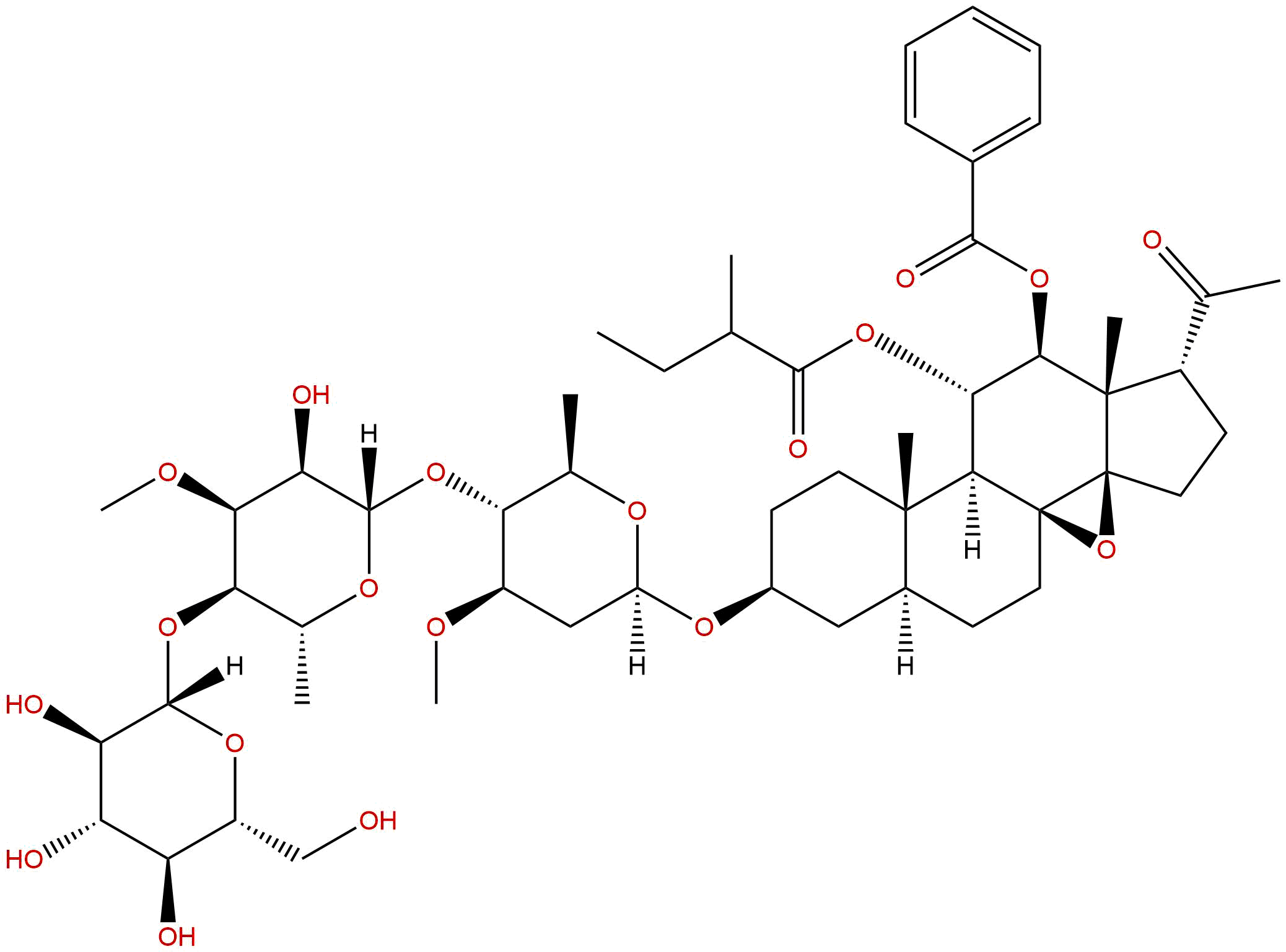
Tenacissoside E (CAS number: 107347-56-8) is a representative polyoxyethylene pregnane glycoside isolated and identified from Tenacissoside. As one of the components with high content and outstanding activity in Tongguan Vine, Tongguan Vine Saponin E has a unique chemical structure, consisting of a C21 steroidal glycoside (such as Tongguan Vine Glycoside A, tenactin A) connected to multiple glycosides (usually including D-oleander, D-Canadian sesame sugar, L-diglycose, etc.) through glycosidic bonds. This complex glycosylation modification not only endows the molecule with unique physicochemical properties, but also profoundly affects its biological activity and pharmacokinetic behavior.
In recent years, scholars at home and abroad have conducted extensive research on the anti-tumor activity and molecular mechanism of Tongguan Vine Saponin E. Research has shown that this compound can inhibit tumor cell proliferation, induce apoptosis, block cell cycle, inhibit angiogenesis, and reverse drug resistance through multi-target and multi pathway pathways. Its targets involve multiple key proteins and signaling pathways closely related to tumor occurrence and development, such as MCL1, BCL2, STAT3, MMP2, TOP1, HIF1A, TOP2A, MAPK1, ESR1, CYP19A1, etc. These findings not only provide modern scientific explanations for the traditional anti-tumor applications of Tongguan Teng, but also lay a solid foundation for the development of new anti-tumor drugs based on Tongguan Teng saponin E. However, despite its remarkable pharmacological activity, Tongguan Vine Saponin E still faces challenges in drug development, such as solubility, oral bioavailability, metabolic stability, etc., which limits its clinical translation. This article aims to systematically review the chemical structure, plant origin, pharmacological activity, mechanism of action, pharmacological evaluation, and clinical application prospects of Tongguan Vine Saponin E, in order to provide comprehensive and professional references for the in-depth research and development of this natural product.
Chemical structure and physicochemical properties
Guanguan Vine Saponin E belongs to the C21 steroidal saponin class, specifically, it is a polyoxypropylene glycoside. Its chemical structure consists of two parts: a C21 steroidal aglycone and an oligosaccharide chain. The glycoside moiety is usually tenacigenin A, which has a core skeleton of pregnane and multiple hydroxyl or carbonyl substituents at positions C-12, C-17, C-20, forming the characteristic of multi oxygen substitution. This polyhydroxy structure is one of the important features that distinguishes C21 steroidal saponins from other steroidal saponins.
The oligosaccharide chain is connected to a specific position of the aglycone through glycosidic bonds, usually at the C-3 position. The types of sugar groups that make up this oligosaccharide chain are diverse, mainly including 2,6-dideoxy sugars or 3-O-methyl-6-deoxy sugars such as D-oleandrose, D-cymarose, and L-diginose. The presence of these rare sugar groups results in a larger molecular weight and more complex structure of Tongguan Vine Saponin E. Its precise molecular weight is 1019.1880 Da, and its molecular formula can usually be expressed as C ₅₀ H ₈₂ O ₂₁ (depending on the sugar chain composition and modification).
In terms of physicochemical properties, Tongguan Vine Saponin E exhibits typical characteristics of saponin compounds. Its lipid water partition coefficient (LogP) is 3.2239, indicating that the molecule as a whole has a certain degree of lipophilicity, but at the same time, it has a certain degree of hydrophilicity due to the presence of a large number of hydroxyl and sugar groups, exhibiting amphiphilicity. Its polar surface area (TPSA) is as high as 257.1900 Å ², mainly attributed to the numerous hydroxyl and ether oxygen atoms in the molecule, indicating that it may be difficult to passively diffuse through biofilms. The water solubility data (0.0193 mg/mL) further confirms its poor water solubility, which may be one of the key factors limiting its oral absorption and in vivo bioavailability. In addition, its blood-brain barrier (BBB) penetration ability was evaluated as "low", which is related to its high TPSA and molecular weight, suggesting that the compound mainly acts on peripheral tissues and may have a relatively small impact on the central nervous system.
Plant sources and extraction methods
The main source of Tongguan Vine Saponin E is Tongguan Vine, which belongs to the family Loricaceae and the genus Lactuca(Marsdenia tenacissima). This plant is mainly distributed in southwestern regions of China such as Yunnan, Guizhou, Sichuan, and Guangxi, as well as Southeast Asian countries such as India, Myanmar, and Thailand. Its medicinal parts are mainly dried rattan stems. The chemical composition of Tongguan Vine is complex, and various components including C21 steroidal saponins, triterpenoids, polysaccharides, alkaloids, volatile oils, etc. have been isolated and identified from it. Among them, C21 steroidal saponins are considered the main substance basis for their anti-tumor activity, and Tongguan Vine Saponin E is one of the representative components.
The extraction and separation of Tongguan Vine Saponin E usually follow the classic process of natural product chemistry, which mainly includes the following steps:
-
Raw material pretreatment and extraction Dry rattan stems are crushed and extracted using polar solvents. Due to the good solubility of saponins in alcohol solvents, methanol or ethanol (such as 70% -95% ethanol) is often used for heating reflux extraction or cold soaking extraction. The extract was concentrated under reduced pressure to obtain the total extract.
-
Preliminary separation and enrichment After suspending the total extract in water, liquid-liquid extraction is carried out using organic solvents of different polarities such as petroleum ether, ethyl acetate, and n-butanol to remove lipid soluble impurities (such as chlorophyll and oil) and water-soluble impurities (such as polysaccharides and tannins). C21 steroidal saponins are usually enriched in the n-butanol extraction layer.
-
Chromatographic Separation and Purification After vacuum drying, the n-butanol extract was subjected to systematic chromatographic separation. Common methods include silica gel column chromatography, reversed phase silica gel (such as ODS) column chromatography, Sephadex LH-20 gel column chromatography and preparative high-performance liquid chromatography (Prep HPLC). In silica gel column chromatography, solvent systems such as chloroform methanol water or ethyl acetate methanol water are commonly used for gradient elution. By repeated column chromatography separation combined with thin-layer chromatography (TLC) detection, the target components can be gradually enriched. Finally, using preparative HPLC with acetonitrile water or methanol water as the mobile phase, high-purity monomers of Tongguan Vine Saponin E can be obtained.
-
Structural Identification The purified monomers obtained require structural confirmation through modern spectroscopic techniques, including nuclear magnetic resonance spectroscopy (¹ H-NMR, ¹ ³ C-NMR, 2D-NMR), high-resolution mass spectrometry (HR-ESI-MS), infrared spectroscopy (IR), etc. By comparing with spectral data reported in literature, its chemical structure was ultimately determined.
It is worth noting that due to the similar structure and numerous isomers of C21 steroidal saponins in Tongguan Vine, it is difficult to isolate and purify a single component, and the yield is usually low. In recent years, some new extraction and separation techniques, such as high-speed countercurrent chromatography (HSCCC), molecular imprinting technology, etc., have also been attempted to be applied to the efficient separation of such components, in order to improve the yield and purity of target compounds.
Pharmacological activity research
The pharmacological activity research of Tongguan Vine Saponin E mainly focuses on the field of anti-tumor, and also involves other aspects such as immune regulation and anti-inflammatory.
Antitumor activity
A large number of in vitro and in vivo experiments have confirmed that Tongguan Vine Saponin E has a significant inhibitory effect on the proliferation of various tumor cell lines, demonstrating broad-spectrum anti-tumor activity.
-
In vitro cytotoxic activity: Studies have shown that Tongguantenoside E can effectively inhibit the growth of human liver cancer cells (HepG2, Huh7), lung cancer cells (A549, H1299), breast cancer cells (MCF-7, MDA-MB-231), colorectal cancer cells (HCT-116, SW480), prostate cancer cells (PC-3, DU145), gastric cancer cells (SGC-7901, BGC-823), cervical cancer cells (HeLa), leukemia cells (K562, HL-60) and other tumor cells. Its half maximal inhibitory concentration (IC ₅₀) value is usually in the micromolar range (1-10 μ M), indicating strong cytotoxicity. It is worth noting that its toxicity to certain normal cells (such as human liver cell L02 and human peripheral blood mononuclear cell PBMC) is relatively low, indicating a certain degree of selectivity.
-
Inducing cell apoptosis One of the important mechanisms by which Tongguan Vine Saponin E induces apoptosis in tumor cells is its anti-tumor effect. After treatment with this compound, various tumor cells exhibit typical morphological features of apoptosis, such as cell shrinkage, chromatin condensation, and formation of apoptotic bodies. Flow cytometry analysis showed that it can increase cell apoptosis rate in a dose-dependent and time-dependent manner. Mechanistically, it can activate the Caspase cascade reaction (such as Caspase-3, Caspase-8, Caspase-9), upregulate the expression of pro apoptotic protein Bax, downregulate the expression of anti apoptotic proteins Bcl-2 and Mcl-1, thereby disrupting mitochondrial membrane potential, promoting cytochrome c release, and ultimately inducing apoptosis through the mitochondrial pathway (endogenous pathway) and death receptor pathway (exogenous pathway).
-
Inhibition of cell proliferation and cycle arrest In addition to inducing apoptosis, Tongguan Vine Saponin E can also effectively inhibit the proliferation of tumor cells. Its mechanism of action is closely related to the inhibition of cell cycle progression. Research has found that this compound can block various tumor cells in the G0/G1 phase or G2/M phase. For example, in breast cancer MCF-7 cells, it can block the cell cycle in G0/G1 phase by downregulating the expression of G1 phase key regulators such as Cyclin D1 and CDK4/6; In liver cancer HepG2 cells, G2/M phase arrest may be caused by upregulating the expression of cyclin dependent kinase inhibitors such as p21 and p27.
-
Inhibit tumor cell migration and invasion Tumor metastasis is the main cause of patient death. Research has shown that Tongguan Vine Saponin E can significantly inhibit the migration and invasion ability of various high metastatic potential tumor cells, such as MDA-MB-231 and A549. The mechanism is related to the downregulation of the expression and activity of matrix metalloproteinases (MMPs, especially MMP-2 and MMP-9). MMPs can degrade extracellular matrix and are key enzymes for tumor cell invasion and metastasis. In addition, the compound may also exert anti metastatic effects by inhibiting epithelial mesenchymal transition (EMT) processes.
-
Inhibit angiogenesis The growth and metastasis of solid tumors depend on the formation of new blood vessels. Guanguan Vine Saponin E has been confirmed to have anti angiogenic activity. In vitro, it can inhibit the proliferation, migration, and luminal formation of human umbilical vein endothelial cells (HUVECs). In vivo, it can effectively inhibit the formation of new blood vessels in experiments such as chicken embryo chorioallantoic membrane (CAM) and Matrigel plug. The mechanism may be related to the downregulation of hypoxia inducible factor-1 α (HIF-1 α) and vascular endothelial growth factor (VEGF) expression.
-
Reverse multidrug resistance Multidrug resistance (MDR) is one of the main reasons for the failure of tumor chemotherapy. Partial studies have shown that Tongguan Vine Saponin E can reverse the resistance of tumor cells to chemotherapy drugs. For example, in doxorubicin (DOX) resistant breast cancer MCF-7/ADR cells, the compound can increase the accumulation of DOX in cells and restore the sensitivity of DOX. The mechanism may be related to the inhibition of the function or expression of drug efflux pumps such as P-glycoprotein (P-gp).
Other pharmacological activities
In addition to its anti-tumor activity, Tongguan Vine Saponin E also exhibits certain immunomodulatory and anti-inflammatory activities. For example, it can regulate the function of macrophages and affect the secretion of cytokines. In inflammatory models, it can inhibit the production of inflammatory mediators such as nitric oxide (NO) and prostaglandin E2 (PGE2). However, there is relatively little research in these areas and further exploration is needed.
Mechanism of action and molecular targets
The anti-tumor effect of Tongguan Vine Saponin E is not achieved through a single target, but through regulating multiple signaling pathways closely related to tumor occurrence and development, acting on multiple key molecular targets, exhibiting the characteristic of "multi-target, multi pathway" action. Based on existing research, its main molecular mechanisms and targets can be summarized as follows:
-
Regulating apoptosis related proteins (MCL1, BCL2)As mentioned earlier, Tongguan Vine Saponin E can activate the mitochondrial apoptosis pathway by downregulating the expression of anti apoptotic proteins Mcl-1 and Bcl-2, while upregulating the expression of pro apoptotic protein Bax, disrupting the balance of Bcl-2 family proteins on the outer membrane of mitochondria. Mcl-1 and Bcl-2 are key regulatory factors for tumor cell survival, and their high expression is closely related to the occurrence, development, and drug resistance of various tumors. Therefore, targeting Mcl-1 and Bcl-2 is one of the core mechanisms by which Tongguan Vine Saponin E exerts anti-tumor activity.
-
Inhibition of STAT3 signaling pathway (STAT3)Signal transducer and activator of transcription factor 3 (STAT3) is a key oncogenic transcription factor that is continuously activated in various tumors, promoting cell proliferation, survival, angiogenesis, and immune escape. Research has shown that Tongguan Vine Saponin E can inhibit the phosphorylation of STAT3 (Tyr705 site), thereby blocking its activation, dimerization, and nuclear translocation, and downregulating the expression of downstream target genes, including Cyclin D1, Survivor, Bcl xL, VEGF, etc. Therefore, inhibiting the STAT3 signaling pathway is one of the important molecular mechanisms by which Tongguan Vine Saponin E exerts its anti-tumor effects.
-
Inhibition of Topoisomerase Activity (TOP1, TOP2A)DNA topoisomerase is an important target for anti-tumor drugs. Topoisomerase I (TOP1) and Topoisomerase II alpha (TOP2A) play critical roles in DNA replication, transcription, and chromosome segregation. Some C21 steroidal saponins have been reported to have topoisomerase inhibitory activity. Although there are not sufficient reports directly targeting the inhibition of TOP1/TOP2A by Tongguan Vine Saponin E, based on the study of its structural analogues and molecular docking predictions, this compound may form a stable drug enzyme DNA ternary complex by binding to TOP1/TOP2A, thereby interfering with the topological structure of DNA, leading to DNA damage, and ultimately inducing cell death. This may be another important mechanism by which it exerts cytotoxic activity.
-
Inhibition of HIF-1 α/VEGF pathway (HIF1A)Hypoxia is a common characteristic of the solid tumor microenvironment, which can induce stable expression of HIF-1 α, thereby transcribing and activating the expression of angiogenic factors such as VEGF, promoting tumor angiogenesis. Guanguan Vine Saponin E has been shown to inhibit the accumulation of HIF-1 α protein under hypoxic conditions and downregulate the expression of VEGF, thereby exerting anti angiogenic effects. This effect may be related to its inhibition of the PI3K/Akt/mTOR signaling pathway.
-
Regulating the MAPK signaling pathway (MAPK1)The mitogen activated protein kinase (MAPK) pathway, including ERK, JNK, and p38, plays a central role in regulating cell proliferation, differentiation, apoptosis, and stress response. The effect of Tongguan Vine Saponin E on the MAPK pathway is cell type dependent. In some studies, it has been found to inhibit the phosphorylation of ERK (MAPK1), thereby suppressing cell proliferation; In other studies, it may promote cell apoptosis by activating the JNK or p38 pathways. This differential regulatory effect reflects its complex network regulatory characteristics.
-
Affects the estrogen signaling pathway (ESR1, CYP19A1)For hormone dependent breast cancer, estrogen receptor alpha (ESR1) and aromatase (CYP19A1) are key drug targets. Some studies suggest that Tongguan Vine Saponin E may have anti estrogenic effects. It can down regulate the expression of ESR1 and inhibit the activity of CYP19A1, thereby reducing the synthesis of estrogen and its role in promoting the proliferation of breast cancer cells. This provides a new theoretical basis for its application in the treatment of breast cancer.
-
Inhibition of MMP-2 expression (MMP2)As mentioned earlier, Tongguan Vine Saponin E can downregulate the expression and activity of MMP-2, thereby inhibiting the invasion and metastasis ability of tumor cells. MMP-2 is a key enzyme for degrading type IV collagen (the main component of the basement membrane), and its expression is regulated by multiple signaling pathways such as MAPK, PI3K/Akt, NF - κ B.
In summary, Tongguan Vine Saponin E synergistically regulates multiple biological processes such as apoptosis, proliferation, cell cycle, angiogenesis, invasion and metastasis by simultaneously acting on multiple targets including MCL1, BCL2, STAT3, TOP1, HIF1A, TOP2A, MAPK1, ESR1, CYP19A1, MMP2, etc., forming a powerful anti-tumor network.
Evaluation of drug properties and pharmacokinetics
Although Tongguan Vine Saponin E exhibits encouraging pharmacological activity, its successful development as a clinical drug depends on its drug affinity and pharmacokinetic (ADME) properties. Based on existing data and computational predictions, its medicinal properties face significant challenges.
Drugability assessment
-
Molecular properties According to Lipinski's Rule of Five, the molecular weight of Tongguan Vine Saponin E (1019.2 Da) far exceeds 500, and LogP (3.22) is within an acceptable range (<5). However, the number of hydrogen bond donors (- OH) and hydrogen bond acceptors (- O -) is numerous, far exceeding the upper limit of the rule (donors<5, acceptors<10). Its high TPSA (257.19 Å ²) is also much higher than the threshold of 140 Å ². These characteristics strongly suggest that the compound has poor oral absorption and low membrane permeability, and belongs to a typical "non class drug" molecule. Its water solubility (0.0193 mg/mL) is extremely poor, making it a poorly soluble compound, which will seriously affect the development and in vivo absorption of its formulations.
-
Security prediction The preliminary toxicity prediction results are relatively positive. The Ames test result is 0.0, indicating that it may not be mutagenic. HERG inhibition is predicted as' no ', indicating a lower risk of causing QT interval prolongation and arrhythmia in the heart. Low blood-brain barrier penetration ability can reduce central nervous system side effects. However, these are only computer simulation prediction results, and their real in vivo toxicity spectra, such as hepatotoxicity, nephrotoxicity, hemolysis, etc., still need to be evaluated through systematic toxicology experiments.
pharmacokinetics
At present, there are relatively limited research reports on the pharmacokinetics of Tongguan Vine Saponin E in vivo, but some key characteristics have been revealed in previous studies
-
absorb Due to its high molecular weight, poor water solubility, and high polarity, the absorption of Tongguan Vine Saponin E in the gastrointestinal tract is expected to be very poor after oral administration, and its oral bioavailability is extremely low. This may be the biggest obstacle to its development as an oral anti-tumor drug. Intravenous injection may be a more feasible route of administration, but it also faces the problem of poor solubility and requires appropriate solubilizing excipients or formulation technologies (such as liposomes and nanoparticles) to improve.
-
distribution After intravenous administration, due to its lipophilicity, this compound may be widely distributed in tissues. However, low BBB penetration indicates limited distribution in the central nervous system.
-
Metabolism As a glycoside compound, Tongguan Vine Saponin E may undergo extensive metabolism in the body. Firstly, in the gastrointestinal tract or liver, its sugar chains may be hydrolyzed by gut microbiota or hepatic glycosidases to produce secondary glycosides or aglycones (such as Tongtongtengyuan A). These metabolites may have pharmacological activity or toxicity different from the original drug. In addition, the hydroxyl groups on the aglycone may also undergo phase II metabolism (such as glucuronidation and sulfation). Therefore, the identification and activity research of metabolites are crucial for a comprehensive understanding of their in vivo pharmacological effects.
-
excretion Due to its high polarity and molecular weight, the prototype drug may mainly enter the intestine through bile excretion and be excreted with feces. Metabolites may be excreted through two pathways: urine and bile.
Clinical application prospects and prospects
Guanguan Vine Saponin E, as a representative component of Guanguan Vine's anti-tumor activity, has broad clinical application prospects, but also faces huge challenges.
Potential application directions
-
As a candidate anti-tumor drug Its broad-spectrum anti-tumor activity, multi-target mechanism of action, and relatively low hERG toxicity and mutagenicity risk make it a potential new anti-tumor drug. Especially for the refractory tumors driven by STAT3, HIF-1 α and other signal pathways (such as triple negative breast cancer, liver cancer, pancreatic cancer), Tongguantenoside E may provide a new treatment option. Its ability to reverse multidrug resistance also suggests that it can be used as a chemotherapy sensitizer in combination with existing chemotherapy drugs.
-
As a lead compound Due to its poor pharmacological properties, Tongguan Vine Saponin E itself may not be suitable for direct development as an oral medication. But it is an excellent lead compound. Through structural modifications, such as:
- Simplify sugar chains Retain key pharmacophores, remove unnecessary sugar groups, reduce molecular weight and polarity, improve solubility and membrane permeability.
- Synthetic derivatives Introducing specific functional groups, such as amino acids, phosphate groups, etc., onto glycosides or sugar groups to enhance water solubility or targeting.
- Prodrug design Esterification or phosphorylation modification of hydroxyl groups in molecules to produce prodrugs, which can be converted into active prototype drugs in vivo after oral absorption.
Expected to obtain derivatives with better drug properties and stronger activity.
-
As a dietary supplement or adjuvant therapy medication: In China, the extract of Tripterygium wilfordii (such as Xiaoaiping injection/tablet) has been used as an adjuvant treatment for tumors as a traditional Chinese patent medicines and simple preparations. Guanguan Vine Saponin E, as one of its main active ingredients, can be used as a quality control indicator for its content. In the future, standardized extracts based on Tongguan Vine Saponin E as the main ingredient can be developed for adjuvant therapy in cancer patients to improve their quality of life and reduce the side effects of radiotherapy and chemotherapy.
Challenges faced and future research directions
-
Optimization of drug properties This is the primary bottleneck that restricts its clinical translation. The future research focus should be on developing efficient formulation technologies (such as nanoliposomes, polymer micelles, cyclodextrin inclusion complexes) to improve their solubility and bioavailability, or optimizing their structures through medicinal chemical methods.
-
Pharmacokinetic and Metabolic Studies Systematic and in-depth in vivo ADME research is needed to clarify its absorption, distribution, metabolism, and excretion, especially to identify its main metabolites and evaluate their activity and toxicity. This is crucial for understanding the substance basis of its pharmacological effects in the body.
-
Deepening the mechanism of action Although multiple targets have been identified, their direct molecular targets (i.e. proteins that bind directly) are still unclear. Chemical biological methods such as drug affinity reaction target stability DARTS, thermal proteomic analysis TPP, photoaffinity labeling, etc. need to be used to identify its direct target of action, in order to more accurately elucidate its mechanism of action.
-
In vivo efficacy and toxicity evaluation More clinically relevant animal models (such as in situ tumor models and PDX models) need to be established to evaluate their in vivo anti-tumor efficacy. At the same time, strict acute and long-term toxicity studies must be conducted to comprehensively evaluate its safety, especially its impact on the liver, kidneys, heart, and blood system.
-
Study on Structure Activity Relationship Systematically study the structure-activity relationship of Tongguan Vine Saponin E and its analogues (with different sugar chain compositions and glycoside structures), clarify which structural units are necessary for activity, and which structural groups are the causes of adverse ADME properties, providing guidance for rational drug design.
Conclusion
Guanguan Vine Saponin E, as a structurally unique C21 steroidal saponin derived from the traditional Chinese medicine Guanguan Vine, has shown great potential as a new candidate for anti-tumor drugs due to its broad-spectrum and multi-target anti-tumor activity, especially its ability to regulate key pathways such as apoptosis, STAT3, and HIF-1 α. Its target network covers multiple proteins closely related to the malignant phenotype of tumors, such as MCL1, BCL2, STAT3, MMP2, TOP1, HIF1A, TOP2A, MAPK1, ESR1, CYP19A1, etc., reflecting the advantages of multi-target synergistic effects of natural products.
However, this compound also faces a typical dilemma in the development of natural product drugs - the contradiction between activity and drug properties. Its unfavorable physicochemical properties such as high molecular weight, high polarity, and low water solubility result in extremely low oral bioavailability, severely limiting its clinical translation. Therefore, future research should focus on a dual approach: on the one hand, utilizing modern formulation technologies (such as nanodelivery systems) or prodrug strategies to attempt to improve the pharmacokinetic properties of existing molecules; On the other hand, taking it as a guide, systematic structural optimization and structure-activity relationship research are carried out, aiming to significantly improve its drug properties while retaining or even enhancing its activity. At the same time, in-depth elucidation of its direct targets and metabolic processes in vivo will provide a solid theoretical foundation for the above efforts.
In summary, Tongguan Vine Saponin E is a natural anti-tumor active molecule with great research value and development prospects. Despite the numerous challenges ahead, through interdisciplinary collaboration and innovative research strategies, it is expected to overcome the barriers to drug development and ultimately transform it into effective drugs that can benefit cancer patients, adding treasures from traditional Chinese medicine to the treasure trove of modern anti-cancer drugs.