Research progress on natural product Paeonia lactiflora saponin E2: a systematic review from chemical structure to anti-tumor pharmacological mechanism
Introduction/Overview
Natural products, as an important source of drug discovery, play an irreplaceable role in the long history of human fight against diseases. Chinese traditional medicine Bai Tou Weng(Pulsatilla chinensis Bunge Regel is a plant in the family Ranunculaceae, belonging to the genus Paeonia. Its dried roots are used as medicine and have the effects of clearing heat and detoxifying, cooling blood, and stopping dysentery. It is widely used in traditional Chinese medicine clinical practice to treat diseases such as heat toxicity blood dysentery, warm malaria, cold heat, etc. Modern pharmacological research has revealed that extracts of Paeonia lactiflora and its active ingredients exhibit significant biological activities such as anti-tumor, anti-inflammatory, antibacterial, and immune regulation, among which triterpenoid saponins are considered the main pharmacological substances.
Pulshinenoside E2 (CAS number: 244202-36-6) is an important triterpenoid saponin monomer isolated and identified from the roots of Pulshinenoside. In recent years, this compound has received widespread attention due to its unique anti-tumor activity. Research has shown that saponins E2 from Paeonia lactiflora exhibit significant cytotoxic effects on HL-60 leukemia cells, with a half maximal inhibitory concentration (IC50) as low as 2.6 μ g/mL, demonstrating strong anti leukemia potential. More importantly, the compound has been confirmed to be a dual inhibitor of signal transduction and transcription activator 3 (STAT3) and autophagy, and this unique mechanism of action makes it of significant research value and application prospects in the field of tumor therapy.
This article will provide a systematic review of the research progress of Paeonia lactiflora saponin E2 from multiple dimensions, including chemical structure and physicochemical properties, plant sources and extraction methods, pharmacological activity research, mechanism of action and molecular targets, pharmacological evaluation and pharmacokinetics, clinical application prospects and prospects, in order to provide comprehensive scientific basis for the in-depth research and development of this natural product.
Chemical structure and physicochemical properties
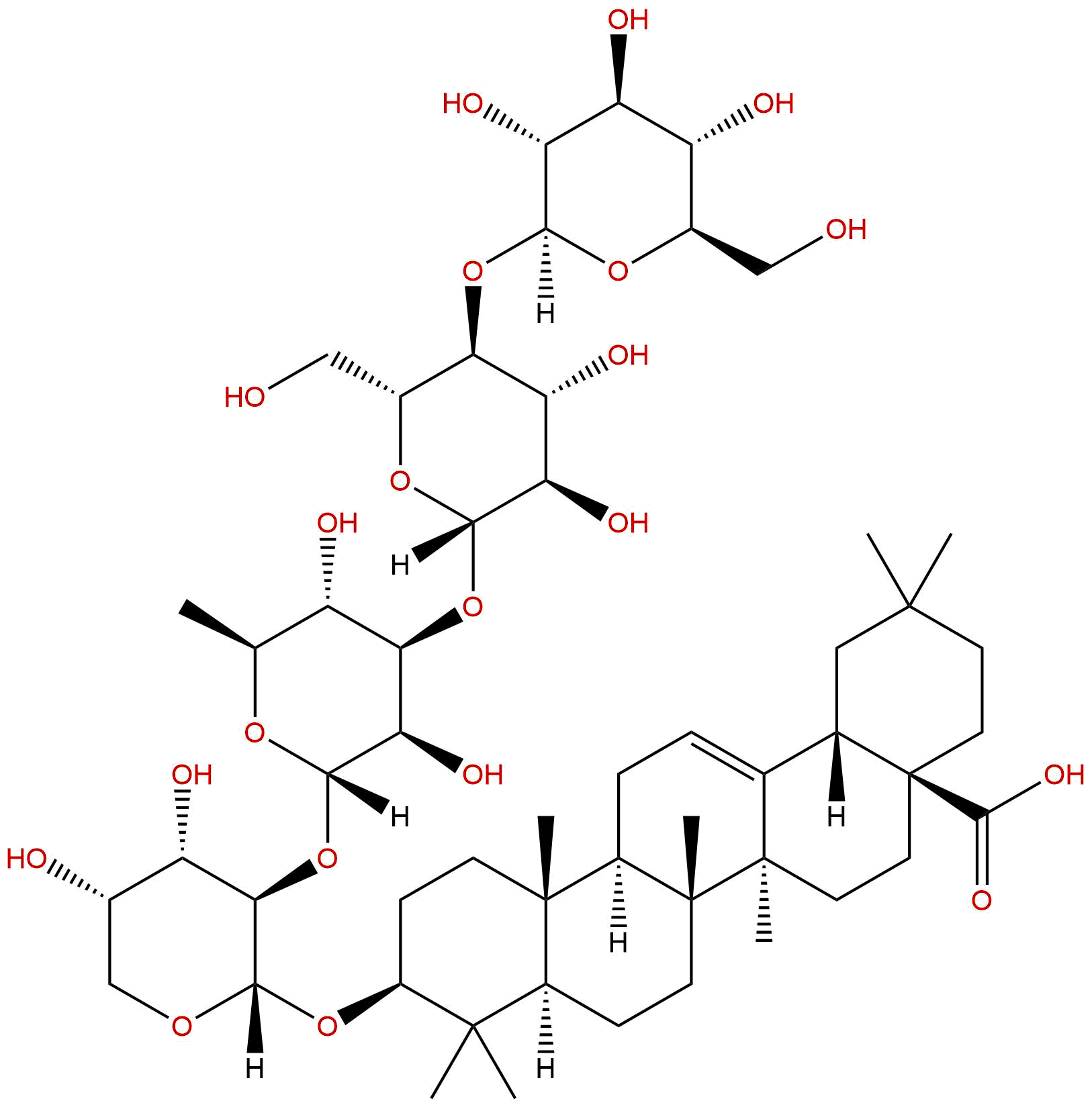
Baitouweng saponin E2 belongs to the pentacyclic triterpenoid saponin class, and its chemical structure has a typical oleane type triterpenoid skeleton. From the analysis of structural characteristics, this compound is composed of two parts: aglycone and glycone. The glycoside moiety is a derivative of oleanolic acid, which has the basic carbon skeleton of pentacyclic triterpenes, including five ring systems A, B, C, D, and E, with the E ring being a six membered ring. The structural features of disaccharide chain saponins are formed by connecting sugar chains at positions C-3 and C-28 of the aglycone.
Specifically, the sugar chain composition of Baitouweng saponin E2 is relatively complex. The sugar chain connected at the C-3 position is usually composed of monosaccharides such as glucose, xylose, arabinose, etc., which are linked by glycosidic bonds; The C-28 position is connected to another sugar chain, which may contain monosaccharide units such as glucose. This dual sugar chain structure endows the compound with unique physicochemical properties and biological activity. The molecular formula is C ₅∝ H ₈₆ O ₂, with a molecular weight of 1059.2500 Da, belonging to high molecular weight natural products.
In terms of physicochemical properties, Baitouweng saponin E2 exhibits typical saponin compound characteristics. Its lipophilic water partition coefficient (LogP) is 2.2366, indicating that the compound has a certain degree of lipophilicity, but also moderate hydrophilicity, which is consistent with its structural characteristics of containing multiple hydroxyl and sugar units in its molecule. The polar surface area (TPSA) is as high as 333.6700 Å ², reflecting the presence of a large number of polar groups in the molecule, such as hydroxyl and ether bonds. The water solubility parameter is 0.2134 mg/mL, which belongs to compounds that are difficult to dissolve in water. This property has a significant impact on their absorption and distribution in the body.
It is worth noting that the blood-brain barrier penetration ability of Baitouweng saponin E2 is relatively low, indicating that the compound mainly acts on peripheral tissues and has a relatively small impact on the central nervous system. In addition, the hERG inhibition test result was negative, indicating a low risk of cardiac toxicity; The Ames test result is 0.0, indicating that the compound did not exhibit mutagenicity in the bacterial recovery mutation test, and the preliminary safety evaluation is relatively optimistic. These physicochemical properties and safety parameters provide favorable conditions for further drug development of Baitouweng saponin E2.
Plant sources and extraction methods
The main source of Baitouweng saponin E2 is the Baitouweng plant in the genus Baitouweng of the Ranunculaceae family(Pulsatilla chinensis)Dry roots. There are about 30 species of plants in the genus Paeonia worldwide, mainly distributed in the northern temperate regions. In China, there are about 10 species, among which Paeonia is one of them(P. chinensis)The most commonly used. In addition, plants of the same genus such as the Korean white headed Weng(P. cernua)Xing'an White Headed Weng(P. dahurica)It may also contain similar saponin components, but there are differences in content and composition.
The harvesting of Bai Tou Weng medicinal herbs is usually carried out in spring or autumn, and those with thick and solid roots are preferred. Fresh roots can be used as extraction materials after being washed and dried. Research has shown that the content of triterpenoid saponins in the roots of white haired Weng is influenced by various factors, including plant growth years, harvest seasons, and production environment. Generally speaking, plants that have been growing for 2-3 years have higher saponin content, and the effective components of medicinal herbs harvested in autumn accumulate more fully.
The extraction and separation of saponins E2 from Paeonia lactiflora are usually carried out using a combination of modern chromatographic techniques and traditional solvent extraction methods. The classic extraction process includes: first, crushing the dried white haired Weng root, refluxing with ethanol or methanol for extraction, and concentrating the extract to obtain the total extract; Subsequently, the total extract was dispersed in water and extracted sequentially with petroleum ether, ethyl acetate, and n-butanol. Saponins were mainly enriched in the n-butanol layer; After the n-butanol extract is dried under reduced pressure, the high-purity Pulsatilla saponin E2 monomer is finally obtained through silica gel column chromatography, ODS reverse phase column chromatography, Sephadex LH-20 gel column chromatography, preparative high-performance liquid chromatography (prep HPLC) and other series of separation and purification steps.
In recent years, with the advancement of separation technology, some new extraction methods have also been applied to the preparation of saponins from Paeonia lactiflora. For example, ultrasound assisted extraction (UAE) and microwave-assisted extraction (MAE) can significantly improve extraction efficiency and shorten extraction time; High speed counter current chromatography (HSCCC) technology has demonstrated unique advantages in the separation of saponin compounds, enabling one-step separation and purification. In addition, macroporous adsorption resins (such as D101, AB-8, etc.) have been widely used in the enrichment and preliminary purification of saponin components, with advantages such as easy operation, low cost, and reusability.
It is worth noting that the content of Baitouweng saponin E2 in plants is relatively low, and it coexists with other structurally similar saponin components, which poses certain challenges for the preparation of high-purity monomers. Therefore, establishing an efficient, environmentally friendly, and scalable extraction and separation process is of great significance for the in-depth research and subsequent development of this compound.
Pharmacological activity research
Antitumor activity
The most notable pharmacological activity of Baitouweng saponin E2 is its anti-tumor effect. In vitro cytotoxicity experiments showed that the compound has inhibitory effects on various tumor cell lines, among which it is most sensitive to HL-60 human promyelocytic leukemia cells, with an IC50 value of only 2.6 μ g/mL (approximately 2.45 μ M). This activity level belongs to a strong level in natural products, indicating its potential for development as an anti leukemia drug.
In addition to HL-60 cells, saponins E2 from Paeonia lactiflora also exhibit certain cytotoxicity towards other hematological tumor cells. Research has shown that this compound can inhibit the proliferation of cell lines such as K562 (chronic myeloid leukemia) and U937 (histiocytic lymphoma), but its sensitivity is slightly lower than that of HL-60 cells. For solid tumor cells, such as breast cancer MCF-7 cells, lung cancer A549 cells, liver cancer HepG2 cells, etc., Pulsatilla saponin E2 also showed different degrees of inhibition, but its IC50 value is usually higher than the activity of leukemia cells, suggesting that this compound may have a relatively selective effect on hematological tumors.
Anti inflammatory and immune regulatory activity
In addition to its anti-tumor effect, Baitouweng saponin E2 also exhibits certain anti-inflammatory activity. Research has shown that this compound can inhibit the production of inflammatory factors such as tumor necrosis factor - α (TNF - α), interleukin-6 (IL-6), and nitric oxide (NO) in macrophages stimulated by lipopolysaccharide (LPS). This activity may be related to the clinical efficacy of traditional use of Bai Tou Weng in the treatment of febrile dysentery, as intestinal inflammation plays an important role in the pathogenesis of dysentery.
In terms of immune regulation, saponins E2 from Paeonia lactiflora have a bidirectional regulatory effect on the proliferation of T lymphocytes and B lymphocytes. At low concentrations, it may promote immune cell activation, while at high concentrations, it exhibits inhibitory effects. This concentration dependent immune regulatory property may play a unique role in tumor immunotherapy.
Other pharmacological activities
Preliminary studies have also found that saponins E2 from Paeonia lactiflora have antioxidant and antibacterial activities. This compound can scavenge DPPH free radicals and ABTS cationic free radicals, demonstrating a certain antioxidant capacity. In antibacterial experiments, saponins E2 from Paeonia lactiflora showed moderate inhibitory effects on common pathogenic bacteria such as Staphylococcus aureus and Escherichia coli. However, these activity studies are still in the preliminary stage and require more experimental data for validation.
Mechanism of action and molecular targets
The anti-tumor mechanism of Baitouweng saponin E2 involves multiple signaling pathways and molecular targets, among which the most crucial is the inhibition of STAT3 signaling pathway and the regulation of cellular autophagy process.
STAT3 signaling pathway inhibition
STAT3 (Signal Transduction and Transcription Activation Factor 3) is a key transcription factor in the JAK/STAT signaling pathway, which is continuously activated in various tumor cells, promoting cell proliferation, inhibiting apoptosis, inducing angiogenesis, and immune escape. Baitouweng saponin E2 has been proven to be an effective STAT3 inhibitor. Specific mechanism studies have shown that this compound can inhibit the phosphorylation and activation of STAT3, especially at the Tyr705 site, thereby blocking STAT3 dimerization, nuclear translocation, and transcriptional activation of downstream target genes.
The downstream target genes of STAT3 include various proteins related to cell survival and proliferation, such as MCL1 (myeloid leukemia factor 1) and BCL2 (B-cell lymphoma 2). MCL1 and BCL2 are both anti apoptotic proteins that are highly expressed in leukemia cells and closely associated with chemotherapy resistance. Baitouweng saponin E2 inhibits STAT3 activity, downregulates the expression levels of MCL1 and BCL2, thereby breaking the survival signal of tumor cells and inducing cell apoptosis. In addition, STAT3 also regulates the expression of matrix metalloproteinase 2 (MMP2), which is involved in the invasion and metastasis of tumor cells. The inhibition of STAT3 by paeoniflorin E2 may also have anti metastatic effects.
Autophagy regulation
Autophagy is an important mechanism for maintaining cellular homeostasis and plays a dual role in the occurrence and development of tumors. Baitouweng saponin E2 has been identified as an autophagy inhibitor. Research has found that this compound can block autophagic flux, leading to autophagic accumulation and inducing tumor cell death. This mechanism of action is different from traditional autophagy inducers, suggesting that paeoniflorin E2 may inhibit autophagy by interfering with the fusion of autophagosomes and lysosomes or lysosomal function.
There is a cross-talk between autophagy inhibition and the STAT3 signaling pathway. The activation of STAT3 can regulate the expression of autophagy related genes, and the autophagy process in turn affects the activity of STAT3. Baitouweng saponin E2 targets both pathways simultaneously, which may produce a synergistic anti-tumor effect. For HL-60 leukemia cells, sustained activation of STAT3 and abnormal regulation of autophagy are important features of their malignant phenotype, therefore inhibiting both targets simultaneously has significant therapeutic implications.
Other molecular targets
In addition to STAT3 and autophagy related targets, paeoniflorin E2 may also act on other molecular targets associated with tumors. According to the relevant targets listed in the compound information, the compound may affect the following signaling molecules:
- HIF1A(Hypoxia inducible factor 1 alpha): Stable expression in the hypoxic microenvironment of tumors, promoting angiogenesis and metabolic reprogramming. Baitouweng saponin E2 may reduce the adaptability of tumors to hypoxic environments by inhibiting the expression of HIF1A.
- TOP1 and TOP2A Topoisomerase I and II α are key enzymes involved in DNA replication and transcription processes, and are also targets of various chemotherapy drugs. Baitouweng saponin E2 may interfere with DNA topology by inhibiting topoisomerase activity, leading to DNA damage.
- MAPK1(Mitogen activated protein kinase 1): Involved in the RAS/RAF/MEK/ERK signaling pathway, regulating cell proliferation and differentiation. Baitouweng saponin E2 may affect the phosphorylation status of MAPK1, thereby interfering with proliferation signaling.
- ESR1(Estrogen receptor alpha) and CYP19A1(Aromatase): It is related to hormone dependent tumors such as breast cancer. Pulsatilla saponin E2 may play an anti breast cancer role by regulating estrogen signaling pathway.
The discovery of these targets is mainly based on computer-aided drug screening and preliminary experimental verification, and their specific mechanisms of action and clinical relevance need further in-depth research.
Molecular mechanism of inducing cell apoptosis
The mechanism by which saponins E2 from Paeonia lactiflora induce apoptosis in tumor cells involves both endogenous and exogenous apoptotic pathways. In HL-60 cells, a decrease in mitochondrial membrane potential, release of cytochrome c into the cytoplasm, and activation of caspase-9 and caspase-3 were observed after treatment with this compound, indicating activation of the endogenous apoptotic pathway. Meanwhile, the expression of death receptor pathway related proteins such as Fas and caspase-8 may also undergo changes. STAT3 inhibition leads to downregulation of MCL1 and BCL2, resulting in a relative increase in the activity of pro apoptotic proteins BAX and BAK, thereby promoting mitochondrial outer membrane permeabilization and initiating the apoptotic cascade reaction.
In addition, saponins E2 from Paeonia lactiflora may induce cell death by generating oxidative stress. After treatment with this compound, intracellular levels of reactive oxygen species (ROS) increased, antioxidant enzyme activity decreased, and the redox balance was disrupted, further promoting mitochondrial damage and apoptosis.
Evaluation of drug properties and pharmacokinetics
Analysis of drug properties parameters
The pharmacological evaluation of Baitouweng saponin E2 is based on its physicochemical properties, pharmacokinetic characteristics, and safety parameters. In terms of molecular weight, 1059.25 Da far exceeds the traditional Lipinski rule of molecular weight less than 500 Da, indicating that this compound may face challenges in oral absorption. The LogP value is 2.2366, which is within the ideal range (usually considered to have good absorption characteristics between 0-3), indicating that its lipid water distribution balance is relatively reasonable. However, TPSA is as high as 333.67 Å ², far exceeding the usual requirement of 140 Å ² or less for oral medications, mainly due to the large number of hydroxyl and sugar units in the molecule, which may lead to poor intestinal permeability.
The water solubility parameter of 0.2134 mg/mL belongs to the low solubility category, which may limit its dissolution and absorption in the gastrointestinal tract. The low penetration ability of the blood-brain barrier is unfavorable for treating central nervous system diseases, but for peripheral tumor treatment, this characteristic can reduce the side effects of the central nervous system. A negative hERG inhibition indicates a low risk of cardiac toxicity, while a negative Ames test suggests no genetic toxicity. These safety parameters provide favorable conditions for subsequent development.
Pharmacokinetic characteristics
At present, there is insufficient systematic research on the pharmacokinetics of Baitouweng saponin E2 in vivo, but its pharmacokinetic behavior can be inferred based on its structural characteristics and studies of similar compounds. Triterpenoid saponins usually have low oral bioavailability, mainly due to their high molecular weight, polarity, poor intestinal permeability, and possible influence by intestinal microbiota and P-glycoprotein efflux. Intravenous administration may be a more effective route of administration.
In terms of distribution in the body, saponins E2 from Paeonia lactiflora may be mainly distributed in the blood and vascular rich organs such as the liver, spleen, and lungs. Its binding rate with plasma proteins may be high, affecting the concentration and efficacy of free drugs. Metabolic pathways may include phase I metabolism (such as oxidation and reduction) and phase II metabolism (such as glucuronic acid binding) in the liver, as well as the hydrolysis of sugar chains by gut microbiota. The main excretion pathway may be bile excretion, with some being excreted through the kidneys.
safety evaluation
Preliminary safety evaluation shows that Baitouweng saponin E2 has good safety characteristics. Except for Ames test negative, the toxicity of this compound in normal cells is usually lower than that in tumor cells, showing a certain degree of selectivity. However, systematic toxicology studies, including acute toxicity, chronic toxicity, reproductive toxicity, etc., still need to be conducted. In addition, as a STAT3 inhibitor, long-term use may affect the role of STAT3 in normal physiological functions such as immune regulation and tissue repair, and potential immunosuppressive risks need to be addressed.
Clinical application prospects and prospects
Potential for anti leukemia treatment
Based on the potent inhibitory effect of paeoniflorin E2 on HL-60 leukemia cells and its unique dual inhibition mechanism of STAT3/autophagy, this compound has important development value in the treatment of acute promyelocytic leukemia (APL) and acute myeloid leukemia (AML). The chemotherapy drugs currently used in clinical practice, such as cytarabine and anthracycline drugs, have serious toxic side effects and resistance issues. Paeonia lactiflora saponin E2, as a natural product, may provide a new treatment option.
Of particular note is the sustained activation of STAT3 in leukemia stem cells, which is closely associated with disease recurrence and drug resistance. Paeonia lactiflora saponin E2, as a STAT3 inhibitor, may target leukemia stem cells and reduce the risk of recurrence. In addition, autophagy inhibition can enhance the sensitivity of leukemia cells to chemotherapy drugs, suggesting that the combination of paeoniflorin E2 and existing chemotherapy drugs may have a synergistic effect.
Combination therapy strategy
The combination application of Baitouweng saponin E2 with other anti-tumor drugs is an important research direction in the future. Based on its mechanism of action, possible combination therapy strategies include:
- Combined with BCL2 inhibitors Like Venetoclax, both target the anti apoptotic protein BCL2 family and may produce a synergistic pro apoptotic effect.
- Combined use with chemotherapy drugs The autophagic inhibition effect of saponins E2 from Paeonia lactiflora, such as cytarabine and daunorubicin, may enhance the cytotoxicity of chemotherapy drugs.
- Combined with immune checkpoint inhibitors STAT3 inhibition can enhance anti-tumor immune response, and combination with PD-1/PD-L1 inhibitors may improve the efficacy of immunotherapy.
Structural optimization and drug design
As a natural product lead compound, the structural optimization of Baitouweng saponin E2 is a key pathway to enhance its medicinal properties. Possible optimization strategies include:
- Sugar chain modification Modify sugar chains through enzymatic or chemical methods, such as removing some sugar groups and changing the way sugar chains are connected, to reduce molecular weight and polarity and improve oral absorption.
- Glycoside structure modification Introducing functional groups such as hydroxyl, carboxyl, halogen, etc. at specific positions of the oleanolic acid skeleton to enhance interaction with the target protein.
- Prodrug design Prepare saponins E2 from Paeonia lactiflora as prodrugs, such as phosphate ester prodrugs and amino acid ester prodrugs, to improve water solubility and oral bioavailability.
- Nanoformulation development Using nano delivery systems such as liposomes, polymer nanoparticles, and micelles to improve drug solubility, stability, and targeting.
Challenges and Countermeasures
Despite the excellent anti-tumor activity and safety characteristics of Baitouweng saponin E2, its clinical translation still faces many challenges:
- Low oral bioavailability This is a common issue among triterpenoid saponins. Developing new drug delivery systems (such as nanomaterials, liposomes) or exploring non oral routes of administration (such as intravenous injection, transdermal delivery) are possible solutions.
- The preparation process is complex Low content in natural products makes separation and purification difficult. Developing biosynthetic or chemical synthesis methods, as well as optimizing extraction processes, are key to ensuring drug supply.
- The mechanism of action still needs to be further explored The specific molecular details of STAT3 and autophagy inhibition, as well as their interactions with other targets, need further clarification.
- Insufficient preclinical research The pharmacokinetics, toxicology, and pharmacodynamics of the system still need to be studied, especially in terms of in vivo anti-tumor activity and safety evaluation.
Future research directions
Looking ahead to the future, research on saponins E2 from Paeonia lactiflora should focus on the following directions:
- In depth mechanism research Using omics techniques such as proteomics and transcriptomics to systematically reveal its functional network, identify key targets and signaling pathways.
- Pharmacokinetic optimization Conduct pharmacokinetic studies in vivo, clarify absorption, distribution, metabolism, and excretion characteristics, and provide a basis for formulation design.
- Research on Structure Activity Relationship By synthesizing a series of derivatives and systematically studying the effects of structural modifications on activity and drug formation.
- In vivo efficacy evaluation Establish multiple animal models of tumors and evaluate the anti-tumor effects of Bai Tou Weng saponin E2 monotherapy and combination therapy.
- safety evaluation Conduct systematic toxicology research, including acute toxicity, long-term toxicity, reproductive toxicity, etc.
- Formulation development Explore new delivery systems such as nanomaterials, liposomes, and cyclodextrin inclusion complexes to improve drug solubility and bioavailability.
Conclusion
As a triterpenoid saponin monomer isolated and identified from traditional Chinese medicine Bai Tou Weng, Bai Tou Weng saponin E2 has shown important research value in the field of anti-tumor drug development due to its unique dual inhibition mechanism of STAT3 and autophagy. This compound has strong cytotoxicity against HL-60 leukemia cells and acts on multiple tumor related targets such as MCL1, BCL2, MMP2, HIF1A, TOP1, TOP2A, MAPK1, ESR1, CYP19A1, forming a complex anti-tumor network.
From a chemical structure perspective, Baitouweng saponin E2 exhibits typical characteristics of disaccharide chain triterpenoid saponins, with a large molecular weight and high polarity. This is not only the structural basis for its biological activity, but also the challenge it faces in developing medicinal properties. Preliminary safety evaluation shows that it has low cardiac toxicity and no mutagenicity, providing favorable conditions for subsequent development. However, issues such as low oral bioavailability and complex preparation processes still need to be overcome.
Looking ahead to the future, the research on Baitouweng saponin E2 is in a transitional stage from natural product discovery to drug development. Through in-depth mechanism research, structural optimization, formulation innovation, and systematic preclinical evaluation, this natural product is expected to develop into a new candidate drug for the treatment of malignant tumors such as leukemia. Meanwhile, its unique dual inhibition mechanism of STAT3/autophagy also provides new ideas for the treatment of other STAT3 related diseases, such as inflammatory diseases and autoimmune diseases. With the continuous advancement of modern medicinal chemistry and pharmacology technology, the development prospects of Baitouweng saponin E2 and its derivatives are worth looking forward to.