Introduction/Overview
Natural products have always been an important source of innovative drug discovery, especially in the field of anti-tumor drugs. Many first-line clinical drugs such as paclitaxel and vincristine are derived from plants. Ardisia plants, as traditional medicinal resources, are used in folk medicine in many regions of Asia to treat inflammation, infections, and tumor diseases. Their rich secondary metabolites, especially triterpenoid saponins, exhibit a wide range of biological activities. Ardisicrispin B (CAS: 112766-96-8) is a complex and high molecular weight triterpenoid saponin isolated from this genus of plants. In recent years, with the in-depth study of its pharmacological activity, Bai Liang Jin Su B has shown excellent anti-tumor potential. Its effects involve inducing apoptosis, inhibiting invasion and metastasis, regulating key signaling pathways, and targeting multiple key proteins including MCL1, STAT3, TOP1/2A, which has attracted widespread attention in the fields of pharmacology and medicinal chemistry. This article aims to systematically review the chemical structure, plant origin, pharmacological activity, mechanism of action, and pharmacological characteristics of Bai Liang Jin Su B, in order to provide comprehensive scientific references for the in-depth research of this compound and the development of future anti-tumor drugs.
Chemical structure and physicochemical properties
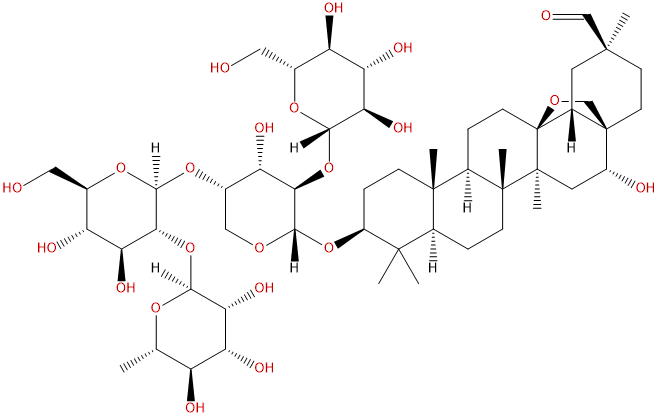
Bai Liang Jin Su B is an oleane type pentacyclic triterpenoid saponin, with a molecular formula of C ₅₄ H ₈₆ O ₂ ₄ and a molecular weight of up to 1075.2490 Da, belonging to the category of large molecule natural products. The core of its structure is the oleanolic acid glycoside, which is connected to complex oligosaccharide chains through glycosidic bonds at positions C-3 and C-28, respectively. Typical sugar units may include glucose, xylose, arabinose, arabinose, etc. The composition, connection sequence, and position of these sugar chains are important structural foundations for their high polarity and biological activity.
From the analysis of parameters related to drug properties, Bai Liang Jin Su B exhibits typical polar macromolecular saponin characteristics. Its topological polar surface area (TPSA) is as high as 342.9000 Å ², mainly attributed to the numerous hydroxyl and glycosidic oxygen atoms in the molecule, indicating its strong ability to form hydrogen bonds. The calculated lipid water partition coefficient (LogP) value is 1.7540, indicating that the molecule as a whole exhibits a certain degree of lipophilicity, which is related to its hydrophobic triterpenoid parent nucleus. However, the large hydrophilic sugar chain greatly balances its hydrophobicity, making it actually appear as an amphiphilic molecule. Its water solubility value is 0.1381, belonging to the category of slight solubility, which poses certain challenges for the development of formulations. The molecular weight far exceeds the 500 Da upper limit of the conventional "Ro5" principle, indicating that its oral bioavailability may be low and difficult to cross the blood-brain barrier (predicted as low permeability). In terms of early safety indicators, existing data predict that there is no significant risk of hERG potassium channel inhibition (hERG inhibition: No), and the Ames test result is 0.0, suggesting that it may not have a direct genotoxic mutagenesis risk, but further experimental verification is needed.
Plant sources and extraction methods
Bai Liang Jin Su B is mainly isolated from various plants in the Myrsinaceae family, such as Ardisia Ardisia crispa、Ardisia crenata(cinnabar root) and so on. These plants are widely distributed in East Asia and Southeast Asia, and their roots, leaves, or whole plants are often used in traditional Chinese medicine and folk therapy for clearing heat and detoxifying, promoting blood circulation and removing blood stasis, dispersing nodules and reducing swelling.
Its extraction and separation usually follow the classic process of natural product chemistry. Firstly, dry plant materials (such as roots and stems) are crushed and subjected to reflux extraction or cold soaking extraction using methanol, ethanol, or ethanol water mixed solvents to fully extract polar saponin components. The extract is concentrated under reduced pressure to obtain a crude extract. Subsequently, utilizing the amphiphilicity of saponins, the n-butanol water blending method is often used for preliminary enrichment, with saponins mainly concentrated in the n-butanol layer. Further purification relies on various chromatographic techniques. Usually, macroporous adsorption resins (such as D101, HP-20) are used for sugar removal and preliminary separation, followed by normal phase silica gel column chromatography and subdivision using gradient elution systems such as chloroform methanol water. Due to the complex structure of Bai Liang Jin Su B and the presence of multiple structurally similar saponin homologs, the final high-purity preparation often requires the use of high-performance separation methods such as reverse phase high performance liquid chromatography (RP-HPLC, commonly C18 column, with methanol water or acetonitrile water as mobile phase) or medium pressure liquid chromatography (MPLC). Structural identification involves the comprehensive use of nuclear magnetic resonance (NMR, including ¹ H, ¹ ³ C, COSY, HSQC, HMBC), mass spectrometry (MS, such as ESI-MS, HR-ESI-MS), and chemical degradation methods (such as acid hydrolysis to identify sugar composition).
Pharmacological activity research
A large number of in vitro and in vivo studies have confirmed that Bai Liang Jin Su B has significant and broad-spectrum anti-tumor activity, which is its core pharmacological effect.
1. Antitumor activity:
* In vitro cytotoxicity: Bailiang Jinsu B has strong proliferation inhibitory activity on a variety of human tumor cell lines, including lung cancer (such as A549), liver cancer (such as HepG2, SMMC-7721), breast cancer (such as MCF-7, MDA MB-231), colon cancer (such as HCT-116), leukemia (such as HL-60), etc. Its IC ₅₀ value is mostly at the micromolar (μ M) or even sub micromolar level, demonstrating potent cytotoxicity.
* Inducing cell apoptosis: Studies using flow cytometry (Annexin V/PI double staining) and Hoechst/PI staining have shown that berberine B can significantly induce apoptosis in tumor cells, exhibiting typical morphological features of apoptosis (such as chromatin agglutination and nuclear fragmentation) and biochemical markers (such as phosphatidylserine eversion).
* Inhibit cell migration and invasion: Through scratch healing experiments and Transwell chamber experiments, it was found that Bai Liang Jin Su B can effectively inhibit the migration and invasion ability of highly metastatic tumor cells (such as MDA-MB-231), indicating its potential for anti-tumor metastasis.
* In vivo anti-tumor effect: In nude mouse transplant tumor models (such as liver cancer H22, sarcoma S180, or human derived tumor xenograft models), intraperitoneal injection or gavage of berberine B can significantly inhibit tumor growth, reduce tumor weight, and have little effect on mouse body weight within a certain dose range, demonstrating certain anti-tumor effects and tolerability in vivo.
2. Other potential activities:
In addition to anti-tumor effects, some studies suggest that Bai Liang Jin Su B may also have anti-inflammatory, antioxidant, and other activities. These activities may be related to the microenvironment regulation in its anti-tumor effects, but the relevant research is not yet systematic and needs further exploration.
Mechanism of action and molecular targets
The anti-tumor effect of Bai Liang Jin Su B is the result of multi-target and multi pathway synergy, and its mechanism of action is complex and precise, mainly involving the following aspects:
1. Inducing mitochondrial pathway apoptosis and regulating Bcl-2 family proteins:
Bai Liang Jin Su B can induce a decrease in mitochondrial membrane potential, promote the release of cytochrome C, and activate the cascade reaction of caspase-9 and caspase-3, which is a classic endogenous apoptotic pathway. During this process, it is able to Downregulation of anti apoptotic proteins MCL1 and BCL2 The expression of or interference with its function, while possibly upregulating the expression of pro apoptotic proteins (such as Bax, Bak), disrupts the balance of apoptosis in cells, and strongly promotes tumor cells towards programmed cell death.
2. Inhibition of STAT3 signaling pathway:
Signal transducer and activator of transcription factor 3 (STAT3) is an important oncogenic transcription factor that is continuously activated in various tumors. Bai Liang Jin Su B has been proven to be effective Inhibition of STAT3 phosphorylation (activation)To prevent its nuclear translocation and binding to DNA, thereby downregulating the expression of a series of downstream target genes related to proliferation (such as Cyclin D1), survival (such as Survivors), and angiogenesis (such as VEGF), and comprehensively inhibiting the malignant phenotype of tumors at the transcriptional level.
3. Interference with DNA topoisomerase function:
Bai Liang Jin Su B can Inhibition of Topoisomerase I (TOP1) and Topoisomerase II α (TOP2A) The activity. These two enzymes are crucial for DNA replication, transcription, and chromosome separation. Inhibiting its function can lead to DNA single or double strand breaks that cannot be repaired in a timely manner, triggering DNA damage reactions and ultimately resulting in cell cycle arrest (often in the G2/M phase) and cell death.
4. Inhibit tumor invasion and metastasis related factors:
Bai Liang Jin Su B Energy Downregulation of Matrix Metalloproteinase 2 (MMP2) Expression and activity. MMP2 is a key enzyme that degrades extracellular matrix (ECM) and basement membrane, and inhibition of its activity can effectively weaken the invasion and metastasis ability of tumor cells. At the same time, it can also Inhibition of hypoxia inducible factor 1 alpha (HIF1A) The stability and activation of tumor cells interfere with their adaptation to hypoxic microenvironments and the generation of angiogenic signals.
5. Regulating kinase signaling and hormone related pathways:
The study also found that Bai Liang Jin Su B can affect Mitogen activated protein kinase 1 (MAPK1/ERK2) The activity of MAPK interferes with the MAPK/ERK signaling pathway, which is closely related to cell proliferation and survival. In addition, for hormone dependent tumors such as breast cancer, it may affect Estrogen receptor alpha (ESR1) Signal or Aromatase (CYP19A1) Its activity plays an anti-tumor role related to endocrine regulation.
In summary, Bai Liang Jin Su B forms a multidimensional and synergistic anti-tumor mechanism network by simultaneously acting on core targets of multiple key biological processes such as apoptosis regulation, signal transduction, DNA metabolism, invasion and metastasis. This is also the molecular basis for its highly efficient anti-tumor activity.
Evaluation of drug properties and pharmacokinetics
Although Bai Liang Jin Su B has significant pharmacological activity, its huge molecular weight and complex structure pose significant challenges to its drug development, and related research is still in the preclinical stage.
1. Absorption, distribution, metabolism, and excretion (ADME) characteristics:
* Absorption: As a highly polar and high molecular weight saponin, the oral bioavailability of berberine B is expected to be extremely low. Its ability to cross the intestinal epithelial cell membrane is limited, and it is susceptible to the influence of gastrointestinal pH and intestinal microbiota enzymatic hydrolysis (sugar chains may be hydrolyzed). Non oral routes (such as intravenous injection, intraperitoneal injection) may be a more feasible way of administration.
* Distribution: It is predicted that it is difficult to penetrate the blood-brain barrier (BBB permeability is low), which limits its application in central nervous system tumors, but may also reduce the risk of central neurotoxicity. Due to its amphiphilic nature, it may have a certain distribution in blood rich tissues such as the liver and spleen.
* Metabolism: As saponins, their metabolic pathways may involve hydrolysis (especially hydrolysis of glycosidic bonds), oxidation, binding, and other reactions. The liver may be the main metabolic organ, and the cytochrome P450 enzyme system (CYP450) may be involved in the metabolism of its glycosides. The hydrolysis of sugar chains may produce secondary aglycones and glycosides with varying levels of activity or toxicity.
* Excretion: The prototype drug and its metabolites may be mainly excreted through bile and kidneys. Its macromolecular properties may be more inclined towards bile excretion.
2. Challenges and optimization strategies for drug development:
* Solubility and permeability: Moderate to low water solubility and poor membrane permeability are the main bottlenecks. Formulation strategies such as making nanocrystals, liposomes, micelles, or cyclodextrin inclusion complexes can significantly improve their solubility and stability, and may target tumor tissues through enhanced permeability and retention (EPR) effects.
* Metabolic stability: Glycoside bonds may be unstable in the body. By structural modification, such as acylation of glycosides or synthesis of more active aglycone derivatives, its metabolic stability may be improved.
* Selective toxicity: Although the initial Ames test was negative, a comprehensive preclinical safety evaluation (acute toxicity, chronic toxicity, reproductive toxicity, etc.) has not yet been systematically conducted. Its potential toxicity to normal cells, especially to normal tissues with high expression of certain targets, needs to be carefully evaluated.
* Lack of pharmacokinetic research: At present, there is very limited publicly available data on the pharmacokinetic parameters of the Bai Liang Jin Su B system in vivo, such as half-life, clearance rate, absolute bioavailability, etc. This is a gap that must be filled to promote its development.
Clinical application prospects and prospects
As a multi-target anti-tumor lead compound, Bai Liang Jin Su B has broad clinical application prospects, but the road ahead is long and requires interdisciplinary collaboration.
1. Development strategy:
* Directly developed as a new type of anti-tumor drug: In response to its drug weakness, we will focus on conducting pharmaceutical research based on novel drug delivery systems (such as targeted nano formulations) to improve its pharmacokinetic behavior, reduce systemic toxicity, and enhance tumor targeting. At the same time, conduct systematic preclinical pharmacological, pharmacokinetic, and toxicological studies to provide a complete data package for its application for clinical trials.
* Structural optimization as a lead compound: By using its active aglycone or simplified structure as the core, rational medicinal chemical modifications are carried out with the aim of maintaining or enhancing activity while reducing molecular weight, improving lipid solubility and metabolic stability, and obtaining more "drug like" candidate drugs.
* Combination therapy research: Explore the combination therapy of Bai Liang Jin Su B with existing clinical anti-tumor drugs (such as chemotherapy drugs, targeted drugs, immune checkpoint inhibitors). Its unique multi-target mechanism may produce synergistic effects, reverse drug resistance, or reduce the dosage and toxic side effects of traditional drugs.
2. Potential and direction:
* Treatment of refractory/multidrug-resistant tumors: Its mechanism of action on the apoptotic pathway (MCL1/BCL2) and DNA damage repair (TOP1/2A) provides a new approach to overcome tumor drug resistance caused by abnormalities in these targets.
* Anti tumor metastasis: Its inhibition of metastasis related targets such as MMP2 and HIF1A makes it uniquely valuable in preventing and treating tumor metastasis.
* Examples of Modernization of Traditional Chinese Medicine: The in-depth study of Bai Liang Jin Su B is a successful example of discovering modern innovative drugs with clear molecular mechanisms from traditional medicinal plants, which helps to promote the modernization and international recognition of traditional Chinese medicine.
Future research should focus on: 1) using proteomics, chemical proteomics, and other technologies to more accurately map their direct targets; 2) Using patient derived organoids or humanized mouse models to validate their efficacy in more clinical contexts; 3) Accelerate the systematic preclinical evaluation that meets drug registration requirements.
Conclusion
Bai Liang Jin Su B is a complex and highly active triterpenoid saponin isolated from the traditional medicinal plant Bai Liang Jin. Its excellent anti-tumor activity stems from its multidimensional regulation of multiple key tumor related targets such as MCL1, STAT3, TOP1/2A, MMP2, etc. It can effectively induce apoptosis, inhibit proliferation, block the cycle, and weaken invasion and metastasis ability. Although its enormous molecular weight and poor pharmacological parameters (such as low water solubility and low blood-brain barrier permeability) pose serious challenges for subsequent development, this does not conceal its enormous value as an excellent lead compound. Through the structural optimization of modern medicinal chemistry, the application of innovative formulation technology, and a rational combination therapy strategy, Bai Liang Jin Su B is expected to be transformed into a new anti-tumor drug with clinical application prospects. The continuous and in-depth research on it not only helps to reveal the pharmacological substance basis of hundred taels of metal plants, but also provides important scientific basis and practical direction for exploring multi-target anti-tumor drugs from the treasure trove of natural products.