Introduction/Overview
Natural products, as an important source of drug discovery, play an irreplaceable role in the long history of human fight against diseases. The isolation and identification of bioactive secondary metabolites from traditional herbs, and elucidation of their pharmacological mechanisms, are important paradigms in modern medicinal chemistry and pharmacology research. Lucynoside E, as a natural saponin compound isolated from Cucurbitaceae plants, has gradually attracted widespread attention from researchers in recent years due to its potential application value in the treatment of inflammatory diseases, especially dermatitis.
Dermatitis, as a common skin inflammatory disease, has a complex pathogenesis involving the interaction of multiple factors such as genetics, environment, and immunity. Taking atopic dermatitis (AD) as an example, its core pathological features include skin barrier dysfunction, overactivation of Th2 type immune response, and persistent chronic inflammation. At the molecular level, multiple signaling pathways and cytokines are involved in the occurrence and development of dermatitis. Among them, Signal Transduction and Transcription Activation Factor 3 (STAT3) serves as a key node connecting extracellular signals and gene transcription, playing a central role in inflammatory response, cell proliferation, and differentiation. The complex inflammatory network is composed of pro-inflammatory cytokines such as tumor necrosis factor (TNF), interleukin-6 (IL6), and interleukin-1 β (IL1B), as well as cyclooxygenase-2 (PTGS2, COX-2) and chemokine CXCL8 (IL-8) regulated by the nuclear factor kappa B (NF - κ B) signaling pathway. In addition, Th17 cells and their secreted cytokines such as interleukin 17A (IL17A) and interleukin 22 (IL22) also play important roles in maintaining chronic skin inflammation and inducing the expression of antimicrobial peptides (such as DEFB4A, human β - defense factor 2). Therefore, the search for new compounds that can intervene in this complex inflammatory network through multiple targets and pathways has become an important direction for the development of dermatitis drugs.
Cucurbitacin E stands out in this context. Its unique chemical structure endows it with the potential to regulate multiple inflammation related targets. This review aims to systematically summarize the chemical characteristics, plant sources, extraction methods, pharmacological activities, mechanisms of action, medicinal properties, and clinical application prospects of luffa glycoside E, in order to provide comprehensive scientific basis for the in-depth research and development of this natural product.
Chemical structure and physicochemical properties
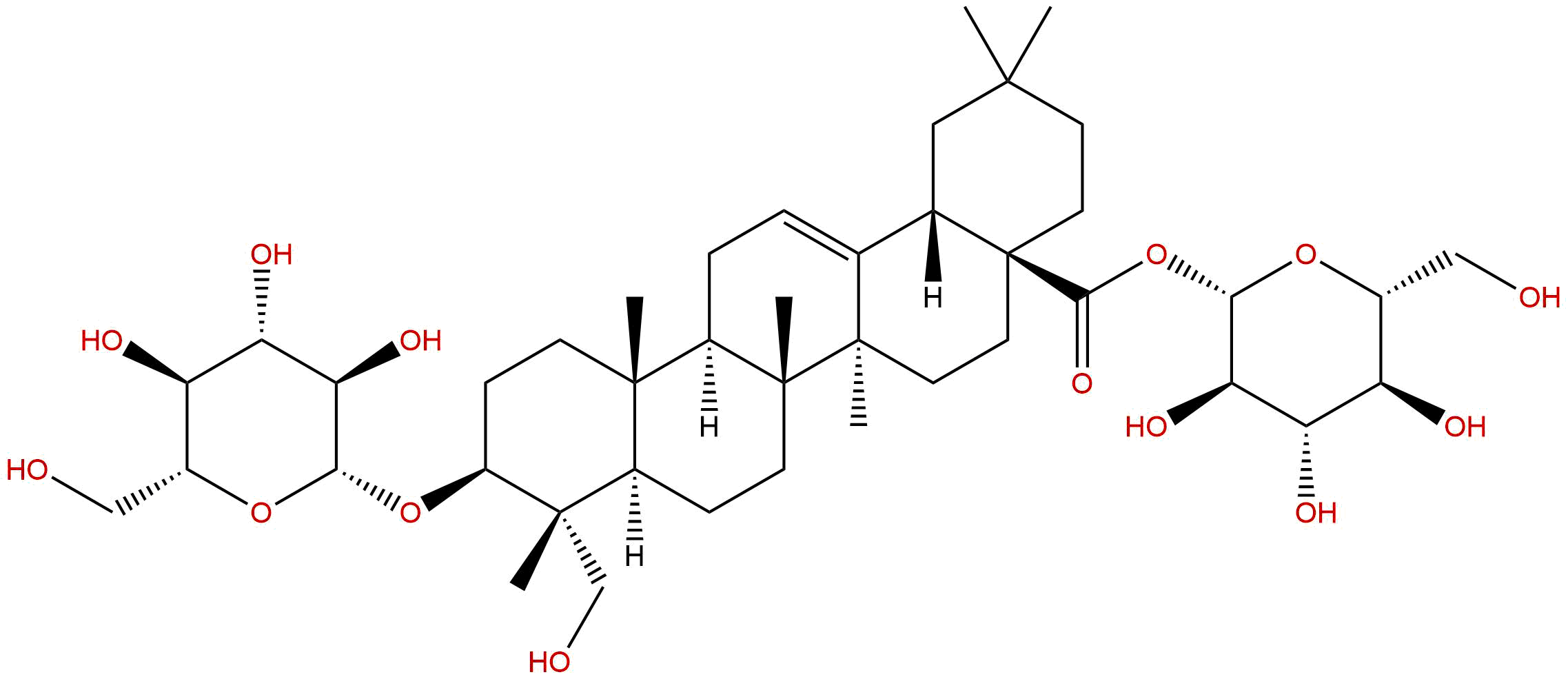
Lucynoside E is a typical tetracyclic triterpenoid saponin compound, and its chemical structure belongs to the Cucurbitane type triterpenoid glycoside. The basic skeleton of this type of compound is composed of 30 carbon atoms, with a parent nucleus structure of cyclopentane and polyhydrogen phenanthrene, and functional groups such as hydroxyl or carbonyl groups are often attached at positions C-3 and C-25. The structural feature of luffa glycoside E lies in its sugar chain portion, which is usually connected to specific hydroxyl groups of the aglycone by multiple monosaccharides (such as glucose, xylose, xylose, etc.) through glycosidic bonds. This glycosylation modification not only significantly increases the polarity and water solubility of the molecule, but also has a decisive impact on its biological activity and pharmacokinetic behavior.
From the perspective of physical and chemical properties, the molecular weight of luffa glycoside E is 796.9920 Da, which is a medium-sized natural product molecule. Its lipid water partition coefficient (LogP) is 2.5568, indicating that the compound has a certain degree of lipophilicity, but also moderate hydrophilicity, which provides possibilities for its transmembrane transport and interaction with biological targets. The topological polar surface area (TPSA) is as high as 236.0600 Å ², which is much higher than the recommended threshold for oral drugs (about 140 Å ²), mainly due to the large number of hydroxyl and glycosidic oxygen atoms in its molecules. A high TPSA value usually indicates that the compound is difficult to passively diffuse through the cell membrane, especially the blood-brain barrier (BBB). In fact, the evaluation of pharmacological parameters shows that its blood-brain barrier permeability is "low", indicating that luffarin E mainly acts on peripheral tissues rather than the central nervous system. This may be beneficial for the development of drugs to treat peripheral inflammatory diseases such as dermatitis, as it can reduce the risk of central nervous system related side effects.
Water solubility is a key parameter that affects the oral absorption and formulation development of drugs. The water solubility determination value of luffa glycoside E is 0.0550 mg/mL, which belongs to low solubility compounds. This contrasts with the presence of a large number of polar groups (such as hydroxyl groups) in its molecular structure, but the rigid structure of glycosidic bonds and intermolecular hydrogen bonding may limit its free dissolution in water. In addition, the hERG inhibition test result was' no ', indicating that the compound has a low potential risk in terms of cardiac safety. The Ames test result was 0.0, indicating that it did not exhibit mutagenicity in the bacterial recovery mutation test, suggesting a low risk of genetic toxicity. These physicochemical properties and preliminary safety assessments have laid an important foundation for the subsequent development of luffa glycoside E.
Plant sources and extraction methods
Cucurbitacin E is mainly derived from plants in the Cucurbitaceae family, especially from the genus Cucurbitaceae(Luffa)Plants, such as regular loofah(Luffa cylindrica)And Guangdong luffa(Luffa acutangula). As a common vegetable and traditional medicinal plant, luffa has a long history of application in folk medicine, including its fruit, leaves, vines, roots, and other parts. It is commonly used to treat inflammation, pain, edema, and other diseases. Modern plant chemistry research has shown that luffa is rich in various types of secondary metabolites, including triterpenoid saponins, flavonoids, polysaccharides, etc. Among them, cucurbitacin triterpenoid saponins are one of its main active ingredients, and luffa glycoside E is a representative compound.
The extraction of luffa glycoside E usually follows the classic process of natural product chemistry, with the core goal of efficiently and selectively enriching target compounds from plant materials. Firstly, crush the dried loofah raw materials (usually fruits or stems) to increase the solvent contact area. Subsequently, solvent extraction was used, and due to the polarity characteristics of luffa glycoside E, methanol, ethanol, or their aqueous solutions were often selected as extraction solvents. For example, using 70% -95% ethanol for reflux extraction or cold soaking extraction can effectively dissolve various polar components, including luffa glycoside E, from plant substrates. After filtration and vacuum concentration of the extract, crude extract is obtained.
The crude extract contains a large amount of impurities such as sugars, pigments, lipids, etc., which require preliminary separation and purification. Liquid liquid extraction is a commonly used first step, which uses different solvents (such as petroleum ether, ethyl acetate, n-butanol) to perform fractional extraction on the crude extract. Due to its glycosidic structure and high polarity, luffa glycoside E is usually enriched in the n-butanol extraction layer. After concentration in the n-butanol layer, a total saponin rich substance was obtained.
Further separation and purification of silk gourd glycoside E monomer require the use of various chromatographic techniques. Silica gel column chromatography is one of the most commonly used methods, which can achieve preliminary separation of saponins of different polarities by adjusting the ratio of eluent (such as chloroform methanol water system). For saponins with similar structures, reverse phase column chromatography (such as C18 silica gel) often provides better separation efficiency, and methanol water or acetonitrile water systems are commonly used as mobile phases. In addition, high-performance liquid chromatography (HPLC) technology, especially preparative HPLC, is the ultimate means of obtaining high-purity guar glycoside E monomer. By optimizing chromatographic conditions such as stationary phase, mobile phase composition, flow rate, detection wavelength, etc., precise separation and purification of target compounds can be achieved. The entire extraction and separation process typically requires real-time monitoring using thin-layer chromatography (TLC) or HPLC to ensure effective tracking and purity control of the target compound.
Pharmacological activity research
The pharmacological activity research of luffa glycoside E is currently in its early stages, but preliminary studies have revealed its potential in anti-inflammatory and immune regulation, especially in models related to dermatitis, showing interesting effects.
anti-inflammatory activity Inflammation is the core pathological process of dermatitis. Research has shown that luffa glycoside E can significantly inhibit the production of various pro-inflammatory mediators. In a macrophage model stimulated by lipopolysaccharide (LPS), treatment with cucurbitacin E can effectively reduce the release of nitric oxide (NO) and prostaglandin E2 (PGE2), which are key mediators of inflammatory response. Meanwhile, it can also downregulate the mRNA and protein expression levels of pro-inflammatory cytokines such as TNF - α, IL-6, and IL-1 β. These effects are closely related to the inhibition of NF - κ B signaling pathway by luffa glycoside E. NF - κ B is a core transcription factor that regulates the expression of various inflammatory genes. Cucurbitacin E inhibits the phosphorylation and degradation of I κ B α, preventing the translocation of NF - κ B p65 subunit to the nucleus, thereby blocking its transcriptional activity and ultimately reducing the production of downstream inflammatory factors.
Protective effect on dermatitis model Due to its strong in vitro anti-inflammatory activity, the anti dermatitis effect of luffa glycoside E in animal models has also received attention. In the classic mouse model of atopic dermatitis induced by 2,4-dinitrochlorobenzene (DNCB), local or oral administration of luffarin E can significantly reduce the severity of skin lesions, manifested as a decrease in erythema, edema, desquamation, and scratch marks. Histopathological analysis showed that the thickening of the epidermis and infiltration of inflammatory cells in the dermis of mice treated with luffa glycoside E were significantly improved. In addition, luffa glycoside E can also reduce the levels of Th2 cytokines (such as IL-4, IL-13) and Th17 cytokines (such as IL-17A, IL-22) in skin lesions, and regulate the levels of immunoglobulin E (IgE) in serum, indicating its regulatory effect on adaptive immune response.
The impact on skin barrier function Dysfunction of the skin barrier is an important factor in the occurrence and aggravation of dermatitis. Cucurbitacin E may improve this condition by upregulating the expression of skin barrier related proteins. Preliminary studies have shown that treatment with cucurbitacin E can increase the expression of filaggrin and Loricrin in keratinocytes, which are key structural proteins that form the stratum corneum barrier. In addition, it can promote the synthesis of ceramides, further strengthening the lipid barrier of the skin. These effects collectively help repair damaged skin barriers, reduce water loss, and prevent the invasion of external allergens.
Other potential activities In addition to anti-inflammatory and skin barrier repair effects, luffa glycoside E may also have antioxidant activity. The multiple hydroxyl groups in its molecular structure endow it with the ability to scavenge free radicals, thereby reducing oxidative stress damage to skin cells. Oxidative stress and inflammatory response mutually promote each other and are important links in the pathological process of dermatitis. Therefore, the antioxidant effect of luffa glycoside E may synergize with its anti-inflammatory effect, jointly exerting a therapeutic effect on dermatitis.
Mechanism of action and molecular targets
The molecular mechanism of silk gourd glycoside E in treating dermatitis is multi-layered and multi-target, with its core being the precise regulation of the inflammatory signaling network. According to existing research, its mechanism of action mainly involves the following aspects and is highly correlated with the given targets (STAT3, TNF, PTGS2, NFKB1, IL6, IL1B, CXCL8, IL17A, IL22, DEFB4A).
1. Inhibit the NF - κ B signaling pathway (targets: NFKB1, TNF, PTGS2, IL6, IL1B, CXCL8):
NF - κ B is the central regulator of inflammatory response. Cucurbitacin E inhibits the activity of upstream kinases (such as IKK), preventing the phosphorylation and degradation of I κ B α, thereby binding NF - κ B (composed of p50 and p65 subunits, NFKB1 encodes p105 and forms p50 after processing) in the cytoplasm, preventing it from entering the nucleus to initiate transcription of downstream genes. This mechanism directly leads to downregulation of the expression of its target genes, including:
- TNF Encoding tumor necrosis factor - α, it is a key cytokine that initiates and amplifies the inflammatory cascade.
- PTGS2 Encoding cyclooxygenase-2, it catalyzes the synthesis of prostaglandin E2 and is an important mediator of inflammation and pain.
- IL6 Encoding interleukin-6, a pleiotropic cytokine involved in acute phase response and chronic inflammation.
- IL1B Encoding interleukin-1 β, another key pro-inflammatory cytokine that mediates fever and inflammatory responses.
- CXCL8 Encoding chemokine IL-8, it is the main chemokine recruited by immune cells such as neutrophils to the site of inflammation.
2. Regulating the STAT3 signaling pathway (targets: STAT3, IL17A, IL22, DEFB4A):
STAT3 is a key transcription factor that mediates signal transduction of various cytokines, such as IL-6 and IL-22. In dermatitis, excessive activation of STAT3 is closely related to the differentiation and functional maintenance of Th17 cells. Cucurbitacin E can inhibit the phosphorylation of STAT3 (Tyr705 site), thereby blocking its activation. The decrease in STAT3 activity directly affects the expression of downstream target genes:
- IL17A Encoding IL-17A, it is a characteristic cytokine of Th17 cells that plays a central role in recruiting neutrophils and inducing antimicrobial peptide expression.
- IL22 Encoding IL-22, mainly produced by Th17 and Th22 cells, it participates in skin barrier function and antibacterial defense, but overexpression is also associated with chronic inflammation.
- DEFB4A Encoding human β - defence-2 (hBD-2), an antimicrobial peptide produced by keratinocytes, its expression is regulated by STAT3 and NF - κ B. In dermatitis, the abnormally high expression of DEFB4A is associated with the persistence of inflammation. Cucurbitacin E may downregulate the overexpression of DEFB4A by inhibiting STAT3, thereby reducing inflammation.
3. Multi target collaborative regulation:
Cucurbitacin E not only acts on a single target, but also achieves extensive regulation of the inflammatory network by simultaneously inhibiting two key signaling pathways, NF - κ B and STAT3. This multi-target mode of action has significant advantages: on the one hand, it can simultaneously inhibit the production of multiple pro-inflammatory cytokines and chemokines, thereby more effectively blocking the inflammatory cascade reaction; On the other hand, it can regulate the Th1/Th2/Th17 immune balance and improve the skin immune microenvironment. For example, by inhibiting STAT3, the pathogenicity of Th17 cells can be weakened, and the production of IL-17A and IL-22 can be reduced; By inhibiting NF - κ B, cytokines such as TNF - α and IL-6 that promote Th17 differentiation can be reduced, forming negative feedback regulation.
4. Repair effect on the skin barrier:
The repairing effect of luffa glycoside E on the skin barrier may be partially achieved by regulating the differentiation and lipid metabolism of keratinocytes. Although the specific molecular mechanism is not fully understood, it may be related to the activation of nuclear receptors such as PPAR γ or the regulation of the MAPK signaling pathway. Improved skin barrier function can reduce the penetration of external stimuli and allergens, thereby lowering the activation threshold of the immune system and alleviating inflammatory reactions from the source.
In summary, luffa glycoside E inhibits the NF - κ B and STAT3 signaling pathways, downregulates the expression of a series of inflammation related genes such as TNF, PTGS2, IL6, IL1B, CXCL8, IL17A, IL22, DEFB4A, and synergistically improves skin barrier function, forming the molecular pharmacology basis for its treatment of dermatitis. This multi-target and multi pathway mechanism of action gives it unique advantages in treating complex diseases such as dermatitis.
Evaluation of drug properties and pharmacokinetics
To move luffa glycoside E from laboratory research to clinical application, a comprehensive evaluation of its drug like and pharmacokinetic properties is necessary. Based on the provided parameters and existing knowledge, a preliminary analysis of its pharmacological potential can be conducted.
Drugability assessment:
- drug-likeness The molecular weight (796.99 Da) and TPSA (236.06 Å ²) of luffa glycoside E both exceed the classical "Lipinski Five Rules" (molecular weight<500, TPSA<140 Å ²), which usually indicates that oral bioavailability may be low. However, many successful natural product drugs, such as cyclosporine and paclitaxel, also violate these rules, indicating the need for more flexible drug evaluation criteria for natural products. Its LogP value (2.56) is within the ideal range, indicating moderate lipophilicity.
- safety The preliminary safety assessment results are relatively optimistic. The hERG inhibition test was negative, reducing the risk of cardiac toxicity. The Ames test result is 0.0, indicating no direct mutagenicity. These data provide a positive starting point for subsequent toxicology research. Of course, a more comprehensive in vitro and in vivo toxicological evaluation is needed, including acute toxicity, subchronic toxicity, reproductive toxicity, etc.
- Water solubility Poor water solubility (0.055 mg/mL) is one of the main challenges faced by the medicinal properties of luffa glycoside E. Low water solubility can limit its oral absorption and pose difficulties for formulation development. The strategies to address this issue include: preparing in salt form (if there are ionizable groups in the molecule), using nanoformulation techniques (such as liposomes, nanoemulsions, solid lipid nanoparticles), forming inclusion complexes with cyclodextrin, or designing as prodrugs.
Pharmacokinetic prediction and challenges:
- absorb Due to its high molecular weight and polarity, the oral absorption of luffa glycoside E is expected to be poor, and its bioavailability may be low. Its absorption may mainly rely on passive diffusion and/or mediation by intestinal transporters such as OATP. The food effect may also significantly affect its absorption.
- distribution Due to its high TPSA and low BBB permeability, luffarin E is mainly distributed in plasma and extracellular fluid, making it difficult to enter the central nervous system. This is beneficial for its treatment of peripheral diseases such as dermatitis. Its distribution volume may be small.
- Metabolism As a saponin compound, luffa glycoside E may undergo extensive metabolism in the body. The sugar chain part may be hydrolyzed under the action of gut microbiota to generate secondary glycosides or aglycones (i.e. deglycosylation metabolism). Glycosides may undergo further biotransformation in the liver through phase I metabolism (oxidation, reduction, hydrolysis) and phase II metabolism (glucuronidation, sulfation). These metabolites may have pharmacological activity or toxicity different from the original drug.
- excretion Cucurbitacin E and its metabolites are mainly excreted through bile and feces. Due to its high molecular weight, its renal excretion may be limited. After bile excretion, some metabolites may be reabsorbed in the intestine (enterohepatic circulation), thereby prolonging their retention time in the body.
Improvement strategy:
In view of the above pharmacokinetic challenges, the development of topical preparations of luffaside E (such as cream, ointment, gel) may be a more realistic and efficient strategy. Local administration can directly deliver drugs to the skin target site, avoiding the problems of poor oral absorption and first pass effects, while reducing the risk of systemic exposure and side effects. By optimizing the formulation formula (such as using penetration enhancers, liposome carriers, etc.), the penetration and retention of luffa glycoside E in the skin can be improved, enhancing its local therapeutic effect.
Clinical application prospects and prospects
As a natural product with multi-target anti-inflammatory and skin barrier repair activities, luffa glycoside E has shown promising clinical application prospects in the treatment of dermatitis, especially atopic dermatitis.
1. As a candidate molecule for novel anti dermatitis drugs:
The current treatment of dermatitis mainly relies on glucocorticoids, calcineurin inhibitors (such as tacrolimus and pimecrolimus), and biologics (such as Dupilumab). However, these drugs have their own limitations: long-term use of glucocorticoids may lead to side effects such as skin atrophy and capillary dilation; Calcium regulated phosphatase inhibitors have a potential risk of lymphoma with a black box warning; Biological agents are expensive and require injection administration. As a natural small molecule compound, the multi-target mechanism of action of luffa glycoside E may provide a new therapeutic strategy, which is expected to maintain efficacy while reducing the side effects caused by long-term use. Especially its ability to simultaneously inhibit the NF - κ B and STAT3 pathways may have special value for patients with traditional treatment resistant or refractory dermatitis.
2. Develop topical preparations for local use:
In view of its low oral bioavailability and the characteristics of dermatitis as a local skin disease, the development of topical preparations of luffaside E (such as cream, gel, nano emulsion, etc.) is the most direct way to promote its clinical application. Local administration can maximize its local anti-inflammatory and barrier repair effects while minimizing systemic exposure. Future research needs to focus on optimizing the transdermal absorption performance of formulations, ensuring that active ingredients can effectively penetrate the stratum corneum and achieve effective therapeutic concentrations in the epidermis and dermis.
3. Combination use with other drugs:
Cucurbitacin E may have a synergistic effect with other anti dermatitis drugs. For example, when combined with low-dose glucocorticoids, it may enhance therapeutic efficacy through its multi-target mechanism and allow for a reduction in hormone dosage, thereby reducing hormone related side effects. Combined with moisturizers or skin barrier repair agents, it can synergistically improve skin barrier function. Future preclinical and clinical studies should explore the safety and efficacy of these combination therapy regimens.
4. Expand indications:
Given its anti-inflammatory and immunomodulatory effects, the potential indications for luffa glycoside E may not be limited to dermatitis. Other inflammatory diseases related to Th2/Th17 immune response, such as psoriasis, allergic rhinitis, asthma, inflammatory bowel disease, etc., may also become potential application areas. In addition, its antioxidant and anti-inflammatory properties also suggest its potential applications in skin photoaging, wound healing, and other areas.
Future research directions:
- In depth mechanism research It is necessary to use techniques such as gene knockout, RNA interference, proteomics, etc. to more accurately elucidate the direct molecular targets and complete signaling network of luffa glycoside E.
- Pharmacokinetic optimization Systematically study its absorption, distribution, metabolism, and excretion characteristics under different administration routes (especially transdermal administration), and explore strategies such as prodrug design and nano formulations to improve its pharmacokinetic properties.
- safety evaluation Conduct comprehensive toxicological studies, including assessment of local tolerance, skin sensitization, phototoxicity, reproductive and developmental toxicity, and carcinogenicity risk of long-term use.
- clinical trial After completing sufficient preclinical studies, rigorous clinical trials should be designed to systematically evaluate the clinical value of luguanosine E in patients with dermatitis, from phase I (safety, tolerability, pharmacokinetics) to phase II (dose exploration, preliminary efficacy) and then to phase III (confirmatory efficacy and safety).
Conclusion
Cucurbitacin E, a natural saponin derived from the traditional medicinal plant luffa, has shown significant research value and development potential in the treatment of inflammatory diseases, especially dermatitis, due to its unique chemical structure and multi-target pharmacological activity. This review systematically summarizes the research progress in chemistry, phytochemistry, pharmacology, mechanisms, and medicinal properties. It provides a new molecular perspective for the treatment of complex dermatitis pathology by inhibiting the NF - κ B and STAT3 signaling pathways, downregulating a series of key inflammatory targets such as TNF, IL6, IL1B, IL17A, IL22, and synergistically improving skin barrier function.
Despite challenges in drug development, particularly in terms of oral bioavailability and water solubility, the good preliminary safety characteristics and feasibility of local administration of luffa glycoside E provide a realistic pathway for its development. Future research should focus on further elucidating its mechanism of action, optimizing formulation techniques to overcome pharmacokinetic barriers, and verifying its safety and efficacy through rigorous preclinical and clinical studies. The research on luffa glycoside E not only enriches the knowledge treasury of natural product chemistry and pharmacology, but also brings new hope for the development of new anti-inflammatory drugs derived from traditional wisdom. With the continuous deepening of research, this natural product is expected to move from the laboratory to clinical practice, providing a safe and effective new option for patients suffering from dermatitis.