


Synonym name: Pectolinaroside; Neolinarin
Catalogue No.: BP1070
Cas No.: 28978-02-1
Formula: C29H34O15
Mol Weight: 622.576
Botanical Source: Cirsium spp., Kickxia elatine, Linaria spp. and Duranta plumieri
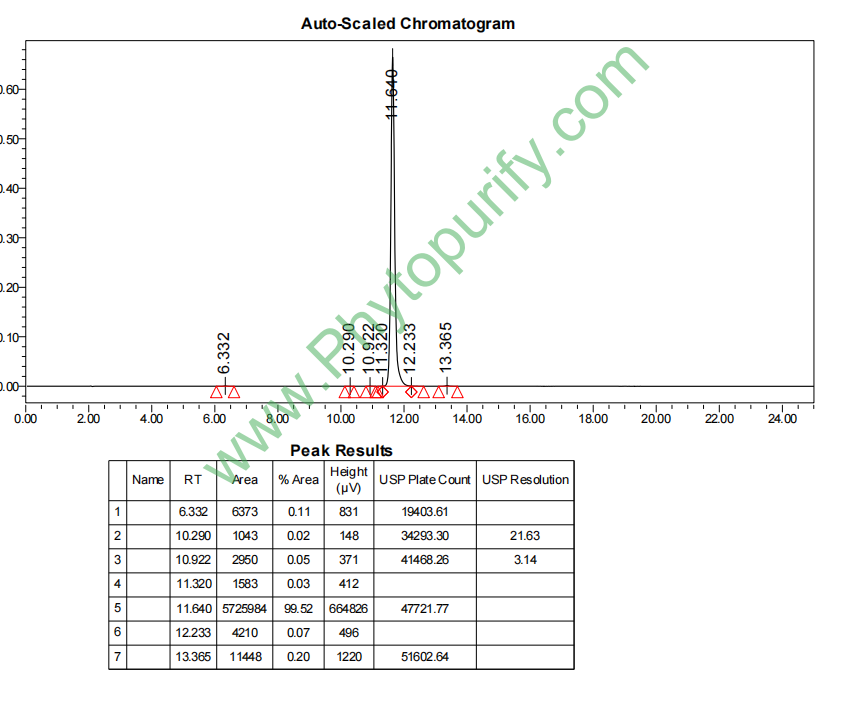
Purity: 95%~99%
Analysis Method: HPLC-DAD or/and HPLC-ELSD
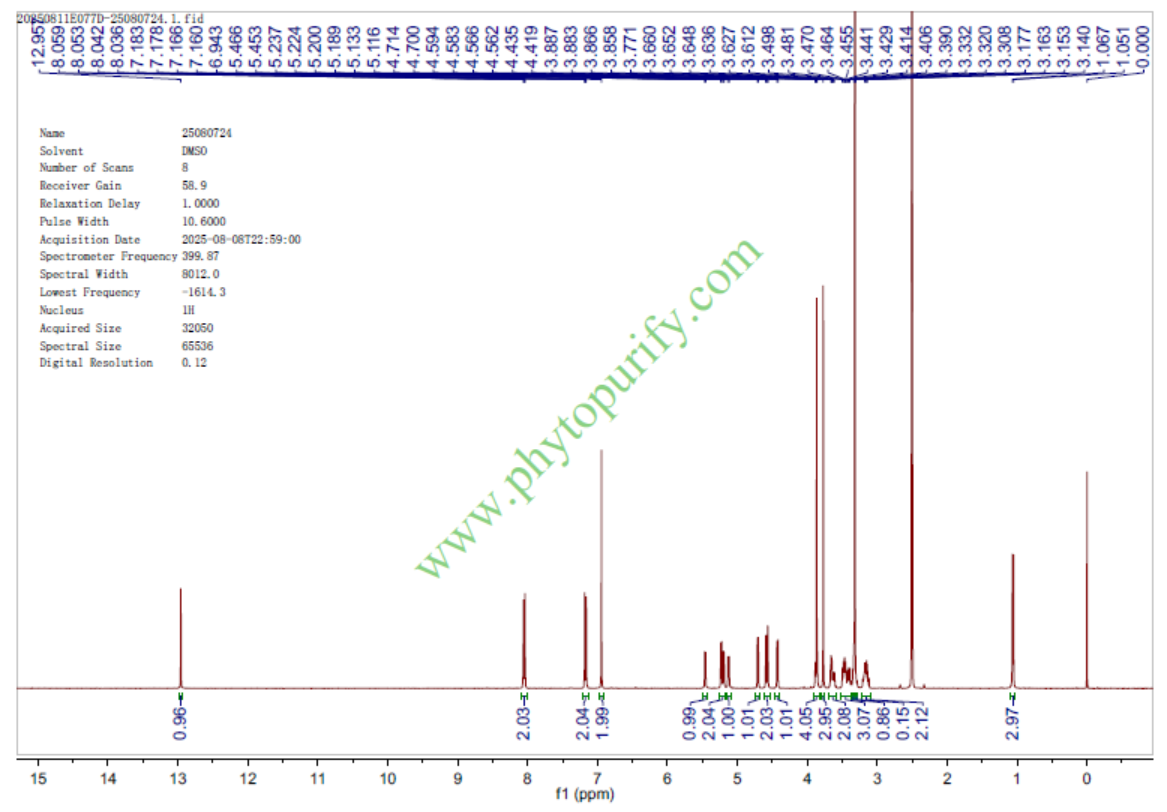
Identification Method: Mass, NMR
Packing: Brown vial or HDPE plastic bottle
Can be supplied from milligrams to grams.
For Reference Standard and R&D, Not for Human Use Directly.
Inquire for bulk scale.
HPLC of Pectolinarin
HNMR of Pectolinarin
Storage conditions:Short-term storage at 2~8℃, long-term storage at -20 ~ -80℃
227.2000
.2739
.2642
.9881
.4815
.2413
Low
77.9955
4.6609
Yes
No
Yes
No
No
No
0.6
Yes
No
No
Yes
Natural products, as an important treasure trove for drug discovery, play an irreplaceable role in the long history of human fight against diseases. Among them, flavonoids have attracted much attention due to their wide range of biological activities and low toxicity. Liuchuan fish leaf glycoside, also known as Pectolinarin, is a flavonoid carbon glycoside with significant biological activity, and its CAS number is 28978-02-1. In recent years, with the deepening of modern pharmacological research, the anti-inflammatory activity of Liupangolin and its potential therapeutic value in various inflammation related diseases have gradually become prominent. Research has shown that this compound can effectively inhibit the secretion of key pro-inflammatory factors such as interleukin-6 (IL-6) and interleukin-8 (IL-8), and reduce the production of prostaglandin E2 (PGE2) and nitric oxide (NO). Further mechanistic studies have revealed that it can induce cell apoptosis while inhibiting cell proliferation and inflammatory response by regulating important signaling pathways such as PI3K/Akt. This article aims to provide a systematic review of the chemical properties, plant sources, pharmacological activities, molecular mechanisms of action, pharmacological evaluation, and clinical application prospects of Liupangyu leaf glycosides, in order to provide comprehensive scientific references for the in-depth research and development of this natural product.
The chemical name of Liuchuan fish leaf glycoside is apigenin 7-O - β - D-glucopyranosyl (1 → 6) - β - D-glucopyranoside, which is a typical flavonoid carbon glycoside. Its molecular formula is C29H34O15 and its molecular weight is 622.5760. Structurally, its parent nucleus is apigenin, which is connected to a disaccharide chain consisting of two glucose units on the hydroxyl group at position 7. This glycosylation structure has a significant impact on its water solubility and biological activity.
In terms of physicochemical properties, the calculated lipid water partition coefficient (LogP) is 0.2739, indicating that the compound has moderate lipophilicity but overall leans towards hydrophilicity. Its topological polar surface area (TPSA) is as high as 227.2000 Å ², which is mainly attributed to the numerous oxygen atoms and sugar based structures in the molecule, indicating its good water solubility. The calculated value is about 0.9881 mg/mL. These properties collectively determine the distribution characteristics of salidroside in organisms: its ability to cross the blood-brain barrier is predicted to be "low", which limits its direct effects on central nervous system diseases, but may also reduce the potential risk of neurotoxicity. In addition, preliminary drug safety screening showed no significant inhibitory effect on hERG potassium channels (hERG inhibition: no), indicating a low risk of cardiac toxicity; The Ames test result is 0.6, indicating that its mutagenic potential is weak, providing a favorable safety data basis for its further development.
Liuchuan fish leaf glycoside is relatively widely distributed in nature and mainly exists in various Asteraceae plants. Its name "Cirsium japonicum glycoside" comes from the above ground part of the traditional Chinese medicine Cirsium japonicum DC. Cirsium japonicum has the effects of cooling blood, stopping bleeding, dispersing blood stasis, detoxifying and eliminating carbuncles. Liuchuangyu leaf glycoside is considered one of its important active ingredients. In addition, the compound has also been isolated and identified from Linaria plants, certain species of Salvia, and other plants in the Asteraceae family.
The extraction method follows the conventional process of natural product chemistry. Firstly, dry and crush the plant material, and then extract it using an appropriate solvent. Common extraction solvents include methanol, ethanol, or their aqueous solutions, and techniques such as heating reflux, ultrasound assistance, or microwave assistance are used to improve extraction efficiency. After filtration and concentration, the crude extract needs to be separated and purified through a series of chromatographic techniques, such as macroporous adsorption resin column chromatography, silica gel column chromatography, polyamide column chromatography, and high performance liquid chromatography (HPLC). Structural identification involves the comprehensive use of techniques such as ultraviolet spectroscopy (UV), infrared spectroscopy (IR), mass spectrometry (MS), and nuclear magnetic resonance spectroscopy (NMR, including 1H-NMR and 13C-NMR). In recent years, optimizing extraction processes (such as response surface methodology optimization) and developing green extraction technologies have become one of the research directions in this field to meet the needs of pharmacological research and potential development.
The pharmacological activity research of Liuchuan fish leaf glycoside mainly focuses on the field of anti-inflammatory, and extends to related antioxidant, anti-tumor and other aspects.
1. Anti inflammatory activity
This is the most core and extensively studied pharmacological effect of Liuchuan fish leaf glycoside. In various in vitro inflammatory models, such as the lipopolysaccharide (LPS) - induced macrophage RAW264.7 model, salidroside has shown strong anti-inflammatory effects. It can dose dependently inhibit the secretion of key pro-inflammatory cytokines IL-6 and chemokine IL-8. At the same time, it can significantly inhibit the production of inflammatory mediators PGE2 (produced by the cyclooxygenase pathway) and NO (produced by inducible nitric oxide synthase). These effects collectively alleviate the inflammatory cascade reaction, providing experimental evidence for the treatment of acute and chronic inflammatory diseases.
2. Antioxidant activity
As a flavonoid compound, Liupangyu leaf glycoside itself has the ability to scavenge free radicals. The phenolic hydroxyl group in its molecular structure can effectively neutralize reactive oxygen species (ROS) and reactive nitrogen species (RNS), reducing oxidative stress damage to cells. Oxidative stress and inflammatory processes are mutually causal, therefore their antioxidant effects and anti-inflammatory activities complement each other, together forming the basis of their cell protective effects.
3. Antitumor activity
Preliminary studies have shown that salidroside has inhibitory effects on the proliferation of certain cancer cell lines, such as liver cancer and colon cancer cells. Its anti-tumor mechanism is not only related to its anti-inflammatory properties (chronic inflammation is a promoting factor for tumor occurrence and development), but more direct evidence shows that it can induce tumor cell apoptosis. For example, in liver cancer research, treatment with Liuchuan fish leaf glycoside can lead to cell cycle arrest and changes in the expression of apoptosis related proteins.
4. Other potential activities
There are also studies reporting that Liuchuan fish leaf glycoside may have anti allergic, neuroprotective (although BBB permeability is low, it may act on the periphery or through indirect mechanisms), and anti fibrotic activities, but these studies are still in their early stages and require more evidence to support them.
The anti-inflammatory and other pharmacological effects of Liuchuan fish leaf glycoside involve the regulation of multiple signaling pathways and intervention of multiple molecular targets, forming a multi-target and multi pathway action network.
1. Inhibition of the PI3K/Akt signaling pathway
This is one of the clearer mechanisms currently being studied. The phosphatidylinositol 3-kinase/protein kinase B (PI3K/Akt) pathway is an important intracellular survival and proliferation signaling pathway that is often abnormally activated in inflammation and tumors. Liuchuan fish leaf glycoside can inhibit the activation of PI3K and the phosphorylation of downstream effector molecule Akt. The decrease in Akt activity can weaken its activation of pro-inflammatory transcription factors such as nuclear factor kappa B (NF - κ B), thereby reducing the expression of genes such as IL-6, TNF - α, and NOS2; On the other hand, it can regulate apoptosis related proteins (such as Bcl-2 family proteins, Caspase-3, etc.) and promote the initiation of cell apoptosis programs.
2. Regulation of NF - κ B signaling pathway
Nuclear factor kappa B (NF - κ B) is the core transcription factor in inflammatory response. Liuchuan fish leaf glycoside can inhibit the activity of I κ B kinase (IKK, encoded by IKBKB), prevent the phosphorylation and degradation of inhibitory protein I κ B, thereby causing NF - κ B (such as RELA/p65 subunit) to remain in the cytoplasm and unable to enter the nucleus to initiate the transcription of many inflammatory genes such as IL-6, TNF, NOS2, etc. This is the key molecular mechanism by which it inhibits the production of IL-6, TNF, and NO.
3. Impact on STAT3 signal
Signal transducer and activator of transcription factor 3 (STAT3) is another important pro-inflammatory and pro cancer pathway. Cytokines such as IL-6 can activate the JAK-STAT3 pathway. Liuchuan fish leaf glycoside may inhibit the production of IL-6 upstream or directly interfere with the phosphorylation and nuclear translocation of STAT3, thereby blocking its transcriptional activity.
4. Direct or indirect inhibition of inflammation related enzymes
Liuchuan fish leaf glycoside can downregulate the expression of inducible nitric oxide synthase (NOS2) and cyclooxygenase-2 (COX-2, encoded by PTGS2, which may also affect PTGS1/COX-1), which is directly related to its reduction of NO and PGE2 production. In addition, studies suggest that it may affect the activity of inflammasome components such as Caspase-1 (CASP1), thereby inhibiting the maturation of inflammatory factors such as IL-1 β.
5. Potential role of ion channels
Bioinformatics or preliminary experiments suggest that salidroside may regulate ion channels related to pain and neurogenic inflammation, such as transient receptor potential vanillic acid subtype 1 (TRPV1) and anchoring protein subtype 1 (TRPA1), providing clues for its potential analgesic applications.
In summary, Liupangyu leaf glycoside exerts its comprehensive biological effects of anti-inflammatory and apoptosis inducing by acting on multiple targets such as IKBKB, RELA, STAT3, NOS2, PTGS1, and converging to inhibit core inflammatory signaling pathways such as PI3K/Akt and NF - κ B.
Although Liuchuan fish leaf glycoside has shown good biological activity in vitro, its potential as a drug still requires systematic pharmacological evaluation and pharmacokinetic studies.
Analysis of drug properties parameters As mentioned earlier, its molecular weight is moderate, but its TPSA is high, which may limit its membrane permeability, consistent with its prediction of low blood-brain barrier permeability. Good water solubility is beneficial for formulation development, but oral bioavailability may face challenges due to first pass effects and intestinal absorption efficiency. The negative results of hERG and Ames are its early safety advantages.
Current status of pharmacokinetic research At present, there are relatively limited reports on the pharmacokinetic studies of the Liuchuan fish leaf glycoside system, which is often a bottleneck in the development of natural product monomers. Based on the structural characteristics of its flavonoid glycosides, it can be inferred that its possible in vivo processes include:
* absorb After oral administration, the gut microbiota or glycosidase on the intestinal mucosa may hydrolyze it into aglycones (apigenin) and glycosides, and the absorption of aglycones may be faster, but their activity may change.
* distribution Due to its strong hydrophilicity, it is expected to be mainly distributed in the blood and systemic circulation, with limited penetration into tissues, especially the central nervous system.
* Metabolism Mainly undergoing extensive phase II metabolism in the liver, such as glucuronidation and sulfation.
* excretion Metabolites are mainly excreted through the kidneys and urine.
Future research requires the use of technologies such as liquid chromatography-mass spectrometry (LC-MS/MS) to establish sensitive blood drug concentration detection methods, clarify their pharmacokinetic characteristics in experimental animals such as rats and dogs, as well as in humans, including key parameters such as absolute bioavailability, half-life, distribution volume, and clearance rate. In addition, its binding rate to plasma proteins and metabolic differences among different species are also important research topics.
The various pharmacological activities of Liuchuan fish leaf glycosides provide potential applications in multiple disease fields.
1. Inflammatory diseases This is the most direct application direction. Including rheumatoid arthritis, inflammatory bowel disease (such as ulcerative colitis), chronic hepatitis, dermatitis, asthma, etc. Its multi-target anti-inflammatory properties may have advantages over single target inhibitors, allowing for more comprehensive control of the inflammatory network.
2. Adjuvant therapy or chemoprevention for tumors Based on its induction of apoptosis and anti-inflammatory effects, Liupangyu leaf glycoside may be used as an adjuvant therapy for certain tumors closely related to chronic inflammation, such as liver cancer and colon cancer, or as a chemopreventive agent. Combined with conventional chemotherapy drugs, it may have the effect of increasing sensitivity or reducing inflammatory side effects.
3. Pain management If its regulatory effect on TRPV1/TRPA1 channels is confirmed, it may be developed as a novel analgesic for the treatment of neuropathic pain or inflammatory pain.
4. Metabolic disorders Low degree chronic inflammation is the common pathological basis of obesity, type 2 diabetes, atherosclerosis and other metabolic diseases. The anti-inflammatory activity of Liuchuan fish leaf glycoside may provide new ideas for the prevention and treatment of these diseases.
However, there are still many challenges to clinical application:
* Systematic pharmacodynamic validation More in vivo animal models of diseases (such as arthritis models, colitis models, tumor transplantation models) are needed to confirm the effectiveness of oral or injection administration.
* Pharmacokinetic optimization The pharmacokinetic properties of its natural form may not be ideal and may require structural modifications (such as preparing prodrugs or changing dosage forms) to improve its bioavailability and targeting.
* Comprehensive Security Assessment Systematic preclinical toxicology studies are required, including acute toxicity, long-term toxicity, reproductive toxicity, etc.
* Deep exploration of the mechanism of action Using chemical biology methods such as affinity fishing, molecular docking, and validation to more accurately identify its direct target and elucidate the synergistic relationship between its multiple targets.
As a natural flavonoid glycoside derived from traditional medicinal plants, Liuchuan fish leaf glycoside (Cirsium Cirrhoides) has become a promising candidate molecule in natural product pharmacology research due to its significant anti-inflammatory activity, clear multi-target mechanism of action, and good preliminary safety characteristics. It effectively regulates the production of inflammatory mediators such as IL-6, TNF - α, NO, PGE2, and induces pathological cell apoptosis by inhibiting key signaling pathways such as PI3K/Akt and NF - κ B, demonstrating broad application prospects in inflammatory diseases and tumors. However, the road from active compounds to candidate drugs and even marketed drugs is long and arduous. Future research needs to focus on deepening its systematic pharmacological evaluation, elucidating its complete pharmacokinetic profile, conducting comprehensive preclinical safety assessments, and actively exploring strategies to improve its drug properties through pharmaceutical or chemical means. Only through interdisciplinary and in-depth research can the modern medical value of this ancient phytochemical be fully unleashed, providing a solid scientific basis for the development of new anti-inflammatory drugs with independent intellectual property rights.
