


Product name: Pectolinarigenin
Synonym name: Hortensin
Catalogue No.: BP1069
Cas No.: 520-12-7
Formula: C17H14O6
Mol Weight: 314.293
Botanical Source: Olearia paniculata, Eupatorium semiserratum, Millingtonia hortensis and many other plants
Physical Description: Yellow powder
Type of Compound: Flavonoids
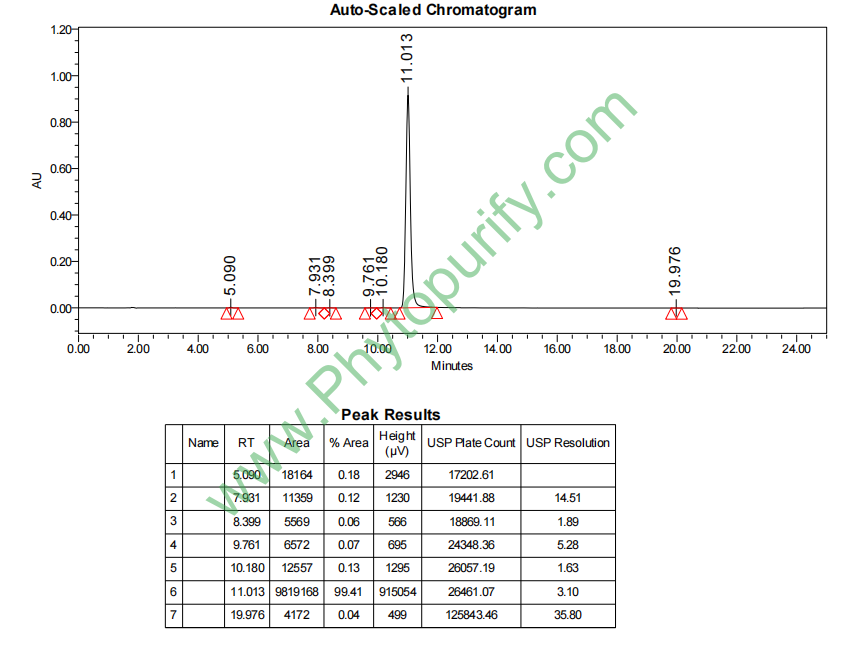
Purity: 95%~99%
Analysis Method: HPLC-DAD or/and HPLC-ELSD
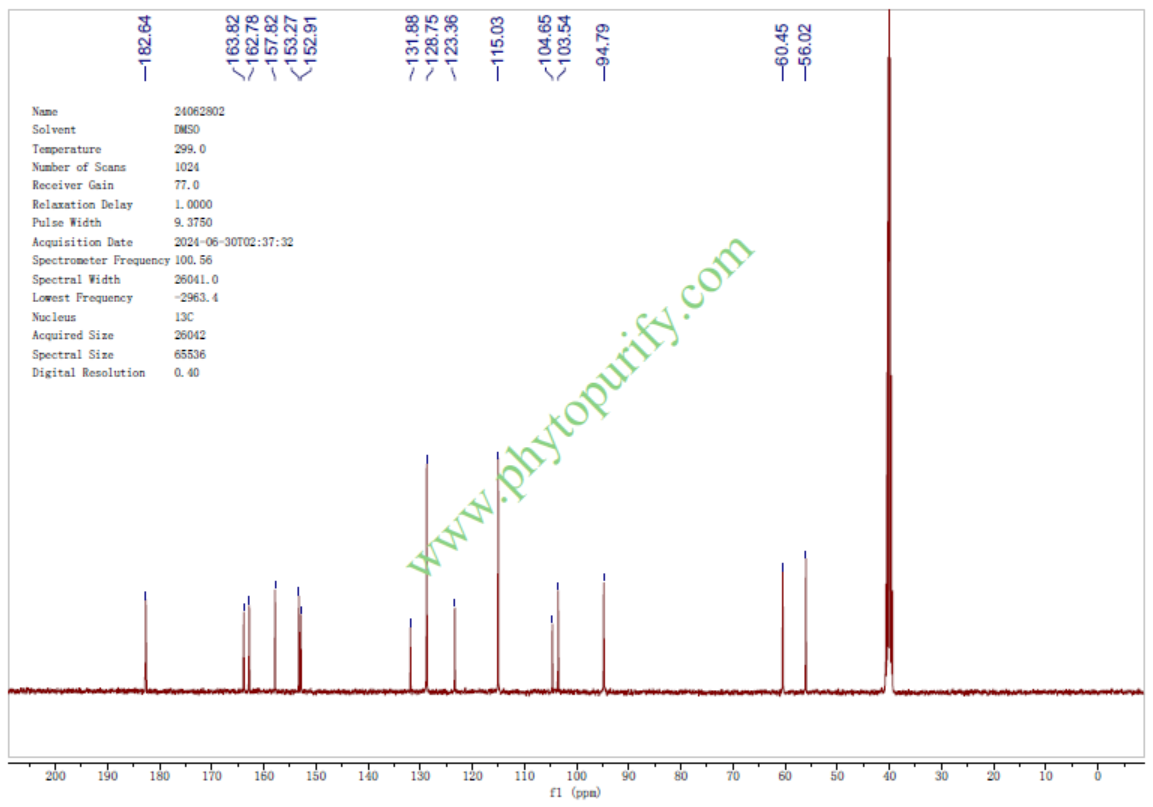
Identification Method: Mass, NMR
Packing: Brown vial or HDPE plastic bottle
Storage: Store in a well closed container, protected from air and light. Put into refrigerate or freeze for long term storage.
Whenever possible, you should prepare and use solutions on the same day. However, if you need to make up stock solutions in advance, we recommend that you store the solution as aliquots in tightly sealed vials at -20℃. Generally, these will be useable for up to two weeks.
The product could be supplied from milligrams to grams, up to kilograms
Inquire for bulk scale.
Descriptions:
Pectolinarin and pectolinarigenin exhibit hepatoprotective activity mainly via SOD antioxidant mechanism, can prevent the hepatic injury in rats caused by D-galactosamine.[1]
Pectolinarigenin and pectolinarin possess anti-inflammatory activity and that they may inhibit eicosanoid formation in inflammatory lesions. [2]
Pectolinarigenin inhibits breast cancer stem cell-like properties and lowers the chemoresistance of the cancer cells to chemotherapy, the results provide an insight into the mechanism of the anti-breast tumor effects and an experimental basis for the use of pectolinarigenin to enhance treatment of patients with breast cancer.[3]
Pectolinarigenin shows potent anti-proliferation activity by inducing apoptosis and downregulation of Bcl2 expression in MCF-7 breast cancer cell; protein expression of Bcl2 is almost completely inhibited upon the treatment with 25 mM pectolinarigenin. [4]
References:
[1] Yoo Y M, Nam J H, Kim M Y, et al. Biol Pharm Bull, 2008, 31(4):760-4.
[2] Lim H, Son K H, Chang H W, et al. Biol Pharm Bull, 2008, 31(11):2063-7.
[3] Lu M, Xu X, Lu H, et al. Tropi J Pharm Res, 2016, 15(3):547-53.
[4] Lu M, Kong Q, Xu X, et al. Tropi J Pharm Res, 2014, 13(2):225-8.
[5] Sakpakdeejaroen I, Juckmeta T, Itharat A. J Med Assoc Thai. 2014 Aug;97 Suppl 8:S76-80.
NMR of Pectolinarigenin
HPLC of Pectolinarigenin
Storage conditions:Short-term storage at 2~8℃, long-term storage at -20 ~ -80℃
89.1300
2.5370
2.3117
.0088
4.1849
18.0645
Low
92.0508
2.2763
Yes
No
Yes
No
Yes
No
0.6
No
No
Yes
No
Inflammation and oxidative stress are the common pathological basis of various chronic diseases, such as neurodegenerative diseases, cancer, metabolic syndrome, and autoimmune diseases. Traditional single target anti-inflammatory drugs, such as selective COX-2 inhibitors, often come with cardiovascular risks or limited efficacy. Therefore, developing multi-target natural products that can simultaneously act on multiple key nodes in the inflammatory network has become an important strategy for new drug development. Pectolinaringen, a naturally occurring flavonoid compound, has received widespread attention in the pharmacology community in recent years due to its unique COX-2/5-LOX dual inhibitory activity and multi pathway regulatory ability. This compound not only exhibits significant anti-inflammatory, antioxidant, anti-tumor, and neuroprotective activities, but also demonstrates therapeutic potential in various disease models. This article aims to provide a systematic review of the chemical properties, plant sources, pharmacological activities, molecular mechanisms of action, medicinal properties, and clinical application prospects of Liuchuan fish yellow pigment, in order to provide comprehensive scientific references for the in-depth research and development of this natural product.
Liuchuan fish flavin (CAS number: 520-12-7), chemical name 5,7-dihydroxy-4 '- methoxy-6-methylflavone, molecular formula C17H14O6, molecular weight 314.2930. Its core structure is the flavonoid nucleus, which is replaced by methyl and methoxy groups at the 6th and 4th positions of the A and B rings, respectively. This unique substitution pattern is crucial for its biological activity. From the analysis of its physical and chemical properties, the calculated lipid water partition coefficient (LogP) is 2.5370, indicating that it has moderate lipophilicity. The topological polar surface area (TPSA) is 89.1300 Å ², with low water solubility (approximately 0.0088 mg/mL). These parameters suggest that Liuchuangyu flavin has good membrane permeability, but its oral bioavailability may be affected by solubility and first pass effects. Its blood-brain barrier permeability is predicted to be "low", which poses a certain challenge for its action on central nervous system targets. However, some studies have shown its effectiveness in neuroinflammatory models, possibly by acting on peripheral or blood-brain barrier damaged areas. Importantly, preliminary pharmacological screening showed no significant risk of hERG channel inhibition (low arrhythmogenic potential), and the Ames test result was 0.6, indicating a low risk of mutagenicity and providing early positive signals for its safety assessment.
Liuchuanyu flavin is widely distributed in various Asteraceae plants and is one of the main active ingredients of its name derived from Linaria vulgaris, Cirsium, Saussurea, Anaphalis and other plants. In addition, it has also been found in plants such as the family Lamiaceae and the family Verbenaceae. Traditional extraction methods mainly rely on organic solvent extraction, commonly using methanol, ethanol, or acetone for reflux or ultrasonic extraction of plant dried materials. Then it is separated and purified by column chromatography technology (such as silica gel column, polyamide column or Sephadex LH-20 gel column), and high-purity monomer is obtained by combining high performance liquid chromatography (HPLC) or preparative thin layer chromatography (PTLC). In recent years, green extraction techniques such as ultrasound assisted extraction, microwave-assisted extraction, and supercritical fluid extraction have been explored and applied for the extraction of lutein from willow carp due to their high efficiency and low solvent consumption. The diversity of plant sources and optimization of extraction processes are the material basis for ensuring their subsequent pharmacological research and application development.
Liuchuan fish yellow pigment exhibits extensive and significant pharmacological activities, and its core functions can be summarized as follows:
Anti inflammatory and anti allergic activity Liuchuan fish yellow pigment is an effective dual inhibitor of COX-2 (cyclooxygenase-2) and 5-LOX (5-lipoxygenase). This characteristic enables it to simultaneously block the synthesis pathways of two key pro-inflammatory mediators, prostaglandins and leukotrienes. In the LPS induced macrophage and microglial inflammation model, it can dose dependently inhibit the production of inflammatory factors such as nitric oxide (NO), prostaglandin E2 (PGE2), tumor necrosis factor - α (TNF - α), interleukin-6 (IL-6), and increase the level of anti-inflammatory factor IL-10. In animal models, it can effectively alleviate xylene induced ear swelling in mice, carrageenan induced paw swelling, and ovalbumin induced allergic asthma, as well as alleviate airway inflammation and goblet cell proliferation.
Antioxidant and neuroprotective activities Liuchuan fish flavin has direct free radical scavenging ability and can promote the nuclear translocation of transcription factor Nrf2 (nuclear factor E2 related factor 2) by modifying Keap1 protein, thereby activating antioxidant response elements (ARE) and upregulating the gene expression of phase II detoxifying enzymes and antioxidant enzymes such as heme oxygenase-1 (HO-1) and quinone oxidoreductase 1 (NQO1). In astrocyte, microglial, and neuronal injury models, it exerts a protective effect on neurodegenerative diseases such as Parkinson's disease and Alzheimer's disease by inhibiting the overactivation of NF - κ B and MAPK (p38, JNK, ERK) signaling pathways, reducing neuroinflammation and oxidative stress.
Antitumor activity Salicin showed growth inhibition and apoptosis promoting effects on many cancer cell lines (such as gastric cancer, liver cancer, breast cancer, colon cancer, lung cancer). Its anti-tumor mechanism is complex, involving inducing cell cycle arrest in the G2/M phase, triggering mitochondrial pathway apoptosis (downregulating Bcl-2 and Mcl-1, upregulating Bax), inhibiting the STAT3 signaling pathway, suppressing the expression and activity of matrix metalloproteinases (MMP-2/9) to inhibit invasion and metastasis, and inducing protective autophagy. In gastric cancer research, it exerts anti-cancer effects by inhibiting the PI3K/Akt/mTOR pathway.
Renal protective effect In a mouse model of hyperoxaluria induced by glyoxylate, berberine can significantly reduce damage to renal tubular epithelial cells, deposition of calcium oxalate crystals, infiltration of inflammatory cells, and fibrosis. The mechanism is closely related to the inhibition of HIF-1 α (hypoxia inducible factor-1 α) activity, reduction of oxidative stress, and inflammation response.
Skin pigment regulation effect This compound can inhibit the synthesis of melanin in B16F10 melanoma cells induced by α - melanocyte stimulating hormone (α - MSH), and its effect is related to the inhibition of tyrosinase activity and MITF (microphthalmia associated transcription factor) expression, suggesting its potential application value in the treatment of melanosis, post inflammatory pigmentation, and melasma.
The multiple pharmacological activities of Liuchuan fish yellow pigment stem from its diverse regulation of cellular signaling networks. Its key mechanisms of action and molecular targets can be summarized as follows:
Double inhibition of inflammatory mediator synthesis As a dual inhibitor of COX-2/5-LOX, Liupangolin directly acts on these two key enzymes, reducing the production of PGE2 and leukotrienes (such as LTB4) from the source, which is the cornerstone of its potent anti-inflammatory effect.
Regulating key inflammation and survival signaling pathways:
Activate endogenous antioxidant defense system By covalently modifying the cysteine residues of Keap1 protein, Nrf2 is released from Keap1 binding and translocated to the nucleus, where it binds to ARE and initiates transcription of a series of antioxidant and cell protective genes.
Targeting specific disease-related targets:
Although the in vitro activity of Liuchuan fish yellow pigment is significant, its pharmacological properties still need to be systematically evaluated. Its moderate LogP value and lower TPSA are beneficial for its penetration of cell membranes, but poor water solubility and first pass metabolism may limit its oral absorption and bioavailability. Currently, publicly available pharmacokinetic data in vivo is relatively limited. There are research reports that in rats, after oral administration, Liupangyu flavin is rapidly absorbed, but its absolute bioavailability is not high. Its main metabolic pathways may include II combined reactions such as glucuronidation, sulfation, and O-demethylation. Its blood-brain barrier permeability prediction is low, which may require structural modifications to improve its ability to enter the brain or rely on its peripheral inhibitory effect on neuroinflammation in the application of central nervous system diseases. In terms of safety, preliminary hERG and Ames negative results are its advantages, but comprehensive preclinical safety evaluations for acute toxicity, long-term toxicity, reproductive toxicity, and other factors are still needed. Future research needs to focus on its formulation strategies (such as nanocrystals, liposomes, cyclodextrin inclusion complexes, etc.) to improve solubility and bioavailability, and systematically elucidate the relationship between its in vivo metabolites and activity.
The multi-target action characteristics of Liuchuan fish yellow pigment provide unique advantages in the treatment of complex diseases, and its clinical application prospects are mainly reflected in the following directions:
However, pushing it into clinical practice still faces challenges:First Further pharmacokinetic and toxicological studies are needed to clarify its therapeutic window.secondly Its water solubility and bioavailability urgently need to be optimized through prodrug strategies or novel drug delivery systems.Again It is necessary to validate its efficacy in animal models that are closer to human diseases, such as transgenic animal models and humanized models.finally It is necessary to explore its synergistic effects with other drugs in order to develop more effective combination therapy plans.
As a multi-target active molecule derived from plants, Liuchuanyu flavin exhibits remarkable comprehensive pharmacological activities in anti-inflammatory, antioxidant, anti-tumor, and organ protection aspects due to its core ability of dual inhibition of COX-2/5-LOX and fine regulation of multiple key signaling pathways such as NF - κ B, MAPK, Nrf2, PI3K/Akt. From traditional medicinal plants to modern molecular pharmacology research, the scientific value of Liupangolin is gradually being revealed. Although there are still obstacles such as solubility, bioavailability, and systematic toxicity evaluation on the path of drug conversion, its clear multi-target mechanism of action and good preliminary safety characteristics make it a highly valuable lead compound for development. Future research should focus on improving its pharmaceutical properties through rational drug chemical modifications and advanced formulation techniques, and conducting systematic preclinical and clinical studies to transform this ancient natural molecule into modern drugs that benefit patients, especially in addressing major health challenges such as neurodegenerative diseases, chronic inflammation, and tumors.
