Multi dimensional research progress on soybean saponin C: a triterpenoid compound of oleanane type
Introduction/Overview
Natural products, as an important source of drug discovery, play an irreplaceable role in the history of human fight against diseases. Triterpenes, as a class of structurally diverse and biologically active natural products, have long been of great concern to pharmaceutical researchers. Soyasapogenol C (CAS number: 595-14-2), as a typical oleane type pentacyclic triterpenoid compound, mainly exists in leguminous plants and is one of the glycoside forms obtained by hydrolysis of soybean saponins. In recent years, with the increasing demand for natural antiviral drugs, soybean saponin C has gradually entered the field of researchers due to its significant anti herpes simplex virus type 1 (HSV-1) activity.
Herpes simplex virus type 1 is a DNA virus that widely infects humans, with a global infection rate of up to 60% -80%. HSV-1 not only causes common diseases such as oral herpes and keratitis, but can also lead to life-threatening complications such as severe encephalitis in immunocompromised populations. The commonly used anti HSV drugs in clinical practice, such as acyclovir and other nucleoside analogues, although have definite therapeutic effects, the problem of drug resistance caused by long-term use is becoming increasingly prominent, and they are ineffective against latent viruses. Therefore, the search for natural anti HSV compounds with new mechanisms of action has become a hot topic in drug development. Soybean saponin C provides a new candidate molecule for the development of anti HSV drugs due to its unique chemical structure and clear antiviral activity.
This article will provide a systematic review of the research progress of soybean saponin C from multiple dimensions, including chemical structure, plant origin, pharmacological activity, mechanism of action, pharmacological evaluation, and clinical application prospects, in order to provide reference for the in-depth research and development of this compound.
Chemical structure and physicochemical properties
Chemical structural characteristics
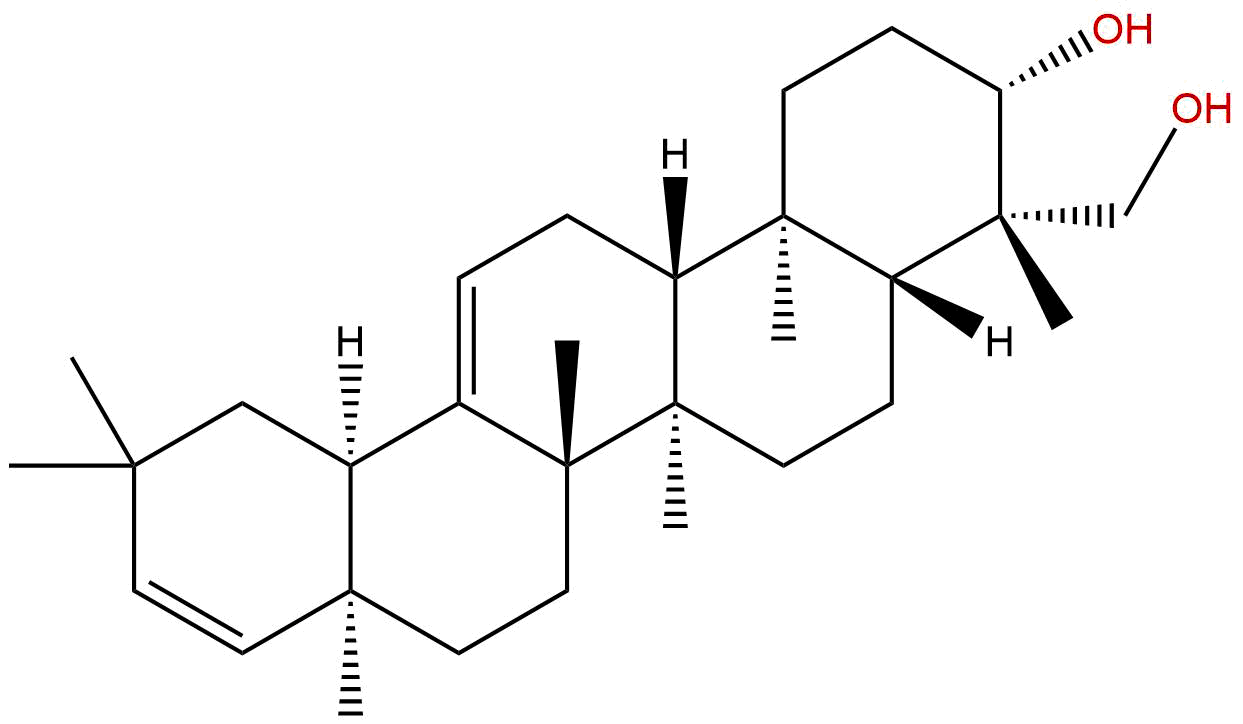
Soybean saponin C belongs to the oleane type pentacyclic triterpenoid compounds, and its basic skeleton is composed of six isoprene units, forming five fused ring systems A, B, C, D, and E. Compared with other oleanolic triterpenoids such as oleanolic acid, soybean saponin C has hydroxyl groups attached to the C-3 and C-21 positions, respectively, and carbonyl substitution at the C-22 position. This unique substitution pattern endows it with special biological activity. Its molecular formula is C30H48O2, with a molecular weight of 440.7120 g/mol. The structure contains multiple chiral centers and has a clear three-dimensional spatial configuration.
From the perspective of structure-activity relationship, the oleane skeleton of soybean saponin C provides a rigid hydrophobic core, while C-3 hydroxyl and C-22 carbonyl groups act as hydrogen bond donors and acceptors, which may participate in interactions with target proteins. The presence of C-21 hydroxyl further increases the polarity and reactivity of the molecule. This hydrophilic hydrophobic amphiphilic structural feature enables it to interact with both lipid membranes and hydrophilic biomolecules simultaneously, which may be the structural basis for its antiviral activity.
Physical and chemical property parameters
The physicochemical properties of soybean saponin C have a decisive impact on its medicinal properties. Its lipid water partition coefficient (LogP) is 6.8562, indicating that the compound has extremely high lipid solubility, which is consistent with its hydrophobic skeleton structure of pentacyclic triterpenes. A high LogP value means that the compound is easily able to penetrate biofilms, but it may also result in extremely low solubility in aqueous media. In fact, its water solubility is only 0.0002 mg/mL, which is one of the main obstacles restricting its formulation development and in vivo application.
The topological polar surface area (TPSA) is 40.46 Å ², which is below the threshold of 60 Å ², indicating that the compound has good cell membrane permeability. The evaluation of blood-brain barrier penetration is "high", indicating that daidzein C may be able to enter the central nervous system, which is of great significance for the treatment of central nervous system infections such as HSV encephalitis, but may also pose a risk of central nervous system toxicity. The hERG inhibition evaluation was negative, reducing the risk of cardiac toxicity. The Ames test result is 0.0, indicating that the compound did not exhibit mutagenicity in the bacterial recovery mutation test, and the preliminary safety is good.
It is worth noting that the physicochemical properties of daidzein C exhibit typical "five rules of drug like" deviation characteristics: molecular weight 440.7 (<500), LogP 6.86 (>5), hydrogen bond donor 2 (<5), hydrogen bond acceptor 2 (<10), among which LogP exceeds the rule range. This indicates that although the compound has certain drug like characteristics, its high lipid solubility may pose challenges in terms of solubility and bioavailability.
Plant sources and extraction methods
Natural source distribution
Soybean saponin C is mainly present in leguminous plants, especially in soybeans (Glycine max) and their processed products. In soybeans, soybean saponin C mainly exists in the form of saponins, which combine with sugar chains to form soybean saponins. Soybean saponins are an important class of secondary metabolites in leguminous plants, which can be classified into different types based on their glycoside structures, such as group A, group B, group E, and DDMP group. Soybean saponin C is one of the main glycosides of group B soybean saponins, and its content is relatively high in immature soybean seeds.
In addition to soybeans, other leguminous plants such as wild soybeans (Glycine soja), beans (Phaseolus vulgaris), and mung beans (Vigna radiata) also contain daidzein C or its precursor compounds. In addition, similar triterpenoids have also been detected in certain traditional medicinal plants such as licorice (Glycyrrhiza uralensis), but the specific distribution of daidzein C is still dominated by soybeans and their products.
Extraction and purification methods
The extraction of soybean saponin C usually adopts the classic strategy of "saponin extraction acid hydrolysis organic solvent extraction". Firstly, soybean raw materials (such as defatted soybean meal) are refluxed and extracted with methanol or ethanol to obtain crude total saponin extract. Then, the crude extract is hydrolyzed under acidic conditions (usually using hydrochloric acid or sulfuric acid) to break glycosidic bonds and release aglycones. After neutralization, the hydrolysis product is extracted with organic solvents such as ethyl acetate, chloroform, or n-hexane to obtain a mixture rich in triterpenoid glycosides.
The purification process usually combines multiple chromatographic techniques. Silica gel column chromatography is the most commonly used preliminary separation method, which uses gradient elution systems such as chloroform methanol or n-hexane ethyl acetate to separate soybean saponin C from other triterpenoid compounds (such as soybean saponin A, B, E, etc.). High performance liquid chromatography (HPLC) can be used for further purification and purity analysis. The commonly used stationary phase is a C18 reverse phase column, and the mobile phase is an acetonitrile water or methanol water system.
In recent years, some new extraction techniques have also been applied to the preparation of soybean saponin C. Supercritical fluid extraction (SFE) uses CO2 as the extractant and can be operated at lower temperatures to avoid degradation of thermosensitive components, but the yield is relatively low. Microwave assisted extraction (MAE) and ultrasound assisted extraction (UAE) improve extraction efficiency and shorten extraction time by disrupting cell wall structure. The application of these green extraction technologies provides a new approach for the efficient and environmentally friendly preparation of soybean saponin C.
It is worth noting that the content of daidzein C in plants is usually low and coexists with structurally similar compounds, making it difficult to isolate and purify. Developing efficient and highly selective extraction and purification processes is a key step in ensuring the smooth progress of subsequent research on this compound.
Pharmacological activity research
Antiviral activity
The most notable pharmacological activity of soybean saponin C is its anti HSV-1 effect. Research has shown that the compound has significant inhibitory activity against HSV-1, with a half maximal inhibitory concentration (IC50) of 18.9 μ M. Although there is a certain gap between this activity level and the positive control drug acyclovir (IC50 of about 1-5 μ M), considering its unique mechanism of action, it still has important research value.
It is worth noting that the antiviral activity of soybean saponin C may be selective. Preliminary studies have shown that the compound has a relatively weak inhibitory effect on HSV-2, suggesting that it may exert its effects through specific molecular mechanisms targeting HSV-1. In addition, the activity of soybean saponin C against certain RNA viruses (such as influenza virus) has not been reported yet, and its antiviral spectrum needs to be further expanded.
anti-inflammatory activity
Triterpenoids generally have anti-inflammatory activity, and daidzein C is no exception. Research has shown that this compound can inhibit the production of nitric oxide (NO) and prostaglandin E2 (PGE2) in macrophages induced by lipopolysaccharide (LPS), and its mechanism may be related to the inhibition of the expression of inducible nitric oxide synthase (iNOS) and cyclooxygenase-2 (COX-2). In addition, soybean saponin C can also reduce the levels of pro-inflammatory cytokines such as tumor necrosis factor - α (TNF - α) and interleukin-6 (IL-6), exhibiting multi-target anti-inflammatory effects.
Antitumor activity
Some oleanane type triterpenoids have anti-tumor activity, and research on soybean saponin C in this area is still in its infancy. Existing data show that this compound has a certain inhibitory effect on the proliferation of some tumor cell lines (such as human hepatoma cell HepG2, human breast cancer cell MCF-7), but the IC50 value is usually above 50 μ M, and the activity is relatively weak. Its anti-tumor mechanism may be related to inducing cell apoptosis and blocking the cell cycle, but the specific molecular mechanism is still unclear.
Other biological activities
In addition to the aforementioned activities, soybean saponin C has also been reported to have antioxidant and hepatoprotective effects. Its antioxidant activity may be related to the hydroxyl structure in its molecule, which can clear free radicals and inhibit lipid peroxidation. In terms of liver protection, this compound can alleviate liver cell damage induced by carbon tetrachloride and reduce transaminase levels, but its hepatoprotective effect is weaker than that of the same genus of oleanolic acid and glycyrrhetinic acid.
Mechanism of action and molecular targets
Mechanism of action against HSV-1
The mechanism of action of soybean saponin C against HSV-1 has not been fully elucidated, but existing research suggests that it may exert its effects through multiple targets and pathways. Unlike nucleoside analogues such as acyclovir, daidzein C does not directly inhibit viral DNA polymerase, but may act in the early stages of viral infection.
One possible mechanism is to interfere with the fusion process between the viral envelope and the host cell membrane. The invasion of HSV-1 requires the interaction between viral envelope glycoproteins (such as gB, gD, gH/gL) and host cell surface receptors (such as HVEM, nectin-1). The high lipid solubility of soybean saponin C enables it to insert into cell membranes, alter membrane fluidity and microenvironment, thereby inhibiting virus cell membrane fusion. In addition, the compound may directly bind to viral envelope glycoproteins, blocking their recognition with receptors.
Another mechanism involves inhibiting the transcription and replication of viral genes. Research has shown that certain triterpenoids can inhibit the expression of early genes (such as ICP0, ICP4) of HSV-1, thereby blocking the initiation of the virus replication cycle. Further molecular biology experiments are needed to verify whether soybean saponin C acts through a similar mechanism.
Molecular target prediction
Based on chemical structural similarity and computer-aided drug design, researchers predicted the potential molecular targets of daidzein C. Molecular docking studies have shown that this compound may have binding ability to certain key proteins of HSV-1, such as DNA polymerase, thymidine kinase, and helicase primer enzyme complex, but the binding affinity is usually lower than known inhibitors.
In addition, soybean saponin C may also act on the signaling pathways of host cells. For example, the compound may regulate the host cell's antiviral immune response by activating the NF - κ B or MAPK signaling pathways. The regulatory effects of triterpenoids on the PI3K/Akt/mTOR pathway have also been widely reported, which plays a critical role in virus replication and host cell survival.
It is worth noting that the C-22 carbonyl group of soybean saponin C may act as a Michael addition receptor, covalently binding to cysteine residues in the target protein, forming an irreversible inhibitory effect. Although this covalent binding mechanism may enhance drug efficacy, it also increases the risk of off target toxicity, which needs to be addressed in subsequent research.
Evaluation of drug properties and pharmacokinetics
Analysis of drug properties
The evaluation of the pharmacological properties of soybean saponin C shows a clear duality. From a favorable perspective, its molecular weight is moderate (440.7 Da), with fewer hydrogen bond donors and acceptors, and moderate TPSA, which meets the requirements of cell membrane permeability. The data of hERG inhibition negative and Ames test negative indicate that its preliminary safety is good. However, high LogP value (6.86) and extremely low water solubility (0.0002 mg/mL) are the main obstacles to its drug development.
According to Lipinski's "Five Rules for Generic Drugs," compounds with a LogP greater than 5 typically face challenges in oral absorption. The high lipid solubility of soybean saponin C may make it difficult to dissolve in the gastrointestinal tract, resulting in extremely low oral bioavailability. In addition, high LogP values may lead to the widespread distribution of the compound in the body, increasing the risk of drug drug interactions and potentially causing tissue accumulation toxicity.
Pharmacokinetic characteristics
At present, there is limited systematic research data on the pharmacokinetics of soybean saponin C in vivo. Based on its physicochemical properties and research experience of similar compounds, it can be inferred that its pharmacokinetic characteristics are as follows:
In terms of absorption, the oral absorption of soybean saponin C will be severely limited due to its extremely low water solubility. Although its high lipid solubility is beneficial for penetrating the intestinal epithelial cell membrane, the dissolution rate may be the rate limiting step of absorption. The use of formulation techniques such as liposomes, cyclodextrin inclusion complexes, and solid dispersions may improve their solubility and oral bioavailability.
In terms of distribution, high LogP values suggest that the compound may be highly bound to plasma proteins and have low free drug concentrations. Its high blood-brain barrier penetrability allows it to enter the central nervous system, which may be beneficial for treating HSV encephalitis, but also increases the risk of central nervous system toxicity. In addition, the compound may accumulate in lipid rich organs such as the liver and adipose tissue.
In terms of metabolism, triterpenoids are usually metabolized by the liver cytochrome P450 enzyme system, mainly undergoing reactions such as hydroxylation, oxidation, and glucuronic acid binding. The C-3 and C-21 hydroxyl groups of soybean saponin C may become substrates for glucuronosyltransferase, forming water-soluble complexes that are excreted from the body. C-22 carbonyl may be reduced to hydroxyl, further increasing the diversity of metabolites.
In terms of excretion, metabolites are mainly excreted through bile and urine. Due to its large molecular weight and high lipid solubility, the renal excretion of the prototype drug may be limited, and bile excretion may be the main clearance pathway.
safety evaluation
Existing toxicological data indicate that the acute toxicity of soybean saponin C is relatively low. A negative Ames test indicates no genetic toxicity risk. HERG inhibition negativity reduces the risk of cardiac toxicity. However, there is still a lack of systematic safety evaluation data for long-term toxicity, reproductive toxicity, carcinogenicity, and other factors.
It is worth noting that compounds with high LogP values often have a risk of "phosphatidylosis", which refers to the accumulation of phospholipids in lysosomes leading to metabolic disorders. In addition, the hemolytic activity of triterpenoid compounds also needs attention, and whether soybean saponin C has similar properties remains to be verified.
Clinical application prospects and prospects
Development of anti-HSV-1 drugs
The biggest advantage of soybean saponin C as a candidate compound for anti-HSV-1 is that it may have a mechanism of action different from nucleoside analogues. For acyclovir resistant virus strains, soybean saponin C may still be effective, providing new ideas for solving clinical resistance problems. In addition, the effect of this compound on latent viruses is also worth exploring. If it can eliminate viruses lurking in the trigeminal ganglia, it will have important clinical significance.
However, the transformation from lead compounds to clinical drugs faces many challenges. The primary issue is extremely low water solubility, which requires the development of suitable formulation technologies. Liposome, nanoemulsions, phospholipid complexes, and other lipid delivery systems may enhance their bioavailability. Secondly, it is necessary to optimize its pharmacokinetic characteristics and improve solubility and metabolic stability through structural modifications (such as prodrug design).
Structural modification and structure-activity relationship
Structural modification based on the skeleton of soybean saponin C is an important strategy to enhance its medicinal properties. Possible modification sites include esterification or etherification of C-3 hydroxyl groups to regulate lipid solubility; The introduction or modification of C-21 hydroxyl groups to enhance interaction with target proteins; Reduction or substitution of C-22 carbonyl groups to alter reaction activity; And modification of the A and E rings to improve metabolic stability.
By studying the structure-activity relationship of the system, it is expected to obtain derivatives with stronger activity, higher selectivity, and better pharmacokinetic properties. For example, introducing polar groups such as carboxyl and amino groups can reduce LogP values and improve water solubility; Introducing fluorine atoms can enhance metabolic stability; The preparation of phosphate ester prodrugs can improve water solubility and release active drugs in vivo.
Combination therapy strategy
The combined application of soybean saponin C and existing anti HSV drugs is worth exploring. Combined use with acyclovir may produce a synergistic effect, reducing the dosage of each and minimizing toxic side effects. Combined use with immunomodulators such as interferons may enhance antiviral immune responses. In addition, the compound can also be used as an adjuvant therapy to alleviate the inflammatory response caused by HSV infection.
Other potential applications
In addition to its ability to resist HSV-1, the other biological activities of soybean saponin C also deserve further exploration. Its anti-inflammatory activity may enable it to play a role in inflammatory diseases such as hepatitis and arthritis. Although the anti-tumor activity is weak, it may be improved through structural modification. In addition, as a natural product, this compound also has potential application value in the fields of health products and functional foods.
Conclusion
Soybean saponin C, as an oleane type triterpenoid compound, has shown significant value in the field of natural antiviral drug research due to its unique chemical structure and clear anti-HSV-1 activity. This article provides a systematic review of the compound from multiple dimensions, including chemical structure, plant origin, pharmacological activity, mechanism of action, and pharmacological evaluation, revealing its advantages and disadvantages as a lead compound.
At present, the research on soybean saponin C is still in its early stages, and many key scientific questions need to be answered: what is its precise molecular target for anti-HSV-1? Is it effective against latent viruses? What are the pharmacokinetic characteristics in vivo? How to improve its medicinal properties through structural modification? The resolution of these issues will drive the compound from the laboratory to clinical applications.
Looking ahead, with the advancement of structural biology, computer-aided drug design, and nanoformulation technology, soybean saponin C and its derivatives are expected to become a new direction for the development of anti-HSV-1 drugs. Meanwhile, the study of this compound will also provide reference for the drug development of other oleanane type triterpenoids. Natural products are the treasure trove of drug discovery, and in-depth research on soybean saponin C will once again prove the scientific value of this assertion.