Introduction/Overview
Natural products have long been an important source of innovative drug discovery, and their structural diversity and wide range of biological activities provide unique molecular frameworks for treating various diseases. Phenylpropanoid compounds, as an important class of secondary metabolites in natural products, have attracted much attention due to their significant pharmacological activities such as antioxidant, anti-inflammatory, neuroprotective, and anti-tumor effects. Among them, the compound erythro-2- (4-allyl-2,6-dimethoxyphenoxy) -1- (4-hydroxy-3-methoxyphenyl) -1-propanol (CAS: 41535-95-9) is a structurally novel phenylpropanoid molecule. Although this compound has not been widely studied, its unique chemical structure - combining allyl phenyl ether, ortho dimethoxybenzene, and phenylpropanol units with hydroxyl and methoxy substituents - suggests that it may have diverse bioactive targets and potential therapeutic value. This article aims to systematically review the chemical properties, plant sources, pharmacological activities, potential mechanisms of action, medicinal characteristics, and future development prospects of this compound, in order to provide comprehensive academic references for the in-depth research and potential applications of this natural product.
Chemical structure and physicochemical properties
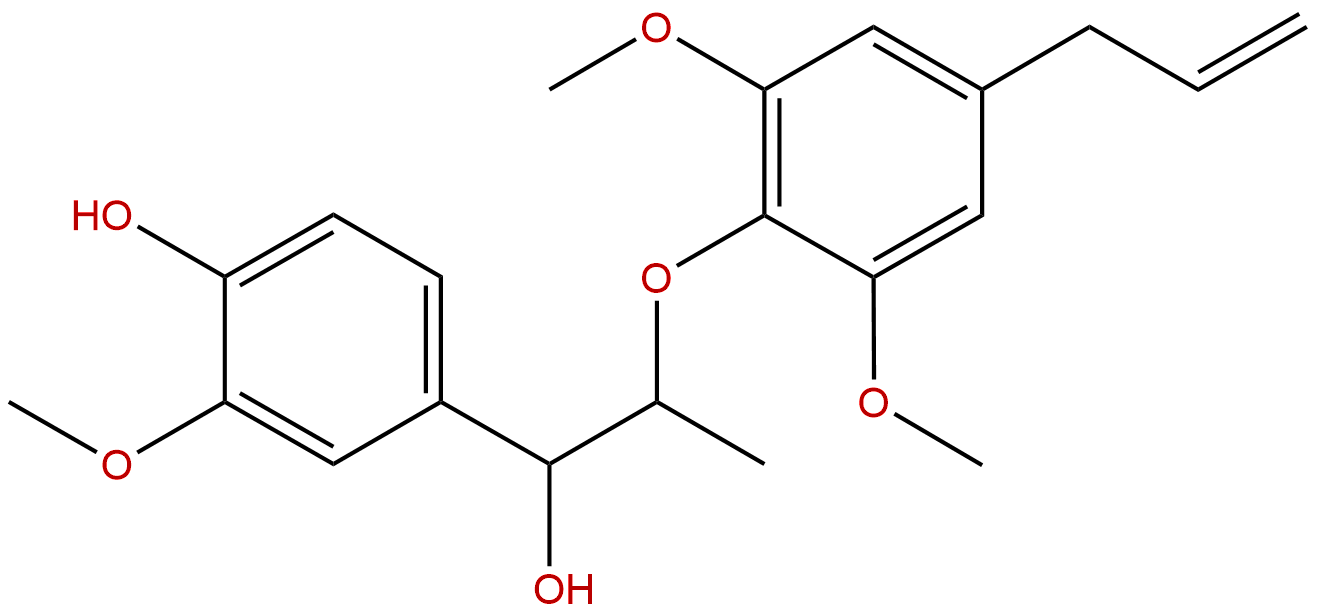
The systematic naming of this compound clearly reveals its core structure: it is a propanol derivative, with two aromatic ring systems attached to the 1st and 2nd positions of the propane skeleton, respectively.
* 1-position substituent Connected is 4-hydroxy-3-methoxyphenyl, also known as guaiacol group. This structural unit is widely present in various natural products with antioxidant and anti-inflammatory activities, such as ferulic acid, paclitaxel, etc.
* 2-position substituent Connected by ether bonds is 4-allyl-2,6-dimethoxyphenoxy. This part has significant structural features, including an active allyl side chain and a highly symmetrical 2,6-dimethoxyphenyl ring. The presence of allyl groups may endow molecules with certain reactivity and may participate in regulating interactions with certain enzymes or receptors.
There are two chiral centers (C1 and C2) in the molecule, resulting in multiple stereoisomers. The "red" in its name indicates its specific relative configuration, which may have a decisive impact on the biological activity of the compound, as different stereoconfigurations may lead to significant differences in binding ability to the target.
According to the provided pharmacological parameters, the molecular weight of the compound is 374.4330, which is a medium-sized organic molecule. Its lipid water partition coefficient (LogP) is 2.8661, indicating that the compound has moderate lipophilicity, which is beneficial for its penetration of cell membranes, but may also affect its water solubility and in vivo distribution. The topological polar surface area (TPSA) is 77.38 Å ², which is relatively moderate and usually compatible with a certain membrane permeability. The calculated water solubility value is relatively low (0.0936), indicating that it belongs to a poorly soluble compound, which is a key issue that needs to be addressed in subsequent formulation development. Of particular note is that its predicted blood-brain barrier (BBB) permeability is "high," strongly suggesting that the compound may have central nervous system activity, providing key clues for studying its neuroprotective, analgesic, or neuropsychiatric therapeutic potential. In addition, preliminary toxicity predictions showed no risk of hERG inhibition (no) and no risk of Ames test mutagenicity (0.0), providing positive early signals for its safety assessment.
Plant sources and extraction methods
At present, there are very limited publicly available reports on the plant source of this specific compound (CAS: 41535-95-9). Based on the chemical nature of its phenylpropanoid class, it can be reasonably inferred that it may originate from certain higher plants, especially those families and genera rich in lignin, phenylpropanoid glycosides, or related phenylpropanoid compounds. For example,Lythraceae, Oleaceae, Asteraceae and Thymelaeaceae Complex phenylpropanoid derivatives can often be isolated from certain plants. In the future, it is necessary to conduct targeted search and identification in relevant plant extracts through systematic phytochemical screening and the use of chromatography-mass spectrometry technology.
In terms of extraction and separation methods, mature processes of similar phenylpropanoid compounds can be referenced. Preliminary extraction is usually carried out using methanol, ethanol, or acetone water mixed solvents for reflux or ultrasound assisted extraction to fully obtain components with a wide range of polarities. Subsequently, the crude extract was subjected to preliminary fractionation using liquid-liquid extraction (such as extraction with ethyl acetate or n-butanol). This compound has moderate polarity and phenolic hydroxyl groups, and may be enriched in the ethyl acetate site. Further purification requires various column chromatography techniques, including silica gel column chromatography (using petroleum ether ethyl acetate or chloroform methanol gradient elution), reverse phase silica gel (such as ODS, using methanol water system elution), and high performance liquid chromatography (HPLC). The conjugated system and phenolic hydroxyl groups in its structure give it characteristic absorption in the ultraviolet region (around 280 nm and 230 nm), making it easy to use UV detectors for HPLC monitoring. The final structural confirmation requires the comprehensive use of techniques such as nuclear magnetic resonance (NMR, including 1H, 13C, COSY, HSQC, HMBC), high-resolution mass spectrometry (HR-ESI-MS), and X-ray single crystal diffraction (if single crystals can be obtained).
Pharmacological activity research
Although there are not many direct pharmacological research reports on this compound, by analogy analysis of its structural units (guaiacol, allyl phenyl ether, dimethoxybenzene) and prediction of its high BBB permeability, it can be inferred that it may have the following pharmacological activity potentials:
- Neuroprotection and anti neuroinflammatory activity The guaiacol group in the structure is a known antioxidant and anti-inflammatory pharmacophore. Many compounds containing this unit, such as curcumin derivatives and certain lignans, have been shown to enhance cellular antioxidant defense by activating the Nrf2/ARE pathway and inhibit NF - κ B-mediated inflammatory cytokine expression. Its high BBB permeability allows it to directly act on the central nervous system, potentially for the treatment of neurodegenerative and neuroinflammatory diseases such as Alzheimer's disease, Parkinson's disease, cerebral ischemia-reperfusion injury, and multiple sclerosis.
- Analgesic and anti nociceptive activity The structure of allyl phenyl ether is reminiscent of certain plant components that have analgesic effects. This structure may function by regulating ion channels related to pain perception (such as TRPV1) or neurotransmitter systems (such as GABAergic and opioid systems). Its lipophilicity and BBB permeability are conducive to its central analgesic effect.
- Antioxidant and anti-inflammatory activities This is the fundamental activity that its structure is most likely to possess. The phenolic hydroxyl groups in the molecule can directly scavenge free radicals (such as DPPH, ABTS free radicals) and inhibit lipid peroxidation. At the same time, the entire molecule may downregulate the production of inflammatory mediators such as COX-2, iNOS, TNF - α, IL-6, etc. by regulating signaling pathways such as MAPK and PI3K/Akt, which has potential application value in inflammatory models such as arthritis and colitis.
- Potential anti-tumor activity Some phenylpropanoid compounds have been reported to have inhibitory effects on tumor cell proliferation, induce apoptosis, or autophagy. The allyl and phenolic hydroxyl groups of this compound may participate in inducing the production of reactive oxygen species (ROS), or exert anti-tumor effects by affecting the expression of cell cycle proteins and apoptosis related proteins (such as Bcl-2 family, caspases). Its specific activity needs to be validated for different tumor cell lines.
- Cardiovascular protective activity Antioxidant and anti-inflammatory properties are usually associated with cardiovascular protection, which may help to improve endothelial function and inhibit atherosclerotic plaque formation.
Mechanism of action and molecular targets
Based on its chemical structure and the mode of action of similar compounds, this compound may exert pharmacological effects by acting on the following molecular targets or signaling pathways:
- Nuclear factor E2 related factor 2 (Nrf2) pathway As a classic cellular defense pathway, Nrf2 is a key transcription factor that regulates the expression of genes driven by antioxidant response elements (ARE). The electrophilic group of this compound (possibly derived from metabolites of allyl or oxidation products of phenolic hydroxyl groups) may modify the cysteine residue of Keap1 protein, causing Nrf2 to dissociate and translocate to the nucleus, thereby upregulating the expression of phase II detoxifying enzymes such as heme oxygenase-1 (HO-1), NAD (P) H quinone oxidoreductase 1 (NQO1), and antioxidant proteins. This is one of the core mechanisms by which it exerts neuroprotective and antioxidant effects.
- Nuclear factor kappa B (NF - κ B) pathway NF - κ B is a central transcription factor that regulates inflammatory responses. This compound may inhibit the activity of I κ B kinase (IKK), prevent the phosphorylation and degradation of I κ B α, thereby limiting NF - κ B in the cytoplasm and reducing the transcription of pro-inflammatory cytokines (TNF - α, IL-1 β, IL-6), chemokines, and inflammatory enzymes (COX-2, iNOS). Its anti-inflammatory activity is likely closely related to this pathway.
- Mitogen activated protein kinase (MAPK) pathway This compound may regulate the phosphorylation levels of p38 MAPK, JNK, and ERK1/2. These signaling pathways play important roles in cellular stress, inflammation, and apoptosis. Regulating it may be another mechanism by which it exerts anti-inflammatory and anti-tumor effects.
- Transient receptor potential vanillic acid subtype 1 (TRPV1) channel The allyl phenyl ether unit in the structure has similarities with some TRPV1 modulators. TRPV1 is an important pain receptor and integrator. This compound may act as an agonist (causing desensitization) or antagonist to regulate TRPV1 function, thereby producing analgesic effects.
- Gamma aminobutyric acid (GABA) system Some phenylpropanoid compounds have been shown to be positive allosteric modulators of GABA_A receptors. Given the high BBB permeability and structural characteristics of this compound, it may have anti anxiety, sedative, or anticonvulsant effects by enhancing GABAergic inhibitory neurotransmission.
- Epigenetic targets Studies have shown that some natural products can exert anti-cancer effects by inhibiting histone deacetylases (HDACs) or DNA methyltransferases (DNMTs). The methoxy and hydroxyl groups in the structure of this compound may be involved in interactions with such enzymes, but this requires experimental verification.
Evaluation of drug properties and pharmacokinetics
Based on the provided calculation parameters, conduct a preliminary evaluation of the pharmacological properties of the compound:
- Absorption and distribution The moderate LogP value (2.87) and TPSA value (77.38) conform to Lipinski's five rules (molecular weight<500, LogP<5, number of hydrogen bond donors<5, number of hydrogen bond acceptors<10), indicating its good oral absorption potential. The high BBB permeability prediction is its most prominent distribution characteristic, laying the foundation for the development of central nervous system drugs. However, the lower water solubility (0.0936 mg/mL) may be the main limiting factor for its oral bioavailability, and it is necessary to consider using formulation technologies such as nanocrystals, solid dispersions, liposomes, or cyclodextrin inclusion to improve it.
- Metabolism and excretion There are multiple methoxy and allyl groups in the molecule, which are common metabolic sites in the cytochrome P450 (CYP) enzyme system, especially in the CYP2C and CYP3A families, and may undergo O-demethylation or allyl oxidation. Phenolic hydroxyl groups may undergo II phase binding reactions (such as glucuronidation and sulfation). These metabolic pathways will affect their in vivo half-life and activity. Future research needs to clarify its main metabolic enzymes, metabolites, and their activities.
- Preliminary toxicity assessment The absence of hERG inhibition and prediction of Ames mutagenicity are positive early safety signals, reducing the risk of cardiac and genetic toxicity. However, comprehensive safety evaluation still requires in vitro cytotoxicity testing, as well as in vivo acute toxicity, subchronic toxicity, and reproductive toxicity studies.
- Gap in pharmacokinetic research At present, there is a complete lack of experimental pharmacokinetic data for this compound, including its oral bioavailability, plasma protein binding rate, tissue distribution characteristics, main metabolic pathways, excretion pathways, and half-life. These are the key information that must be filled in to advance its preclinical development.
Clinical application prospects and prospects
As a novel natural phenylpropanoid, the clinical application prospects of this compound mainly depend on the in-depth verification of its core pharmacological activity and the selection of development strategies.
- Therapeutic agents for central nervous system diseases Given its high BBB permeability and potential neuroprotective, anti neuroinflammatory, and analgesic activities, it is most promising to be developed for therapeutic purposes Neurodegenerative diseases(such as Alzheimer's disease, Parkinson's disease)stroke、neuropathic pain and Multiple sclerosis It can be used as a lead compound for structural optimization to improve its potency, selectivity, and metabolic stability.
- Anti inflammatory and analgesic drugs For:Rheumatoid arthritis、Osteoarthritis and Inflammatory bowel disease The anti-inflammatory and antioxidant properties of chronic inflammatory diseases have practical value. It can be explored that its local topical preparations (such as gel and patch) can be used to relieve muscle joint pain.
- Adjuvant anti-tumor therapy Its potential anti-tumor activity can be used as an adjuvant therapy in combination with conventional chemotherapy drugs, which may enhance sensitivity, reduce toxicity, or reverse drug resistance. Further research is needed on the specific mechanisms and targets of its anti-tumor effects.
- Development Challenges and Strategies:
- Water solubility improvement This is the primary pharmaceutical challenge. It needs to be solved through salt formation, prodrug design, or advanced delivery systems.
- Confirmation of Activity and Mechanism The most urgent task at present is to conduct systematic in vitro and in vivo pharmacological experiments, clarify its core indications, and thoroughly elucidate its molecular targets and signaling pathways.
- structural optimization Based on the study of structure-activity relationship, modify its molecules reasonably. For example, modifying phenolic hydroxyl groups to improve metabolic stability; Modify allyl groups to regulate activity or reduce potential toxicity; Introducing other functional groups to enhance affinity for specific targets.
- Multi target drug development Its structural characteristics suggest that it may be a natural multi-target regulator. From the perspective of modern network pharmacology and systems biology, this multi-target characteristic may be an advantage rather than a disadvantage for treating complex multifactorial diseases such as neurodegenerative diseases.
Conclusion
Red 2- (4-allyl-2,6-dimethoxyphenoxy) -1- (4-hydroxy-3-methoxyphenyl) -1-propanol (CAS: 41535-95-9) is a natural phenylpropanoid product with unique chemical structure and abundant biological activity potential. It combines pharmacophores such as guaiacol, allyl phenyl ether, and symmetrical dimethoxybenzene, indicating that it may have important value in neuroprotection, anti-inflammatory, analgesic and other fields. Preliminary pharmacological analysis shows that it conforms to the drug like rules and has high blood-brain barrier permeability, providing a key basis for its development as a central nervous system drug. However, the current research on this compound is still in a very early stage, and its exact plant origin, detailed pharmacological activity spectrum, precise molecular mechanism of action, and complete pharmacokinetic characteristics all need to be systematically and deeply explored. Future research should first focus on its activity verification and mechanism analysis, and strive to solve the bottleneck of drug formation such as water solubility. With the continuous deepening of research, this compound is expected to become a valuable lead molecule, providing new candidate structures and ideas for the development of new drugs for the treatment of neurodegenerative diseases, chronic inflammation, and related diseases.