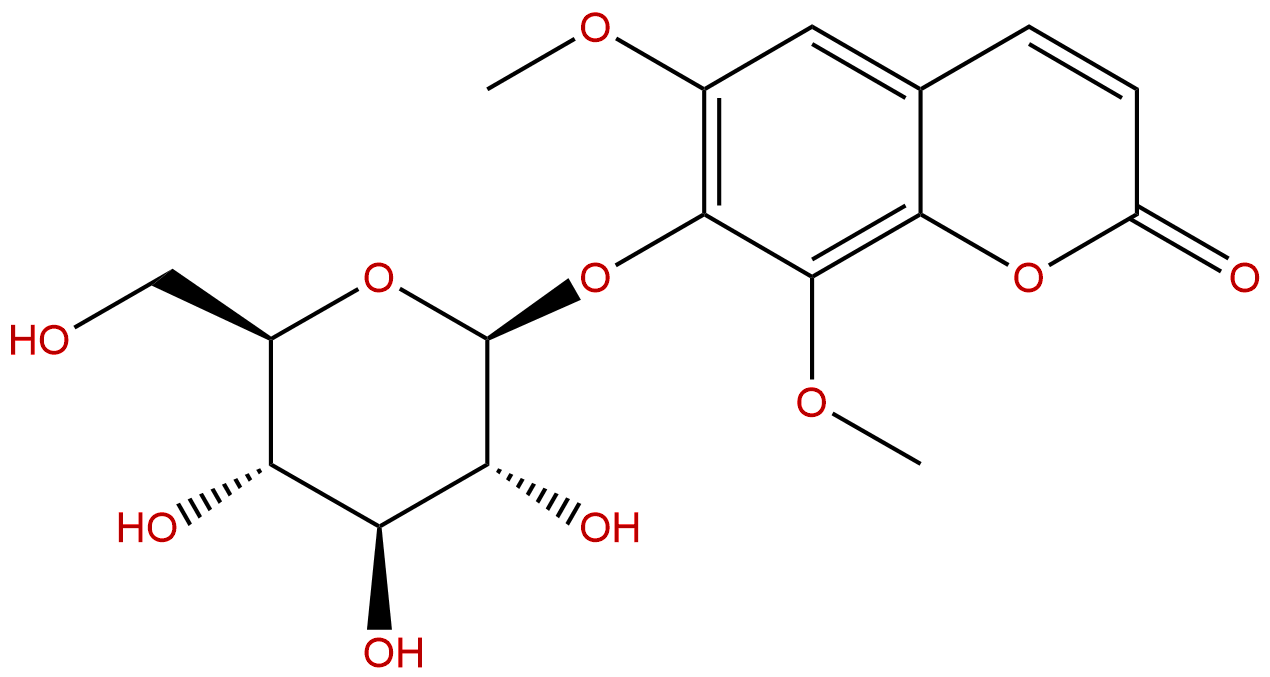


Product name: Calycanthoside
Synonym name: Isofraxidin 7-O-beta-D-glucoside
Catalogue No.: SBP01731
Cas No.: 483-91-0
Formula: C17H20O10
Mol Weight: 384.337
Botanical Source:
Physical Description: Powder
Type of Compound: Coumarins
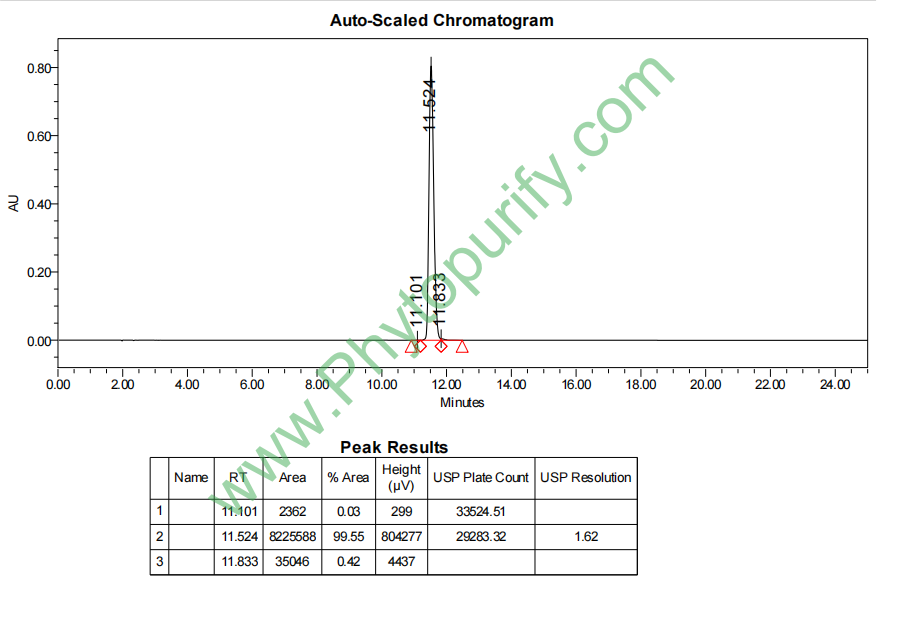
Purity: 95%~99%
Analysis Method: HPLC-DAD or/and HPLC-ELSD
Identification Method: Mass, NMR
Packing: Brown vial or HDPE plastic bottle
The product could be supplied from milligrams to grams. Inquire for bulk scale.
We provide solution to improve the water-solubility of compounds, thereby facilitating the variety of activity tests and clinic uses.
For Reference Standard and R&D, Not for Human Use Directly.
Description:
Isofraxidin-7-O-glucoside(Calycanthoside ) has the anti-inflammatory effect, it has inhibitory activity on NO production.It also shows antibacterial activity.
References:
China Medical Herald, 2016, 13(13):20-3.
Anti-inflammatory constituents of Acanthopanax senticosus
To study the anti-inflammatory constituents of Acanthopanax senticosus.
METHODS AND RESULTS:
NO production in the activated RAW 264.7 macrophages induced by LPS and IFN-γ were used to evaluate anti-inflammatory activity. The compounds were isolated by HPD 100 resin, silica gel, ODS and HPLC methods, their structures were identified by Infrared TLC method and spectral imaging spectrum technology. The extraction of A. senticosus. had inhibitory activity on NO production. Seven compounds were isolated and identified as Syringin, Isofraxidin-7-O-glucoside(Calycanthoside),, Syringaresinoldi-O-β-D-glycoside, Sesamin, Daucosterol, β-sitosterol and Vanillic acid respectively.
CONCLUSIONS:
The extraction of A. senticosus. has the anti-inflammatory effect, and phenylpropanoids are the anti-inflammatory constituents.
Zhongguo Zhong Yao Za Zhi,2008,33(15):1843-6.
Studies on chemical constituents and antibacterial activity from n-butanol extract of Sarcandra glabra
To study the chemical constituents and the antibacterial activity from n-butanol extract of Sarcandra glabra.
METHODS AND RESULTS:
The compounds were isolated by Diaion HP-20, Sephadex LH-20, MCI CHP-20 and silica gel column chromatographic methods. Their structures were identified on the basis of physicochemical and spectroscopic analysis. The antibacterial effect of the compounds were measured against Staphylococcus aureus by filterpaper slice method, finally the antibacterial ring in each group was recorded after 24 hours. Seven constituents were isolated and elucidated as 5, 7, 3', 4'-tetrahydroxy-6-C-beta-D-glucopyranosylflavanone(1),kaempferol-3-O-beta-D-glucuronide (2),fraxidin (3),isofraxidin (4),isofraxidin-7-O-beta-D-glucopyranoside(Calycanthoside) (5),kaempferol (6), pinostrobin (7).
CONCLUSIONS:
Diameters (in mm) of antibacterial ring in the compounds 2, 5, 6 were orderly recorded as follows: 14.67 +/- 0.08, 11.14 +/- 1.06, 8.26 +/- 1.26 and the compound 4 is not effective. Compounds 1-3 and 5 were isolated from S. glabra for the first time.
HPLC of Calycanthoside
Storage conditions:Short-term storage at 2~8℃, long-term storage at -20 ~ -80℃
Calycanthioside (CAS number 483-91-0) is a natural product isolated from the traditional Chinese medicinal herb Angelica tenuissima, belonging to the class of isoxazinopyridine glycosides. With the development of modern pharmacology and natural product chemistry, isopyramidin-7-glucoside has gradually attracted widespread attention due to its significant biological activity, especially in the field of anti-inflammatory potential. Inflammatory response, as the fundamental pathological process of the occurrence and development of various diseases, has complex and diverse regulatory mechanisms. Finding anti-inflammatory natural products with high efficiency and low toxicity has become an important direction for current drug research and development. This article will provide a systematic review of the chemical structure and physicochemical properties, plant sources and extraction methods, pharmacological activity and mechanism of action, pharmacological evaluation and pharmacokinetic characteristics of isopyramidin-7-glucoside. Finally, it will explore its clinical application prospects and future research directions, providing reference and inspiration for researchers in related fields.
The molecular formula of imidacloprid 7-glucoside is C18H24O10, with a molecular weight of 384.3370. The core of its structure is the pyrazine pyridine ring system, and the 7-hydroxyl group is connected to the glucose unit through a glycosidic bond. The LogP value of this compound is -0.2177, indicating strong hydrophilicity and a water solubility of 9.3360, indicating good water solubility. The polar surface area (TPSA) is 148.0500, indicating that its molecular polarity is high, which may affect its cell membrane permeability and bioavailability. The low permeability of the blood-brain barrier suggests limited distribution in the central nervous system. The negative result of hERG channel inhibition experiment indicates a low risk of cardiac toxicity. The Ames test score is 0.9, indicating low genotoxicity potential and good safety basis.
From a chemical structure perspective, the glycosidic portion of imidacloprid 7-glucoside endows it with good water solubility and biocompatibility, while the core of imidacloprid may be the key to its biological activity. This structural feature gives it certain advantages in drug design, especially suitable for developing anti-inflammatory drugs for oral administration.
Imidaclopyridine-7-glucoside is mainly isolated from the plant Angelica tenuissima in the Umbelliferae family. Angelica plants are widely used in traditional Chinese medicine, with various effects such as harmonizing qi and blood, promoting blood circulation and removing blood stasis, and dispelling wind and dampness. Angelica tenuissima, as one of the important medicinal species, contains abundant pyrazine compounds in its rhizomes.
The extraction method usually uses ethanol or methanol as solvents for reflux extraction, followed by multi-step separation and purification techniques such as liquid-liquid distribution, silica gel column chromatography, and reverse phase high performance liquid chromatography (RP-HPLC) to obtain high-purity isopyramidin-7-glucoside. In recent years, the application of ultrasound assisted extraction and microwave-assisted extraction technologies has significantly improved extraction efficiency and purity, while reducing solvent usage and extraction time. In addition, the application of reverse phase solid-phase extraction (SPE) combined with high-performance liquid chromatography-mass spectrometry (HPLC-MS) technology has promoted the qualitative and quantitative analysis of the compound, providing a reliable analytical method for subsequent pharmacological research.
The main pharmacological activity of imidacloprid 7-glucoside is focused on anti-inflammatory effects. A large number of in vitro cell models and in vivo animal experiments have shown that this compound can effectively inhibit the production and release of various inflammatory mediators, and alleviate inflammatory reactions.
At the cellular level, isoxazipine-7-glucoside significantly inhibits the expression of pro-inflammatory factors such as IL-6, TNF - α, NOS2, PTGS2, etc. in macrophages and monocytes, reducing the activation of inflammatory signaling pathways. Its regulatory effect on the NFKB1 and STAT3 signaling pathways is particularly prominent, which can block the transmission of inflammatory signals and alleviate cellular inflammatory responses. In addition, the regulatory effect of this compound on TRPV1 and TRPA1 plasma channels suggests its potential value in neuroinflammation and pain relief.
In animal experiments, isoxazipine-7-glucoside has shown good anti-inflammatory effects in various inflammatory models, such as acute inflammation models, chronic inflammation models, and inflammatory pain models, significantly reducing tissue swelling, inflammatory cell infiltration, and related pathological damage. Its anti-inflammatory effect is positively correlated with dosage and has no significant toxic side effects.
In addition, isoxazipine-7-glucoside also exhibits certain antioxidant activity, which can clear free radicals, alleviate oxidative stress, and further assist in its anti-inflammatory effect.
The anti-inflammatory mechanism of imidacloprid 7-glucoside involves multiple molecular targets and signaling pathways, reflecting its characteristic of multi-target and multi pathway synergistic regulation.
IL-6 and STAT3 signaling pathways
IL-6, as a key pro-inflammatory cytokine, activates the STAT3 signaling pathway, promoting the persistence and exacerbation of inflammatory responses. Imidaclopyridine-7-glucoside can inhibit the expression of IL-6 and its mediated STAT3 phosphorylation, block the transcription of downstream inflammatory genes, and achieve the effect of inhibiting inflammation.
NFKB1 signaling pathway
NFKB1 is a central regulatory factor in inflammatory response, regulating the expression of various inflammatory mediators. Imidaclopyridine-7-glucoside reduces the expression of pro-inflammatory genes by inhibiting the activation of NFKB1, thereby alleviating the inflammatory response.
CASP1 (caspase 1)
CASP1 participates in the assembly of inflammasomes and the activation of inflammatory cytokine IL-1 β, promoting the inflammatory cascade reaction. Imidaclopyridine-7-glucoside inhibits CASP1 activity and blocks inflammasome mediated inflammatory signaling.
TRPV1 and TRPA1 ion channels
These two channels play important roles in inflammatory pain and neuroinflammation. Imidaclopyridine-7-glucoside regulates the activity of TRPV1 and TRPA1, alleviating inflammation related pain symptoms.
PTGS1 and PTGS2 (cyclooxygenase 1 and 2)
PTGS2 is a key enzyme induced during inflammation, catalyzing the synthesis of prostaglandins. The inhibitory effect of imidacloprid 7-glucoside on PTGS2 helps to reduce the production of inflammatory mediators.
NOS2 (inducible nitric oxide synthase)
NOS2 produces a large amount of nitric oxide in the inflammatory response, promoting the progression of inflammation. Imidaclopyridine-7-glucoside inhibits NOS2 expression, alleviates oxidative stress and inflammatory damage.
In summary, isoxazipine-7-glucoside exerts systemic anti-inflammatory effects by regulating inflammation related signaling pathways through multi-target synergistic effects.
From the perspective of medicinal properties, isoxazipine-7-glucoside has ideal physicochemical properties. Its molecular weight is moderate (384.3 Da), with a LogP value of -0.2177, indicating good water solubility and moderate lipid solubility, which is beneficial for absorption and distribution in vivo. A higher TPSA (148.05 Å ²) suggests stronger polarity, which may limit cell membrane permeability but also facilitate dissolution and transport in the blood.
The low blood-brain barrier permeability indicates that the compound mainly acts on peripheral tissues, reducing the potential toxicity risk to the central nervous system. The hERG channel inhibition experiment was negative, indicating a low risk of cardiac toxicity and good safety. The Ames test results are close to negative, indicating a low risk of genotoxicity.
At present, there is limited research on the pharmacokinetics of imidacloprid 7-glucoside. Preliminary data suggests that its oral bioavailability is limited, possibly due to its high polarity and glycosidic structure. The metabolism in the body mainly involves glycoside hydrolysis and oxidation reactions through the liver enzyme system, and the activity and safety of metabolites still need further research. The excretion pathway is mainly through the kidneys.
In the future, it is necessary to strengthen systematic research on its absorption, distribution, metabolism, and excretion (ADME) characteristics, optimize the administration route and dosage form design, and improve the feasibility of its clinical application.
Imidaclopyridine-7-glucoside, as a natural product with significant anti-inflammatory activity, has broad clinical application potential. Inflammatory related diseases such as rheumatoid arthritis, inflammatory bowel disease, chronic obstructive pulmonary disease, etc. all have urgent treatment needs, and existing drugs often come with side effects and resistance issues. Imidaclopyridine-7-glucoside provides valuable molecular basis for the development of novel anti-inflammatory drugs due to its multi-target regulatory mechanism and good safety.
In addition, its regulatory effect on TRPV1 and TRPA1 channels suggests potential application value in the fields of neuroinflammation and pain management. In the future, modern drug delivery technologies such as nanocarriers and sustained-release formulations can be combined to enhance their bioavailability and targeting.
In terms of clinical translation, systematic toxicological evaluation, pharmacokinetic studies, and preclinical efficacy verification need to be carried out, gradually advancing to the clinical trial stage. Combining modern molecular biology techniques to deeply analyze its mechanism of action and metabolic pathways will help guide the development of clinical medication plans.
In addition, the structural modification and derivative development of isozopicryl-7-glucoside are also future research focuses, aiming to improve its efficacy and pharmacokinetic properties through structural optimization, and promote it as a new generation of safe and efficient anti-inflammatory drugs.
As an important active ingredient in Angelica tenuissima, isoxazipine-7-glucoside has shown great potential as a natural anti-inflammatory drug due to its unique chemical structure and significant anti-inflammatory activity. The mechanism of multi-target regulation of inflammatory signaling pathways provides new ideas for the treatment of various inflammation related diseases. Although there are still certain challenges in pharmacokinetics and clinical applications, with the deepening of research and technological progress, isoxazipine-7-glucoside is expected to become a star compound in the field of natural product pharmacology, promoting the development of anti-inflammatory drugs to a new level. Future research should focus on mechanism analysis, drug optimization, and clinical translation to promote its widespread application in modern medicine.
