Introduction/Overview
Neurodegenerative diseases such as Alzheimer's disease (AD) and Parkinson's disease (PD) have become major global public health challenges. With the increasing aging of the population, it is particularly urgent to find treatment strategies that can effectively delay or prevent the progression of such diseases. The current mainstream drugs mostly focus on symptom relief, making it difficult to fundamentally intervene in disease progression and often accompanied by side effects. Therefore, exploring neuroprotective lead compounds with multi-target, high efficiency and low toxicity characteristics from natural products has become an important direction for new drug development. D-Epigabacin (CAS: 84709-25-1), as a flavonoid compound isolated from traditional medicinal plants, has attracted much attention in recent years due to its excellent neuroprotective activity in various in vitro and in vivo models. Its unique chemical structure enables it to simultaneously act on multiple key targets related to neuronal survival, oxidative stress, protein misfolding, and apoptosis, such as BACE1, APP, MAPT, NRF2, etc., demonstrating great potential for intervening in the complex pathological network of neurodegenerative diseases. This article aims to systematically review the chemical properties, plant sources, pharmacological activities, mechanisms of action, and medicinal properties of d-epigallocatechin, and to provide prospects for its clinical application.
Chemical structure and physicochemical properties
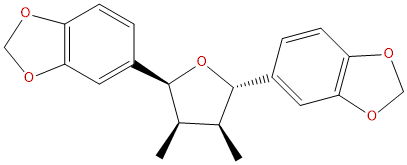
D-Epigabalin is a flavanone compound with the chemical name (2S) -5,7-dihydroxy-2- (4-hydroxyphenyl) -8- (3-methylbut-2-en-1-yl) -2,3-dihydro-4H-1-benzopyran-4-one. Its molecular formula is C20H20O5 and its molecular weight is 340.3750 g/mol. The structural core is the dihydroflavonoid skeleton, which is characterized by a C-8 position being replaced by an isopentenyl group (3-methylbut-2-enyl). This structural modification is relatively unique in natural flavonoids and is considered closely related to its unique biological activity and lipid solubility.
Based on its chemical structure calculations, the drug properties related parameters show that the lipid water partition coefficient (LogP) of d-epigallocatechin gallate is 3.5557, indicating its moderate lipophilicity, which is beneficial for penetrating cell membranes and the blood-brain barrier. The topologically polar surface area (TPSA) is 46.1500 Å ², which is a relatively low value, further supporting its good membrane permeability. Its water solubility is poor, about 0.0015 mg/mL, which suggests that in the development of formulations, it may be necessary to improve its solubility through techniques such as salt formation, cyclodextrin inclusion, or nanoformulation. It is crucial that the predictive model indicates a high blood-brain barrier permeability, which is a crucial advantageous attribute for the development of central nervous system drugs. In addition, preliminary toxicity predictions indicate a negative hERG inhibition risk and an Ames test (mutagenicity) prediction value of 0.0, suggesting that it may have good cardiac safety and genetic toxicity risk profile, but further experimental validation is needed.
Plant sources and extraction methods
D-epigallocatechin is mainly derived from Fabaceae, a genus of sheep hooves in the legume family(Bauhinia)Separated from plants, especially in various types Bauhinia It has been found in the roots, stem bark, and leaves of spp. The genus is commonly used in traditional medicine in many regions to treat inflammation, pain, diabetes and other diseases, which provides traditional application clues for the discovery of its neuroprotective activity.
Its extraction and separation usually follow the conventional process of natural product chemistry. Firstly, the dried plant material is crushed and subjected to extraction or reflux extraction using polar organic solvents such as methanol, ethanol, or acetone to obtain the crude extract. Subsequently, the crude extract was subjected to preliminary fractionation using solvent partitioning methods (such as sequential extraction with petroleum ether, ethyl acetate, and n-butanol), and d-epigallocatechin gallate was enriched in the ethyl acetate fraction. Further purification depends on a variety of chromatographic techniques, including silica gel column chromatography (with chloroform methanol gradient elution), Sephadex LH-20 gel column chromatography, and high performance liquid chromatography (HPLC, usually using C18 reverse phase column, methanol water or acetonitrile water as mobile phase) for final monomer separation and preparation. Structural identification involves the comprehensive use of techniques such as ultraviolet spectroscopy (UV), mass spectrometry (MS), nuclear magnetic resonance spectroscopy (1H-NMR, 13C-NMR), and circular dichroism (CD). In particular, CD spectroscopy can determine the absolute configuration of the C-2 position as the "S" type, i.e. the "d -" (or "+") configuration.
Pharmacological activity research
Numerous preclinical studies have confirmed that d-epigallocatechin has extensive and significant neuroprotective activity, mainly focused on antioxidant, anti apoptotic, inhibition of toxic protein aggregation, and improvement of synaptic function.
-
anti-oxidative stress In various neuronal cell injury models induced by hydrogen peroxide (H2O2), glutamate, or β - amyloid protein (A β), such as PC12 cells, SH-SY5Y cells, and primary cortical neurons, d-epigabalin dose dependently increases cell survival rate and reduces lactate dehydrogenase (LDH) leakage rate. Its function is closely related to significantly reducing intracellular levels of reactive oxygen species (ROS) and malondialdehyde (MDA), while enhancing the activity of endogenous antioxidant enzymes such as superoxide dismutase (SOD) and glutathione peroxidase (GSH Px).
-
Anti neuronal apoptosis Research has shown that d-epigallocatechin can inhibit neuronal apoptosis induced by A β or neurotoxins. It can alleviate the decrease in mitochondrial membrane potential, reduce the release of cytochrome c from mitochondria, downregulate the expression of pro apoptotic protein Bax, and upregulate the expression of anti apoptotic protein Bcl-2, thereby inhibiting the activation of caspase-3 and blocking the execution stage of apoptosis.
-
Inhibit AD related pathological processes:
- Reduce the generation of A βIn a cell model overexpressing APP, d-epigallocatechin can significantly reduce the secretion of A β 40 and A β 42. The mechanism is related to the direct inhibition of β - secretase 1 (BACE1) activity.
- Inhibit excessive phosphorylation of Tau protein In some cell models, d-epigallocatechin has shown the ability to reduce the phosphorylation of Tau protein at multiple AD related sites (such as Ser396, Ser404), suggesting that it may regulate the activity of related kinases (such as GSK-3 β) and phosphatases.
- Inhibition of acetylcholinesterase (AChE)In vitro enzyme activity experiments have shown that d-epigallocatechin has a certain inhibitory effect on AChE, which helps to increase the level of acetylcholine in synaptic cleft and may improve cognitive dysfunction in AD patients.
-
Internal neuroprotective effect In Alzheimer's disease model mice (such as APP/PS1 transgenic mice), intraperitoneal injection or oral administration of d-epigallocatechin can improve the spatial learning and memory abilities of mice (Morris water maze, new object recognition experiment). Pathological examination found that it can reduce the deposition of A β plaques in the brain, alleviate neuroinflammation (activation of microglia), and protect the synaptic structure of hippocampal neurons. In Parkinson's disease models such as MPTP induced mice, it also exhibits protective effects on dopaminergic neurons and improves motor function.
Mechanism of action and molecular targets
The neuroprotective effect of d-epigallocatechin is not achieved through a single pathway, but rather acts on an interconnected target network, demonstrating the advantages of multi-target therapy strategies.
-
Targeting the amyloid protein pathway D - Table Gabaxin is BACE1 An effective inhibitor that occupies its active site reduces the beta site cleavage of APP, thereby reducing the generation of A β from the source. At the same time, it may be achieved through interaction with APP Their direct or indirect interactions affect their metabolic pathways.
-
Regulating Tau protein homeostasis D-table gabalin can reduce MAPT Abnormal hyperphosphorylation of Tau protein, a gene product encoding Tau protein. The mechanism may involve regulating the MAPK signaling pathway (such as inhibition)MAPK1/ERK2 Overactivation or activation of deacetylase SIRT1 The activation of SIRT1 has been shown to promote the degradation of Tau protein and inhibit its phosphorylation.
-
Activate endogenous antioxidant defense system D - Table Gabaxin is NRF2 An effective activator of the nuclear factor E2 related factor 2 pathway. It can promote the translocation of NRF2 from the cytoplasm to the nucleus, thereby upregulating the expression of downstream antioxidant response elements (ARE) driven genes such as heme oxygenase-1 (HO-1), quinone oxidoreductase 1 (NQO1), etc., thereby systematically enhancing the cell's ability to resist oxidative stress.
-
Inhibition of apoptosis and regulation of autophagy: Through upward adjustment BCL2 The expression and inhibition of mitochondrial apoptosis pathway are regulated by d-epigallocatechin, which maintains mitochondrial functional integrity. inhibit CASP3 Activation is the final stage of its anti apoptotic effect. In addition, studies suggest that it may promote the clearance of damaged proteins and organelles (autophagy) through pathways such as SIRT1, which is beneficial for the stability of the neuronal microenvironment.
-
Other potential targets: Yes ACHE Inhibition contributes to the function of the cholinergic system. Correct SNCA The potential inhibitory effect of (encoding alpha synuclein) aggregation provides a possibility for its application in Parkinson's disease. The regulation of the MAPK pathway also affects inflammation and stress responses.
Evaluation of drug properties and pharmacokinetics
Although d-epigallocatechin exhibits excellent pharmacological activity, its pharmacological properties still need to be comprehensively evaluated.
- Absorption, distribution, metabolism, excretion (ADME)Currently, there is limited publicly available pharmacokinetic research data for the system. Based on its physicochemical properties (moderate LogP, low TPSA, high BBB permeability prediction), it can be inferred that it may have good gastrointestinal absorption and central distribution after oral administration. However, its poor water solubility may limit its oral bioavailability. As a flavonoid compound, it is likely to undergo extensive phase II metabolism in the body, such as glucuronidation and sulfation, as well as possible phase I metabolism (such as cytochrome P450 enzyme catalysis). These metabolic processes may result in a shorter half-life, requiring subsequent structural optimization (such as prodrug preparation) or designing appropriate dosing regimens.
- Formulation Challenge Low water solubility is the main obstacle to formulation development. Advanced delivery systems such as nanocrystals, liposomes, solid dispersions, or inclusion complexes with cyclodextrin need to be explored to enhance their solubility and dissolution rate, thereby improving oral absorption.
- Preliminary Safety Prediction The calculated toxicology prediction shows no significant risk of hERG channel inhibition and mutagenicity (Ames negative), which is a positive signal. However, a comprehensive preclinical safety evaluation, including acute toxicity, subchronic toxicity, reproductive toxicity, and other experiments, is still needed to confirm its safety window.
- blood-brain barrier Its high BBB permeability prediction is one of its core advantages as a neuroprotective agent, but it needs to be ultimately confirmed through in vivo experiments such as brain plasma ratio determination.
Clinical application prospects and prospects
D-Epigabalin, as a multi-target neuroprotective lead compound, has shown broad application prospects in the treatment of neurodegenerative diseases such as Alzheimer's disease and Parkinson's disease.
-
As a multi-target therapeutic drug Single target drugs often have limited efficacy in addressing the complex multifactorial pathological mechanisms of neurodegenerative diseases. D-Epigabalin can simultaneously intervene in multiple key processes such as A β production, Tau pathology, oxidative stress, and cell apoptosis, and is expected to achieve synergistic treatment, delaying or preventing disease progression.
-
The potential of disease modification therapy Existing drugs are mostly symptomatic treatments. D-epigallocatechin has the potential to develop into disease modifying therapy (DMT) by acting on core pathological targets of diseases such as BACE1 and Tau, which is the ultimate goal of drug development in this field.
-
Candidates for combination therapy In the future, it may be used in combination with existing acetylcholinesterase inhibitors (such as donepezil) or NMDA receptor antagonists (such as memantine) to improve symptoms while providing potential disease modifying effects, achieving a synergistic therapeutic effect.
-
Challenges faced and future research directions:
- In depth pharmacokinetic and toxicological research It is necessary to conduct toxicological studies on the in vivo ADME and GLP standards as soon as possible to clarify their pharmacokinetic characteristics and safety range.
- Structural optimization and derivative development To address its drawbacks of poor water solubility and potentially rapid metabolism, a series of derivatives or prodrugs are synthesized through rational medicinal chemical modifications to optimize its drug properties.
- Elaborate elucidation of the mechanism of action It is necessary to use techniques such as gene knockout and RNA interference to further validate the specific contributions and interrelationships of each target in mediating its neuroprotective effects in cell and animal models.
- Exploration of New Delivery Systems Develop nano delivery systems or intranasal drug delivery models targeting the central nervous system to improve their brain targeted delivery efficiency.
- Expand indications In addition to AD and PD, its antioxidant and anti apoptotic mechanisms also suggest its potential application value in other neurological diseases such as stroke, traumatic brain injury, and amyotrophic lateral sclerosis.
Conclusion
D-Epigabalin is a highly valuable flavonoid neuroprotective lead compound discovered from traditional medicinal plants. Its unique isopentenyl structure endows it with good lipid solubility and blood-brain barrier penetration potential, while its multi-target mechanism of action, including BACE1 inhibition, NRF2 pathway activation, anti apoptosis, and Tau pathological regulation, demonstrates unique advantages in dealing with complex neurodegenerative disease pathological networks. Despite facing challenges such as optimizing drug properties and conducting systematic pharmacokinetic and toxicological evaluations on the path towards clinical translation, existing research has laid a solid foundation for it. With the continuous deepening of subsequent research, d-epigallocatechin and its structurally optimized derivatives are expected to provide important candidate molecules for the development of a new generation of multi-target, disease modifying neurodegenerative disease treatment drugs, with significant scientific significance and clinical translational value.