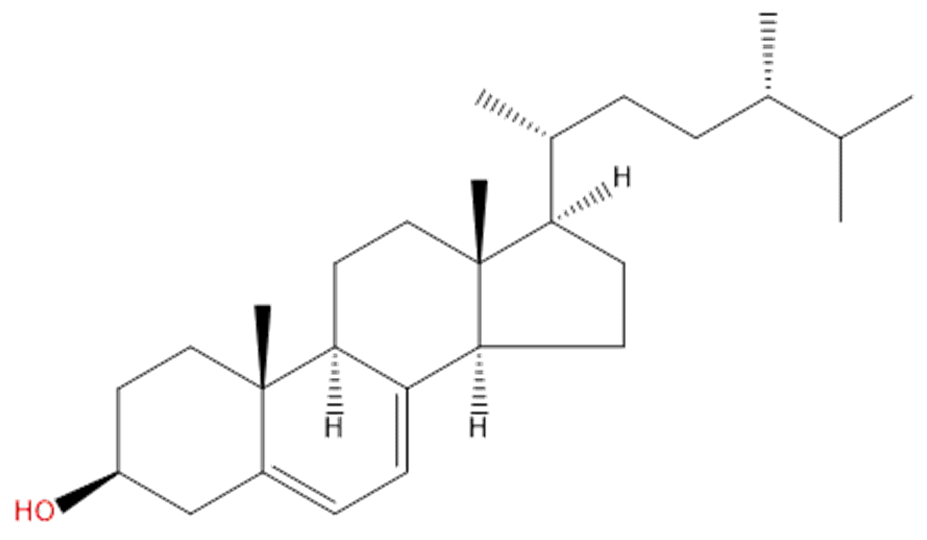


Product name: 22,23-Dihydroergosterol
Synonym name: Ergosta-5,7-dien-3β-ol
Catalogue No.: BP2099
Cas No.: 516-79-0
Formula: C28H46O
Mol Weight: 398.675
Botanical Source:
Type of Compound: Steroids
Purity: 95%~99%
Analysis Method: HPLC-DAD or/and HPLC-ELSD
Identification Method: Mass, NMR
Packing: Brown vial or HDPE plastic bottle
Storage: Store in a well closed container, protected from air and light. Put into refrigerate or freeze for long term storage.
Whenever possible, you should prepare and use solutions on the same day. However, if you need to make up stock solutions in advance, we recommend that you store the solution as aliquots in tightly sealed vials at -20℃. Generally, these will be useable for up to two weeks.
The product could be supplied from milligrams to grams
Inquire for bulk scale.
For Reference Standard and R&D, Not for Human Use Directly.
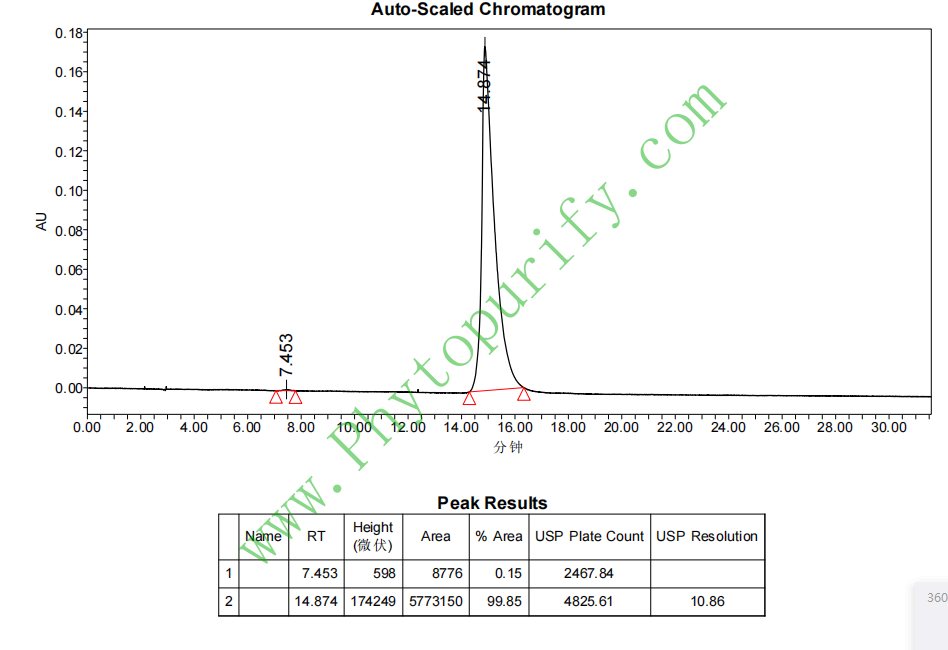
HPLC of 22,23-Dihydroergosterol
Storage conditions:Short-term storage at 2~8℃, long-term storage at -20 ~ -80℃
20.2300
8.3634
8.3634
.0000
8.3327
3.9785
High
92.8638
4.4988
No
No
No
No
No
No
0.0
No
No
No
No
22,23-dihydroergosterol (CAS number 516-79-0) is a natural plant sterol with unique structural characteristics, belonging to the ergosterol class. As a member of plant sterols, 3 β - sterols, and ergosterol, 22,23-dihydroergosterol exhibits a steroid skeleton with double bonds at positions 5,6- and 7,8, and a hydroxyl group at position 3 β. It originates from the hydrogenation product of 5 α - ergotamine, reflecting the diversity and complexity of steroid compounds. In recent years, with the continuous rise of natural products in the field of drug development, 22,23-dihydroergosterol has gradually attracted attention due to its potential biological activity, especially its application value in the field of anti osteoporosis.
Osteoporosis is a metabolic bone disease characterized by decreased bone density and microstructural damage to bone tissue, which seriously affects the quality of life of middle-aged and elderly populations. Although there are many existing treatment methods, there are still problems such as limited efficacy and significant side effects, which have prompted researchers to continuously explore new therapeutic targets and drug sources. 22,23-dihydroergosterol exhibits excellent anti osteoporosis potential by regulating various key targets related to bone metabolism, such as estrogen receptor (ESR1), matrix metalloproteinase 9 (MMP9), vitamin D receptor (VDR), transcription factor RUNX2, bone formation related protein SP7, bone resorption related caspase K (CTSK), and bone protective protein TNFRSF11B.
This article provides a systematic review of the chemical structure and physicochemical properties, plant sources and extraction methods, pharmacological activity research, mechanism of action and molecular targets, pharmacological evaluation and pharmacokinetic characteristics of 22,23-dihydroergosterol, as well as its clinical application prospects and future development directions. The aim is to provide a theoretical basis and reference for the in-depth research and drug development of this natural product.
22,23-dihydroergosterol is a typical ergosterol of the ergosterol class, with a molecular formula of C28H46O and a molecular weight of 398.6750. Its structural features include the 5,6- and 7,8-position double bonds on the steroid skeleton, as well as the 3 β - hydroxyl group (3 β - OH), which gives it high chemical and biological activity. This compound is a hydrogenated product of 5 α - ergotamine, where the double bonds at positions 22 and 23 are hydrogenated to form a relatively stable dihydroergosterol structure.
From the perspective of physicochemical properties, the LogP value of 22,23-dihydroergosterol is as high as 8.3634, indicating its strong lipid solubility and difficulty in dissolving in water (with a water solubility of 0.0000), which is closely related to the hydrophobicity of its steroid structure. The extremely low polar surface area (TPSA of 20.23 Å ²) further supports its lipophilic characteristics. This compound has a high blood-brain barrier permeability, suggesting that it may play a role in the central nervous system, but current research on its neurological activity is not sufficient.
In addition, 22,23-dihydroergosterol has shown good safety performance. The hERG channel inhibition test was negative, indicating a low risk of cardiac toxicity; The Ames test result is 0.0, indicating no significant mutagenicity and meeting high safety requirements.
In summary, the chemical structure of 22,23-dihydroergosterol endows it with unique physicochemical properties, particularly high lipid solubility and excellent biofilm penetration ability, laying the foundation for its biological activity and drug development.
22,23-dihydroergosterol is widely present in various plants, especially in the sterol components of certain fungi and higher plants. As a plant sterol, its main sources include Claviceps spp., certain mushrooms, and some grasses. Ergosterol compounds play a role in regulating membrane fluidity and stability in plant cell membranes, and their content and composition vary depending on the plant species, growth environment, and collection time.
The common methods for extracting 22,23-dihydroergosterol mainly include solvent extraction, chromatographic separation, and crystallization purification. The specific steps are as follows:
Raw material pretreatment Collect plant or fungal samples rich in ergosterol, dry and crush to increase surface area.
Solvent extraction Organic solvents such as ethanol, methanol, or ethyl acetate are used for reflux extraction to exploit their good solubility in sterol compounds.
Crude extract concentration The extract is concentrated under reduced pressure, the solvent is removed, and a crude extract containing sterols is obtained.
Separation and purification Separation and purification of 22,23-dihydroergosterol were achieved through techniques such as silica gel column chromatography, reverse phase high performance liquid chromatography (RP-HPLC), and gradient elution.
Crystallization and identification The purified product was further purified by recrystallization, and its structure was confirmed by nuclear magnetic resonance (NMR), mass spectrometry (MS), infrared spectroscopy (IR), and ultraviolet spectroscopy (UV).
In recent years, with the optimization of extraction processes, the application of green technologies such as supercritical CO2 extraction and microwave-assisted extraction has improved extraction efficiency and purity, and reduced environmental burden. In addition, the study of biosynthetic pathways also provides the possibility for microbial fermentation to produce 22,23-dihydroergosterol, which has the potential for large-scale production.
The research on the pharmacological activity of 22,23-dihydroergosterol mainly focuses on its anti osteoporosis effect. The pathological mechanism of osteoporosis involves an imbalance between bone formation and bone resorption. 22,23-dihydroergosterol regulates bone metabolism related signaling pathways through multiple targets, exhibiting significant bone protective effects.
In vitro cell experiments have shown that 22,23-dihydroergosterol can promote the proliferation and differentiation of osteoblasts (such as osteoblasts and osteoblast precursor cells), enhance the expression of bone matrix proteins such as collagen I (COL1A1) and osteocalcin (BGLAP). Meanwhile, the compound inhibits the formation and activity of osteoclasts, reduces bone resorption, and maintains the dynamic balance of bone remodeling.
Animal model studies further confirm that 22,23-dihydroergosterol significantly increases bone density, improves bone microstructure, and reduces the risk of fractures in ovariectomized rat models of osteoporosis. Its mechanism of action involves regulating the expression of bone metabolism related genes, promoting the activity of bone formation related transcription factors RUNX2 and SP7, and inhibiting the expression of bone resorption related protein CTSK.
Although current research mainly focuses on bone metabolism, 22,23-dihydroergosterol, as a member of plant sterols, may also have multiple biological activities such as anti-inflammatory, antioxidant, and regulating lipid metabolism. Some preliminary studies suggest that it may be involved in immune regulation and cell signaling, but the relevant data is not sufficient and further in-depth exploration is needed.
The anti osteoporosis effect of 22,23-dihydroergosterol involves multiple signaling pathways and key molecular targets, reflecting its pharmacological characteristics of multi-target and multi mechanism.
As an important regulatory factor of bone metabolism, ESR1 mediates the protective effect of estrogen on bone tissue. 22,23-dihydroergosterol can activate ESR1, mimic the bone protective effect of estrogen, promote osteoblast proliferation and bone matrix synthesis, inhibit osteoclast activity, and alleviate osteoporosis.
MMP9 participates in the degradation of bone matrix during bone remodeling. 22,23-dihydroergosterol reduces excessive degradation of bone matrix and maintains bone tissue integrity by downregulating MMP9 expression.
VDR regulates calcium and phosphorus metabolism as well as bone cell function. 22,23-dihydroergosterol enhances the expression and activity of VDR, promotes calcium absorption and bone mineralization processes, and improves bone quality.
RUNX2 and SP7 are key transcription factors for osteoblast differentiation. This compound promotes the maturation of osteoblasts and the synthesis of bone matrix proteins, enhancing bone formation by activating these two factors.
CTSK is a key enzyme secreted by osteoclasts, involved in the degradation of collagen. 22,23-dihydroergosterol inhibits CTSK activity, reduces bone resorption, and protects bone tissue.
Osteoprotegerin, as a competitive inhibitor of RANKL, inhibits osteoclast formation. 22,23-dihydroergosterol upregulates TNFRSF11B expression and enhances bone protection. SOST, as a negative regulator of bone formation, is downregulated by this compound, promoting bone formation.
COL1A1 encodes collagen type I, which is the main component of bone matrix; BGLAP encodes osteocalcin, a marker protein for bone mineralization. 22,23-dihydroergosterol promotes the expression of these two genes, enhances bone matrix synthesis and mineralization.
In summary, 22,23-dihydroergosterol achieves anti osteoporosis therapeutic effects by regulating multiple targets mentioned above, coordinating bone formation and resorption processes.
The pharmacological analysis of 22,23-dihydroergosterol shows that it has certain advantages and challenges.
High lipid solubility (LogP=8.3634) endows it with excellent cell membrane penetration ability, especially the high permeability of the blood-brain barrier, suggesting its potential role in the central nervous system. However, its extremely low water solubility limits its oral bioavailability and formulation development, requiring drug carrier technology or structural modification to improve solubility.
The hERG channel inhibition test was negative, indicating a low risk of cardiac toxicity. The Ames test has no mutagenicity, good safety, and is suitable for further development.
At present, there is limited pharmacokinetic data on 22,23-dihydroergosterol. Based on its high lipid solubility, it is speculated that it is widely distributed in the body, easily penetrates lipid membranes, and may have a longer half-life and higher tissue accumulation. The metabolic pathway may involve the hepatic steroid metabolizing enzyme system, such as the cytochrome P450 family. The excretion pathway is still unclear.
To overcome the problems of poor water solubility and low bioavailability, future research can focus on the development of drug delivery systems such as nanocarrier encapsulation, liposome formulations, solid dispersions, and structural modifications to optimize pharmacokinetic properties.
22,23-dihydroergosterol, as a natural plant sterol, has shown broad application prospects in the field of anti osteoporosis. The mechanism of multi-target regulation of bone metabolism is in line with the current trend of precision medicine and multi-target drug development.
Osteoporosis treatment Based on its dual effects of promoting bone formation and inhibiting bone resorption, 22,23-dihydroergosterol is expected to become an effective therapeutic agent for osteoporosis, especially for patients with osteoporosis caused by estrogen deficiency.
Fracture repair assistance By promoting osteoblast activity and bone matrix synthesis, this compound may accelerate the process of fracture healing and assist in clinical fracture treatment.
Combination therapy strategy Can be used in combination with existing anti osteoporosis drugs such as bisphosphonates and selective estrogen receptor modulators (SERMs) to achieve synergistic effects and reduce monotherapy side effects.
Drug formulation development Develop a new drug delivery system to address its low water solubility issue and improve bioavailability and targeting.
Systematic pharmacokinetic study In depth exploration of its absorption, distribution, metabolism, and excretion characteristics in the body to guide clinical dose design.
Preclinical safety and toxicology assessment Systematic evaluation of the safety of long-term medication lays the foundation for clinical trials.
Clinical trial validation Conduct randomized controlled clinical trials to verify its efficacy and safety, and promote its clinical application.
Research on multi-target mechanism Further analyze its molecular mechanisms of action in bone metabolism and other potential diseases, and expand indications.
22,23-dihydroergosterol, as a structurally unique plant sterol, exhibits significant anti osteoporosis potential due to its ability to regulate bone metabolism through multiple targets. Its good safety and blood-brain barrier permeability provide favorable conditions for its drug development. However, the development challenges of formulations with high lipid solubility and low water solubility still need to be overcome. In the future, through optimizing extraction processes, innovating drug delivery systems, and conducting systematic pharmacokinetic and clinical studies, 22,23-dihydroergosterol is expected to become an important natural drug resource in the field of osteoporosis, promoting progress in the treatment of bone metabolism diseases.
