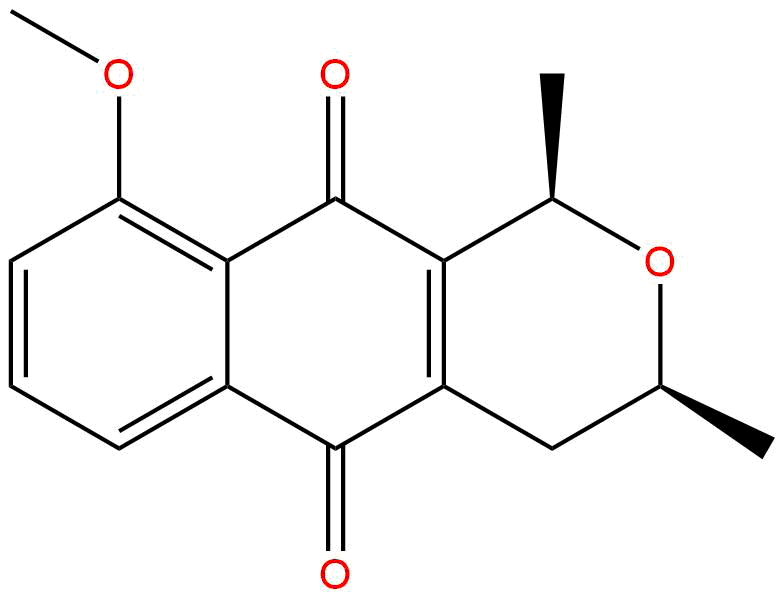


Product name: Eleutherin
Synonym name:
Catalogue No.: BP5288
Cas No.: 478-36-4
Formula: C16H16O4
Mol Weight: 272.3
Botanical Source:
Type of Compound: Quinones
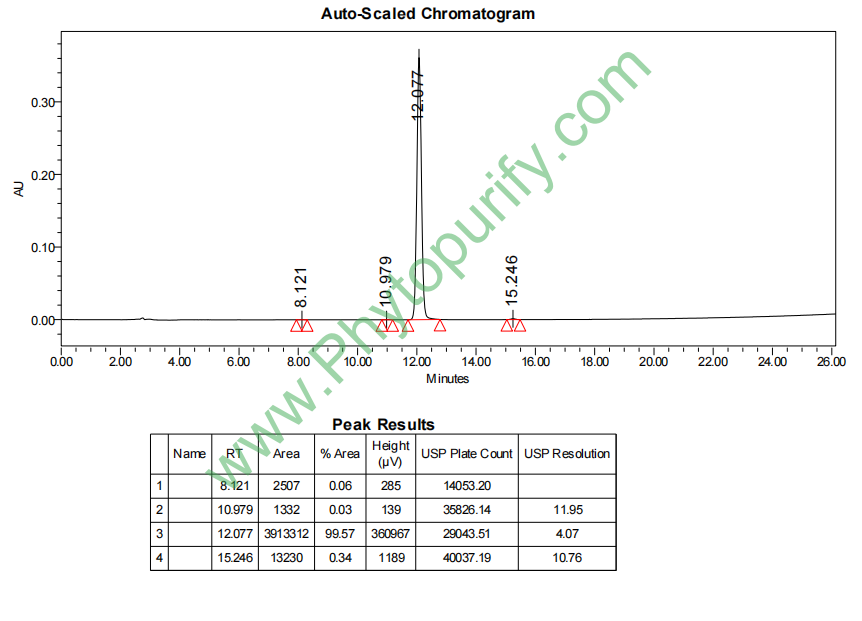
Purity: 95%~99%
Analysis Method: HPLC-DAD or/and HPLC-ELSD
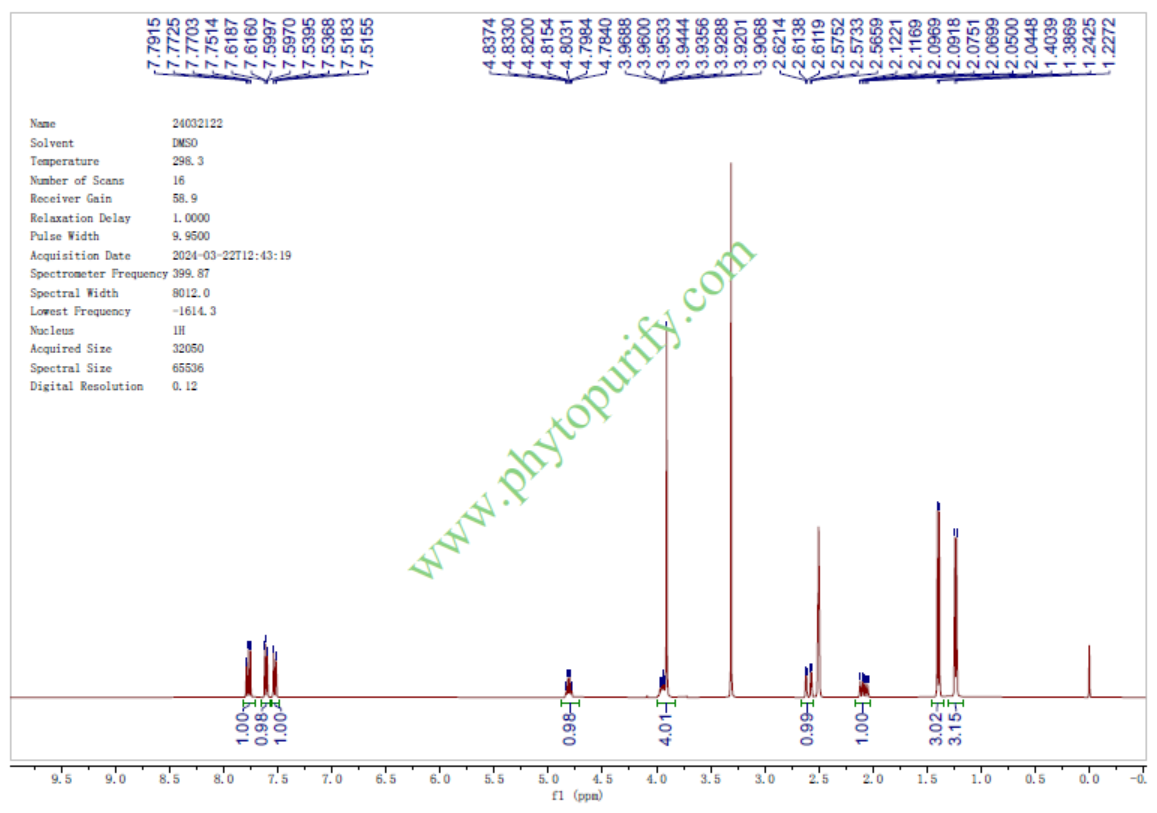
Identification Method: Mass, NMR
Packing: Brown vial or HDPE plastic bottle
Storage: Store in a well closed container, protected from air and light. Put into refrigerate or freeze for long term storage.
Whenever possible, you should prepare and use solutions on the same day. However, if you need to make up stock solutions in advance, we recommend that you store the solution as aliquots in tightly sealed vials at -20℃. Generally, these will be useable for up to two weeks.
The product could be supplied from milligrams to grams
Inquire for bulk scale.
For Reference Standard and R&D, Not for Human Use Directly.
HPLC of Eleutherin
HNMR of Eleutherin
Storage conditions:Short-term storage at 2~8℃, long-term storage at -20 ~ -80℃
52.6000
2.5182
2.5183
.0577
5.1515
22.8471
High
80.8212
3.3750
No
No
No
No
Yes
Yes
1.5
Yes
Yes
Yes
Yes
Natural products, as an important source of drug discovery, play an irreplaceable role in the long history of human struggle against diseases. From ancient plant therapies to modern target based drug screening, plant secondary metabolites continue to provide valuable lead compounds for innovative drug development due to their unique chemical diversity and biological activity. Among the numerous biologically active natural product families, naphthoquinone compounds have attracted much attention due to their broad pharmacological effects, such as antibacterial, anti-inflammatory, anti-tumor, and cardiovascular protective activities. Eleutherin, as a typical naphthoquinone derivative, is derived from the traditional medicinal plant Eleutherin(Eleutherine bulbosa The active ingredient isolated from (Mill.) Urb. has become one of the hotspots in natural product pharmacology research due to its unique chemical structure and significant biological activity.
Red onion, also known as Little Red Garlic or Red Onion Head, belongs to the Iridaceae family of the genus Red Onion(Eleutherine)Plants, originally from tropical regions of the Americas, have been widely introduced and cultivated in Asia, Africa, and other regions. In the traditional medical system, shallot is used to treat a variety of diseases, including diarrhea, dysentery, hypertension, diabetes and cardiovascular diseases. Folk people often crush its bulbs and apply them externally to treat trauma and inflammation, or take them orally to relieve chest and abdominal pain and promote blood circulation. As one of the main active ingredients of this plant, the discovery and research of allicin not only provide scientific basis for the modern pharmacological application of traditional herbs, but also reveal its enormous potential in the field of cardiovascular disease prevention and treatment.
Modern pharmacological studies have shown that allicin has multiple biological activities, among which the most prominent is its protective effect on the cardiovascular system. In particular, research has shown that allicin B has a significant protective effect on human umbilical vein endothelial cells (HUVECs) and can counteract endothelial cell damage induced by various factors. As a barrier on the inner wall of blood vessels, the functional integrity of endothelial cells is crucial for maintaining vascular homeostasis, regulating vascular tension, and preventing thrombosis. Endothelial dysfunction is considered as the starting link and key pathological basis of atherosclerosis, hypertension, coronary heart disease and other cardiovascular diseases. Therefore, the endothelial protective effect of allicin suggests that it may become a novel candidate molecule for the treatment or prevention of cardiovascular diseases. In addition, allicin B also exhibits anti platelet aggregation activity, which is closely related to multiple key targets such as cyclooxygenase (PTGS1/PTGS2), integrin (ITGA2B/ITGB3), P2Y12 receptor (P2RY12/P2Y12), thromboxane A2 receptor (TBXA2R), and phosphodiesterase 3A (PDE3A). Antiplatelet aggregation is one of the core strategies for preventing and treating arterial thrombotic diseases such as myocardial infarction and stroke. Therefore, a deep understanding of the chemical properties, pharmacological effects, molecular mechanisms, and medicinal properties of Allium erinaceus is of great scientific significance and application value for promoting its transformation from a natural product to a clinical candidate drug. The purpose of this article is to comprehensively review the research progress of allicin B, covering its chemical structure and physicochemical properties, plant sources and extraction methods, pharmacological activity, mechanism of action, evaluation of drug properties, and clinical application prospects, in order to provide systematic references for the subsequent research and development of this compound.
Eleutherin is a natural naphthoquinone compound with a unique skeleton. The core of its chemical structure is the naphthoquinone parent nucleus, specifically, it belongs to 1,4-naphthoquinone derivatives. Unlike simple 1,4-naphthoquinone, the structure of red onion ethyl ketone is more complex. Its naphthoquinone ring is connected to an oxygen-containing hexagonal heterocyclic ring (pyram ring), forming a fused ring system of naphthopyranedione. This unique "naphthoquinone pyran" skeleton endows allicin with special chemical properties and biological activity that distinguish it from other naphthoquinone compounds. Its molecular formula is C ₁₆ H ₁₆ O ₄, and its molecular weight is 272.3000 g/mol. From the perspective of stereochemistry, there is a chiral center in the molecule of allicin, which gives it optical activity. Its naturally occurring configuration is usually right-handed (+) - eleutherin), while its isomer Eleutherol has slight structural differences but belongs to the active ingredient of plants in the Allium genus.
In terms of physical and chemical properties, allicin exhibits typical lipid soluble small molecule characteristics. Its lipid water partition coefficient (LogP) is 2.5182, indicating moderate lipophilicity, which makes it easy to penetrate biological membranes and facilitate absorption and distribution in the body. However, its water solubility is only 0.0577 mg/mL, making it a poorly soluble compound. This characteristic may limit its oral bioavailability, as drug dissolution is a prerequisite for absorption in the gastrointestinal tract. Therefore, in the process of drug development, it may be necessary to use solubilization techniques, such as preparing salts, using surfactants, forming inclusion complexes or nano formulations, to improve their water solubility and dissolution rate. The topological polar surface area (TPSA) of Allicin B is 52.6000 Å ². TPSA is an important parameter for predicting drug oral absorption and blood-brain barrier permeability. It is generally believed that molecules with TPSA less than 60 Å ² have good blood-brain barrier permeability, while molecules with TPSA less than 140 Å ² have good oral absorption potential. The TPSA value of Allicin B is exactly below 60 Å ², which is highly consistent with its predicted high blood-brain barrier (BBB) permeability. High BBB permeability suggests that resveratrol may enter the central nervous system, providing potential therapeutic applications for central nervous system diseases such as neuroprotection and anti stroke. However, it may also bring central related side effects that need to be addressed in future research. In addition, in terms of safety prediction, the hERG inhibition assessment result is "no", indicating that the risk of cardiac toxicity of Allium erinaceus is relatively low, which is a positive indication of drug efficacy. However, the Ames test result was 1.5, indicating that it may have a certain genetic toxicity risk, which requires further evaluation and confirmation in subsequent toxicology studies. Overall, allicin has the basic physicochemical characteristics for optimization as a lead compound, but its poor water solubility and potential genetic toxicity are key obstacles that need to be overcome.
Allicin B is mainly derived from the Allium genus of the Iridaceae family(Eleutherine bulbosa (Mill.) Urb.), In addition, in other species of the Allium genus such as Eleutherine americana Merr. ex K. Heyne also exists. Red onion is a perennial herbaceous plant, and its medicinal parts are mainly the underground bulbs. This plant is distributed in tropical and subtropical regions around the world, and is often used as a folk medicine and seasoning in Southeast Asian countries such as Indonesia, Malaysia, Thailand, as well as in South America such as Brazil and Peru. In China, red onions are mainly cultivated in Yunnan, Guangxi, Guangdong and other places. Their bulbs are known as "little red garlic" or "red onion heads" in folk culture, and are used to treat injuries caused by falls, rheumatism, rheumatism, dysentery and other diseases.
The method of extracting allicin from scallion bulbs is mainly based on its lipid solubility, usually using organic solvent extraction. The classic extraction process includes the following steps: Firstly, fresh or dried scallion bulbs are crushed into coarse powder to increase the contact area between the solvent and the material, thereby improving the extraction efficiency. Then, select a suitable organic solvent for soaking or reflux extraction. Due to its good solubility in moderately polar organic solvents, commonly used extraction solvents include ethanol, methanol, ethyl acetate, chloroform, etc. Among them, ethanol is the most commonly used solvent in industrial production due to its high safety, good extraction efficiency, and easy recovery. Usually, a certain concentration of ethanol (such as 70% -95% ethanol) is used for multiple extractions at room temperature or heating conditions until the active ingredients are almost completely extracted. After filtration and vacuum concentration of the extract, a crude extract containing various naphthoquinone components (including allicin B, allicin A, isoallicin B, etc.) was obtained.
In order to obtain high-purity red onion ethyl monomer, further separation and purification of the crude extract are required. Common separation methods include solvent extraction, column chromatography, and recrystallization. For example, the crude extract can be suspended in water and then extracted sequentially with organic solvents of different polarities (such as petroleum ether, chloroform, ethyl acetate, n-butanol) to separate the components of different polarities. Allicin B is usually enriched in the chloroform or ethyl acetate extraction sites. Subsequently, the extraction site can be separated by silica gel column chromatography, using mixed solvents such as petroleum ether ethyl acetate or chloroform methanol for gradient elution. Based on the detection results of thin layer chromatography (TLC) or high performance liquid chromatography (HPLC), the fraction containing allicin is collected. For components that are difficult to separate, further efficient separation techniques such as preparative HPLC or high-speed countercurrent chromatography (HSCCC) can be used for purification. Finally, through recrystallization technology, the crystalline pure product of Allium erinaceus can be obtained. Its structure can be confirmed by spectroscopic methods such as nuclear magnetic resonance (NMR), mass spectrometry (MS), infrared spectroscopy (IR), and X-ray single crystal diffraction. With the development of modern separation technology, some more efficient and environmentally friendly extraction methods, such as supercritical fluid extraction (SFE), microwave-assisted extraction (MAE), and ultrasound assisted extraction (UAE), have also been attempted to be applied to the extraction of allicin. These methods have the advantages of short extraction time, low solvent dosage, and high extraction rate, showing good application prospects.
The pharmacological activity research of Allicin B mainly focuses on its protective effect on the cardiovascular system, especially in terms of anti platelet aggregation and endothelial cell protection. In addition, its anti-inflammatory and antioxidant activities have also aroused the interest of researchers.
1. Antiplatelet aggregation activity
Platelets play a central role in the development of hemostasis, thrombosis and atherosclerosis. Abnormal platelet aggregation is a key factor leading to arterial thrombotic diseases such as acute coronary syndrome and ischemic stroke. Research has shown that allicin can effectively inhibit platelet aggregation caused by various inducers such as ADP, collagen, arachidonic acid, and thrombin. Its mechanism of action involves multiple steps: firstly, allicin can inhibit the activity of cyclooxygenase (COX), especially COX-1 (PTGS1) and COX-2 (PTGS2), thereby reducing the production of thromboxane A ₂ (TXA ₂). TXA ₂ is a potent inducer of platelet aggregation and vasoconstrictor, and its reduced production is one of the important mechanisms for antiplatelet aggregation. Secondly, allicin B can block key receptors on the surface of platelets, such as integrin α IIb β 3 (ITGA2B/ITGB3, i.e. fibrinogen receptor), thereby inhibiting the binding of fibrinogen to platelets, which is the ultimate common pathway for platelet aggregation. In addition, it can antagonize P2Y12 receptors (P2RY12/P2Y12) and thromboxane A2 receptors (TBXA2R), further weakening platelet response to activation signals. Finally, studies suggest that allicin may inhibit platelet activation by suppressing phosphodiesterase 3A (PDE3A) and increasing cAMP levels in platelets. This multi-target and multi pathway antiplatelet mechanism suggests that berberine may theoretically have stronger antithrombotic effects and may reduce the risk of resistance to single target drugs such as aspirin and clopidogrel.
2. Protective effect of endothelial cells
Endothelial cells are a single layer of cells covering the inner wall of blood vessels, and the integrity of their structure and function is crucial for maintaining vascular health. Endothelial cell injury is the initial link of cardiovascular diseases such as atherosclerosis. Research has found that allicin B has a significant protective effect on human umbilical vein endothelial cells (HUVECs). It can counteract endothelial cell damage induced by oxidative stress (such as hydrogen peroxide H ₂ O ₂), inflammatory factors (such as tumor necrosis factor - α TNF - α), or high glucose environment. Its protective mechanism may include: enhancing the antioxidant defense ability of endothelial cells, such as upregulating the activity of antioxidant enzymes such as superoxide dismutase (SOD) and glutathione peroxidase (GSH Px), and reducing intracellular reactive oxygen species (ROS) levels; Inhibiting inflammatory response, such as reducing the expression of adhesion molecules (such as VCAM-1, ICAM-1), thereby inhibiting monocyte adhesion to endothelial cells; And inhibit endothelial cell apoptosis, such as regulating the expression of apoptosis related proteins such as Bcl-2/Bax, and activating survival signaling pathways such as PI3K/Akt. Through these mechanisms, allicin can help maintain the normal function of endothelial cells, promote the production of nitric oxide (NO), and play a role in vasodilation and anti atherosclerosis.
3. Other pharmacological activities
In addition to the cardiovascular protective effects mentioned above, allicin B also exhibits various other biological activities. For example, studies have reported that it has anti-inflammatory activity and can inhibit the production of inflammatory mediators (such as NO, PGE2, TNF - α, IL-6) in macrophages stimulated by lipopolysaccharide (LPS). In addition, allicin B also exhibits certain antibacterial activity and has inhibitory effects on certain Gram positive bacteria (such as Staphylococcus aureus) and fungi. Some preliminary studies also suggest that it may have anti-tumor activity and can inhibit the proliferation of certain cancer cells, but its specific mechanism and effect still need to be further studied. Given its high blood-brain barrier permeability, the potential protective effect of resveratrol in central nervous system diseases such as neurodegenerative diseases and cerebral ischemia-reperfusion injury is also worth exploring.
The pharmacological activity of Allicin B is derived from its interaction with specific biomolecules (targets), thereby regulating the intracellular signal transduction network. Its mechanism of action exhibits the characteristics of multi-target and multi pathway, especially in the areas of antiplatelet aggregation and endothelial protection, with clear molecular targets involved.
1. Molecular mechanism of antiplatelet aggregation
The anti platelet aggregation effect of Allicin B is one of its most closely studied pharmacological activities, and its molecular mechanism can be summarized as intervening in multiple key nodes of the platelet activation signaling pathway.
2. Molecular mechanism of endothelial cell protection
The protective effect of onion extract on endothelial cells is mainly achieved through three pathways: antioxidant, anti-inflammatory, and anti apoptotic.
To push natural products from laboratory research to clinical applications, a systematic evaluation of their drug like and pharmacokinetic (ADME) properties is necessary. Red onion extract has both advantages and challenges in these aspects.
1. Evaluation of drug properties
Based on classic pharmacological rules such as the Lipinski Five Rules, the molecular weight (272.3 Da<500 Da), LogP (2.52<5), number of hydrogen bond donors (0-1<5), and number of hydrogen bond acceptors (4<10) of allicin all meet the requirements, indicating that it has the basic chemical skeleton to become an oral drug. Its TPSA is 52.6 Å ², which is lower than 60 Å ², indicating good intestinal absorption and blood-brain barrier permeability. These parameters are positive signals for the medicinal properties of Allicin B.
However, its extremely poor water solubility (0.0577 mg/mL) is the main barrier to drug development. Low water solubility can lead to slow and incomplete dissolution of drugs in the gastrointestinal tract after oral administration, seriously affecting their oral bioavailability. In addition, the Ames test result is 1.5, indicating the potential risk of genetic toxicity, which is a safety issue that requires high vigilance in drug development. It must be confirmed and assessed through more comprehensive genetic toxicity tests (such as in vivo micronucleus test, chromosome aberration test). The negative inhibition of hERG is a favorable factor, indicating a lower risk of causing QT interval prolongation and apical torsion ventricular tachycardia in the heart.
2. Pharmacokinetic characteristics
At present, there are relatively few systematic studies on the pharmacokinetics of Allicin B in vivo, but based on its physicochemical properties and preliminary research, some inferences can be made about its ADME characteristics.
3. Challenges and optimization strategies faced
The optimization of the pharmacological properties of Allium erinaceus mainly focuses on improving water solubility and reducing potential toxicity. The strategy includes:
- Prodrug design Introducing ionizable groups (such as phosphate esters and amino acid esters) into molecules to make prodrugs, improving water solubility, and releasing the original drug after enzymatic hydrolysis in vivo.
- Formulation technology Modern formulation technologies such as solid dispersions, liposomes, nanoparticles, and cyclodextrin inclusion complexes are used to improve the solubility and bioavailability of drugs.
- Structural modification On the basis of maintaining the core pharmacophore, reasonable structural modifications are made to the molecule, such as introducing polar groups (such as hydroxyl, carboxyl, amino) at appropriate positions to improve water solubility and reduce potential genetic toxicity. For example, one can attempt to synthesize a series of derivatives of allicin and search for candidate compounds with higher activity, lower toxicity, and better pharmacokinetic properties through structure-activity relationship (SAR) studies.
The unique pharmacological activity of Allicin B, especially its dual effects of antiplatelet aggregation and endothelial protection, makes it an attractive clinical application prospect in the prevention and treatment of cardiovascular diseases.
1. Antithrombotic therapy
The commonly used antiplatelet drugs in clinical practice, such as aspirin (COX-1 inhibitor) and clopidogrel (P2Y12 receptor antagonist), although effective, have certain limitations, such as the risk of gastrointestinal bleeding (aspirin) and drug resistance (clopidogrel). As a multi-target antiplatelet aggregation agent, Allicin B acts on multiple key targets such as COX, P2Y12 receptor, integrin α IIb β 3, and PDE3A, theoretically exhibiting stronger antithrombotic effects and lower risk of drug resistance. It may develop into a new type of antiplatelet drug with a unique mechanism for the prevention and treatment of atherothrombotic diseases, such as myocardial infarction, ischemic stroke and peripheral artery diseases. In particular, its endothelial protective effect can not only inhibit thrombosis, but also protect vascular health from the source and delay the progress of atherosclerosis, which is an advantage that the existing antiplatelet drugs do not have.
2. Prevention and treatment of atherosclerosis
Atherosclerosis is a chronic inflammatory disease, and endothelial dysfunction is its initial step. Onion B protects endothelial cells through antioxidant, anti-inflammatory and anti apoptotic mechanisms, and inhibits platelet activation and aggregation, which can interfere with the occurrence and development of atherosclerosis from multiple aspects. Therefore, it is expected to become a multi potent anti atherosclerosis drug. Long term use of allicin or its derivatives may help stabilize plaques, delay vascular aging, and reduce the incidence of cardiovascular events.
3. Other potential applications
Given its high blood-brain barrier permeability, resveratrol has potential value in the treatment of cerebral ischemia-reperfusion injury (stroke). Its antiplatelet effect can prevent further formation of blood clots, while its antioxidant and anti-inflammatory effects can alleviate brain tissue damage caused by ischemia-reperfusion. In addition, its anti-inflammatory activity also suggests that it may be used to treat other inflammatory diseases, such as rheumatoid arthritis, inflammatory bowel disease, etc. Its antibacterial activity provides the possibility for its development as an anti infective drug.
4. Future research directions
Despite its broad prospects, there is still a long way to go for the clinical application of Allium erinaceus. Future research should focus on the following aspects:
- In depth pharmacokinetic research Systematically study the absorption, distribution, metabolism, and excretion processes of Allicin B in animal bodies, identify its main metabolites and their activity/toxicity, and clarify its pharmacokinetic parameters.
- Comprehensive toxicological evaluation Conduct acute and chronic toxicity tests on various animal models, especially for in-depth evaluation of their potential genetic toxicity, to determine their safe dose range and toxic target organs.
- Structure Activity Relationship (SAR) Study Synthesize a series of derivatives of Allium erinaceus and systematically study the relationship between their chemical structures and activities such as antiplatelet, endothelial protection, antioxidant, etc., in order to obtain candidate compounds with stronger activity, lower toxicity, and better pharmacokinetic properties.
- In depth study of the mechanism of action Using modern molecular biology techniques such as gene knockout, RNA interference, proteomics, and network pharmacology, we aim to more accurately elucidate the targets and signaling networks of allicin at the cellular and molecular levels.
- Formulation development Develop a suitable drug delivery system to address its poor water solubility, improve its oral bioavailability, and explore the feasibility of other delivery routes (such as transdermal and injection).
- Preclinical pharmacodynamic studies: On appropriate animal disease models (such as atherosclerosis model, thrombus model, cerebral ischemia reperfusion model), verify the in vivo efficacy of allicin, and provide key evidence for its entry into clinical trials.
Red onion extract, a naphthoquinone derivative derived from the traditional medicinal plant red onion, has become a shining pearl in the field of natural product pharmacology research due to its unique chemical structure and various biological activities, especially its significant effects in antiplatelet aggregation and endothelial cell protection. Its multi-target mechanism of action demonstrates potential beyond single target drugs in combating complex cardiovascular diseases. However, transitioning from natural products to clinical drugs is a challenging path. The problems of poor water solubility and potential genetic toxicity faced by red onion extract need to be solved through modern medicinal chemistry and pharmacology methods. Systematic research on its pharmacokinetics and toxicology, as well as in-depth exploration of structure-activity relationships, will be key steps in promoting its clinical application.
Looking ahead to the future, with the continuous deepening of research, we have reason to believe that through the continuous development of allicin and its derivatives, a new class of cardiovascular drugs with dual effects of endothelial protection and antithrombotic therapy is expected to be born. This will not only bring new treatment options for patients suffering from cardiovascular disease, but also once again confirm the eternal value of natural products as a treasure trove of drug discovery. The research process of allicin B is a model of combining traditional wisdom with modern science, which inspires us to continue exploring active molecules that can benefit human health in the vast world of natural products.
