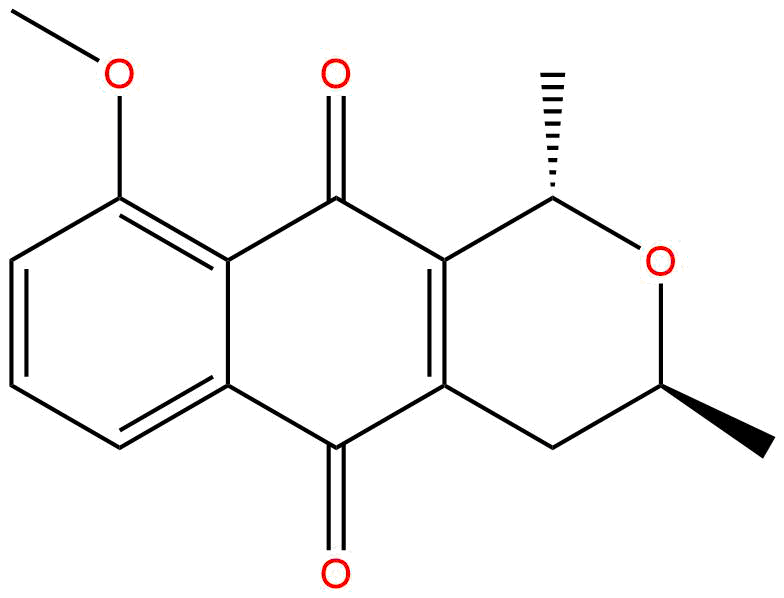


Product name: Isoeleutherin
Synonym name: (+)-allo-Eleutherin
Catalogue No.: BP4431
Cas No.: 1078723-14-4
Formula: C16H16O4
Mol Weight: 272.3
Botanical Source:
Type of Compound:
Purity: 95%~99%
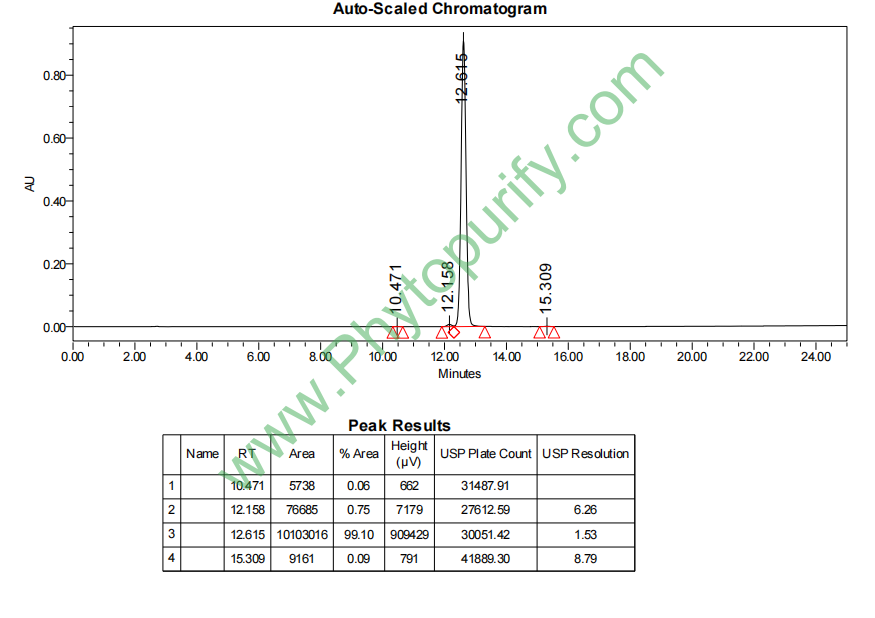
Analysis Method: HPLC-DAD or/and HPLC-ELSD
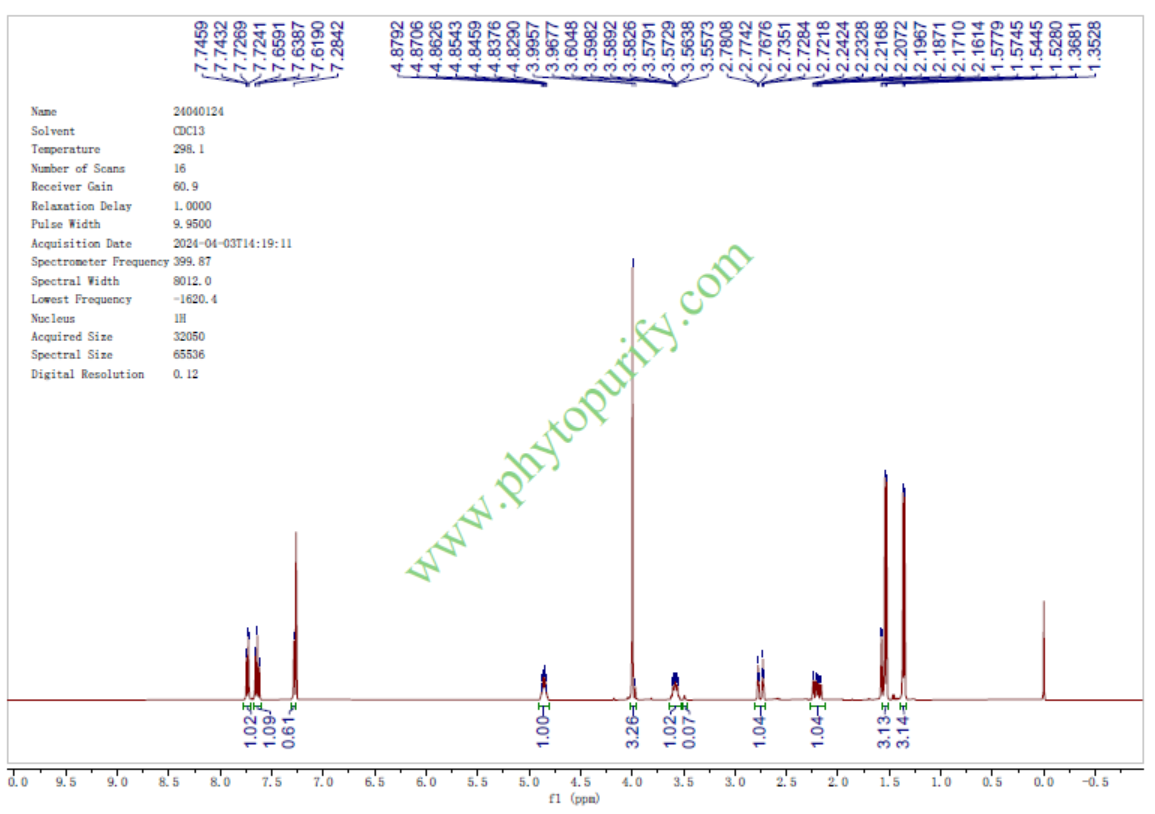
Identification Method: Mass, NMR
Packing: Brown vial or HDPE plastic bottle
Storage: Store in a well closed container, protected from air and light. Put into refrigerate or freeze for long term storage.
Whenever possible, you should prepare and use solutions on the same day. However, if you need to make up stock solutions in advance, we recommend that you store the solution as aliquots in tightly sealed vials at -20℃. Generally, these will be useable for up to two weeks.
The product could be supplied from milligrams to grams
Inquire for bulk scale.
For Reference Standard and R&D, Not for Human Use Directly.
HPLC of Isoeleutherin
HNMR of Isoeleutherin
Storage conditions:Short-term storage at 2~8℃, long-term storage at -20 ~ -80℃
52.6000
2.5329
2.5330
.0610
5.0448
22.7277
High
80.6413
3.3750
No
No
No
No
Yes
Yes
1.5
Yes
Yes
Yes
Yes
Melanoma is an invasive malignant tumor originating from skin melanocytes. Its incidence rate continues to rise worldwide, and the prognosis of late patients is very poor. It is easy to develop resistance to traditional chemotherapy and radiotherapy. Therefore, the development of new, efficient, and low toxicity anti melanoma drugs is an important direction in current tumor pharmacology research. Natural products have always been an important source of innovative drug discovery due to their structural diversity and rich biological activity. Isoeleutherin (CAS number: 1078723-14-4), as a naphthopyranone compound isolated from traditional medicinal plants, has attracted much attention in recent years due to its significant anti proliferative and pro apoptotic activities in various tumor models, especially melanoma. Research has shown that isoquercetin can exert multi-target anti-tumor effects by intervening in multiple key signaling pathways and molecular targets, providing potential strategies for overcoming tumor heterogeneity and drug resistance. This article aims to systematically review the chemical properties, plant sources, pharmacological activities, mechanisms of action, medicinal properties, and application prospects of isoquercetin in the field of melanoma resistance, in order to provide comprehensive scientific references for the in-depth research and development of this compound.
Isoquercetin is a natural product of naphthopyranone, with a molecular formula of C16H16O4 and a molecular weight of 272.3000. Its core structure is composed of a fused naphthalene ring and a pyranone ring, with specific substituents such as methoxy and methyl. This unique fused ring structure gives it a specific spatial conformation and electronic distribution, which is the structural basis for its interactions with various biomolecules such as enzymes and receptors.
From the analysis of physical and chemical properties, the lipid water partition coefficient (LogP) of isoquercetin is 2.5329, indicating that the compound has moderate lipophilicity, which is conducive to its penetration of the cell membrane and entry into the cell to exert its effects. Its topological polar surface area (TPSA) is 52.6000 Å ², which is relatively low, further indicating its good membrane permeability. However, its water solubility is poor, about 0.0610 mg/mL, which may pose challenges in formulation development and in vivo administration routes. It is worth noting that based on its physicochemical parameters prediction, isoquercetin has a high blood-brain barrier permeability, which provides unique advantages for its potential application in the treatment of melanoma that may undergo brain metastasis. In addition, preliminary pharmacological risk assessment showed negative hERG inhibition, indicating a low risk of inducing cardiac toxicity (such as long QT syndrome); However, the Ames test result is 1.5, indicating a possible slight risk of mutagenicity and requiring close attention and in-depth evaluation in subsequent development.
Isoquercetin is mainly derived from the Iridaceae family of the Allium genus(Eleutherine)Plants, especially American red onions(Eleutherine bulbosa (Mill.) Urb., Also known as Eleutherine americana)The bulbs. This genus of plants has a long history of application in traditional medicine in Southeast Asia and South America, often used to treat inflammation, infections, cardiovascular diseases, and digestive system diseases.
The extraction and separation of isoquercetin from plant materials usually use organic solvent extraction combined with chromatographic separation technology. The common process is as follows: first, the dried plant bulbs are crushed, and polar organic solvents such as methanol, ethanol, or acetone are used for cold soaking or heating reflux extraction to obtain the crude extract. Subsequently, the crude extract was preliminarily segmented using liquid-liquid extraction methods (such as ethyl acetate, chloroform, etc.). The obtained fraction rich in naphthopyranone compounds is further separated and purified by column chromatography, using commonly used stationary phases such as silica gel and reverse phase silica gel (such as C18), and mobile phases of different proportions of petroleum ether ethyl acetate or methanol water systems. Monitor by thin layer chromatography (TLC) or high performance liquid chromatography (HPLC), and ultimately obtain high-purity isoquercetin monomer by preparative HPLC or recrystallization methods. In recent years, green extraction techniques such as supercritical fluid extraction have also been explored to improve extraction efficiency and selectivity.
A large number of in vitro and in vivo pharmacological studies have confirmed that isoquercetin has a wide range of biological activities, and its core research focus is on the field of anti-tumor, especially targeting melanoma.
The anti melanoma effect of isoquercetin is not achieved through a single pathway, but involves a complex multi-target regulatory network. Existing research has preliminarily revealed its interactions with multiple key targets involved in the development and progression of melanoma
In summary, isoquercetin exerts a synergistic anti-tumor effect by simultaneously acting on multiple targets such as BCL2, TP53, MAPK pathway, NF - κ B pathway, and cell cycle checkpoint, which may be its potential advantage in overcoming single target drug resistance.
Although isoquercetin has shown good pharmacological activity in vitro, its successful development as a drug highly depends on systematic pharmacological evaluation and pharmacokinetic studies. At present, the preclinical pharmacokinetic data of isoquercetin is not complete, but based on its physicochemical properties and preliminary research, the following analysis can be conducted:
As a natural lead compound with multiple targets against melanoma, isohongcong B has broad clinical application prospects, but also faces many challenges.
Potential advantages and prospects:
1. Multi target mechanism of action Targeting the complex signaling network of melanoma, multi-target drugs may be more effective in inhibiting tumor growth and delaying the development of drug resistance. The characteristic of isoquercetin makes it a potential candidate for monotherapy or combination therapy.
2. Blood-brain barrier penetrability For common brain metastases in advanced melanoma, the efficacy of existing drugs is limited. The high BBB permeability potential of isoquercetin provides a unique opportunity for its treatment of brain metastases.
3. Combined application with traditional therapy or immunotherapy Exploring the synergistic effects of isoquercetin with dalafenib/trametinib (targeting BRAF/MEK), chemotherapy drugs (such as dacarbazine), or immune checkpoint inhibitors (such as PD-1 antibodies) may lead to better therapeutic efficacy and overcome drug resistance.
4. Structural optimization and derivative development Using it as the parent nucleus for structural modification aims to enhance activity, improve water solubility, and reduce potential toxicity, which is an important direction in pharmaceutical chemistry research.
Challenges faced and future research directions:
1. In depth study on the mechanism of action It is necessary to clarify more accurately the direct interaction mode (whether it is direct binding or indirect regulation) between it and various targets (such as PRKCA, NRAS, etc.), and use gene knockout/knockdown techniques to verify the necessity of key targets in mediating their effects.
2. Preclinical development of the system A comprehensive pharmacokinetic study (ADME), safety pharmacology, and toxicology evaluation must be completed to clarify its therapeutic window. Pharmaceutical research needs to address the issues of solubility and stability.
3. Pharmacodynamic validation in vivo It is necessary to validate the anti-tumor efficacy and metastasis inhibition ability of monotherapy and combination therapy in more and more clinically relevant melanoma animal models, such as patient derived tumor xenograft models.
4. Risk benefit assessment The potential genetic toxicity risk is a core safety issue that must be strictly monitored and evaluated in future development.
Isoquercetin is a natural compound of naphthopyranone with significant anti melanoma activity discovered from traditional medicinal plants. It exerts multiple pharmacological effects such as inducing apoptosis, inhibiting proliferation, blocking the cell cycle, and resisting migration and invasion by regulating multiple signaling pathways such as BCL2, TP53, MAPK, and NF - κ B, demonstrating the characteristics of multi-target anti-tumor drugs. Despite challenges such as poor water solubility and potential genetic toxicity in drug development, its unique structure, clear biological activity, and especially its potential blood-brain barrier penetration ability make it of significant exploration value in the field of anti melanoma drug research and development. Future research should focus on in-depth analysis of its molecular action network, systematic preclinical pharmacokinetics and safety evaluation, and actively carry out derivative design and optimization based on its structure. Through interdisciplinary collaboration, isoquercetin is expected to gradually develop from a promising natural lead compound into a novel therapeutic weapon against melanoma, a malignant disease.
