


Synonym name: Alantolactone; Alantic anhydride; Alantcamphor
Catalogue No.: BP0712
Cas No.: 546-43-0
Formula: C15H20O2
Mol Weight: 232.323
Botanical Source: Inula helenium (elecampane), Inula racemosa, Inula grandis, Inula magnifica, Saussurea lappa, Codonocephalum grande (preferred genus name Inula), Abutilon indicum and other plants
Purity: 95%~99%
Analysis Method: HPLC-DAD or/and HPLC-ELSD
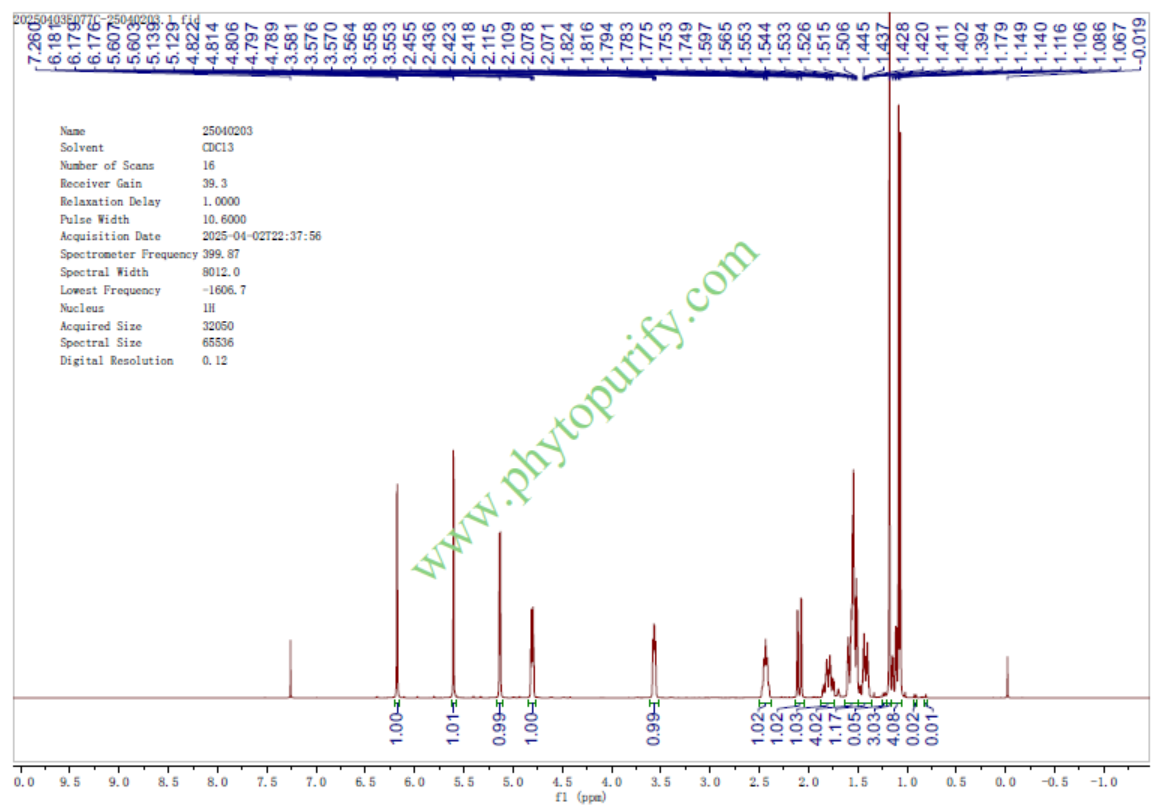
Identification Method: Mass, NMR
Packing: Brown vial or HDPE plastic bottle
Can be supplied from milligrams to grams.
For Reference Standard and R&D, Not for Human Use Directly.
Inquire for bulk scale.
HPLC of Helenine
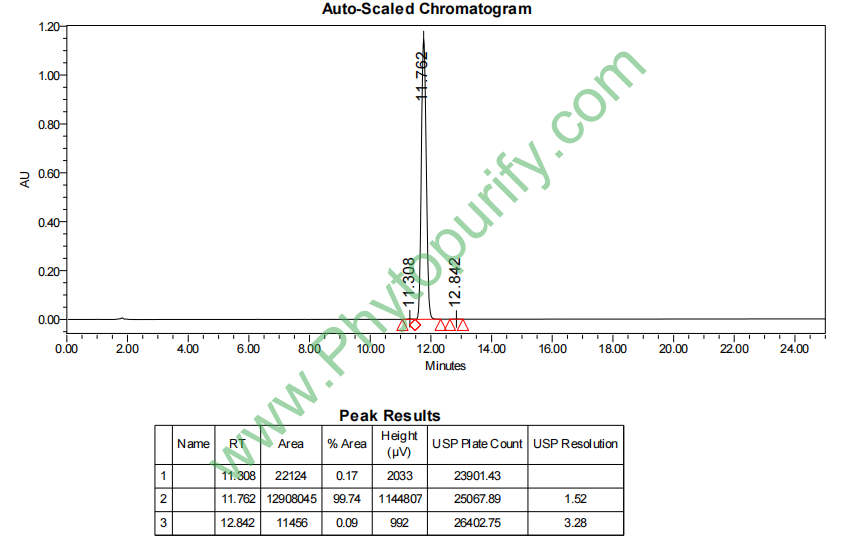
HPLC of Alantolactone
Storage conditions:Short-term storage at 2~8℃, long-term storage at -20 ~ -80℃
26.3000
3.6064
3.6064
.0540
7.7185
19.3387
High
77.7656
4.5188
No
Yes
No
No
Yes
No
0.0
No
No
No
Yes
Natural products, as an important source of drug discovery, play an irreplaceable role in the history of human disease prevention and treatment. Sesquiterpene lactones have always been a hot topic in medicinal chemistry and pharmacology research due to their structural diversity and significant biological activity. Among them, Helene (CAS number: 546-43-0), as a sesquiterpene lactone with a unique naphthofuran skeleton, has attracted much attention since its discovery due to its wide range of pharmacological activities. Early research mainly focused on its antiviral and anti-tumor potential, but in recent years, with the deepening of molecular biology and signaling pathway research, its powerful anti-inflammatory effects and multi-target regulatory characteristics have gradually become the forefront of research. Inflammation is the fundamental pathophysiological process by which the body responds to injury or infection, but uncontrolled chronic inflammation is a common pathological basis for various major diseases such as cancer, autoimmune diseases, neurodegenerative diseases, and metabolic syndrome. Therefore, the search for efficient and multi-target natural anti-inflammatory lead compounds has important scientific significance and clinical value. This article aims to systematically review the chemical properties, plant sources, pharmacological activities, especially the molecular mechanism and target network of anti-inflammatory effects of coumarin, and evaluate and prospect its pharmacological properties and clinical application prospects, in order to provide comprehensive academic references for the deep development of this compound.
The chemical name of coumarin is 3a, 5,6,7,8,8a, 9,9a octahydronaphtho [2,3-b] furan-2-one, with a molecular formula of C15H20O2 and a molecular weight of 232.3230. Structurally, it belongs to the sesquiterpene lactone family, with a core skeleton consisting of a fused naphthofuran system in which the furan ring is fused with the lactone ring. The molecule is connected to a methyl group at positions 5 and 8a, and has a key methylene (=CH2) substituent at position 3. The combination of rigidity and flexibility, as well as the presence of lactone rings and vinyl bonds, is an important structural basis for its biological activity.
In terms of physicochemical properties, the lipid water partition coefficient (LogP) of coumarin is 3.6064, indicating its good lipophilicity, which facilitates its penetration of cell membranes and binding to hydrophobic targets. Its topological polar surface area (TPSA) is relatively low, only 26.3000 Å ², further confirming its low molecular polarity. The water solubility data is 0.0540 mg/mL, which belongs to compounds that are difficult to dissolve in water. This is more common in natural products and is also one of the difficulties that need to be overcome in the development of their formulations. It is worth noting that its predicted blood-brain barrier permeability is "high", indicating that the compound has potential therapeutic applications for central nervous system diseases, such as neuroinflammatory related diseases. In addition, preliminary pharmacological risk assessment showed no inhibition of hERG potassium channels (hERG inhibition: No), and the Ames test result was 0.0, indicating that it may not have cardiotoxicity and mutagenicity risks, providing positive early data for its safety evaluation.
Turmeric lactone is mainly derived from plants of the genus Inula and the genus Inula helicium in the Asteraceae family. The rhizome of Inula helenium L. is its most famous source, and this plant is commonly used in traditional medicine to treat respiratory and digestive system diseases. In addition, the presence of this compound or its structural analogues has also been found in some Artemisia plants.
Organic solvent extraction is commonly used to extract coumarin from plant materials. Dried and crushed plant rhizomes are usually first defatted with petroleum ether or n-hexane, followed by repeated leaching or reflux extraction using medium polarity solvents such as ethyl acetate, chloroform, or methanol. Due to the relatively low content of coumarin and the complex composition of plant extracts, further separation and purification are crucial. The conventional purification process includes silica gel column chromatography, using different ratios of petroleum ether ethyl acetate or n-hexane ethyl acetate gradient elution, and preliminary separation based on their polarity. Subsequently, high-purity monomer compounds can be obtained by preparative thin layer chromatography (PTLC) or high performance liquid chromatography (HPLC, often using a reverse phase C18 column with methanol water or acetonitrile water as the mobile phase). Modern technologies such as high-speed counter current chromatography (HSCCC) are also suitable for the separation of such natural products due to their advantages of not requiring solid phase carriers and high recovery rates. The optimization of extraction and separation processes aims to improve the yield and purity of target compounds, which is the foundation for subsequent pharmacological research and development.
Turmeric lactone exhibits diverse pharmacological activities, and its research has expanded from early antiviral and anti-tumor activities to anti-inflammatory and immune regulatory fields.
1. Antitumor and apoptosis inducing activity: Turmeric lactone is clearly classified as an anti-tumor agent and an inducer of cell apoptosis. Studies have shown that it can significantly inhibit the proliferation and promote apoptosis of many human cancer cell lines, including lung cancer, breast cancer, liver cancer, colon cancer and leukemia cells. Its function is not limited to cytotoxicity, but also involves regulating the cell cycle (such as blocking in the G2/M phase).
2. Anti inflammatory activity: This is the core focus of current pharmacological research on coumarin. In various animal models of acute and chronic inflammation, such as lipopolysaccharide (LPS) - induced sepsis, carrageenan induced paw swelling, acetic acid induced increased peritoneal capillary permeability in mice, and cotton ball induced granuloma models, coumarin has shown strong anti-inflammatory effects. It can significantly inhibit the red, swollen, hot, and painful reactions in the inflamed area, and reduce the level of inflammatory mediators.
3. Other activities: Early literature reported that it has certain antiviral (such as anti influenza virus) and antibacterial activity. In addition, it also demonstrates immunomodulatory potential by regulating immune cell function.
The anti-inflammatory effect of coumarin is not achieved through a single pathway, but through a multi-target and multi-level regulatory network, which explains its potent and broad-spectrum anti-inflammatory properties. The key mechanism of action and molecular targets are as follows:
1. Inhibit the nuclear factor kappa B (NF - κ B) signaling pathway: This is the core mechanism by which coumarin exerts anti-inflammatory effects. NF - κ B is a central regulatory factor in inflammatory response. Turmeric lactone can inhibit IKBKB (I κ B kinase β), prevent the phosphorylation and degradation of I κ B protein, thereby retaining NF - κ B (mainly subunit RELA/p65) in the cytoplasm and preventing its nuclear translocation. This directly leads to the inhibition of transcription of a series of pro-inflammatory cytokine genes downstream, including tumor necrosis factor - α (TNF - α), interleukin-6 (IL-6), and inducible nitric oxide synthase (NOS2).
2. Inhibition of STAT3 signaling pathway: Signal transducer and activator of transcription factor 3 (STAT3) is another important pro-inflammatory and pro cancer pathway. Turmeric lactone can inhibit the phosphorylation (activation) and nuclear translocation of STAT3 induced by cytokines such as IL-6, thereby blocking its mediated gene expression and playing a dual role in inhibiting inflammation and tumor growth.
3. Regulating inflammasome activity: The activation of inflammasomes such as NLRP3 leads to the cleavage and activation of caspase-1 (CASP1), which in turn promotes the maturation and release of interleukin-1 β (IL-1 β) and IL-18. Studies have shown that eugenolide can inhibit the assembly and activation of NLRP3 inflammasome, reduce the activity of CASP1, and reduce the secretion of mature IL-1 β, which is of great significance in the treatment of gout, type 2 diabetes and other inflammasome related diseases.
4. Inhibition of cyclooxygenase-1 (PTGS1/COX-1): Turmeric lactone has an inhibitory effect on prostaglandin endoperoxide synthase 1 (COX-1). COX-1 is a constitutively expressed enzyme that participates in maintaining physiological levels of prostaglandins and is also activated during inflammation. Inhibiting COX-1 helps reduce the production of pro-inflammatory mediators such as prostaglandins.
5. Adjust ion channels: Turmeric lactone has been reported as a regulator of transient receptor potential vanillic acid subtype 1 (TRPV1) and transient receptor potential anchor protein subtype 1 (TRPA1). These two channels are important sensors for pain and neuroinflammation. By regulating the activity of these channels, coumarin may directly participate in anti nociceptive effects and inhibit neurogenic inflammation.
6. Downregulate pro-inflammatory mediators: Taking into account the above target effects, coumarin can effectively reduce the expression and release of key pro-inflammatory cytokines (TNF - α, IL-6, IL-1 β) and inflammatory effector enzymes (NOS2, COX-2) in cell and animal models.
In summary, coumarin acts on multiple key inflammatory signaling nodes such as NF - κ B, STAT3, and inflammasomes simultaneously, and regulates pain sensing channels, forming a synergistic anti-inflammatory network. This gives it a unique advantage in dealing with complex and multifactorial chronic inflammatory diseases.
Based on its physicochemical parameters and existing research, a preliminary evaluation of the pharmacological properties of coumarin is conducted
Advantage:
1. Strong activity, multi-target: The mechanism of action is clear, multi-target synergy may reduce the risk of drug resistance, and has potential for complex diseases.
2. Better security warning: The preliminary prediction of no hERG inhibition and genotoxicity provides a good safety starting point for subsequent development.
3. Good membrane permeability and BBB permeability: Moderate LogP values and low TPSA indicate good oral absorption potential and blood-brain barrier penetration ability, providing potential for the treatment of central nervous system inflammatory diseases such as Alzheimer's disease and multiple sclerosis.
Challenge:
1. Poor water solubility: Low water solubility (0.0540 mg/mL) may seriously affect its oral bioavailability and the development of intravenous dosage forms.
2. Lack of pharmacokinetic data: At present, there are few reports on the systematic pharmacokinetic studies of coumarin, such as absorption, distribution, metabolism, and excretion. Key parameters such as metabolic pathways, major metabolites, half-life, and oral bioavailability urgently need to be elucidated.
3. Potential metabolic stability issues: As a sesquiterpene lactone, the lactone ring and ene bond in its structure may serve as binding sites for metabolic enzymes such as cytochrome P450 and esterase, leading to rapid metabolism in the body.
4. Preparation difficulty: Advanced drug delivery technologies are needed to improve its solubility and bioavailability, such as nanocrystals, liposomes, cyclodextrin inclusion complexes, or solid dispersions.
The future optimization of drug properties should focus on: ① conducting systematic preclinical pharmacokinetic and toxicological studies; ② Using pharmaceutical methods to solve solubility problems; ③ Optimize its pharmacokinetic properties through structural modifications (such as synthesizing water-soluble prodrugs or similar compounds) while maintaining its activity.
The multi-target anti-inflammatory properties of coumarin paint a broad prospect for its application in various disease fields:
1. Inflammatory related diseases:
* Rheumatoid arthritis/osteoarthritis: By inhibiting NF - κ B, STAT3, and inflammasomes, reducing cytokines such as TNF - α, IL-6, IL-1 β in joint synovium, inflammation and bone destruction may be effectively alleviated.
* Inflammatory bowel disease (IBD): Its anti-inflammatory and immunomodulatory effects may have therapeutic value for ulcerative colitis and Crohn's disease.
* Neuroinflammatory diseases: With its high BBB penetration, it has great potential in the regulation of neuroinflammation in diseases such as Alzheimer's disease, Parkinson's disease, and multiple sclerosis.
* Metabolic disorders: Chronic low-grade inflammation is the core feature of obesity, type 2 diabetes and nonalcoholic fatty liver. Turmeric lactone may improve insulin resistance and metabolic disorders by inhibiting inflammasomes and related pathways.
2. Tumor treatment: Its ability to induce apoptosis and inhibit STAT3/NF - κ B, two pro survival and pro-inflammatory pathways, makes it suitable as a chemotherapy adjuvant or for preventing inflammation driven tumorigenesis. Especially in cancers closely related to chronic inflammation, such as liver cancer and colon cancer, it may have unique effects.
3. Pain management: By regulating the TRPV1/TRPA1 channel and exerting strong anti-inflammatory effects, it is possible to develop novel analgesic drugs for the treatment of inflammatory pain and neuropathic pain.
Outlook and Challenges:
Despite the bright future, the clinical application of coumarin still faces a series of challenges: ① In depth study of the mechanism of action: More precise elucidation of its direct interaction mode with various targets (such as eutectic structure) is needed, and exploration of its overall regulatory role in the immune microenvironment. ② Preclinical development: The pharmacological, pharmacokinetic, and toxicological evaluations of the system must be completed to clarify its therapeutic window and potential toxicity. ③ Formulation innovation: Developing stable and efficient formulations suitable for clinical administration is a key step. ④ Combination therapy strategy: Exploring its combination application with existing anti-inflammatory or anticancer drugs may result in synergistic effects, reducing their respective dosages and side effects.
Future research should integrate multiple omics technologies, molecular simulations, and artificial intelligence to deeply explore their biological functions and promote their transformation from natural lead compounds to clinical candidate drugs.
As a structurally unique sesquiterpene lactone natural product, coumarin has become a star molecule in natural product pharmacology research due to its excellent multi-target anti-inflammatory activity, clear ability to induce cell apoptosis, and good blood-brain barrier penetration potential. It demonstrates enormous application value in treating chronic inflammation, tumors, and neurodegenerative diseases by precisely intervening in core inflammatory signaling hubs such as NF - κ B, STAT3, and inflammasomes. However, its inherent poor water solubility and unclear pharmacokinetic characteristics are the main obstacles hindering its clinical application. Future research should strive to optimize its physicochemical and pharmacokinetic properties by comprehensively utilizing medicinal chemistry, pharmacy, and pharmacology methods based on in-depth analysis of its molecular action network, and promote high-quality preclinical and clinical research. The research process of coumarin once again confirms the important significance of discovering multi-target lead compounds from traditional medicinal plants for solving complex disease treatment problems.
