


Product name: Isoalantolactone
Synonym name: Isohelenin
Catalogue No.: BP0771
Cas No.: 470-17-7
Formula: C15H20O2
Mol Weight: 232.323
Botanical Source: Inula helenium L.
Physical Description:
Type of Compound: Sesquiterpenoids
Purity: 95%~99%
Analysis Method: HPLC-DAD or/and HPLC-ELSD
Identification Method: Mass, NMR
Packing: Brown vial or HDPE plastic bottle
Storage: Store in a well closed container, protected from air and light. Put into refrigerate or freeze for long term storage.
Whenever possible, you should prepare and use solutions on the same day. However, if you need to make up stock solutions in advance, we recommend that you store the solution as aliquots in tightly sealed vials at -20℃. Generally, these will be useable for up to two weeks.
The product could be supplied from milligrams to grams
Inquire for bulk scale.
Chengdu Biopurify Phytochemicals Ltd. is a leading company in the research, development, manufacture and marketing of High Quality Phytochemicals and Extracts(especially Active Ingredients from Traditional Chinese Medicine,TCM), Natural Active Pharmaceutical Ingredients worldwide.
The main services:
A. Supply active ingredients and reference standards of TCM, from mgs to kgs scale
B. Custom extraction and purification, target Herb Active Ingredients
C. Custom synthesis and semi-synthesis for Natural Active Ingredients
D. CR(contract research), CM(contract manufacture) and PD(process development) services from lab scale, pilot scale to commercial scale(GMP is also available)
E. TCM compounds library for drug screen,more than 3000 compounds available, many of them are rare and unique.
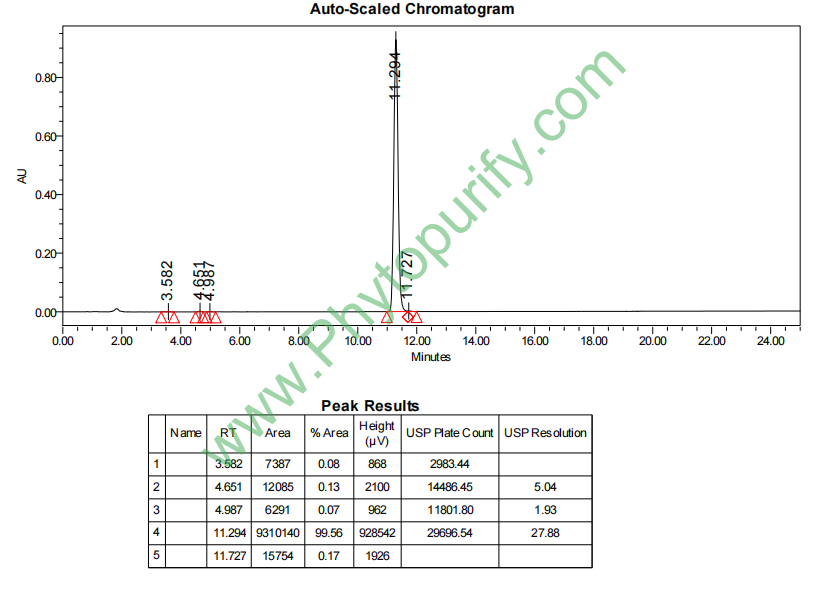
HPLC of Isoalantolactone
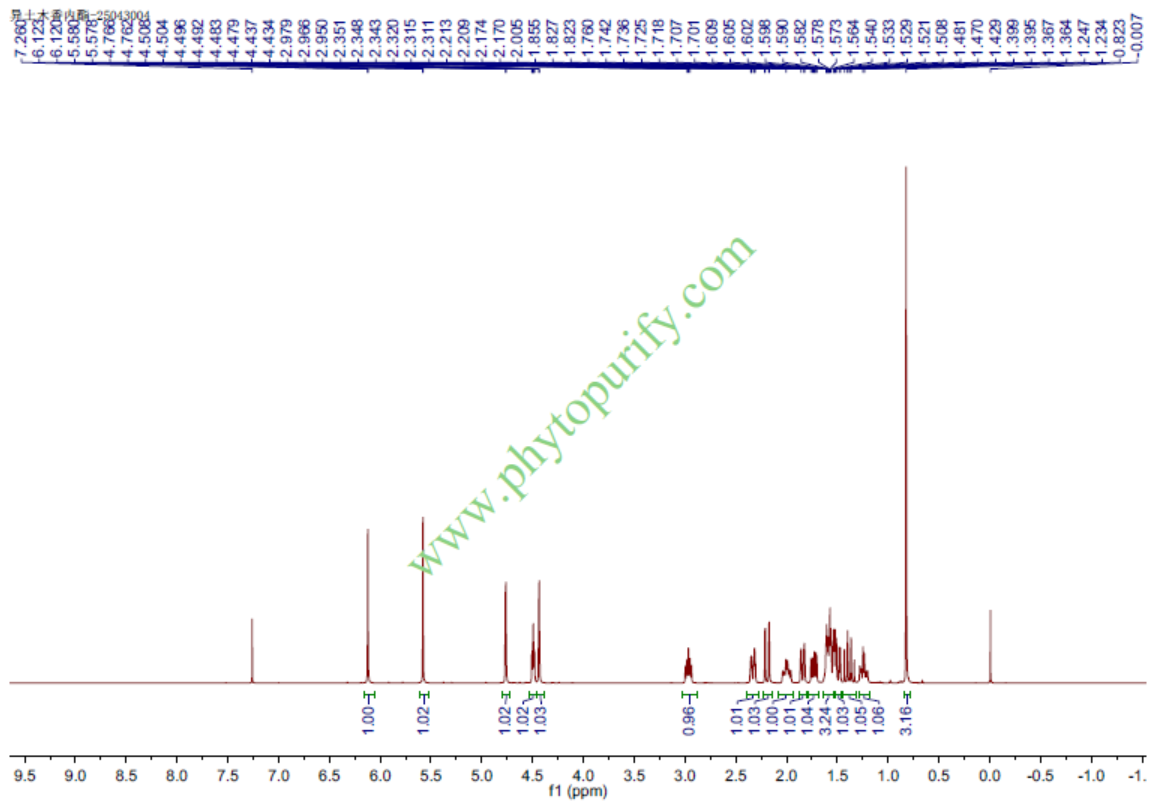
HNMR of Isoalantolactone
Storage conditions:Short-term storage at 2~8℃, long-term storage at -20 ~ -80℃
26.3000
3.0070
3.0070
.0616
7.4211
12.0961
High
77.5523
4.2440
No
No
No
No
Yes
No
0.3
No
No
No
No
Natural products, as an important source of drug discovery, play an irreplaceable role in the long history of human fight against diseases. Among numerous natural compounds with biological activity, sesquiterpene lactones have attracted much attention due to their structural diversity and significant pharmacological activity. This type of compound is widely present in Asteraceae plants, and its α - methylene - γ - lactone structural unit is considered a key pharmacophore for exerting biological activity. Isoalantolactone (CAS number: 470-17-7), as a typical representative of eudesmanolide sesquiterpene lactones, has become one of the research hotspots in the field of natural product pharmacology since its isolation and identification in plants of the genus Inula.
The chemical name of isocoumarin is 3a, 5, 6, 7, 8, 8-hexahydro-5,8a-dimethyl-3-methylene-2H-cycloheptano [b] furan-2-one, with a molecular formula of C ₁₅ H ₂₀ O ₂ and a molecular weight of 232.32 Da. This compound was initially isolated from the rhizomes of Inula helenium L. and later discovered in various Asteraceae plants. Isocoumarin not only has various pharmacological activities such as antifungal, anti-inflammatory, and anti-tumor effects, but more importantly, as a natural alkylating agent, it can regulate multiple signaling pathways by covalently modifying cysteine residues in target proteins, thereby exerting its biological effects. In recent years, with the in-depth study of its mechanism of action, the potential application of isocoumarin in anti-inflammatory and anti-tumor fields has become increasingly prominent, especially in regulating key inflammatory signaling pathways such as IL-6/STAT3 and NF - κ B, making it an ideal lead compound for the development of new anti-inflammatory and anti-tumor drugs.
This article will provide a systematic review of the research progress of isocoumarin from the aspects of chemical structure and physicochemical properties, plant sources and extraction methods, pharmacological activity, mechanism of action, evaluation of drug properties, and clinical application prospects, in order to provide reference for the further development and utilization of this compound.
Isocoumarin belongs to the eudesmanolide class of sesquiterpene lactones, and its core skeleton is the decalin system, which is composed of two hexagonal rings fused together. Structurally, isocoumarin has the following significant characteristics:
α - methylene - γ - lactone structure This is an active group shared by sesquiterpene lactones, located between the C-3 and C-4 positions. The α, β - unsaturated carbonyl groups in this structure have electrophilicity and can undergo Michael addition reactions with thiol groups (- SH) in biomolecules, which is the structural basis for their alkylation and biological activity.
Double ring skeleton A ring is a six membered ring, B ring is a six membered ring, and the two are connected in a trans fused manner. The C-5 and C-8a positions each have a methyl substituent located in the β and α configurations, respectively.
Lactone ring The γ - lactone ring is fused with the B ring to form a cycloheptanofuran structure. The carbonyl oxygen atom of the lactone ring is oriented towards the outer side of the molecule, which facilitates hydrogen bonding interactions with the target protein.
Isocoumarin and alantolactone are isomers of each other, and the difference between the two lies in the position of the double bond. The double bond of isocoumarin is located between the C-3 and C-4 positions (extra cyclic double bond), while the double bond of isocoumarin is located between the C-4 and C-5 positions (intra cyclic double bond). This subtle structural difference leads to differences in biological activity and target selectivity between the two.
According to the results of computational chemistry and experimental measurements, the main physicochemical parameters of isocoumarin are as follows:
From the perspective of structure property relationship, the LogP value of isocoumarin is about 3.0, which meets the requirement of Lipinski's "Five Rules" with LogP<5, indicating that it has good membrane permeability. However, its water solubility is poor (about 0.06 mg/mL), which may affect oral bioavailability and needs to be improved through formulation techniques such as cyclodextrin inclusion, liposome encapsulation, etc. It is worth noting that isocoumarin has high blood-brain barrier permeability, which provides possibilities for its application in central nervous system diseases such as neuroinflammation and brain tumors, but may also increase the risk of central nervous system toxicity.
Isocoumarin is mainly found in plants of the Asteraceae genus Inula, with higher concentrations in species including:
Inula helicium L Also known as Qi Mu Xiang or Qing Mu Xiang, it is a traditional source plant of isoxylenol. The roots and rhizomes of the Chinese medicinal plant are rich in various sesquiterpene lactones, among which isocoumarin and Chinese medicinal plant lactone are the main active ingredients, with a total content of up to 1% -3% of dry weight.
Inula japonica Thunb Its dried inflorescence is a traditional Chinese medicine spiral flower, which has the effects of reducing qi, phlegm, and nausea. Modern research has shown that spiral flowers contain various sesquiterpene lactones such as isocoumarin.
Inula cappa DC Used in folk medicine to treat diseases such as colds, fever, sore throat, etc., its above ground parts contain isocoumarin.
Inula racemosa Hook. f Distributed in the Himalayan region, its rhizomes have a high content of isocoumarin.
In addition, isocoumarin is also present in other Asteraceae plants, such as Carpesium abrotanoides L. and Blumea balsamifera DC.
The extraction methods of isocoumarin mainly include traditional solvent extraction and modern assisted extraction techniques.
Traditional solvent extraction method:
- Ethanol reflux extraction Grind the dried plant material (usually rhizomes) and extract 2-3 times with 70% -95% ethanol reflux, each time for 1-2 hours. After concentration of the extract, it is extracted with petroleum ether or ethyl acetate, and then purified by silica gel column chromatography.
- Chloroform extraction The good solubility of sesquiterpene lactones was extracted using chloroform, but chloroform is more toxic and is now less commonly used.
Modern assisted extraction technology:
- Ultrasound assisted extraction Under the action of ultrasound field, the plant cell wall is damaged, and the solvent permeability is enhanced, which can significantly improve the extraction efficiency and shorten the extraction time. The optimization conditions are usually 60% -80% ethanol, a solid-liquid ratio of 1:10-1:15, ultrasound power of 200-400 W, temperature of 40-60 ° C, and extraction time of 30-60 minutes.
- Microwave assisted extraction By utilizing the body heating effect of microwaves, the internal temperature of plant cells rapidly increases, the cell membrane ruptures, and the target components dissolve quickly. Microwave extraction can be completed within a few minutes with minimal solvent usage.
- Supercritical fluid extraction Extract using CO ₂ as the extractant under supercritical conditions (temperature>31.1 ° C, pressure>7.38 MPa). This method has high selectivity, no solvent residue, and is suitable for extracting thermosensitive components. Adding an appropriate amount of ethanol as an entrainer can improve the extraction rate of isocoumarin.
Separation and purification:
Isocoumarin in crude extracts usually needs to be purified by column chromatography. Common methods include:
- silica gel column chromatography Using a gradient elution of petroleum ether ethyl acetate (10:1 to 4:1), isocoumarin is typically enriched in the petroleum ether ethyl acetate (8:1) component.
- High Performance Counter Current Chromatography (HSCCC)The effective separation of isocoumarin and coumarin can be achieved by using a two-phase solvent system (such as n-hexane ethyl acetate methanol water) for separation.
- Preparation type high performance liquid chromatography (Prep HPLC)High purity (>98%) isocoumarin can be obtained by using a C18 reverse phase column with methanol water or acetonitrile water as the mobile phase.
Inflammation is the body's defense response to infection and tissue damage, but excessive or sustained inflammation can lead to the occurrence and development of various diseases. Isocoumarin exhibits significant anti-inflammatory activity in both in vivo and in vitro models.
In vitro research:
In the RAW264.7 macrophage model stimulated by lipopolysaccharide (LPS), isocoumarin (1-10 μ M) can dose dependently inhibit the production of nitric oxide (NO) and prostaglandin E ₂ (PGE ₂), and its mechanism is related to the downregulation of inducible nitric oxide synthase (iNOS/NOS2) and cyclooxygenase-2 (COX-2/PTGS2) expression. In addition, isocoumarin can significantly inhibit the release of pro-inflammatory cytokines such as tumor necrosis factor - α (TNF - α), interleukin-6 (IL-6), and interleukin-1 β (IL-1 β).
In human keratinocyte HaCaT cells, isocoumarin can inhibit the expression of TNF - α - induced chemokines and adhesion molecules, indicating its potential application value in skin inflammatory diseases.
In vivo research:
In the rat paw swelling model induced by carrageenan, intraperitoneal injection of isocoumarin (10-20 mg/kg) significantly reduced the degree of paw swelling, and the effect was comparable to the positive control drug indomethacin. In the acetic acid-induced model of increased peritoneal capillary permeability in mice, isocoumarin also showed significant inhibitory effects.
In a mouse colitis model induced by dextran sulfate sodium (DSS), oral administration of isocoumarin (20-40 mg/kg) can alleviate colon tissue damage, reduce disease activity index, and inhibit the expression of TNF - α, IL-6, and IL-1 β in colon tissue. These results indicate that isocoumarin has potential value in the treatment of inflammatory bowel disease.
Isocoumarin exhibits cytotoxic effects on various tumor cell lines, and its mechanism of action involves inducing cell apoptosis, inhibiting cell proliferation and migration, reversing drug resistance, and other aspects.
Cytotoxicity spectrum:
Isocoumarin has significant growth inhibitory effects on the following tumor cell lines (IC ₅₀ values typically range from 1-20 μ M):
-Lung cancer: A549, H1299, H460
-Breast cancer: MCF-7, MDA-MB-231
-Liver cancer: HepG2, Huh7
-Colorectal cancer: HCT116, SW480
-Gastric cancer: SGC-7901, BGC-823
-Prostate cancer: PC-3, DU145
-Leukemia: HL-60, K562
It is worth noting that isocoumarin has relatively low toxicity to normal cells (such as human normal liver cell L02 and human umbilical vein endothelial cell HUVEC) and exhibits certain selectivity.
Inducing cell apoptosis:
Isocoumarin can induce tumor cell apoptosis through two pathways: endogenous (mitochondrial) and exogenous (death receptor). In A549 lung cancer cells, treatment with isocoumarin resulted in a decrease in mitochondrial membrane potential, release of cytochrome c, activation of caspase-9 and caspase-3, and upregulation of Bax/Bcl-2 ratio. In addition, isocoumarin can upregulate the expression of death receptors DR4 and DR5, and enhance TRAIL induced cell apoptosis.
Inhibit cell migration and invasion:
In the MDA-MB-231 breast cancer cells, isoagallolide can inhibit the activity of matrix metalloproteinases (MMP-2 and MMP-9), thereby reducing the migration and invasion of cells. This effect is related to the inhibition of the NF - κ B signaling pathway.
Isocoumarin has inhibitory effects on various pathogenic fungi, including Candida albicans, Cryptococcus neoformans, Aspergillus fumigatus, and others. Its antifungal mechanism may be related to the disruption of fungal cell membrane integrity, inhibition of ergosterol synthesis, and induction of reactive oxygen species (ROS) production.
The pharmacological mechanism of action of isocoumarin involves multiple signaling pathways and molecular targets, with the core being the covalent modification of cysteine residues in target proteins by the α - methylene - γ - lactone structure.
Nuclear factor kappa B (NF - κ B) is the core transcription factor in inflammatory response, regulating the expression of various pro-inflammatory genes. Isocoumarin inhibits the NF - κ B signaling pathway through the following mechanisms:
Inhibition of I κ B kinase (IKK) activity Isocoumarin can directly covalently bind to the Cys-179 residue of IKK β (IKBKB), inhibiting its kinase activity and preventing the phosphorylation and degradation of I κ B α, resulting in NF - κ B (p65/RELA) remaining in the cytoplasm and unable to enter the nucleus.
Inhibition of p65 nuclear translocation Isocoumarin can also directly bind to the Cys-38 residue of p65 subunit, interfering with its binding ability to DNA and reducing the transcriptional activity of NF - κ B.
Downregulation of NF - κ B target gene expression Through the above mechanism, isocoumarin can inhibit the expression of NF - κ B target genes such as COX-2, iNOS, TNF - α, IL-6, IL-1 β, MMP-9, etc.
Signal transducer and activator of transcription factor 3 (STAT3) plays a crucial role in inflammation and tumors. Isocoumarin can inhibit the phosphorylation and dimerization of STAT3, and its mechanism includes:
Inhibition of JAK kinase activity Isocoumarin can bind to the Cys-1065 residue of JAK2, inhibiting its kinase activity and reducing the phosphorylation of the Tyr-705 site of STAT3.
Directly modify STAT3 Isocoumarin can directly covalently bind to the Cys-259 residue of STAT3 protein, interfering with its SH2 domain function and preventing STAT3 dimerization and nuclear translocation.
Downregulate STAT3 target genes After inhibiting STAT3 signaling, isocoumarin can downregulate the expression of genes related to cell proliferation and survival, such as Cyclin D1, Survivor, Bcl xL, VEGF, etc.
NLRP3 inflammasome is an important component of the innate immune system, and its abnormal activation is associated with various inflammatory diseases. Isocoumarin can inhibit the assembly and activation of NLRP3 inflammasomes:
Inhibition of CASP1 activity Isocoumarin can directly bind to the catalytic cysteine residue of caspase-1 (CASP1), inhibit its enzymatic activity, and thus block the maturation and secretion of IL-1 β and IL-18.
Inhibition of NLRP3 expression By inhibiting NF - κ B signaling, isocoumarin can downregulate the expression level of NLRP3 protein and reduce the formation of inflammasomes.
Transient receptor potential (TRP) channels play an important role in sensory conduction and inflammatory response. Isocoumarin can regulate the activity of TRPV1 and TRPA1 channels:
TRPV1 Isocoumarin can act as an agonist of TRPV1 channel, causing calcium ion influx and inducing sensory neuron desensitization, thereby producing analgesic effects.
TRPA1 Isocoumarin can activate the TRPA1 channel by covalently modifying cysteine residues (such as Cys-621, Cys-665), and participate in the regulation of inflammatory pain.
Based on computational chemistry and experimental data, the pharmacological characteristics of isocoumarin are as follows:
Complies with Lipinski's "Five Rules":
-Molecular weight: 232.32 Da (<500)
- LogP:3.007(<5)
-Number of hydrogen bond donors: 0 (<5)
-Number of hydrogen bond acceptors: 2 (<10)
-Number of rotatable keys: 1 (<10)
Isocoumarin fully complies with Lipinski's rules, indicating its basic chemical properties as an oral medication. In addition, its TPSA is 26.30 Å ², far below the upper limit of 140 Å ², indicating good oral absorption and membrane permeability.
safety evaluation:
-HERG inhibition: negative (low risk of cardiac toxicity)
-Ames test: 0.3 (low risk of mutagenicity, but further validation is required)
-Cytotoxicity: Selective toxicity to normal cells needs to be improved
potential issues:
1. Poor water solubility The water solubility of 0.0616 mg/mL may limit its oral bioavailability and requires improvement through formulation technology.
2. Covalent modification properties As an alkylating agent, the non-specific covalent binding of isocoumarin may lead to off target effects and toxicity.
3. Metabolic stability Sesquiterpene lactones are easily metabolized in the body, which may affect the duration of their pharmacological effects.
At present, there is insufficient systematic research on the pharmacokinetics of isocoumarin, but some studies have provided preliminary information:
absorb:
-After oral administration, isocoumarin can be absorbed by the gastrointestinal tract, but its absolute bioavailability may be low (estimated to be<20%), mainly limited by its water solubility and first pass metabolism.
-Intraperitoneal injection can provide high bioavailability.
distribution:
-Isocoumarin has high blood-brain barrier permeability and can be distributed to the central nervous system.
-The plasma protein binding rate is relatively high (estimated to be>90%), which may affect the concentration of free drugs.
Metabolism:
-Isocoumarin is mainly metabolized in the liver, involving cytochrome P450 enzyme systems (such as CYP3A4, CYP2C9) and glutathione S-transferase.
-The main metabolic pathways include: lactone ring hydrolysis, double bond reduction, hydroxylation, and covalent binding with glutathione.
-Metabolites may lose or retain some biological activity.
excretion:
-Isocoumarin and its metabolites are mainly excreted through bile and urine.
-The half-life is relatively short (estimated to be 1-3 hours) and may require frequent administration.
Based on the pharmacological activity and mechanism of action of isocoumarin, it has potential for development in the following disease areas:
Inflammatory diseases:
-Inflammatory bowel disease (IBD): including Crohn's disease and ulcerative colitis
-Rheumatoid arthritis
-Skin inflammatory diseases (such as psoriasis, atopic dermatitis)
-Neuroinflammation (such as Alzheimer's disease, Parkinson's disease)
tumor:
-Lung cancer, breast cancer, liver cancer, colorectal cancer and other solid tumors
-Leukemia and other hematological malignancies
-As a chemotherapy sensitizer, it enhances the efficacy of conventional chemotherapy drugs
fungal infection:
-Shallow and deep fungal infections, especially drug-resistant strains
structural optimization:
-Modify the structure of α - methylene - γ - lactone to improve target selectivity and reduce off target toxicity.
-Introducing water-soluble functional groups (such as phosphate esters and amino acid esters) to improve water solubility and oral bioavailability.
-Develop pre drug strategies to improve metabolic stability.
Formulation development:
-New delivery systems such as liposomes, nanoparticles, and cyclodextrin inclusion complexes improve water solubility and targeting.
-Topical preparations (such as cream and gel) are used for skin inflammation and fungal infection.
-Extended release formulations extend the dosing interval.
combination therapy:
-Combined with conventional anti-inflammatory drugs (such as nonsteroidal anti-inflammatory drugs, glucocorticoids) to reduce dosage and side effects.
-Combined with chemotherapy drugs such as cisplatin, paclitaxel, and 5-fluorouracil, it exerts a synergistic anti-tumor effect.
-Combined with antifungal drugs such as fluconazole and amphotericin B to overcome drug resistance.
Despite the multifaceted pharmacological activities and good pharmacological basis of isocoumarin, its development still faces the following challenges:
Future research directions should include:
-Thoroughly elucidate the molecular pharmacological mechanism of isocoumarin, particularly its covalent binding mode with key target proteins.
-Develop highly selective derivatives of isocoumarin to improve therapeutic efficacy and reduce toxicity.
-Conduct systematic pharmacokinetic and toxicological studies to lay the foundation for clinical trials.
-Explore the unique role of isocoumarin in regulating the inflammatory tumor microenvironment.
As a typical eucalyptus lactone sesquiterpene lactone, isocoumarin has become an important research object in the field of natural product pharmacology due to its unique chemical structure and diverse pharmacological activities. Its α - methylene - γ - lactone structure endows it with alkylating agent properties, which can regulate key signaling pathways such as NF - κ B, STAT3, NLRP3 inflammasome by covalently modifying cysteine residues in various signaling proteins, thereby exerting anti-inflammatory, anti-tumor, antifungal and other biological effects.
From the perspective of medicinal properties, isocoumarin conforms to the Lipinski rule and has the basic chemical properties for oral drug development. However, its poor water solubility and metabolic instability need to be overcome through structural optimization and formulation technology. With the deepening understanding of its mechanism of action and the continuous advancement of medicinal chemical modifications, isocoumarin and its derivatives are expected to play an important role in the treatment of inflammatory diseases and tumors.
Natural products are an inexhaustible source of drug discovery, and the research history of isocoumarin once again confirms this viewpoint. The transformation research of isocoumarin from active ingredients in traditional Chinese medicine to modern drug lead compounds not only provides candidate molecules for the development of new therapeutic drugs, but also provides an important example for understanding the interaction mechanism between natural products and biomolecules. I believe that in the near future, with the deepening of interdisciplinary research, isocoumarin and its analogues will make greater contributions to human health.
