Pharmacological research progress and clinical application prospects of Kaempferol 3-O-neohesperidoside
Introduction/Overview
Natural products, as an important source of drug discovery, play an irreplaceable role in the long history of human disease prevention and treatment. Flavonoids, as the most widely distributed class of secondary metabolites in nature, have attracted much attention due to their structural diversity and extensive biological activity. Kaempferol 3-O-neohesperidoside, also known as kaempferol-3-O-neohesperidoside, is a typical flavonol glycoside compound. Its chemical structure is formed by connecting the kaempferol nucleus with a neohesperidoside group through a glycosidic bond. This compound was first isolated and identified from plants of the genus Platycodon, hence its name.
In recent years, with the in-depth research on the pharmacological activity of natural products, Bairui Cao Su I has demonstrated various biological activities, especially in the fields of anti-inflammatory and anti-tumor, showing significant potential. Research has shown that resveratrol I can exert its pharmacological effects by regulating multiple signaling pathways, including inhibiting the expression of estrogen receptor alpha (ER alpha) and activating the MEK-MAPK signaling pathway to induce cell apoptosis. In addition, the compound has regulatory effects on various inflammation related targets such as IL-6, STAT3, TNF, etc., suggesting its potential important value in the treatment of inflammation related diseases.
This article will provide a systematic review of the research progress of Bai Rui Cao Su I from the aspects of chemical structure and physicochemical properties, plant sources and extraction methods, pharmacological activity research, mechanism of action and molecular targets, drug evaluation and pharmacokinetics, and clinical application prospects, in order to provide reference for the in-depth research and development of this natural product.
Chemical structure and physicochemical properties
Chemical structural characteristics
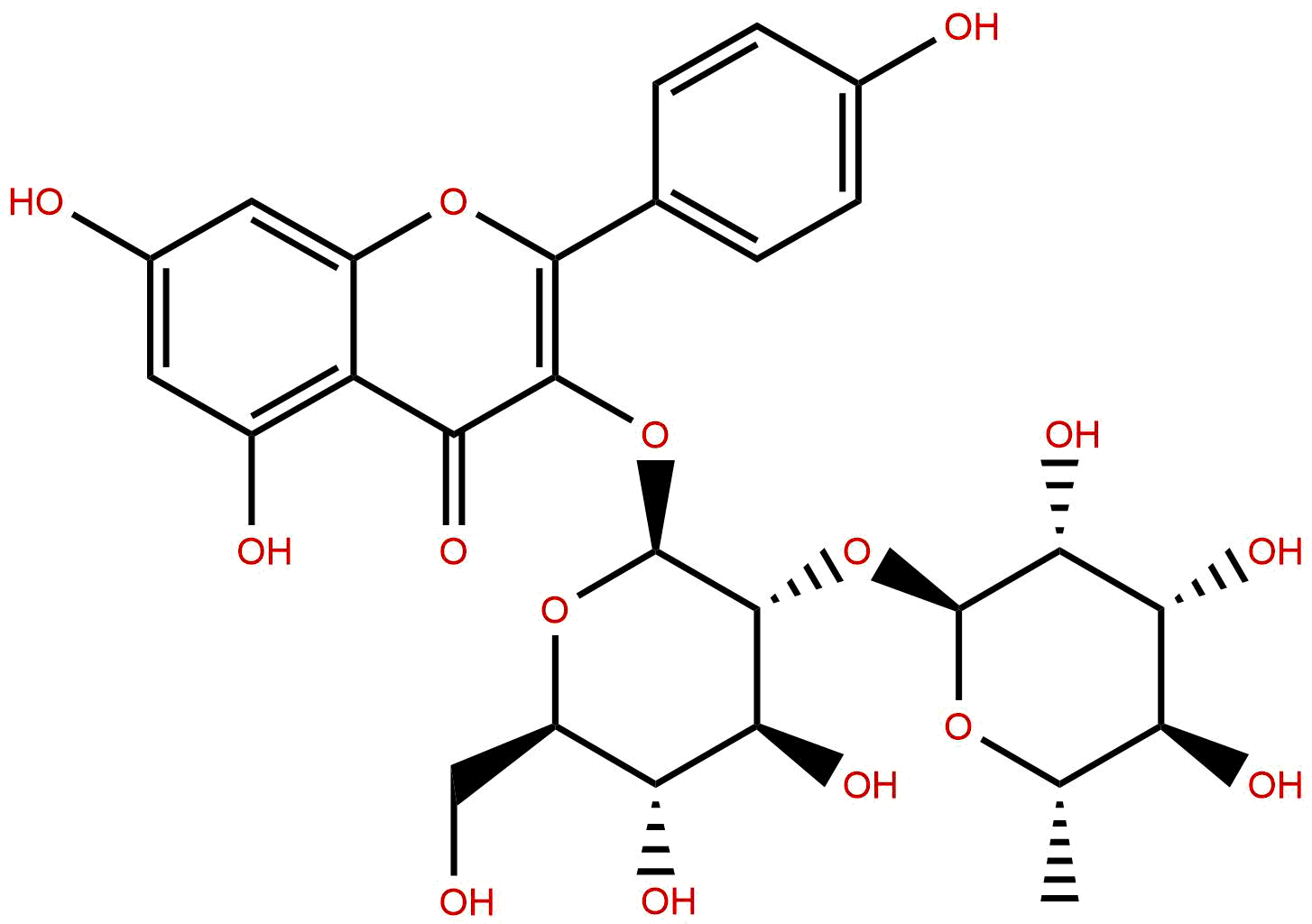
The chemical name of Bairuicao Su I is Kaempferol-3-O-neohesperidoside, and its chemical structure consists of the glycoside kaempferol and the sugar moiety. Shannai phenol (3,5,7-trihydroxy-2- (4-hydroxyphenyl) -4H-1-benzopyran-4-one) belongs to flavonol compounds, and its parent nucleus structure is 2-phenylchromenone, with one hydroxyl substituent at each of the C3, C5, C7, and C4 'positions. The sugar moiety is neohesperidose, which is a disaccharide formed by the connection of xylose and glucose through alpha-1,2-glycoside bonds.
In Bairuicao I, the new orange peel sugar is connected to the C3 hydroxyl group of kaempferol through a β - glycosidic bond, forming a complete glycosidic structure. This glycosylation modification not only increases the water solubility of the compound, but may also affect its interaction mode with biological targets. The molecular formula of this compound is C27H30O15, with a molecular weight of 594.5220 g/mol and a CAS registration number of 32602-81-6.
Physicochemical properties
Bairuicao Su I is a light yellow to yellow crystalline powder with certain hygroscopicity. The physicochemical properties parameters are as follows: the lipophilic water partition coefficient (LogP) is -0.3295, indicating that the compound has good hydrophilicity, which is consistent with the presence of multiple hydroxyl and sugar groups in its molecule. The polar surface area (TPSA) is 249.2000 Å ², and a higher TPSA value suggests that the compound may have certain limitations in terms of cell membrane permeability. The water solubility parameter is 2.8159, which belongs to the category of moderately water-soluble compounds. This characteristic is beneficial for their dissolution and distribution in living organisms.
It is worth noting that the blood-brain barrier penetration ability of resveratrol I is relatively low, mainly due to its high molecular weight and polar surface area. This characteristic to some extent limits the application of the compound in the treatment of central nervous system diseases, but also implies that it may have better selective distribution in peripheral tissues. In addition, the hERG inhibition test result was negative, indicating that the compound has a low risk of causing cardiac toxicity. The Ames test result is 0.6, indicating a low risk of genetic toxicity, which provides a safety basis for further drug development.
Plant sources and extraction methods
Plant-based
Bairuicao Su I was originally from the Bairuicao genus(Thesium)Separated from plants, hence named. Bai Rui Cao belongs to the Santalaceae family and is a semi parasitic herbaceous plant widely distributed in temperate and subtropical regions of Asia, Europe, and Africa. In China, Bai Rui Cao(Thesium chinense)It is an important medicinal plant, and its whole plant is used in traditional Chinese medicine to treat diseases such as colds, fever, sore throat, and abscesses.
Except for plants in the genus Platycodon, Platycodon I is widely distributed in nature and has been found in various plants. For example, in Rosaceae plants such as roses(Rosa rugosa)Cherry Blossoms(Rosa laevigata)Detected in all cases; In leguminous plants such as locust flowers(Sophora japonica)There have also been discoveries; In addition, this compound has been reported to exist in plants of multiple families and genera such as Asteraceae, Lamiaceae, and Rhamnaceae. This widespread distribution suggests that resveratrol I may have important physiological functions in the plant kingdom, such as participating in plant defense responses, UV protection, etc.
extraction method
The extraction of Bairui Cao Su I is usually carried out using solvent extraction method, taking advantage of its good solubility in medium polar solvents. Common extraction solvents include methanol, ethanol, acetone, and their aqueous solutions. Research has shown that using a 70% -80% ethanol aqueous solution as the extraction solvent can achieve high extraction efficiency. The extraction methods can be cold soaking, percolation, or reflux extraction, among which reflux extraction is more commonly used due to its higher efficiency.
In recent years, various auxiliary extraction techniques have been developed to improve extraction efficiency and selectivity. Ultrasound assisted extraction utilizes the cavitation effect of ultrasound to destroy plant cell walls, promote the release of target compounds, significantly shorten extraction time, and improve yield. Microwave assisted extraction utilizes the penetrating and selective heating properties of microwaves to rapidly increase the internal temperature of plant cells, accelerating the dissolution of target compounds. In addition, enzyme assisted extraction can effectively improve the extraction rate of resveratrol I by degrading plant cell walls with enzyme preparations such as cellulase and pectinase.
After concentration, the extract usually needs to be purified. Common purification methods include macroporous adsorption resin column chromatography, polyamide column chromatography, silica gel column chromatography, and preparative high-performance liquid chromatography. Macroporous adsorption resins such as HPD-100, AB-8, etc. have good adsorption and desorption properties for flavonoid glycosides, and can achieve preliminary purification. Polyamide column chromatography utilizes its characteristic of forming hydrogen bonds with phenolic hydroxyl groups to exhibit good selectivity towards flavonoids. For the preparation of high-purity samples, it is usually necessary to combine multiple chromatographic techniques for systematic separation and purification.
Pharmacological activity research
Antitumor activity
Bairuicao Su I has shown significant anti-tumor activity in various tumor cell models. In the study of breast cancer, this compound can inhibit the expression of estrogen receptor α (ER α), thereby interfering with estrogen signaling pathway and inhibiting the proliferation of estrogen dependent breast cancer cells. This finding has potential significance for the treatment of endocrine resistant breast cancer. Research has shown that resveratrol I can inhibit cell cycle progression by downregulating the level of ER α protein, reducing the expression of downstream target genes such as PR and Cyclin D1.
In the glioblastoma cell model, resveratrol I induces cell apoptosis by activating the MEK-MAPK signaling pathway. The MEK-MAPK pathway is a key signaling pathway that regulates cell proliferation, differentiation, and apoptosis, and its abnormal activation or inhibition is closely related to the occurrence and development of various tumors. Bairui Cao Su I can promote the phosphorylation of MEK and ERK, thereby activating downstream apoptosis related proteins such as Bax and Caspase-3, ultimately leading to tumor cell apoptosis.
In the study of lung cancer cells, resveratrol I also showed the effect of inducing apoptosis. The mechanism involves the activation of the MEK-MAPK pathway and the involvement of the mitochondrial apoptosis pathway. In addition, Bai Rui Cao Su I can also inhibit the migration and invasion ability of lung cancer cells, suggesting its potential anti metastatic potential.
anti-inflammatory activity
Inflammation is the body's defense response to harmful stimuli, but excessive or sustained inflammation can lead to tissue damage and the occurrence of various diseases. Bairui Cao Su I has shown significant anti-inflammatory activity in various inflammatory models. Research has shown that this compound can inhibit lipopolysaccharide (LPS) - induced macrophage inflammatory response and reduce the production of pro-inflammatory cytokines such as TNF - α, IL-6, IL-1 β, etc.
The anti-inflammatory effect of Bai Rui Cao Su I involves multiple inflammation related targets. Among them, the regulation of the nuclear factor kappa B (NF - κ B) signaling pathway is one of the core mechanisms of its anti-inflammatory effect. Bairui Cao Su I can inhibit the activity of I κ B kinase (IKK), prevent the phosphorylation and degradation of I κ B, and thus inhibit the nuclear translocation and transcriptional activity of NF - κ B. In addition, the compound can inhibit the activation of the STAT3 signaling pathway, reduce the phosphorylation level of STAT3, and thereby decrease the expression of inflammation related genes.
It is worth noting that resveratrol I also has regulatory effects on cyclooxygenase-1 (COX-1) and inducible nitric oxide synthase (iNOS). COX-1 is a key enzyme in prostaglandin synthesis, while iNOS catalyzes the production of nitric oxide, both of which play important roles in inflammatory responses. Bairui Cao Su I exerts anti-inflammatory effects by inhibiting the activity or expression of these enzymes, reducing the production of inflammatory mediators such as prostaglandins and nitric oxide.
Other pharmacological activities
In addition to anti-tumor and anti-inflammatory activities, Bai Rui Cao Su I also exhibits various other pharmacological activities. In terms of antioxidant properties, this compound can scavenge free radicals, chelate metal ions, and enhance the activity of endogenous antioxidant enzymes in cells. Its antioxidant activity is mainly attributed to the phenolic hydroxyl structure on the parent nucleus of kaempferol, which can provide hydrogen atoms to neutralize free radicals and block oxidative chain reactions.
In terms of neuroprotection, although the blood-brain barrier penetration ability of resveratrol I is relatively low, there are still studies reporting its protective effect in peripheral nerve injury models. In addition, the regulatory effect of this compound on transient receptor potential channels such as TRPV1 and TRPA1 suggests its potential application value in pain treatment.
Mechanism of action and molecular targets
Regulatory mechanism of estrogen receptor alpha
The regulation of thymosin I on estrogen receptor α (ER α) is an important mechanism of its anti breast cancer effect. ER α is a member of nuclear receptor superfamily, which is positive in about 70% of breast cancer and is an important target of endocrine therapy. Research has shown that resveratrol I can downregulate the expression level of ER α through multiple pathways.
Firstly, resveratrol I can promote the ubiquitination degradation of ER α protein. The ubiquitin proteasome system is the main pathway for protein degradation in cells. Thymosin I enhances the interaction between ER α and E3 ubiquitin ligase, accelerating the ubiquitination modification of ER α and promoting its recognition and degradation by the 26S proteasome. Secondly, the compound can also inhibit the transcriptional activity of the ER α gene, reduce the level of ER α mRNA, and thus decrease the synthesis of new proteins. In addition, resveratrol I may also inhibit the transcriptional activation function mediated by ER α by interfering with the interaction between ER α and co activators.
Activation of MEK-MAPK signaling pathway
In glioblastoma and lung cancer cells, resveratrol I induces apoptosis by activating the MEK-MAPK signaling pathway. The MEK-MAPK pathway includes a series of kinases such as Raf, MEK, ERK, and is an important signaling cascade that regulates cell fate. Bairuicao I can promote the phosphorylation of MEK1/2, thereby activating downstream ERK1/2.
Activated ERK can be translocated to the nucleus, phosphorylating various transcription factors such as Elk-1, c-Fos, c-Jun, etc., regulating gene expression related to cell apoptosis. In addition, ERK can phosphorylate Bcl-2 family proteins, alter mitochondrial membrane potential, promote the release of cytochrome c, activate Caspase cascade reaction, and ultimately lead to cell apoptosis. It is worth noting that the activation of the MEK-MAPK pathway may have different biological effects in normal and tumor cells, depending on various factors such as cell type, stimulation intensity, and duration.
Regulation of inflammation related targets
The anti-inflammatory effect of Bai Rui Cao Su I involves multiple molecular targets. Among them, the regulation of the NF - κ B signaling pathway is one of its core mechanisms. NF - κ B is a key transcription factor in inflammatory response, regulating the expression of various pro-inflammatory cytokines, chemokines, and adhesion molecules. Bairui Cao Su I inhibits the activity of IKK β (IKBKB), prevents the phosphorylation and degradation of I κ B α, and retains NF - κ B in an inactive form in the cytoplasm, thereby suppressing its nuclear translocation and transcriptional activity.
STAT3 is another important inflammation related transcription factor involved in signal transduction of cytokines such as IL-6. Bairui Cao Su I can inhibit the phosphorylation of STAT3, reduce its transcriptional activity, and thereby decrease the expression of pro-inflammatory factors such as IL-6. In addition, the regulation of CASP1 (Caspase-1) by this compound is also worth paying attention to. Caspase-1 is a key effector molecule for inflammasome activation, involved in the maturation and secretion of IL-1 β and IL-18. Bairuicao I may reduce the production of these pro-inflammatory cytokines by inhibiting the activity of Caspase-1.
Other molecular targets
The regulatory effects of resveratrol I on TRPV1 and TRPA1 channels have also received attention. TRPV1 and TRPA1 are members of the transient receptor potential channel family, expressed in sensory neurons and involved in the transmission of pain and inflammatory signals. Research has shown that resveratrol I can regulate the activity of these channels, possibly by affecting the phosphorylation status of the channels or directly interacting with channel proteins.
In addition, the regulation of PTGS1 (COX-1) and NOS2 (iNOS) by this compound is also of great significance. COX-1 is a key enzyme in prostaglandin synthesis, while iNOS catalyzes the production of nitric oxide. Bairui Cao Su I exerts anti-inflammatory effects by inhibiting the activity or expression of these enzymes, reducing the production of inflammatory mediators.
Evaluation of drug properties and pharmacokinetics
Drugability assessment
The pharmacological evaluation of Bairuicao Su I involves multiple aspects. From the perspective of physicochemical properties, its molecular weight is 594.5220, slightly higher than the molecular weight threshold of traditional oral drugs (500 Da), which may affect its oral absorption. The LogP value is -0.3295, indicating that the compound has strong hydrophilicity, which is beneficial for dissolution in aqueous environments, but may limit its passive diffusion through cell membranes. The TPSA value is 249.2000 Å ², which is much higher than the recommended upper limit of 140 Å ² for oral drugs, indicating that its oral bioavailability may be low.
In terms of safety, the hERG inhibition test result was negative, indicating a low risk of the compound causing QT interval prolongation in the heart. The Ames test result is 0.6, indicating a low risk of genetic toxicity. These safety data provide favorable conditions for the further development of Bai Rui Cao Su I. However, it should be noted that these data mainly come from in vitro experiments, and in vivo safety still needs to be verified through systematic toxicological studies.
Pharmacokinetic characteristics
The pharmacokinetic study of Bai Rui Cao Su I is not yet sufficient, but its pharmacokinetic characteristics can be inferred based on its physicochemical properties. Due to its high molecular weight and polarity, the oral absorption of this compound may be poor, and its bioavailability may be low. In terms of internal distribution, due to its strong hydrophilicity, it may mainly be distributed in the blood and extracellular fluid, and tissue distribution may be limited. The low penetration ability of the blood-brain barrier suggests that the distribution of this compound in the central nervous system is limited.
In terms of metabolism, resveratrol I, as a glycoside compound, may be hydrolyzed by microbial enzymes or glycosidases from intestinal epithelial cells in the intestine, releasing the glycoside kaempferol. Shanna phenol can be further metabolized through phase II metabolic reactions such as glucuronidation, sulfation, methylation, etc. In addition, the sugar moiety may also be metabolized into monosaccharides or further decomposed.
In terms of excretion, resveratrol I and its metabolites may be mainly excreted through bile and urine. Due to its high molecular weight, bile excretion may be its main clearance pathway. In addition, some metabolites may be reabsorbed through the enterohepatic circulation, prolonging their retention time in the body.
Structural modification and drug design
Regarding the shortcomings in the medicinal properties of Bairui Cao Su I, optimization can be achieved through structural modification. For example, through prodrug design strategies, groups that can enhance oral absorption, such as ester groups, phosphate groups, etc., are introduced into the molecule to be enzymatically interpreted and release active ingredients in vivo. In addition, by modifying the sugar moiety, such as changing the type, quantity, or connection mode of the sugar moiety, its physicochemical properties and biological activity may be regulated.
Nanoformulation technology is also an effective strategy for improving the bioavailability of resveratrol I. Delivery systems such as liposomes, polymer nanoparticles, and solid lipid nanoparticles can enhance the solubility and stability of the compound, improve its pharmacokinetic characteristics, and achieve targeted delivery. In addition, the combination with absorption enhancers such as surfactants, bile salts, etc. may also enhance their oral absorption.
Clinical application prospects and prospects
Antitumor therapy
The application prospect of thymosin I in the treatment of breast cancer is worth looking forward to. It provides a new therapeutic strategy for endocrine therapy of drug-resistant breast cancer by inhibiting the expression of ER α. For ER positive breast cancer patients with drug resistance after tamoxifen or aromatase inhibitor treatment, thymosin I may restore the sensitivity of endocrine therapy by reducing ER α level. In addition, the induction of apoptosis by this compound in glioblastoma and lung cancer provides a theoretical basis for its application in the treatment of brain tumors and lung cancer.
However, the application of resveratrol I in tumor therapy still faces challenges. The problems of low oral bioavailability and limited tissue distribution need to be solved through formulation technology or structural modification. In addition, its selectivity between normal cells and tumor cells also needs further evaluation to reduce potential toxic side effects.
Inflammatory diseases
The anti-inflammatory activity of Bai Rui Cao Su I provides the possibility for its application in the treatment of inflammatory diseases. Rheumatoid arthritis, inflammatory bowel disease, asthma and other chronic inflammatory diseases are common and difficult to treat diseases in clinical practice. Existing treatment drugs often have problems such as poor efficacy or significant side effects. Bairui Cao Su I may have unique advantages in the treatment of these diseases by regulating inflammatory responses through multiple targets.
It is worth noting that the regulatory effect of resveratrol I on TRPV1 and TRPA1 channels suggests its potential application value in pain treatment. Chronic pain is often accompanied by inflammatory reactions, and resveratrol I may provide a new option for pain treatment by simultaneously exerting anti-inflammatory and analgesic effects. In addition, the regulatory effect of this compound on CASP1 also suggests its potential application in inflammatory body related diseases such as gout, type 2 diabetes, etc.
Combination therapy strategy
The combination application of Bairui Cao Su I with other drugs may produce synergistic effects and improve therapeutic efficacy. The combination application of resveratrol I with chemotherapy drugs, targeted drugs, or immunotherapy drugs is worth exploring in tumor treatment. For example, when used in combination with chemotherapy drugs such as paclitaxel and cisplatin, it may synergistically inhibit tumor growth through different mechanisms; Combined with MEK inhibitors, it may enhance anti-tumor effects by regulating the MAPK signaling pathway.
In the treatment of inflammatory diseases, the combination of resveratrol I with nonsteroidal anti-inflammatory drugs, glucocorticoids, or biologics may regulate the inflammatory response through multi-target regulation, improve efficacy, and reduce side effects. In addition, the combination application of Bairui Cao Su I with other natural products is also worth paying attention to, such as the combination with natural compounds with anti-inflammatory activity such as curcumin and resveratrol, which may produce synergistic anti-inflammatory effects.
Future research directions
The research on Bai Rui Cao Su I is still in its early stages, and further exploration is needed in multiple aspects in the future. Firstly, it is necessary to establish a systematic pharmacokinetic research method to comprehensively evaluate the absorption, distribution, metabolism, and excretion characteristics of the compound in vivo. Secondly, it is necessary to conduct systematic toxicology studies, including acute toxicity, chronic toxicity, reproductive toxicity, etc., to evaluate their safety.
In terms of the mechanism of action, further clarification is needed on the interaction modes between Bairui Cao Su I and various molecular targets, including binding sites, binding modes, conformational changes, etc. The application of structural biology research techniques such as X-ray crystallography and nuclear magnetic resonance will help reveal their mechanisms of action. In addition, the application of systems pharmacology and network pharmacology methods can reveal the multi-target mechanism of action of resveratrol I at the overall level.
In terms of clinical application, standardized clinical trials are needed to evaluate the efficacy and safety of resveratrol I in patients with tumors and inflammatory diseases. At the same time, it is necessary to develop formulations suitable for clinical applications, such as oral formulations, injections, topical formulations, etc., to meet the needs of different disease treatments.
Conclusion
Bai Rui Cao Su I, as a natural flavonoid glycoside compound, exhibits various pharmacological activities, especially in the fields of anti-tumor and anti-inflammatory, with significant potential. It exerts biological effects through various mechanisms such as regulating ER α expression, activating MEK-MAPK signaling pathway, inhibiting NF - κ B and STAT3 signaling pathways, involving multiple molecular targets. This compound has a good safety foundation, but issues such as low oral bioavailability and limited tissue distribution still need to be addressed through structural modification or formulation techniques.
With the deepening of the research on thymosin I, its therapeutic potential in tumor diseases such as breast cancer, glioblastoma, lung cancer, and inflammatory diseases such as rheumatoid arthritis, inflammatory bowel disease will be further verified. In the future, by combining modern medicinal chemistry, pharmacokinetics, systems pharmacology and other interdisciplinary methods, Bairui Cao Su I is expected to be developed into a natural drug candidate compound with clinical application value, contributing to human health.