


Product name: Astragalin
Synonym name: Kaempferol 3-glucoside
Catalogue No.: BP0209
Cas No.: 480-10-4
Formula: C21H20O11
Mol Weight: 448.38
Botanical Source: ThesiumchinenseTurcz.
Physical Description:
Type of Compound: Flavonoids
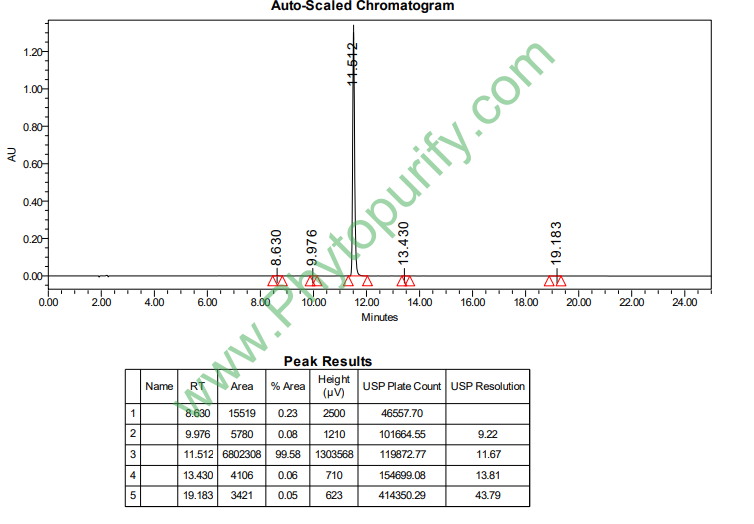
Purity: 95%~99%
Analysis Method: HPLC-DAD or/and HPLC-ELSD
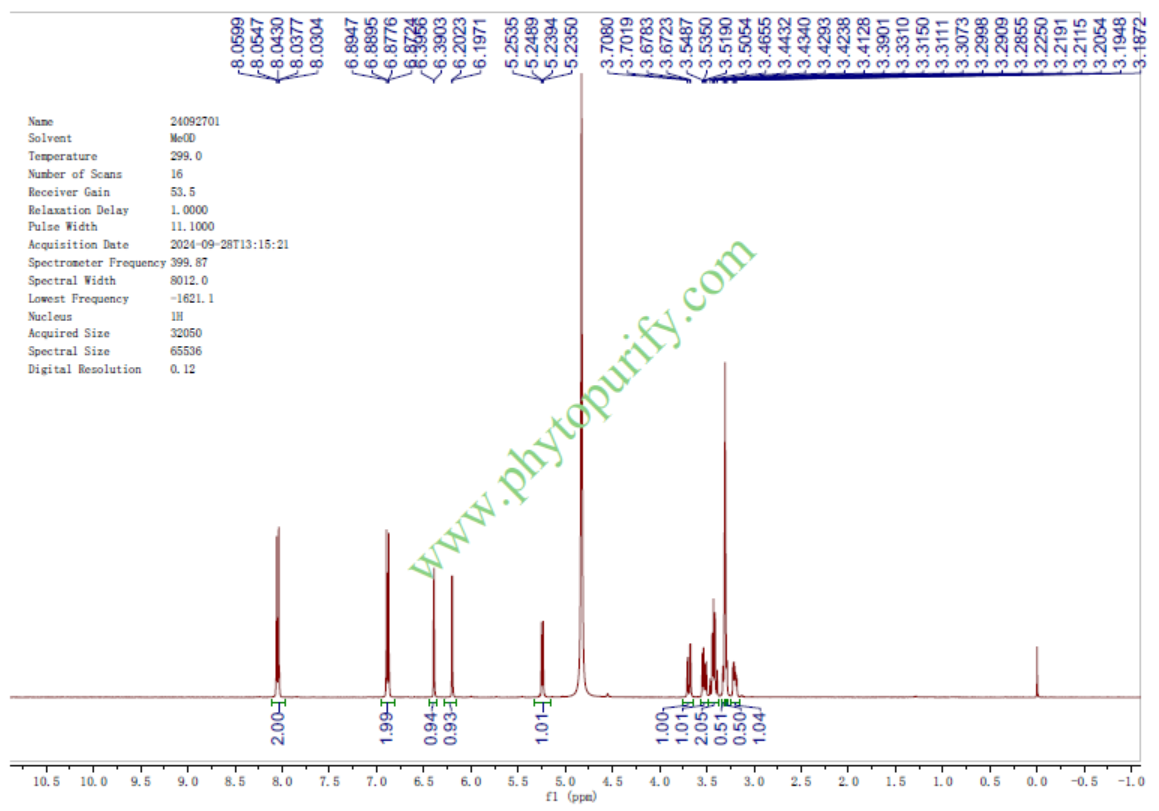
Identification Method: Mass, NMR
Packing: Brown vial or HDPE plastic bottle
Storage: Store in a well closed container, protected from air and light. Put into refrigerate or freeze for long term storage.
The product could be supplied from milligrams to grams
Inquire for bulk scale.
Description:
Astragalin (kaempferol-3-O-glucoside) is a flavonoid with anti-inflammatory activity, it inhibits the TLR4-mediated NF-κB and mitogen-activated protein kinases signaling pathways. Astragalin ameliorates oxidative stress-associated epithelial eosinophilia and apoptosis through disturbing TLR4-PKCβ2-NADPH oxidase-responsive signaling; it also can be effective in allaying ROS-promoted bronchial fibrosis through inhibiting autophagosome formation in airways.
References:
J Surg Res. 2014 Dec;192(2):573-81.
Inhibitory effects of astragalin on lipopolysaccharide-induced inflammatory response in mouse mammary epithelial cells.
Tea brewed from the leaves of persimmon or Rosa agrestis have several medical functions including treating allergy, antiatopic dermatitis, and anti-inflammatory effects. The objective of this study was to investigate the molecular mechanisms of Astragalin, a main flavonoid component isolated from these herbs, in modifying lipopolysaccharide (LPS)-induced signaling pathways in primary cultured mouse mammary epithelial cells (mMECs).
METHODS AND RESULTS:
The mMECs were treated with LPS in the absence or presence of different concentrations of Astragalin. The expression of proinflammatory cytokines tumor necrosis factor α, and interleukin 6, as well as nitric oxide production were determined by enzyme-linked immunosorbent assay and Griess reaction, respectively. Cyclooxygenase-2, inducible nitric oxide synthase, toll-like receptor 4 (TLR4), nuclear factor-κB (NF-κB), inhibitor protein of NF-κB (IκBα), P38, extracellular signal-regulated kinase, and c-Jun N-terminal kinase were measured by Western blot. The results showed that Astragalin suppressed the expression of tumor necrosis factor α, interleukin 6, and nitric oxide in a dose-dependent manner in mMECs. Western blot results showed that the expression of inducible nitric oxide synthase and cyclooxygenase-2 was inhibited by Astragalin. Besides, Astragalin efficiently decreased LPS-induced TLR4 expression, NF-κB activation, IκBα degradation, and the phosphorylation of p38, extracellular signal-regulated kinase in BMECs.
CONCLUSIONS:
Our results indicated that Astragalin exerts anti-inflammatory properties possibly via the inactivation of TLR4-mediated NF-κB and mitogen-activated protein kinases signaling pathways in LPS-stimulated mMECs. Thus, Astragalin may be a potential therapeutic agent for bovine mastitis.
Respir Res. 2015 Apr 21;16:51.
Astragalin inhibits autophagy-associated airway epithelial fibrosis.
Fibrotic remodeling of airway and lung parenchymal compartments is attributed to pulmonary dysfunction with an involvement of reactive oxygen species (ROS) in chronic lung diseases such as idiopathic pulmonary fibrosis and asthma.
METHODS AND RESULTS:
The in vitro study elucidated inhibitory effects of Astragalin, kaempferol-3-O-glucoside from leaves of persimmon and green tea seeds, on oxidative stress-induced airway fibrosis. The in vivo study explored the demoting effects of Astragalin on epithelial to mesenchymal transition in BALB/c mice sensitized with ovalbumin (OVA). The exposure of 20 μM H2O2 for 72 h accelerated E-cadherin loss and vimentin induction in airway epithelial BEAS-2B cells, which was reversed by non-toxic Astragalin at 1-20 μM. Astragalin allayed the airway tissue levels of ROS and vimentin enhanced by OVA challenge. Collagen type 1 production increased in H2O2-exposed epithelial cells and collagen fiber deposition was observed in OVA-challenged mouse airways. This study further investigated that the oxidative stress-triggered autophagic regulation was responsible for inducing airway fibrosis. H2O2 highly enhanced the expression induction of the autophagy-related beclin-1 and light chains 3A/B (LC3A/B) within 4 h and Astragalin blocked such induction by H2O2. This compound deterred the ROS-promoted autophagosome formation in BEAS-2B cells. Consistently, in OVA-sensitized mice the expression of beclin-1 and LC3A/B was highly induced, and oral administration of Astragalin suppressed the autophagosome formation with inhibiting the induction of these proteins in OVA-challenged airway subepithelium. Induction of autophagy by spermidine influenced the epithelial induction of E-cadherin and vimentin that was blocked by treating Astragalin.
CONCLUSIONS:
These results demonstrate that Astragalin can be effective in allaying ROS-promoted bronchial fibrosis through inhibiting autophagosome formation in airways.
BMC Pulm Med. 2014 Jul 29;14:122.
Astragalin inhibits airway eotaxin-1 induction and epithelial apoptosis through modulating oxidative stress-responsive MAPK signaling.
Eotaxin proteins are a potential therapeutic target in treating the peribronchial eosinophilia associated with allergic airway diseases. Since inflammation is often associated with an increased generation of reactive oxygen species (ROS), oxidative stress is a mechanistically imperative factor in asthma. Astragalin (kaempferol-3-O-glucoside) is a flavonoid with anti-inflammatory activity and newly found in persimmon leaves and green tea seeds. This study elucidated that Astragalin inhibited endotoxin-induced oxidative stress leading to eosinophilia and epithelial apoptosis in airways.
METHODS AND RESULTS:
Airway epithelial BEAS-2B cells were exposed to lipopolysaccharide (LPS) in the absence and presence of 1-20 μM Astragalin. Western blot and immunocytochemical analyses were conducted to determine induction of target proteins. Cell and nuclear staining was also performed for ROS production and epithelial apoptosis. When airway epithelial cells were exposed to 2 μg/ml LPS, Astragalin nontoxic at ≤ 20 μM suppressed cellular induction of Toll-like receptor 4 (TLR4) and ROS production enhanced by LPS. Both LPS and H2O2 induced epithelial eotaxin-1 expression, which was blocked by Astragalin. LPS activated and induced PLCγ1, PKCβ2, and NADPH oxidase subunits of p22phox and p47phox in epithelial cells and such activation and induction were demoted by Astragalin or TLR4 inhibition antagonizing eotaxin-1 induction. H2O2-upregulated phosphorylation of JNK and p38 MAPK was dampened by adding Astragalin to epithelial cells, while this compound enhanced epithelial activation of Akt and ERK. H2O2 and LPS promoted epithelial apoptosis concomitant with nuclear condensation or caspase-3 activation, which was blunted by Astragalin.
CONCLUSIONS:
Astragalin ameliorated oxidative stress-associated epithelial eosinophilia and apoptosis through disturbing TLR4-PKCβ2-NADPH oxidase-responsive signaling. Therefore, Astragalin may be a potent agent antagonizing endotoxin-induced oxidative stress leading to airway dysfunction and inflammation.
HPLC of Astragalin
HNMR of Astragalin
Storage conditions:Short-term storage at 2~8℃, long-term storage at -20 ~ -80℃
190.2800
-.0431
-.2043
1.3498
.4168
.1799
Low
79.3884
3.8841
Yes
No
No
No
Yes
No
1.2
Yes
Yes
Yes
Yes
Flavonoids, as one of the most widely distributed plant secondary metabolites in nature, have long been of great concern due to their extensive biological activities. Astrolin, also known as kaempferol-3-O - β - D-glucoside, is a typical flavonol glycoside compound with a CAS number of 480-10-4. In recent years, with the deepening of pharmacological research on natural products, ziyunying glycoside has gradually become a hot molecule in the field of drug development due to its significant multiple pharmacological activities such as anti-inflammatory, antioxidant, anticancer, neuroprotective, cardioprotective, and anti osteoporosis. Especially in the treatment strategies of complex diseases such as inflammatory bowel disease and cancer, ziyunying glycoside has shown the potential to exert its effects through multiple targets and pathways, providing valuable lead compounds for the development of new therapeutic drugs. This article aims to provide a systematic review of the chemical properties, plant sources, pharmacological activities, molecular mechanisms of action, pharmacological evaluation, and clinical application prospects of ziyunying glycoside, in order to provide comprehensive scientific references for the in-depth research and development of this compound.
The molecular formula of Ziyunying glycoside is C21H20O11, with a molecular weight of 448.3800. Its chemical structure is based on the flavonol parent compound kaempferol, with a β - D-glucose group attached to the C-3 hydroxyl group. This glycosidic structure significantly affects its physicochemical properties and biological activity.
In terms of physical and chemical properties, the theoretical lipid water partition coefficient (LogP) of Astragalus membranaceus glycoside is about -0.0431, indicating its good hydrophilicity. Its topological polar surface area (TPSA) is as high as 190.2800 Å ², mainly attributed to the numerous hydrogen bond donors and acceptors in the molecule (such as hydroxyl groups and oxygen atoms on sugar rings). These characteristics determine its relatively good water solubility, with a calculated value of about 1.3498 mg/mL, which is beneficial for its distribution in biological aqueous environments. However, its higher polarity and TPSA also result in a lower ability to cross the blood-brain barrier, limiting its direct effects on central nervous system diseases. In the preliminary safety evaluation, ziyunying glycoside showed no significant inhibitory effect on hERG potassium channels, indicating a low risk of cardiac toxicity; The Ames test result is 1.2, indicating that it has no significant mutagenicity, providing preliminary safety evidence for its further development.
Ziyunying glycoside is widely distributed in nature and exists in various medicinal and edible plants. Its main plant sources include the leguminous plant Astragalus membranaceus(Astragalus membranaceus)The stems and leaves of the plant (named after it), as well as the mallow family plant grass cotton(Gossypium herbaceum)The rose, a plant in the Rosaceae family(Rosa rugosa)The petals of the plant, as well as the rosewood(Rhus succedanea)The fruits, etc. In addition, daily dietary sources such as green tea, lychee leaves, and mangoes also contain a certain amount of amygdalin.
Solvent extraction method is commonly used to extract astragaloside from plant materials. Methanol, ethanol, or their aqueous solutions are commonly used extraction solvents due to their good solubility in flavonoid glycosides. In order to improve extraction efficiency and selectivity, modern extraction techniques such as ultrasound assisted extraction, microwave-assisted extraction, and pressurized liquid extraction have been widely used. These technologies use physical means to destroy plant cell walls, accelerate solvent permeation and solute diffusion, thereby achieving higher extraction rates in a shorter period of time and reducing solvent consumption.
The crude extract after extraction usually requires further separation and purification to obtain high-purity puerarin. The conventional purification steps include preliminary enrichment using macroporous adsorption resins (such as AB-8, D101), followed by fine separation using techniques such as silica gel column chromatography, polyamide column chromatography, or preparative high-performance liquid chromatography. In recent years, high-speed countercurrent chromatography technology has shown unique advantages in the preparation and separation of puerarin due to its advantages such as no need for solid carriers, high sample recovery rate, and low deactivation.
A large number of pharmacological studies both in vitro and in vivo have confirmed that astragaloside has diverse and significant biological activities.
1. Anti inflammatory activity: The anti-inflammatory effect of Astragalus membranaceus glycoside is one of its most prominent activities. In various acute and chronic inflammation models, such as lipopolysaccharide induced macrophage inflammation model, carrageenan induced rat paw swelling model, and dextran sulfate induced colitis in mice (inflammatory bowel disease model), ziyunying glycoside can effectively inhibit the production and release of pro-inflammatory mediators such as nitric oxide, prostaglandin E2, tumor necrosis factor - α, interleukin-6, and interleukin-1 β.
2. Antioxidant activity: The phenolic hydroxyl groups in the structure of Astragalus membranaceus glycosides enable them to effectively scavenge free radicals such as DPPH free radicals, ABTS free radicals, and superoxide anions, and exhibit strong iron ion reduction ability. Its antioxidant effect is not limited to direct free radical scavenging, but can also upregulate the activity of key enzymes in the intracellular antioxidant defense system (such as superoxide dismutase and glutathione peroxidase), reducing oxidative stress damage to cells.
3. Anti cancer activity: Astragaloside showed growth inhibitory activity on a variety of human cancer cell lines, including breast cancer, lung cancer, liver cancer, colon cancer and prostate cancer cells. Its anti-cancer mechanism involves inducing cell cycle arrest (such as G2/M phase arrest), inhibiting cancer cell migration and invasion, and inducing cell apoptosis. Research has shown that ziyunying glycoside can upregulate pro apoptotic proteins (such as Bax), downregulate anti apoptotic proteins (such as Bcl-2), and activate the caspase cascade reaction.
4. Neuroprotective and cardioprotective activity: In animal models of Alzheimer's disease and cerebral ischemia-reperfusion injury, ziyunying glycoside improves cognitive dysfunction and reduces cerebral infarction area through anti-inflammatory, antioxidant, and inhibition of neuronal apoptosis pathways. In terms of the heart, it can alleviate myocardial ischemia-reperfusion injury, improve cardiac function, and its mechanism is related to regulating autophagy, reducing mitochondrial dysfunction, and inhibiting myocardial fibrosis.
5. Anti osteoporosis activity: Ziyunying glycoside can promote osteoblast differentiation and mineralization, while inhibiting osteoclast formation and bone resorption function. In a rat model of osteoporosis induced by ovariectomy, administration of puerarin can increase bone density and improve bone microstructure, indicating its potential in preventing and treating postmenopausal osteoporosis.
6. Antibacterial activity: Studies have also shown that purple cloud glycoside has a certain inhibitory effect on certain Gram positive and Gram negative bacteria, but its antibacterial spectrum and efficacy are usually weaker than specialized antibiotics.
The multiple pharmacological activities of Astragaloside stem from its regulatory effects on multiple signaling pathways within cells, involving multiple molecular targets. Especially in the pharmacological research of inflammatory bowel disease, its action network is relatively clear.
1. Regulating the AMPK signaling pathway: AMP activated protein kinase is a core regulator of cellular energy metabolism. Ziyunying glycoside can activate AMPK (composed of subunits such as PRKAA1), thereby inhibiting the activity of mammalian rapamycin target protein complex 1, regulating cell autophagy, inhibiting inflammatory response and excessive cell proliferation, which is of great significance in mucosal repair of inflammatory bowel disease and prevention of colon cancer.
2. Adjust the NOTCH1 signaling pathway: The NOTCH1 signaling pathway plays a crucial role in cell differentiation, proliferation, and inflammatory response. Ziyunying glycoside can inhibit the abnormal activation of NOTCH1 and the expression of its downstream target gene Hes1, thereby reducing intestinal inflammation and inhibiting the stem cell characteristics of colon cancer cells.
3. Inhibition of IDO1 activity: Indoleamine 2,3-dioxygenase 1 is a key enzyme involved in the metabolism of tryptophan to kynurenine, playing a role in immune tolerance and tumor immune escape. Ziyunying glycoside can inhibit the activity of IDO1, which may help reverse the immunosuppressive state of the tumor microenvironment and regulate intestinal immune balance.
4. Affects the activity of carboxylesterase (CES1/CES2): Carboxyesterase is involved in the metabolism of endogenous substances and exogenous drugs. The regulation of CES1 and CES2 by ziyunying glycoside may affect its own and other drug metabolism processes, but its specific role in drug efficacy still needs further research.
5. Intervention of cell cycle related proteins: By inhibiting cell cycle regulatory proteins such as CDC25B phosphatase, astragaloside can activate cell cycle checkpoints, block cells at specific cycles, and inhibit proliferation.
6. Regulating the TLR4/NF - κ B and JAK/STAT inflammatory pathways: Ziyunying glycoside can inhibit the activation of Toll like receptor 4, thereby suppressing the transduction of nuclear factor kappa B signaling pathway and reducing the production of downstream pro-inflammatory cytokines such as IL-6 and TNF - α. At the same time, it can also inhibit the activity of tyrosine phosphatase PTPN1 (PTP1B), or directly affect the phosphorylation of signal transduction and transcription activator 3, thereby interfering with the important pro-inflammatory and pro cancer signaling pathway JAK/STAT3.
In summary, Ziyunying glycoside forms a synergistic network by acting on multiple targets such as AMPK, NOTCH1, IDO1, TLR4, STAT3, etc., jointly exerting its core pharmacological effects of anti-inflammatory, anticancer, and immune regulation.
Despite exhibiting excellent biological activity in vitro, the development of medicinal properties of Astragalus membranaceus glycosides still faces some challenges.
Pharmacokinetic characteristics: Ziyunying glycoside can be absorbed orally, but as a flavonoid glycoside, its absorption is significantly influenced by gut microbiota and intestinal epithelial cell enzymes (such as β - glucosidase). Glycoside bonds are easily hydrolyzed in the intestine to produce the glycoside kaempferol, which may have a higher absorption rate but is also metabolized more rapidly. Therefore, the oral bioavailability of puerarin is usually not high. After absorption, astragaloside and its metabolites undergo extensive II binding reactions (such as glucuronidation and sulfation) in the body, mainly excreted through urine and bile. More in vivo research data is needed to support parameters such as plasma protein binding rate and tissue distribution characteristics (except for low blood-brain barrier penetration).
Optimization strategy for drug properties: In order to improve its bioavailability and targeting, researchers are exploring various strategies:
1. Structural modification: Chemical modification of its sugar moiety or aglycone to synthesize lipophilic prodrugs or derivatives, in order to improve membrane permeability.
2. Formulation technology: Using nano formulation technology, such as preparing liposomes, nanoparticles, solid lipid nanoparticles, or micelles, to encapsulate puerarin. These nanocarriers can protect drugs from degradation, enhance their gastrointestinal stability, promote lymphatic absorption or increase cellular uptake through phagocytosis, and even achieve passive targeting (EPR effect) or active targeting of inflammatory sites or tumor tissues.
3. Pre medication strategy: Design prodrugs that can be activated by specific enzymes (such as enzymes highly expressed in tumor or inflammatory sites) to increase local drug concentration and reduce systemic side effects.
The clinical application prospects of ziyunying glycoside are broad, but transforming it from an active natural compound into a mature therapeutic drug still requires crossing many links.
Potential application directions:
1. Adjuvant treatment for inflammatory bowel disease: Based on its strong anti-inflammatory effect and multiple regulatory capabilities against IBD related targets, Ziyunying glycoside is expected to be developed as an adjuvant therapy or nutritional supplement for IBD (including ulcerative colitis and Crohn's disease), used to alleviate symptoms, maintain remission, and reduce the side effects of traditional immunosuppressive agents.
2. Chemotherapy prevention and adjuvant therapy for cancer: Its multi-target anti-cancer properties make it promising in the field of cancer chemoprevention, especially for colon cancer. Combination therapy with conventional chemotherapy drugs can also be considered to enhance efficacy, reduce chemotherapy resistance, or alleviate adverse reactions.
3. Treatment of metabolic bone disease: As a potential bone forming agent, it can be used for the prevention and treatment of osteoporosis, especially for patients who are intolerant to existing anti bone resorption drugs.
4. Functional foods and health products: With its antioxidant and anti-inflammatory basic activities, it can be widely used in the development of functional foods or dietary supplements that enhance immunity, protect cardiovascular and neurological health.
Challenges and future research directions:
1. Deep analysis of the mechanism of action: Technologies such as proteomics, metabolomics, and gene editing need to be utilized to more accurately elucidate its primary target and downstream signaling network, distinguishing between its direct targets and indirect effects.
2. Systematic drug evaluation: Complete preclinical pharmacokinetic and toxicological studies must be conducted to clarify the treatment window, long-term toxicity, reproductive toxicity, etc., providing a basis for clinical trials.
3. Clinical translational studies: Designing and implementing rigorous clinical trials to verify its effectiveness, safety, and optimal dosing regimen in the human body is the necessary path for it to enter the market.
4. Green and sustainable production: Explore the efficient and environmentally friendly production of Astragaloside using synthetic biology techniques such as microbial cell factories to address issues such as limited plant extraction sources, high costs, and large batch differences.
Ziyunying glycoside, as a natural flavonoid glycoside with abundant sources, has shown great potential for drug development due to its multiple pharmacological activities such as anti-inflammatory, antioxidant, anticancer, and bone protection, as well as its unique mechanism of acting on multiple targets such as AMPK, NOTCH1, STAT3, etc. Despite its limitations in oral bioavailability and systemic pharmacokinetics, these challenges are gradually being overcome through the empowerment of modern pharmaceutical chemistry and formulation technologies. In the future, with the continuous deepening of basic research and the continuous promotion of translational medicine, ziyunying glycoside is expected to move from the laboratory to clinical practice in the prevention and treatment of major chronic diseases such as inflammatory bowel disease, tumors, and osteoporosis, contributing its natural wisdom to human health and providing valuable paradigms for the research and development of other natural products.
