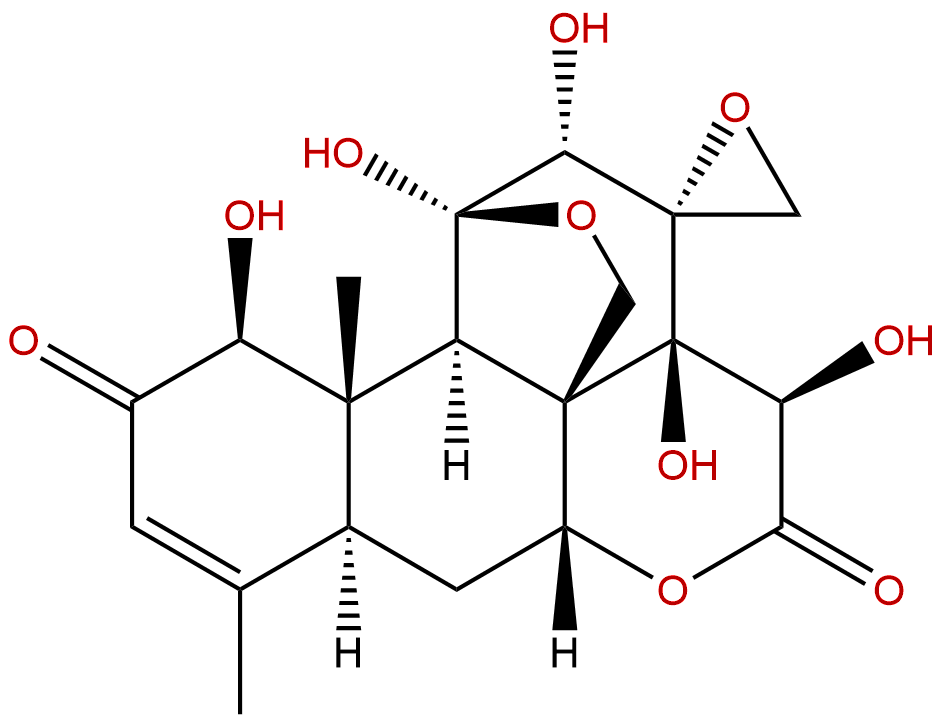


Product name: 13-alpha-(21)-Epoxyeurycomanone
Synonym name:
Catalogue No.: BP1795
Cas No.: 138809-10-6
Formula: C20H24O10
Mol Weight: 424.402
Botanical Source: Eurycoma longifolia
Physical Description: Cryst.
Type of Compound: Diterpenoids
Purity: 95%~99%
Analysis Method: HPLC-DAD or/and HPLC-ELSD
Identification Method: Mass, NMR
Packing: Brown vial or HDPE plastic bottle
The product could be supplied from milligrams to grams. Inquire for bulk scale.
We provide solution to improve the water-solubility of compounds, thereby facilitating the variety of activity tests and clinic uses.
For Reference Standard and R&D, Not for Human Use Directly.
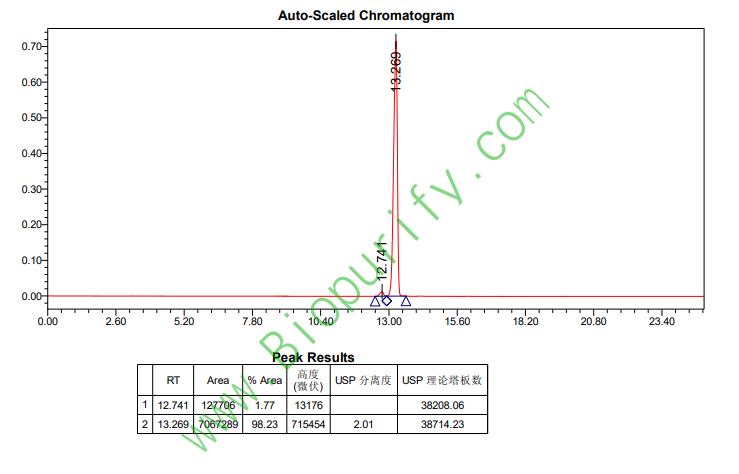
HPLC of 13-alpha-(21)-Epoxyeurycomanone
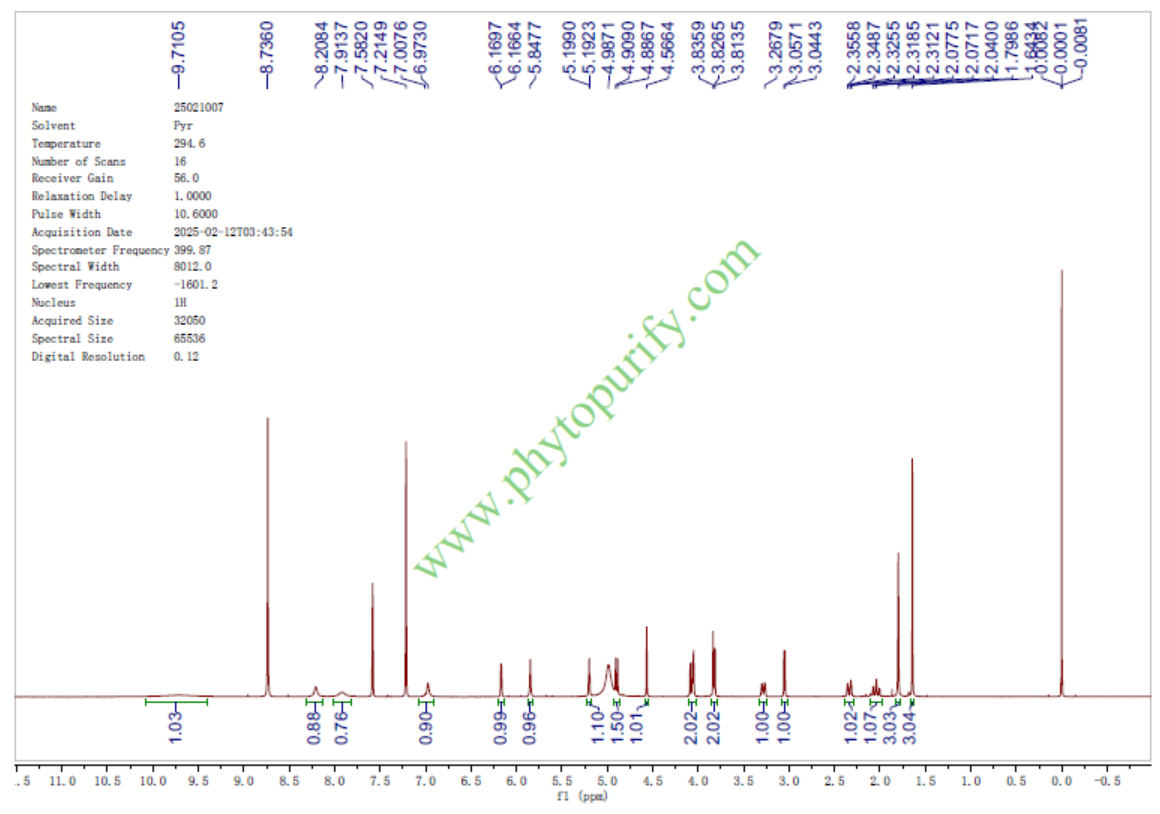
HNMR of 13-alpha-(21)-Epoxyeurycomanone
Storage conditions:Short-term storage at 2~8℃, long-term storage at -20 ~ -80℃
166.2800
-.6546
-.6548
2.3281
.6335
3.4579
Low
34.6567
7.1478
No
No
No
No
Yes
No
0.6
Yes
No
Yes
Yes
Invasive fungal infection is an increasingly serious global public health challenge, among which the incidence rate and mortality of candidasis caused by candida species (especially candida albicans) remain high. Existing antifungal drugs, such as azoles, polyenes, and echinocandins, face many limitations in clinical application, including increasingly common drug resistance, significant toxic side effects, and complex drug interactions. Therefore, discovering lead compounds with novel structures and unique mechanisms of action from natural products has become an important strategy for the development of antifungal drugs.
Kuan Ying ketone compounds are a class of compounds mainly derived from traditional medicinal plants in Southeast Asia Kuanyingmu genus The bitter lignin tetracyclic triterpenoids have attracted much attention for their significant anti malarial, anti-inflammatory, and cytotoxic activities. As a structurally modified unique member of this family, 13 α (21) - epoxy ketone has attracted widespread interest in the field of natural product pharmacology in recent years due to its potent antifungal activity demonstrated in vitro and preliminary in vivo models. Its unique 13,21-epoxy bridge structure may endow it with a mode of action different from conventional antifungal drugs. This article aims to provide a systematic review of the chemical properties, plant sources, pharmacological activities, mechanisms of action, pharmacological evaluation, and clinical application potential of 13 α (21) - epoxy ketone, in order to provide comprehensive scientific references for the development of innovative antifungal drugs based on this compound.
The chemical system name of 13 α (21) - epoxy ketone is (1S, 4R, 5S, 7R, 8S, 10R, 12S, 13S) -4,8,12-trihydroxy-13- (2-hydroxypropan-2-yl) -1,5,7,10-tetramethyl-16-oxatetracyclic [9.7.0.0 ¹, ¹³. 0 ⁴, ⁸] octadecane-2,14,17-trione. Its CAS registration number is 138809-10-6.
The core skeleton of this compound is a highly oxidized lignin type tetracyclic triterpene. Its most significant structural feature is the formation of a critical ethylene oxide bridge (13 α, 21 epoxy) between C-13 and C-21 positions, which greatly affects the three-dimensional conformation and chemical reactivity of the molecule and is considered a key pharmacophore for its biological activity. The molecule also contains multiple oxygen-containing functional groups: one hydroxyl group (C-4, C-8) on each of the A and B rings, one hydroxyl group (C-12) on the D ring, and three ketone carbonyl groups at C-2, C-14, and C-17 positions. The presence of these polar groups makes their molecules exhibit strong hydrophilicity.
Based on computational and experimental data, its key physicochemical properties are as follows: molecular weight is 424.40 g/mol. The calculated lipid water partition coefficient (LogP) is -0.65, indicating that the compound has a high degree of hydrophilicity, which is in sharp contrast to traditional hydrophobic antifungal drugs such as azoles. The topologically polar surface area (TPSA) is as high as 166.28 Å ², further confirming the presence of numerous hydrogen bond acceptor and donor sites on its molecular surface. The predicted water solubility is good, about 2.33 mg/mL. These properties suggest that its transmembrane permeability may be limited, especially its ability to penetrate the blood-brain barrier is predicted to be "low", which is an unfavorable factor for the treatment of central nervous system fungal infections, but may help reduce the risk of central neurotoxicity. Preliminary toxicity screening showed no significant inhibitory effect on hERG potassium channels (indicating a low potential risk of arrhythmia), and the Ames test result was 0.6 (negative), indicating no significant genetic toxicity.
13 α (21) - epoxy kaempferol is mainly isolated from plants of the genus kaempferol in the family Sapindaceae, especially Kuanying Wood The plant is widely distributed in Southeast Asia. In traditional medicine in Malaysia, Indonesia and other countries, its roots and bark are often used to treat fever, malaria, indigestion and infectious diseases.
The extraction and separation of this compound from plant materials typically follows the following process:
1. Raw material pretreatment Collect the roots or stem bark of Platycodon grandiflorus, clean, dry, and crush into coarse powder.
2. Solvent extraction The most commonly used method is to extract using a medium polarity solvent. Methanol or ethanol water mixed solvents are widely used due to their good solubility and extraction efficiency for lignin compounds. Cold immersion, hot reflux, or ultrasound assisted extraction methods can be used.
3. Preliminary enrichment After concentrating the crude extract under reduced pressure, the resulting paste is often subjected to liquid-liquid extraction using solvents such as petroleum ether, ethyl acetate, and n-butanol in sequence. 13 α (21) - epoxy ketone is mainly enriched in the extraction sites of ethyl acetate and n-butanol due to its polarity.
4. Separation and purification Column chromatography is a crucial step in separating the active site. Normal phase silica gel column chromatography is commonly used for preliminary separation using gradient elution systems of chloroform methanol or dichloromethane methanol. Subsequently, modern chromatographic techniques such as reverse phase silica gel (e.g. C18) column chromatography, preparative thin-layer chromatography, or high-performance liquid chromatography are used to further purify the target fraction until high-purity monomer compounds are obtained. The separation process usually requires monitoring by TLC or HPLC, and structural confirmation by techniques such as nuclear magnetic resonance and mass spectrometry.
In recent years, in order to reduce the consumption of organic solvents and improve efficiency, some green extraction techniques such as supercritical CO ₂ extraction and microwave-assisted extraction have also been explored and applied to the extraction of ketones.
The most prominent pharmacological activity of 13 α (21) - epoxy ketone is its Broad spectrum and potent antifungal activity Especially targeting the Candida genus.
In addition to antifungal activity, this compound has also been reported to have moderate anti malaria activity and some anti-inflammatory effects, but its main research focus is still on the field of antifungal activity.
Unlike traditional single target antifungal drugs, the antifungal effect of 13 α (21) - epoxyketone involves synergistic interference from multiple targets and pathways, which may be the reason for its high efficiency and low susceptibility to drug resistance. The currently revealed and speculated mechanisms of action and molecular targets include:
Destruction of cell membrane structure and function:
Toxicity factor inhibition:
Stress response pathway interference:
Energy metabolism inhibition:
In summary, 13 α (21) - epoxy ketone exerts a powerful "multi pronged" fungicidal effect by simultaneously attacking multiple key life processes of Candida, including cell membrane, cell wall, virulence factors, stress pathways, and energy metabolism. This multi-target mode of action makes it difficult for fungi to develop high-level drug resistance through a single gene mutation, which is its core advantage as a novel antifungal lead compound.
Although 13 α (21) - epoxybenzophenone exhibits excellent activity in vitro, its clinical application still needs to overcome many hurdles in drug evaluation.
As a multi-target antifungal lead compound with a novel mode of action, 13 α (21) - epoxy ketone has broad clinical application prospects, but the road ahead is long.
Potential application directions:
1. Treatment of drug-resistant candidiasis This compound or its structurally optimized derivatives have the potential to become an effective alternative or complementary treatment option for the increasingly severe azole resistant Candida infections.
2. Combination medication components Utilizing its synergistic effect with existing drugs, develop fixed dose compound formulations to reduce the dosage of each component, minimize toxic side effects, broaden the antibacterial spectrum, and delay the development of drug resistance.
3. Topical preparations for local use: In view of its strong anti biofilm activity, local drugs such as gel, creams, gargles or suppositories developed for the treatment of oral candidiasis, vaginal candidiasis or cutaneous candidiasis can avoid the absorption and distribution problems faced by systematic administration.
4. Medical Device Coatings Apply it as a surface coating for medical devices such as central venous catheters and urinary catheters to prevent Candida biofilm related infections.
Future research directions and challenges:
1. Research on Structural Optimization and Structure Performance Relationship Systematically modifying structures to maintain or enhance their antifungal activity while improving their pharmacokinetic properties (such as increasing membrane permeability and metabolic stability). Focus on studying the role of key pharmacophores such as epoxy bridges, hydroxyl groups, and ketone carbonyl groups.
2. In depth study on the mechanism of action Using chemical biology methods such as photoaffinity labeling and proteomics to accurately identify the protein targets it directly acts on, and elucidate the detailed molecular mechanisms of its multi-target network regulation.
3. Comprehensive preclinical development Complete pharmacological, pharmacokinetic, and toxicological evaluations that comply with preclinical research guidelines for new drugs, and establish stable raw material processes and quality standards.
4. Exploration of New Delivery Systems Actively researching new delivery technologies such as nano drug delivery systems to improve their in vivo fate and achieve targeted delivery and controlled release.
13 α (21) - epoxy ketone is a bitter lignin compound with a unique 13,21-epoxy bridge structure discovered from traditional medicinal plants. It stands out as a highly valuable lead molecule for antifungal drugs due to its broad-spectrum and potent antifungal activity, especially its inhibitory effect on drug-resistant strains and biofilms, as well as its ability to interfere with multiple mechanisms such as ergosterol synthesis, cell wall construction, virulence expression, stress response, and energy metabolism. Although it faces challenges in terms of oral bioavailability and drug development, these obstacles are expected to be overcome through rational drug chemical modifications, innovative administration strategies, and in-depth mechanism research. In the future, research on 13 α (21) - epoxy ketone may not only lead to the emergence of a new generation of antifungal drugs, but also provide new ideas and tools for understanding the biology of fungal pathogens and developing multi-target anti infective therapies. Continuing to deepen its exploration is the only way to transform this natural treasure into a clinical treatment tool.
