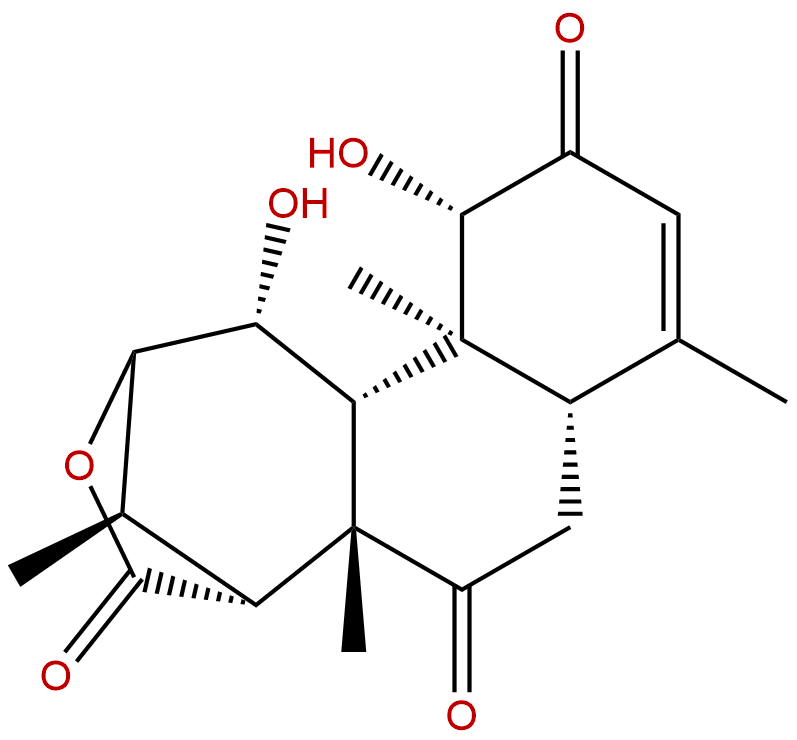


Product name: Eurycomalactone
Synonym name:
Catalogue No.: BP1796
Cas No.: 23062-24-0
Formula: C19H24O6
Mol Weight: 348.395
Botanical Source: Eurycoma longifolia
Physical Description:
Type of Compound: Diterpenoids
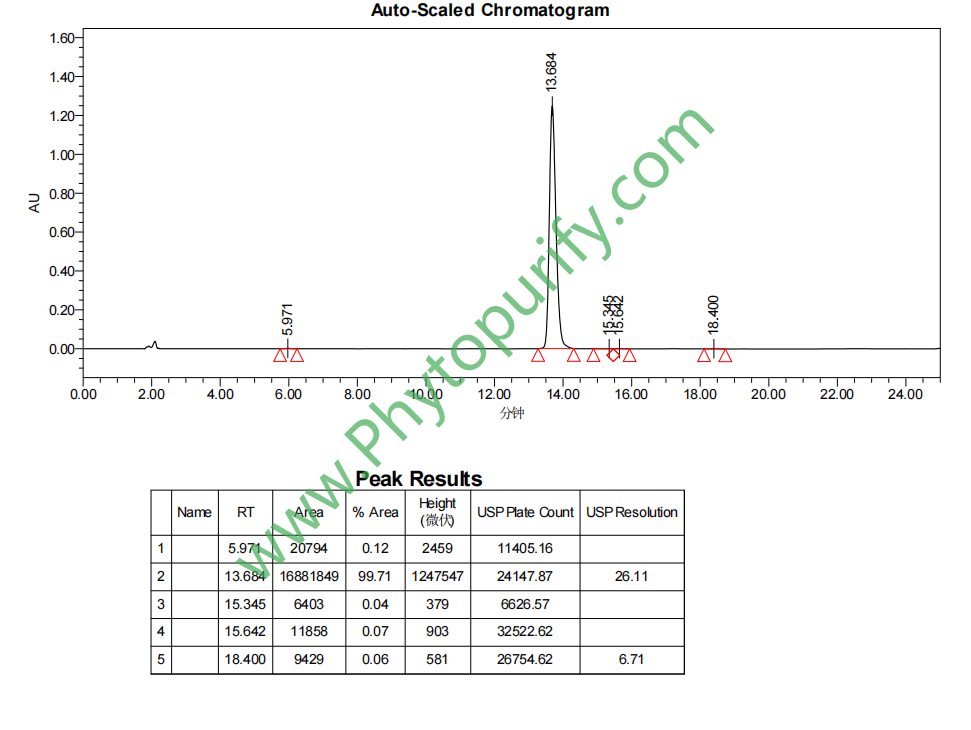
Purity: 95%~99%
Analysis Method: HPLC-DAD or/and HPLC-ELSD
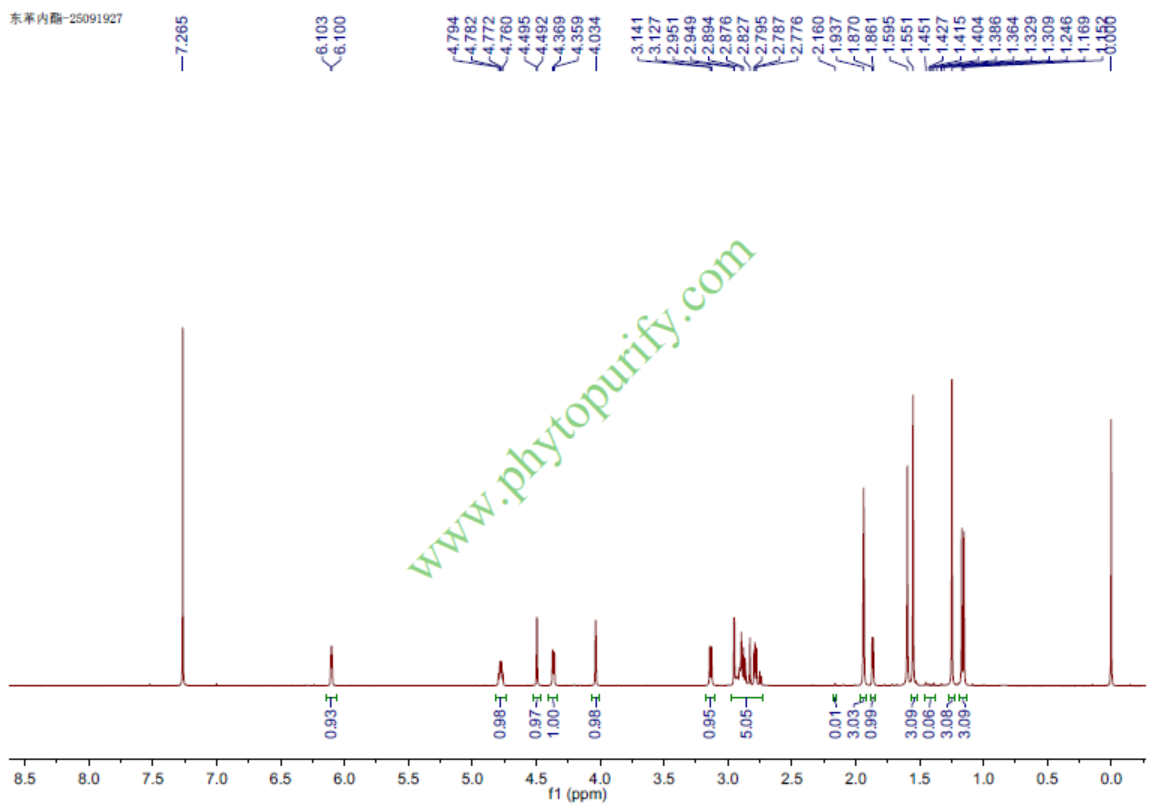
Identification Method: Mass, NMR
Packing: Brown vial or HDPE plastic bottle
The product could be supplied from milligrams to grams. Inquire for bulk scale.
We provide solution to improve the water-solubility of compounds, thereby facilitating the variety of activity tests and clinic uses.
For Reference Standard and R&D, Not for Human Use Directly.
HPLC of Eurycomalactone
HNMR of Eurycomalactone
Storage conditions:Short-term storage at 2~8℃, long-term storage at -20 ~ -80℃
100.9000
.8581
.8582
.6079
1.7476
15.4436
High
45.6797
5.7817
No
No
No
No
Yes
No
0.0
Yes
No
No
Yes
Natural products, as an important source of drug discovery, play an irreplaceable role in the history of human disease treatment. Among them, it originates from traditional medicinal plants in Southeast Asia Tongkat Ali(Eurycoma longifolia Jack's various active ingredients have attracted much attention due to their broad pharmacological effects. Dongge Ali is known as the "Malay ginseng" among the people, traditionally used to enhance physical strength, resist fatigue, fight malaria, and improve male sexual function. With the development of modern separation and identification techniques, a series of structurally unique pine like compounds have been isolated from their roots,Dongge lactone Eurycomalatone is one of the representative components with significant biological activity. This compound was first isolated and identified in 1972, with a CAS number of 23062-24-0.
In recent years, studies have revealed that lactone is not only closely related to its reproductive regulatory effects in traditional applications, but also exhibits strong anti-inflammatory and anti-tumor potential. As an effective inhibitor of nuclear factor kappa B (NF - κ B), it can intervene in multiple key signaling pathways related to cell proliferation, survival, inflammation, and stress response, thus showing broad application prospects in the treatment of cancer, inflammatory diseases, and even male infertility. This article aims to provide a systematic review of the chemical properties, plant sources, pharmacological activities, molecular mechanisms of action, pharmacological evaluation, and clinical application potential of daidzein, in order to provide comprehensive scientific references for the in-depth research and development of this natural product.
Dongge lactone is a pine like compound with a complex condensed ring system. Its molecular formula is C20H28O5 and its molecular weight is 348.3950. Structurally, it belongs to highly oxidized tetracyclic triterpenoid derivatives, with a core skeleton composed of multiple five - and six membered rings fused together. The structure contains a key gamma lactone ring (which is also the origin of its name "lactone"), multiple oxygen-containing functional groups (such as hydroxyl and carbonyl groups), and multiple chiral centers. These structural features collectively determine its unique physicochemical properties and biological activity.
According to calculations and experimental data, the lipid water partition coefficient (LogP) of Dong Ge lactone is approximately 0.8581, indicating its lipophilicity but not high hydrophobicity. Its topological polar surface area (TPSA) is 100.9000 Å ², reflecting the high proportion of polar functional groups (such as hydroxyl and lactone carbonyl oxygen) in the molecule. The predicted value of water solubility is about 0.6079 mg/mL, which belongs to the category of slightly soluble to poorly soluble, posing a challenge for its formulation development. In the prediction of absorption, distribution, metabolism, and excretion (ADME), lactone exhibits high blood-brain barrier permeability, suggesting its potential role in central nervous system related diseases. In addition, preliminary toxicity predictions showed no significant inhibitory risk on hERG potassium channels (hERG inhibition: No), and the Ames test predicted a negative result (Ames test: 0.0), indicating a low genetic toxicity risk. These characteristics provide preliminary favorable evidence for its pharmacological development.
Dongge lactone is mainly derived from plants of the Simaroubacheae family and the genus Dongge Ali Changye Dongge Ali(Eurycoma longifolia Jack's root. This plant is widely distributed in tropical rainforests of Southeast Asia, such as Malaysia, Indonesia, Thailand, and Vietnam. Its roots are the main parts of traditional medicine and modern research, rich in various alkaloids, pine like compounds (such as daidzein, daidzein), saponins, and tannins.
The extraction and separation of daidzein usually follow the conventional process of natural product chemistry. Firstly, crush the dried Dongge Arigen and extract it using an appropriate solvent. Common extraction solvents include methanol, ethanol, or methanol water mixed solvents, which can effectively extract polar and moderately polar components. After vacuum concentration, the crude extract is separated and purified using a series of chromatographic techniques, such as silica gel column chromatography, reverse phase column chromatography (such as C18), high performance liquid chromatography (HPLC), etc. The separation process is often tracked and detected by thin layer chromatography (TLC) or high-performance liquid chromatography. Due to the complex chemical composition of plants and the relatively low content of lactone, obtaining high-purity monomeric compounds requires multiple steps and precise chromatographic separation. The application of modern technologies such as high-speed countercurrent chromatography (HSCCC) and preparative high-performance liquid chromatography (pre HPLC) has greatly improved their separation efficiency and purity.
The pharmacological activity research of Dong Ge lactone reveals its multifaceted therapeutic potential, mainly focusing on anti-tumor, anti-inflammatory, improving male reproductive function, and potential radiation/chemotherapy sensitization effects.
1. Antitumor activity:
Dongge lactone exhibits significant growth inhibition and cytotoxic effects on various human cancer cell lines. Its anti-tumor mechanisms are diverse, including inducing cell apoptosis, inhibiting cell proliferation, and blocking the cell cycle. Research has shown that lactone can block the cell cycle in the G2/M phase, thereby preventing the mitotic process of cancer cells. More importantly, it has been proven to be effective Radiosensitizer and Chemosensitizer Under the background of radiotherapy, lactone can delay the repair process of DNA double strand breaks, making cancer cells more sensitive to radiation. In terms of chemotherapy, it can significantly enhance the sensitivity of cancer cells to chemotherapy drugs such as cisplatin, providing a new strategy for overcoming tumor resistance.
2. Anti inflammatory and immune regulatory activity:
One of the core pharmacological properties of Dong Ge lactone is its powerful NF - κ B inhibitory activity NF - κ B is a core transcription factor that regulates inflammation, immune response, and cell survival. Dongge lactone can inhibit the activation of NF - κ B with low micromolar potency (IC50=0.5 μ M), thereby downregulating the expression of a series of pro-inflammatory cytokines (such as TNF - α, IL-1 β, IL-6) and inflammatory mediators. This role makes it potentially valuable in treating chronic inflammatory diseases such as arthritis and inflammatory bowel disease, as well as tumors driven by chronic inflammation.
3. Improve male reproductive function:
This is highly consistent with the traditional use of Dongge Ali. Dongge lactone exerts its efficacy by acting on multiple key targets related to testosterone biosynthesis and spermatogenesis. Research has shown that it can inhibit the activity of aromatase (encoded by the CYP19A1 gene), reduce the conversion of testosterone to estradiol, and indirectly increase testosterone levels in the body. At the same time, it can regulate the expression of genes related to steroid synthesis (such as STAR) and may affect the function of gonadotropin receptors (such as FSHR, LHB), thereby positively regulating the hypothalamic pituitary gonadal axis. In addition, its regulatory effect on androgen receptor (AR) and potential impact on 5 α - reductase type 2 (SRD5A2, which converts testosterone into more active dihydrotestosterone) contribute to its potential for improving sperm quality, quantity, and vitality, as well as treating male infertility.
4. Other activities:
Some studies also suggest that lactone has anti malaria, anti anxiety, and anti fatigue activities, but there is relatively little research in these areas, and the mechanism needs further clarification.
The multiple pharmacological activities of Dong Ge lactone stem from its precise intervention in multiple key signaling pathways within cells, and its mechanism of action is complex and orderly.
1. Inhibition of NF - κ B signaling pathway:
This is the most prominent molecular mechanism of Dong Ge lactone. It inhibits the activity of I κ B kinase (IKK) or interferes with the formation of IKK complexes, preventing the phosphorylation and degradation of I κ B proteins, thereby causing NF - κ B dimers to remain in the cytoplasm and unable to enter the nucleus to initiate target gene transcription. This process effectively blocks NF - κ B mediated cell survival, proliferation, invasion, and inflammatory response.
2. Interference with PI3K/AKT signaling pathway:
The phosphatidylinositol 3-kinase (PI3K)/protein kinase B (AKT) pathway is a core pathway that regulates cell growth, metabolism, and survival, and often interferes with the NF - κ B pathway. Dongge lactone can inhibit the phosphorylation (activation) of AKT, thereby blocking its downstream signals. The dual inhibition of the AKT/NF - κ B pathway synergistically induces apoptosis in cancer cells and reduces cell resistance to apoptotic stimuli.
3. Inducing cell cycle arrest and apoptosis:
Dongge lactone affects the progression of the cell cycle from G1 phase to S phase by downregulating the expression of Cyclin D1. Meanwhile, its ability to block cells in the G2/M phase is related to interference with the function of mitotic related proteins, such as the Cyclin B1/Cdk1 complex. In terms of inducing apoptosis, lactone can upregulate the expression and activity of pro apoptotic proteins (such as Bax, caspase-3), downregulate the levels of anti apoptotic proteins (such as Bcl-2, Bcl xL), and induce the loss of mitochondrial membrane potential, thereby initiating the endogenous apoptotic pathway.
4. Inhibit protein synthesis:
Research has shown that lactone can inhibit overall protein synthesis, which may be achieved by affecting eukaryotic translation initiation factors or ribosome function, thereby fundamentally limiting the rapid proliferation of cancer cells.
5. Regulating the network of reproductive related targets:
In the male reproductive system, lactone forms a multi-target regulatory network:
* CYP19A1 (aromatase)Directly inhibit, reduce estrogen production, and increase testosterone/estrogen ratio.
* AR (androgen receptor)May act as a regulator, affecting androgen signaling transduction.
* SRD5A2 (5 α - reductase type 2)May affect its activity and regulate dihydrotestosterone levels.
* FSH/LHB (follicle stimulating hormone receptor/luteinizing hormone receptor)Possible upstream regulation may affect the signal of pituitary gonadotropins to the testes.
* STAR (acute steroidogenic regulatory protein)Regulating its expression affects the transport of cholesterol into mitochondria, which is the rate limiting step in steroid hormone synthesis.
Although Dong Ge lactone has shown excellent biological activity in vitro and some preclinical models, its successful development as a drug highly depends on systematic drug efficacy evaluation and pharmacokinetic studies.
Drug Evaluation:
Based on its physicochemical parameters, Dong Ge lactone belongs to the Biopharmaceutical Classification System (BCS) Class II or IV compounds (low solubility, medium/high permeability). Its micro solubility is the main obstacle to oral administration and may need to be improved through formulation methods, such as making nanocrystals, solid dispersions, liposomes, or cyclodextrin inclusion complexes to enhance its solubility and bioavailability. A higher blood-brain barrier permeability suggests that it may be effective against brain tumors or central nervous system inflammation. The preliminary toxicity warning (no hERG inhibition, Ames negative) has given the green light for its safety assessment, but comprehensive preclinical safety evaluations such as acute toxicity, long-term toxicity, and reproductive toxicity still need to be carried out.
Pharmacokinetic (PK):
At present, there is relatively limited research data on the pharmacokinetics of the lactone system, which remains a key weakness in its development process. Based on the characteristics of similar compounds, it can be inferred that they may undergo extensive metabolism in vivo, including oxidation and reduction of liver cytochrome P450 enzyme system, as well as II binding reactions such as glucuronic acid binding. The degree of oral absorption, peak time, half-life, tissue distribution characteristics (especially the ability to enrich target organs such as the prostate and testes), and main excretion pathways (via bile or kidneys) all need to be elucidated through standardized animal pharmacokinetic experiments. Understanding its PK behavior is the basis for determining dosing regimens, predicting drug interactions, and evaluating clinical dose safety windows.
The multi-target and multi pathway action characteristics of Dong Ge lactone have brought unique application prospects in multiple therapeutic fields, but also face the challenge of transitioning from laboratory to clinical practice.
Clinical application prospects:
1. neoadjuvant therapy As a sensitizer for radiation therapy and platinum based chemotherapy, lactone is expected to be used to treat malignant tumors such as nasopharyngeal carcinoma, lung cancer, and prostate cancer that are sensitive to radiation and chemotherapy, improving efficacy and potentially reducing radiation and chemotherapy doses, thereby reducing side effects. Its inhibitory effect on NF - κ B and PI3K/AKT pathways also makes it potential in overcoming tumor drug resistance and inhibiting metastasis.
2. Male infertility and hypogonadism Developing plant-based drugs or health supplements for the treatment of idiopathic oligoasthenozoospermia and delayed hypogonadism (LOH) based on their clear role in regulating testosterone synthesis and improving sperm parameters has broad market prospects. Consider developing it as an oral or topical preparation.
3. Chronic inflammatory diseases Based on its strong NF - κ B inhibitory activity, it has exploratory value in the treatment of inflammatory diseases such as rheumatoid arthritis, osteoarthritis, and chronic prostatitis.
4. Combination therapy strategy Given its sensitizing effect, the combination with existing standard therapies (chemotherapy, radiotherapy, targeted therapy) is the most efficient and likely research and development path to achieve clinical translation.
Challenges and Prospects:
1. Resources and Sustainable Supply Dongge Ali grows slowly and has limited wild resources. To achieve large-scale production of lactone, modern biotechnology methods such as plant cell culture, synthetic biology (such as microbial heterologous synthesis), or total chemical synthesis are necessary.
2. Pharmacokinetic and Formulation Research This is currently the biggest bottleneck. It is necessary to invest resources in systematic ADME research and develop advanced formulations that can significantly improve its oral bioavailability.
3. Deep exploration of the mechanism of action Although it is known to act on multiple targets, the most direct molecular targets (such as direct binding sites with IKK or aromatase) still need to be accurately identified through chemical biology methods (such as affinity fishing, molecular docking, and site directed mutagenesis validation).
4. Preclinical and clinical research Rigorous animal disease model experiments need to be designed to verify their in vivo effectiveness and safety. Ultimately, only through well-designed human clinical trials (stages I-III) can its clinical efficacy and safety be confirmed, promoting it to become a true drug.
Dongge lactone, as a natural active molecule derived from the traditional medicinal plant Dongge Ali, stands out in modern pharmacological research due to its unique pine like chemical structure and multi-target pharmacological mechanism. From inhibiting core inflammation and tumor pathways NF - κ B/AKT, to precisely regulating the male reproductive endocrine network, to its unique value as a radiosensitizer and chemotherapy sensitizer, its demonstrated biodiversity is remarkable. Although there are still a series of scientific challenges in drug formulation, pharmacokinetics, and large-scale preparation, these obstacles are expected to be gradually overcome with the interdisciplinary integration and technological progress of natural product chemistry, molecular pharmacology, pharmaceutical formulation, and synthetic biology. Dongge lactone not only provides valuable lead compounds for the development of new drugs for anti-tumor, anti-inflammatory, and reproductive health improvement, but also perfectly interprets the successful paradigm of exploring modern therapeutic value from traditional medical wisdom. Continued in-depth research on it will undoubtedly bring new hope and choices for the treatment of related diseases.
