


Synonym name:
Catalogue No.: BP1417
Cas No.: 6879-01-2
Formula: C22H33NO4
Mol Weight: 375.509
Botanical Source: Alkaloid from Stemona tuberosa, Stemona japonica and Stemona sessilifolia (Stemonaceae)
Purity: 95%~99%
Analysis Method: HPLC-DAD or/and HPLC-ELSD
Identification Method: Mass, NMR
Packing: Brown vial or HDPE plastic bottle
Can be supplied from milligrams to grams.
For Reference Standard and R&D, Not for Human Use Directly.
Inquire for bulk scale.
Description:
Tuberostemonine has antitussive activity, acts in part as an open-channel blocker at the crayfish neuromuscular junction; it also exhibits relatively higher intestinal permeabilities.
References:
Planta Med. 2009 May;75(6):575-80.
Oral absorption and antitussive activity of tuberostemonine alkaloids from the roots of Stemona tuberosa.
The intestinal absorption of four stereoisomers of Tuberostemonine-type alkaloids, neoTuberostemonine (1), Tuberostemonine (2), Tuberostemonine H (3), and Tuberostemonine J (4), isolated from the antitussive Chinese medicinal herb Radix Stemonae, and the IN VIVO antitussive activity of alkaloids 1, 2 and 3 were investigated in the current study.
METHODS AND RESULTS:
All three alkaloids exhibited dose-dependent inhibitory effects on citric acid-induced cough in guinea pigs after intraperitoneal administration. Alkaloid 2 had the same potency via both oral and intraperitoneal dosing, 1 exhibited significantly lower oral activity than that following intraperitoneal application, while 3 did not show oral activity.
CONCLUSIONS:
Alkaloid 4 demonstrated a moderate permeability in Caco-2 monolayer cells while alkaloids 1, 2 and 3 exhibited relatively higher intestinal permeabilities, indicating that all four alkaloids tested had reasonable oral absorption.
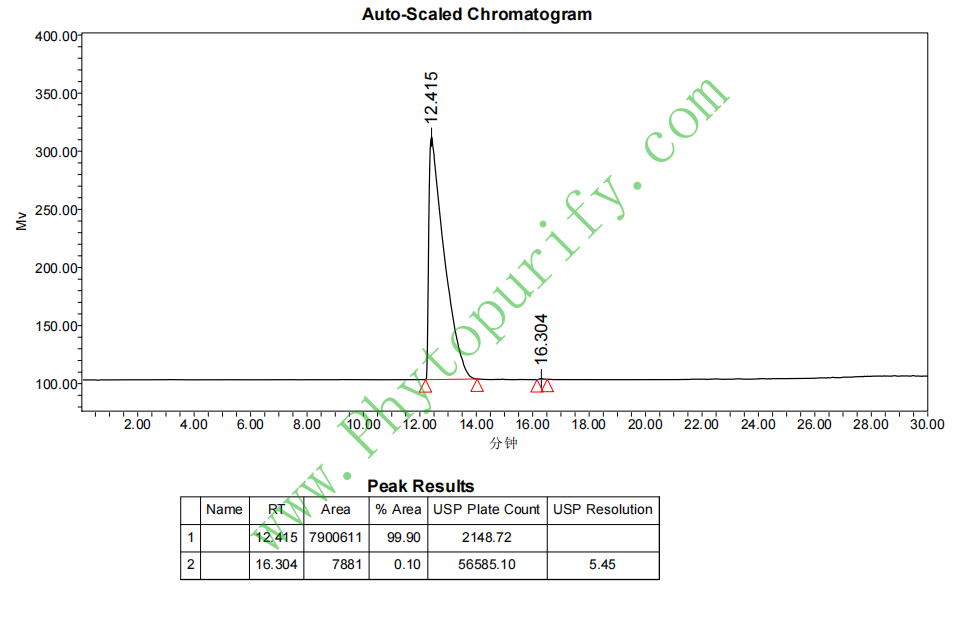
HPLC of Tuberostemonine
Storage conditions:Short-term storage at 2~8℃, long-term storage at -20 ~ -80℃
55.8400
2.5917
2.3977
.1429
3.7961
9.4444
High
64.5134
5.1787
No
No
Yes
No
Yes
No
0.6
No
No
Yes
Yes
Coughing is an important defensive reflex of the body, but chronic or severe coughing seriously affects the quality of life of patients and is one of the most common symptoms of respiratory diseases. Although existing cough suppressants such as opioids and peripheral cough suppressants have certain therapeutic effects, their side effects (such as addiction, constipation, drowsiness, etc.) limit long-term use. Therefore, searching for efficient and low toxicity cough suppressant active ingredients from natural products has always been an important direction in drug development. Tuberostemonine, CAS number 6879-01-2, is a steroid alkaloid with significant biological activity isolated from traditional cough and phlegm reducing Chinese medicine plants of the genus Tuberostemonine. Modern pharmacological research has confirmed that it exhibits potent cough suppressing effects on various experimental cough models, and its mechanism of action involves multi-target regulation. Unlike traditional central cough suppressants, it has potential value for the development of new cough suppressants. This article aims to provide a systematic review of the chemical properties, plant sources, pharmacological activities, mechanisms of action, medicinal properties, and clinical application prospects of Polygonatum sibiricum, in order to provide comprehensive scientific references for the in-depth research and development of this natural product.
Tuberostemonine type steroid alkaloids belong to a large category of polyphenolic alkaloids. Its basic skeleton is composed of a steroid core fused with a nitrogen-containing heterocyclic ring (usually pyrrole or pyrrolidinofuran structure), with a complex structure and multiple chiral centers, and unique stereochemistry. Its molecular formula is C22H33NO4 and its molecular weight is 375.5090. This structure endows it with specific physicochemical properties: the calculated lipid water partition coefficient (LogP) is 2.5917, indicating that it has moderate lipophilicity and is conducive to transmembrane transport; The topological polar surface area (TPSA) is 55.8400 Å ², indicating moderate molecular polarity; The predicted water solubility is about 0.1429 mg/mL, which belongs to the category of slightly soluble to poorly soluble. This suggests that solubilization strategies may need to be considered in formulation development. The crystal structure analysis of Yebai alkaloid shows that its intramolecular hydrogen bonds and rigid skeleton are crucial for its spatial conformation and biological activity. These basic physicochemical parameters are the basis for its subsequent pharmacokinetic behavior and drug efficacy evaluation.
The main source of berberine in leaves comes from the genus Stemonaceae in the family Stemonaceae(Stemona)Plants, especially the authentic source of traditional Chinese medicine "Bai Bu", such as Ye Bai Bu(Stemona tuberosa Lour.)、 Upright Hundred Parts(S. sessilifolia (Miq.) Miq.) and Manhua Baibu(S. japonica (Blume) Miq.)。 Among them, Bai Bu is one of its main plant sources, and this alkali is also named after it. Baibu plants have a long history in traditional Chinese medicine, mainly used to moisten the lungs and lower qi, relieve cough and kill insects.
Organic solvent extraction combined with modern chromatographic separation techniques is commonly used to extract berberine from leaves. The classic process is as follows: After the dried rhizomes of Baibu are crushed, they are refluxed and extracted with polar solvents such as ethanol or methanol, and concentrated to obtain the total extract. The extract is then dissolved in acidic water (such as dilute hydrochloric acid), filtered out of insoluble substances, alkalized (such as ammonia water) to precipitate alkaloids, or extracted with organic solvents (such as chloroform, ethyl acetate) to obtain the total alkaloid fraction. Further purification of Yebai alkaloid requires column chromatography technology, often using silica gel, alumina or reverse phase silica gel (such as C18) as the stationary phase, and gradient elution with different ratios of petroleum ether ethyl acetate, chloroform methanol and other solvent systems. High performance liquid chromatography (HPLC) or medium pressure preparative liquid chromatography (MPLC) is commonly used for final purification to obtain high-purity monomer compounds. In recent years, liquid-liquid distribution chromatography techniques such as high-speed countercurrent chromatography (HSCCC) have also been applied to the efficient separation of Baibu alkaloids due to their high recovery rate and avoidance of irreversible adsorption caused by solid adsorbents.
Numerous preclinical studies have confirmed that the core pharmacological activity of berberine is its potent cough suppressant effect.
1. Cough suppressant activity In various experimental animal models (such as ammonia or citric acid induced cough mouse models, capsaicin induced cough guinea pig models), administration of berberine by gavage or intraperitoneal injection can significantly prolong the cough latency and reduce the number of coughs. Its antitussive strength is comparable or stronger than the positive drug codeine, but the duration of action may be longer. It is worth noting that no significant central inhibition (such as reduced spontaneous activity) or constipation side effects similar to codeine were observed at its effective dose, suggesting that it may have a better safety window.
2. Function characteristics Research has shown that its antitussive effect on berberine may involve both central and peripheral mechanisms. In peripheral experiments, it can inhibit the discharge of airway sensory nerve C fibers caused by irritants such as capsaicin and bradykinin; In central experiments, intrathecal administration can also inhibit cough reflex, but its specific site of action is not completely the same as opioid receptors.
3. Other potential activities In addition to cough suppressants, some studies suggest that total alkaloids and certain monomeric components of Polygonatum sibiricum have insecticidal (especially body lice and pubic lice), antibacterial, anti-inflammatory and other activities. However, the strength and specificity of the effects of Polygonatum sibiricum on these aspects still need to be further clarified. Its cough suppressant activity is currently the most prominent and valuable direction for development.
The cough suppression mechanism of berberine involves the regulation of multiple key molecular targets on the cough reflex pathway, exhibiting multi-target effects. The main associated targets are as follows:
1. Transient receptor potential channel:
* TRPV1 Capsaicin receptors are key sensors that mediate airway chemical irritant cough. Berberine may antagonize the TRPV1 channel, inhibit its activation by capsaicin, heat, protons, etc., thereby reducing the release of neuropeptides from sensory nerve endings and exerting cough suppressing effects.
* TRPA1 Another important chemical receptor can be activated by mustard oil, cold air, environmental pollutants, and other factors. Inhibition of TRPA1 may be involved in the anti cough effect of berberine on various irritating gases.
2. Opioid receptor system:
* OPRM1(μ - opioid receptor): The main target of traditional central cough suppressant codeine. The partial regulation of μ receptor downstream signals by berberine may be different from classical opioid drugs, producing a cough suppressing effect but avoiding typical respiratory depression and addiction risks. Its specific interaction mode is a research hotspot.
3. Sodium ion channels and neural excitability:
* SCN9A(encoding Nav1.7 sodium channel alpha subunit): Highly expressed in nociceptive sensory neurons, regulating the generation and conduction of action potentials. Regulating Nav1.7 channels may affect the excitability of cough afferent nerves and is a potential novel analgesic and antitussive target.
4. Neuropeptides and their receptor system:
* CALCA Calcitonin gene-related peptide (CGRP) and TAC1(Encoding substance P, neurokinin A, etc.): Both are important neuropeptides released by sensory nerve C fibers and are powerful mediators in cough reflex. Berberine may alleviate neurogenic inflammation and cough impulses by inhibiting the release of these neuropeptides or antagonizing their receptors (such as NK1 receptors).
* GRPR(Gastrin releasing peptide receptor) and NMUR1(Neuroregulatory peptide U receptor 1): Both are present in the central nervous system, especially in brain regions related to respiratory regulation and cough center (such as the solitary tract nucleus). They are involved in regulating respiratory rhythms and cough reflex sensitivity. Berberine may exert cough suppressing effects at the central level by regulating these neuropeptide receptor systems.
In summary, berberine may act simultaneously on peripheral sensory nerves (inhibiting TRPV1/TRPA1, regulating SCN9A, and reducing CGRP/P substance release) and central cough integration areas (regulating OPRM1, GRPR, NMUR1, etc.) to inhibit the input, integration, and output of cough reflex in multiple links and targets. This may be the reason for its high efficiency and low side effects.
Based on its physical and chemical properties and preliminary research, the pharmacological characteristics of Yebaiban are as follows:
* Absorption and distribution Moderate LogP value (2.59) is beneficial for its gastrointestinal absorption. It is predicted that its blood-brain barrier (BBB) permeability is "high", which is consistent with pharmacological evidence of its central antitussive activity and can enter the brain to act on cough related targets.
* Metabolism and safety warning:
* HERG inhibition Predicted as' no ', this is a positive signal indicating a low risk of potential cardiac toxicity (inducing long QT syndrome), but experimental verification is needed.
* Ames test The predicted value is 0.6 (usually interpreted as a high possibility of a negative result, but caution should be exercised and actual experimental confirmation is required), indicating that the genetic toxicity risk may be low.
* Cytochrome P450 Currently, there is a lack of detailed data. As an alkaloid, it is likely to be metabolized by the liver CYP450 enzyme system, and identifying its main metabolic enzyme subtypes is crucial for evaluating drug interactions.
* Current status of pharmacokinetic research Currently, there are few reports on pharmacokinetic studies of the berberine system in leaves. Limited animal studies have shown that it can be absorbed in the body after oral administration, but key parameters such as absolute bioavailability, plasma protein binding rate, major metabolites, and elimination half-life are not yet clear. Its slightly soluble properties may affect its oral absorption rate and degree, and future pharmaceutical research (such as making solid dispersions, cyclodextrin inclusion complexes, nanocrystals, etc.) may be the key to improving its bioavailability.
* Summary The advantages of Yebai alkaloid in terms of structural novelty, pharmacological activity, and preliminary safety prediction have been demonstrated, but its poor water solubility and lack of systematic pharmacokinetic data are the core issues that must be addressed in its drug conversion process.
As a natural cough suppressant active ingredient derived from traditional Chinese medicine, berberine has broad clinical application prospects, but also faces challenges.
prospect:
1. Lead compounds of novel multi-target cough suppressants Its unique multi-target mechanism of action, especially the synergistic regulation of peripheral targets such as TRPV1/TRPA1 and the central opioid/neuropeptide system, provides an excellent template for the development of new cough suppressants that are different from existing drugs such as codeine and dexmedetomidine, and have no addictive or central inhibitory side effects.
2. Treatment of refractory chronic cough For chronic cough with complex etiology and poor response to existing treatments (such as cough hypersensitivity syndrome), multi-target drugs may be more effective than single target drugs. The mechanism of action of berberine on leaves perfectly meets this requirement.
3. Examples of Modernization and Internationalization of Traditional Chinese Medicine In depth research on it is a model for elucidating the scientific connotation of the traditional efficacy of Bai Bu's "cough suppressant" from the perspective of "medicinal materials ingredients targets mechanisms", which helps to promote the modernization and internationalization of traditional Chinese medicine.
Challenges and Prospects:
1. Optimization of drug properties The primary task is to address its water solubility and oral bioavailability issues. Optimization is required through structural modification (preparation of water-soluble prodrugs or similar substances) or advanced formulation techniques.
2. System preclinical evaluation Comprehensive preclinical pharmacokinetic (ADME) and toxicological (acute toxicity, chronic toxicity, reproductive toxicity, etc.) studies must be completed to confirm its safety. Especially its high BBB permeability requires a detailed evaluation of its long-term effects on the central nervous system.
3. Deep explanation of mechanism It is necessary to use molecular docking, point mutation, photoaffinity labeling and other technologies to accurately elucidate their modes of action (excitation/antagonism, allosteric regulation, etc.) and affinity towards the above-mentioned multiple targets, and clarify the primary and secondary relationships of their contributions.
4. clinical research Ultimately, rigorous clinical trials need to be designed to validate its effectiveness, safety, and optimal dosing regimen in patients.
Future research can focus on rational drug design around its core structure, improving pharmacokinetic properties while retaining multi-target activity, and potentially creating a class of new drugs with independent intellectual property rights.
Duiye Baibu alkaloid is a treasure discovered from the traditional cough medicine Baibu. Its unique steroidal alkaloid structure endows it with potent and potentially multi-target cough suppressing pharmacological activity. Existing studies have shown that it exerts therapeutic effects by intervening in multiple key cough reflex processes such as TRPV1/TRPA1, opioid receptors, and neuropeptide systems, and preliminary drug prediction indicates its potential for development. Although there are still significant gaps in solubility, systemic pharmacokinetics, and toxicological evaluation, its value as a lead compound for novel multi-target cough suppressants is beyond doubt. With the deep integration of modern medicinal chemistry, pharmacology, and pharmaceutical technology, berberine is expected to play an important role in overcoming clinical challenges such as chronic cough, and become a successful bridge connecting the wisdom of traditional Chinese medicine with the development of modern innovative drugs. The continuous and in-depth research on it not only has important scientific significance, but also contains enormous clinical application value and industrial prospects.
