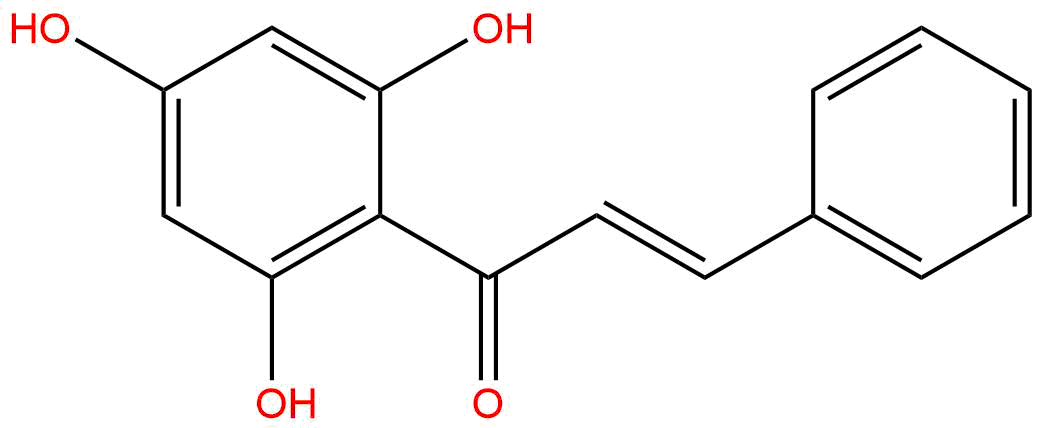


Product name: Pinocembrin chalcone
Synonym name: 2',4',6'-Trihydroxychalcone
Catalogue No.: SBP03761
Cas No.: 4197-97-1
Formula: C15H12O4
Mol Weight: 256.257
Botanical Source:
Type of Compound: Chalcones
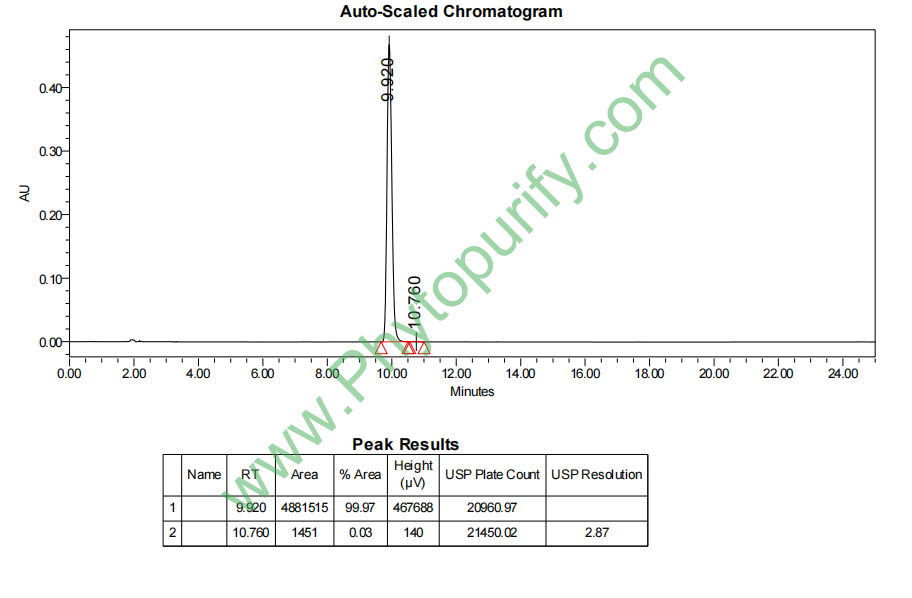
Purity: 95%~99%
Analysis Method: HPLC-DAD or/and HPLC-ELSD
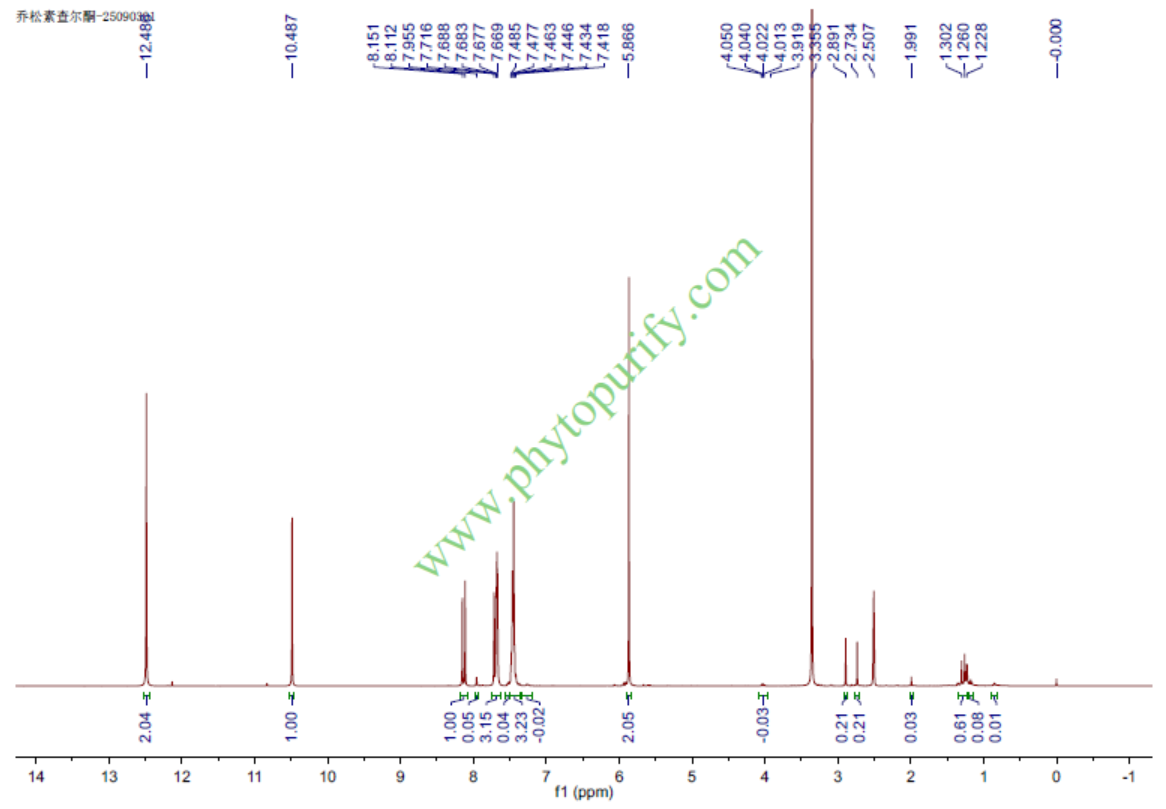
Identification Method: Mass, NMR
Packing: Brown vial or HDPE plastic bottle
Storage: Store in a well closed container, protected from air and light. Put into refrigerate or freeze for long term storage.
Whenever possible, you should prepare and use solutions on the same day. However, if you need to make up stock solutions in advance, we recommend that you store the solution as aliquots in tightly sealed vials at -20℃. Generally, these will be useable for up to two weeks.
The product could be supplied from milligrams to grams
Inquire for bulk scale.
For Reference Standard and R&D, Not for Human Use Directly.
HPLC of Pinocembrin chalcone
HNMR of Pinocembrin chalcone
Storage conditions:Short-term storage at 2~8℃, long-term storage at -20 ~ -80℃
77.7600
3.2678
2.9449
.0895
4.8444
16.4895
Low
93.1304
2.1839
Yes
No
No
No
Yes
Yes
0.6
Yes
No
Yes
Yes
Natural products have always been an important source of innovative drug discovery, among which flavonoids have attracted much attention due to their wide range of biological activities. Pinocembrin chalcone, also known as 2 ', 4', 6 '- trihydroxychalcone (CAS number: 4197-97-1), is an important member of the chalcone family. As a dihydrochalcone compound, it is not only a precursor for the biosynthesis of various flavonoids, but also exhibits diverse and significant pharmacological activities on its own. Early research revealed that it has antibacterial properties, especially isolated from the genus Helichrysum Trilineatum. In recent years, with the deepening of research on metabolic diseases and oxidative stress-related diseases, the pharmacological potential of Qiaoson Chalcone has been more widely explored. Research shows that it can not only improve glucose tolerance, promote fatty acid oxidation and reduce tissue fat accumulation by activating AMP activated protein kinase (AMPK) pathway, thus showing potential in the management of diabetes and its complications, but also showing a protective role in gastric ulcer models. In addition, its powerful antioxidant network regulation ability involves multiple key targets such as NRF2, SOD, CAT, etc., laying the foundation for its application in fields such as inflammation, aging, and neurodegenerative diseases. This article aims to provide a systematic review of the chemical properties, plant sources, pharmacological activities, mechanisms of action, medicinal properties, and clinical application prospects of Qiaoson chalcone, in order to provide comprehensive scientific references for the in-depth research and development of this compound.
The molecular formula of Qiaososu Chalone is C15H12O4, with a molecular weight of 256.2570. Its chemical structure belongs to the basic skeleton of chalcones, which consists of two aromatic rings (A ring and B ring) connected by a three carbon α, β - unsaturated carbonyl system. Specifically, the A ring of Qiaoson chalcone is a 2 ', 4', 6 '- trihydroxy substituted benzene ring, and the B ring is an unsubstituted benzene ring. This specific hydroxylation pattern is the key structural basis for its biological activity. α. The β - unsaturated ketone structure makes it prone to Michael addition reactions, which is also an important chemical mechanism for its interaction with nucleophilic thiol groups (such as cysteine residues in proteins) in vivo, thereby regulating various enzyme activities and signaling pathways.
From the perspective of physicochemical properties, its calculated lipid water partition coefficient (LogP) is 3.2678, indicating that the compound has moderate lipophilicity, which is beneficial for its penetration of cell membranes but may also affect its water solubility. Its topological polar surface area (TPSA) is 77.7600 Å ², which is relatively low, further supporting its good membrane permeability. The measured value of water solubility is about 0.0895 mg/mL, which belongs to the category of slight solubility, which may be a limiting factor for its oral bioavailability. In the preliminary pharmacological screening, the compound did not show significant hERG potassium channel inhibitory activity (hERG inhibition: No), indicating a low risk of cardiac toxicity. The Ames test result was 0.6, indicating that no significant mutagenicity was observed under the experimental conditions, but its genetic toxicity still needs to be evaluated more comprehensively. It is worth noting that its blood-brain barrier permeability is predicted to be "low", which may limit its direct efficacy in central nervous system diseases, but it is expected to be improved through formulation modifications or structural modifications.
Qiao Song Su Chalone is relatively widely distributed in nature, but one of the sources with high content is from plants in the Asteraceae genus. The initial research report was based on Helichrysum trilineatum The compound was isolated and its antibacterial activity was confirmed. In addition, it has also been found in propolis, buds of certain poplar species, as well as in various plants such as ginger and legumes. In propolis, it often coexists with its corresponding flavanone, Pinocembrin, and the two can be converted into each other in plants through isomerase.
Organic solvent extraction is commonly used to extract catechol from plant materials. Due to its phenolic nature, methanol, ethanol, acetone, or mixtures of these solvents with water are commonly used for leaching or reflux extraction. For example, using a 70-80% ethanol aqueous solution for ultrasonic assisted extraction of dried aerial parts of wax chrysanthemum can effectively leach it out. Subsequently, crude extract was obtained by vacuum concentration.
Further separation and purification require the use of chromatographic techniques. Crude extracts are often separated by silica gel column chromatography using gradient elution systems such as petroleum ether ethyl acetate or chloroform methanol. Due to the presence of multiple phenolic hydroxyl groups and weak acidity in Qiaoson chalcone, polyamide column chromatography can also be considered for enrichment. High performance liquid chromatography (HPLC), especially preparative HPLC, is the final key step in obtaining high-purity monomers. C18 reverse phase chromatography columns are commonly used, with methanol water or acetonitrile water (containing a small amount of formic acid or acetic acid to inhibit phenolic hydroxyl ionization and improve peak shape) as the mobile phase for elution. Structural identification involves the comprehensive use of techniques such as ultraviolet spectroscopy (UV), mass spectrometry (MS), and nuclear magnetic resonance spectroscopy (NMR, especially 1H NMR and 13C NMR). The typical UV spectrum exhibits characteristic absorption peaks of chalcone at~370 nm and~310 nm.
The pharmacological activity research of Qiaososu Chalone has expanded from its initial antibacterial activity to multiple fields such as metabolism, digestion, and antioxidant activity, demonstrating the characteristics of multi-target action.
The multiple pharmacological effects of Qiaososu Chalone stem from its regulation of multiple key signaling pathways and molecular targets within cells, with the core centered around Energy metabolism regulation and Oxidative stress defense Two major systems.
AMPK signaling pathway activation AMPK is the "main switch" for cellular energy metabolism. Qiaoson chalcone has been confirmed to be an activator of AMPK. The specific activation mechanism may involve increasing the intracellular AMP/ATP ratio (through mild inhibition of mitochondrial respiratory chain complexes?) or direct allosteric activation. After AMPK activation, a series of downstream effects are produced:a) In skeletal muscle and liver, the inhibition of carnitine palmitoyltransferase 1 (CPT1) is relieved by phosphorylating acetyl CoA carboxylase (ACC), thereby Promote fatty acid oxidation;b) Inhibit the transcriptional activity of sterol regulatory element binding protein 1c (SREBP-1c) and reduce hepatic steatosis;c) Enhance the membrane translocation of glucose transporter 4 (GLUT4),Promote glucose uptake;d) Inhibit mTORC1 pathway and regulate autophagy. These effects collectively explain its role in improving insulin sensitivity, lowering blood sugar, and lowering blood lipids.
NRF2/ARE antioxidant pathway Qiaoson chalcone is an effective activator of NRF2 (encoded by the NFE2L2 gene). It may inactivate the cysteine residues of KEAP1 (the negative regulatory protein of NRF2) through Michael addition, thereby stabilizing NRF2 and promoting its nuclear translocation. In the nucleus, NRF2 binds to antioxidant response elements (ARE), initiating the transcription of a series of phase II detoxifying enzymes and antioxidant proteins, including:
Inhibition of Tyrosinase (TYR) and Matrix Metalloproteinases (MMPs)Qiaoson chalcone can competitively inhibit Tyrosinase (TYR)The activity is related to its potential skin whitening applications. At the same time, it can be lowered Matrix metalloproteinase-1 and -3 (MMP1, MMP3)The expression of MMPs may be related to the inhibition of AP-1 or MAPK signaling pathways, as well as its antioxidant effect, which reduces the induction of MMPs by oxidative stress, thereby exerting a protective effect on extracellular matrix and anti photoaging.
Anti inflammatory pathway regulation In addition to indirectly anti-inflammatory effects through NRF2/HMOX1, Qiaoson Chalcone can also inhibit the activation of classic pro-inflammatory signaling pathways such as NF - κ B, reducing the production of inflammatory mediators.
Although the pharmacological activity of Qiaoson chalcone is clear, its pharmacological development still faces challenges, and systematic pharmacokinetic studies are relatively limited.
Absorption, distribution, metabolism, excretion (ADME):
Challenges and optimization strategies for drug development:
Preliminary evaluation of safety The existing limited data (no hERG inhibition, negative Ames test) suggests that it has a good safety profile, but comprehensive preclinical toxicology studies are still needed, including acute toxicity, subchronic toxicity, reproductive toxicity, etc., to evaluate its safety window.
The diverse pharmacological effects of Qiaososu Chalone provide broad prospects for its application in multiple disease fields, but solid research is still needed for its transformation.
Potential clinical application directions:
Future research prospects:
Qiaososu chalcone, as a naturally occurring chalcone compound, exhibits a multi-target and multi pathway pharmacological spectrum centered on activating the AMPK and NRF2 pathways due to its unique chemical structure. From improving glucose and lipid metabolism, protecting gastric mucosa, to resisting oxidative damage and inflammation, its research value has surpassed the initial antibacterial category, especially in today's increasingly popular metabolic diseases, highlighting its important development potential. However, its inherent physicochemical properties and pharmacokinetic deficiencies are the main obstacles to clinical application. Future research should focus on elucidating its precise molecular mechanism of action and systematically optimizing its drug properties through modern medicinal chemistry and pharmacology methods. By combining the multi potency advantage of traditional natural products with modern drug research and development technology, it is expected that josone chalcone will eventually develop from a potential lead compound into a new therapeutic drug or important health product raw material for treating diabetes, its complications, metabolic liver disease and other diseases.
