


Synonym name: Luteolin 7-methyl ether
Catalogue No.: BP0063
Cas No.: 20243-59-8
Formula: C16H12O6
Mol Weight: 300.266
Botanical Source: Baccharis spp., Eremanthus sp., Hazardia sp., Salvia officinalis (sage) and Thymus membranaceus and other plants
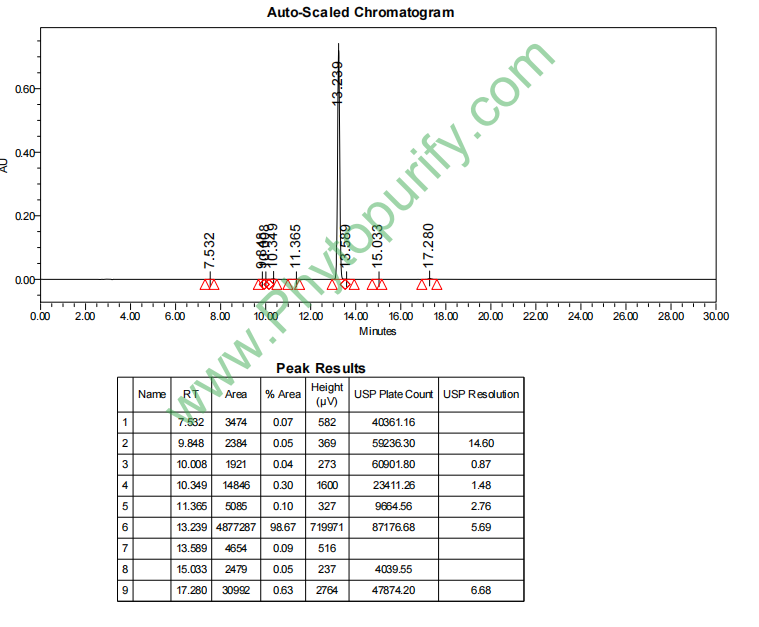
Purity: 95%~99%
Analysis Method: HPLC-DAD or/and HPLC-ELSD
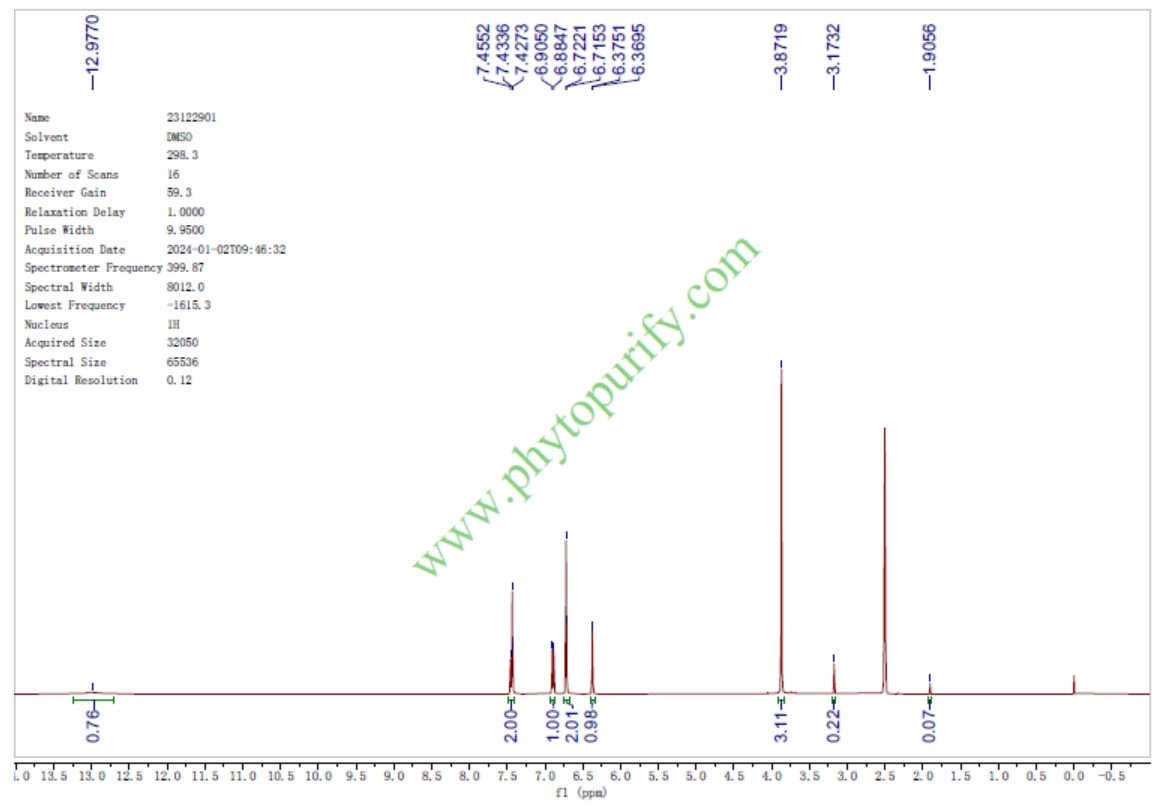
Identification Method: Mass, NMR
Packing: Brown vial or HDPE plastic bottle
Can be supplied from milligrams to grams.
For Reference Standard and R&D, Not for Human Use Directly.
Inquire for bulk scale.
HPLC of 3'-hydroxygenkwanin
HNMR of 3'-hydroxygenkwanin
Storage conditions:Short-term storage at 2~8℃, long-term storage at -20 ~ -80℃
107.2200
1.8900
1.8900
Low
Unknown
Unknown
Unknown
Unknown
Unknown
Unknown
Hydroxygenkwanin (CAS number: 20243-59-8) is a flavonoid compound derived from natural plants, which has received widespread attention in recent years due to its potential pharmacological activity and multi-target mechanism of action. As an important member of flavonoid natural products, hydroxyquercetin exhibits significant biological activities in antioxidant, anti-inflammatory, and cardiovascular protection, especially in the research of myocardial infarction (MI) related diseases, demonstrating unique therapeutic potential. Myocardial infarction, as one of the cardiovascular diseases with a high mortality rate worldwide, has a complex pathogenesis involving multiple molecular targets and signaling pathways. Hydroxyquercetin exhibits pharmacological properties of multi-target synergistic regulation by regulating multiple targets closely related to myocardial infarction, such as APP, PTPN1, MAOA, ABCB1, ABCG2, SYNJ2, ALOX5, TRPV1, CNR1, and SHBG, providing new ideas and possibilities for the prevention and treatment of myocardial infarction.
This article will provide a systematic review of the chemical structure and physicochemical properties, plant sources and extraction methods, pharmacological activity and mechanism of action of hydroxyquercetin, and comprehensively evaluate its pharmacological parameters. It will also explore its potential and future development direction in clinical applications, aiming to provide theoretical basis and guidance for related research.
Hydroxynaringenin belongs to the flavonoid class, with a molecular formula of C16H12O6 and a molecular weight of 292.26. Its chemical structural characteristics include a typical flavonoid skeleton containing multiple hydroxyl substituents, especially the hydroxyl modification at the 3 'position, which endows it with unique biological activity. The LogP value of this compound is 1.89, indicating that it has moderate lipid solubility, which is beneficial for cell membrane penetration but not excessively lipid soluble, balancing bioavailability and water solubility. The topological polar surface area (TPSA) is 107.22 Å ², indicating its strong polarity and hydrogen bond acceptor ability (6 hydrogen bond acceptors), which is of great significance for the binding of molecules to biomolecule targets.
From a pharmacokinetic perspective, hydroxyquercetin has low blood-brain barrier permeability, indicating its limited distribution in the central nervous system, which may reduce the risk of central nervous system related side effects. However, the experimental data on its hepatotoxicity, cardiotoxicity, and hERG channel inhibition are currently unclear, and further systematic research is needed to evaluate its safety.
Hydroxy genkwan is mainly found in plants of the genkwa family, especially in the Genkwa genus as an important source. Genkwa plants are widely used in traditional Chinese medicine and have the effects of clearing heat, detoxifying, reducing swelling, and relieving pain. Hydroxy quercetin, as one of its main active ingredients, bears some of the pharmacological basis.
The common methods for extracting hydroxyquercetin include solvent extraction and chromatographic separation. Generally, ethanol or methanol is used as the extraction solvent, and crude extracts are obtained through ultrasound assisted extraction or reflux extraction. Subsequently, separation and purification were carried out using techniques such as silica gel column chromatography and reverse phase high performance liquid chromatography (RP-HPLC). In recent years, supercritical fluid extraction technology and microwave-assisted extraction technology have also been applied to the extraction of hydroxyquercetin, improving extraction efficiency and purity.
The optimization of extraction process not only affects the yield of hydroxyquercetin, but also relates to the stability of its bioactive components and the accuracy of subsequent pharmacological research. Therefore, establishing a standardized and controllable extraction and purification process is a key link in promoting its medicinal development.
The pharmacological activity research of hydroxyquercetin covers multiple fields such as antioxidant, anti-inflammatory, anti-tumor, and cardiovascular protection, especially its protective effect in myocardial infarction models has attracted widespread attention.
Antioxidant effect Hydroxyquercetin can alleviate oxidative stress damage by clearing free radicals, inhibiting lipid peroxidation, and protecting myocardial cells from ischemia-reperfusion injury. Both in vitro DPPH radical scavenging experiments and cell models have confirmed its significant antioxidant capacity.
anti-inflammatory effect Hydroxyquercetin can inhibit the activation of inflammatory factors such as TNF - α, IL-6, and NF - κ B signaling pathways, alleviate inflammatory reactions, and reduce myocardial tissue inflammation damage, which has positive significance for myocardial repair after myocardial infarction.
Cardiovascular protection In animal myocardial infarction models, hydroxyquercetin significantly improves cardiac function, reduces myocardial ischemia area, inhibits myocardial cell apoptosis, and promotes myocardial cell survival. It regulates intracellular calcium homeostasis, energy metabolism, and cellular signaling through multi-target synergistic effects, enhancing the ability of myocardium to resist ischemic injury.
Other activities Some studies have shown that hydroxyquercetin also has certain regulatory effects on the nervous system and tumor cells, but the relevant mechanisms still need to be further explored.
The multi-target mechanism of action of hydroxyquercetin is the basis for its pharmacological effects. Research on targets related to myocardial infarction has revealed its complex molecular regulatory network:
APP (amyloid precursor protein)Hydroxyquercetin may affect the survival and apoptosis pathways of myocardial cells and alleviate ischemic injury by regulating the expression or processing of APP.
PTPN1 (protein tyrosine phosphatase 1)As a negative regulatory factor, PTPN1 is involved in the insulin signaling pathway and cell proliferation. The regulation of its activity by hydroxyquercetin helps to improve myocardial metabolic abnormalities.
MAOA (monoamine oxidase A)Regulating neurotransmitters and oxidative stress, hydroxyquercetin inhibits MAOA activity, reduces oxidative stress products, and protects myocardial cells.
ABCB1 and ABCG2 (ATP binding cassette transporters)Hydroxynaringenin may regulate drug efflux and cell protection by modulating these transporters, affecting drug metabolism and cellular environment stability.
SYNJ2 (Phosphatidylinositol Phosphatase): Involved in membrane lipid metabolism and signal transduction, hydroxyquercetin regulates SYNJ2, which may affect cell membrane dynamics and signaling pathways.
ALOX5 (Lipoxygenase 5)Mediating the generation of inflammatory mediators, the inhibitory effect of hydroxyquercetin on ALOX5 helps alleviate myocarditis.
TRPV1 (Transient receptor potential vanillic acid receptor 1)Involved in pain and inflammatory responses, hydroxyquercetin regulates TRPV1 function and may alleviate myocardial ischemia related pain and inflammation.
CNR1 (cannabinoid receptor 1)Regulating cardiovascular function and neuroprotection, the effect of hydroxyquercetin on CNR1 is still under study, suggesting its possible involvement in myocardial protection.
SHBG (Sex Hormone Binding Globulin): Affects hormone activity and metabolism, and the regulation of SHBG by hydroxyquercetin may indirectly affect myocardial metabolic status.
In summary, hydroxyquercetin exerts its comprehensive pharmacological effects through synergistic regulation of multiple targets and pathways, especially in the pathological process of myocardial infarction, demonstrating unique therapeutic potential.
The pharmacological evaluation of hydroxyquercetin is based on its physicochemical properties and preliminary pharmacokinetic data:
Molecular weight and lipid solubility The molecular weight of 292.26 and the LogP value of 1.89 are within the ideal range for oral small molecule drugs, which contribute to good absorption and distribution.
Polarity and Hydrogen Bond Receptors The TPSA is 107.22 and the number of hydrogen bond acceptors is 6, indicating good water solubility, which is beneficial for in vivo transport and target binding.
Blood-brain barrier permeability Low permeability reduces the risk of central nervous system side effects, but may limit the therapeutic application of central related diseases.
safety indicator At present, key safety indicators such as hepatotoxicity, cardiotoxicity, and hERG channel inhibition are not yet clear and need to be validated through in vitro and in vivo toxicology studies.
pharmacokinetics The existing research is relatively limited, and the absorption, distribution, metabolism, and excretion (ADME) characteristics of hydroxyquercetin in vivo still need to be systematically studied. Preliminary data suggests that its oral bioavailability is moderate, and its metabolic pathway may involve the liver enzyme system. In the future, attention should be paid to its metabolic stability and potential drug interactions.
Overall, hydroxyquercetin has good medicinal chemical properties and potential drug properties, but research on safety and pharmacokinetics still needs to be strengthened to support its clinical development.
Hydroxyquercetin, as a natural flavonoid compound with multi-target effects, has shown broad application prospects in the treatment of myocardial infarction and related cardiovascular diseases. Its antioxidant, anti-inflammatory, and cardioprotective effects provide new strategies for the comprehensive management of myocardial infarction, especially suitable for the prevention and treatment of ischemia-reperfusion injury and myocardial cell apoptosis.
The key to future clinical applications lies in:
Pharmacodynamic and toxicological evaluation of the system Clarify the safe dosage range and potential adverse reactions to ensure the safety of clinical use.
Pharmacokinetic optimization Improving bioavailability and targeting through structural modification or drug carrier technology to enhance therapeutic efficacy.
In depth analysis of multi-target mechanism Using modern molecular biology and omics techniques, we aim to reveal the specific role of hydroxyquercetin in the regulation of multiple pathways in myocardial infarction, providing a basis for precise treatment.
Clinical trial design and implementation Conduct early clinical trials to evaluate its efficacy and safety in patients with myocardial infarction, and promote the transition from laboratory research to clinical application.
In addition, the potential applications of hydroxyquercetin in other disease fields such as neurodegenerative diseases, tumors, etc. are also worth paying attention to, and future interdisciplinary research will expand its medicinal value.
Hydroxy quercetin, as a natural flavonoid compound with multiple targets and functions, exhibits unique pharmacological advantages in the prevention and treatment of myocardial infarction and related cardiovascular diseases. Its excellent physicochemical properties and preliminary pharmacological activity research provide a solid foundation for its medicinal properties. However, current research on its safety, pharmacokinetics, and clinical efficacy is still insufficient, and there is an urgent need for systematic and in-depth experimental and clinical validation. In the future, by combining modern drug development technology and multidisciplinary research methods, hydroxyquercetin is expected to become an important innovative drug in the field of cardiovascular disease treatment, bringing new treatment options for clinical patients.
Through continuous basic and applied research, the medicinal potential of hydroxyquercetin will be more comprehensively developed and utilized, promoting the development of natural product pharmacology and the modernization process of natural medicine.
