Storage conditions:Short-term storage at 2~8℃, long-term storage at -20 ~ -80℃
Sodium dichloroacetate (DCA), CAS number 2156-56-1, is a structurally simple and biologically active organic small molecule compound. As an inhibitor of pyruvic acid dehydrogenase kinase (PDK), DCA can activate the pyruvic acid dehydrogenase complex (PDC) and promote mitochondrial oxidation of intracellular energy metabolism. In recent years, DCA has become a research hotspot in the field of tumor metabolic therapy due to its potential role in regulating tumor metabolism. It exhibits good anti-tumor potential by regulating the metabolic reprogramming of cancer cells, inhibiting lactate production, inducing reactive oxygen species (ROS) production, thereby inhibiting tumor cell proliferation and inducing apoptosis. This article provides a systematic review of the chemical structure and physicochemical properties, sources and extraction, pharmacological activity, mechanism of action and molecular targets, pharmacological evaluation, pharmacokinetic characteristics, and clinical application prospects of sodium dichloroacetate. The aim is to provide scientific basis for further research and development of this compound.
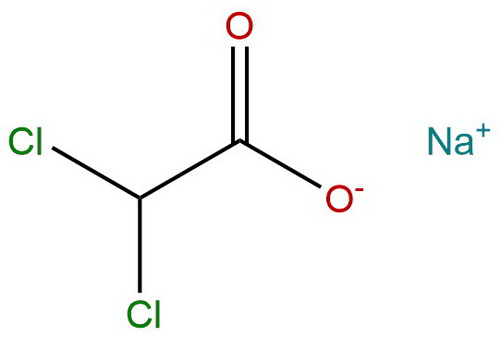
The chemical formula for sodium dichloroacetate is C2HCl2NaO2, with a molecular weight of 128.9420. Its molecular structure contains a dichloro substituted acetic acid group, and sodium ions exist in salt form. The LogP value of this compound is 0.6793, indicating that it has moderate lipophilicity and can maintain a certain balance between the aqueous and lipid phases. The polar surface area (TPSA) is 37.3 Å ², indicating that its molecules have a certain polarity, which is beneficial for water solubility and biofilm penetration. The water solubility is relatively high, about 72.7791 mg/mL, which is conducive to the absorption of oral administration. The blood-brain barrier has a lower permeability, reducing the risk of central nervous system side effects. The hERG channel inhibition experiment showed a negative result, indicating a low risk of cardiac toxicity. The Ames mutagenicity test score is 1.5, indicating low genotoxicity and good safety.
The simplicity of its chemical structure and excellent physicochemical properties give sodium dichloroacetate certain advantages in drug development, especially in the design and in vivo distribution of oral formulations.
Sodium dichloroacetate, as a simple organic salt, is traditionally prepared through chemical synthesis rather than directly extracted from plants. Its chemical synthesis usually involves the reaction of dichloroacetic acid with sodium hydroxide to produce the sodium salt form. However, the natural precursors and related organic acids of dichloroacetic acid are widely present in various plant and microbial metabolites, providing a basis for the study of its biosynthetic pathways.
In recent years, with the development of natural product pharmacology, some studies have attempted to screen organic acids and their derivatives with similar structures from plant metabolites, and explore their structure-activity relationship (SAR) with sodium dichloroacetate. However, sodium dichloroacetate itself is not a typical plant derived natural product, and its application relies more on high-purity chemical synthesis processes.
The pharmacological activity of sodium dichloroacetate is mainly reflected in its ability to regulate cellular energy metabolism, especially its role in tumor cell metabolic reprogramming. As an inhibitor of PDK, DCA relieves the phosphorylation inhibition of PDH, restores its activity, promotes the entry of pyruvate into mitochondria for oxidative metabolism, reduces lactate production, and reverses the Warburg effect of cancer cells (i.e. preference for anaerobic glycolysis). This metabolic transformation not only inhibits the proliferation of tumor cells, but also induces cell apoptosis by increasing mitochondrial reactive oxygen species (ROS) levels.
In addition, DCA can also inhibit Na+- K+-2Cl - cotransporter protein (NKCC), affecting intracellular ion balance and volume regulation, further interfering with the physiological functions of tumor cells. Several in vitro and in vivo experiments have shown that DCA has significant anti proliferation and pro apoptosis effects on a variety of tumor cell lines (including lung cancer, breast cancer, glioma, etc.).
In the field of non tumor diseases, DCA has also shown the potential to regulate mitochondrial function and metabolic disorders, such as acidosis and mitochondrial diseases, but its core research and applications are still focused on tumor metabolic therapy.
The main mechanism of action of sodium dichloroacetate is based on its inhibition of pyruvate dehydrogenase kinase (PDK). PDK phosphorylates the E1 α subunit of PDC, inhibiting its activity and blocking the oxidative metabolic pathway of pyruvate entering mitochondria. DCA blocks this phosphorylation process, activates PDC, promotes the transport of pyruvate into mitochondria, enhances oxidative phosphorylation, inhibits lactate production, and corrects metabolic abnormalities in cancer cells.
In terms of molecular targets, DCA affects multiple key proteins related to tumor growth and survival:
These multi-target effects make DCA have broad application potential in tumor therapy, especially in combination therapy, enhancing anti-tumor effects through synergistic effects.
The pharmacological parameters of sodium dichloroacetate show that it has good potential for drug development. Moderate molecular weight, high water solubility, conducive to oral absorption. The LogP value is moderate, with both hydrophilicity and lipophilicity, facilitating the distribution of drugs in the body. Its polar surface area is relatively low, which helps to penetrate the cell membrane.
The low permeability of the blood-brain barrier reduces the risk of central nervous system toxicity. The hERG channel inhibition experiment result is negative, indicating a low risk of cardiac toxicity. The Ames test results showed low genotoxicity and good safety.
In terms of pharmacokinetics, DCA is rapidly absorbed orally, with a plasma half-life of about 1-2 hours. It is mainly metabolized by the liver, and the metabolites are mainly excreted by the kidneys. Its pharmacokinetic characteristics support daily oral administration regimens, but also suggest the need to pay attention to dosage adjustments to avoid potential toxic side effects.
Sodium dichloroacetate, as a metabolic regulator, has demonstrated unique advantages in the field of tumor treatment. It has become an emerging direction in tumor metabolic therapy by correcting metabolic abnormalities in cancer cells, inhibiting tumor growth and metastasis. Several preclinical studies and early clinical trials have confirmed its potential efficacy in glioma, lung cancer, breast cancer and other solid tumors.
In the future, DCA is expected to serve as an adjuvant drug for monotherapy or combination chemotherapy, radiotherapy, and immunotherapy, improving the overall effectiveness of cancer treatment. Its low cost and convenient oral administration also make it suitable for widespread promotion.
However, the clinical application of DCA still faces some challenges, such as dose optimization, long-term safety assessment, and the establishment of personalized treatment plans. In addition, in-depth analysis of its molecular mechanism and search for biomarkers to predict therapeutic efficacy will help improve its clinical translation rate.
Future research should focus on the synergistic mechanism of DCA with other anti-tumor drugs, optimize dosing regimens, expand indications, and strengthen exploration of its potential applications in non tumor metabolic diseases.
Sodium dichloroacetate, as a metabolic regulator with a clear mechanism of action, occupies an important position in the fields of natural product pharmacology and tumor metabolic therapy. It exhibits good anti-tumor activity by inhibiting PDK, activating PDH, correcting metabolic abnormalities in cancer cells, inhibiting tumor proliferation, and inducing apoptosis. Combining its excellent physicochemical properties and medicinal properties, DCA has broad clinical application prospects.
Although more clinical data is still needed to support its safety and efficacy, sodium dichloroacetate undoubtedly provides new ideas and strategies for tumor metabolic therapy. In the future, with the deepening of molecular target research and the advancement of drug development technology, DCA is expected to become an important drug in the field of tumor treatment, bringing new therapeutic hope to patients.