


Synonym name:
Catalogue No.: BP1408
Cas No.: 6138-41-6
Formula: C7H8ClNO2
Mol Weight: 173.596
Botanical Source:
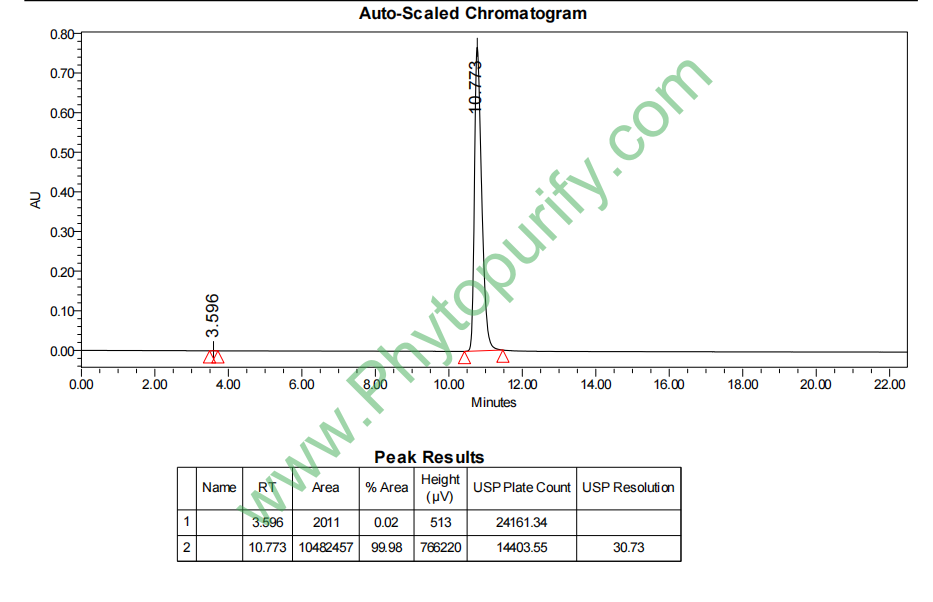
Purity: 95%~99%
Analysis Method: HPLC-DAD or/and HPLC-ELSD
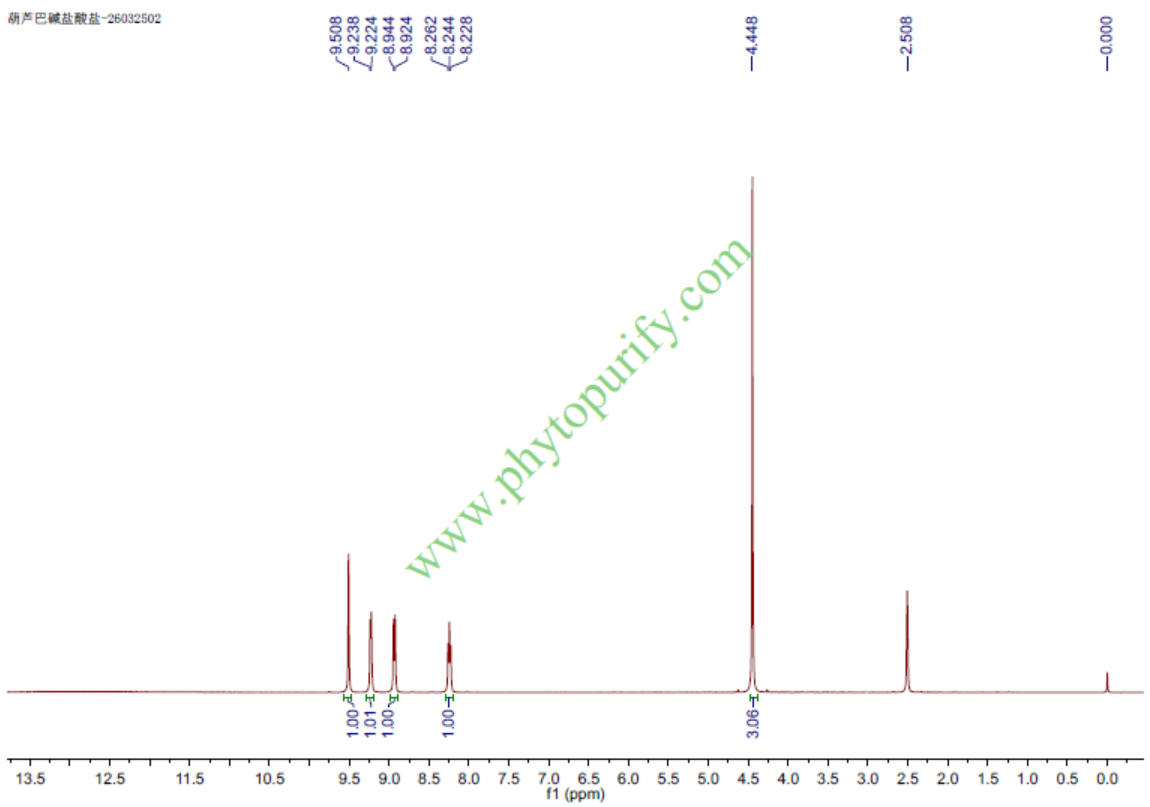
Identification Method: Mass, NMR
Packing: Brown vial or HDPE plastic bottle
Can be supplied from grams to kilograms.
Trigonelline is a bitter alkaloid in coffee which serves to produce important aroma compounds. In terms of concentration trigonelline is higher for arabica than robusta and ranges from about 0.6-1.3% and 0.3-0.9%, respectively.
During roasting trigonelline partially degrades to produce two important compounds - pyridines and nicotinic acid - such that a very dark roast will only a fraction of its original trigonelline content.
Nicotinic acid or also known was vitamin B3 (niacin) is produced by the demethylation of trigonelline at temperatures above 160°C-230°C where approximately 85% is decomposed. But when compared to green coffee - there is an overall net increase of about 10x from green to roasted.
According to lab experiments formation of nicotinic acid depends more on the roasting temperature than on the actual duration of the roast.
Interestingly, coffee has been found to contain a significant amount of niacin - providing 10-40mg of niacin/100g of coffee and far exceeding the daily recommended dosage.
Decaffeinated coffees typically contain about 35% less nicotinic acid due to the elimination of trigonelline by chlorinated solvents. Recently, trigonelline has been found to reduce the incidence of dental caries due to its ability to prevent Stretococcal mutans from adhering to teeth enamel.
HPLC of Trigonelline Hydrochloride
HNMR of Trigonelline Hydrochloride
Storage conditions:Short-term storage at 2~8℃, long-term storage at -20 ~ -80℃
41.1800
-3.6916
-3.7553
26.3884
.8024
6.9718
High
10.8780
2.7811
Yes
No
No
No
No
Yes
0.9
No
Yes
No
No
Diabetes is a global chronic metabolic disease, its incidence rate continues to rise, has become a serious public health challenge. Although the current clinical first-line drugs can effectively control blood glucose, there are still side effects, secondary failure and other problems. Therefore, it is always an important direction for drug research and development to explore new, safe, multi-target anti diabetes lead compounds from natural products. Trigonelline Hydrochloride (CAS: 6138-41-6), a traditional medicinal plant of fenugreek(Trigonella foenum-graecum L. ) and motherwort(Leonurus japonicus The key active alkaloid components in Houtt have attracted much attention in recent years due to their extensive pharmacological activities. Early research mainly focused on its hypoglycemic effect, but with the deepening of molecular pharmacology research, its action profile has far exceeded the scope of blood sugar reduction, showing multiple biological activities including regulating the nuclear factor E2 related factor 2 (Nrf2) pathway, inducing ferroptosis, antiviral and antimicrobial activity. These findings not only reveal the potential of trigonelline hydrochloride as a candidate drug for anti diabetes, but also provide new scientific clues for its application in tumor treatment, anti infection and other fields. This article aims to systematically review the chemical properties, plant sources, pharmacological activities, molecular mechanisms of action, medicinal properties, and clinical application prospects of cucurbitacin hydrochloride, in order to provide comprehensive academic references for the in-depth development and transformation research of this natural product.
Trigonelline hydrochloride is the hydrochloride form of Trigonelline. Huluba alkaloid itself is a quaternary ammonium alkaloid, chemically known as N-methylnicotinate. Its molecular formula is C7H7NO2 and its molecular weight is 137.14. The molecular weight of its hydrochloride form (C7H7NO2 · HCl) is 173.60 (note: the molecular weight of 138.1460 in the provided information may refer to the free base form or be calculated differently, usually the molecular weight of cucurbitacin hydrochloride is about 173.6). The core of its structure is the pyridine ring, which is connected to a carboxyl group at position 3 and methylated on the nitrogen atom to form an internal salt structure. After salt formation with hydrochloric acid, its stability is enhanced, making it more conducive to storage and research.
From the perspective of physical and chemical properties, cucurbitacin hydrochloride has typical hydrophilic characteristics. Its calculated lipid water partition coefficient (LogP) is -3.6916, indicating that it has extremely strong hydrophilicity and very low lipid solubility. The topological polar surface area (TPSA) is 41.18 Å ², further confirming its good polarity. Its water solubility is as high as 26.3884 mg/mL, making it highly soluble in water, which provides favorable conditions for its absorption and distribution in organisms, but may also limit its transmembrane passive diffusion ability. In the preliminary safety evaluation, its Ames test value is 0.9 (usually considered negative if less than 2), indicating a low risk of mutagenicity; There is no inhibitory effect on hERG potassium channels, indicating a low potential risk of causing QT interval prolongation in the heart. In addition, its prediction has a high blood-brain barrier permeability, which provides a basis for its potential central nervous system related activities (such as neuroprotection) research.
Cucurbitacin is widely present in various plants, and its main and most representative source is the legume plant cucurbitacin(Trigonella foenum-graecum L. The seeds. Fenugreek has long been used in traditional medicine, especially Ayurveda and traditional Chinese medicine, to treat diabetes, dyspepsia and hypercholesterolemia. Its hypoglycemic effect is partly attributed to fenugreek base. Another important source is the lip shaped plant motherwort(Leonurus japonicus Houtt.), Its whole plant is commonly used for the treatment of gynecological diseases, and it also contains a certain amount of cucurbitacin. In addition, trace amounts are also present in plants such as coffee beans, peas, marijuana, and oats.
The extraction and separation of cucurbitacin and its hydrochloride salt usually follow the conventional process of natural product chemistry. Firstly, dry and crush the plant materials (such as fenugreek seeds). Solvent extraction is commonly used for extraction, with commonly used solvents including methanol, ethanol, or water. Heating reflux or ultrasound assisted extraction is used to improve efficiency. Due to the fact that cucurbitacin is a water-soluble alkaloid, the aqueous extraction method is also commonly used. After filtration and concentration, the crude extract can be separated and purified using methods such as macroporous adsorption resin, silica gel column chromatography, and reverse phase high performance liquid chromatography (RP-HPLC). Huluba alkaloids often exist in the form of free bases in plant bodies, and can obtain more stable hydrochloride crystals by reacting with hydrochloric acid to form salts. Modern analytical techniques such as liquid chromatography-mass spectrometry (LC-MS) and nuclear magnetic resonance (NMR) are key means for identifying its structure and purity. Optimizing the extraction process, such as using response surface methodology design, aims to improve yield, save costs, and maintain activity.
Huluba alkaloid hydrochloride exhibits diverse pharmacological activities, forming the cornerstone of its multi-purpose development.
Anti diabetes and hypoglycemic activity This is the core activity of cucurbitacin that was first recognized and studied. A large number of in vivo experiments have shown that fenugreek hydrochloride can significantly reduce the fasting blood glucose and glycosylated hemoglobin levels of diabetes model animals (such as streptozotocin induced diabetes rats), and improve oral glucose tolerance. Its effect is not limited to reducing blood sugar, but also regulating lipid metabolism, reducing serum triglycerides and cholesterol, which is of positive significance for the prevention and treatment of diabetes complications.
Antitumor activity Recent studies have revealed its remarkable anti-tumor potential. Huluba alkaloid has been identified as an effective Nrf2 inhibitor Nrf2 is a key transcription factor in cellular antioxidant stress response, but it continues to be abnormally activated in various cancers, promoting tumor cell survival, proliferation, and chemotherapy resistance. Huluba alkaloids weaken the defense mechanism of tumor cells by inhibiting the Nrf2 signaling pathway, blocking downstream proteasome activity, and ultimately Enhance apoptosis of pancreatic cancer and other cancer cells This mechanism provides theoretical support for its use as a chemotherapy sensitizer or as a standalone anti-tumor drug.
Induced ferroptosis Iron dependent programmed cell death, distinct from apoptosis and necrosis, is closely related to the accumulation of lipid peroxidation. The latest research shows that cucurbitacin can induce ferroptosis in tumor cells. The mechanism may involve interfering with intracellular iron metabolism, inhibiting glutathione peroxidase 4 (GPX4) activity, or consuming glutathione (GSH), leading to the accumulation of lipid reactive oxygen species (ROS) and selective killing of tumor cells. This adds a new dimension to its anti-tumor effect.
Antimicrobial and antiviral activity Huluba alkaloid hydrochloride has shown inhibitory effects on various pathogenic microorganisms. It has antibacterial(such as certain Gram positive and Gram negative bacteria) and antifungal Activity. Of particular importance is its impact on Herpes simplex virus type 1 (HSV-1) It has inhibitory effects and may be achieved by interfering with virus adsorption or replication cycles, which provides the possibility for its application in the field of anti infection.
Other activities The study also suggests that cucurbitacin has potential activities such as neuroprotection, memory improvement, anti-inflammatory, and antioxidant (in specific contexts, context related to Nrf2 inhibition), but its mechanism and effects need further clarification.
The multiple pharmacological activities of cucurbitacin hydrochloride stem from its regulation of multiple molecular targets and signaling pathways.
In anti-diabetic On the one hand, its mechanism of action is multi-target synergy:
* Enhancement of insulin signaling pathway By activating the insulin receptor (INSR) and phosphorylating insulin receptor substrate 1 (IRS1), it promotes the translocation of glucose transporter 4 (SLC2A4/GLUT4) to the cell membrane, accelerating the uptake and utilization of glucose by peripheral tissues.
* Key metabolic enzymes and receptor regulation It can activate the glucagon like peptide-1 (GLP-1) system and inhibit the activity of dipeptidyl peptidase-4 (DPP4), thereby increasing endogenous GLP-1 levels and promoting insulin secretion. In addition, it can also act as a partial agonist of peroxisome proliferator activated receptor gamma (PPARG) to improve insulin sensitivity. The potential regulation of glucokinase (GCK) may also be involved in its insulin secretion promoting effect.
In antitumor In terms of aspect, its core mechanism revolves around Nrf2 pathway inhibition:
*Nrf2 normally binds to Keap1 and is degraded by ubiquitination. Huluba alkaloids may interfere with Keap1-Nrf2 interactions or Nrf2 transcriptional activity, leading to reduced nuclear translocation of Nrf2 and downregulation of its target genes (such as genes encoding proteasome subunits and antioxidant enzymes). After the proteasome activity is blocked, misfolded proteins and pro apoptotic proteins accumulate in tumor cells, leading to cell apoptosis.
In Inducing ferroptosis aspect:
*Its specific molecular targets are still under in-depth research, and may directly or indirectly consume intracellular GSH, inhibit GPX4 activity, disrupt cellular antioxidant balance, and lead to irreversible accumulation of lipid peroxidation products (such as 4-HNE, MDA), ultimately causing ferroptosis. This process is closely related to intracellular iron ion metabolism.
In antimicrobial aspect:
*The quaternary ammonium salt structure may disrupt the permeability and integrity of microbial cell membranes, similar to the action of some cationic antibacterial agents. The mechanism of anti-HSV-1 may involve interactions with the viral envelope or host cell receptors.
Based on its physicochemical parameters and preliminary biological data, cucurbitacin hydrochloride has shown certain potential as a drug, but there are also challenges.
Advantage:
1. Good security foundation The Ames test is negative and there is no warning of hERG inhibition, providing preliminary safety assurance.
2. Widely available medicinal sources and feasible preparation Rich plant sources and relatively mature extraction and purification processes.
3. Excellent water solubility Beneficial for formulation development (such as injection and oral liquids) and rapid absorption in the body.
4. Multi-target effect: For complex diseases (such as diabetes and cancer), it may have the advantage of synergistic treatment.
Challenges and unknowns:
1. Lack of pharmacokinetic (PK) data There is relatively little research on the absorption, distribution, metabolism, and excretion (ADME) of its system in existing literature. Its high water solubility and low LogP suggest that its oral bioavailability may be limited by the passive diffusion efficiency across intestinal epithelial cells, and may require the use of active transporters. Although its blood-brain barrier permeability prediction is high, experimental verification is needed.
2. Metabolic stability As a small molecule alkaloid, whether it is easily metabolized and cleared by liver metabolic enzymes (such as CYP450) in the body, and the length of its half-life, are the key factors affecting its administration regimen.
3. Selective mechanism of action For example, whether the inhibition of Nrf2 affects the antioxidant defense of normal tissues while fighting cancer requires precise dosage and targeted studies. The selective window for inducing ferroptosis also needs to be clarified.
4. Formulation development Although it has good water solubility, how to improve its oral bioavailability or develop targeted delivery systems (such as nano formulations for tumor therapy) is the focus of translational research.
At present, its pharmacological evaluation is still in the preclinical stage, and there is an urgent need to conduct systematic in vivo pharmacokinetics, toxicology (acute toxicity, long-term toxicity), and formulation studies to clarify its development value.
The clinical application prospects of cucurbitacin hydrochloride are broad, but the pathway is clear and full of challenges.
Future research should focus on: ① completing systematic preclinical pharmacological, pharmacokinetic, and toxicological evaluations; ② Using omics techniques (transcriptome, proteome, metabolome) to comprehensively elucidate its network pharmacology mechanism; ③ Explore its new applications in different disease models, such as non-alcoholic fatty liver disease and neurodegenerative diseases; ④ Conduct high-quality clinical research to verify its human efficacy and safety.
Huluba alkaloid hydrochloride, a natural alkaloid derived from traditional medicinal plants, is moving from ancient herbal experience to the forefront of modern drug development with its rich pharmacological activity and unique multi-target mechanism of action. From lowering blood sugar to anti-tumor, from inducing ferroptosis to antiviral, its continuously expanding biological activity profile reveals the enduring vitality of natural products as a source of innovative drugs. Despite facing scientific challenges such as unclear pharmacokinetics, need for refinement of mechanism selectivity, and lack of systematic toxicological data on the path towards clinical application, its existing research foundation, good safety screening characteristics, and clear multi-target effects make it an extremely valuable lead compound for development. With the continuous deepening of interdisciplinary research and the advancement of technological means, cucurbitacin hydrochloride is expected to achieve breakthroughs in metabolic diseases and tumor treatment, providing important candidate molecules for the development of new drugs with Chinese original characteristics, and also setting an example for interpreting the scientific connotation of traditional drugs.
