Introduction/Overview
Natural products, as an important source of drug discovery, play an irreplaceable role in human health maintenance and disease treatment. Flavonoids, as one of the most widely distributed and structurally diverse secondary metabolites in nature, have attracted much attention due to their extensive biological activities. Quercetin, kaempferol, myricetin and other flavonol compounds and their glycoside derivatives have been extensively studied and proven to have various pharmacological effects such as antioxidant, anti-inflammatory, anti-tumor, and cardiovascular protection. Among numerous flavonoids, Isorhamnetin, as an important O-methylated flavonol, has been extensively studied for its biological activity. However, its glycoside derivatives, especially Isorhamnetin 7-O - α - L-rhamnoside, as a specific form of existence in nature, its unique pharmacological activity and mechanism of action are gradually attracting the attention of researchers.
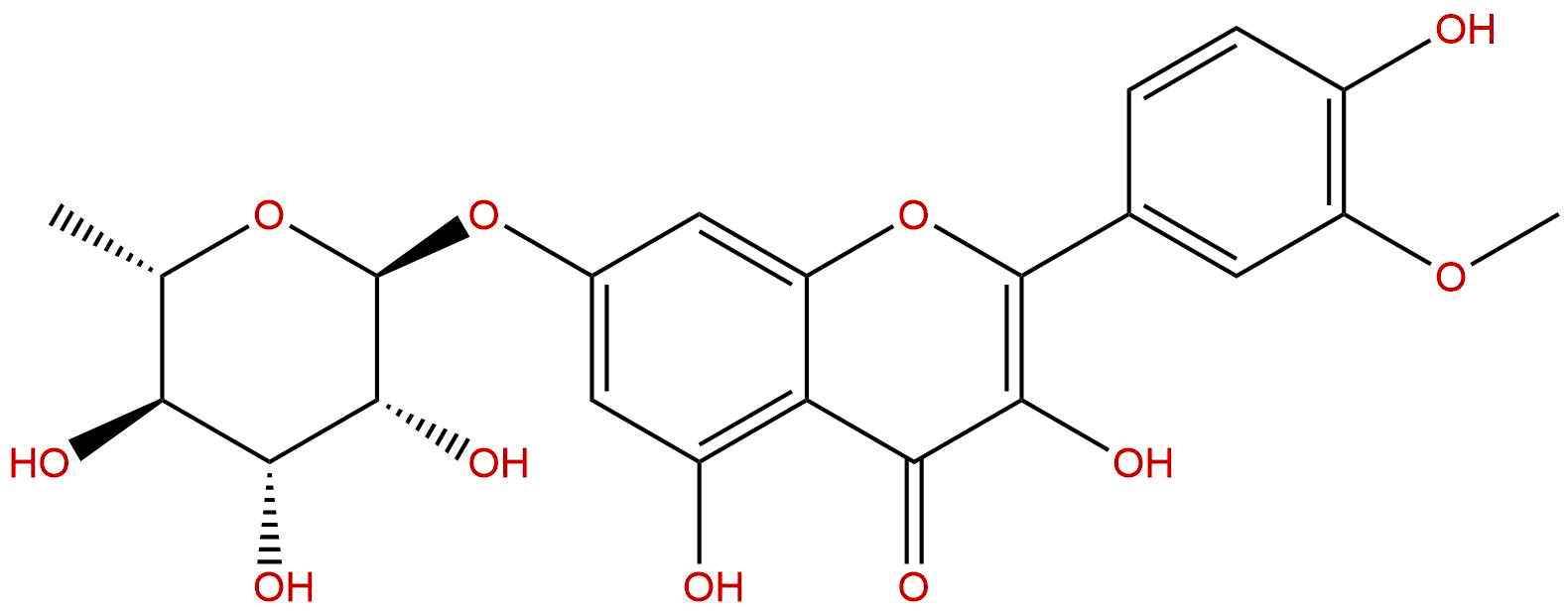
Isorhamnetin-7-O - α - L-rhamnose, CAS number 17331-72-5, is a flavonol glycoside formed by connecting the 7-hydroxyl group of isorhamnetin-7-O - α - L-rhamnose (3,5,7-trihydroxy-4 '- methoxyflavonol) with α - L-rhamnose through a glycosidic bond. Compared with glycoside isorhamnetin, the introduction of sugar groups not only changes the physicochemical properties of the molecule, such as solubility and stability, but may also affect its interaction mode with biological targets, thereby exhibiting unique or enhanced biological activity. In recent years, research on this compound has mainly focused on its potential for antioxidant damage. Relevant studies have revealed that it upregulates a series of antioxidant enzymes, such as superoxide dismutase 1 (SOD1), superoxide dismutase 2 (SOD2), catalase (CAT), glutathione peroxidase 1 (GPX1), and heme oxygenase 1 (HMOX1), by regulating the antioxidant signaling pathway centered around nuclear factor E2 related factor 2 (NFE2L2/NRF2), thereby exerting a cell protective effect. This discovery provides key clues for understanding its pharmacological mechanism and also indicates its potential application value in oxidative stress-related diseases such as neurodegenerative diseases, cardiovascular diseases, metabolic diseases, and inflammatory diseases.
This review aims to systematically review the current research status of isorhamnose-7-O - α - L-rhamnose, starting from its chemical structure, physicochemical properties, plant sources, and extraction methods, to deeply explore its pharmacological activity, mechanism of action, and molecular targets. Combined with drug evaluation and pharmacokinetic characteristics, the clinical application prospects are discussed, in order to provide comprehensive scientific basis for the further development and utilization of this natural product.
Chemical structure and physicochemical properties
The chemical structure of isorhamnose-7-O - α - L-rhamnose is the basis of its biological activity. Its parent nucleus is isorhamnetin, which belongs to flavonol compounds. The basic skeleton of flavonols is composed of two benzene rings (A ring and B ring) connected by an oxygen-containing pyran ring (C ring). The structural characteristics of isorhamnetin are the presence of hydroxyl groups (- OH) at positions 5 and 7 of the A ring and 3 of the C ring, while the 3 'position of the B ring is hydroxyl and the 4' position is methoxy (- OCH ∝). This specific substitution pattern of hydroxyl and methoxy groups endows isorhamnetin with unique chemical properties and biological activity. In this compound, an α - L-rhamnose molecule is connected to the hydroxyl group at position 7 of isorhamnosus through a glycosidic bond. Rhamnose is a 6-deoxyhexose sugar, and its alpha configuration determines the stereochemical arrangement of each substituent on the sugar ring. The introduction of glycosylation is a key structural feature that distinguishes this compound from its aglycone.
From the perspective of physical and chemical properties, the molecular formula of this compound is C ₂₂ H ₂ O ₁₁, with a molecular weight of 462.4070 g/mol. The LogP of its lipid water partition coefficient is 1.0480, indicating that the compound has a certain degree of lipophilicity, but overall tends towards moderate polarity, which allows it to reach a certain balance in the lipid bilayer and aqueous environment, facilitating its absorption and distribution in vivo. The topological polar surface area (TPSA) is 179.2800 Å ², which is a relatively high value mainly attributed to the large number of oxygen atoms on hydroxyl and sugar groups in the molecule. A high TPSA value usually indicates strong hydrogen bonding ability between molecules and water molecules, good water solubility, but it may also limit their passive diffusion through cell membranes, especially the blood-brain barrier. The calculated water solubility is 0.9208 mg/mL, further confirming its good water solubility. Regarding the blood-brain barrier permeability, the predicted result is "low", which is consistent with the high TPSA value and the rule of molecular weight greater than 400 Da, indicating that this compound may face challenges in the application of central nervous system diseases and needs to be improved through special drug delivery systems or structural modifications. In addition, hERG inhibition was predicted as' no ', indicating a low risk of cardiac toxicity such as prolonged QT interval, which is a positive drug signal. The Ames test predicts a value of 0.6, which is generally considered negative (non mutagenic) if it is below 0.5. 0.6 is in the critical or weakly positive range, indicating that its potential genetic toxicity risk needs to be addressed and validated in actual biological evaluations.
In summary, the chemical structure of isorhamnose-7-O - α - L-rhamnose determines its characteristics of both hydrophilicity and moderate lipophilicity. Good water solubility facilitates its transport in body fluids, while a certain degree of lipophilicity facilitates its interaction with biological membranes or target proteins. Its lower BBB permeability suggests its limitations in application, while its good cardiac safety provides favorable conditions for its development.
Plant sources and extraction methods
Isorhamnose-7-O - α - L-rhamnose is not a rare natural product. It is widely distributed in the plant kingdom, especially in various medicinal and edible plants. Its main plant sources include but are not limited to the following categories:
- Polygonaceae plants Like buckwheat(Fagopyrum esculentum)And bitter buckwheat(Fagopyrum tataricum)The seeds, stems, and leaves of the plant are rich in various flavonoids, among which isorhamnose-7-O - α - L-rhamnose is one of the important components. Buckwheat, as a medicinal and edible crop, is closely related to its flavonoids and health benefits such as antioxidant, hypoglycemic, and lipid-lowering effects.
- Asteraceae plants Many Asteraceae plants, such as seabuckthorn(Hippophae rhamnoides)Among the fruits, leaves, and seeds of Artemisia plants, as well as some Artemisia plants such as Artemisia argyi Artemisia argyi)The presence of this compound has been detected in all cases. Sea buckthorn is famous for its rich nutritional and medicinal value, and its flavonoids are an important material basis for exerting antioxidant and anti-inflammatory effects.
- Leguminous plants Some leguminous plants, such as Astragalus membranaceus(Astragalus membranaceus)The root also contains this compound. As a traditional Qi tonifying medicine, the research on the active ingredients of Huangqi has always been a hot topic.
- Other families and genera In addition, in the Muridae family (such as Muridae) Rhamnus Belonging to plants, Rhododendron family (such as Vaccinium) Vaccinium vitis-idaea)There are also reports in plants. Its widespread distribution suggests that this compound may play an important defensive role in plants' response to environmental stress, such as ultraviolet radiation and pathogen infection.
The extraction method for this compound usually follows the classic process of natural product chemistry, which mainly includes extraction, separation, and purification.
Extract The most commonly used method is solvent extraction. Given that the compound has moderate polarity and contains multiple hydroxyl groups, solvents with higher polarity or mixed solvents are usually chosen for extraction. Common solvents include methanol, ethanol, water, or their mixtures in different proportions. For example, using a 70% -80% ethanol aqueous solution for reflux extraction or cold soaking extraction can effectively dissolve the target compound from plant materials. In order to improve extraction efficiency and selectivity, modern extraction techniques such as ultrasound assisted extraction, microwave-assisted extraction, enzyme assisted extraction, etc. have also been widely used. These methods can shorten extraction time, reduce solvent usage, and may increase the yield of target products.
Separation and Purification The crude extract is a complex mixture containing a large amount of impurities such as other flavonoids, phenolic acids, sugars, lipids, etc. Therefore, further separation and purification steps are required. Common methods include:
- Liquid-liquid extraction By using different solvents (such as petroleum ether, ethyl acetate, n-butanol, water) for fractional extraction of crude extracts, the target compound can be enriched in a solvent layer of specific polarity. Isorhamnose-7-O - α - L-rhamnose is usually enriched in the ethyl acetate or n-butanol extraction layer.
- Column chromatography method This is the core step of separation and purification. Common stationary phases include silica gel, polyamide, Sephadex LH-20, ODS (C18 reverse phase silica gel), etc.
- Silica gel column chromatography Suitable for the separation of moderately polar compounds, gradient elution is often performed using systems such as chloroform methanol water or ethyl acetate methanol water.
- Polyamide column chromatography It has a special adsorption effect on flavonoids and is a classic method for separating flavonoid glycosides and aglycones. Usually, water ethanol gradient elution is used to effectively separate flavonoid glycosides of different polarities.
- Sephadex LH-20 column chromatography Separation based on molecular size and adsorption is commonly used for the final purification of flavonoid glycosides to remove pigments and other impurities.
- ODS column chromatography Suitable for reverse phase separation, using methanol water or acetonitrile water systems for elution, with high separation efficiency, especially suitable for separating flavonoid glycosides with similar structures.
- High performance liquid chromatography (HPLC)For research on high-purity requirements, preparative HPLC is an effective means to ultimately obtain high-purity monomeric compounds. By selecting appropriate chromatographic columns (such as C18 columns) and mobile phases (such as acetonitrile water formic acid system), precise separation and purification of the target compound can be achieved.
During the extraction and purification process, the structural identification of compounds usually relies on spectroscopic techniques, including ultraviolet spectroscopy (UV), infrared spectroscopy (IR), mass spectrometry (MS), and nuclear magnetic resonance spectroscopy (¹ H-NMR, ¹ ³ C-NMR, 2D-NMR). By comparing with literature data or analyzing spectra, the structure of the compound is ultimately confirmed to be isorhamnose-7-O - α - L-rhamnose.
Pharmacological activity research
At present, the most core and clear field of pharmacological activity research on isorhamnose-7-O - α - L-rhamnose is its antioxidant damage effect. Oxidative stress is a state in which the body produces excessive amounts of free radicals such as reactive oxygen species (ROS) and reactive nitrogen species (RNS) when subjected to harmful stimuli, exceeding the body's antioxidant system's clearance capacity, resulting in an imbalance between the oxidative and antioxidant systems. This imbalance is considered to be the common pathophysiological basis for the occurrence and development of a variety of chronic diseases, including cardiovascular diseases, neurodegenerative diseases, diabetes and its complications, inflammatory diseases, and tumors.
Multiple in vitro and in vivo studies have confirmed that isorhamnose-7-O - α - L-rhamnose can effectively alleviate oxidative damage induced by various factors.
- In vitro cell experiments In various cell models, such as human umbilical vein endothelial cells (HUVECs), nerve cells (such as PC12 cells, SH-SY5Y cells), liver cells (such as HepG2 cells), and cardiomyocytes, pre-treatment with isorhamnetin-7-O - α - L-rhamnose can significantly counteract the decrease in cell viability and apoptosis caused by stimuli such as hydrogen peroxide (H ₂ O ₂), tert butyl hydroperoxide (t-BHP), high glucose, and hypoxia/reoxygenation (H/R). Specifically, it can reduce the levels of intracellular ROS and malondialdehyde (MDA, a lipid peroxidation product), while increasing the content of endogenous antioxidants such as reduced glutathione (GSH) and enhancing the activity of various antioxidant enzymes, such as superoxide dismutase (SOD), catalase (CAT), and glutathione peroxidase (GPx). These results indicate that the compound can enhance the antioxidant defense ability of cells at multiple levels, thereby protecting cells from oxidative stress damage.
- In vivo animal experiments In the corresponding animal models, the compound also demonstrated good antioxidant protection effects. For example, in a mouse model of acute liver injury induced by carbon tetrachloride (CCl ₄) or acetaminophen (APAP), oral administration of isorhamnose-7-O - α - L-rhamnose can significantly reduce serum levels of alanine aminotransferase (ALT) and aspartate aminotransferase (AST), alleviate pathological damage to liver tissue, and its mechanism is closely related to reducing MDA content and enhancing SOD and CAT activity in the liver. In the model of cerebral ischemia-reperfusion injury, this compound can reduce the volume of cerebral infarction and improve neurological function scores. Its protective effect is also related to the inhibition of oxidative stress and inflammatory response.
In addition to its core antioxidant activity, some studies also suggest that the compound may have other pharmacological effects that are often associated with its antioxidant properties. For example, its antioxidant effect may indirectly exert anti-inflammatory effects by inhibiting the activation of inflammatory signaling pathways such as nuclear factor kappa B (NF - κ B), reducing the release of pro-inflammatory factors such as tumor necrosis factor alpha (TNF - α) and interleukin-6 (IL-6). In addition, preliminary studies have also found that it can inhibit the proliferation of some tumor cell lines (such as liver cancer cells, breast cancer cells), but its specific mechanism and effect need further study. Overall, antioxidant damage is currently the most clearly defined and extensively studied pharmacological activity of this compound.
Mechanism of action and molecular targets
The molecular mechanism by which isorhamnose-7-O - α - L-rhamnose exerts antioxidant damage is mainly attributed to its regulation of the antioxidant signaling pathway centered around nuclear factor E2 related factor 2 (NFE2L2, also known as NRF2). NRF2 is the main transcription factor for cells to respond to oxidative stress and electrophilic substances, known as the "master switch" of the antioxidant defense system. Under normal physiological conditions, NRF2 binds to the inhibitory protein Keap1 (Kelch like ECH associated protein 1) in the cytoplasm, remains inactive, and is rapidly degraded through the ubiquitin proteasome pathway. When cells are stimulated by oxidative stress or electrophilic substances, the conformation of Keap1 changes, leading to the release and stabilization of NRF2, which then translocates into the nucleus. In the nucleus, NRF2 forms heterodimers with small Maf proteins, recognizing and binding to antioxidant response elements (ARE) in the promoter region of target genes, thereby initiating transcription of a series of downstream protective genes.
Research has shown that isorhamnose-7-O - α - L-rhamnose can effectively activate the NRF2 signaling pathway. The specific mechanism may include:
- Promote nuclear translocation of NRF2 This compound may disrupt the interaction between Keap1-NRF2 by modifying key cysteine residues on Keap1 protein, leading to the dissociation and stabilization of NRF2 from Keap1 and promoting its translocation into the nucleus.
- Enhance the transcriptional activity of NRF2 NRF2 entering the nucleus binds to ARE, initiating the transcription of downstream target genes.
The downstream target genes regulated by this compound are the key executors of its antioxidant effects. The proteins encoded by these target genes mainly include a series of key antioxidant enzymes and phase II detoxifying enzymes:
- Superoxide Dismutase 1 (SOD1) and Superoxide Dismutase 2 (SOD2)SOD is the first line of defense in the body for clearing superoxide anion radicals (O ₂⁻ ·). SOD1 mainly exists in the cytoplasm, while SOD2 mainly exists in mitochondria. This compound can efficiently dismutation highly oxidative superoxide anions into hydrogen peroxide (H ₂ O ₂) and oxygen (O ₂) by upregulating the expression of SOD1 and SOD2, thereby reducing the direct damage of superoxide anions to cells.
- Catalase (CAT)CAT mainly exists in peroxisomes, and its function is to decompose H ₂ O ₂ into water and oxygen, which is a key enzyme for clearing H ₂ O ₂. This compound upregulates CAT expression and effectively eliminates H ₂ O ₂ produced by SOD action, preventing its further conversion into more toxic hydroxyl radicals (· OH).
- Glutathione peroxidase 1 (GPX1)GPX1 is a selenium dependent enzyme widely present in the cytoplasm and mitochondria. It utilizes reduced glutathione (GSH) as a substrate to reduce H ₂ O ₂ and organic hydroperoxides (such as lipid peroxides) to water and corresponding alcohols, thereby protecting cell membranes and biomolecules from oxidative damage. This compound upregulates GPX1 expression and enhances the ability of cells to use GSH to clear peroxides.
- Heme oxygenase 1 (HMOX1)HMOX1 is a classic target gene of NRF2, which catalyzes the degradation of heme into biliverdin, carbon monoxide (CO), and free iron. Bilibilin is subsequently converted into bilirubin, both of which are potent endogenous antioxidants; CO is an important gas signaling molecule with anti-inflammatory, anti apoptotic, and vasodilatory effects. This compound significantly upregulates the expression of HMOX1 by activating NRF2, which is one of its important mechanisms for exerting cell protective effects.
In summary, isorhamnose-7-O - α - L-rhamnose activates the NRF2/ARE signaling pathway, synergistically upregulates the expression of a series of antioxidant enzymes such as SOD1, SOD2, CAT, GPX1, and HMOX1, and constructs a multi-level and efficient antioxidant defense network. This network can comprehensively and effectively combat oxidative stress, protect the integrity of cell structure and function through multiple processes such as clearing superoxide anions, decomposing hydrogen peroxide, repairing lipid peroxidation, and producing endogenous antioxidant substances. This multi-target and multi pathway regulatory mode is the advantage that distinguishes it from single antioxidants (such as vitamin C and vitamin E), and also explains its good protective effect in various oxidative stress-related disease models.
Evaluation of drug properties and pharmacokinetics
The evaluation of drug properties and pharmacokinetic studies are crucial steps in advancing natural products from laboratory research to clinical applications. Based on the provided calculation parameters, we can conduct a preliminary evaluation of the pharmacological properties of isorhamnose-7-O - α - L-rhamnose.
Analysis of drug properties parameters:
- Molecular weight (462.4 Da)Slightly higher than the threshold of molecular weight less than 500 Da in Lipinski's Rule of Five, it is at the edge of the acceptable range. A higher molecular weight usually means a larger molecule, which may affect its oral absorption and membrane permeability.
- LogP(1.05)Far below 5, it indicates strong hydrophilicity and moderate lipid solubility. Compliant with the "Five Rules for Similar Drugs", good hydrophilicity is beneficial for its dissolution and absorption in the gastrointestinal tract.
- TPSA(179.3 Ų)Significantly higher than the commonly used threshold of 140 Å ². A high TPSA value indicates a high molecular polarity and a large number of hydrogen bond donors and acceptors. Although this is beneficial for water solubility, it significantly reduces its ability to passively diffuse through cell membranes, especially through the blood-brain barrier. This explains the prediction result of low BBB permeability.
- Water solubility (0.92 mg/mL)Belonging to moderate to high water solubility, it is beneficial for formulation development.
- HERG inhibition (No)This is a very positive signal indicating that the compound has a low risk of causing fatal arrhythmias (such as TdP) at therapeutic concentrations and has good cardiac safety.
- Ames test (0.6)The value is within the critical range, indicating a potential risk of genetic toxicity. This needs to be rigorously validated in subsequent in vitro and in vivo genetic toxicity experiments. If confirmed to have mutagenicity, it will pose a significant obstacle to its development.
Speculation on pharmacokinetic characteristics:
Based on the above parameters, it can be inferred that the pharmacokinetic characteristics of isorhamnose-7-O - α - L-rhamnose are as follows:
- absorb After oral administration, it is expected to dissolve in the gastrointestinal tract due to its good water solubility and moderate LogP. However, high TPSA values may lead to lower passive diffusion efficiency through intestinal epithelial cells. Therefore, its oral bioavailability may not be high. Its absorption may depend on active transport or cellular bypass pathways. In addition, as a glycoside, it may be hydrolyzed by gut microbiota or brush edge enzymes (such as lactase root bark glycoside hydrolase) in the small intestine into aglycones (isorhamnetin) and rhamnose, which are then absorbed in the form of aglycones. Therefore, its in vivo efficacy may be the result of the combined action of the prototype drug and aglycones.
- distribution Due to its high polarity and low fat solubility, the distribution volume of this compound may be small, mainly distributed in extracellular fluid. Its low BBB permeability limits its application in central nervous system diseases.
- Metabolism The main metabolic pathways may include deglycosylation (hydrolysis to isorhamnetin) in the intestine and liver, followed by phase II metabolism of isorhamnetin, such as glucuronidation and sulfation, to form more easily excreted metabolites. In addition, the hydroxyl group on isorhamnetin may also undergo methylation or demethylation reactions.
- excretion The prototype drug and its metabolites are mainly excreted through bile and urine.
Summary of Medicinal Properties:
Isorhamnose-7-O - α - L-rhamnose has some positive pharmacological characteristics, such as good water solubility and low risk of cardiac toxicity. However, the low membrane permeability caused by its high polarity, potential low oral bioavailability, and critical genetic toxicity risk are the main challenges for its drug development. Future research directions should focus on: 1) improving its oral bioavailability through formulation technologies such as liposomes, nanoparticles, and phospholipid complexes; 2) Improve membrane permeability through structural modifications (such as prodrug design); 3) Conduct a comprehensive toxicological evaluation, especially genetic toxicity studies, to clarify its safety. For diseases that require crossing the blood-brain barrier, special brain targeted delivery systems may need to be developed.
Clinical application prospects and prospects
Based on its clear pharmacological activity against oxidative damage and regulatory effect on the NRF2 signaling pathway, isorhamnose-7-O - α - L-rhamnose has shown potential clinical application prospects in various disease fields closely related to oxidative stress.
- Metabolic diseases Oxidative stress is the core link of the occurrence and development of insulin resistance, type 2 diabetes and its complications (such as diabetes nephropathy, diabetes retinopathy, diabetes neuropathy). This compound can enhance the antioxidant capacity of the body by activating NRF2, which is expected to improve insulin sensitivity, protect the function of pancreatic islet β cells, and delay the progress of diabetes complications. Its protective effect on hepatocytes and endothelial cells also suggests its potential value in nonalcoholic fatty liver disease (NAFLD) and vascular disease in diabetes.
- cardiovascular disease The occurrence and development of cardiovascular diseases such as atherosclerosis, myocardial ischemia-reperfusion injury and hypertension are closely related to vascular endothelial dysfunction and myocardial cell oxidative damage. The protective effect of this compound on endothelial cells, as well as its anti-inflammatory and anti apoptotic effects by up regulating HMOX1, make it a potential candidate drug for preventing atherosclerosis and alleviating myocardial ischemia-reperfusion injury.
- Neurodegenerative diseases Although the compound has a low ability to cross the blood-brain barrier, the pathological features of neurodegenerative diseases such as Alzheimer's disease and Parkinson's disease involve severe oxidative stress and neuroinflammation. By developing brain targeted delivery systems or utilizing their potential to be metabolized into glycosides by gut microbiota and enter the brain, this compound or its metabolites are still expected to play a role in neuroprotection. Its ability to activate NRF2 is of great significance for clearing abnormal protein aggregates and protecting mitochondrial function.
- Inflammatory diseases Oxidative stress and inflammatory response are intertwined. This compound may have therapeutic potential for chronic inflammatory diseases such as rheumatoid arthritis and inflammatory bowel disease by inhibiting inflammatory pathways such as NF - κ B.
- Liver protection As mentioned earlier, this compound has shown significant protective effects in various chemical liver injury models, suggesting that it can be used as a lead compound for hepatoprotective drugs, for the prevention and treatment of drug-induced liver injury, alcoholic liver disease, etc.
prospect:
Despite its promising prospects, the clinical translation of isorhamnose-7-O - α - L-rhamnose still faces many challenges. Future research should focus on the following aspects:
- In depth mechanism research Besides the NRF2 pathway, does this compound also act on other signaling pathways such as PI3K/Akt, MAPK, Sirtuins, etc? What are the differences in in in vitro and in vivo activity between it and glycoside isorhamnetin, and what is the synergistic mechanism? The answers to these questions will help to a more comprehensive understanding of their pharmacological effects.
- Pharmacokinetic optimization How to overcome the bottleneck of low oral bioavailability? The development of new drug delivery systems (such as nanoemulsions, solid dispersions, phospholipid complexes) or structural modifications (such as designing prodrugs) is an important direction for the future.
- Toxicological evaluation of the system For the critical results of Ames test, standardized in vitro and in vivo genetic toxicity, acute toxicity, long-term toxicity, and reproductive toxicity studies must be conducted to comprehensively evaluate its safety and determine the safe range of medication.
- Study on Structure Activity Relationship Systematic study on the effects of glycosylation at different positions on the activity, solubility, and metabolism of isorhamnetin (such as 3-O-glycosides and 7-O-glycosides) in the parent nucleus, providing a basis for finding better derivatives.
- Preclinical validation Validate its efficacy and safety in animal models closer to human diseases, such as gene knockout mice and high-fat diet induced models, and explore its interactions with other drugs.
Conclusion
As a natural flavonol glycoside widely present in various medicinal and edible plants, isorhamnose-7-O - α - L-rhamnose has attracted attention for its clear antioxidant damage activity. The core of its mechanism of action lies in activating the NRF2/ARE signaling pathway, thereby synergistically upregulating the expression of a series of key antioxidant enzymes such as SOD, CAT, GPX1, HMOX1, etc., and constructing a powerful cellular defense system. This compound has good water solubility and low risk of cardiac toxicity, providing a favorable basis for its drug development. However, the low membrane permeability and potential low oral bioavailability caused by its high polarity, as well as the critical genetic toxicity risk, are the main bottlenecks in its drug development. In the future, through in-depth mechanism research, pharmacokinetic optimization, and systematic toxicological evaluation, combined with modern formulation technology, it is expected to overcome these challenges and transform this natural product with great potential into an effective drug for treating oxidative stress-related diseases. The continuous research on isorhamnose-7-O - α - L-rhamnose will not only enrich our understanding of the structure-activity relationship of flavonoids, but also provide valuable examples for discovering and developing innovative drugs from traditional medicinal plants.