| Catalog No | Package | Original Price | Price | Inventory | Quantity | Operating |
|---|---|---|---|---|---|---|
| BP1772-20mg | 20mg | $130.00 | Sign in |
|


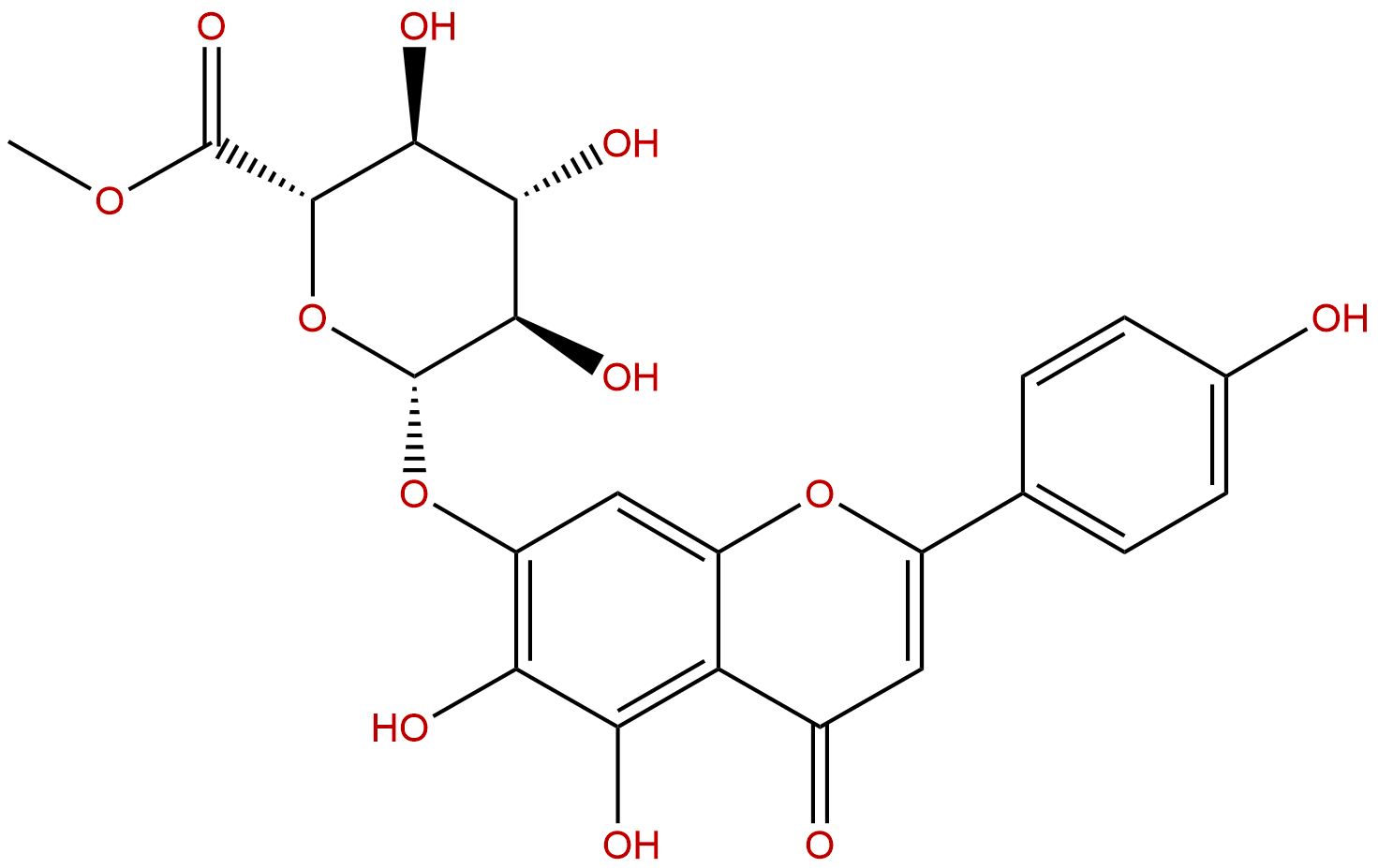
Product name: Scutellarin methyl ester
Synonym name:
Catalogue No.: BP1772
Cas No.: 119262-68-9
Formula: C22H20O12
Mol Weight: 476.39
Botanical Source:
Physical Description: Yellow powder
Type of Compound: Flavonoids
Purity: 95%~99%
Analysis Method: HPLC-DAD or/and HPLC-ELSD
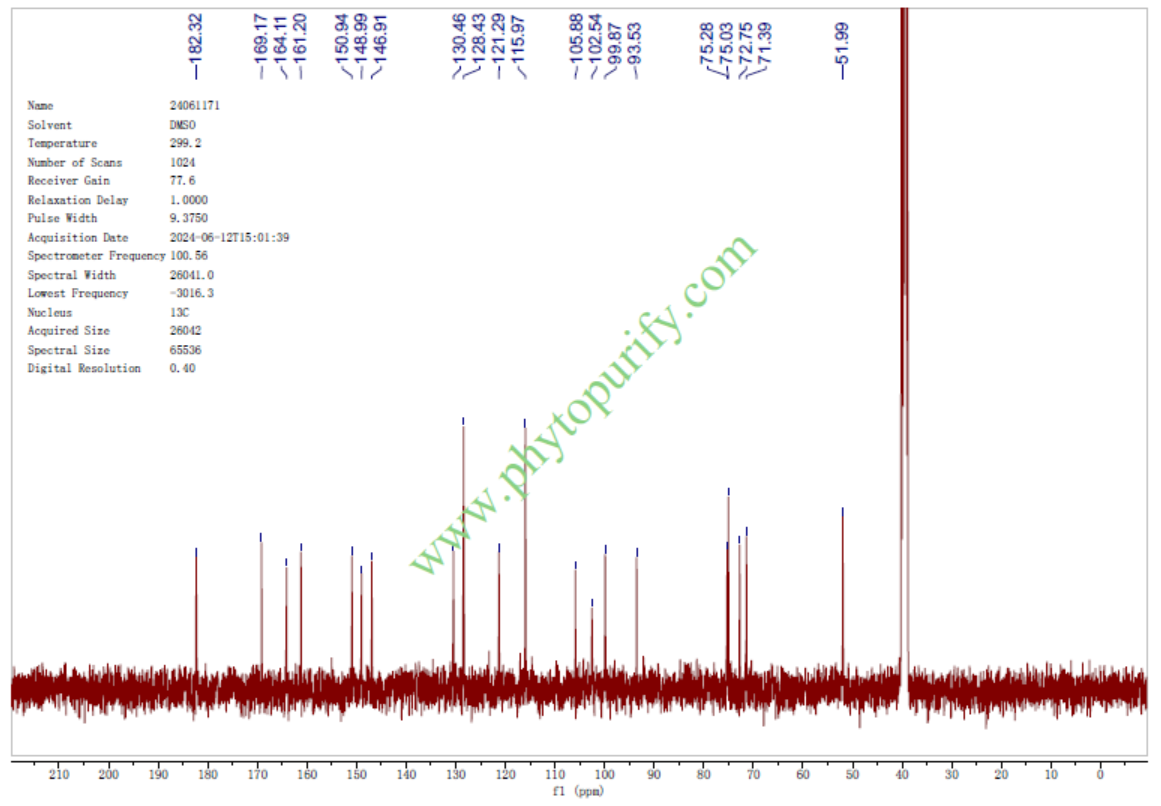
Identification Method: Mass, NMR
Packing: Brown vial or HDPE plastic bottle
The product could be supplied from milligrams to grams. Inquire for bulk scale.
We provide solution to improve the water-solubility of compounds, thereby facilitating the variety of activity tests and clinic uses.
For Reference Standard and R&D, Not for Human Use Directly.
NMR of Scutellarin methyl ester
Storage conditions:Short-term storage at 2~8℃, long-term storage at -20 ~ -80℃
196.3500
.5283
.4085
.8416
.5575
.2719
Low
82.2407
4.0341
Yes
No
No
No
Yes
No
0.6
Yes
No
Yes
No
Stroke, especially ischemic stroke, is one of the leading causes of death and long-term disability worldwide. Its pathological and physiological processes are complex, involving multiple links such as energy metabolism failure, excitotoxicity, oxidative stress, inflammatory response, and cell apoptosis, which pose great challenges to clinical treatment. Therefore, the search for drugs that can act on multiple targets and have neuroprotective effects is currently a hot research topic. Natural products have always been an important source of innovative drug discovery due to their structural diversity and rich biological activity. Lamplighter is derived from the short stalked plant Scutellaria baicalensis in the Asteraceae family(Erigeron breviscapus The mixture of flavonoids extracted from (Vant.) Hand. - Mazz. has been widely used in the treatment of ischemic cardiovascular and cerebrovascular diseases in clinical practice. Scutellarin, also known as Scutellarin, is the main active ingredient in Scutellaria baicalensis. However, its water solubility and lipid solubility are poor, and its oral bioavailability is low, which limits its application. Scutellarin methyl ester, as a methylated derivative of Scutellarin, has been structurally modified to improve its physicochemical properties and exhibit pharmacological activity similar or even stronger than the parent compound, especially in the field of cerebral ischemia, showing great potential. This article aims to provide a systematic review of the chemical properties, pharmacological activities, mechanisms of action, and medicinal properties of ethyl ester of Lampyridis, in order to provide scientific basis for its further research and development.
Lamplighter ethyl ester, chemical name 4 ', 5,6-trihydroxy-7-O-glucuronic acid methyl ester flavonoid, CAS number 119262-68-9. Its molecular formula is C22H20O12 and its molecular weight is 476.3900. Structurally speaking, it is a carboxymethylation product of baicalin, also known as scutellarin. Scutellaria baicalensis B is composed of flavonoid glycoside (Scutellaria baicalensis) and glucuronic acid at the 7th hydroxyl group. The methyl ester of Scutellaria baicalensis is methylated on the carboxyl group of the glucuronic acid unit of Scutellaria baicalensis.
This structural modification significantly altered its physicochemical properties. The calculated lipid water partition coefficient (LogP) is 0.5283, which is higher in lipid solubility compared to genistein (LogP is usually negative and highly hydrophilic). The total polar surface area (TPSA) is 196.35 Å ², indicating that the molecule still has many polar regions. The water solubility parameter is 0.8416, indicating that it still has some water solubility, but may be lower than its parent compound. This "amphiphilic" optimization - balancing hydrophilicity and lipophilicity - is a common strategy for improving drug absorption and transmembrane transport, especially across the blood-brain barrier. However, preliminary drug efficacy evaluation suggests that its blood-brain barrier permeability is still classified as "low", which may be due to its high molecular weight (>450) and still high polar surface area, suggesting that further formulation or structural optimization may be needed in the future. In addition, its hERG inhibition risk is "no", and the Ames test result is 0 (negative), indicating that its cardiac toxicity risk and genetic toxicity risk are relatively low, and its safety characteristics are good.
The direct plant source of methyl ester of breviscapine is not a single plant material. It is mainly isolated from the crude extract of breviscapine or prepared by chemical or biological transformation (methylation) of its main component, breviscapine.
Native sources and crude extracts The precursor substance, Lampyridin-B, is mainly derived from the traditional Chinese medicine Lampyridin-B (short stalked Feipeng). The extraction of breviscapine is usually carried out by solvent extraction, using ethanol or methanol aqueous solution for reflux or ultrasonic extraction, followed by concentration, precipitation (such as alcohol precipitation), enrichment and purification by macroporous adsorption resin (such as AB-8, D101 type), etc., to obtain breviscapine extract with breviscapine as the main component (usually required to have a content>85%). In this crude extract, there may be trace amounts of berberine methyl ester or derivatives produced during the extraction process.
Derivative preparation The more commonly used method to obtain sufficient and high-purity methyl ester of breviscapine for research is semi-synthetic Starting from the purified Lampyridin-2 from Lampyridin-2, under mild alkaline conditions (such as potassium carbonate, cesium carbonate), it reacts with methylation reagents such as iodomethane (CH3I) or dimethyl sulfate ((CH3) 2SO4) to selectively esterify the carboxyl group on its glucuronic acid unit, producing Lampyridin-2 methyl ester. After the reaction, the target compound can be separated and purified by column chromatography (such as silica gel column, preparative high-performance liquid chromatography) to obtain high purity. This method has controllable yield and is the main means of laboratory scale preparation. Biocatalysis, such as the use of methyltransferases, is also a potential environmentally friendly synthetic pathway, but there is currently limited research on it.
The pharmacological activity research of ethyl ester of Scutellaria baicalensis mainly focuses on its neuroprotective effect, especially showing multiple beneficial effects in cerebral ischemia models.
Neuroprotective effect In various in vitro and in vivo models of cerebral ischemia/reperfusion injury, scutellarin methyl ester exhibits significant neuroprotective activity. In cell models, it can alleviate neuronal apoptosis and necrosis induced by oxygen glucose deprivation/reperfusion (OGD/R) and improve cell survival rate. In animal models, such as the rat model of middle cerebral artery occlusion, administration of scutellarin methyl ester can significantly reduce cerebral infarction volume, alleviate brain edema, and improve neurological deficit scores. In some studies, its protective effect is superior to that of equal doses of scutellarin, which may be related to its improved membrane permeability and bioavailability.
anti-oxidative stress The burst of reactive oxygen species (ROS) after cerebral ischemia is a key factor leading to neuronal damage. Research has shown that Scutellaria baicalensis methyl ester can effectively scavenge free radicals such as DPPH and ABTS, enhance the activity of intracellular antioxidant enzyme systems (such as superoxide dismutase (SOD) and glutathione peroxidase (GSH Px)), reduce the levels of lipid peroxidation products such as malondialdehyde (MDA), and thus alleviate oxidative stress damage.
anti-inflammatory effect Overactivation of microglia and cytokine storm after ischemia are important reasons for exacerbating secondary brain injury. Lamplighter methyl ester can inhibit the activation of microglia, downregulate the expression of pro-inflammatory factors such as tumor necrosis factor - α (TNF - α), interleukin-1 β (IL-1 β), and interleukin-6 (IL-6), and may upregulate the levels of anti-inflammatory factors such as IL-10. This anti-inflammatory effect is closely related to its regulation of related inflammatory signaling pathways.
antiapoptosis Apoptosis is one of the main forms of neuronal death after ischemia. Dengzhan flower ethyl ester can inhibit mitochondrial pathway apoptosis by regulating the Bcl-2/Bax protein ratio and suppressing caspase-3 activation.
Protection of the blood-brain barrier Cerebral ischemia can damage the integrity of the blood-brain barrier, leading to vasogenic cerebral edema and the entry of harmful substances into the brain. Research has shown that berberine methyl ester can alleviate blood-brain barrier damage, and its mechanism may be related to inhibiting the expression of matrix metalloproteinases (MMPs) and protecting tight junction proteins such as ZO-1 and Occludin.
Potential other activities Based on the basic structure of its flavonoids, scutellarin methyl ester may also have cardiovascular and cerebrovascular protective activities such as improving microcirculation, anti platelet aggregation, anti atherosclerosis, which need further research to confirm.
The neuroprotective effect of methyl ester of Scutellaria baicalensis is not achieved through a single target, but rather through the synergistic action of multiple targets and pathways. Based on the provided target information, the mechanism of action network can be summarized as follows:
Energy metabolism and cell survival regulation: AMPK (PRKAA1) pathway AMP activated protein kinase (AMPK) is a core sensor of cellular energy metabolism. During cerebral ischemia, energy depletion occurs, the AMP/ATP ratio increases, and AMPK is activated. Lamplighter methyl ester may promote cell survival or regulate apoptosis during energy crisis by regulating AMPK activity, affecting downstream pathways such as mTOR and autophagy. Its specific effects (activation or inhibition) need to be further studied in specific pathological contexts.
Alzheimer's disease-related pathological regulation: APP, BACE1, MAPT targets Cerebral ischemia is an important risk factor for vascular dementia and Alzheimer's disease. Lamplighter methyl ester may inhibit the activity of β - secretase 1 (BACE1) by affecting the processing of amyloid precursor protein (APP), thereby reducing the production of β - amyloid protein (A β). Meanwhile, it may also regulate the phosphorylation status of microtubule associated protein tau (MAPT) and alleviate neurofibrillary tangle like pathology. This suggests that it not only has a protective effect during acute ischemia, but may also have the potential to improve long-term cognitive dysfunction related to ischemia.
Insulin signaling and metabolic regulation: PTPN1 (PTPN1)Protein tyrosine phosphatase 1B (PTP1B) is a negative regulator of the insulin and leptin signaling pathways, and its inhibition can improve insulin resistance. Brain insulin signaling disorders are associated with cognitive decline and neurodegenerative diseases. Lamplighter methyl ester may exert neuroprotective and metabolic improvement effects by inhibiting PTP1B, enhancing central insulin signaling.
Drug efflux and bioavailability: ABCB1 (ABCB1)P-glycoprotein (P-gp) is an important efflux transporter encoded by the ABCB1 gene, which is highly expressed on the blood-brain barrier and limits the entry of many drugs into the brain. Lamplighter ethyl ester may be a substrate or regulator of P-gp. Understanding its interaction with P-gp is crucial for optimizing its brain delivery and drug efficacy.
DNA repair and oxidative stress: APEX1 (APEX1)Purine/pyrimidine endonuclease 1 (APE1) is a key enzyme in the base excision repair pathway, and also has the function of regulating oxidative stress response and inflammatory gene transcription. Lamplighter methyl ester may enhance the ability of neurons to repair DNA damage caused by ischemia and regulate related inflammatory responses by affecting the activity of APE1.
Signal transduction and inflammation: PRKCA (PRKCA), CLEC4E (CLEC4E), PTGS1 (PTGS1)。
In summary, the construction of a three-dimensional network of action from energy metabolism, oxidative stress, inflammatory response to protein pathology, and cell apoptosis by methyl ester of Scutellaria baicalensis demonstrates the advantages of multi-target action of natural products.
Despite its excellent pharmacological activity, the pharmacological properties of methyl ester of Scutellaria baicalensis still need to be comprehensively evaluated.
Absorption, distribution, metabolism, excretion (ADME):
safety Preliminary computer predictions indicate that the hERG inhibition risk is low and beneficial for cardiac safety. The Ames test result is negative, indicating no direct genetic toxicity. However, a comprehensive preclinical safety evaluation is still needed, including acute toxicity, long-term toxicity, reproductive toxicity, etc., to assess its safety window.
Formulation considerations Given the potential challenges of oral absorption and brain entry, the development of novel drug delivery systems is of great value. For example, preparing it into liposomes, nanoparticles, microemulsions, or solid dispersions can improve its solubility, stability, and bioavailability. Nanoformulations with surface modifications (such as connecting brain targeting ligands) can actively target the blood-brain barrier and increase drug concentration in the brain.
As an optimized derivative of scutellarin, scutellarin methyl ester has clear application prospects in the treatment of ischemic stroke and related neurological diseases.
Treatment of cerebral ischemia/reperfusion injury Its multi-target neuroprotective effect makes it a promising adjuvant therapy for acute ischemic stroke, which can be used in combination with reperfusion therapies such as thrombolysis and thrombectomy to reduce reperfusion injury, expand the treatment time window, and improve patient prognosis.
Prevention and treatment of vascular cognitive impairment (VCI) and Alzheimer's disease (AD)Its regulatory effects on AD related targets such as APP processing, BACE1, tau protein, as well as anti-inflammatory and antioxidant properties, make it potential for treating vascular dementia and mixed dementia, and even delaying the progression of AD. Can be developed as a neuroprotective agent for long-term management.
Combination therapy and multimodal therapy Due to its broad and relatively safe mechanism of action, it can be considered to be used in combination with existing drugs (such as antiplatelet drugs, statins, etc.) to form a synergistic effect and improve overall efficacy.
Challenges and Future Directions Faced:
As a flavonoid derivative derived from the traditional Chinese medicine Lamplighter, Lamplighter Ethylmethyl ester has been structurally modified to preserve and enhance its neuroprotective activity while improving some of its physicochemical properties. Its antioxidant, anti-inflammatory, anti apoptotic, and multi-target regulatory effects in cerebral ischemia models reveal its enormous potential as a multi-target neuroprotective agent. Although there are still challenges in terms of blood-brain barrier permeability and systemic drug resistance, these obstacles are expected to be overcome with further elucidation of the mechanism of action and the application of novel drug delivery technologies. In the future, through interdisciplinary collaboration and in-depth translational research from basic to clinical settings, breviscapine methyl ester is expected to develop from a promising candidate compound into a novel drug for the treatment of ischemic stroke and related neurodegenerative diseases, bringing new hope to patients.
