Serpentine B (Fenfanol Palmitate): A Systematic Review from Natural Products to Anti inflammatory and Gastrointestinal Protective Agents
Introduction/Overview
Natural products, as an important source of drug discovery, play an irreplaceable role in human health maintenance and disease treatment. Among numerous natural compounds with biological activity, pentacyclic triterpenoids have attracted much attention due to their structural diversity and wide pharmacological activities. Serpentin B, chemically known as Lupeol palmitate, is a natural ester compound formed by the ester bond between Lupeol and Palmitic acid. This compound was initially isolated and identified from Balanophoraceae plants, hence the name "Balanophoraceae B".
The discovery of serpentin B can be traced back to the mid-20th century. With the advancement of natural product chemical separation technology, researchers have identified this compound from various medicinal plants. It is worth noting that serpentin B is not a unique metabolite of a single plant, but is widely present in various plant groups, including families such as Moraceae, Euphorbiaceae, and Araliaceae. This widespread distribution suggests that it may play an important role in plant physiological functions and also provides abundant natural sources for drug development.
From the perspective of pharmacological activity, the most notable feature of snake snake seed extract B is its significant anti ulcer and gastrointestinal protective effects. As a common global disease, peptic ulcer affects about 10% of the population, and its pathogenesis involves multiple factors such as excessive gastric acid secretion, Helicobacter pylori infection, use of nonsteroidal anti-inflammatory drugs, and oxidative stress. Although traditional therapeutic drugs such as proton pump inhibitors and H2 receptor antagonists are effective, long-term use has problems such as side effects and high recurrence rates. Therefore, the search for natural compounds with multi-target mechanisms and fewer side effects has become a research hotspot. Serpentin B has shown significant potential in this field due to its unique chemical structure and pleiotropic pharmacological activity.
In addition, the anti-inflammatory activity of serpentin B is also worthy of attention. Inflammation is a common pathological basis for various chronic diseases such as arthritis, cardiovascular disease, metabolic syndrome, etc. Modern research has shown that serpentin B can exert anti-inflammatory effects by regulating multiple inflammatory signaling pathways and inhibiting the expression of key pro-inflammatory factors. This multi-target action characteristic gives it unique advantages in the treatment of inflammation related diseases.
This article will provide a systematic review of the research progress of serpentin B from multiple dimensions, including chemical structure and physicochemical properties, plant sources and extraction methods, pharmacological activity research, mechanism of action and molecular targets, pharmacological evaluation and pharmacokinetics, clinical application prospects and prospects, in order to provide reference for the in-depth research and development of this natural product.
Chemical structure and physicochemical properties
Chemical structural characteristics
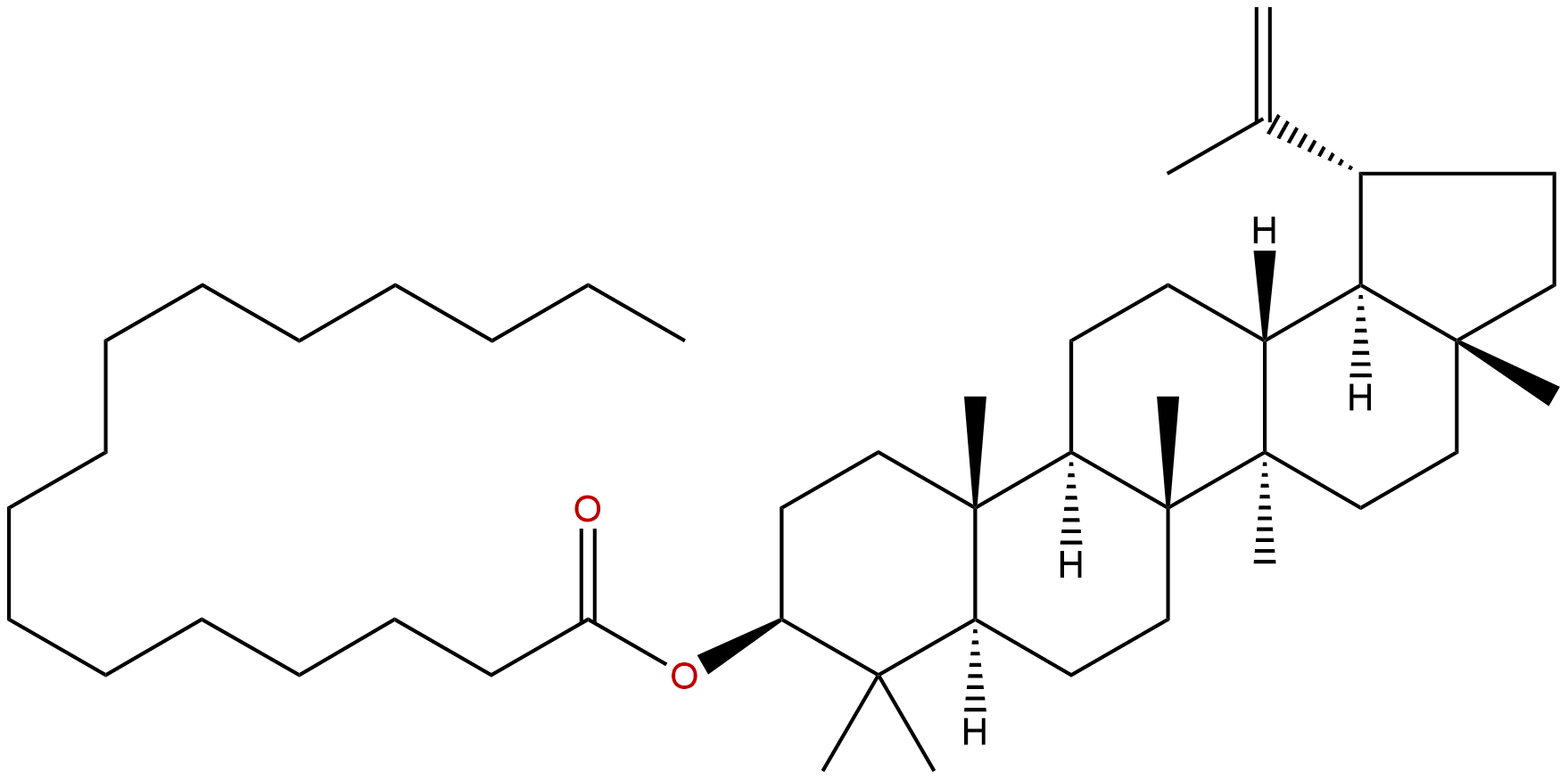
The chemical essence of serpentin B is an ester formed by the combination of lupinol (a pentacyclic triterpenoid compound) and palmitic acid (hexadecanoic acid). Its molecular formula is C ₄₆ H ₈₀ O ₂, with a molecular weight of 665.1440 Da. Structurally, the compound consists of two parts: a triterpenoid skeleton (lupinol moiety) and a long-chain fatty acid (palmitic acid moiety).
Fenfanol belongs to the Lupane type of pentacyclic triterpenoids, with a core structure consisting of five rings (A, B, C, D, E), where the E ring is a five membered ring. The characteristic structure of lupine alcohol includes: C-3 hydroxyl group (- OH), C-20 isopropenyl side chain, and C-28 methyl group. In serpentin B, the hydroxyl group at position C-3 of coumarin is linked to the carboxyl group of palmitic acid through ester bonds, forming 3 β - palmitoyloxy coumarin (3 β - palmitoyloxylup-20 (29) - ene). This esterification modification significantly alters the physicochemical properties of the parent compound.
As a saturated long-chain fatty acid (C16:0), the introduction of palmitic acid endows serpentin B with stronger lipophilicity. From a stereochemical perspective, the C-3 hydroxyl group of lupine alcohol is in a β configuration, thus the ester bond formed also maintains a specific spatial orientation. This structural feature may affect its interaction mode with biological targets.
Physical and chemical property parameters
The physical and chemical properties parameters of serpentin B have important indicative significance for its drug development potential. According to computational chemistry and experimental measurement data, the key parameters of this compound are as follows:
Lipid water partition coefficient (LogP): 14.0000. This extremely high LogP value indicates that serpentin B has strong lipophilicity and is almost insoluble in water. This property originates from the large triterpenoid skeleton and long-chain fatty acid portion in its structure. High lipophilicity means that the compound is easy to penetrate biological membranes, but it may also lead to poor water solubility, affecting oral bioavailability.
Topological Polarity Surface Area (TPSA): 26.3000 Å ². TPSA is an important parameter for measuring the polarity and hydrogen bonding ability of compounds. The TPSA value of serpentin B is relatively low (less than 140 Å ²), indicating that it has good cell membrane permeability and meets the requirements for TPSA in Lipinski's "Five Rules". A low TPSA value is also consistent with its high LogP value.
Water solubility:0.0000 mg/mL。 Serpentin B is almost insoluble in water, which poses a challenge to its formulation development. In the in vivo environment, this compound may require the use of bile acid salts, lipid carriers, or nanoformulation techniques to enhance solubility and bioavailability.
Blood-brain barrier penetrability: High. Based on its high lipophilicity and low polarity, serpentin B theoretically has the ability to penetrate the blood-brain barrier (BBB). This characteristic may have advantages in treating central nervous system diseases, but it may also pose a risk of central nervous system toxicity.
HERG inhibition Yes. HERG (human ether - à - go related gene) potassium channel inhibition is an important predictor of drug cardiac toxicity. Serpentin B is predicted to be a hERG inhibitor, suggesting a potential risk of prolonging the QT interval, which requires special attention in drug development.
Ames test: 0.0. The Ames test is used to evaluate the mutagenicity of compounds. The Ames test result of serpentin B was negative (0.0), indicating that it does not have significant genetic toxicity and has certain advantages in safety.
Overall, the physicochemical properties of serpentin B exhibit typical lipophilic natural product characteristics: high LogP, low water solubility, and good membrane permeability. These properties not only endow it with unique pharmacokinetic properties, but also pose challenges for formulation development. In subsequent drug chemistry optimization, strategies such as prodrug design, nano encapsulation, or structural modification can be used to improve its water solubility and reduce potential toxicity.
Plant sources and extraction methods
Main plant sources
Serpentin B is widely distributed in nature and mainly exists in the following plant groups:
Snakehead family plants As the naming source of this compound, Balanophoraceae plants are an important source of serpentin B. For example, species such as Balanophora japonica and Balanophora involucrata contain this compound. Snake grass plants are parasitic herbaceous plants that often inhabit the roots of other plants, and their chemical composition has unique diversity.
Mulberry plants Plants in the Moraceae family, such as Morus alba, contain serpentin B in their root bark and bark. As a traditional medicinal plant, Morus alba has been proven to have various chemical components with biological activity.
Euphorbiaceae plants Euphorbiaceae plants such as Euphorbia antiquarum and Sapium sebiferum are also sources of serpentin B. Euphorbiaceae plants are known for their abundance of diterpenes and triterpenoids.
Araliaceae plants There have also been reports of serpentin B in plants of the Araliaceae family, such as Acanthopanax senticosus and Panax ginseng. These plants are commonly used in traditional medicine to enhance immunity and combat fatigue.
Other sources In addition, serpentin B is also present in various plants such as Asteraceae, Fabaceae, and Myrtaceae. This widespread distribution suggests that the compound may be a common secondary metabolite in the plant kingdom.
Extraction and Separation Methods
The extraction of serpentin B is usually carried out using organic solvent extraction combined with modern chromatographic separation techniques. A typical extraction process includes the following steps:
Raw material pretreatment Grind dry plant materials (such as roots, stems, leaves, or whole plants) to an appropriate particle size (usually 40-60 mesh) to increase extraction efficiency.
Solvent extraction Based on the high lipophilicity of serpentin B, non-polar or moderately polar solvents are often used for extraction. Common solvents include petroleum ether, n-hexane, chloroform, ethyl acetate, or ethanol. Among them, ethanol water mixed systems (such as 70% -95% ethanol) are widely used in industrial extraction, balancing extraction efficiency and safety. The extraction method can be cold soaking, percolation or reflux extraction, usually extracted 2-3 times, each time for 1-3 hours.
Concentration and preliminary separation Extract the liquid and concentrate it under reduced pressure to obtain a paste. Suspend the extract in water and perform liquid-liquid extraction with petroleum ether, chloroform, ethyl acetate, and n-butanol in sequence to obtain extraction sites of different polarities. Serpentin B is mainly enriched in the extraction sites of petroleum ether or chloroform.
chromatographic separation Further separation was performed using silica gel column chromatography. Usually, petroleum ether ethyl acetate or petroleum ether acetone gradient elution systems are used. The elution position of serpentin B can be monitored by thin layer chromatography (TLC), and commonly used color reagents are 10% sulfuric acid ethanol solution or vanillin sulfuric acid reagent. After heating, it exhibits a characteristic color reaction.
purification For samples with high purity requirements, preparative high-performance liquid chromatography (Prep HPLC) can be used for purification. The commonly used chromatographic column is a C18 reverse phase column, and the mobile phase is acetonitrile water or methanol water system. The longer retention time of serpentin B reflects its strong lipophilicity.
Structural Identification The purified compound was structurally confirmed by nuclear magnetic resonance spectroscopy (NMR, including ¹ H-NMR, ¹ ³ C-NMR, DEPT, COSY, HSQC, HMBC, etc.) and high-resolution mass spectrometry (HR-MS). The characteristic NMR signals of serpentin B include the C-20 alkene proton (δ H 4.68, 4.57, 1H, br s each) of the lupanol skeleton, the C-3 esterified proton signal (δ H 4.47, 1H, dd, J=10.0, 5.0 Hz), and the methylene signal of the long chain of palmitic acid (δ H 1.25, br s).
Content determination method
The determination of serpentin B content is usually carried out using high-performance liquid chromatography ultraviolet detection (HPLC-UV) or liquid chromatography-mass spectrometry (LC-MS). Due to the lack of strong UV absorbing groups in this compound, evaporative light scattering detectors (ELSD) or mass spectrometry detectors are often used to improve sensitivity. In quality control, serpentin B can be used as an indicator component to evaluate the quality of related medicinal materials.
Pharmacological activity research
Anti ulcer and gastrointestinal protective effects
The most notable pharmacological activities of serpentin B are its anti ulcer and gastrointestinal protective effects. Multiple in vitro and in vivo studies have confirmed the potential of this compound in the treatment of peptic ulcers.
Ethanol induced gastric ulcer model In the ethanol induced acute gastric ulcer model in rats, serpentin B (10-50 mg/kg, orally administered) can significantly reduce the area of gastric mucosal damage and lower the ulcer index. Histopathological examination showed that the integrity of gastric mucosal epithelial cells was protected in the serpentin B treatment group, and submucosal edema and inflammatory cell infiltration were significantly reduced. Its protective effect is comparable or better than the positive control drug omeprazole.
Non steroidal anti-inflammatory drug (NSAID) induced gastric ulcer model In the indomethacin induced gastric ulcer model, serpentin B also showed protective effects. This compound can reverse the decrease in gastric mucosal blood flow, mucus secretion, and prostaglandin E2 (PGE2) levels caused by NSAIDs. These results suggest that serpentin B may exert its anti ulcer effect by maintaining gastric mucosal barrier function and promoting the synthesis of protective factors.
Gastric ulcer model induced by pyloric ligation In the pyloric ligation model, serpentin B can reduce gastric acid secretion, total acidity, and pepsin activity, indicating its inhibitory effect on gastric acid secretion. At the same time, the compound can also increase the content of gastric wall mucus and enhance mucosal defense ability.
Function characteristics The anti ulcer effect of serpentin B has the characteristics of multi-target and multi pathway. It can not only inhibit attack factors such as gastric acid and pepsin, but also enhance defense factors such as mucus, prostaglandins, and antioxidant enzymes. This dual mechanism of action gives it unique advantages in ulcer treatment.
anti-inflammatory activity
The anti-inflammatory activity of serpentin B has been validated in various inflammatory models.
Acute inflammation model In the carrageenan induced rat plantar swelling model, serpentin B (25-100 mg/kg) can significantly inhibit plantar swelling, and its effect is dose-dependent. In the xylene induced mouse ear swelling model, the compound also showed significant anti-inflammatory effects, with inhibition rates reaching 40% -60%.
Chronic inflammation model In the adjuvant arthritis (AA) rat model, serpentin B (50 mg/kg, continuously administered for 21 days) can alleviate joint swelling, reduce arthritis index, and inhibit synovial tissue proliferation and inflammatory cell infiltration. X-ray imaging examination showed that the degree of bone destruction and joint space stenosis in the serpentin B treatment group was significantly milder than that in the model group.
Regulation of inflammatory factors Serpentin B can significantly reduce the levels of pro-inflammatory factors such as tumor necrosis factor - α (TNF - α), interleukin-6 (IL-6), and interleukin-1 β (IL-1 β) in inflammatory tissues. Meanwhile, the compound can also increase the expression of anti-inflammatory factor interleukin-10 (IL-10). The balance regulation of pro-inflammatory/anti-inflammatory factors is an important mechanism for its anti-inflammatory effect.
Other pharmacological activities
In addition to its anti ulcer and anti-inflammatory effects, serpentin B also exhibits various other pharmacological activities:
antioxidant activity Serpentin B can scavenge free radicals (such as DPPH, ABTS ⁺ free radicals), reduce the level of lipid peroxidation product malondialdehyde (MDA), and increase the activity of antioxidant enzymes (superoxide dismutase SOD, glutathione peroxidase GSH Px, catalase CAT). This antioxidant effect may be closely related to its protective effect on gastrointestinal mucosa and anti-inflammatory effect.
Analgesic activity In the acetic acid writhing and hot plate pain models, serpentin B exhibits a certain analgesic effect, but its efficacy is weaker than classical analgesics such as morphine. Its analgesic mechanism may be related to inhibiting the release of inflammatory mediators and activating opioid receptors.
Antitumor activity: Preliminary research shows that Serpentin B has inhibitory effect on the proliferation of some tumor cell lines (such as human hepatoma cell HepG2, human breast cancer cell MCF-7), and the IC ₀ value is within the range of 10-50 μ M. However, its anti-tumor activity is relatively weak and lacks in vivo experimental evidence.
Antibacterial activity Serpentin B exhibits weak to moderate inhibitory effects on certain Gram positive bacteria, such as Staphylococcus aureus, but has weaker activity against Gram negative bacteria and fungi.
Mechanism of action and molecular targets
The pharmacological activity of serpentin B involves multiple molecular targets and signaling pathways, reflecting the characteristic of multi-target action of natural products. The following elaborates on its mechanism of action from the perspectives of key targets and signaling pathways.
Inflammatory related targets
IL-6/STAT3 signaling pathway Interleukin-6 (IL-6) is an important pro-inflammatory cytokine that exerts biological effects by activating signal transduction and transcription activator 3 (STAT3). Serpentin B can inhibit the expression of IL-6 and the phosphorylation of STAT3, thereby blocking the activation of the IL-6/STAT3 signaling pathway. In the gastric ulcer model, the IL-6 level and p-STAT3 protein expression were significantly reduced in the serpentin B treatment group, which is closely related to the reduction of gastric mucosal injury.
NF - κ B signaling pathway Nuclear factor kappa B (NF - κ B) is the core transcription factor in inflammatory response, regulating the expression of various pro-inflammatory genes. Serpentin B can inhibit the activity of I κ B kinase β (IKBKB), prevent the phosphorylation and degradation of I κ B α, and thus inhibit the nuclear translocation and transcriptional activity of NF - κ B (p65/RELA). In macrophages stimulated by lipopolysaccharide (LPS), pretreatment with serpentin B can significantly reduce the mRNA and protein levels of TNF - α, IL-6, and inducible nitric oxide synthase (NOS2), all of which are related to the inhibition of the NF - κ B pathway.
CASP1/IL-1 β axis Cysteine aspartate protease 1 (CASP1) is a key effector molecule for inflammasome activation, responsible for cleaving pro-IL-1 β into mature IL-1 β. Serpentin B can inhibit the activation of CASP1 and reduce the production and release of IL-1 β. In the gastric ulcer model, the CASP1 activity and IL-1 β levels in the serpentin B treatment group were significantly reduced, suggesting that it may exert anti-inflammatory effects by inhibiting the inflammasome pathway.
TNF - α/TNFR signaling Tumor necrosis factor - α (TNF - α) is a key initiating factor in inflammatory response. Serpentin B can inhibit the expression and release of TNF - α, and may interfere with the binding of TNF - α to its receptors. In the colitis model, the TNF - α level in the serpentin B treatment group was significantly reduced, and colon tissue damage was alleviated.
Pain and sensory nerve related targets
TRPV1 and TRPA1 channels Transient receptor potential vanillic acid subtype 1 (TRPV1) and anchor protein subtype 1 (TRPA1) are ion channels expressed on sensory neurons, involved in the transmission of pain and inflammatory signals. Serpentin B can inhibit the activity of TRPV1 and TRPA1, reduce calcium ion influx and release of neuropeptides such as substance P and calcitonin gene-related peptide CGRP. In the gastric ulcer model, the activation of TRPV1 and TRPA1 is associated with sensitization of gastric mucosal sensory nerve endings, and inhibition of these channels by serpentin B may help alleviate ulcer related pain and inflammatory responses.
Cyclooxygenase pathway
PTGS1/COX-1 Prostaglandin endoperoxide synthase 1 (PTGS1, also known as cyclooxygenase-1COX-1) is a key enzyme in the synthesis of prostaglandins and plays an important role in maintaining gastric mucosal integrity. The inhibitory effect of serpentin B on PTGS1 is relatively weak, which is different from traditional nonsteroidal anti-inflammatory drugs such as aspirin and indomethacin. This selectivity may explain why serpentin B exerts anti-inflammatory effects without causing significant gastric damage. In fact, serpentin B can also promote the synthesis of protective prostaglandins (such as PGE2) by upregulating PTGS1 expression or enhancing its activity, thereby exerting a gastroprotective effect.
Antioxidant and Cellular Protection Mechanisms
The antioxidant effect of serpentin B involves multiple aspects: direct clearance of free radicals, chelation of transition metal ions, activation of nuclear factor E2 related factor 2 (Nrf2)/antioxidant response element (ARE) pathway. Nrf2 is a key transcription factor regulating the expression of antioxidant enzymes, and serpentin B can promote nuclear translocation of Nrf2 and enhance the expression of downstream target genes such as SOD, CAT, GSH Px, and heme oxygenase-1HO-1. The activation of this antioxidant defense system helps alleviate cellular damage caused by oxidative stress and plays an important role in gastric mucosal protection.
Multi target network regulation
Overall, serpentin B forms a complex regulatory network by acting on multiple targets and signaling pathways such as IL-6/STAT3, NF - κ B, CASP1/IL-1 β, TNF - α, TRPV1/TRPA1, PTGS1, and Nrf2/ARE. This multi-target mode of action enables it to simultaneously inhibit inflammation, alleviate pain, enhance antioxidant defense, and maintain mucosal integrity, thereby exerting a comprehensive gastrointestinal protective effect. It is worth noting that the weak inhibitory property of serpentin B on PTGS1 avoids the gastrointestinal side effects of traditional NSAIDs, which is its unique advantage as an anti ulcer drug.
Evaluation of drug properties and pharmacokinetics
Analysis of drug properties parameters
Based on the physical and chemical properties parameters mentioned earlier, the pharmacological properties of snake venom B can be evaluated from the following aspects:
Drug Evaluation According to Lipinski's "Five Rules" (molecular weight ≤ 500, LogP ≤ 5, hydrogen bond donor ≤ 5, hydrogen bond acceptor ≤ 10), the molecular weight (665.14 Da) and LogP (14.00) of serpentin B exceed the range of the rules, indicating that it may not meet the criteria for traditional oral drugs. However, for natural products, many successful drugs such as cyclosporine A have also broken these rules, so evaluation needs to be based on specific circumstances.
Water solubility challenge Serpentin B is almost insoluble in water (solubility 0.0000 mg/mL), which is the biggest obstacle to its medicinal properties. Low water solubility not only affects oral absorption, but also poses difficulties for formulation development. To address this issue, the following strategies can be considered: preparing in salt form (such as phosphate prodrug), encapsulating with liposomes or nanoparticles, solubilizing with surfactants, developing self emulsifying drug delivery systems (SMEDS), etc.
Metabolic stability Serpentin B contains ester bonds and may be hydrolyzed by esterases in the body to produce lupine alcohol and palmitic acid. This hydrolytic metabolism may affect its pharmacological and pharmacokinetic behavior. Fenfanol itself also has various biological activities, so serpentin B may act as a prodrug, and its active form may be the parent compound and/or hydrolysis product. This characteristic needs to be considered in pharmacological research.
Cardiac safety HERG inhibition prediction is positive, indicating that serpentin B may have a risk of cardiac toxicity. In drug development, comprehensive cardiac safety evaluation is required, including hERG current suppression experiments, action potential measurements, and in vivo electrocardiogram monitoring. If there is indeed a risk of QT interval prolongation, structural modifications can be used to reduce hERG affinity.
Genotoxicity The Ames test is negative, indicating that serpentin B does not have significant mutagenicity, which is a positive signal for its safety.
Pharmacokinetic characteristics
At present, there is relatively little systematic research on the pharmacokinetics of serpentin B. However, based on its physicochemical properties and studies of similar compounds, the following characteristics can be inferred:
absorb After oral administration, the absorption of serpentin B may be poor and unstable, mainly limited by its low water solubility. High lipophilicity makes it easy to integrate into mixed micelles and chylomicrons, which may be absorbed through the lymphatic pathway, thus bypassing the liver's first pass effect. Food, especially high-fat meals, may significantly promote its absorption.
distribution Serpentin B has high lipophilicity and may have a large distribution volume, making it easy to accumulate in adipose tissue and cell membranes. Its high blood-brain barrier penetration suggests that it may reach effective concentrations in the central nervous system, which is both advantageous (such as treating central inflammation) and risky (such as central toxicity).
Metabolism The main metabolic pathways may include ester hydrolysis (to produce coumarin and palmitic acid), hydroxylation, oxidation, and glucuronic acid binding. Cytochrome P450 enzymes (especially CYP3A4) may be involved in its oxidative metabolism. The hydrolysis product lupinol is further metabolized into products such as lupinol acid.
excretion Serpentin B and its metabolites may be mainly excreted into the intestine through bile and partially excreted from the body through feces. Due to high lipophilicity, renal excretion may not be the main pathway.
Formulation development strategy
The following formulation strategies can be adopted to address the challenges of the pharmacological properties of serpentin B:
Lipid preparations Dissolving serpentin B in oil or surfactants to prepare soft capsules or self emulsifying systems can significantly improve its oral bioavailability.
nano-formulation The preparation of serpentin B nanoparticles or nanosuspensions using nanoprecipitation, high-pressure homogenization, or microfluidic techniques can improve solubility and dissolution rate.
Prodrug design Introducing phosphate, amino acid, or polyethylene glycol (PEG) groups into the hydroxyl or carboxyl sites of serpentin B to prepare water-soluble prodrugs, which are then released in vivo through enzymatic or chemical hydrolysis.
Cyclodextrin inclusion complex The use of β - cyclodextrin or its derivatives to encapsulate serpentin B can improve its water solubility and stability.
Clinical application prospects and prospects
Potential therapeutic areas
Based on the pharmacological activity of serpentin B, its clinical application prospects mainly focus on the following areas:
Peptic ulcer and gastritis The anti ulcer and gastrointestinal protective effects of serpentin B make it a potential candidate drug for the treatment of peptic ulcers and chronic gastritis. Compared with existing drugs, its multi-target mechanism of action may provide a more comprehensive therapeutic effect, and lower PTGS1 inhibitory activity may reduce gastrointestinal side effects. In the future, it can be developed into oral preparations for the prevention and treatment of ulcers.
Inflammatory bowel disease The anti-inflammatory activity of serpentin B suggests that it may have therapeutic effects on inflammatory bowel diseases such as ulcerative colitis and Crohn's disease. Animal experiments have preliminarily confirmed its protective effect in colitis models, but more research is needed to validate its clinical potential.
Oral Ulcers and Mucosal Inflammation: Based on its mucosal protection, Serpentine B can be developed as oral patch, mouthwash or gel for the treatment of recurrent oral ulcer or oral mucositis caused by radiotherapy and chemotherapy.
Arthritis and inflammatory diseases The anti-inflammatory and analgesic effects of serpentin B make it promising for the treatment of inflammatory joint diseases such as rheumatoid arthritis and osteoarthritis. Local administration (such as topical creams or patches) may reduce systemic side effects.
Research Challenges and Solutions Strategies
Despite its various pharmacological activities, the clinical translation of serpentin B still faces the following challenges:
The issue of bioavailability Low water solubility and poor oral absorption are the main obstacles. The solution strategy includes developing lipid formulations, nano formulations, or prodrugs, as well as exploring non oral routes of administration (such as transdermal and inhalation).
Cardiac toxicity risk The prediction of hERG inhibition requires experimental verification. If cardiac toxicity is confirmed, the risk can be reduced through structural modifications, such as introducing polar groups into the palmitic acid chain or shortening the length of the fatty acid chain.
The mechanism of action is unclear Although multiple molecular targets have been identified, the direct target of serpentin B is still unclear. In the future, it is necessary to use chemical biology methods such as affinity chromatography, drug affinity reaction target stability DARTS, cell thermal transition analysis CETSA, etc. to identify its direct binding proteins.
Lack of clinical research At present, research on serpentin B mainly focuses on in vitro and animal experiments, lacking human clinical trial data. In the future, systematic preclinical toxicology studies and phase I clinical trials are needed to evaluate its safety, tolerability, and pharmacokinetic characteristics.
Future research directions
Research on Structural Optimization and Structure Performance Relationship Through the synthesis of analogues of serpentin B, the effects of triterpenoid skeleton, ester bond position, and fatty acid chain length on activity were systematically studied to search for lead compounds with stronger activity and lower toxicity.
Combination therapy research Explore the synergistic effects of serpentin B with existing anti ulcer drugs (such as proton pump inhibitors, bismuth agents) or anti-inflammatory drugs (such as 5-aminosalicylic acid), and develop combination therapy plans.
Development of a new drug delivery system Develop a targeted delivery system for serpentin B using nanotechnology, lipid carriers, or intelligent responsive materials to increase its concentration at the lesion site and reduce systemic side effects.
Metabolomics and Systems Pharmacology Research Using metabolomics and systems pharmacology methods, comprehensively analyze the metabolic fate and pharmacological action network of serpentin B in vivo, providing scientific basis for its precise application.
Conclusion
Serpentin B (lupinol palmitate), as a natural pentacyclic triterpenoid ester compound, occupies an important position in the field of natural product drug research due to its unique chemical structure and pleiotropic pharmacological activity. This article systematically reviews the chemical structure, physicochemical properties, plant origin, extraction methods, pharmacological activity, mechanism of action, pharmacological evaluation, and clinical application prospects of the compound.
From a chemical perspective, serpentin B is formed by the ester bond between coumarin and palmitic acid, and its high lipophilicity and low water solubility are both characteristics and challenges. From a pharmacological perspective, this compound exerts anti ulcer, anti-inflammatory, antioxidant, and analgesic effects by regulating multiple signaling pathways such as IL-6/STAT3, NF - κ B, CASP1/IL-1 β, TRPV1/TRPA1, and Nrf2/ARE, and has significant therapeutic potential for digestive system diseases. From the perspective of drug development, although there are challenges such as poor water solubility and potential cardiac toxicity, these issues are expected to be resolved through rational formulation design and structural optimization.
Looking ahead to the future, research on serpentin B should be deepened from the following aspects: firstly, strengthening the identification of its direct target and elucidating the precise molecular mechanism; Secondly, conduct systematic preclinical safety evaluation and pharmacokinetic studies; The third is to develop new drug delivery systems to improve their bioavailability; The fourth is to explore its potential application in chronic inflammatory diseases such as inflammatory bowel disease and arthritis. With the continuous deepening of research, serpentin B is expected to move from the laboratory to clinical practice, providing new treatment options for patients with peptic ulcers and inflammatory diseases.
Natural products are valuable resources for drug discovery, and the research history of serpentin B once again proves that extracting active ingredients from traditional medicinal plants and conducting systematic research using modern pharmacology and medicinal chemistry methods is an important approach for innovative drug development. I believe that in the near future, serpentin B and its derivatives will play a greater role in the pharmaceutical field.