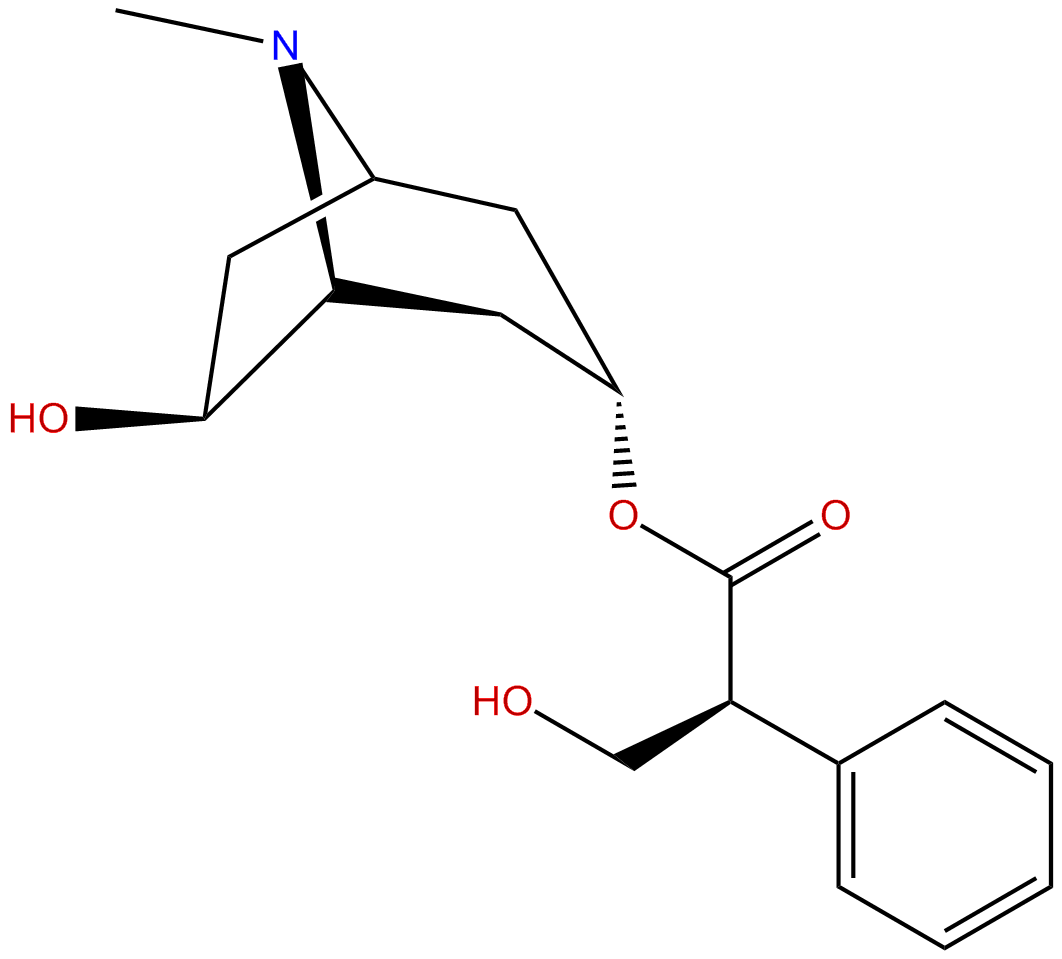


Synonym name: Raceanisodamine; 6-Hydroxyhyoscyamine; 6-beta-Hydroxyhyoscyamine
Catalogue No.: BP0174
Cas No.: 17659-49-3
Formula: C17H23NO4
Mol Weight: 305.374
Botanical Source:
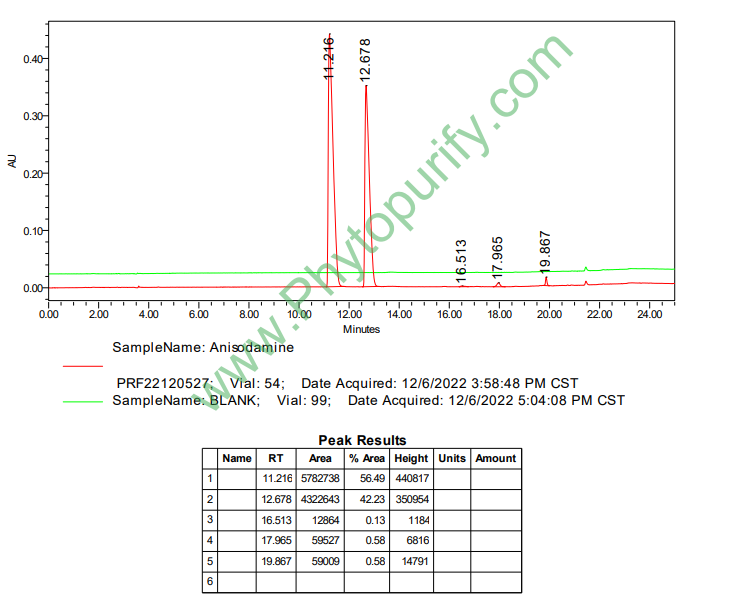
Purity: 95%~99%
Analysis Method: HPLC-DAD or/and HPLC-ELSD
Identification Method: Mass, NMR
Packing: Brown vial or HDPE plastic bottle
Can be supplied from milligrams to grams.
For Reference Standard and R&D, Not for Human Use Directly.
Inquire for bulk scale.
Description:
Anisodamine, an anticholinergic drug, has antishock effect, which is intimately linked to alpha7nAChR-dependent anti-inflammatory pathway. Anisodamine demonstrates a direct cardiac depressive action at the myocyte level, which may be related to, at least in part, NO production and cholinoceptor antagonism, it causes the changes of structure and function in the transmembrane domain of the Ca(2+)-ATPase from sarcoplasmic reticulum. Anisodamine, a vasoactive drug, can abate endogenous endotoxaemia subsequent to splanchnic vasoconstriction due to hypovolaemia, it alleviates inflammatory damage by significantly reducing the expressions of VEGF and ICAM-1, and shows significant protective effects in an animal model of infusion phlebitis. Anisodamine also inhibits shiga toxin type 2-mediated tumor necrosis factor-alpha production in vitro and in vivo.
References:
Burns. 1997 Mar;23(2):142-6.
Anisodamine restores bowel circulation in burn shock.
METHODS AND RESULTS:
In a group of eight burn patients with a mean of 65.3 +/- 17.4 per cent TBSA burn injury (range 50-90 per cent TBSA), accompanied by a mean of 43.5 +/- 18.9 per cent TBSA full-thickness injury, it was shown that the evidence of global hypovolaemia had disappeared at 12 h after the injury following aggressive fluid resuscitation, while there was still a subnormal pHi of stomach at 48 h. As a prolonged period of inadequacy of oxygen delivery to the intestine might result in impairment of the intestinal mucosal barrier function, and then endogenous endotoxaemia might ensue, it seems to be important to correct intestinal hypoxia as early as possible. Since the inadequate perfusion to the gut wall is due to selective vasoconstriction of the mesenteric vasculature, logic dictates that the use of a vasodilator is in order. Anisodamine, an anticholinergic drug, was then given in six burn patients with comparable burn size and amount of fluid replenishment with the eight patients in the control group. It was clearly demonstrated that gastric pHi returned to normal before 48 h after injury. Plasma endotoxin and TNF contents were measured, and they were significantly lower than control values after 72 h.
CONCLUSIONS:
In conclusion, it is believed that Anisodamine might be a valuable adjunct to the resuscitation regime of burn shock, and, therefore, a promising drug to abate endogenous endotoxaemia subsequent to splanchnic vasoconstriction due to hypovolaemia. The shortcomings of the drug were a mild abdominal distention and tachycardia after its administration.
Exp Biol Med (Maywood). 2001 Jun;226(6):597-604.
Anisodamine inhibits shiga toxin type 2-mediated tumor necrosis factor-alpha production in vitro and in vivo.
Cytokines, in particular tumor necrosis factor (TNF), appear to be necessary to develop the pathological process of Shiga toxin-producing Escherichia coli (STEC) infection.
METHODS AND RESULTS:
In this study we examined the effect of Anisodamine, a vasoactive drug, on TNF-alpha production in Shiga toxin type 2 (Stx2)-stimulated human monocytic cells in vitro and in Stx2-injected mice sera in vivo. Human monocytes and THP-1 cells were stimulated by Stx2 (1-100 ng/ml) with or without Anisodamine addition (1-400 micrograms/ml). For in vivo evaluations, C57BL/6 mice were given a single intraperitoneal injection of Anisodamine (6-50 mg/kg) or saline after intraperitoneal injection of Stx2 (50 ng/kg). The results showed that Anisodamine suppressed Stx2-induced TNF-alpha production in a dose- and time-dependent manner. Anisodamine also suppressed Stx2-induced TNF-alpha mRNA expression. Further study showed that endogenous prostaglandin E2 may be involved in this inhibitory effect. In contrast to TNF-alpha mRNA, Anisodamine at concentrations as high as 400 micrograms/ml did not decrease Stx2-induced IL-1 beta and IL-8 mRNA levels. In addition, Anisodamine (> 50 micrograms/ml) increased Stx2-stimulated THP-1 cell viability. Levels of TNF-alpha in Anisodamine-treated mice sera were significantly lower than those in the saline-treated group 1.5 and 24 hr after Stx2 injection. Anisodamine induced a lower percentage of death in Stx2-injected mice.
CONCLUSIONS:
Taken together, our results indicate that Anisodamine has an important regulatory effect on Stx2-induced TNF-alpha production in vitro and in vivo. The present study suggested that this drug should be further investigated for its effects on Stx2-mediated diseases in humans.
Chin Med J (Engl). 2012 Jan;125(2):300-5.
Effects of anisodamine on the expressions of vascular endothelial growth factor and intercellular adhesion molecule 1 in experimental infusion phlebitis.
Infusion phlebitis is the most common side effect of clinical intravenous drug therapy and several clinical studies have demonstrated that Anisodamine can effectively prevent the occurrence of infusion phlebitis. This study was designed to investigate effects of Anisodamine on the expressions of vascular endothelial growth factor (VEGF) and intercellular adhesion molecule 1 (ICAM-1) in a rabbit model of infusion phlebitis and to analyze the mechanisms of Anisodamine effect on the prevention and treatment of experimental infusion phlebitis.
METHODS AND RESULTS:
Twenty-four specific pathogen-free male Japanese white rabbits were randomly assigned to the control group, the model group, the magnesium sulfate group and the Anisodamine group. The rabbit model of infusion phlebitis, induced by intravenous administration, was established and expressions of VEGF and ICAM-1 were determined and contrasted with the control group treated with normal saline. We evaluated expression by histopathology, immunohistochemistry, reverse transcription-polymerase chain reaction, and Western blotting assay.Pathohistological changes of the model group were observed, such as loss of venous endothelial cells, inflammatory cell infiltration, edema and thrombus. The magnesium sulfate group and the Anisodamine group showed significant protective effects on vascular congestion, inflammatory cell infiltration, proliferation, swelling of endothelium and perivascular hemorrhage. The model group showed the highest expressions of VEGF and ICAM-1 of the four groups (P < 0.01). On the contrary, Anisodamine alleviated the inflammatory damage by significantly reducing the expressions of VEGF and ICAM-1 compared with the model group (P < 0.01). There was no significant difference in the expressions of VEGF and ICAM-1 between the magnesium sulfate group and the Anisodamine group (P > 0.05).
CONCLUSIONS:
Anisodamine alleviates inflammatory damage by significantly reducing the expressions of VEGF and ICAM-1, and shows significant protective effects in an animal model of infusion phlebitis.
HPLC of Anisodamine
Storage conditions:Short-term storage at 2~8℃, long-term storage at -20 ~ -80℃
70.0000
1.0039
-.0460
18.0381
1.3027
5.8325
High
29.0852
4.4665
No
No
No
No
No
No
0.0
No
No
Yes
No
Anisodamine is a compound derived from the Solanaceae plant Anisodamine(Anisodus tanguticus)The chemical structure of the extracted tropane alkaloids belongs to tropane derivatives. Since its first isolation and identification from endemic plants on the Qinghai Tibet Plateau in the 1960s, scopolamine has been widely used in clinical practice due to its unique pharmacological activity spectrum and good safety. It has shown significant therapeutic effects in improving microcirculation disorders, treating septic shock, and organophosphate poisoning. In recent years, with the deepening of molecular pharmacology and systems biology research methods, the multi-target action characteristics of scopolamine and its molecular mechanisms in anti-inflammatory, anti shock, organ protection and other aspects have gradually been revealed, making it an important research object in the field of natural product drug development.
As a non subtype selective muscarinic (M receptor) and nicotinic (N receptor) cholinergic receptor antagonist, scopolamine's classical pharmacological effects are mainly based on its regulation of the cholinergic system. However, increasing evidence suggests that the pharmacological activity of scopolamine goes far beyond its simple anticholinergic effect. Research has found that scopolamine can exert anti shock effects through an α 7-nicotinic acetylcholine receptor (α 7nAChR) - dependent anti-inflammatory pathway, while also regulating the production of nitric oxide (NO), affecting myocardial cell calcium homeostasis, and inhibiting the expression of vascular endothelial growth factor (VEGF) and intercellular adhesion molecule-1 (ICAM-1), thereby exerting protective effects in various pathological states. In addition, anisodamine inhibits the production of tumor necrosis factor alpha (TNF - α) mediated by Shiga toxin type 2, suggesting that it has potential value in the treatment of infectious diseases.
It is worth noting that based on multi-target network pharmacology analysis, scopolamine is associated with multiple targets related to depression disorders, such as SIGMAR1、ACHE、HTR2B、DRD1、HTR7、CHRM3、CHRM1、SLC6A3、SLC6A4) The existence of interactions provides a new research direction for its application in the field of mental and neurological disorders. This article will provide a systematic review of the research progress of scopolamine from the aspects of chemical structure, plant origin, pharmacological activity, mechanism of action, pharmacological evaluation, and clinical application prospects.
The chemical name of scopolamine is 6 β - hydroxy-3 α - trophin ester, with a molecular formula of C ₁₇ H ₂∝ NO ₄ and a molecular weight of 305.3740. Its chemical structure consists of a tropane skeleton and tropane ester side chains, and is equivalent to atropine and scopolamine in the tropane alkaloid class. Compared with atropine, scopolamine has a hydroxyl substituent at position 6 of the tropane ring, which endows it with unique pharmacological properties and lower neurotoxicity.
From the perspective of stereochemistry, scopolamine has multiple chiral centers, and its naturally occurring configuration is the (1R, 3R, 5S, 6R) - configuration. The chiral center (α - carbon atom) of the topiramate moiety is in the S configuration, and this stereochemical feature has a significant impact on its binding ability with cholinergic receptors. Research has shown that the 6 β - hydroxyl group of scopolamine can enhance its water solubility while reducing its lipid solubility, which may be the structural basis for its lower central nervous system toxicity compared to atropine.
In terms of physicochemical properties, the lipid water partition coefficient (LogP) of scopolamine is 1.0039, indicating its moderate lipophilicity and favorable transmembrane transport. The topological polar surface area (TPSA) is 70.000 Å ², which meets the conventional requirements for oral medication (TPSA<140 Å ²). The water solubility parameter is 18.0381 mg/mL, indicating good water solubility, which provides convenience for its injection administration. It is worth noting that scopolamine has a high ability to penetrate the blood-brain barrier, which is closely related to its ability to effectively enter the central nervous system and exert detoxification effects in the treatment of organophosphate poisoning.
From the perspective of chemical stability, the ester bond of scopolamine is relatively stable in acidic environments, but it is easily hydrolyzed under alkaline conditions. The alkane ring structure is sensitive to oxidation and may degrade under light and high temperature conditions. Therefore, preparations of scopolamine usually need to be stored in a dark, sealed, and cool environment. In addition, scopolamine can form crystalline salts with various acids, and its hydrochloride form is commonly used in clinical practice to improve solubility and stability.
Scopolamine mainly comes from the genus Scopola in the Solanaceae family(Anisodus)Plants, among which the Scotropha montana(Anisodus tanguticus)It is the main source of medicinal plants. The plants of the genus Scopola are mainly distributed in high-altitude areas of southwestern China, including the Qinghai Tibet Plateau, Yunnan, Sichuan, Gansu, and other regions. The unique plateau climate and geographical environment in these areas provide suitable conditions for the growth of Scopola plants.
Except for the Chinese parasol beetle, other plants of the same genus such as San San San(Anisodus acutangulus)Sai Fen(Anisodus luridus)It has also been reported to contain scopolamine, but the content varies. Research has shown that the content of scopolamine in the rhizomes and stems of Scotropha acutissima is the highest, usually between 0.1% and 0.5%, while the content in the stems and leaves is relatively low. The accumulation of alkaloids in plants is influenced by various factors, including growth altitude, harvest season, soil conditions, etc. The alkaloid content is usually highest in the rhizomes harvested in autumn.
The traditional extraction method of scopolamine is mainly based on the acid-base properties of alkaloids, using the basic process of solvent extraction acid water extraction alkalization organic solvent extraction. Specifically, the dried and crushed plant materials are subjected to percolation extraction using ethanol or methanol. After concentration of the extract, dilute acid (such as hydrochloric acid or sulfuric acid) is added to convert alkaloids into water-soluble salts, and non alkaloid components are filtered out. After alkalization of the filtrate (usually adjusted to pH 9-10 with ammonia or sodium hydroxide), it is extracted with organic solvents such as chloroform or dichloromethane. The organic phase is dried and concentrated to obtain crude total alkaloids. The crude product can be separated and purified by silica gel column chromatography or preparative high-performance liquid chromatography to obtain high-purity scopolamine.
In recent years, with the promotion of green chemistry concepts and the development of separation technologies, some new extraction methods have been applied to the preparation of scopolamine. Ultrasound assisted extraction and microwave-assisted extraction techniques can significantly shorten extraction time, improve extraction efficiency, and reduce the use of organic solvents. In addition, supercritical fluid extraction technology (especially supercritical CO ₂ extraction) has shown application potential in the field of alkaloid extraction due to its environmentally friendly and selective advantages. Ionic liquids, as a new type of green solvent, have also been attempted for the extraction of scopolamine, and preliminary studies have shown good extraction effects.
It is worth noting that due to the limited resources and long growth cycle of Scopola plants, the production of Scopolamine through plant cell culture and genetic engineering has become a research hotspot. The hairy root culture technique has been successfully established in plants of the genus Scopola. By optimizing the culture conditions and adding precursor substances, the yield of Scopolamine can be significantly increased. In addition, key enzyme genes involved in the biosynthesis of scopolamine, such as tropinone reductase and scopolamine 6 β - hydroxylase, have been cloned and functionally identified, providing a molecular basis for metabolic engineering modification.
The most classic pharmacological effect of scopolamine is its anti shock effect, which has been widely validated in clinical practice. Research has shown that scopolamine can significantly improve microcirculation disorders in various types of shock states such as septic shock, hemorrhagic shock, and cardiogenic shock. Its mechanism of action involves multiple levels: firstly, scopolamine antagonizes cholinergic receptors, relieves small vessel spasm, reduces peripheral vascular resistance, and increases tissue perfusion; Secondly, scopolamine can inhibit platelet aggregation and leukocyte adhesion, and improve hemorheological properties; In addition, scopolamine can stabilize lysosomal membranes, reduce the release of lysosomal enzymes, and thus alleviate cell damage during shock.
In the model of hemorrhagic shock, scopolamine can alleviate endogenous endotoxemia caused by visceral vasoconstriction due to low blood volume. This effect may be related to the improvement of intestinal microcirculation, protection of intestinal mucosal barrier function, and reduction of endotoxin translocation by scopolamine. The study also found that scopolamine can significantly reduce the expression levels of VEGF and ICAM-1 in plasma during shock, thereby alleviating inflammation and increasing vascular permeability.
The anti-inflammatory effect of scopolamine has received widespread attention in recent years. Research has found that scopolamine can exert anti-inflammatory effects through an α 7nAChR dependent anti-inflammatory pathway. α 7nAChR is a key receptor in the cholinergic anti-inflammatory pathway, and its activation can inhibit the release of pro-inflammatory cytokines (such as TNF - α, IL-1 β, IL-6, etc.) by macrophages and monocytes. As a non subtype selective cholinergic receptor antagonist, scopolamine exhibits a concentration dependent regulatory effect on α 7nAChR: at low concentrations, it may partially excite the receptor, while at high concentrations, it exhibits an antagonistic effect.
In vitro experiments showed that scopolamine can inhibit the production of TNF - α and IL-6 in macrophages stimulated by lipopolysaccharide (LPS), while promoting the release of anti-inflammatory cytokine IL-10. In in vivo experiments, scopolamine pretreatment significantly reduced the mortality rate of endotoxemia mice and alleviated multi organ damage. In addition, scopolamine has shown significant protective effects in animal models of intravenous phlebitis, reducing endothelial damage and inflammatory cell infiltration.
It is worth noting that scopolamine has an inhibitory effect on the production of TNF - α mediated by Shiga toxin type 2 (Stx2). Shiga toxin is the main virulence factor of Shiga bacteria and Shiga toxin producing Escherichia coli, and its induced excessive production of TNF - α is a key link leading to serious complications such as hemolytic uremic syndrome. The effect of scopolamine suggests its potential application value in the treatment of complications related to infectious diarrhea.
The effects of scopolamine on the cardiovascular system are bidirectional and complex. At the overall level, scopolamine can dilate blood vessels, lower blood pressure, and improve myocardial blood supply, which are mainly related to its anticholinergic effect. However, at the level of myocardial cells, scopolamine exhibits direct cardiac inhibitory effects. Research has found that scopolamine can reduce the contractility and frequency of myocardial cells, which may be related to the production of NO and cholinergic receptor antagonism.
Further research has shown that scopolamine can affect the function of sarcoplasmic reticulum Ca ² ⁺ - ATPase (SERCA) in myocardial cells. SERCA is a key enzyme that regulates calcium circulation in myocardial cells, and its activity directly affects the contraction and relaxation function of the myocardium. Scopolamine can cause changes in the structure and function of the SERCA transmembrane domain, thereby affecting the uptake and release of calcium ions. This discovery provides a new molecular mechanism for understanding the cardiac effects of scopolamine.
In addition, scopolamine has a protective effect on vascular endothelial cells. In the hypoxia/reoxygenation injury model, scopolamine can inhibit endothelial cell apoptosis and maintain endothelial barrier function. This effect may be related to its antioxidant and anti-inflammatory activities.
Scopolamine, as a cholinergic receptor antagonist, has multiple effects on the central nervous system. In the treatment of organophosphate poisoning, scopolamine can effectively counteract the muscarinic symptoms caused by excessive acetylcholine, and due to its high blood-brain barrier penetration ability, it can enter the central nervous system to exert detoxification effects. Compared with atropine, scopolamine has milder central side effects, manifested as fewer central excitatory symptoms such as excitement and delirium.
In recent years, based on network pharmacology analysis, there have been interactions between scopolamine and multiple targets associated with depression. These targets include the sigma 1 receptor (SIGMAR1), acetylcholinesterase (ACHE), serotonin receptors (HTR2B, HTR7), dopamine receptor (DRD1), muscarinic receptors (CHRM3, CHRM1), and dopamine and serotonin transporters (SLC6A3, SLC6A4). This discovery suggests that scopolamine may exert antidepressant effects through multi-target synergistic effects, but its specific mechanism still needs further research and verification.
The core pharmacological mechanism of scopolamine is its antagonistic effect on cholinergic receptors. As a non subtype selective antagonist of muscarinic and nicotinic acetylcholine receptors, scopolamine can bind to five subtypes of muscarinic receptors M1-M5 and multiple subtypes of nicotinic receptors, blocking the action of acetylcholine. Compared with atropine, scopolamine has lower selectivity for various subtypes of M receptors, but relatively weaker affinity for M2 receptors, which may be one of the reasons for its milder cardiac side effects.
At the molecular level, the topiramate moiety of scopolamine can interact with the positive binding site of cholinergic receptors, while the 6 β - hydroxy group may affect its binding kinetics with receptors. Research has shown that the binding of scopolamine to cholinergic receptors is reversible, and its dissociation rate is fast, which helps reduce drug accumulation and adverse reactions.
The anti-inflammatory effect of scopolamine is closely related to α 7nAChR. α 7nAChR is a key component of the cholinergic anti-inflammatory pathway, mainly expressed on the surface of immune cells such as macrophages, monocytes, and microglia. When α 7nAChR is activated, it can inhibit the activation of nuclear factor kappa B (NF - κ B) through downstream signaling pathways, thereby reducing the production of pro-inflammatory cytokines.
The effect of scopolamine on α 7nAChR exhibits concentration dependent characteristics. At low concentrations (micromolar level), scopolamine may partially excite α 7nAChR, activating the cholinergic anti-inflammatory pathway; At high concentrations, it exhibits an antagonistic effect. This feature gives scopolamine a unique advantage in anti-inflammatory treatment, as it can exert anti-inflammatory effects while avoiding excessive inhibition of the cholinergic system.
Nitric oxide (NO) is an important signaling molecule in the body, playing a crucial role in cardiovascular regulation, inflammatory response, and neural transmission. Scopolamine can affect the production and signal transduction of NO. In myocardial cells, scopolamine can induce the production of NO, which in turn affects myocardial contractile function through the cGMP PKG pathway. In endothelial cells, scopolamine can regulate the activity of endothelial nitric oxide synthase (eNOS), affect the release of NO, and thus participate in the regulation of vasodilation.
It is worth noting that the effect of scopolamine on NO production is tissue-specific. Under inflammatory conditions, scopolamine can inhibit the overexpression of inducible nitric oxide synthase (iNOS), reduce excessive NO production, and alleviate NO mediated cell damage. This bidirectional regulatory effect helps maintain the homeostasis of NO within the physiological range.
The regulation of intracellular calcium homeostasis by scopolamine is an important mechanism of its cardiac function. Research has found that scopolamine can affect the structure and function of sarcoplasmic reticulum Ca ² ⁺ - ATPase (SERCA2a) in myocardial cells. SERCA2a is a key enzyme in the calcium cycle of myocardial cells, responsible for pumping calcium ions back into the sarcoplasmic reticulum, thereby mediating myocardial relaxation.
Scopolamine can interact with the transmembrane domain of SERCA2a, alter its conformation, and affect the efficiency of calcium ion binding and transport. This effect leads to a decrease in the amplitude of calcium transients in myocardial cells and a weakening of contractility. In addition, scopolamine can further regulate calcium ion influx and release by affecting the activity of L-type calcium channels and Ryanodine receptor (RyR2).
Based on system pharmacology and network pharmacology analysis, the pharmacological effects of scopolamine involve multiple targets and signaling pathways. In addition to the main mechanisms mentioned above, scopolamine can also affect the expression of adhesion molecules such as VEGF and ICAM-1, regulate the balance of apoptosis related proteins (such as Bcl-2 and Bax), and affect the mitogen activated protein kinase (MAPK) signaling pathway.
In terms of depression related targets, scopolamine interacts with multiple targets such as SIGMAR1, ACHE, HTR2B, DRD1, HTR7, CHRM3, CHRM1, SLC6A3, SLC6A4, etc. These targets involve the monoamine neurotransmitter system, cholinergic system, and sigma receptor system, suggesting that scopolamine may exert antidepressant effects through multi-target synergistic effects. However, further research is needed to understand the specific molecular mechanisms and clinical significance of these interactions.
The pharmacological parameters of scopolamine meet the basic requirements for drug development. Its molecular weight is 305.3740 Da, which is within the ideal range for small molecule drugs (<500 Da). The lipid water partition coefficient (LogP) is 1.0039, indicating that it has moderate lipophilicity, which is beneficial for oral absorption and transmembrane transport. The topological polar surface area (TPSA) is 70.000 Å ², which is lower than the conventional upper limit of oral drugs (140 Å ²), indicating its good oral bioavailability potential.
The water solubility parameter is 18.0381 mg/mL, indicating good water solubility, which provides convenience for its injection administration. It is worth noting that scopolamine has a high blood-brain barrier penetration ability, which has advantages in the treatment of organophosphate poisoning, but may also increase the risk of central nervous system side effects.
In terms of safety evaluation, the hERG inhibition test result was negative, indicating a low risk of scopolamine induced QT interval prolongation in the heart. The Ames test result is 0.0, indicating no significant genetic toxicity. These safety data provide important assurance for the clinical application of scopolamine.
The pharmacokinetic study of scopolamine is mainly based on animal experiments and clinical observations. After oral administration, scopolamine is rapidly but incompletely absorbed in the gastrointestinal tract, with a bioavailability of approximately 30% -50%. After absorption, the drug is widely distributed in the body, with higher concentrations in organs with abundant blood flow such as the lungs, liver, and kidneys. Due to its high blood-brain barrier penetration ability, scopolamine can reach effective concentrations in the central nervous system.
The metabolism of scopolamine in the body is mainly carried out through the liver, and the main metabolic pathways include ester hydrolysis, hydroxylation reaction, and glucuronic acid binding. The hydrolysis of ester bonds is its main metabolic pathway, generating derivatives of tropin acid and tropin alcohol, some of which retain pharmacological activity. Scopolamine and its metabolites are mainly excreted through the kidneys, with a small amount excreted through bile.
In terms of elimination half-life, the elimination half-life of scopolamine is about 2-4 hours, making it a short acting drug. This feature allows for flexible adjustment of dosing regimens in clinical applications, but also requires frequent dosing to maintain effective blood drug concentrations. It is worth noting that in the state of shock, due to insufficient tissue perfusion and impaired liver and kidney function, the pharmacokinetic parameters of scopolamine may change, and dosage adjustments need to be made according to specific circumstances.
Scopolamine is mainly used in the form of hydrochloride salt in clinical practice, and commonly used dosage forms include injection and tablet. Injection is used for intravenous administration in acute shock and can quickly take effect; Tablets are used for maintenance therapy and treatment of chronic diseases. In addition, transdermal and intranasal formulations of scopolamine are also being studied to improve patient compliance and achieve continuous administration.
In recent years, new drug delivery systems have been explored to improve the pharmacokinetic properties of scopolamine. Liposome, nanoparticle, and microemulsion carrier systems can enhance the bioavailability of scopolamine, prolong its action time, and achieve targeted delivery. For example, scopolamine liposomes have shown better anti shock effects and lower toxicity in animal experiments.
Scopolamine has a clinical history of several decades and is mainly used in the following fields:
Treatment of septic shock Scopolamine is a commonly used medication for improving microcirculation disorders in shock states, which can significantly reduce the mortality rate of shock patients. In clinical practice, it is often used in combination with vasoactive drugs and fluid resuscitation.
Detoxification of organophosphate poisoning Scopolamine can effectively counteract muscarinic symptoms caused by organophosphate poisoning, such as pupil constriction, increased glandular secretion, smooth muscle spasms, etc. Compared with atropine, scopolamine has milder central side effects and is more suitable for the treatment of organophosphate poisoning.
Digestive system diseases Scopolamine can alleviate smooth muscle spasms in the gastrointestinal tract and is used to treat stomach pain, abdominal pain, biliary colic, etc.
Ophthalmic applications Scopolamine can dilate the pupils and regulate paralysis, and is used for ophthalmic examination and treatment.
Based on in-depth research on the pharmacological mechanism of scopolamine in recent years, its application prospects in the following disease fields are worth paying attention to:
Inflammatory diseases The anti-inflammatory effect of scopolamine makes it potentially valuable in the treatment of inflammatory bowel disease, acute pancreatitis, acute lung injury, and other diseases. It exerts its effects through the α 7nAChR dependent anti-inflammatory pathway, which may provide new therapeutic strategies for these diseases.
cardiovascular disease The regulatory effect of scopolamine on calcium homeostasis in myocardial cells suggests that it may have a protective effect in the treatment of diseases such as myocardial ischemia-reperfusion injury and heart failure. However, its direct cardiac inhibitory effect needs to be carefully evaluated in clinical applications.
Neuropsychiatric disorders Based on multi-target network pharmacology analysis, scopolamine may have application value in the treatment of mental disorders such as depression and anxiety. Its interaction with multiple neurotransmitter systems suggests that it may have a unique antidepressant mechanism.
infectious diseases The inhibitory effect of scopolamine on the production of TNF - α mediated by Shiga toxin type 2 suggests its potential value in the treatment of infectious diarrhea related complications such as hemolytic uremic syndrome.
The research directions of future scopolamine mainly include the following aspects:
Structural optimization and derivative development Based on the chemical structure of scopolamine, derivatives with higher selectivity and fewer side effects can be developed through structural modification. For example, developing selective M receptor subtype antagonists or α 7nAChR partial agonists to enhance therapeutic efficacy and safety.
In depth study of the mechanism of action By utilizing modern molecular biology and structural biology techniques, we aim to investigate the molecular mechanisms underlying the interactions between scopolamine and various targets, particularly its binding patterns and conformational changes with key targets such as α 7nAChR and SERCA2a.
Development of a new drug delivery system Develop a novel drug delivery system based on nanotechnology to improve the bioavailability of scopolamine, achieve targeted delivery and sustained-release administration, and reduce dosing frequency and side effects.
Clinical translational research Conduct high-quality clinical research to verify the efficacy and safety of scopolamine in new indications such as inflammatory diseases, cardiovascular diseases, and neurological and psychiatric disorders, and provide evidence-based medicine for its clinical application.
Pharmacogenomics research Study the individual differences in the pharmacodynamics and pharmacokinetics of scopolamine, explore the influence of genetic factors on its efficacy and toxicity, and provide guidance for personalized medication.
As a natural product discovered from traditional Chinese medicine, scopolamine has undergone decades of research, and its pharmacological activity and mechanism of action have been comprehensively revealed. From the initial anticholinergic and anti shock effects, to the discovery of multiple mechanisms such as the α 7nAChR dependent anti-inflammatory pathway, NO signaling regulation, and calcium homeostasis regulation in recent years, the research process of scopolamine reflects the typical paradigm of natural product drug development - from empirical medicine to molecular pharmacology.
The multi-target action characteristics of scopolamine are both its advantages and challenges. The advantage lies in the ability to synergistically exert therapeutic effects through multiple mechanisms, adapting to the treatment needs of complex diseases; The challenge lies in the potential for non-specific side effects, requiring precise control of medication dosage and administration regimen. In the future, with the development of structural optimization, new drug delivery systems, and precision medicine, scopolamine and its derivatives are expected to play a therapeutic role in more disease fields.
It is worth emphasizing that the research process of scopolamine fully demonstrates the value of traditional Chinese medicine in modern drug development. The successful development of scopolamine from folk medicine on the Qinghai Tibet Plateau to clinical research worldwide provides valuable experience for discovering lead compounds from natural products. In future drug development, further exploration of active ingredients in traditional Chinese medicine, combined with modern pharmacology and medicinal chemistry methods, will undoubtedly make greater contributions to human health.
