| Catalog No | Package | Original Price | Price | Inventory | Quantity | Operating |
|---|---|---|---|---|---|---|
| BP4779-1000mg | 1000mg | $65.00 | Sign in |
|


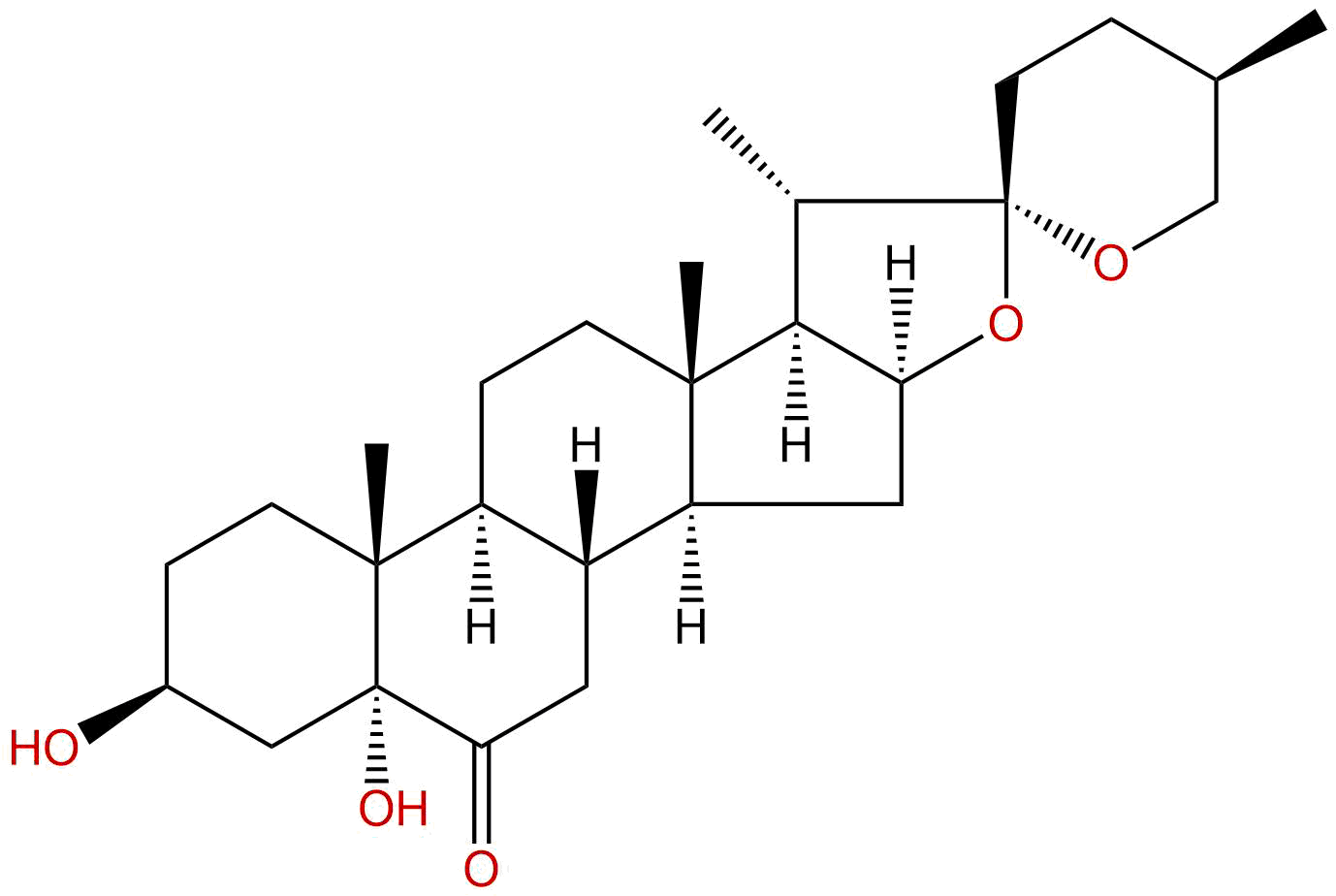
Product name: 5-Alpha-Hydroxy Laxogenin
Synonym name: Brassinosteroid BB16;(3β,5α,25R)-3,5-Dihydroxyspirostan-6-one
Catalogue No.: BP4779
Cas No.: 56786-63-1
Formula: C27H42O5
Mol Weight: 446.628
Botanical Source:
Type of Compound:
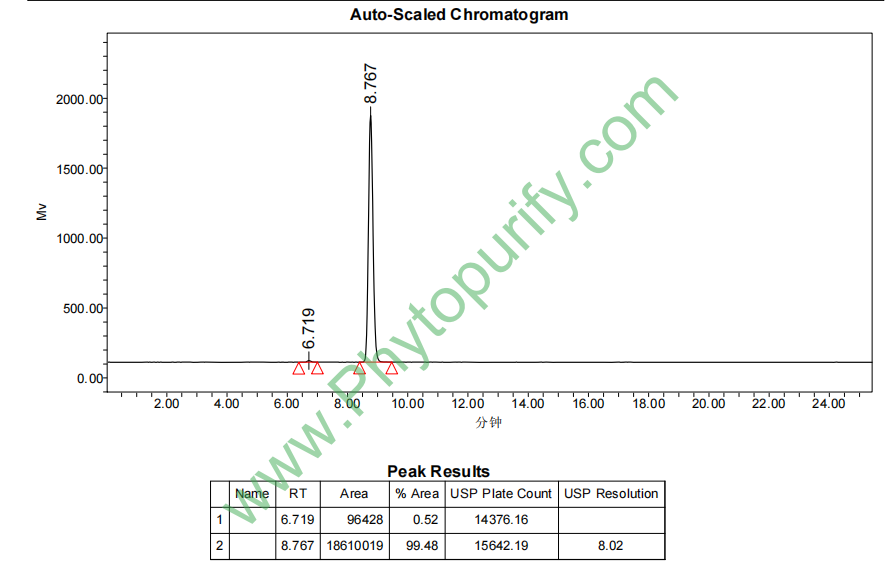
Purity: 95%~99%
Analysis Method: HPLC-DAD or/and HPLC-ELSD
Identification Method: Mass, NMR
Packing: Brown vial or HDPE plastic bottle
Storage: Store in a well closed container, protected from air and light. Put into refrigerate or freeze for long term storage.
Whenever possible, you should prepare and use solutions on the same day. However, if you need to make up stock solutions in advance, we recommend that you store the solution as aliquots in tightly sealed vials at -20℃. Generally, these will be useable for up to two weeks.
The product could be supplied from milligrams to grams
Inquire for bulk scale.
For Reference Standard and R&D, Not for Human Use Directly.
HPLC of 5-Alpha-Hydroxy Laxogenin
Storage conditions:Short-term storage at 2~8℃, long-term storage at -20 ~ -80℃
75.9900
3.4587
3.4587
.0037
4.0200
11.3110
High
77.1491
5.5360
No
No
No
No
Yes
No
0.0
Yes
No
No
No
Natural products have always been an important treasure trove for innovative drug discovery, among which steroidal saponins have attracted much attention due to their wide range of biological activities. 5-alpha-Hydroxy Laxogenin (CAS number: 56786-63-1), as a unique chemical backbone of spirostanol saponins, has emerged in the field of pharmacology research in recent years. Its core pharmacological value lies in demonstrating significant and multi-target anti-inflammatory activity, which provides new potential candidate molecules for the treatment of chronic inflammatory diseases. Chronic inflammation is a common pathological basis for many major diseases, such as rheumatoid arthritis, inflammatory bowel disease, neurodegenerative diseases, and metabolic syndrome. Existing anti-inflammatory drugs often have side effects such as gastrointestinal damage and immune suppression. Therefore, the search for efficient and low toxicity new anti-inflammatory natural products has become a research hotspot. This article aims to provide a systematic review of the chemical properties, plant sources, pharmacological activities, molecular mechanisms of action, pharmacological characteristics, and clinical application potential of 5- α - hydroxylasso saponin glycoside, in order to provide comprehensive academic references for the in-depth research and development of this compound.
5- α - hydroxylasso saponin glycoside is a spirostanol compound with the molecular formula C27H42O4 and a molecular weight of 446.6280. Its core structure is based on the steroid core of cyclopentane and phenanthrene, characterized by the presence of an alpha hydroxy substitution at the C-5 position, and the formation of a typical spiroketide structure through oxygen atom connection at the C-22 and C-26 positions (the F ring is an oxygen-containing five membered heterocyclic ring). This unique spirostane structure is a key chemical characteristic that distinguishes it from other steroidal saponins, and has a decisive impact on its spatial conformation and biological activity.
From the analysis of physical and chemical properties, the calculated lipid water partition coefficient (LogP) of this compound is 3.4587, indicating that it has moderate lipophilicity, which is conducive to its penetration of cell membranes and binding to hydrophobic targets. Its topological polar surface area (TPSA) is 75.99 Å ², which is relatively low, further confirming its good membrane permeability. However, its water solubility is poor, at around 0.0037 mg/mL, which may pose challenges in formulation development and in vivo absorption. Pharmacokinetic predictions indicate that the compound has a high potential for blood-brain barrier penetration, suggesting its potential intervention in central nervous system inflammation. In addition, preliminary pharmacological risk assessment showed a negative hERG inhibition risk and an Ames test result of 0.0 (negative), indicating a low potential risk of arrhythmia and genetic toxicity, providing preliminary positive signals for its safety evaluation.
5- α - hydroxylasso saponin glycoside is mainly found in various plants of the Liliaceae, Dioscoreaceae, and Gentianaceae families. Common plant sources include but are not limited to Smilax genus(Smilax spp.)、Heavy buildings belong to(Paris spp.) and some others Agave genus(Agave spp.) Plants. In these plants, it usually exists in the form of saponins (i.e. bound to sugar chains) in the roots, tubers, or leaves, and is a secondary metabolite that plays a defensive role.
The extraction and separation method follows the conventional process of natural product chemistry. Firstly, dry and crushed plant materials are subjected to reflux extraction or ultrasound assisted extraction using polar solvents such as methanol, ethanol, or ethanol water mixtures to obtain crude total saponin extracts. Subsequently, the crude extract was subjected to macroporous adsorption resin column chromatography, and gradient elution was performed using ethanol water solutions of different concentrations to enrich the saponin sites. The obtained saponin site needs to undergo further acid hydrolysis or enzymatic hydrolysis to cut off the sugar chain and release sapogenin (i.e. 5-alpha-hydroxylaxosine). Finally, high-purity monomer compounds are obtained through repeated methods such as normal phase silica gel column chromatography, reverse phase preparative high-performance liquid chromatography (RP-HPLC), or crystallization. Modern technologies such as high-speed countercurrent chromatography (HSCCC) are increasingly being applied for efficient separation of such compounds due to their advantage of avoiding irreversible adsorption. The optimization of extraction process requires comprehensive consideration of solvent type, concentration, temperature, time, and hydrolysis conditions to maximize yield and purity.
A large number of in vitro and in vivo pharmacological studies have confirmed that the core biological activity of 5- α - hydroxylaxosine is concentrated in anti-inflammatory The field, and its role is extensive and significant.
In in vitro model Among them, this compound can effectively inhibit the production of nitric oxide (NO) and prostaglandin E2 (PGE2) by macrophages (such as RAW 264.7 cells) induced by lipopolysaccharide (LPS) or other inflammatory stimuli. Meanwhile, it can significantly downregulate the expression levels of various pro-inflammatory cytokines and mediators, including tumor necrosis factor - α (TNF - α), interleukin-6 (IL-6), interleukin-1 β (IL-1 β), etc.
In In vivo animal model Its anti-inflammatory effect has been further validated. For example, in the mouse ear xylene induced inflammation model, carrageenan induced rat paw swelling model, and cotton ball induced granuloma model, oral or intraperitoneal administration of 5- α - hydroxylaxosine can dose dependently reduce tissue edema and inflammatory exudation. More importantly, in more complex disease models such as collagen induced rat arthritis model and dextran sulfate sodium (DSS) - induced mouse colitis model, this compound also exhibits protective effects in improving joint pathological damage, reducing disease activity index, alleviating colon shortening and histological damage. These studies collectively indicate that 5- α - hydroxylaxosine is not only effective in acute inflammation, but also has the potential to intervene in chronic immune inflammation.
The anti-inflammatory effect of 5- α - hydroxylaxosine is not achieved through a single pathway, but involves a multi-target and multi-level network regulatory system, which explains its broad-spectrum anti-inflammatory effect. Existing research has revealed that its mechanism of action mainly revolves around the following key targets and signaling pathways:
Inhibition of nuclear factor kappa B (NF - κ B) signaling pathway NF - κ B is the core transcription factor of inflammatory response. Research has shown that 5- α - hydroxylasso saponin glycoside can inhibit the activity of I κ B kinase (IKK, encoded by IKBKB), prevent the phosphorylation and degradation of I κ B α, and thus inhibit the nuclear translocation of NF - κ B p65 subunit (RELA). This directly leads to the inhibition of transcription of numerous pro-inflammatory genes downstream, such as TNF - α, IL-6, NOS2.
Regulating the Janus kinase/signal transduction and transcriptional activator (JAK/STAT) pathway This compound can inhibit JAK/STAT3 signaling activated by cytokines such as IL-6. By reducing the phosphorylation of STAT3 and the expression of its downstream target genes, it helps break the vicious cycle of continuous activation of STAT3 in chronic inflammation.
Intervention in inflammasome activation The activation of inflammasomes (such as NLRP3) leads to the cleavage and maturation of Caspase-1 (CASP1), which in turn promotes the maturation and release of IL-1 β and IL-18. Research suggests that 5- α - hydroxylasso saponin may reduce the production of these potent pro-inflammatory factors by inhibiting the assembly of NLRP3 inflammasomes or the activity of Caspase-1.
Regulating cyclooxygenase and nitric oxide synthase This compound can inhibit the expression of inducible cyclooxygenase (COX-2, encoded by PTGS2, but may also regulate its isoenzymes PTGS1/COX-1) and inducible nitric oxide synthase (iNOS, encoded by NOS2), thereby reducing the excessive production of inflammatory mediators such as PGE2 and NO.
Affects ion channel activity Transient receptor potential vanillic acid subtype 1 (TRPV1) and transient receptor potential anchor protein subtype 1 (TRPA1) are important ion channels involved in pain perception and neurogenic inflammation. Preliminary evidence suggests that 5- α - hydroxylaxosine may act as a regulator to affect the function of these channels, which may be one of its mechanisms for alleviating inflammatory pain.
In summary, 5- α - hydroxylaxosine exerts a synergistic effect on multiple key inflammatory signaling nodes such as NF - κ B, JAK/STAT, and inflammasomes, and regulates the synthesis enzymes and receptors of key inflammatory mediators, forming a three-dimensional anti-inflammatory network.
Based on its physical and chemical parameters and preliminary research, a preliminary evaluation of the pharmacological properties of 5- α - hydroxylaxosine was conducted. its Advantage It has a moderate molecular weight and a LogP value indicating good membrane permeability, which is beneficial for oral absorption and cell targeting; The higher blood-brain barrier permeability provides the possibility for its treatment of neuroinflammation; The preliminary safety warning (hERG negative, Ames negative) laid the foundation for its subsequent development.
However, it faces Main challenges It has extremely low water solubility, which may lead to low oral bioavailability. Therefore, formulation strategies will be the key to its development, such as using nanocrystal technology, liposomes, cyclodextrin inclusion complexes, or solid dispersions to improve its solubility and dissolution rate. There is currently insufficient publicly available data on the pharmacokinetic studies of its system, such as absorption, distribution, metabolism, excretion, and ADME. Future research needs to clarify the degree of oral absorption, plasma protein binding rate, major metabolic organs (such as liver CYP450 enzyme mediated metabolism) and metabolites, elimination half-life, and tissue distribution characteristics (especially the ability to accumulate in inflammatory sites). Clarifying these PK parameters is a prerequisite for rational drug administration design and toxicological evaluation.
As a multi-target anti-inflammatory natural product, 5- α - hydroxylaxosine has broad clinical application prospects, but the road ahead is long.
Potential application directions including:
1. Chronic inflammatory diseases As an adjuvant or alternative medication for the treatment of autoimmune diseases such as rheumatoid arthritis, osteoarthritis, and ankylosing spondylitis, it may reduce dependence on traditional nonsteroidal anti-inflammatory drugs (NSAIDs) or glucocorticoids.
2. Inflammatory bowel disease Its effectiveness in mouse colitis models supports its exploration as a potential therapeutic option for ulcerative colitis or Crohn's disease.
3. Neuroinflammatory related diseases With its potential to penetrate the blood-brain barrier, it may play a role in the regulation of neuroinflammation in neurodegenerative or autoimmune diseases such as Alzheimer's disease, Parkinson's disease, and multiple sclerosis.
4. Inflammatory pain management By acting on targets such as TRPV1/TRPA1, a novel analgesic may be developed for the treatment of chronic inflammatory pain.
5. Skin inflammation Exploring local or systemic treatments for skin inflammatory diseases such as atopic dermatitis and psoriasis.
Future research prospects:
1. Deepening the mechanism of action It is necessary to use techniques such as gene knockout, molecular docking, and surface plasmon resonance to accurately verify the direct interaction sites and binding modes with the above-mentioned targets.
2. System drug development Comprehensive preclinical ADME and toxicology studies must be conducted, with a focus on overcoming the formulation challenges caused by its low water solubility.
3. structural optimization Using it as the parent nucleus, carry out reasonable structural modifications (such as glycosylation, esterification, synthesis of derivatives) in order to improve water solubility, enhance activity, or reduce potential toxicity, and obtain better candidate drugs.
4. Clinical translational research After completing sufficient preclinical research, gradually advance human clinical trials to verify its safety and effectiveness.
5- α - hydroxylasso saponin glycoside is a natural product of spirostanol derived from plants. With its unique multi-target anti-inflammatory mechanism, it has shown great potential in the treatment of various chronic inflammatory diseases. It exerts broad-spectrum anti-inflammatory effects by synergistically inhibiting key inflammatory signaling pathways such as NF - κ B, JAK/STAT3, inflammasomes, and regulating COX-2, iNOS, and TRP channels. Although its excellent in vitro activity and preliminary in vivo effects are encouraging, its low solubility and unclear systemic pharmacokinetic properties are the main bottlenecks for its drug conversion. Future research should focus on delving into the details of its molecular action, utilizing modern pharmaceutical techniques to improve its bioavailability, and conducting systematic preclinical evaluations. With the advancement of these studies, 5- α - hydroxylaxosine is expected to develop from a potential natural active molecule into a novel anti-inflammatory drug lead compound with clinical application value, providing a new option for the treatment of inflammatory diseases.
