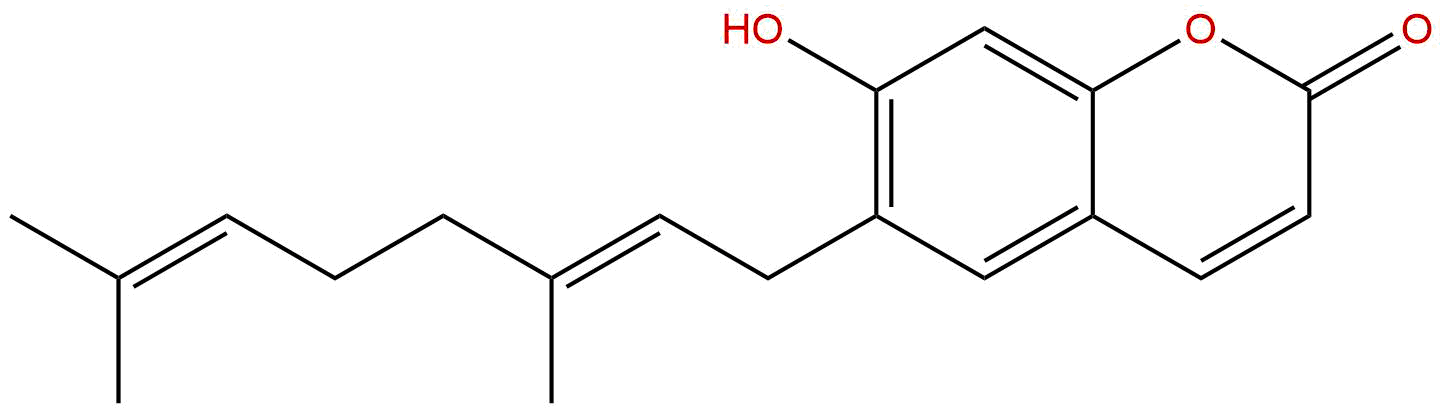


Product name: Ostruthine
Synonym name: 王草质
Catalogue No.: BP5217
Cas No.: 148-83-4
Formula: C19H22O3
Mol Weight: 298.382
Botanical Source:
Type of Compound: Coumarins
Purity: 95%~99%
Analysis Method: HPLC-DAD or/and HPLC-ELSD
Identification Method: Mass, NMR
Packing: Brown vial or HDPE plastic bottle
Storage: Store in a well closed container, protected from air and light. Put into refrigerate or freeze for long term storage.
Whenever possible, you should prepare and use solutions on the same day. However, if you need to make up stock solutions in advance, we recommend that you store the solution as aliquots in tightly sealed vials at -20℃. Generally, these will be useable for up to two weeks.
The product could be supplied from milligrams to grams
Inquire for bulk scale.
For Reference Standard and R&D, Not for Human Use Directly.
HPLC of Ostruthine

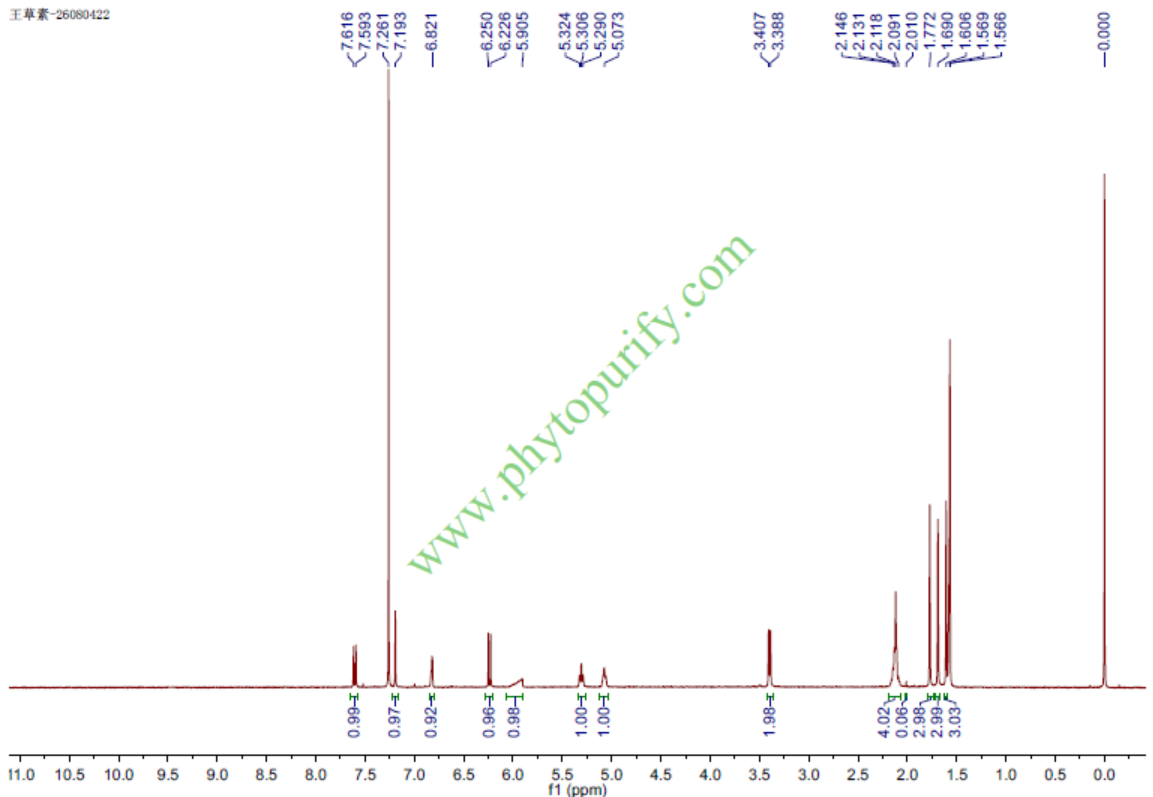
HNMR of Ostruthine
Storage conditions:Short-term storage at 2~8℃, long-term storage at -20 ~ -80℃
50.4400
4.9759
4.9595
.0125
2.6173
15.3951
High
92.7572
2.6908
Yes
Yes
Yes
No
No
Yes
0.0
No
Yes
Yes
Yes
Natural products, as an important source of drug discovery, play an indispensable role in the long history of human struggle against diseases. From traditional plant-based drugs to modern targeted drugs, the diverse secondary metabolites in nature continue to provide valuable lead compounds for the development of innovative drugs. Among numerous natural products with biological activity, coumarin compounds have attracted much attention due to their wide range of pharmacological activities, such as anticoagulant, anti-inflammatory, antioxidant, antibacterial, and anti-tumor effects. Ostrutine, as a simple coumarin derivative derived from Umbelliferae plants, has gradually entered the field of researchers in recent years, exhibiting unique biological characteristics and potential medicinal value.
Wangcao Su, chemical name 7- [(3,7-dimethyl-2,6-octadienyl) oxy] -2H-1-benzopyran-2-one, is a naturally occurring isopentenyl coumarin. Its CAS number is 148-83-4. From a chemical structure perspective, Wangcao Su belongs to the terpenoid lactone class of compounds, with its parent nucleus being coumarin (benzopyran-2-one), and a monoterpene group - geranyl - attached to the hydroxyl group at position 7. This unique structure endows Wangcao Su with physicochemical properties and biological activity that are different from simple coumarins. Early research mainly focused on its significance in plant chemical taxonomy, while in the past two decades, with the advancement of modern pharmacology and molecular biology techniques, the activities of Wangcao Su in multiple fields such as anti-tumor, anti-inflammatory, and neuroprotective have been gradually revealed, and its mechanism of action has become increasingly clear.
Of particular note is the outstanding performance of Wangcao Su in anti-tumor research. Existing evidence suggests that it can exert multiple effects, such as inhibiting tumor cell proliferation, inducing apoptosis, inhibiting angiogenesis and metastasis, by regulating multiple signaling pathways and targets closely related to tumor occurrence and development, such as MCL1, BCL2, STAT3, MMP2, TOP1, HIF1A, TOP2A, MAPK1, ESR1, and CYP19A1. These findings not only deepen our understanding of the structure-activity relationship of coumarin compounds, but also provide new ideas for the development of novel, multi-target anti-tumor drugs. This article aims to systematically review the research progress of Wangcao Su in terms of chemical structure, plant origin, pharmacological activity, mechanism of action, and medicinal properties, in order to provide comprehensive references for the in-depth study and future development of this natural product.
The chemical structure of Ostrutine is the basis of its biological function. Its IUPAC name is 7- [(2E) -3,7-dimethylocta-2,6-dien-1-yl] oxy-2H-chromene-2-one. This molecule consists of two core structures: a coumarin mother core and a geranyl side chain connected to the 7th oxygen atom through an ether bond. The coumarin parent nucleus (2H-1-benzopyran-2-one) provides a rigid planar structure with conjugated π - electron systems, which enables it to undergo π - π stacking, hydrophobic interactions, and other interactions with various biomolecules. The geranyl side chain is a hydrophobic monoterpene chain containing two double bonds, which greatly increases the lipophilicity of the molecule and may affect its biological activity by interacting with the hydrophobic pockets of cell membranes or proteins.
The molecular formula of Wangcao Su is C ₁₉ H ₂₂ O3, with a molecular weight of 298.3820 g/mol. Its physicochemical properties are important criteria for evaluating its potential as a drug candidate molecule. According to calculations or experimental measurements, Wangcao Su has the following key pharmacological parameters:
- Lipid water partition coefficient (LogP): 4.9759. This value is relatively high, indicating that Wangcao Su has strong lipophilicity. A high LogP value is beneficial for its penetration into biological membranes, but it may also lead to poor water solubility and fast metabolic clearance rate in the body.
- Polarized surface area (TPSA): 50.4400 Å ². TPSA is an important indicator for measuring the hydrogen bonding ability of molecules, usually associated with oral absorption and blood-brain barrier permeability. The moderate TPSA value of Wangcao Su indicates its good potential for cell membrane permeability.
- Water solubility:0.0125 mg/mL。 This value is extremely low and belongs to insoluble compounds. Low water solubility is a common challenge in the development of natural products, which can seriously affect their oral bioavailability and in vivo efficacy. Therefore, improving the water solubility of Wangcao Su is a key direction in pharmaceutical research.
- Blood-brain barrier (BBB) permeability: High. Combining its high LogP and moderate TPSA, it is predicted that Wangcao Su can effectively penetrate the blood-brain barrier. This characteristic makes it potentially advantageous in treating central nervous system diseases such as neurodegenerative diseases and gliomas, but it may also increase the risk of central nervous system toxicity.
- HERG inhibition: No. HERG potassium channel inhibition is the main cause of drug induced cardiac toxicity (QT interval prolongation). Wangcao Su has no hERG inhibitory activity, which is an important safety advantage.
- Ames test: 0.0. The Ames test is used to evaluate the mutagenicity of compounds. The result of 0.0 indicates that Wangcao Su did not show genetic toxicity in the testing system, providing preliminary evidence for its safety.
In summary, the structural characteristics of Wangcao Su determine its high lipophilicity, low water solubility, good membrane permeability, and potential central nervous system activity. Its preliminary safety evaluation (no hERG inhibition, no Ames mutagenicity) is encouraging, but its extremely low water solubility is the main obstacle to its drug development.
Wangcao Su is not widely distributed in the plant kingdom, and its main source is concentrated in a few genera of Apiaceae, especially in the genus Peucedanum(Peucedanum)And when belonging(Angelica)Plants. These plants are often used in traditional medicine to treat diseases such as inflammation, pain, cough, and tumors. Common plant species rich in resveratrol include:
- Qianhu genus As follows: Peucedanum ostruthium(Wang Cao, also the origin of its common name "Ostrutine")Peucedanum praeruptorum(White flowered beard)Peucedanum decursivum(Purple flowered Qianhu) and so on. The roots and rhizomes of these plants are the main enrichment sites of resveratrol.
- When Belonging As follows: Angelica archangelica(Round leaved Angelica sinensis)Angelica sinensis(Angelica sinensis) and so on. In these plants, resveratrol usually coexists with other coumarin compounds such as resveratrol, isoquercetin, etc.
The content of Wangcao Su in plants is influenced by various factors, including plant species, growth environment, harvest season, location, and processing methods. Usually, the content in roots and rhizomes is higher than that in aboveground parts.
In order to obtain high-purity Wangcao Su, researchers have developed various extraction and purification methods. The classic process usually includes the following steps:
Finally, the isolated compound was structurally identified using spectroscopic techniques such as nuclear magnetic resonance spectroscopy (NMR) and mass spectrometry (MS), and confirmed to be Wangcao Su.
In recent years, significant progress has been made in the pharmacological activity research of Wangcao Su, revealing its potential therapeutic effects in multiple disease models, among which anti-tumor activity is the most studied area.
Wang Cao Su shows a broad spectrum of cytotoxicity or proliferation inhibition in a variety of tumor cell lines, including breast cancer, lung cancer, liver cancer, colorectal cancer, prostate cancer, leukemia, etc. Its mechanism of action is complex and involves multiple levels:
Wangcao Su has shown significant anti-inflammatory effects in various inflammatory models. It can inhibit the production of nitric oxide (NO) and prostaglandin E2 (PGE2) in macrophages stimulated by lipopolysaccharide (LPS), and its mechanism is related to the downregulation of inducible nitric oxide synthase (iNOS) and cyclooxygenase-2 (COX-2) expression. In addition, Wangcao Su can also inhibit the release of pro-inflammatory cytokines such as tumor necrosis factor - α (TNF - α), interleukin-6 (IL-6), and interleukin-1 β (IL-1 β). These effects are partially achieved by inhibiting the activation of nuclear factor kappa B (NF - κ B) and mitogen activated protein kinase (MAPK) signaling pathways.
Given its excellent blood-brain barrier permeability, the neuroprotective effect of Wangcao Su has also attracted attention. Research has shown that Wangcao Su can protect neurons from damage induced by glutamate, β - amyloid protein (A β), or oxidative stress. The mechanism may include clearing free radicals, increasing the activity of antioxidant enzymes such as superoxide dismutase (SOD) and glutathione peroxidase (GSH Px), inhibiting neuroinflammatory responses, and regulating the expression of apoptosis related proteins. These findings suggest that Wangcao Su may have potential therapeutic value for neurodegenerative diseases such as Alzheimer's disease and Parkinson's disease.
In addition to the above-mentioned activities, Wangcao Su has also been reported to have antibacterial, antiviral, antiplatelet aggregation, vasodilatory and other effects. For example, it has a certain inhibitory effect on Gram positive bacteria such as Staphylococcus aureus and Bacillus subtilis; And it can inhibit acetylcholinesterase activity, indicating its potential to improve cognitive function.
The pharmacological activity of Wangcao Su is the result of its interaction with multiple molecular targets. Based on existing research, its mechanism of action exhibits the characteristics of multi-target and multi pathway, which is consistent with the mode of action of many natural products. The following is a detailed explanation of its key molecular targets and signaling pathways.
1. Anti apoptotic and cell survival pathways
- MCL1 and BCL2 These two proteins are key anti apoptotic members of the BCL-2 family, maintaining mitochondrial outer membrane integrity by binding to and inhibiting pro apoptotic proteins BAX/BAK. Wangcao Su can downregulate the protein levels of MCL1 and BCL2, thereby relieving the inhibition of BAX/BAK, promoting the opening of mitochondrial permeability transition pores, releasing cytochrome C, and initiating endogenous apoptosis programs.
- STAT3 Signal transducer and activator of transcription factor 3 (STAT3) is an important transcription factor that is continuously activated in various tumors, promoting cell proliferation, survival, angiogenesis, and immune escape. Wangcao Su inhibits JAK kinase or directly binds to the SH2 domain of STAT3, blocking STAT3 phosphorylation and dimerization, and preventing its nuclear initiation of downstream target genes (such as MCL1, BCL2, Cyclin D1, VEGF) transcription.
2. Cell proliferation and cycle regulation pathways
- MAPK1 (ERK2)The MAPK/ERK pathway is one of the core pathways regulating cell proliferation, differentiation, and survival. Wangcao Su can inhibit the phosphorylation of MAPK1 (ERK2), thereby blocking the transmission of growth factors and other stimulating signals to the nucleus, and inhibiting the expression of genes related to cell cycle progression.
- ESR1 and CYP19A1 In hormone dependent tumors, the estrogen signaling axis is a key driving factor. On the one hand, Wangcao Su acts as an antagonist of ESR1, directly blocking the binding of estrogen to its receptor; On the other hand, it reduces the synthesis of estrogen in the body by inhibiting the activity of CYP19A1 (aromatase). This dual mechanism of action makes it unique in the treatment of hormone related tumors such as breast cancer.
3. Transfer and Angiogenesis Pathways
- MMP2 Matrix metalloproteinase-2 (MMP2) is a key enzyme that degrades type IV collagen (the main component of the basement membrane) and plays a central role in tumor invasion and metastasis. Wangcao Su can directly bind to the catalytic zinc ions of MMP2, inhibit its enzymatic activity, and may downregulate the transcription and expression of MMP2 by inhibiting upstream signals such as MAPK/ERK.
- HIF1A Hypoxia inducible factor 1 alpha (HIF1A) is a core transcription factor that cells respond to in low oxygen environments. It is highly expressed in solid tumors and drives the expression of genes related to angiogenesis, glycolysis, and metastasis (such as VEGF, GLUT1, MMP2). Wangcao Su can reduce the protein level of HIF1A by promoting its degradation (such as through VHL dependent ubiquitination pathway) or inhibiting its synthesis, thereby inhibiting tumor angiogenesis.
4. DNA damage and repair pathways
- TOP1 and TOP2A DNA topoisomerase is responsible for regulating the topological structure of DNA and is essential for DNA replication and transcription. Wangcao Su can act as a topoisomerase inhibitor, forming stable "cleavable complexes" with TOP1 or TOP2A, preventing DNA strand reconnection, leading to single or double strand breaks, and ultimately causing cell cycle arrest and apoptosis. This mechanism is similar to classical chemotherapy drugs and is an important source of their direct cytotoxic effects.
In summary, Wangcao Su forms a complex regulatory network by acting on multiple key targets such as MCL1, BCL2, STAT3, MAPK1, ESR1, CYP19A1, MMP2, HIF1A, TOP1, and TOP2A, synergistically exerting its anti-tumor, anti-inflammatory, and neuroprotective pharmacological activities. This multi-target mode of action is its advantage, but it also poses challenges for accurately analyzing its dominant mechanism.
Although Wangcao Su exhibits encouraging pharmacological activity, it still needs to undergo rigorous pharmacological evaluation from a natural product to a clinical drug, with pharmacokinetic (ADME) properties being the key factor determining its successful conversion.
1. Physical and chemical properties and medicinal properties
As mentioned earlier, the physicochemical properties of Wangcao Su exhibit typical "double-edged sword" characteristics. Its high LogP (4.98) and low water solubility (0.0125 mg/mL) are the main bottlenecks for drug development. According to the Lipinski Five Rules, LogP greater than 5 and poor water solubility are common obstacles in oral drug development. This suggests that the oral bioavailability of Wangcao Su may be low, as the dissolution and absorption of the drug in the gastrointestinal tract will be severely limited. In addition, high lipophilicity also makes it easily metabolized by the liver's cytochrome P450 enzyme system, leading to significant first pass effects and further reducing systemic exposure.
2. Pharmacokinetic characteristics (prediction and preliminary study)
At present, there are few systematic studies on the pharmacokinetics of Wangcao Su in vivo, but it can be inferred based on its physicochemical properties and studies of its analogues:
- absorb Oral absorption may be poor and irregular, mainly limited by low water solubility. Although high LogP is beneficial for penetrating the intestinal epithelial cell membrane, if it cannot be effectively dissolved in intestinal fluid, absorption is impossible. Its absorption may be highly dependent on formulation techniques such as liposomes, cyclodextrin inclusion complexes, solid dispersions, etc.
- distribution Once it enters the bloodstream, due to its high lipophilicity, Wangcao Su may be widely distributed in tissues, especially adipose tissue. Its predicted high blood-brain barrier permeability suggests that it can effectively enter the central nervous system, which is advantageous for treating brain diseases, but central toxicity should also be monitored.
- Metabolism Wangcao Su is likely to undergo extensive phase I and phase II metabolism in the liver. The two double bonds (geranyl side chain) and coumarin lactone ring in its molecule are the main metabolic sites. Phase I metabolism may include epoxidation, hydroxylation, O-dealkylation, etc., catalyzed by the CYP450 enzyme system (such as CYP3A4, CYP2C9). Phase II metabolism involves binding with glucuronic acid, sulfuric acid, and other substances to generate more water-soluble metabolites that are easier to excrete.
- excretion Metabolites are mainly excreted through bile and urine. Due to its moderate molecular weight and lipophilicity, the prototype drug may also be excreted through bile.
3. Safety evaluation
The preliminary safety evaluation results are relatively optimistic. A negative Ames test indicates that it has no genetic toxicity. A negative hERG inhibition test reduces the risk of cardiac toxicity. However, these are only preliminary in vitro safety data. A comprehensive in vivo safety assessment, including acute toxicity, long-term toxicity, reproductive toxicity, and potential toxicity to other organs (especially the liver and kidneys), is still essential. Due to its high lipophilicity and potential central nervous system distribution, special attention should be paid to its side effects on the central nervous system.
4. Strategies for improving drug properties
In response to the shortcomings in the medicinal properties of Wangcao Su, future research needs to focus on addressing the following issues:
- Improve water solubility This is the most fundamental issue. A prodrug strategy can be employed, such as introducing polar groups such as phosphate and amino acids into the hydroxyl or carboxyl sites of coumarin mother nuclei, to release the prototype drug after enzymatic hydrolysis in vivo. In addition, developing new drug delivery systems such as liposomes, nanoparticles, phospholipid complexes, cyclodextrin inclusion complexes, etc., is also an effective way to improve their solubility and bioavailability.
- Optimize metabolic stability By structural modification, such as saturating the double bonds in the geranyl side chain or introducing methyl steric hindrance groups, the rate of CYP450 enzyme metabolism can be reduced and the half-life in vivo can be extended.
- Improve selectivity Although multi-target targeting is its advantage, it may also lead to off target effects. By using structure based drug design (SBDD), we can gain a deeper understanding of the binding patterns of Wangcao Su with various targets such as TOP1, STAT3, ESR1. This enables precise modification of its structure to enhance its affinity for specific targets and reduce unnecessary side effects.
Wangcao Su, as a natural coumarin with multi-target activity, has broad clinical application prospects, but also faces many challenges.
1. Potential application areas
- Antitumor therapy In view of its broad-spectrum anti-tumor activity, unique dual anti estrogen mechanism (ESR1 antagonism+CYP19A1 inhibition) and inhibition of tumor angiogenesis and metastasis, Wang Cao or its derivatives have great potential in the treatment of breast cancer (especially ER positive), prostate cancer, lung cancer, liver cancer and other solid tumors. It can be used as a monotherapy or in combination with existing chemotherapy drugs (such as paclitaxel, cisplatin) or targeted drugs to enhance efficacy and overcome drug resistance.
- Neurodegenerative diseases Its high blood-brain barrier permeability, antioxidant, anti-inflammatory, and anti apoptotic neuroprotective effects make it a potential candidate drug for treating diseases such as Alzheimer's disease and Parkinson's disease. Especially its ability to inhibit acetylcholinesterase activity, which is similar in mechanism to existing drugs for treating Alzheimer's disease (such as donepezil), deserves further investigation.
- Chronic inflammatory diseases Its anti-inflammatory activity suggests that it may have therapeutic effects on chronic inflammatory diseases such as rheumatoid arthritis and inflammatory bowel disease.
- Other Based on its antiplatelet aggregation and vasodilatory effects, it may also play a role in the prevention and treatment of cardiovascular diseases such as thrombosis and hypertension.
2. Future research directions
- In depth mechanism research Although multiple targets have been identified, the direct target of Wangcao Su in cells (i.e. which protein it directly binds to) is not yet fully understood. The key to elucidating its exact mechanism of action is to identify its direct binding proteins using techniques such as chemical proteomics and drug affinity reaction target stability (DARTS).
- Structure Activity Relationship (SAR) Study Systematically modifying the structure of Wangcao Su molecules, synthesizing a series of derivatives, and evaluating their activity, selectivity, and pharmacokinetic properties are the core strategies for obtaining better candidate compounds. For example, exploring the effects of the length, unsaturation, substituents, and modification of different sites on the coumarin core of the geranyl side chain on its activity.
- Drug delivery system development Developing efficient and safe drug delivery systems (such as nanoliposomes, polymer micelles, PLGA nanoparticles) to address its poor water solubility is a necessary step towards preclinical research. These systems can not only improve bioavailability, but also achieve targeted delivery and reduce systemic toxicity.
- In vivo efficacy and safety evaluation Systematically evaluate the in vivo efficacy, pharmacokinetic characteristics, and long-term toxicity of Wangcao Su and its derivatives in various animal models, such as xenograft tumor models, transgenic mouse models, and inflammation models, to provide sufficient data support for clinical trials.
- Combination therapy research Exploring the optimal combination therapy of Wangcao Su with existing clinical drugs (such as chemotherapy drugs and immune checkpoint inhibitors), evaluating synergistic effects and reducing toxicity, is a possible shortcut for its rapid entry into clinical application.
Ostrutine, as a natural isopentenyl coumarin derived from Umbelliferae plants, has become a remarkable molecule in the field of natural product drug development due to its unique chemical structure and multifaceted pharmacological activities, especially its significant potential in anti-tumor, anti-inflammatory, and neuroprotective fields. Its mechanism of action involves the regulation of multiple key targets such as MCL1, BCL2, STAT3, MMP2, TOP1, HIF1A, ESR1, CYP19A1, etc., reflecting the typical characteristics of multi-target and multi pathway synergistic effects of natural products.
However, from laboratory discovery to clinical application, Wangcao Su still faces severe challenges. Its extremely low water solubility and potential metabolic instability are the main bottlenecks restricting its drug development. The future research focus should be on: guiding structural optimization through in-depth structure-activity relationship studies, and developing efficient and low toxicity new derivatives; Using advanced formulation technology to solve its solubility and bioavailability issues; And systematically validate its efficacy and safety in animal models closer to clinical practice.
Although there is a long way to go, the unique biological characteristics of Wang Cao Su, especially its dual role of estrogen receptor antagonist and aromatase inhibition, as well as its good penetration ability of the central nervous system, make it have irreplaceable potential value in the treatment of major diseases such as breast cancer and neurodegenerative diseases. With the continuous advancement of modern medicinal chemistry, pharmacology, and pharmaceutical technology, we have reason to believe that in-depth research on berberine will not only enrich our understanding of the biological activity of coumarin compounds, but also have the potential to ultimately transform them into effective drugs that benefit human health.
