

Synonym name: Fujimycin
Catalogue No.: BP1358
Cas No.: 104987-11-3
Formula: C44H69NO12
Mol Weight: 804.031
Botanical Source: Prod. by Streptomyces tsukubaensis and Streptomyces hygroscopicus yakushimaensis
Purity: 95%~99%
Analysis Method: HPLC-DAD or/and HPLC-ELSD
Identification Method: Mass, NMR
Packing: Brown vial or HDPE plastic bottle
Can be supplied from milligrams to grams.
For Reference Standard and R&D, Not for Human Use Directly.
Inquire for bulk scale.
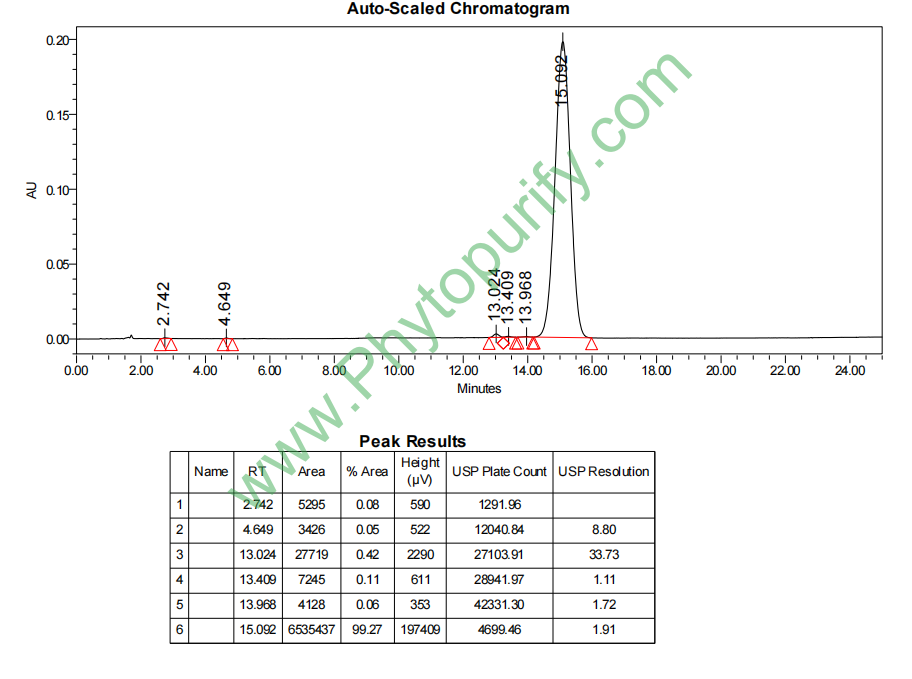
HPLC of Tacrolimus
Storage conditions:Short-term storage at 2~8℃, long-term storage at -20 ~ -80℃
178.3600
3.5490
3.5490
.0486
.9050
2.0294
Low
83.5736
6.9178
No
No
No
No
Yes
Yes
0.0
Yes
No
Yes
Yes
Organ transplantation is an effective treatment for end-stage organ failure, and transplant rejection is the main obstacle affecting the long-term survival of the transplant and patient prognosis. The discovery and application of immunosuppressants are the cornerstone of the development of transplant medicine. After the successful clinical application of cyclosporin A (CsA), researchers have never stopped exploring more efficient and low toxicity novel immunosuppressants. The discovery of Tacrolimus (FK506) marks a new era in immunosuppressive therapy. Tacrolimus is a macrolide compound isolated from soil actinomycetes, and its immunosuppressive efficacy is about 10-100 times that of cyclosporine A. Since its approval in the 1990s for the prevention of rejection reactions after solid organ transplantation such as liver and kidney transplantation, it has become one of the core immunosuppressive agents worldwide and has been widely used in the treatment of autoimmune diseases. This article aims to provide a systematic review of the chemical structure, sources, pharmacological activity, mechanism of action, drug properties, and clinical applications of tacrolimus, in order to provide reference for related research and clinical practice.
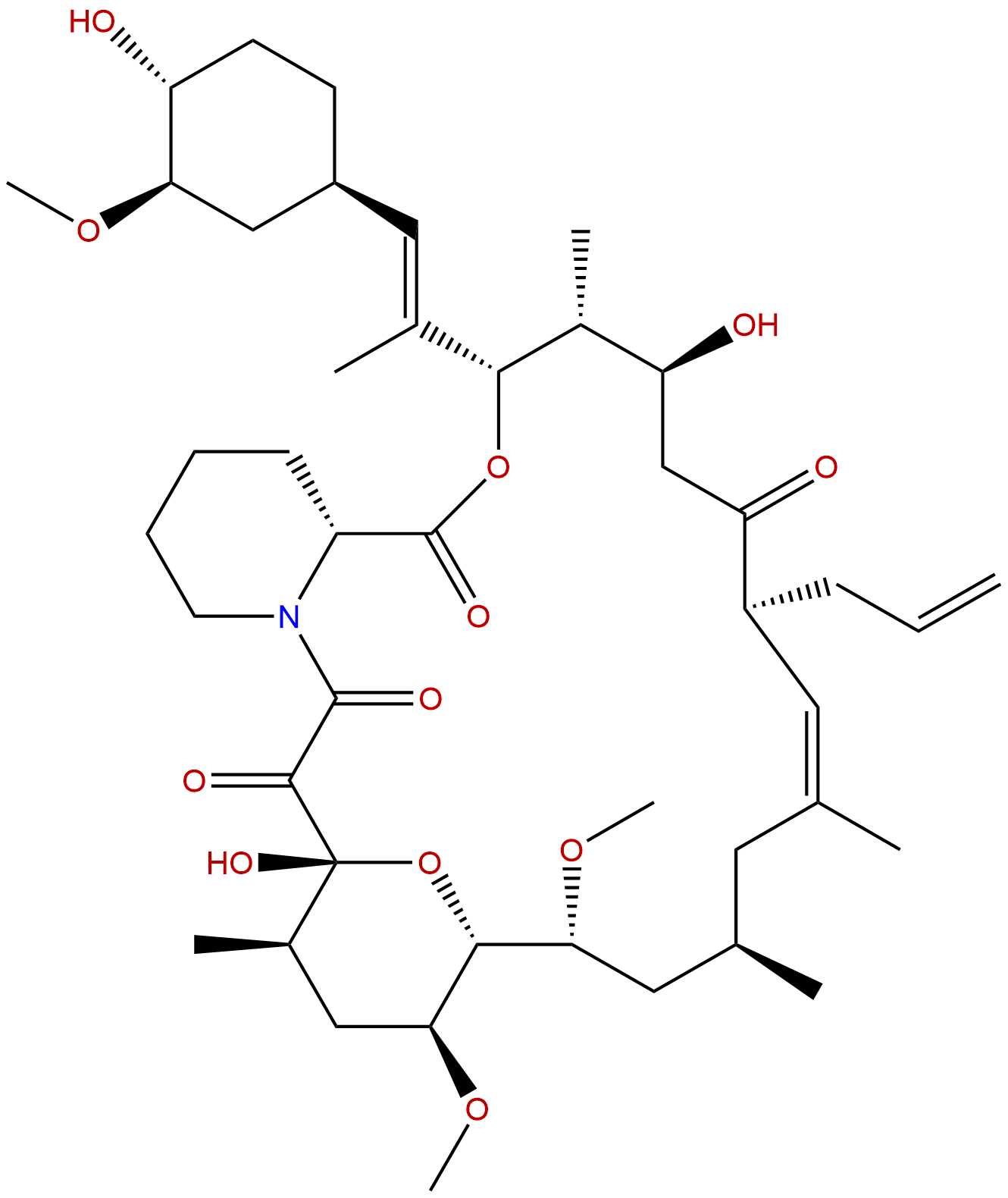
The chemical name of tacrolimus is [3S - [3R * [E (1S *, 3S *, 4S *)], 4S *, 5R *, 8S *, 9E, 12R *, 14R *, 15S *, 16R *, 18S *, 19S *, 26aR *] -5, 6, 8, 11, 12, 13, 14, 15, 16, 17, 18, 19, 24, 25, 26, 26a-hexahydro-5,19-dihydroxy-3- [2- (4-hydroxy-3-methoxycyclohexyl) -1-methylvinyl] -14, 16-dimethoxy-4, 10, 12, 18-tetramethyl-8- (2-propene) Base) -15,19-epoxy-3H-pyrido [2,1-c] [1,4] oxadiazoheterocyclic tricentene-1,7,20,21 (4H, 23H) - tetraone. Its CAS number is 104987-11-3, molecular formula is C44H69NO12, and molecular weight is 804.0310.
Structurally, tacrolimus is a 23 membered macrocyclic lactone, with a complex structure consisting of a nitrogen-containing heterocyclic ring (pyridine ring) fused with the lactone ring at its core. The molecule contains multiple chiral centers and has a complex stereochemical configuration, which is closely related to its specific biological activity. The key functional groups include alpha, beta unsaturated ketone (enone) structures, multiple hydroxyl and methoxy groups, and an allyl side chain.
Its physicochemical properties are as follows: the coefficient of lipid water partition (LogP) is 3.5490, indicating that the compound has good lipophilicity. The topologically polar surface area (TPSA) is as high as 178.3600 Å ², mainly attributed to the presence of multiple hydrogen bond acceptors (such as carbonyl and ether bonds) and donors (hydroxyl groups) in the molecule. The combination of high TPSA and lipophilicity results in extremely low water solubility, only 0.0486 mg/mL. This low water solubility has a significant impact on its formulation development (such as the use of nanocrystals, liposomes, or cyclodextrin inclusion techniques) and in vivo absorption behavior. In addition, its blood-brain barrier permeability is low, which to some extent limits its direct effects on the central nervous system, but also reduces the potential risk of neurotoxicity. In terms of safety, existing data shows that its hERG inhibition is negative, and the Ames test result is 0.0, indicating a low risk of mutagenicity. However, in clinical applications, attention still needs to be paid to its unique nephrotoxicity, neurotoxicity, and metabolic interaction risks.
It should be noted that although many natural products come from plants, tacrolimus is not extracted from plants, but from microorganisms. It was first isolated from soil samples of Mount Tsukuba in Japan in 1984 by researchers from Fujisawa Pharmaceutical Co., Ltd. (now Astellas Pharmaceuticals) as an actinomycete - Streptomyces Tsukuba(Streptomyces tsukubaensis)Found and purified in the fermentation broth. Therefore, its standard name "tacrolimus" and development code "FK506" both originate from this discovery process.
The production of tacrolimus mainly adopts microbial fermentation method, which is a typical industrial microbial pharmaceutical process. The specific process includes:
1. Cultivation and fermentation of bacterial strains Inoculate the spores of Streptomyces Tsukuba into seed culture medium for primary and secondary seed expansion. Then transfer the mature seed liquid to a large fermentation tank for deep aeration fermentation. The fermentation process requires strict temperature control pH、 Dissolved oxygen, stirring rate, and supply of nutrients (carbon source, nitrogen source, inorganic salts, etc.) to maximize the yield of tacrolimus.
2. Extraction and Separation After fermentation, as tacrolimus mainly exists in the mycelium, the mycelium needs to be separated by filtration or centrifugation first. The mycelium is soaked in organic solvents (such as acetone, methanol, ethyl acetate, etc.) or extracted by ultrasonic fragmentation. After concentration of the extraction solution, crude extract is obtained.
3. Purification and refinement The crude extract contains a large amount of impurities and needs to be purified through multi-step chromatographic separation techniques, often using methods such as silica gel column chromatography and reverse phase high performance liquid chromatography (HPLC). By optimizing the elution conditions and gradually improving the purity of the product, high-purity tacrolimus crystals that meet pharmaceutical standards are ultimately obtained.
4. Structural Identification and Quality Control Determine its chemical structure using techniques such as mass spectrometry (MS), nuclear magnetic resonance (NMR), and X-ray single crystal diffraction. The production process must strictly comply with GMP standards, and quality control measures such as HPLC should be used to control the content and related substances of raw materials and formulations.
The core pharmacological activity of tacrolimus is its strong immunosuppressive effect, and its research mainly focuses on the following aspects:
T lymphocyte inhibitory effect Tacrolimus has a strong inhibitory effect on the activation and proliferation of T lymphocytes, which is the basis of its immunosuppressive effect. In vitro mixed lymphocyte reaction (MLR) and in vivo transplantation models, tacrolimus can effectively inhibit T cell proliferation induced by allogeneic antigens, mitogens (such as ConA, PHA), or CD3/CD28 monoclonal antibodies. Its half maximal inhibitory concentration (IC50) is at the nanomolar (nM) level, and its efficacy is significantly stronger than cyclosporine A.
Inhibition of cytokine production Tacrolimus can strongly inhibit activated T cells from producing various key cytokines, especially interleukin-2 (IL-2). In addition, it also has a significant inhibitory effect on the production of interferon - γ (IFN - γ), tumor necrosis factor - α (TNF - α), interleukin-3 (IL-3), granulocyte macrophage colony-stimulating factor (GM-CSF), etc. These cytokines play a central role in immune response processes such as T cell clone expansion, macrophage activation, and inflammatory response, and their inhibition is key to controlling rejection reactions.
The impact on B lymphocytes and antibody production Tacrolimus mainly inhibits T helper cell function, indirectly affecting the activation of B lymphocytes and antibody production. It can inhibit antibody responses to T-cell dependent antigen stimulation, but has a weaker inhibitory effect on T-cell independent antibody responses.
anti-inflammatory effect In addition to direct immunosuppression, tacrolimus also exhibits anti-inflammatory properties. It can inhibit the release of inflammatory mediators such as histamine by mast cells and eosinophils, and may affect the function of other inflammatory cells.
Non immunological activity In recent years, studies have found that tacrolimus has shown potential application value in fields such as the nervous system and skin. For example, topical application of tacrolimus ointment (Putpi) ®) It has been widely used to treat atopic dermatitis, and its mechanism may be related to inhibiting the release of inflammatory factors by T cells and mast cells in the skin. In addition, studies have explored its role in neuroprotection, promoting nerve regeneration, and other aspects, but the mechanism is not yet fully understood.
The mechanism of action of tacrolimus has been thoroughly studied, with its core being the inhibition of a highly specific signaling pathway.
Initial binding: FK506 binding protein (FKBP)After entering the cell (mainly through passive diffusion), tacrolimus first binds to a class of immunoaffins in the cytoplasm - FK506 binding protein (mainly FKBP12). FKBP12 has peptidyl prolyl cis trans isomerase (PPIase) activity, but when bound to tacrolimus, it inhibits this enzyme activity. However, this is not the main mechanism of its immune suppression. The key is the formation of the tacrolimus FKBP12 complex, which creates a new, high affinity drug receptor protein interface.
Core target: Calcinurin (CaN) inhibition The formed tacrolimus FKBP12 complex can specifically and highly affinity bind to the catalytic subunit of calcineurin (CALN, i.e. CnA). Calcium regulated neurophosphatase is a calcium ion/calmodulin (Ca ² ⁺/CaM) - dependent serine/threonine protein phosphatase, which is a critical node downstream of the T cell receptor (TCR) signaling pathway. When TCR is activated, the intracellular calcium ion concentration increases, and Ca ² ⁺/CaM binds to calcineurin and activates its phosphatase activity.
Signal transduction blockade: NFAT dephosphorylation and nuclear translocation inhibition The main substrate of activated calcineurin is the activated T cell nuclear factor (NFAT) family proteins, particularly NFATC1 (NFATc1/NFAT2). In the resting state, NFAT protein is highly phosphorylated and retained in the cytoplasm. After activation of calcineurin, it can cause specific dephosphorylation of NFAT protein, exposing nuclear localization sequences (NLS) and promoting rapid translocation of NFAT into the nucleus.
Gene transcription inhibition: downregulation of gene expression such as IL-2 NFAT entering the nucleus binds with other transcription factors (such as AP-1) to form a transcription complex, which binds to the promoter region of the target gene and initiates gene transcription. The most important target gene among them is IL-2 Genes. IL-2 is a T cell autocrine growth factor that is crucial for clonal expansion of T cells. The tacrolimus FKBP12 complex strongly inhibits the transcription and synthesis of IL-2 by inhibiting the activity of calcineurin, blocking the dephosphorylation and nuclear translocation of NFAT. In addition, other cytokines regulated by NFAT (such as IL-3, IL-4, IFN - γ, GM-CSF, etc.) and cell surface molecules (such as...)cd40l)The expression is also inhibited.
Potential impact on other targets As mentioned in the literature IFNGR1 (interferon gamma receptor 1)and CD80(B7-1)It is not a direct molecular target of tacrolimus. IFNGR1 is a receptor for IFN - γ signaling, and tacrolimus indirectly affects its pathway by inhibiting the production of IFN - γ. CD80 is a co stimulatory molecule on antigen-presenting cells that binds to CD28 on T cells to provide a second signal for T cell activation. Tacrolimus may downregulate the expression of CD80 on certain cells by inhibiting pathways such as NFAT, but more importantly, by inhibiting T cell function and blocking its response to CD80/CD28 co stimulatory signals.
In summary, tacrolimus precisely blocks the key link of TCR signaling leading to IL-2 transcription through the formation of the "drug-FKBP12 calcineurin" ternary complex, thereby inhibiting the early activation of T lymphocytes, which is the molecular basis of its strong immunosuppressive activity.
The druggability of tacrolimus is distinct, with complex pharmacokinetic (PK) behavior, large individual differences, narrow treatment window, and the need for therapeutic drug monitoring (TDM).
Drugability assessment:
* Advantage Very high activity (nanomolar level), clear mechanism of action, relatively high target specificity (mainly targeting T cells).
* challenge:
* Physicochemical properties Low water solubility and high lipophilicity affect its oral absorption and formulation development.
* Narrow treatment window The effective concentration is close to the toxic concentration, and a low blood drug concentration can easily lead to rejection reactions, while a high concentration increases the risk of toxicity (such as nephrotoxicity, neurotoxicity, and abnormal glucose metabolism).
* There are significant individual differences.Absorption, distribution, metabolism, and excretion are influenced by various factors, including genetic polymorphism, concomitant medication, liver function, gastrointestinal status, etc.
* Multiple drug interactions Mainly metabolized by the liver cytochrome P450 3A4/3A5 (CYP3A4/3A5) enzyme system and excreted by P-glycoprotein (P-gp), significant interactions occur when combined with drugs that affect CYP3A or P-gp, such as azole antifungal drugs, macrolide antibiotics, calcium channel blockers, anticonvulsants, etc.
Pharmacokinetic characteristics:
* absorb Incomplete oral absorption and high variability. The average oral bioavailability of regular formulations is about 20-25%, and they are significantly affected by food (especially high-fat diets), which can reduce absorption. The absorption site is mainly in the small intestine.
* distribution Widely distributed in the body, manifested by a large cloth volume (about 1300 L). The binding rate with red blood cells and plasma proteins (mainly albumin and α 1-acid glycoprotein) is high (>98%), and the whole blood concentration is much higher than the plasma concentration. Therefore, clinical monitoring usually uses the whole blood trough concentration (C0).
* Metabolism Almost entirely metabolized by CYP3A4/3A5 enzymes in the liver, producing various demethylation and hydroxylation metabolites, among which the main metabolite is 13 demethylated tacrolimus, which has weak immunosuppressive activity.
* excretion Metabolites are mainly excreted through bile and feces, while the proportion of prototype drugs excreted through urine is extremely low (<1%). Liver dysfunction can significantly affect its clearance, and the dosage needs to be adjusted.
* Therapeutic drug monitoring (TDM)Given its PK characteristics, routine monitoring of whole blood trough concentration is a necessary means to guide individualized drug administration, optimize efficacy, and reduce toxic side effects. The target trough concentration range varies depending on the type of transplanted organ, postoperative time, combination therapy regimen, and individual patient conditions.
Since its launch, tacrolimus has become a first-line basic immunosuppressant for preventing rejection in solid organ transplantation (liver, kidney, heart, lung, pancreas, etc.), often used in combination with mycophenolate mofetil, glucocorticoids, etc. In addition, its application has been expanded to the following fields:
* Graft-versus-host disease (GVHD)Used for the prevention and treatment of GVHD after allogeneic hematopoietic stem cell transplantation.
* Autoimmune diseases Local topical treatment for moderate to severe atopic dermatitis; Systematically used for the treatment of refractory rheumatoid arthritis, systemic lupus erythematosus, autoimmune hepatitis, uveitis, etc., but the risk of infection and long-term toxicity needs to be balanced.
* Other There are also applied studies in the treatment of diseases such as nephrotic syndrome, ulcerative colitis, and vitiligo.
Future prospects and research directions:
1. Development of new formulations To improve its water solubility and bioavailability, and reduce PK variation, researchers are developing sustained-release formulations, nano formulations, transdermal drug delivery systems, etc. Sustained release formulations, such as tacrolimus sustained-release capsules, have been launched and can provide a smoother blood drug concentration, which may improve efficacy and safety.
2. Individualized precision medication By combining pharmacogenomics (such as CYP3A5 and ABCB1 gene polymorphisms) with population pharmacokinetic models, a more accurate initial dose prediction model can be established to achieve true personalized drug administration.
3. Combination therapy optimization Explore the optimal combination regimen of immunosuppressive agents with different mechanisms of action, such as mammalian rapamycin target protein inhibitors, co stimulatory signal blockers, etc., in order to enhance efficacy while reducing individual doses and toxicity.
4. Localized and Targeted Therapy Expansion Further develop its local or targeted drug delivery system in the fields of skin diseases, ophthalmic diseases, inflammatory bowel diseases, etc., to improve local efficacy, reduce systemic exposure and side effects.
5. Exploration of new indications Based on its regulation of immunity and potential non immune effects, explore its value in the adjuvant application of immunotherapy for fibrotic diseases, neurodegenerative diseases, and certain tumors, but carefully evaluate the risk benefit ratio.
6. Biosimilar drugs and structural modifications With the expiration of the original drug patent, the research and development of biosimilars (more accurately referred to as chemical generic drugs) with high requirements for their production process and quality control is an important direction. Meanwhile, modifying its chemical structure with the aim of discovering derivatives with higher activity, lower toxicity, or better PK characteristics is also one of the pathways for new drug development.
Tacrolimus, as a classic macrolide immunosuppressant discovered from microbial secondary metabolites, has profoundly changed the treatment landscape of organ transplantation and autoimmune diseases with its excellent efficacy, relatively clear target of action, and wide clinical applications. It forms a complex with tacrolimus binding protein to precisely inhibit calcineurin, thereby blocking the core signaling pathway of T cell activation. This mechanism has become an example in immunopharmacology textbooks. However, its inherent pharmacokinetic complexity, narrow treatment window, and long-term toxic side effects have also prompted researchers to continuously conduct in-depth research and innovation in formulation technology, personalized medication, combination therapy, and exploration of new indications. In the future, with the development of precision medicine and new drug delivery systems, tacrolimus and its derivatives are expected to continue to play a key role in safer and more effective immune regulation therapy, bringing good news to more patients.
