


Product name: Tracheloside
Synonym name:
Catalogue No.: BP1401
Cas No.: 33464-71-0
Formula: C27H34O12
Mol Weight: 550.557
Botanical Source: Trachelospermum jasminoides(Lindl.)Lem.
Physical Description:
Type of Compound: Lignans
Purity: 95%~99%
Analysis Method: HPLC-DAD or/and HPLC-ELSD
Identification Method: Mass, NMR
Packing: Brown vial or HDPE plastic bottle
Storage: Store in a well closed container, protected from air and light. Put into refrigerate or freeze for long term storage.
The product could be supplied from milligrams to grams
Inquire for bulk scale.
Description:
Tracheloside significantly decreases the activity of alkaline phosphatase (AP), an estrogen-inducible marker enzyme, with an IC(50) value of 0.31 microg/ml, a level of inhibition comparable to that of tamoxifen (IC(50) = 0.43 microg/ml).
References:
Biosci Biotechnol Biochem. 2006 Nov;70(11):2783-5.
An anti-estrogenic lignan glycoside, tracheloside, from seeds of Carthamus tinctorius.
The lignan glycoside, Tracheloside, was isolated from seeds of Carthamus tinctorius (Compositae) as an anti-estrogenic principle against cultured Ishikawa cells by employing a bioassay-linked HPLC-ELSD method.
METHODS AND RESULTS:
Tracheloside significantly decreased the activity of alkaline phosphatase (AP), an estrogen-inducible marker enzyme, with an IC(50) value of 0.31 microg/ml, a level of inhibition comparable to that of tamoxifen (IC(50) = 0.43 microg/ml).
Cancer Lett. 2003 Oct 28;200(2):133-9.
Lack of significant inhibitory effects of a plant lignan tracheloside on 2-amino-1-methyl-6-phenylimidazo[4,5-b]pyridine (PhIP)-induced mammary carcinogenesis in female Sprague-Dawley rats.
Tracheloside, one of the plant lignans which can be extracted from the debris after safflower oil is produced from the seeds of Carthamus tinctorious, is an analogue of another plant lignan, arctiin, the side-chain C-2 of the five-membered ring being changed from a hydrogen to a hydroxyl group. We have already demonstrated that arctiin has chemopreventive effect on mammary carcinogenesis. Therefore, chemopreventive effects of Tracheloside on the initiation or post-initiation period of 2-amino-1-methyl-6-phenylimidazo[4,5-b]pyridine (PhIP)-induced mammary carcinogenesis in female rats were examined.
METHODS AND RESULTS:
For initiation, female Sprague-Dawley (SD) rats at the 6 weeks of age were given intragastric administrations of 100 mg/kg body weight of PhIP once a week for 8 weeks. The animals were treated with 0.2 or 0.02% Tracheloside during or after this carcinogen exposure. Control rats were fed basal diet with PhIP initiation or 0.2% Tracheloside or basal diet alone without initiation throughout the experimental period. All surviving animals were necropsied at the week 52 of administration. There were no clear treatment-related changes with statistical significance in all parameters for mammary carcinomas measured in this experiment.
CONCLUSIONS:
These results indicate that Tracheloside may not exert significant effects on PhIP-induced mammary carcinogenesis at least under the present experiment condition.
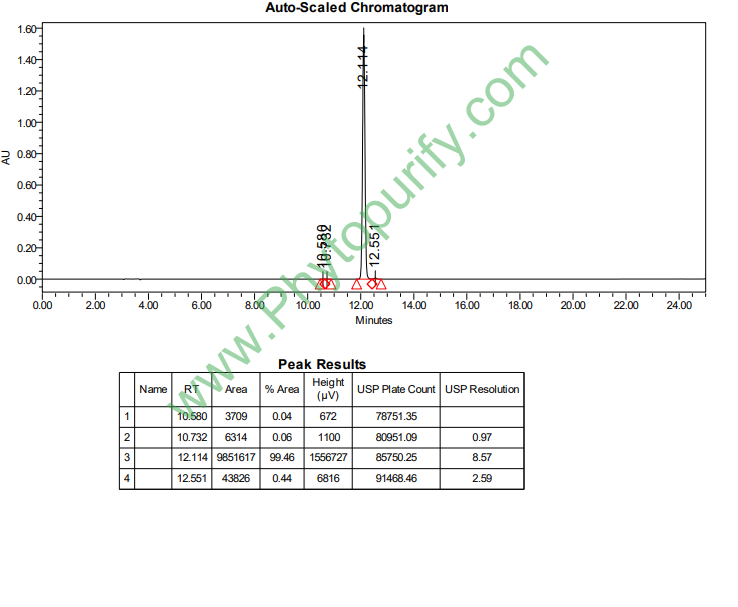
HPLC of Tracheloside
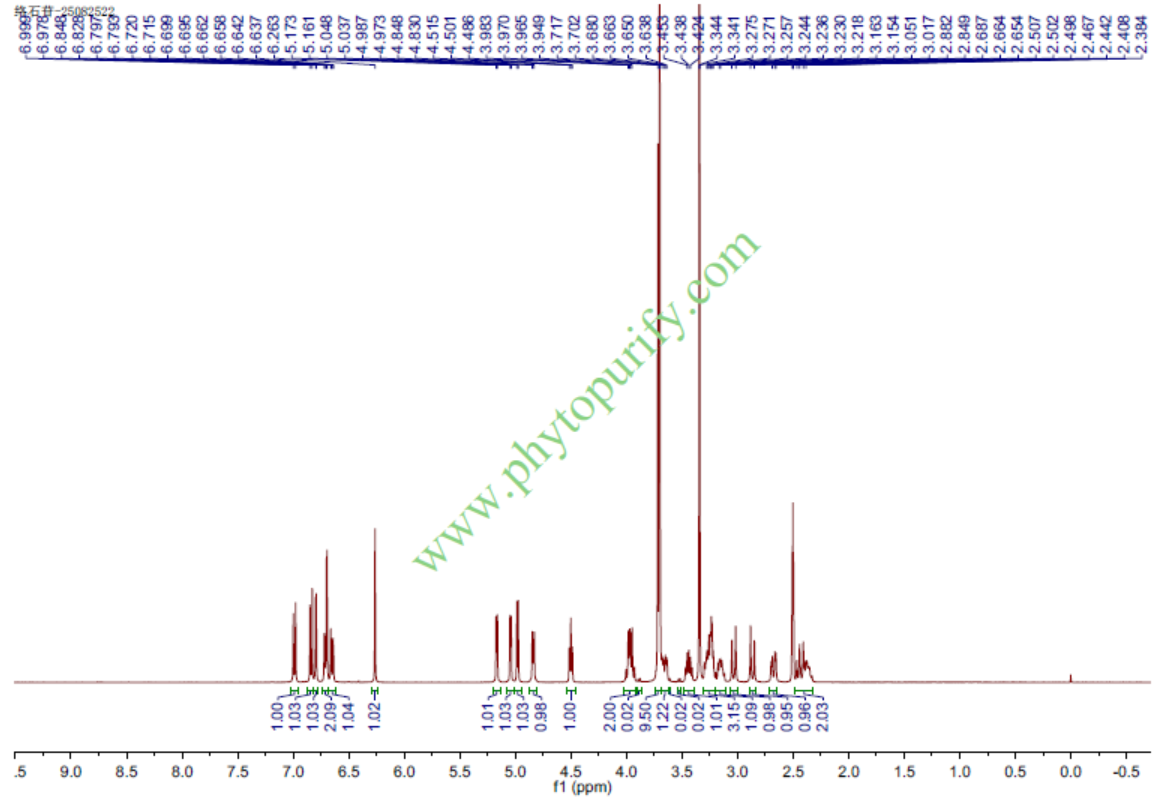
HNMR of Tracheloside
Storage conditions:Short-term storage at 2~8℃, long-term storage at -20 ~ -80℃
173.6000
.6260
.6260
1.7200
.6488
.1627
Low
78.0855
4.2743
Yes
No
No
No
No
No
0.0
Yes
Yes
No
Yes
Lignin compounds, as a type of natural product widely present in the plant kingdom, have always been a hot topic in natural medicinal chemistry and pharmacology research due to their structural diversity and extensive biological activity. Among them, Tracheloside (CAS number: 33464-71-0), as a lignin glycoside with unique pharmacological activity, has gradually attracted the attention of researchers in recent years. The initial research revealed its anti estrogenic activity, suggesting its potential application value in hormone related diseases. However, with the deepening of research, its pharmacological activity spectrum continues to expand, especially in promoting keratinocyte proliferation, accelerating wound healing, and exhibiting significant cardiovascular protective effects, showing multi-target and multi pathway characteristics. Luoshi glycoside promotes tissue repair by regulating key signaling pathways such as ERK1/2, and its multi-target mode of action involves multiple key molecules closely related to cardiovascular homeostasis, such as SELP, PPARG, ACE, AKT1, NOS3, providing a solid scientific basis for its application in the prevention and treatment of cardiovascular diseases. This article aims to provide a systematic review of the chemical structure, plant sources, pharmacological activity, mechanism of action, pharmacological evaluation, and clinical application prospects of luo shi glycoside, in order to provide comprehensive references for the in-depth development and transformation research of this natural product.
Luoshi glycoside is a type of lignan glycoside compound. Its molecular formula is C27H34O12 and its molecular weight is 550.5570. Its basic structure consists of two phenylpropanoid units (C6-C3) connected by β - β 'to form a typical lignin skeleton, with one unit having a glycosidic group attached, which is the source of its "glycosidic" properties and significantly affects its water solubility and biological activity.
From the analysis of physical and chemical properties, the lipid water partition coefficient (LogP) of Luo Shi glycoside is 0.6260, indicating that it has a certain degree of lipophilicity, but overall tends to be hydrophilic. Its topological polar surface area (TPSA) is as high as 173.6000 Å ², mainly attributed to the numerous hydroxyl groups and oxygen atoms in the glycosidic structure of the molecule, which are potential hydrogen bond donors and acceptors. The higher TPSA value is consistent with the measured water solubility data (1.7200 mg/mL), indicating that quercetin has moderate solubility in aqueous media, which is beneficial for its absorption and distribution in organisms. Preliminary predictions of drug efficacy indicate that its ability to cross the blood-brain barrier is relatively low, suggesting that the risk of central nervous system related side effects may be relatively low. In addition, key toxicity warning indicators indicate that it has no inhibitory effect on hERG potassium channels (hERG inhibition: No), and the Ames test result is 0.0, preliminarily indicating that it is non mutagenic and has a relatively good safety basis.
Luoshi glycosides mainly come from plants in the Trachelossperm genus of the Apocynaceae family, which is also the origin of their name. Among them, the source plants that have been extensively studied include Trachelosspermum jasminoides (Lindl.) Lem. Its dried vine stems with leaves are often used in traditional medicine to dispel wind, unblock meridians, cool blood, and reduce swelling. In addition, this component has also been found in certain plants belonging to the same or other families.
Organic solvent extraction is commonly used to extract glycosides from plant materials. The common process includes heating reflux extraction or ultrasound assisted extraction of dried and crushed plant materials (such as Lonicera japonica) using polar solvents such as methanol or ethanol. The extract is concentrated under reduced pressure to obtain a crude extract. Subsequently, utilizing the polarity and solubility characteristics of the glycosides, a solvent (such as ethyl acetate, n-butanol, and water) was used for fractional extraction for preliminary enrichment. Further purification depends on column chromatography technology, which often uses silica gel, macroporous adsorption resin (such as D101), reverse silica gel (such as ODS) or dextran gel (such as Sephadex LH-20) and other fillers to perform gradient elution with chloroform methanol or methanol water solvent systems in different proportions. High performance liquid chromatography (HPLC), especially preparative HPLC, is the final key step in obtaining high-purity roscuronide monomers. Modern extraction techniques such as supercritical fluid extraction and microwave-assisted extraction also have potential applications, aimed at improving extraction efficiency and protecting thermosensitive components.
Luoshi glycoside exhibits diverse pharmacological activities, and its research has expanded from the initial single activity to multiple therapeutic fields.
Anti estrogen and skin repair activity Luoshi glycoside was early identified as an anti estrogenic substance. More importantly, research has found that it can effectively promote the proliferation of keratinocytes by stimulating the phosphorylation of extracellular signal regulated kinase 1/2 (ERK1/2). Keratinocytes are the main cells in the epidermal layer of the skin, and their proliferation and migration are the core processes of skin wound healing. Therefore, roscuronide has been proven to be a good active molecule that promotes wound healing, providing candidate compounds for the development of novel skin repair drugs or functional dressings.
Cardiovascular protective activity This is one of the most prominent fields in the pharmacological research of roscurogenin. Numerous in vitro and in vivo studies have shown that roscuronide has multiple protective effects on the cardiovascular system.
Other potential activities Based on its multi-target properties, there have been research reports on the anti-inflammatory, antioxidant, and neuroprotective effects of roscuronide, but its specific effects and status still require more evidence to support.
The multiple pharmacological effects of Losartan, especially its cardiovascular protective effect, rely on a complex multi-target network rather than a single pathway.
Anti inflammatory and anti adhesive mechanisms In the vascular endothelial inflammation model, one of the core functions of resveratrol is to inhibit the activation of inflammatory signaling pathways such as nuclear factor kappa B (NF - κ B), thereby downregulating the transcription and expression of downstream effector molecules ICAM1 and VCAM1. At the same time, it also inhibits the expression of SELP on the surface of platelets and endothelial cells, blocks the rolling, adhesion and migration of leukocytes to the vascular intima from multiple links, and fundamentally fights atherosclerosis.
Endothelial protection and vasodilation mechanism Rhodiola rosea phosphorylates and activates the PI3K/AKT1 pathway, which in turn phosphorylates and activates NOS3, increasing the production of biologically active NO. NO is the most important endothelial derived relaxing factor in the body, and its elevated levels directly improve endothelial function, combat hypertension and arteriosclerosis.
Cell survival and anti apoptotic mechanism In models of myocardial or endothelial cell injury, the AKT1 signaling pathway activated by resveratrol plays a central role in promoting survival. AKT1 phosphorylates and inhibits various pro apoptotic proteins such as Bad and Caspase-9, while regulating pathways such as mTOR to promote the synthesis of cell survival proteins, effectively resisting cell apoptosis induced by hypoxia, oxidative stress, and other factors.
Metabolic and Hormonal Regulation Mechanisms As a potential regulator of PPARG, resveratrol may affect adipocyte differentiation, glucose uptake, and insulin sensitivity, providing clues for its application in metabolic syndrome related cardiovascular diseases. Its anti estrogenic activity may be achieved by competitively binding to estrogen receptors and regulating the expression of related genes.
Mechanism of wound healing In terms of skin repair, rosmarin rapidly activates the ERK1/2 MAPK signaling pathway, which transmits proliferation signals from cell membrane receptors to the nucleus, promotes the expression of cyclin in keratinocytes, drives cells from G1 phase to S phase, and accelerates cell proliferation and re epithelialization process.
In summary, the mechanism map of action of Luo Shi Glycosides covers multiple levels, including cell surface adhesion molecules (ICAM1, VCAM1, SELP), intracellular key kinases (AKT1, ERK1/2), metabolic nuclear receptors (PPARG), and key enzymes (ACE, NOS3), forming a synergistic network.
Based on the given parameters and existing research, a preliminary evaluation of the pharmacological properties of roscuronide is conducted
At present, there are still few reports on the pharmacokinetic studies of the Luo Shi glycoside system, such as absolute bioavailability, half-life, tissue distribution, protein binding rate, etc. This is a key data gap that must be filled in future development.
The multi-target pharmacological properties of Luo Shi glycoside have depicted broad prospects for its application in multiple clinical fields, but also face challenges.
Application Prospects:
Challenges and Prospects:
Luoshi glycoside, as a natural lignan glycoside derived from traditional medicinal plants, has shown significant development value in the fields of cardiovascular protection and skin wound repair due to its unique chemical structure and multi-target, multi pathway pharmacological mechanisms. The research process from anti estrogenic activity to promoting wound healing, and then to systemic cardiovascular protection, reflects the scientific development path of natural products from single activity discovery to complex mechanism interpretation. Although there are still many challenges in system pharmacokinetics, in-depth mechanism of action analysis, and clinical translation, existing research has laid a solid theoretical foundation for it. In the future, through interdisciplinary collaboration and modern drug research and development technology, Luo Shi Glycoside is expected to be successfully transformed from a potential natural active molecule into innovative drugs or functional products for the prevention and treatment of cardiovascular diseases and the promotion of tissue repair, contributing its unique value to human health.
