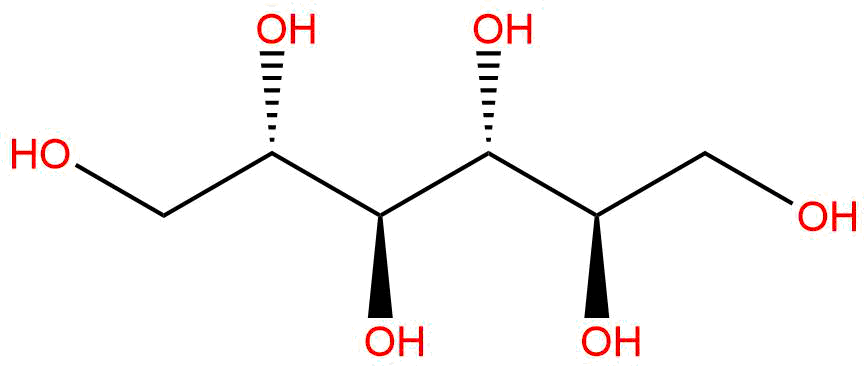


Product name: Allitol
Synonym name:
Catalogue No.: SBP00385
Cas No.: 488-44-8
Formula: C6H14O6
Mol Weight: 182.172
Botanical Source:
Physical Description: Cryst.
Type of Compound: Miscellaneous
Purity: 95%~99%
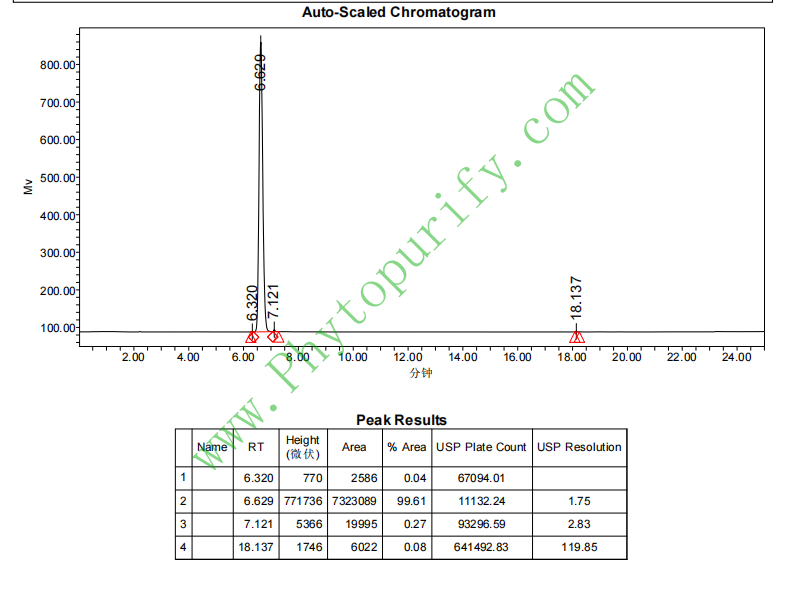
Analysis Method: HPLC-DAD or/and HPLC-ELSD
Identification Method: Mass, NMR
Packing: Brown vial or HDPE plastic bottle
The product could be supplied from milligrams to grams. Inquire for bulk scale.
We provide solution to improve the water-solubility of compounds, thereby facilitating the variety of activity tests and clinic uses.
For Reference Standard and R&D, Not for Human Use Directly.
HPLC of Allitol
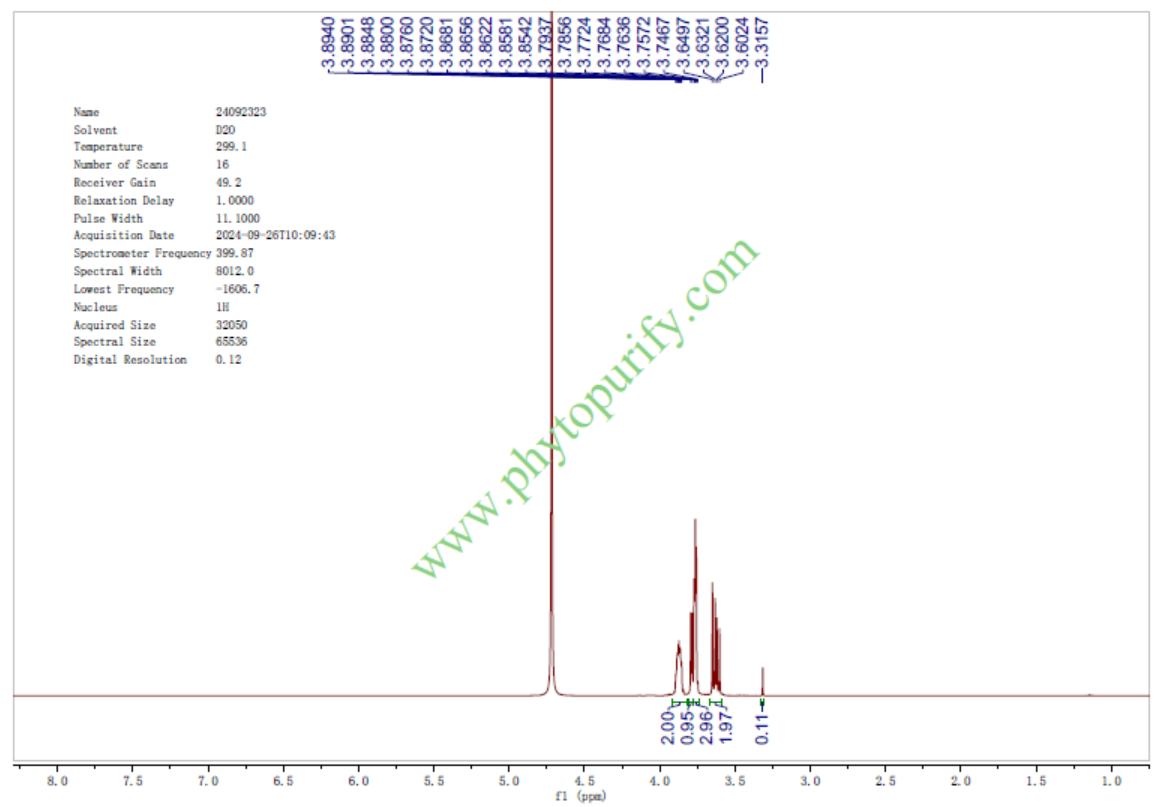
HNMR of Allitol
Storage conditions:Short-term storage at 2~8℃, long-term storage at -20 ~ -80℃
121.3800
-3.0000
-3.0000
Low
No
No
No
No
No
No
No
Natural products, as an important source of drug discovery, have long contributed numerous lead compounds and clinical drugs to human health. In the polyol family, sugar alcohol compounds have attracted much attention due to their unique sweet taste characteristics, low calorie metabolic pathways, and potential biological activities. Among them, Allitol, as a rare natural polyol, has gradually entered the field of researchers in recent years. The chemical name of sugar garlic alcohol is D-alool, with a CAS number of 488-44-8 and a molecular formula of C ₆ H ₁₄ O ₆. It is a six carbon sugar alcohol. Unlike common sugar alcohols such as sorbitol and xylitol, the distribution of saccharin in nature is extremely limited, mainly existing in certain specific plant and microbial metabolites. Its unique chemical structure and biological functions make it a research object worthy of further exploration in the field of natural product pharmacology.
The discovery history of sweet garlic alcohol can be traced back to the mid-20th century, but its research progress has been relatively slow for a long time. In recent years, with the rapid development of gut microbiome, metabolomics, and glycobiology techniques, the biological functions of saccharin have been re understood and evaluated. Studies have shown that glycolic alcohol can not only be used as a low calorie sweetener in the food industry, but also show significant anti diabetes, anti-tumor and antiviral activities, especially in anti AIDS virus (HIV) infection. More notably, saccharin can regulate the structure of gut microbiota, particularly by increasing the abundance of Bacillota, reducing the number of Bacteroidetes, Actinomycota, and Pseudomonas, thereby affecting host metabolic health. Based on PICRUSt2 functional prediction analysis, saccharin can significantly increase the levels of enzymes related to butyric acid metabolism, suggesting that it may exert systemic pharmacological effects through short chain fatty acid metabolism pathways.
This article aims to systematically review the chemical structure characteristics, natural sources and extraction methods, pharmacological activity spectrum, mechanism of action and molecular targets, pharmacological evaluation, and clinical application prospects of saccharin, in order to provide comprehensive academic references for the in-depth research and development of this rare natural product.
The chemical structure of Allitol belongs to hexitol, with a molecular formula of C ₆ H ₁₄ O ₆ and a molecular weight of 182.1700 g/mol. From the perspective of stereochemistry, saccharin is a reduction product of D-allose, and its carbon skeleton consists of six carbon atoms, each of which is connected to a hydroxyl (- OH) group. Compared with the common D-sorbitol, there are differences in the hydroxyl configuration of saccharin at the C3 and C4 positions. This subtle stereochemical difference endows saccharin with unique physicochemical properties and biological activity.
The IUPAC name for saccharin is (2R, 3S, 4R, 5R) - hexane-1,2,3,4,5,6-hexanol, and its structural formula can be expressed as HOCH ₂ - (CHOH) ₄ - CH ₂ OH. It is worth noting that saccharin molecules do not have free aldehyde or ketone groups, and therefore do not have reducibility, which makes them chemically stable in food processing and in vivo. The stereoconfiguration of saccharin determines its interaction mode with biomolecules such as proteins, enzymes, and receptors, which in turn affects its pharmacological effects.
The physicochemical properties of saccharin provide important basis for the evaluation of its medicinal properties. Firstly, its oil-water partition coefficient (LogP) is -3.0000, indicating that the compound has strong hydrophilicity and much higher solubility in the aqueous phase than in the lipid phase. This characteristic determines the distribution behavior of saccharin in the body - mainly distributed in aqueous environments such as blood and extracellular fluid, making it difficult to penetrate the lipid bilayer of biological membranes. The topological polar surface area (TPSA) is 121.3800 Å ², which is higher than the recommended upper limit of 140 Å ² for oral medications, indicating that the oral absorption of saccharin may be limited to some extent, but still within an acceptable range.
The sugar garlic alcohol molecule contains 6 hydrogen bond acceptors (all hydroxyl oxygen atoms), but lacks a clear count of hydrogen bond donor groups. The high-density hydroxyl groups enable it to form a wide range of hydrogen bonding networks with water molecules, which is beneficial for its dissolution in aqueous solutions and may also affect its binding mode with target proteins. From the perspective of chemical stability, saccharin alcohol exhibits good stability under acidic, alkaline, and neutral conditions, and is not easily hydrolyzed or oxidized, which provides favorable conditions for its formulation development and long-term storage.
The structural identification of sweet garlic alcohol usually relies on nuclear magnetic resonance spectroscopy (NMR) and mass spectrometry (MS) techniques. In the ¹ H NMR spectrum, the proton signals of the methylene and methylene groups of saccharin alcohol appear in the range of δ 3.5-4.0 ppm, showing complex multiple peaks, reflecting the presence of multiple chiral centers within the molecule. In the ¹ ³ C NMR spectrum, all six carbon atoms appear in the δ 60-75 ppm region, consistent with typical characteristics of sugar alcohol compounds. In infrared spectroscopy (IR), broad and strong hydroxyl stretching vibration peaks (approximately 3200-3400 cm ⁻¹) and C-O stretching vibration peaks (approximately 1000-1100 cm ⁻¹) are typical features of saccharin. In the mass spectrometry analysis, the molecular ion peak [M+H] Γ of glycolic alcohol is m/z 183.1. Under the electric spray ionization (ESI) mode, obvious sodium adding peak [M+Na] Γ (m/z 205.1) and dehydrated fragment ions can be observed.
Sugar garlic alcohol has extremely limited distribution in nature and is a rare natural product. The currently reported sources of saccharin mainly include the following categories:
Plant-based Sugar garlic alcohol was first isolated from garlic (Allium sativum), which is also the origin of its Chinese name "Sugar garlic alcohol". In addition, trace amounts are also present in the fruits of certain Rosaceae plants, such as apples and pears. In recent years, studies have found that saccharin is relatively abundant in algae, especially in Rhodophyta and Phaeophyta, providing new ideas for the large-scale acquisition of saccharin.
Microbial source Some bacteria and fungi have the ability to synthesize saccharin. For example, certain strains of Bacillus spp. can produce saccharin under specific culture conditions. In addition, using recombinant Escherichia coli to express sugar alcohol dehydrogenase derived from bacteria can also achieve the biosynthesis of sugar garlic alcohol.
chemical synthesis Sugar garlic alcohol can be prepared by catalytic hydrogenation of D-allose, or by isomerization reduction cascade reaction of D-glucose or D-fructose. In recent years, with the promotion of green chemistry concepts, research on enzymatic synthesis of saccharin has received increasing attention.
The extraction process of sweet garlic alcohol varies depending on the source of raw materials. Taking plant raw materials as an example, the typical extraction process includes the following steps:
Raw material pretreatment Fresh or dry plant materials are crushed and then extracted using hot water or ethanol water mixed solvents. Due to its extremely high water solubility, hot water extraction (60-80 ° C) can usually achieve high extraction efficiency.
Decolorization and impurity removal After decolorization treatment with activated carbon, the extraction solution is used to remove proteins, pigments, and ion impurities through ion exchange resins such as strong acidic cation exchange resins and weak alkaline anion exchange resins.
Concentration and Crystallization After decolorization, the clear liquid is concentrated under reduced pressure to an appropriate concentration, and then crystallized by adding organic solvents such as ethanol or acetone. The crystallization of saccharin alcohol usually requires slow and low-temperature (4 ° C) conditions to obtain high-purity crystals.
purification The crude crystalline product can be further purified by recrystallization or preparative high-performance liquid chromatography (HPLC). The commonly used chromatographic columns are amino bonded silica gel columns or sugar analysis specific columns, and the mobile phase is acetonitrile water system.
For saccharin derived from microbial fermentation, the extraction process usually includes steps such as centrifugation or filtration of the fermentation broth to remove bacterial cells, decolorization of the supernatant by activated carbon, ion exchange desalination, and concentration crystallization. It is worth noting that microbial fermentation method has the advantages of short production cycle and relatively low cost, and is an important direction for the future large-scale production of sweet garlic alcohol.
The quality control of sweet garlic alcohol mainly relies on chromatographic and spectroscopic techniques. High performance liquid chromatography evaporative light scattering detection (HPLC-ELSD) or high performance liquid chromatography differential refractive index detection (HPLC-RID) are commonly used methods for the quantification of saccharin. In addition, gas chromatography-mass spectrometry (GC-MS) also has important applications in the analysis of derivatives of saccharin, such as trimethylsilylation. In recent years, nuclear magnetic resonance spectroscopy (NMR) technology, especially quantitative ¹ H NMR (qNMR), has shown promising application prospects in the quality control of saccharin due to its advantage of achieving accurate quantification without the need for standard samples.
The anti - diabetes activity of lycolic alcohol is one of its most remarkable pharmacological effects. The study of long-term fed rat model with lycoryl shows that the compound can significantly improve the metabolic disorder related to diabetes. Specifically, the fasting blood glucose levels of rats treated with saccharin were significantly reduced, insulin sensitivity was improved, and impaired glucose tolerance was partially reversed. Further analysis showed that the anti diabetes effect of glycolic alcohol was closely related to its regulation of intestinal flora structure.
In the model of diabetes rats, garlicol significantly increased the relative abundance of Bacillota, while reducing the number of Bacteroidetes, Actinomycetota and Pseudomonas. There is a clear correlation between the changes in microbial community structure and host metabolic health. The increase in abundance of Bacillus is usually associated with an enhanced ability to produce short chain fatty acids (SCFAs), while the decrease in Bacteroidetes and Actinobacteria may reduce the production of endotoxins (LPS) and systemic low-grade inflammatory responses.
The regulatory effect of saccharin on gut microbiota is not only reflected in the composition changes at the phylum level, but also at the functional gene level. based on PICRUSt2(Phylogenetic Investigation of Communities by Reconstruction of Unobserved States) Functional prediction analysis showed that treatment with saccharin significantly increased the levels of enzymes related to butyric acid metabolism. Butyric acid is one of the most important short chain fatty acids produced by the gut microbiota, with multiple health benefits including serving as the primary energy source for colon epithelial cells, maintaining intestinal barrier integrity, regulating immune responses, and inhibiting inflammatory responses.
The mechanism by which saccharin promotes butyric acid metabolism may be related to its characteristics as a prebiotic. As a sugar alcohol that is difficult to be hydrolyzed by host digestive enzymes, saccharin can reach the colon and be fermented and utilized by specific gut microbiota. Some butyrate producing bacteria, such as Faecalibacterium prausnitzii, Roseburia spp., and Eubacterium rectale, may preferentially utilize saccharin as a carbon source, thereby gaining an advantage in competitive growth and increasing butyrate production. Butyric acid exerts systemic metabolic regulation by activating G protein coupled receptors (such as GPR41 and GPR43) and inhibiting histone deacetylase (HDAC) activity.
Sugar garlic alcohol has also shown potential application value in the field of anti-tumor. Studies have shown that lycoryl and its derivatives can inhibit the proliferation of a variety of tumor cells, including breast cancer, colon cancer and liver cancer cell lines. Its anti-tumor mechanism may involve multiple aspects: firstly, saccharin interferes with the sugar metabolism pathway of tumor cells, especially by inhibiting the activity of key glycolytic enzymes such as hexokinase and phosphofructokinase, thereby blocking the energy supply of tumor cells; Secondly, saccharin can induce apoptosis in tumor cells by activating the caspase cascade and upregulating the expression of pro apoptotic proteins (such as Bax), while downregulating the levels of anti apoptotic proteins (such as Bcl-2); In addition, saccharin also has antioxidant activity, which can clear reactive oxygen species (ROS) and alleviate oxidative stress damage to normal cells.
It should be noted that, as an important intermediate of anti diabetes drugs, the antitumor activity of garlicol may be related to its regulation of insulin-like growth factor (IGF) signaling pathway. Epidemiological studies have shown that diabetes patients have an increased risk of certain types of tumors (such as colorectal cancer, pancreatic cancer, and liver cancer), while lycoryl may indirectly reduce the risk of tumors by improving insulin sensitivity.
Garlic alcohol shows a unique application prospect in the field of anti-virus, especially in the fight against AIDS virus (HIV) infection. Research has confirmed that saccharin is an important intermediate for the preparation of antiviral drugs, and its derivatives have the ability to inhibit HIV reverse transcriptase and integrase activity. The multiple hydroxyl groups in the sugar garlic alcohol molecule enable it to form hydrogen bonds with the active sites of viral proteins, thereby interfering with the virus's replication cycle.
In addition, the antiviral activity of saccharin may also involve its regulation of host cell metabolism. Viral infection is usually accompanied by reprogramming of host cell metabolism, particularly upregulation of the glycolytic pathway (i.e. Warburg effect). Sugar garlic alcohol may exert antiviral effects by competitively inhibiting the uptake and utilization of glucose, which may limit the energy and biosynthetic precursors required for virus replication. This mechanism has been preliminarily validated in research on anti HIV, influenza virus, and hepatitis virus.
The systemic pharmacological effects of saccharin alcohol largely depend on its regulatory effect on gut microbiota. As mentioned earlier, saccharin can significantly alter the composition and function of gut microbiota, particularly by increasing the abundance of Bacillus and reducing the number of Bacteroidetes, Actinobacteria, and Pseudomonas. This change in microbial community structure affects host metabolism through the following pathways:
Short chain fatty acid (SCFA) pathway Sugar garlic alcohol promotes the growth of butyrate producing bacteria and increases the production of SCFAs such as butyric acid. Butyric acid activates GPR41/GPR43 receptors in intestinal epithelial cells, promoting the secretion of glucagon like peptide-1 (GLP-1) and peptide YY (PYY), thereby improving insulin secretion and appetite regulation. Meanwhile, butyric acid inhibits HDAC activity, regulates gene expression, enhances intestinal barrier function, reduces endotoxin translocation, and systemic inflammation.
Bile acid metabolism pathway The gut microbiota is involved in the dissociation and transformation of bile acids. The regulation of bacterial community structure by saccharin may affect the composition of bile acid pool, thereby regulating glucose and lipid metabolism through the farnesol X receptor (FXR) and G protein coupled bile acid receptor 1 (TGR5) signaling pathways.
Endotoxin inflammatory pathway Sugar garlic alcohol reduces the number of Bacteroidetes and Pseudomonas, which are the main sources of lipopolysaccharides (LPS). LPS triggers an inflammatory response by activating Toll like receptor 4 (TLR4), leading to insulin resistance. Sugar garlic alcohol reduces LPS levels, alleviates inflammatory reactions, and improves insulin sensitivity.
In addition to indirect effects through gut microbiota, saccharin may also directly act on host cells. Research has shown that saccharin can inhibit the activity of glucose transporters (GLUTs), especially GLUT2 and GLUT4, thereby reducing glucose uptake. This mechanism plays an important role in anti diabetes and anti-tumor activities.
At the molecular level, saccharin may exert its effects through the following signaling pathways:
AMPK signaling pathway Sugar garlic alcohol may activate AMP activated protein kinase (AMPK), which is a key regulatory factor in cellular energy metabolism. The activation of AMPK promotes glucose uptake, fatty acid oxidation, and mitochondrial biosynthesis, while inhibiting gluconeogenesis and fat synthesis.
PI3K/Akt signaling pathway Sugar garlic alcohol may improve insulin signaling by regulating the phosphorylation status of insulin receptor substrates (IRS), affecting the activity of the PI3K/Akt signaling pathway.
NF - κ B signaling pathway Sugar garlic alcohol inhibits the activity of I κ B kinase (IKK), reduces nuclear translocation of NF - κ B, and thus suppresses the expression of pro-inflammatory cytokines such as TNF - α, IL-6, and IL-1 β.
Based on the chemical structural characteristics of saccharin, computer-aided drug design (CADD) technology can be used to predict its potential molecular targets. Molecular docking studies have shown that saccharin can bind to active sites of various proteins, including:
These predicted results provide important clues for further mechanism research and structural optimization of saccharin.
The pharmacological parameters of saccharin provide important references for its drug development. From the perspective of molecular weight (182.17 Da), saccharin conforms to the typical characteristics of small molecule drugs (<500 Da). Its LogP value is -3.0000, indicating that the compound has strong hydrophilicity, which is both an advantage and a challenge: the advantage is good water solubility and easy formulation development; The challenge lies in poor lipid solubility, which may lead to low oral absorption rate and insufficient bioavailability.
The TPSA of saccharin is 121.38 Å ², which is slightly higher than the recommended upper limit of 140 Å ² for oral medications, but still within an acceptable range. High TPSA values are usually associated with low membrane permeability, suggesting that oral absorption of saccharin may depend on active transport or paracellular pathways. The number of hydrogen bond acceptors is 6, which meets the requirements of Lipinski's five rules (<10).
Safety evaluation is a crucial step in drug development. Existing data indicates that saccharin has good safety characteristics:
These results indicate that saccharin does not have significant genetic toxicity, cardiotoxicity, or hepatotoxicity, laying a safety foundation for its further development. However, it should be noted that the current safety data mainly comes from in vitro experiments and short-term animal experiments. Long term toxicity and reproductive toxicity data are not sufficient and further research is needed.
The pharmacokinetic characteristics of saccharin are closely related to its physicochemical properties. After oral administration, the absorption of saccharin in the gastrointestinal tract may be limited, mainly relying on passive diffusion and possible active transport mechanisms. Due to the absence of ionizable groups in the molecule, the absorption of saccharin is not significantly affected by the pH value of the gastrointestinal tract. The absorbed saccharin is mainly distributed in the extracellular fluid, making it difficult to penetrate the blood-brain barrier (BBB permeability: Low), which limits the possibility of its central nervous system function.
The metabolic pathway of saccharin in the body is not fully understood. As a type of sugar alcohol, saccharin may be partially fermented and utilized by gut microbiota, and partially excreted in its original form through the kidneys. Liver metabolism may involve the oxidation of polyol dehydrogenase to produce corresponding ketose. Further research is needed to determine parameters such as the elimination half-life (t ₁/₂) and apparent distribution volume (Vd) of saccharin.
Given the high water solubility and low fat solubility of saccharin, the main challenge facing its formulation development is to improve oral bioavailability. Possible formulation strategies include:
Prodrug design Esterification or etherification modification of the hydroxyl group of sugar garlic alcohol can improve lipid solubility and promote absorption. The prodrug releases active ingredients after enzymatic or chemical hydrolysis in the body.
nano-formulation Using carrier systems such as lipid nanoparticles, polymer nanoparticles, or solid lipid nanoparticles to encapsulate saccharin and improve its oral absorption and bioavailability.
Penetration enhancer Add intestinal penetration enhancers (such as surfactants, bile salts, or fatty acids) to the formulation to promote paracellular transport of saccharin.
Colon targeted delivery Given the regulatory effect of saccharin on gut microbiota, colon targeted formulations (such as pH sensitive or enzyme sensitive coatings) are designed to release the drug in the colon and exert local and systemic effects.
Garlic alcohol has broad application prospects in the treatment of diabetes. Its unique dual action mechanism - directly improving insulin sensitivity and indirectly exerting metabolic regulation effect through regulating intestinal flora - makes it a potential candidate drug for comprehensive management of diabetes. Compared with existing anti diabetes drugs (such as metformin, sulfonylurea drugs and DPP-4 inhibitors), garlicol may have the following advantages:
Multi target effect Sugar garlic alcohol simultaneously acts on sugar metabolism, lipid metabolism, and inflammatory pathways, which may improve metabolic syndrome more comprehensively.
Regulation of gut microbiota Sugar garlic alcohol may produce long-lasting metabolic improvement effects by regulating the structure of gut microbiota, rather than just short-term hypoglycemic effects.
Low risk of hypoglycemia As a sugar alcohol, saccharin itself does not stimulate insulin secretion, so the risk of causing hypoglycemia is relatively low.
Weight Management As a low calorie sweetener, glycolic alcohol may help diabetes patients control their weight.
The anti-tumor activity of saccharin provides a basis for its application in adjuvant therapy for tumors. As a metabolic regulator, saccharin may enhance the efficacy of conventional chemotherapy or radiotherapy by interfering with the glucose metabolism pathway of tumor cells, while reducing treatment-related adverse reactions. In addition, the antioxidant and anti-inflammatory activities of saccharin may help improve the overall condition and quality of life of cancer patients.
Sugar garlic alcohol has shown unique application value in the field of antiviral therapy, especially in the fight against HIV infection. As an intermediate in the preparation of anti AIDS drugs, lycoryl and its derivatives may be developed into a new class of antiviral drugs. In addition, the antiviral mechanism of saccharin, which interferes with the host cell metabolism required for virus replication, may have broad-spectrum antiviral activity and is worth further exploration.
Given the sweet taste and health benefits of saccharin, its application prospects as a functional food ingredient or health supplement are broad. Garlic alcohol can be used as a low calorie sweetener instead of sucrose in the diet management of diabetes patients. Meanwhile, its prebiotic properties (promoting beneficial bacterial growth and increasing butyric acid production) make it an ideal ingredient for intestinal health products.
Despite exhibiting various pharmacological activities and good safety features, the research and development of saccharin still face many challenges. Future research directions include:
In depth study of mechanisms Using omics techniques such as transcriptomics, proteomics, and metabolomics to systematically elucidate the mechanism of action of saccharin, particularly its interaction network with gut microbiota.
Structural optimization and derivative development Based on the chemical structure of saccharin, design and synthesize derivatives with higher activity and better pharmacokinetic properties to enhance their medicinal properties.
Clinical translational research Conduct systematic preclinical toxicology and pharmacokinetic studies to lay the foundation for clinical trials. Design a reasonable clinical trial program to verify the efficacy and safety of lycoryl in diabetes, cancer, virus infection and other diseases.
Large scale production technology Develop efficient and economical production processes for sweet garlic alcohol, especially microbial fermentation and enzymatic synthesis technologies, to reduce costs and meet the needs of large-scale applications.
Combination therapy research Explore the synergistic effects of saccharin and existing drugs such as metformin, chemotherapy drugs, and antiviral drugs to optimize treatment plans.
Allitol, as a rare natural polyol, is gradually transforming from an ordinary sweetener to a natural product lead compound with important development value due to its unique chemical structure and multidimensional pharmacological activity. This article systematically reviews the chemical structure and physicochemical properties, natural sources and extraction methods, pharmacological activity spectrum, mechanism of action and molecular targets, pharmacological evaluation, and clinical application prospects of saccharin. The existing research shows that glycolic alcohol has shown significant activity in the fields of anti diabetes, anti-tumor and anti-virus, and its mechanism involves the regulation of intestinal flora, short chain fatty acid metabolism, glucose metabolism intervention and signal pathway regulation. Sugar garlic alcohol has good safety characteristics, without obvious liver toxicity, cardiac toxicity, hERG inhibition, and genetic toxicity, laying an important foundation for its further development.
However, research on saccharin is still in its early stages, and many scientific questions need to be answered: what is its exact molecular target? How to optimize its pharmacokinetic properties to improve bioavailability? How effective and safe are they in complex disease models? The answers to these questions will promote the clinical application of saccharin from laboratory research. Looking ahead to the future, with the continuous advancement of gut microbiome, metabolomics, and glycobiology technologies, the scientific value and clinical potential of saccharin, a rare natural product, will be more fully explored and utilized. We have reason to believe that lycoryl and its derivatives are expected to play an important role in the prevention and treatment of major diseases such as diabetes, cancer and virus infection, and make contributions to human health.
