Introduction/Overview
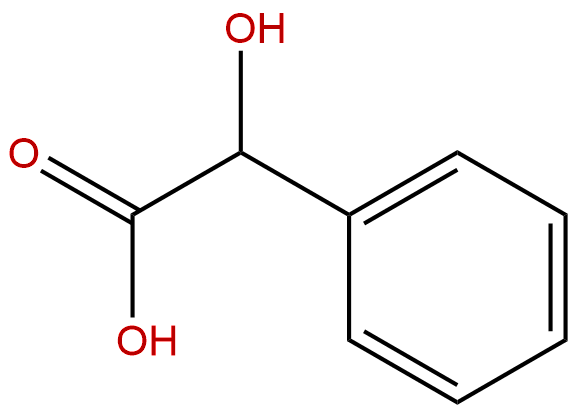
Mandelic acid, also known as alpha hydroxyphenylacetic acid, is a naturally occurring aromatic alpha hydroxy acid. Its CAS number is 611-71-2 and its molecular formula is C8H8O3. There is a pair of optical enantiomers of mandelic acid, among which (R) - mandelic acid is the core discussed in this article, defined as the (R) - enantiomer of mandelic acid, and also the enantiomer of (S) - mandelic acid. In biological systems, (R) - mandelic acid is classified as a human exogenous metabolite. Despite its relatively simple structure, mandelic acid and its derivatives have shown extensive application value in the fields of medicine, cosmetics, and chemical engineering. Traditionally, mandelic acid has been widely used in dermatology to treat skin diseases such as acne and pigmentation due to its mild exfoliation and antibacterial properties. In recent years, with the global spread of multidrug-resistant bacterial infections, the development of new antibacterial drugs is urgently needed. Natural products and their derivatives have become an important source of new drug discovery due to their structural diversity and unique biological activity. In this context, the study of the antibacterial activity and mechanism of action of mandelic acid, especially its specific enantiomers and derivatives, has once again aroused strong interest in the pharmacology community. This article aims to provide a systematic review of the chemical properties, plant sources, pharmacological activities of (R) - mandelic acid, particularly its molecular targets and mechanisms of antibacterial activity, and to provide a professional evaluation and outlook on its pharmacological properties and clinical application prospects.
Chemical structure and physicochemical properties
Mandelic acid is a chiral molecule with a core structure consisting of a benzene ring, an acetic acid group, and a hydroxyl group attached to an alpha carbon. The structural characteristics of its alpha hydroxy acid are the key basis for its biological activity. According to the different configurations of chiral centers (α - carbon atoms), mandelic acid can be divided into (R) - enantiomers and (S) - enantiomers. This article focuses on (R) - mandelic acid, which has an absolute configuration of R-type.
From the analysis of physical and chemical properties, the molecular weight of mandelic acid is 152.1490 g/mol. Its octanol water partition coefficient (LogP) is 0.8103, indicating that the compound has a certain degree of lipophilicity, but overall it still leans towards hydrophilicity, which is consistent with the polar carboxyl and hydroxyl groups in its molecular structure. The topological polar surface area (TPSA) is 57.53 Å ², further confirming its good polarity characteristics. The water solubility data shows 34.7092 mg/mL, indicating that (R) - mandelic acid has good solubility in water, which is beneficial for its formulation development and in vivo absorption. In the preliminary screening of drug properties, the computational model predicts that its blood-brain barrier permeability is low, suggesting that it may not easily enter the central nervous system. This may reduce the risk of central neurotoxicity for antibacterial drugs mainly targeting peripheral infections. In addition, the predicted data showed no significant hERG potassium channel inhibitory activity (predicted as' no '), suggesting a low risk of cardiac toxicity. The Ames test predicted a value of 0.0, suggesting that it may not have direct genetic toxicity. These preliminary pharmacological parameters provide a favorable starting point for the further development of (R) - mandelic acid.
Plant sources and extraction methods
Almond acid naturally exists in various plants, especially in the seeds of Rosaceae plants, such as bitter almonds(Prunus amygdalus var. amara)The name 'mandelic acid' comes from this. In bitter almonds, mandelic acid mainly exists in the form of its glycoside - amygdalin. Almond nitrile glycoside itself is inactive. After hydrolysis by enzymes (such as β - glucosidase) in the body, it can be converted into almond nitrile, which is then broken down into almond acid and hydrogen cyanide. In addition, trace amounts of mandelic acid can also be detected in certain fruits and grains.
The traditional method of extracting mandelic acid from natural raw materials mainly involves starting from plant materials rich in amygdalin, such as almonds. The typical extraction process includes: crushing of raw materials, solvent extraction (such as ethanol or water), filtration and concentration, followed by acid hydrolysis or enzymatic hydrolysis to convert amygdalin into crude amygdalic acid. Subsequently, a series of purification steps are required, such as decolorization with activated carbon and recrystallization (using water or benzene as common solvents), to obtain relatively pure mandelic acid. Due to the limitations of raw material sources, seasons, and extraction rates in natural extraction methods, and the fact that the products are racemic mixtures, large-scale industrial production of mandelic acid, especially optically pure (R) - or (S) - mandelic acid, mainly relies on chemical synthesis and biocatalytic methods. Chemical synthesis usually starts with benzaldehyde as the starting material, and the racemic form is obtained through the "mandelic acid synthesis" route of cyanide and hydrolysis, and then a single enantiomer is obtained through chiral separation. The biocatalytic method utilizes the high stereoselectivity of microorganisms or enzymes (such as nitrile hydrolases and esterases) to asymmetrically synthesize optically pure mandelic acid from precursor compounds. It has the advantages of mild conditions, environmental friendliness, and high enantiomer excess, and is currently a research hotspot for obtaining chiral mandelic acid.
Pharmacological activity research
The most well-known pharmacological activity of mandelic acid is its skin pharmacological effects, including keratinization, promotion of epidermal renewal, and mild antibacterial effects, making it a commonly used ingredient in chemical peels. However, recent studies have revealed that mandelic acid, especially its specific configuration and metal complexes, has a wider and more significant antibacterial activity, which constitutes a new focus of pharmacological research.
1. Antibacterial activity:
Numerous in vitro studies have shown that mandelic acid exhibits inhibitory activity against various Gram positive bacteria (such as Staphylococcus aureus and Staphylococcus epidermidis), Gram negative bacteria (such as Escherichia coli and Pseudomonas aeruginosa), and fungi (such as Candida albicans). Its antibacterial efficacy is significantly influenced by factors such as concentration, pH value, enantiomeric configuration, and the formation of metal complexes. For example, studies have shown that there may be differences in the inhibitory activity of (R) - mandelic acid and (S) - enantiomers on certain strains, suggesting that their targets may have stereoselectivity. It is worth noting that the antibacterial activity of the complexes formed between mandelic acid and metal ions (such as zinc and copper) is often significantly stronger than that of mandelic acid itself. These complexes can disrupt the integrity of bacterial cell membranes, increase membrane permeability, and lead to leakage of intracellular substances, thereby enhancing the bactericidal effect. In addition, at sub inhibitory concentrations, mandelic acid can also interfere with the formation of bacterial biofilms, reduce bacterial adhesion and drug resistance, which is of great significance for the treatment of chronic and refractory infections.
2. Other potential activities:
In addition to its antibacterial effect, research also suggests that mandelic acid may have antioxidant and mild tyrosinase inhibitory activity, the latter of which is related to its use in cosmetics for whitening and lightening spots. However, the strength and in vivo significance of these activities still require further research to confirm.
Mechanism of action and molecular targets
The antibacterial effect of mandelic acid and its derivatives is not achieved through a single mechanism, but rather through the synergistic action of multiple targets and pathways. The structure of its alpha hydroxy acid enables it to chelate metal ions and interfere with metal ion dependent bacterial enzyme systems. According to existing pharmacological and bioinformatics research, its potential targets involve multiple key links in bacterial growth and survival:
- Nucleic acid synthesis and topoisomerase: Predict target points GYRA The DNA gyrase A subunit is a key enzyme for bacterial DNA replication and a classic target for quinolone drugs. Almond acid may affect DNA supercoiling by interfering with its function.
- Cell wall synthesis: FTSZ The cell division protein FtsZ is a key protein for bacterial cell division, similar to the microtubule protein in eukaryotic cells, and is a popular target for new antibacterial drugs. Almond acid may interfere with the polymerization of FtsZ and inhibit bacterial division.PENA Penicillin binding protein 2A (PBP2a) is a key mediator of methicillin-resistant Staphylococcus aureus (MRSA) resistance, and mandelic acid may have a potential effect on it.
- Cell membrane integrity: GYPB(speculated to be related to glycosyltransferases or membrane proteins) and MECA The targeting of (mecA gene product, regulating PBP2a) may affect cell wall peptidoglycan synthesis and membrane stability.
- Metabolic pathway: FABI Enoyl ACP reductase is a key enzyme in the bacterial fatty acid biosynthesis type II pathway (FAS II) and is one of the targets of the anti tuberculosis drug isoniazid. Almond acid may inhibit FABI and block bacterial membrane lipid synthesis.DHFR Dihydrofolate reductase is a key enzyme in the folate synthesis pathway, a target of sulfonamides and trimethoprim, and may be inhibited by mandelic acid.
- Fungal specific targets: For fungi such as Candida, the effect of mandelic acid may involve ERG11(lanosterol 14 α - demethylase, target of azole antifungal drugs) and CYP51A1(Its homolog) interferes with ergosterol synthesis and damages fungal cell membranes. Efflux pump protein CDR1 It is the main mechanism of fungal multidrug resistance, and mandelic acid may reverse fungal resistance by inhibiting the function of this pump.
It should be emphasized that the above target associations are mostly based on computational prediction, phenotype screening analogy, and preliminary mechanism research. The exact high affinity direct target of mandelic acid (i.e. "on target") still needs to be directly verified and confirmed through biophysical techniques such as proteomics, X-ray crystallography co crystallization, and surface plasmon resonance (SPR). Its antibacterial effect is likely to be achieved through moderate intensity action on multiple aforementioned targets, synergistically producing a "multi-target inhibition" effect, which may help delay the development of bacterial resistance.
Evaluation of drug properties and pharmacokinetics
Based on the calculation parameters provided in the previous text, a preliminary evaluation of the pharmacological properties of (R) - mandelic acid is conducted: its moderate LogP value and good water solubility (34.7 mg/mL) indicate good oral absorption potential, which may meet the basic requirements of the "Five Principles of Generic Drugs". Low blood-brain barrier permeability can reduce central side effects for systemic antibiotics. The predicted results without hERG inhibition and Ames toxicity provide preliminary positive signals for its safety.
However, translating these theoretical parameters into actual drugs still faces challenges. As a small molecule organic acid, the pharmacokinetic characteristics of mandelic acid in vivo require experimental data support. Expected to be absorbed through passive diffusion or monocarboxylate transporters (MCTs) in the upper small intestine after oral administration. After absorption, it may be widely distributed in body fluids, but due to its polarity, tissue permeability may be limited. In the body, the main metabolic pathway of mandelic acid may be through liver or kidney metabolic enzymes (such as hydroxy acid oxidase), which are oxidized to the corresponding phenylglyoxylic acid, and further metabolized or combined with glycine to produce hippuric acid for excretion. The prototype drug and its metabolites are mainly excreted through the kidneys and urine. Its plasma half-life is expected to be short and may require frequent administration or preparation into sustained-release formulations.
The main pharmaceutical challenges include: 1) Activity intensity As a single molecule, its inhibitory concentration (IC50/MIC) on key targets may be high, and structural optimization is needed to improve potency. 2) Metabolic stability The α - hydroxy acid structure may facilitate its rapid metabolism in the body. 3) Formulation development: Its acidity may put forward requirements for pH adjustment and stability of locally administered preparations (such as cream and gel). Future research can focus on designing prodrugs of mandelic acid (such as ester prodrugs to improve lipid solubility and transdermal/membrane permeability), developing metal complexes to enhance targeting and activity, or assembling them as pharmacophores with other antibacterial structural fragments to obtain novel derivatives with better pharmacokinetic properties.
Clinical application prospects and prospects
The clinical application prospects of mandelic acid can be expanded to multiple dimensions around its core pharmacological activity - antibacterial:
-
Local anti infective treatment This is the most direct application direction. Based on its good skin tolerance and antibacterial/anti biofilm activity, (R) - mandelic acid or its zinc and copper complexes can be developed as topical preparations (creams, gel, dressings) for the treatment of acne (for Propionibacterium acnes), superficial fungal infections of skin, and chronic wound infections (such as diabetes foot ulcers combined with multi drug resistant bacterial infections). The combination of its exfoliating effect and antibacterial effect is particularly beneficial for the treatment of acne.
-
As an antibacterial enhancer or resistance reversal agent Research can explore the combination of mandelic acid with existing antibiotics (such as β - lactams and fluoroquinolones) to interfere with biofilms, inhibit efflux pumps (such as CDR1 against fungi), or weaken cell membrane barriers, reducing the minimum inhibitory concentration (MIC) of antibiotic resistant bacteria and restoring their sensitivity, thereby addressing multi drug resistant bacterial infections.
-
urinary tract infection Mandelic acid itself and its metabolite hippuric acid have historically been used as adjunctive therapy for urinary tract infections (such as uric acid urotropin), as it can release formaldehyde and exert bactericidal effects in an acidic urine environment. Designing novel derivatives of (R) - mandelic acid may lead to the development of more targeted and safe oral anti infective drugs for the urinary system.
-
Medical Device Coatings Loading derivatives or complexes of mandelic acid onto the surface of catheters and implants can endow them with the ability to resist bacterial adhesion and biofilm formation, preventing medical device related infections.
The future research focus should include: 1) using computational chemistry and structural biology methods to clarify the precise binding mode between (R) - mandelic acid and key target proteins (such as FtsZ, FabI), and guide rational drug design; 2) Conduct in vitro and in vivo pharmacological evaluations of the system, especially in the treatment of drug-resistant bacterial infection models; 3) Conduct comprehensive preclinical pharmacokinetic and toxicological studies to evaluate the safety of its systemic administration; 4) Explore its combination with other therapeutic methods such as photodynamic therapy and nano delivery systems to enhance efficacy and targeting.
Conclusion
(R) As a naturally chiral molecule with a clear structure, mandelic acid has value far beyond traditional skin keratin regulators. Modern pharmacological research, particularly its potential inhibitory activity against multiple key microbial targets such as GYRA, FTSZ, FABI, ERG11, has revealed its enormous potential as a novel antibacterial lead compound. Although its direct and high-intensity target binding mechanism still needs to be further elucidated, its "multi-target, weak action" characteristics may provide new ideas for addressing bacterial resistance. By combining its relatively excellent preliminary drug prediction parameters, rational drug chemical modification, dosage form innovation, and combination therapy strategies, (R) - mandelic acid is expected to transform from an ancient natural product into an innovative drug source to address today's global public health challenge of antimicrobial resistance. Continued in-depth research on it will not only contribute to the development of new anti infective drugs, but also provide a model for the modern development and utilization of natural products.