Introduction/Overview
Natural products have always been an important source of innovative drug discovery, and their unique chemical structures and diverse biological activities provide valuable lead compounds for the treatment of complex diseases, especially malignant tumors. Among numerous natural molecules with potential, Tokinolide B, as a sesquiterpene lactone isolated from traditional medicinal plants, has attracted much attention in recent years due to its significant anti-tumor activity. This compound was isolated from the rhizomes of Ligusticum porteri, a plant belonging to the Umbelliferae family. Preliminary studies have revealed its ability to inhibit the proliferation of various tumor cell lines and involve multiple key cell signaling pathways and molecular targets. With the deepening application of modern pharmacology and molecular biology techniques, the mechanism of action of Tokinolide B is gradually becoming clear. Its characteristic of exerting anti-tumor effects through multiple pathways such as regulating cell apoptosis, inhibiting tumor invasion and metastasis, and interfering with tumor metabolism makes it a promising candidate molecule in the field of anti-tumor drug development. This article aims to systematically review the research progress on the chemical structure, plant origin, pharmacological activity, mechanism of action, and medicinal properties of Tokinolide B, in order to provide comprehensive academic references for the in-depth study and potential clinical applications of this compound.
Chemical structure and physicochemical properties
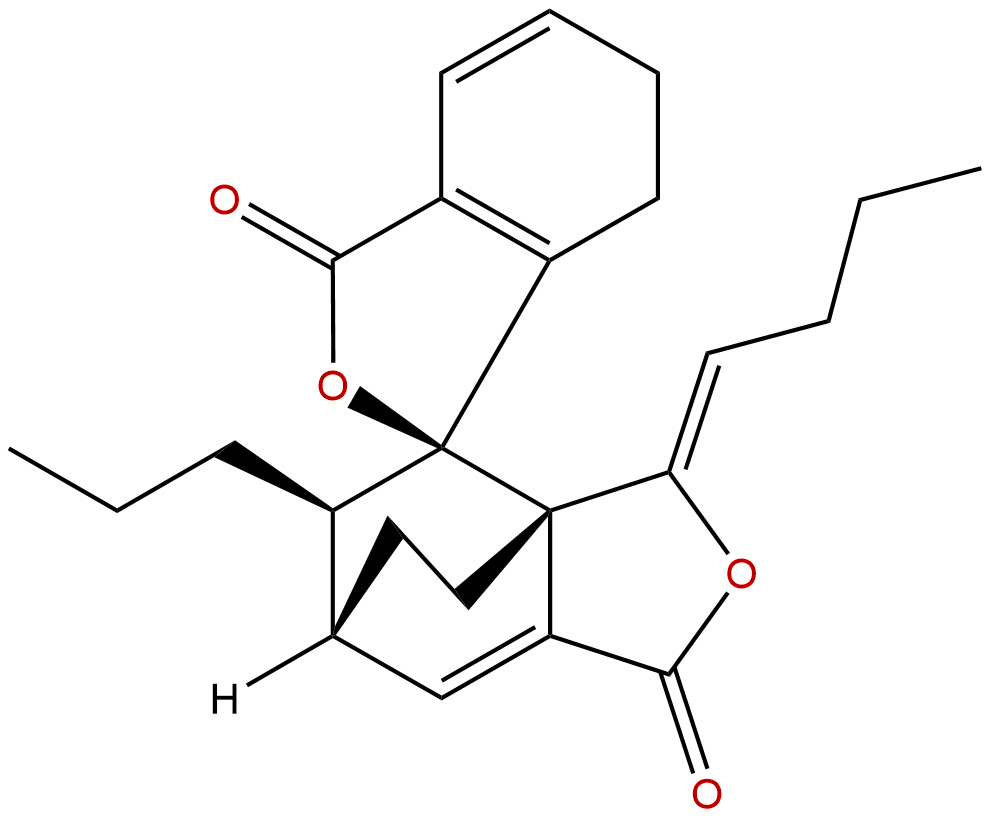
Tokinolide B is a sesquiterpene lactone compound with significant chemical structural characteristics. Its molecular formula is C22H28O5 and its molecular weight is 380.4840. The core skeleton is a typical sesquiterpene nucleus, connected by alpha, beta unsaturated gamma lactone rings. This structural unit is a common feature of many bioactive sesquiterpene lactones, such as artemisinin and triptolide, and is often associated with electrophilic reactivity and specific biological target recognition. In addition, its structure also contains multiple methyl and hydroxyl substituents, which have important effects on its spatial conformation, solubility, and interaction with target proteins.
From the analysis of physicochemical parameters related to drug properties, Tokinolide B exhibits typical hydrophobic characteristics. Its lipophilic water partition coefficient (LogP) is 4.9023, indicating that the compound has high lipophilicity. Consistent with this, its theoretical polar surface area (TPSA) is 52.6 Å ², which is relatively small, further confirming its hydrophobic properties. The water solubility data (0.0019 mg/mL) is extremely low, indicating that solubilization techniques (such as cyclodextrin inclusion, nano formulations, etc.) may be needed in the formulation development process to improve its bioavailability. It is worth noting that its predicted blood-brain barrier permeability is "high", which means that Tokinolide B has the potential to act on central nervous system related tumors or diseases. In the early safety warning indicators, the lack of inhibition of hERG potassium channels by this compound suggests a low risk of cardiac toxicity, while the Ames test result is 0.3 (usually a value<1.5 is considered a low risk of mutagenicity), indicating that its genetic toxicity risk is controllable. These characteristics lay a certain foundation for its subsequent development.
Plant sources and extraction methods
Tokinolide B mainly comes from the rhizomes of Ligusticum porteri (often referred to as Osha or Porter's Lovage) in the family Apiaceae. This plant has traditionally been used by the indigenous peoples of southwestern North America to treat colds, flu, bronchitis, and various inflammatory diseases. Its roots and stems have a strong aroma and medicinal value. Modern plant chemistry research has systematically isolated the secondary metabolites of its rhizome in order to elucidate its pharmacological substance basis.
The extraction process usually follows the conventional process of natural product chemistry. Firstly, the dried Ligusticum porteri rhizomes are crushed and subjected to cold soaking or heated reflux extraction using organic solvents such as methanol, ethanol, or a mixture of dichloromethane and methanol to fully extract the lipophilic components, including Tokinolide B. After vacuum concentration, the obtained crude extract was separated and purified using various chromatographic techniques. Normal phase silica gel column chromatography is often used for preliminary segmentation, and then combined with reverse phase high performance liquid chromatography (RP-HPLC), gel chromatography (Sephadex LH-20) and other methods for fine separation. The identification of Tokinolide B relies on modern spectroscopic techniques, including nuclear magnetic resonance (NMR, especially 1H-NMR, 13C-NMR, COSY, HSQC, HMBC), mass spectrometry (MS), and infrared spectroscopy (IR). By analyzing its spectral data and comparing it with known compounds or literature, its planar structure and relative configuration are ultimately determined. At present, there are few reports on its total synthesis route, and the main source still relies on plant extraction. Therefore, sustainable plant resources or achieving its biosynthesis through synthetic biology methods are the directions that need to be considered in the future.
Pharmacological activity research
The pharmacological activity research of Tokinolide B is currently mainly focused on the field of anti-tumor, and both in vivo and in vitro experiments have confirmed its significant anti-cancer potential.
In vitro anti-tumor activity Multiple studies have shown that Tokinolide B has broad-spectrum proliferation inhibitory activity against various human tumor cell lines. Its cytotoxicity to breast cancer (such as MCF-7, MDA-MB-231), prostate cancer, liver cancer, lung cancer, colon cancer and other cell lines is different, and its half inhibitory concentration (IC50) is often at the level of micromol or even nanomol, showing a strong effect. In addition to directly inhibiting cell proliferation, studies have also found that Tokinolide B can induce apoptosis in tumor cells, leading to cell cycle arrest (such as G2/M phase arrest), and effectively inhibit the migration and invasion ability of tumor cells, indicating its potential for anti metastasis.
In vivo anti-tumor activity In animal model experiments, Tokinolide B also demonstrated good therapeutic effects. For example, in nude mouse models of transplanted tumors (such as breast cancer and liver cancer), intraperitoneal injection or oral administration of Tokinolide B can significantly inhibit the growth of tumors in a dose-dependent manner. The reduction in tumor volume and weight is consistent with the results of in vitro experiments. Preliminary toxicological observations show that at effective doses, Tokinolide B does not cause significant weight loss or severe pathological damage to major organs such as the heart, liver, and kidneys in experimental animals, indicating that it has a certain therapeutic window.
In addition, in addition to its core anti-tumor effect, sporadic studies have explored its anti-inflammatory and antioxidant activities based on its traditional use in plants, but these are not the focus of current research, and its related mechanisms and strength need further confirmation.
Mechanism of action and molecular targets
The anti-tumor effect of Tokinolide B is not achieved through a single pathway, but involves a complex network of multiple targets and pathways. Existing research has preliminarily revealed its effects on the following key targets and signaling pathways:
-
Regulating the apoptotic pathway (targeting the BCL2 family)Tokinolide B can upregulate the expression of pro apoptotic proteins (such as Bax) and downregulate anti apoptotic proteins MCL1 and BCL2 The level. This disruption of the BCL2 family protein balance leads to a decrease in mitochondrial membrane potential, release of cytochrome C, activation of the caspase cascade reaction, and ultimately induction of tumor cell apoptosis. This is one of the core mechanisms by which it exerts cytotoxic effects.
-
Inhibition of transcription factor STAT3 signaling pathway STAT3 is an important oncogenic transcription factor, and sustained activation of STAT3 promotes cell proliferation, survival, and immune escape. Tokinolide B has been shown to inhibit the phosphorylation (activated form) of STAT3, block its nuclear translocation and the transcription of downstream target genes (such as Cyclin D1, Survivor), thereby inhibiting tumor growth and promoting apoptosis.
-
Inhibit tumor invasion and metastasis Tokinolide B can significantly downregulate matrix metalloproteinases MMP2 Expression and activity. MMP2 is a key enzyme that degrades the extracellular matrix and is closely related to tumor invasion and metastasis. By inhibiting MMP2, Tokinolide B effectively reduces the migration and invasion ability of tumor cells.
-
Interference with DNA Topoisomerase Function Research has shown that Tokinolide B can inhibit TOP1 and TOP2A The activity. Topoisomerase is crucial in DNA replication, transcription, and repair, and its inhibition can lead to DNA damage and replication fork arrest, resulting in cell death. This may be an important cause of DNA damage and cell cycle arrest.
-
Affects hypoxia inducible factor HIF1A and MAPK/ERK pathway In the hypoxic microenvironment of tumors, HIF1A is a core factor regulating tumor adaptation and progression. Tokinolide B can inhibit the accumulation of HIF1A and the expression of its downstream genes. Meanwhile, it can also have an impact MAPK1 The ERK2 signaling pathway is closely related to cell proliferation and survival.
-
Intervention in estrogen signaling and synthesis: Tokinolide B shows a strong response to estrogen receptor in hormone dependent tumors (such as breast cancer) ESR1 It has a regulatory effect and can inhibit aromatase CYP19A1 The activity. CYP19A1 is a key enzyme in estrogen synthesis, and its inhibition can reduce estrogen levels in the body, thereby inhibiting the growth of estrogen dependent tumors.
In summary, Tokinolide B forms a synergistic anti-tumor network by simultaneously acting on multiple key links such as apoptosis regulation, signal transduction, extracellular matrix degradation, DNA metabolism, and hormone regulation, which helps overcome the problem of resistance to single target drugs.
Evaluation of drug properties and pharmacokinetics
Although Tokinolide B exhibits excellent pharmacological activity, its drug development still faces some challenges, and related research is still in the early stages.
Pharmacokinetic properties Currently, there is limited publicly available pharmacokinetic research data on the Tokinolide B system. Based on its physicochemical properties (high LogP, low water solubility), it can be inferred that it may face absorption instability and significant first pass effects after oral administration. Its high blood-brain barrier permeability is a double-edged sword, which is beneficial for treating brain tumors but may also increase the potential risk of side effects in the central nervous system. It is predicted that its metabolism in the body may mainly be catalyzed by the liver cytochrome P450 enzyme system, undergoing oxidation, reduction, or binding reactions, but its main metabolites, metabolic pathways, and the main CYP subtypes involved are not yet clear. The main excretion pathway may be bile excretion.
Challenges and optimization directions in drug development:
1. Solubility and permeability The extremely low water solubility is the primary obstacle to the development of its formulations. Advanced drug delivery strategies are needed, such as creating nanocrystals, liposomes, polymer micelles, or solid dispersions, to enhance their solubility and dissolution rate, thereby improving oral bioavailability.
2. Stability Compounds containing α, β - unsaturated lactone structures may undergo hydrolysis or Michael addition reactions with nucleophiles such as glutathione in both in vivo and in vitro environments, affecting their stability and effectiveness. Optimization of the formulation process is needed to protect its active functional groups.
3. Selective toxicity Although the preliminary hERG and Ames test results are good, a comprehensive preclinical safety evaluation is still needed, including acute toxicity, long-term toxicity, reproductive toxicity, etc., to clarify its therapeutic index.
4. Synthetic accessibility Currently, relying on plant extraction limits large-scale supply. Developing efficient and economical fully synthetic or semi synthetic routes, or utilizing synthetic biology methods for heterologous synthesis in microorganisms, is the key to achieving their industrial application in the future.
Clinical application prospects and prospects
As a multi-target anti-tumor natural lead compound, Tokinolide B has broad clinical application prospects, but the road ahead is long.
Potential application directions:
1. Single drug development Based on its broad-spectrum anti-tumor activity and multi mechanism action characteristics, Tokinolide B has the potential to be developed as a novel small molecule anti-tumor drug, especially suitable for tumor types that have developed resistance or strong invasiveness to existing targeted drugs.
2. Combination therapy strategy The combination of Tokinolide B with existing chemotherapy drugs (such as topoisomerase inhibitors, microtubule inhibitors) or targeted drugs may result in synergistic effects, reducing the dosage of each drug, minimizing toxic side effects, and delaying the development of drug resistance. Its characteristic of inhibiting STAT3, HIF1A and other pathways also makes it possible to be used in combination with immune checkpoint inhibitors to improve the tumor immune microenvironment.
3. Target based structural optimization Using it as the parent nucleus for systematic medicinal chemical modification, aiming to improve its activity, selectivity, solubility, and pharmacokinetic properties. For example, by introducing hydrophilic groups to improve water solubility, or by structural modification to reduce its potential toxicity to normal cells.
Future research prospects:
1. Deep exploration of mechanisms Using proteomics, chemical proteomics, and other techniques to identify the protein targets directly affected by it and create a more accurate network of interactions.
2. Pharmacokinetic and Toxicological System Research Conduct a comprehensive preclinical study on ADMET (absorption, distribution, metabolism, excretion, and toxicity) to clarify its in vivo processes, tissue distribution, major metabolites, and safety margins.
3. Advanced delivery system development Actively exploring nano delivery systems targeting its physical and chemical defects, achieving targeted delivery and controlled release, improving efficacy, and reducing systemic toxicity.
4. Exploration of clinical indications In addition to common solid tumors, its high BBB permeability is worth exploring its application value in the treatment of central nervous system tumors such as gliomas.
Conclusion
Tokinolide B, as a sesquiterpene lactone derived from the traditional medicinal plant Ligusticum porteri, has become a highlight in the research of natural anti-tumor drugs due to its unique chemical structure and multi-target, multi pathway anti-tumor mechanism. It exhibits strong anti-tumor potential by regulating apoptosis related proteins (MCL1, BCL2), inhibiting oncogenic signals (STAT3, MAPK), interfering with tumor invasion (MMP2) and DNA metabolism (TOP1, TOP2A), and affecting the tumor microenvironment (HIF1A) and hormone pathways (ESR1, CYP19A1). However, its inherent pharmaceutical challenges, such as low water solubility and unclear pharmacokinetic characteristics, are obstacles that must be overcome to move towards clinical application. Future research should focus on optimizing its properties through medicinal chemistry and pharmacology, delving into its systemic pharmacology and toxicology characteristics, and exploring its combination therapy strategies. As these studies continue to advance, Tokinolide B is expected to evolve from a promising natural lead compound into a novel weapon against malignant tumors, bringing new hope to cancer patients.