Introduction/Overview
Natural products, as an important treasure trove for drug discovery, play an irreplaceable role in the history of human disease treatment. Among them, cucurbitacin compounds are a class of naturally occurring tetracyclic triterpenoids with unique structures and diverse biological activities, widely present in plants such as the Cucurbitaceae and Brassicaceae families. Since its discovery in the mid-20th century, its significant pharmacological activities such as anti-inflammatory, hepatoprotective, and anti-tumor have attracted continuous attention from researchers. Cucurbitacin Q1 (CAS: 99530-82-2) is an important member of the cucurbitacin family, mainly derived from plants Cucumis prophetarum In recent years, with the deepening of molecular pharmacology and tumor biology research, cucurbitacin Q1 has shown great potential for multi-target and multi pathway anti-tumor effects, becoming a hot topic in the field of natural anti-tumor drug research. This article aims to systematically review the chemical structure, plant origin, pharmacological activity, mechanism of action, pharmacological evaluation, and clinical application prospects of cucurbitacin Q1, in order to provide comprehensive scientific references for the in-depth research and development of this compound.
Chemical structure and physicochemical properties
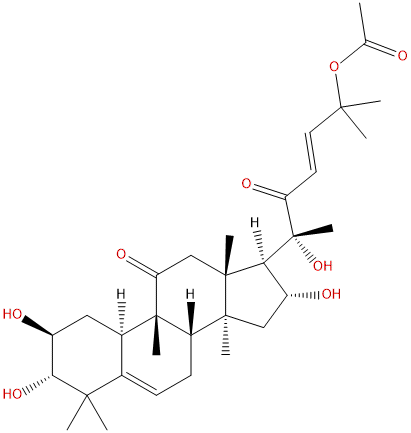
Hulusin Q1 is a typical tetracyclic triterpenoid compound with a molecular formula of C ∝₂ H ₄₈ O ₈ and a molecular weight of 560.7280. Its core skeleton is of cucurbitane type, characterized by high oxidation. Structurally, it retains the characteristic features of cucurbitacin compounds, such as A/B ring trans condensation, C-2 hydroxyl group, C-3 carbonyl group, and C-16 and C-22 hydroxyl groups. Compared with other cucurbitacins (such as cucurbitacin B, E), cucurbitacin Q1 has differences in the side chains and specific substituents, and these subtle structural differences directly affect its physicochemical properties and biological activity.
From the analysis of parameters related to drug properties, the lipid water partition coefficient (LogP) of cucurbitacin Q1 is 3.1496, indicating that it has moderate lipophilicity and is conducive to transmembrane transport. However, excessively high LogP may also lead to solubility and metabolic problems. Its topological polar surface area (TPSA) is 141.3600 Å ², reflecting the presence of multiple polar groups (such as hydroxyl groups) in the molecule, which are crucial for its hydrogen bonding interactions with target proteins but may also affect its membrane permeability. The water solubility data (0.0352 mg/mL) confirms that it belongs to a poorly soluble compound, which will be a key technical bottleneck that needs to be overcome in its formulation development. The prediction of blood-brain barrier permeability as "low" suggests that it may not easily enter the central nervous system, which may reduce the risk of central neurotoxicity for the treatment of peripheral tumors, but also limits its direct effect on brain tumors. In addition, preliminary in vitro safety evaluation showed that its hERG inhibition was "no", and the Ames test result was 0.0, indicating a low potential risk of arrhythmia and genetic toxicity, providing preliminary safety evidence for its further development.
Plant sources and extraction methods
Cucurbitacin Q1 is mainly isolated from plants in the Cucurbitaceae family Cucumis prophetarum The plant is widely distributed in Africa, the Middle East and parts of South Asia, and is often used in traditional medicine to treat inflammation, pain and infectious diseases. Cucurbitacin compounds are usually secondary metabolites of plants, present in roots, stems, leaves, and fruits, and their content is influenced by factors such as plant growth stage, geographical environment, and harvest season.
The extraction of cucurbitacin Q1 is usually carried out using organic solvent extraction method. The classic process involves cold soaking or hot reflux extraction of dried and crushed plant materials (such as roots or aboveground parts) using a moderately polar organic solvent (such as methanol, ethanol, or ethyl acetate). The crude extract was obtained by vacuum concentration of the extraction solution. Subsequently, various chromatographic techniques were used for separation and purification, such as silica gel column chromatography, reverse phase high performance liquid chromatography (RP-HPLC), etc. Due to the low content of cucurbitacin Q1 in plants and its coexistence with structurally similar cucurbitacin compounds, the separation and purification process requires precise solvent system selection and multiple chromatographic steps. The application of modern technologies such as high-speed countercurrent chromatography (HSCCC) and preparative high-performance liquid chromatography (Prep HPLC) has significantly improved their separation efficiency and purity. Structural identification mainly relies on techniques such as nuclear magnetic resonance (NMR, including ¹ H-NMR, ¹ ³ C-NMR, 2D-NMR), mass spectrometry (MS), and X-ray single crystal diffraction.
Pharmacological activity research
Numerous in vitro and in vivo pharmacological studies have shown that the core pharmacological activity of cucurbitacin Q1 is concentrated in the field of anti-tumor, exhibiting significant inhibitory effects on proliferation and inducing apoptosis in various human tumor cell lines.
1. Antitumor activity:
In vitro studies have confirmed that cucurbitacin Q1 has strong cytotoxicity to a variety of cancer cells, such as breast cancer, liver cancer, lung cancer, colon cancer, prostate cancer, and its half inhibitory concentration (IC ≮₀) is usually at the level of micromol or even nanomol. For example, in the models of breast cancer MCF-7 cells and hepatoma HepG2 cells, cucurbitacin Q1 can inhibit cell viability in a dose-dependent manner. In vivo studies also provide strong support. In nude mouse transplant tumor models, intraperitoneal injection or oral administration of cucurbitacin Q1 can significantly inhibit tumor growth, and no severe weight loss or organ toxicity was observed, indicating that it has a certain therapeutic window.
2. Function characteristics:
The anti-tumor effect of cucurbitacin Q1 is not limited to directly killing cancer cells. Research has shown that it can effectively inhibit the migration and invasion ability of cancer cells, indicating its potential for anti-tumor metastasis. In addition, studies have suggested that cucurbitacin Q1 may affect tumor angiogenesis, which is related to its action on targets such as hypoxia inducible factor HIF1A. These multifaceted effects make it a candidate molecule with multidimensional anti-tumor potential.
Mechanism of action and molecular targets
The anti-tumor effect of cucurbitacin Q1 is not achieved through a single pathway, but through intervening in multiple key cellular signaling pathways and molecular targets, forming a networked pharmacological effect. According to existing research, its mechanism of action mainly involves the following aspects:
1. Inducing cell apoptosis: This is one of the core mechanisms of action of cucurbitacin Q1. It upregulates pro apoptotic proteins (such as Bax) and downregulates anti apoptotic proteins BCL2 and MCL1 The expression of caspase disrupts mitochondrial membrane potential, leading to the release of cytochrome C and activating the Caspase cascade reaction, ultimately triggering cell apoptosis.
2. Inhibition of STAT3 signaling pathway: Signal Transduction and Transcription Activation Factor 3(STAT3)It is an important oncogenic transcription factor that is continuously activated in various tumors. Hulusin Q1 can effectively inhibit the phosphorylation (activation) of STAT3, block its nuclear translocation and the transcription of downstream target genes (such as Cyclin D1, Survivor, Bcl-2), thereby inhibiting cell proliferation, promoting apoptosis, and enhancing chemotherapy sensitivity.
3. Interference with cell cycle: Hulusin Q1 can block cancer cells in the G2/M phase, which may be related to its effect on the expression of cyclins and cyclin dependent kinases (CDKs), thereby preventing cell mitosis.
4. Inhibit tumor invasion and metastasis: This action is partially achieved by inhibiting matrix metalloproteinases MMP2 and MMP9 To achieve expression and activity. MMPs can degrade extracellular matrix and are key enzymes for tumor cell invasion and metastasis. Hulusin Q1 effectively weakens the invasive ability of cancer cells by downregulating MMPs.
5. Inhibit topoisomerase activity: Research shows that cucurbitacin Q1 can inhibit TOP1 and TOP2A The activity. Topoisomerase is a key enzyme essential for DNA replication and transcription, and its inhibition can lead to DNA damage and replication fork arrest, triggering a DNA damage response and inducing cell death.
6. Regulating hormone related pathways: In response to hormone dependent tumors (such as breast cancer), cucurbitacin Q1 shows a significant effect on estrogen receptor ESR1 It has a regulatory effect and can inhibit aromatase CYP19A1 The activity. CYP19A1 is a key enzyme in estrogen synthesis, and its inhibition can reduce estrogen levels in the tumor microenvironment, thereby inhibiting the growth of estrogen dependent tumors.
7. Intervention of MAPK/ERK pathway: Mitogen activated protein kinase 1(MAPK1 ERK2, also known as ERK2, is an important kinase that regulates cell proliferation and survival. Cucurbitacin Q1 can inhibit the excessive activation of this pathway, thereby suppressing cell proliferation.
8. Inhibit hypoxia adaptation: By acting on hypoxia inducible factors HIF1A Cucurbitacin Q1 may interfere with the adaptation and survival of tumor cells in a low oxygen microenvironment, and may affect the expression of vascular endothelial growth factor (VEGF), thereby exerting anti angiogenic effects.
In summary, cucurbitacin Q1 forms a synergistic anti-tumor multi-target network by simultaneously targeting multiple key nodes such as apoptosis regulation (BCL2, MCL1), signal transduction (STAT3, MAPK1), cell cycle and DNA damage (TOP1, TOP2A), invasion and metastasis (MMP2), and tumor microenvironment (HIF1A, CYP19A1, ESR1).
Evaluation of drug properties and pharmacokinetics
Although cucurbitacin Q1 exhibits excellent pharmacological activity, its drug likeness still faces challenges, which must be systematically evaluated during its conversion from lead compounds to drugs.
1. Physical and chemical properties and ADME properties:
As mentioned earlier, cucurbitacin Q1 has poor water solubility, which directly affects its oral bioavailability. A high LogP value suggests a tendency towards large distribution volume and tissue accumulation. The low permeability of the blood-brain barrier limits its application in the treatment of brain tumors, but it may also reduce central side effects. Currently, there is relatively limited publicly available pharmacokinetic research data on the cucurbitacin Q1 system. Based on research on similar cucurbitacin compounds, it is speculated that their oral absorption may be limited due to first pass effects and solubility issues. The distribution in the body may be widespread, and metabolism may mainly be carried out through the liver cytochrome P450 enzyme system for oxidation and binding reactions, ultimately excreted through bile and kidneys. The specific metabolites, half-life, absolute bioavailability and other key parameters need to be clarified through standardized preclinical pharmacokinetic studies.
2. Safety evaluation:
Preliminary in vitro screening showed no hERG inhibition or Ames mutagenicity, which is a positive signal. However, cucurbitacin compounds generally have certain toxicity, especially gastrointestinal irritation and liver toxicity. Therefore, a comprehensive preclinical safety evaluation of the acute toxicity, long-term toxicity, and reproductive toxicity of cucurbitacin Q1 is crucial. The therapeutic index (the ratio of effective dose to toxic dose) needs to be accurately evaluated in animal models.
3. Formulation strategy:
In order to improve its water solubility and bioavailability, advanced drug delivery systems need to be developed. Possible strategies include: developing nano formulations such as nanocrystals, liposomes, and polymer micelles; Or form inclusion complexes with cyclodextrin; Or develop it into a prodrug. These technologies are expected to improve their dissolution rate, stability, and potentially achieve targeted delivery, enhancing therapeutic efficacy while reducing systemic toxicity.
Clinical application prospects and prospects
As a multi-target anti-tumor natural lead compound, cucurbitacin Q1 has broad clinical application prospects, but the road is also full of challenges.
1. Development direction:
* Single drug development: As a new type of anti-tumor drug, it is particularly suitable for malignant tumors that are resistant to existing chemotherapy drugs or have abnormal activation of signaling pathways such as STAT3 and BCL-2. Its multi-target characteristics may help overcome tumor heterogeneity and drug resistance.
* Combination therapy: Combined use with existing chemotherapy drugs (such as paclitaxel, cisplatin) or targeted drugs may produce synergistic effects, reduce individual dosages, minimize toxic side effects, and reverse drug resistance. Its STAT3 inhibitory properties are particularly noteworthy, as the STAT3 pathway is one of the common mechanisms of drug resistance.
* Indications expansion: In addition to solid tumors, their immune regulatory potential (through STAT3, etc.) is also worth exploring and may be used in combination strategies for tumor immunotherapy. In addition, based on the traditional anti-inflammatory use of cucurbitacin compounds, the application of cucurbitacin Q1 in inflammation related diseases (such as autoimmune diseases) is also worth exploring preliminarily.
2. Challenges faced:
* Optimization of drug properties: Water solubility and bioavailability are the primary bottlenecks, requiring resources to be invested in pharmaceutical innovation.
* System toxicity assessment: A comprehensive and standardized preclinical safety evaluation must be completed to clarify its toxicity spectrum and safety window.
* Deep analysis of the mechanism of action: Although multiple targets are known, further research is needed on their primary action targets, the primary secondary relationships between each target, and their contribution weights in the overall efficacy. Using chemical biology methods such as affinity fishing and proteomics to identify the proteins directly involved will help to gain a more precise understanding of their mechanisms.
* Synthesis and derivatization: Extracting yields from plants is limited and difficult to meet future development needs. Therefore, developing its full synthetic route or semi synthetic method and modifying its structure to optimize activity, reduce toxicity, and improve pharmacokinetic properties is an important research direction.
Conclusion
Hulusin Q1 is a tetracyclic triterpenoid compound of significant research value derived from traditional medicinal plants. It exhibits strong multi-channel anti-tumor potential by acting on multiple key oncology targets such as MCL1, BCL2, STAT3, MMP2, TOP1/2A, HIF1A, MAPK1, ESR1, and CYP19A1. Despite facing challenges such as solubility and pharmacokinetics in drug development, its unique multi-target mechanism of action and preliminary good in vitro safety implications make it an extremely attractive anti-tumor lead compound. Future research should focus on improving its physicochemical and pharmacokinetic properties through formulation technology and structural modification, conducting systematic preclinical pharmacological and safety evaluations, and elucidating its precise molecular action network. With the advancement of these studies, cucurbitacin Q1 is expected to provide important candidate molecules for the development of novel, efficient, and low toxicity multi-target anti-tumor drugs, continuing the immortal contribution of natural products in the human fight against cancer.