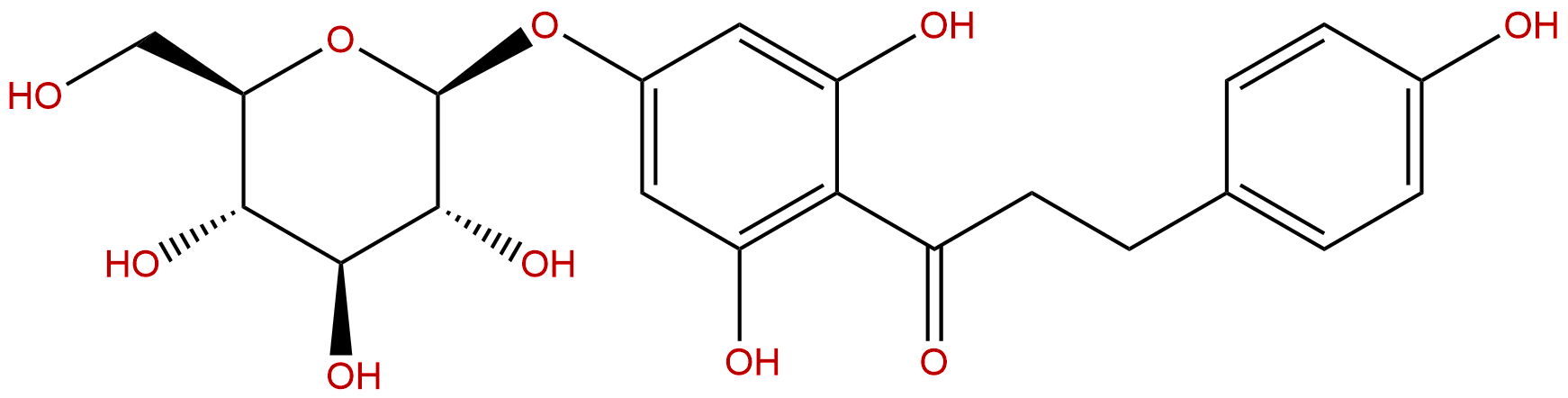


Product name: Trilobatin
Synonym name: p-Phloridzin
Catalogue No.: BP1756
Cas No.: 4192-90-9
Formula: C21H24O10
Mol Weight: 436.413
Botanical Source: Lithocarpus litseifolius
Physical Description: Powder
Type of Compound: Chalcones
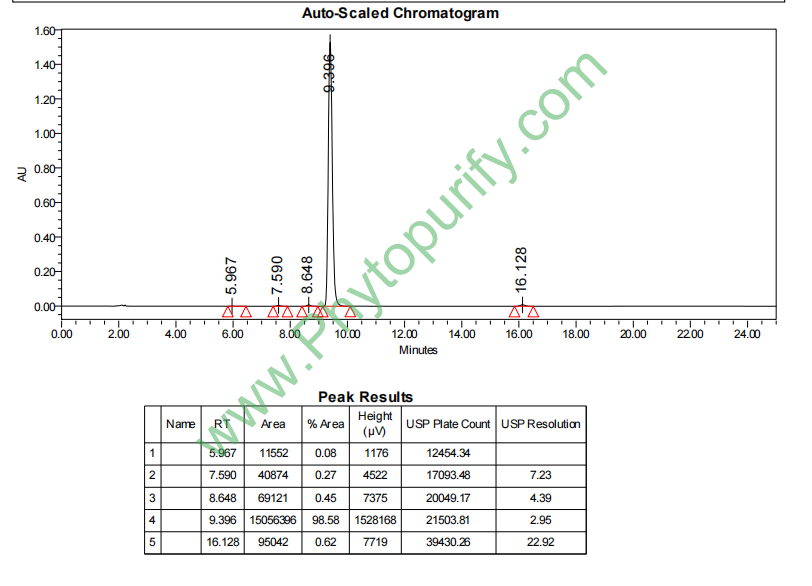
Purity: 95%~99%
Analysis Method: HPLC-DAD or/and HPLC-ELSD
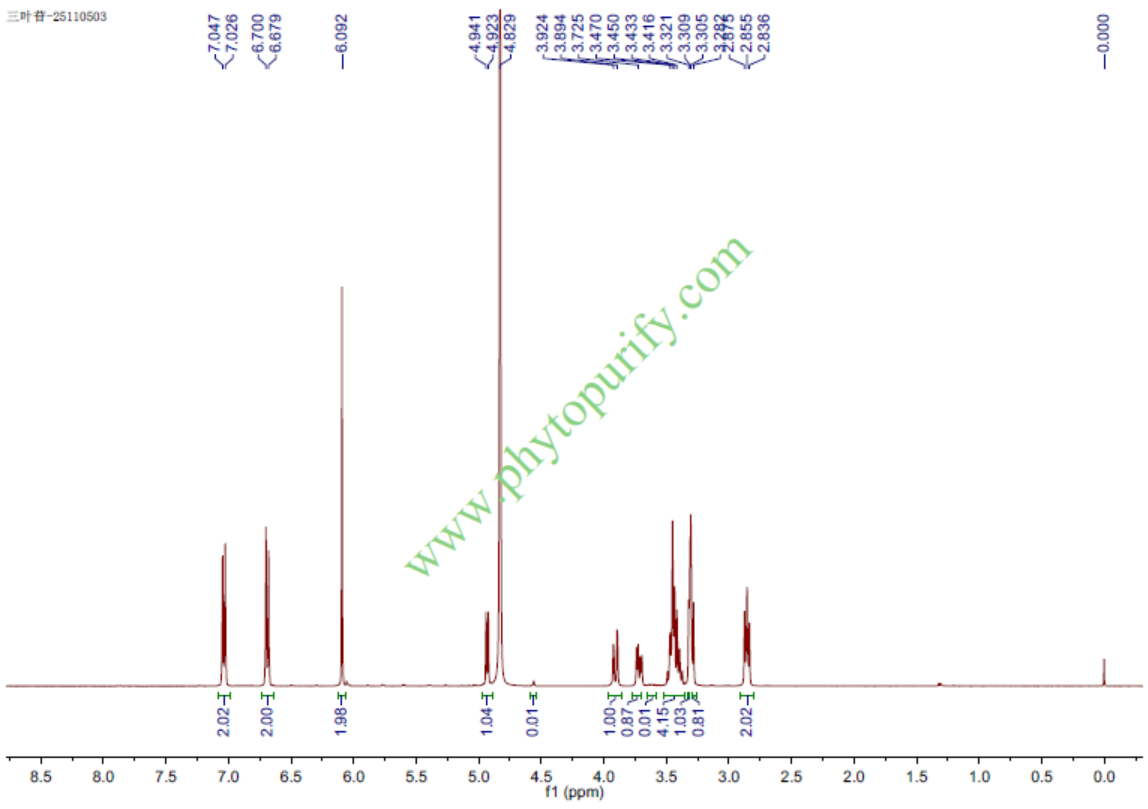
Identification Method: Mass, NMR
Packing: Brown vial or HDPE plastic bottle
The product could be supplied from milligrams to grams. Inquire for bulk scale.
We provide solution to improve the water-solubility of compounds, thereby facilitating the variety of activity tests and clinic uses.
For Reference Standard and R&D, Not for Human Use Directly.
Description:
Trilobatin has anti-oxidant, and anti-inflammatory effects, it can increase superoxide dismutase (SOD) activity, and it potentially inhibits the lipopolysaccharide (LPS)-induced inflammatory response by suppressing the NF-κB signaling pathway. Trilobatin shows a strong inhibitory activity against α-glucosidase and a moderate inhibitory activity against α-amylase for management of postprandial hyperglycemia with less side effect.
References:
Food Chem. 2015 Jan 1;166:609-15.
Trilobatin attenuates the LPS-mediated inflammatory response by suppressing the NF-κB signaling pathway.
We investigated the anti-inflammatory effect of Trilobatin, the flavonoid isolated from the leaves of Lithocarpus polystachyus Rehd, as well as the underlying molecular mechanisms.
METHODS AND RESULTS:
Treatment with Trilobatin (0.005-5 μM) dose-dependently inhibited the lipopolysaccharide (LPS)-induced mRNA expression and secretion of pro-inflammatory cytokines, including tumor necrosis factor α (TNFα), interleukin-1β (IL-1β) and interleukin-6 (IL-6), in RAW 264.7 macrophages. However, no further inhibition was detected when the concentration of Trilobatin was increased to 50 μM. Western blot analysis confirmed that the mechanism of the anti-inflammatory effect was correlated with the inhibition of LPS-induced inhibitor of nuclear factor-kappa B α (IκBα) degradation and nuclear factor-kappa B (NF-κB) p65 phosphorylation. In addition, Trilobatin also showed a significant inhibition of LPS-induced TNFα and IL-6 at both the mRNA and protein levels in a mouse model.
CONCLUSIONS:
Our results suggest that Trilobatin potentially inhibits the LPS-induced inflammatory response by suppressing the NF-κB signaling pathway.
Z Naturforsch C. 2004 Jul-Aug;59(7-8):481-4.
Antioxidant activities of three dihydrochalcone glucosides from leaves of Lithocarpus pachyphyllus.
In vitro antioxidant activities of three sweet dihydrochalcone glucosides from the leaves of Lithocarpus pachyphyllus (Kurz) Rehd. (Fagaceae), Trilobatin 2"-acetate (1), phloridzin (2) and Trilobatin(3), were investigated.
METHODS AND RESULTS:
The IC50 (50% inhibitory concentration) values for compounds 1-3 of lipid peroxidation in rat liver homogenate were 261, 28, 88 microM, respectively. Compounds 1-3 increased superoxide dismutase (SOD) activity with EC50 (50% effective concentration) values of 575, 167, 128 microM, and glutathione peroxidase (GSH-Px) activity with EC50 values of 717, 347, 129 microM, respectively, and showed only weak DPPH (1,1-diphenyl-2-picrylhydrazyl) radical scavenging activity.
HPLC of Trilobatin
HNMR of Trilobatin
Storage conditions:Short-term storage at 2~8℃, long-term storage at -20 ~ -80℃
177.1400
.2474
.0810
2.4553
.6399
.1090
Low
73.5312
3.7717
No
No
No
No
No
No
0.0
Yes
No
Yes
No
Natural products have always been an important treasure trove for innovative drug discovery, with their structural diversity and extensive biological activity providing unique molecular frameworks and lead compounds for the treatment of various diseases. Trilobatin (CAS number: 4192-90-9) is a sweet tea derived from the Fagaceae plant(Lithocarpus polystachyus Dihydrochalcone glycosides isolated from Rehd have attracted much attention in recent years due to their multifaceted pharmacological activities. Initially, trefoil glycosides were considered a potential natural sweetener due to their sweet taste characteristics (sweetness about 300 times that of sucrose). However, with the deepening of research, its biological activity spectrum far exceeds this, showing multiple potentials including anti human immunodeficiency virus type 1 (HIV-1), neuroprotection, anti-inflammatory, and regulation of glucose metabolism. Especially in the fields of inflammatory bowel disease (such as colitis), metabolic diseases, and neurodegenerative diseases, it has shown potential therapeutic value. This article aims to systematically review the chemical structure, plant origin, pharmacological activity, molecular mechanism of action, pharmacological evaluation, and clinical application prospects of trefoil glycosides, in order to provide comprehensive scientific references for the in-depth research and development of this natural product.
The chemical name of trefoil glycoside is 4,2 ', 4', 6 '- tetrahydroxydihydrochalcone-4' - β - D-glucoside, with a molecular formula of C21H24O10 and a molecular weight of 436.4130. The core of its structure is the dihydrochalcone mother nucleus, which is substituted with hydroxyl groups at the 4 position of the A ring and the 2 ', 4', and 6 'positions of the B ring. The hydroxyl group at the 4' position of the B ring is connected to a glucose group through a β - glycosidic bond. This structural feature makes it belong to the dihydrochalcone subclass of flavonoids.
Its physical and chemical properties are as follows: the calculated lipid water partition coefficient (LogP) is 0.2474, indicating that it has relatively good hydrophilicity. The topologically polar surface area (TPSA) is as high as 177.14 Å ², mainly attributed to the presence of multiple hydroxyl groups and oxygen atoms in glycosidic bonds in the molecule, which are potential hydrogen bond donors and acceptors. The theoretically calculated water solubility value is 2.4553mg/mL, further confirming its good water solubility, which is beneficial for its dissolution and bioavailability in aqueous media. Preliminary pharmacological risk assessment shows that trefoil glycoside has a low ability to cross the blood-brain barrier, suggesting that its direct effects on central nervous system diseases may be limited, but it may also reduce the risk of central side effects. In addition, its hERG inhibition risk is negative, and the Ames test result is 0.0, indicating a low risk of cardiac and genetic toxicity, providing a positive signal for its safety evaluation.
Trifolium glycosides mainly come from sweet tea plants of the Quercus genus in the Fagaceae family(Lithocarpus polystachyus The leaves of Rehd. Sweet tea is a traditional substitute tea plant in southern China, such as Guangxi and Hunan. It is commonly used in folk culture to clear heat, moisten the lungs, and quench thirst. Trifolium glycosides are one of the main active ingredients that give sweet tea a sweet taste.
The conventional method for extracting trefoil glycosides from sweet tea leaves includes solvent extraction. Water, methanol, ethanol, or ethanol water solutions with different ratios are commonly used as extraction solvents to improve efficiency through heating reflux, ultrasound assisted, or microwave-assisted extraction. After filtration and concentration, the crude extract is further enriched and purified using macroporous adsorption resins (such as AB-8, D101, etc.), utilizing the polarity characteristics of trefoil glycosides for adsorption and elution. The final high-purity preparation usually relies on preparative high-performance liquid chromatography (HPLC), using a reverse phase C18 chromatographic column and methanol water or acetonitrile water as the mobile phase for separation. In recent years, some green extraction technologies such as supercritical CO2 extraction (with the addition of entrainers) have also been explored to improve extraction efficiency and environmental friendliness.
Trifolium glycosides exhibit a wide and diverse range of pharmacological activities, making them a research hotspot in multiple disease fields.
Anti-HIV-1 activity Early studies have found that trefoil glycosides can inhibit the replication of HIV-1 virus. Its mechanism of action is unique, mainly targeting the viral envelope protein Gp41, interfering with the fusion process between the virus and the host cell membrane, thereby preventing the virus from entering the cell. This sets it apart from traditional reverse transcriptase or protease inhibitors, providing new targets and candidate molecules for the development of anti HIV drugs.
Neuroprotective effect Trifolium glycosides have shown protective effects in various neurodegenerative diseases and brain injury models. Research has shown that it can improve cognitive impairment in Alzheimer's disease model animals and alleviate neurotoxicity induced by β - amyloid protein; In the model of cerebral ischemia-reperfusion injury, it can reduce the area of cerebral infarction and inhibit neuronal apoptosis. Its neuroprotective effect is closely related to multiple mechanisms such as antioxidant, anti-inflammatory, and anti apoptotic effects.
Anti inflammatory and immune regulatory effects Trifolium glycosides exhibit significant anti-inflammatory activity in various inflammatory models, particularly in colitis Research on the therapeutic potential is relatively concentrated. In experimental colitis mouse models induced by dextran sulfate sodium (DSS) or trinitrobenzenesulfonic acid (TNBS), administration of trefoil can effectively alleviate colon tissue damage, reduce disease activity index, inhibit excessive production of pro-inflammatory cytokines (such as TNF - α, IL-1 β, IL-6), and regulate intestinal immune homeostasis.
Regulating glucose metabolism and anti diabetes potential Trifolium glycosides have been identified as inhibitors of sodium glucose cotransporter 1/2 (SGLT1/2). SGLT2 is a key protein responsible for glucose reabsorption in the kidneys, and its inhibitors have become important hypoglycemic drugs in clinical practice. Trifolium glycosides may promote urinary glucose excretion and lower blood glucose levels by inhibiting SGLT activity. In addition, the study also found that it can selectively induce the proliferation of human hepatoblastoma cells (HepG2), which may be related to liver glycogen synthesis or metabolic regulation, but its specific physiological significance still needs further clarification.
Other activities The study also suggests that trefoil glycosides have potential activities such as antioxidant and anti-tumor effects (such as inhibiting the proliferation of certain cancer cells), but research in these areas is still in its early stages.
The multiple pharmacological activities of trefoil stem from its regulation of multiple molecular targets and signaling pathways. Regarding its outstanding anti colitis activity, research has revealed that it involves a complex target network, mainly including:
In terms of neuroprotection, its mechanism involves activating the Nrf2/ARE antioxidant pathway, inhibiting the mitochondrial apoptosis pathway, and regulating neurotrophic signaling pathways such as PI3K/Akt and BDNF/TrkB. In terms of anti HIV, its direct target is the virus Gp41 protein. In terms of lowering blood sugar, its direct effect is to inhibit the transport function of SGLT1/2.
Based on calculations and preliminary experimental data, trefoil glycoside has shown certain potential as a drug. Its good water solubility is beneficial for the development of formulations. Low blood-brain barrier permeability limits its direct central application, but can be improved through formulation techniques such as nanocarriers or structural modifications. The absence of hERG inhibition and Ames mutagenicity are positive indicators of its safety.
However, as a glycoside compound, the pharmacokinetic behavior of trefoil glycosides in vivo may face challenges. After oral administration, its glycosidic bonds may be hydrolyzed by β - glucosidase in gut microbiota or epithelial cells to generate aglycones (trefoil aglycones), whose absorption, distribution, metabolism, and excretion (ADME) characteristics may differ from the prototype drug. There is relatively limited systematic research on the pharmacokinetics of its trefoil glycoside in existing literature. It is expected that its oral bioavailability may be affected by first pass effects and intestinal metabolism. Glycosides may have higher membrane permeability, but their water solubility decreases. The distribution of the prototype drug and its metabolites in vivo, the binding rate with plasma proteins, the main metabolic pathways (such as glucuronidation and sulfation), and the excretion pathways (renal excretion or bile excretion) and other key pharmacokinetic parameters still need to be comprehensively evaluated through standardized in vitro and in vivo experiments (such as Caco-2 cell models, liver microsomal metabolism experiments, in vivo pharmacokinetic studies). These studies are crucial for determining their administration routes, dosage regimens, and potential drug interactions.
The multi-target and multi activity properties of trefoil glycosides have brought broad application prospects in multiple therapeutic fields.
Future research should focus on: ① conducting systematic preclinical pharmacological and safety evaluations (GLP toxicology studies); ② Thoroughly elucidate its metabolic fate and main active forms (prototypes or aglycones) in vivo; ③ Using modern medicinal chemistry methods to optimize the structure and improve its pharmacokinetic properties (such as enhancing stability and BBB permeability); ④ Explore its synergistic effects with other drugs and its application in new dosage forms such as colon targeted formulations and nanoparticles. Multidisciplinary collaboration will accelerate the transformation of trefoil glycosides from natural products to clinical candidate drugs.
Trifolium glycoside, as a natural dihydrochalcone glycoside derived from sweet tea, has gradually evolved from a simple sweet substance to a star molecule with multiple pharmacological activities. Its outstanding performance in anti-inflammatory (especially colitis), neuroprotection, regulation of glucose metabolism, and antiviral effects reveals its complex multi-target mechanism of action. Although it still faces challenges in drug development such as blood-brain barrier permeability and in vivo metabolism, its good water solubility, preliminary safety, and clear target of action have laid a solid foundation for its further development. With the in-depth study of the pharmacological mechanism and pharmacokinetic properties of trefoil glycoside, as well as the rational application of medicinal chemistry and formulation technology, trefoil glycoside is expected to realize its potential value in multiple fields such as inflammatory diseases, metabolic diseases, neuroprotection, and healthy food, contributing a gift from nature to human health.
