Introduction/Overview
Natural products, as an important source of drug discovery, play an irreplaceable role in the long history of human fight against diseases. Especially secondary metabolites derived from traditional medicinal plants, due to their structural diversity and unique biological activity, have always been a hot topic in the development of new drugs. White haired Weng(Pulsatilla chinensis Bunge Regel, as a traditional Chinese medicine, was first recorded in the Shennong Bencao Jing. It has the effects of clearing heat and detoxifying, cooling blood, and stopping dysentery. It is widely used in the clinical practice of traditional Chinese medicine to treat bacterial dysentery, amoebic dysentery, vaginal trichomonas, and other diseases. Modern pharmacological research has shown that the main active ingredients of Paeonia lactiflora, triterpenoid saponins, are the key material basis for its various pharmacological effects such as anti-inflammatory, anti-tumor, antibacterial, and immune regulation.
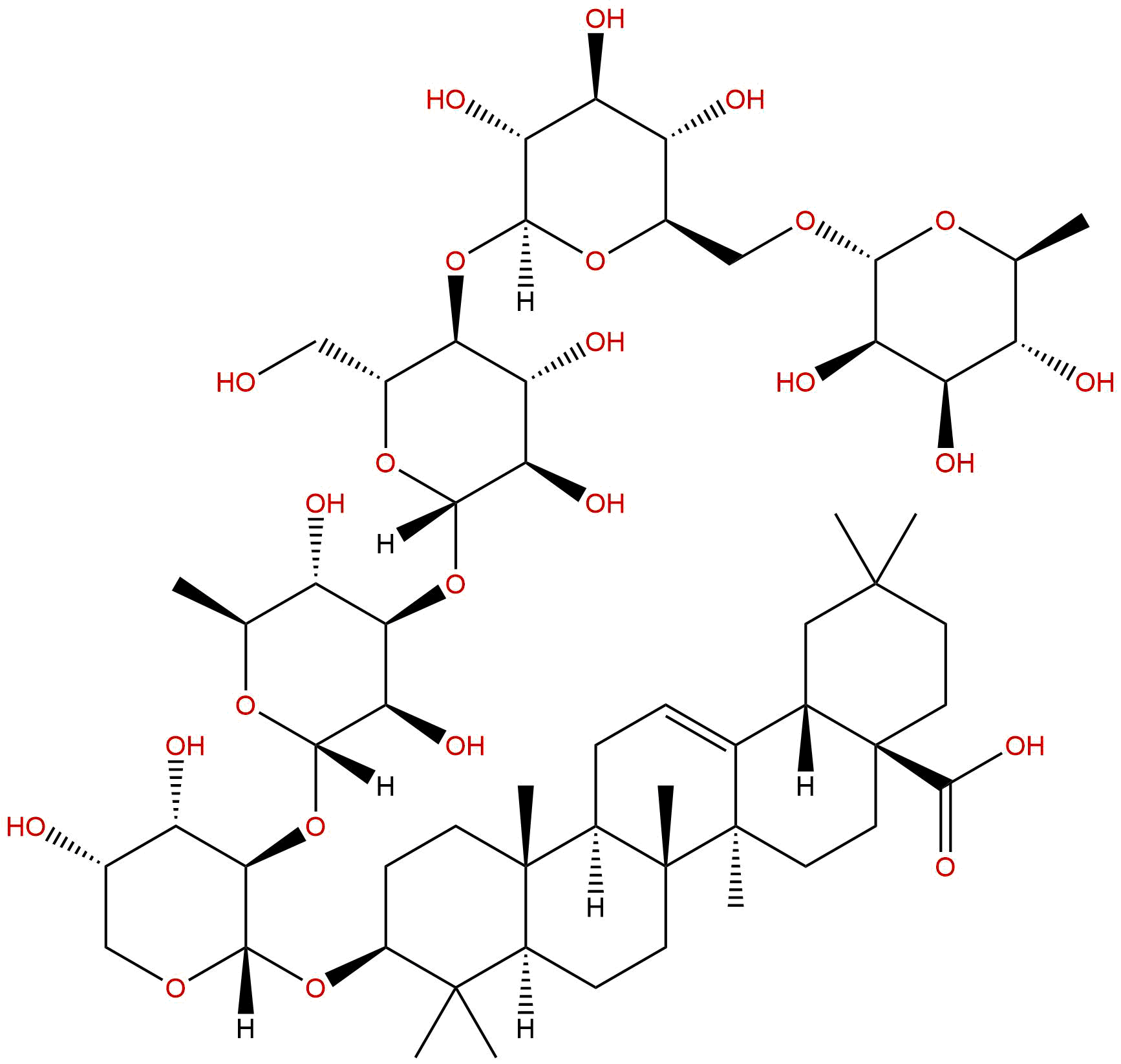
Among the numerous saponins of Paeonia lactiflora, Pulshinenoside E4 (also known as Pulsatilloside E or Hederacholichiside E), as an oleane type pentacyclic triterpenoid saponin, has received widespread attention from scholars at home and abroad in recent years. This compound was first isolated from the roots of white haired Weng, and its unique chemical structure endows it with significant biological activity, especially in the field of anti-tumor, showing great potential. With the continuous deepening of research on the pathogenesis and drug resistance mechanism of leukemia, finding highly efficient, low toxicity, and novel anti leukemia drugs has become an urgent task. Baitouweng saponin E4 has become a highly promising candidate compound due to its significant cytotoxicity against various leukemia cell lines and its potential to exert anti leukemia effects through multi-target regulation.
This article aims to systematically review the chemical structure, physicochemical properties, plant origin, extraction process, pharmacological activity, mechanism of action, pharmacological evaluation, and clinical application prospects of Paeonia lactiflora saponin E4, in order to provide comprehensive reference for the in-depth research and development of this natural product.
Chemical structure and physicochemical properties
Paeonia lactiflora saponin E4 belongs to the Oleanane type pentacyclic triterpenoid saponin. Its glycoside is oleanolic acid, which is a triterpenoid acid widely distributed in nature and has various biological activities. There are sugar chains connected by glycosidic bonds at positions C-3 and C-28. Specifically, the sugar chain composition of Paeonia lactiflora saponin E4 typically includes monosaccharide units such as glucose, xylose, and arabinose, forming complex oligosaccharide chains. This complex glycosylation pattern not only increases the water solubility of the molecule, but also has a decisive impact on its interaction with biological targets and pharmacokinetic behavior.
From the perspective of physical and chemical properties, the molecular weight of Paeonia lactiflora saponin E4 is as high as 1205.3920 Da, which belongs to the category of large molecule natural products. Its lipophilic water partition coefficient (LogP) is 2.1234, indicating that the compound has a certain degree of lipophilicity, but overall tends towards moderate polarity. The topologically polar surface area (TPSA) is as high as 392.5900 Å ², mainly attributed to the large number of hydroxyl and glycosidic oxygen atoms in the molecule. A high TPSA value usually indicates that the compound has good water solubility, but at the same time, it also means that its transmembrane permeability is poor. The calculated water solubility is 0.3614 mg/mL, belonging to the category of slight solubility, which is consistent with the coexistence of hydrophilic sugar chains and hydrophobic glycosides in its structure. It is worth noting that its blood-brain barrier (BBB) penetration ability is predicted to be "low", indicating limited potential for the compound in the treatment of central nervous system diseases, but it may also mean a lower risk of peripheral nervous system related side effects. In addition, the hERG inhibition prediction was "no", and the Ames test result was 0.0, indicating that the compound has a low risk of cardiac toxicity and genetic toxicity, providing favorable early evidence for its safety as a candidate drug.
Plant sources and extraction methods
Paeonia lactiflora saponin E4 mainly comes from the Paeonia lactiflora plant in the Ranunculaceae family(Pulsatilla chinensis)Dry roots. In addition, in North Korea, the White Headed Weng(Pulsatilla cernua)Xing'an White Headed Weng(Pulsatilla dahurica)It has also been found in plants of the same genus, but the content varies depending on factors such as species, place of origin, and harvest season. As a secondary metabolite, triterpenoid saponins are usually stored in vacuoles as glycosides in plants, and their biosynthetic pathways involve modifications of the mevalonate pathway (MVA) and a series of glycosyltransferases.
The traditional method for extracting saponins E4 from Paeonia lactiflora is mainly based on the principle of "similar solubility". Due to the presence of multiple sugar groups and high polarity in the compound, polar solvents are often used for extraction. The classic extraction process is as follows: first, the dried white haired Weng roots are crushed, and then subjected to heating reflux extraction or cold soaking extraction with ethanol or methanol (usually 50% -95%). After filtration and vacuum concentration, the crude extract of total saponins was obtained. In order to further enrich the target components, liquid-liquid extraction method is often used, such as partitioning extraction with n-butanol and water, to enrich saponin components in the n-butanol phase.
Modern separation technology has greatly improved the purification efficiency and yield of Paeonia lactiflora saponin E4. Macroporous adsorption resin (such as D101, AB-8) chromatography is a commonly used method for separating total saponins. By using ethanol water gradient elution at different concentrations, saponins can be preliminarily separated by polarity. Then, combined with silica gel column chromatography, ODS (octadecylsilane bonded silica gel) reverse phase column chromatography, Sephadex LH-20 gel column chromatography and preparative high-performance liquid chromatography (Prep HPLC), high purity monomer compounds can be obtained. In recent years, high-speed countercurrent chromatography (HSCCC) has been successfully applied as an efficient liquid-liquid distribution chromatography technique for the separation and purification of saponins from Paeonia lactiflora due to its advantages of irreversible adsorption and high sample recovery rate. By optimizing the solvent system (such as n-butanol ethyl acetate water system), efficient preparation of paeoniflorin E4 can be achieved.
Pharmacological activity research
The pharmacological activity research of Paeonia lactiflora saponin E4 mainly focuses on its anti-tumor effect, especially its anti leukemia activity.
1. Cytotoxic activity and anti leukemia effect
Early studies have found through MTT or SRB methods that saponins E4 from Paeonia lactiflora exhibit significant inhibitory effects on the proliferation of various human tumor cell lines. Among them, the sensitivity to leukemia cell lines such as HL-60, K562, U937, etc. is particularly prominent. Research data shows that saponins E4 from Paeonia lactiflora can inhibit the growth of leukemia cells in a dose-dependent and time-dependent manner, with a half maximal inhibitory concentration (IC ₅₀) typically at the micromolar level. For example, literature has reported that its IC50 value for acute promyelocytic leukemia HL-60 cells is about 5-10 μ M, demonstrating strong in vitro anti leukemia activity.
2. Inducing cell apoptosis
Further mechanistic studies have shown that the anti leukemia effect of Paeonia lactiflora saponin E4 is closely related to its induction of cell apoptosis. Through Annexin V-FITC/PI dual staining flow cytometry detection, it was observed that after treatment with paeoniflorin E4, the early and late apoptosis rates of leukemia cells significantly increased. Meanwhile, typical morphological features of apoptosis, such as cell shrinkage, chromatin condensation, nuclear fragmentation, and the formation of apoptotic bodies, are clearly visible under a microscope. In addition, Baitouweng saponin E4 can activate the Caspase cascade reaction, including activating Caspase-3, Caspase-8, and Caspase-9, and downregulate the expression of anti apoptotic protein Bcl-2, upregulate the expression of pro apoptotic protein Bax, thereby disrupting mitochondrial membrane potential, releasing cytochrome c, and ultimately synergistically inducing leukemia cell apoptosis through the mitochondrial pathway (endogenous pathway) and death receptor pathway (exogenous pathway).
3. Cell cycle arrest
In addition to inducing apoptosis, cell cycle arrest is also an important mechanism by which paeoniflorin E4 exerts its anti proliferative effect. Research has found that this compound can block leukemia cells in the G ₀/G ₁ phase or G ₂/M phase, and the specific blocking phase may vary depending on the cell type and treatment concentration. For example, in K562 cells, paeoniflorin E4 may inhibit DNA synthesis and cell division by downregulating the expression of G ₁ - phase related proteins such as Cyclin D1 and CDK4, blocking the cells in the G ₀/G ₁ phase. This cycle arrest provides a time window for cells to initiate the apoptotic program.
4. Other pharmacological activities
In addition to its anti leukemia effect, preliminary studies also suggest that Paeonia lactiflora saponin E4 may have anti-inflammatory, antibacterial, and immunomodulatory activities. For example, it may reduce the production of inflammatory factors such as TNF - α and IL-6 by inhibiting the NF - κ B signaling pathway. However, research in these areas is not yet in-depth and requires further systematic verification.
Mechanism of action and molecular targets
The anti leukemia effect of Baitouweng saponin E4 is not achieved through a single target, but presents a complex network feature of multi-target and multi pathway regulation. Based on existing research and relevant targets mentioned in compound information, the mechanism of action can be summarized as follows:
1. Regulation of receptor tyrosine kinases (RTKs)
- FLT3 (FMS like tyrosine kinase 3)FLT3 is one of the most common mutated genes in acute myeloid leukemia (AML), and its internal tandem repeat (ITD) mutation leads to sustained activation of FLT3, driving leukemia cell proliferation and survival. Baitouweng saponin E4 may inhibit the phosphorylation of FLT3, block its downstream STAT5, PI3K/AKT, and RAS/MAPK signaling pathways, thereby suppressing the growth of FLT3-ITD positive leukemia cells.
- KIT(CD117)KIT is another important RTK that is highly expressed or mutated in gastrointestinal stromal tumors and some AML. The potential inhibitory effect of Paeonia lactiflora saponin E4 on KIT activity may further broaden its anti leukemia spectrum.
2. Intervention in the JAK-STAT signaling pathway
- JAK2 (Janus kinase 2)JAK2 is a key kinase for cytokine receptor signaling, and its V617F mutation is a common driving event for myeloproliferative neoplasms (MPNs). Abnormal activation of JAK2 is also common in leukemia. Baitouweng saponin E4 may directly or indirectly inhibit the kinase activity of JAK2, reduce the phosphorylation of STAT3/STAT5, and thereby downregulate the expression of downstream anti apoptotic genes (such as Bcl xL, Mcl-1) and cell cycle proteins (such as Cyclin D1).
3. Effects on epigenetic regulatory factors
- DNMT3A (DNA methyltransferase 3A)DNMT3A is a key enzyme responsible for de novo DNA methylation, and its mutations occur frequently in AML, associated with poor prognosis and hematopoietic stem cell differentiation disorders. Although there is currently no direct evidence to suggest that saponins E4 from Paeonia lactiflora can directly inhibit the enzymatic activity of DNMT3A, studies have shown that certain triterpenoid saponins can affect DNA methylation patterns. Therefore, saponins E4 from Paeonia lactiflora may reverse abnormal epigenetic silencing and reactivate tumor suppressor genes by regulating the expression or activity of DNMT3A.
4. Effects on fusion genes and drug metabolizing enzymes
- BCR-ABL This is a hallmark fusion gene of chronic myeloid leukemia (CML), encoding the P210 protein with sustained tyrosine kinase activity. Baitouweng saponin E4 may exert a cytotoxic effect on imatinib sensitive CML cells by inhibiting BCR-ABL and its downstream signaling pathways (such as PI3K/AKT, RAS/MAPK).
- DCK (deoxycytidine kinase), CDA (cytidine deaminase), NT5C2 (5 '- nucleotidase II), RRM1/RRM2 (ribonucleotide reductase subunit M1/M2)These enzymes are key molecules involved in the metabolism and resistance of nucleoside analogues, such as cytarabine. DCK is responsible for phosphorylating cytarabine into its active form, while CDA and NT5C2 participate in its degradation. RRM1/RRM2 are key enzymes involved in DNA synthesis and repair. Baitouweng saponin E4 may enhance the efficacy of cytarabine and reverse drug resistance by upregulating DCK, downregulating CDA and NT5C2 expression, increasing the accumulation of intracellular active metabolites. Meanwhile, inhibiting the activity of RRM1/RRM2 can directly interfere with DNA synthesis and synergistically enhance the anti leukemia effect.
In summary, Paeonia lactiflora saponins E4 form a multi-target anti leukemia network by simultaneously acting on multiple key nodes that drive the occurrence and development of leukemia, such as FLT3, JAK2, BCR-ABL, epigenetic regulatory factors (DNMT3A), and nucleoside analogue metabolic enzymes (DCK, CDA, etc.). This multi-target mode of action has potential advantages in overcoming the resistance that single target drugs are prone to develop.
Evaluation of drug properties and pharmacokinetics
The evaluation of drug properties is a crucial step in pushing natural products from the laboratory to clinical applications. The medicinal properties of Paeonia lactiflora saponin E4 present both opportunities and challenges.
1. Advantages
- Preliminary safety is good As mentioned earlier, the hERG inhibition prediction is "no" and the Ames test result is 0.0, indicating a low risk of cardiac toxicity and genotoxicity, which is an important additional factor for it as a candidate drug.
- Clear pharmacological activity At the cellular and molecular levels, saponins E4 from Paeonia lactiflora have significant inhibitory and cytotoxic effects on leukemia cells, and the mechanism of action is clear, involving multiple key targets.
- Multi target advantage Its multi-target mode of action is expected to overcome the common resistance problems of single target drugs and may enhance efficacy through synergistic effects.
2. Challenges and shortcomings
- Solubility and permeability The high molecular weight (>1200 Da), high TPSA (>390 Å ²), and moderate LogP of Paeonia lactiflora saponin E4 result in poor water solubility (0.36 mg/mL) and difficulty in passive diffusion through cell membranes. This directly leads to the potential problem of extremely low oral bioavailability. High TPSA means it is difficult to pass through intestinal epithelial cells, while high molecular weight makes it difficult to enter target cells through passive transport.
- Metabolic stability As a saponin compound, it is easily hydrolyzed by acid or metabolized by intestinal microbiota in the gastrointestinal tract, leading to the separation of glycosides and sugar chains, thereby altering its pharmacological activity. Although intravenous administration can avoid first pass effects, its key pharmacokinetic parameters such as half-life, distribution volume, and clearance rate in the blood are still unclear.
- Route of administration restrictions Due to its extremely low oral bioavailability, oral administration may not be an ideal choice. Intravenous injection or transdermal administration may be a more feasible route, but this requires the development of appropriate formulation technologies (such as liposomes, nanoparticles, cyclodextrin inclusion complexes, etc.) to improve their solubility and bioavailability.
3. Current status of pharmacokinetic research
At present, there are few systematic studies on the pharmacokinetics of Paeonia lactiflora saponin E4 in vivo. Previous studies have mostly focused on its metabolism in rats. Preliminary results show that after intravenous injection, the compound is rapidly distributed in the body, but also eliminated quickly. It is distributed more in the liver and kidneys, indicating that it may be mainly excreted through bile and urine. After oral administration, the prototype drug was almost undetectable in the plasma, further confirming its extremely low oral bioavailability. Therefore, future pharmacokinetic studies should focus on exploring how to improve its in vivo fate through novel drug delivery systems, such as nanocarriers.
Clinical application prospects and prospects
Despite the challenges in drug development, the clinical application prospects of Paeonia lactiflora saponin E4 in the field of anti leukemia are still worth looking forward to.
1. As a candidate for novel anti leukemia drugs
Given its multi-target mechanism of action, particularly its potential inhibitory effect on driver genes such as FLT3, JAK2, BCR-ABL, as well as its ability to regulate nucleoside analog metabolic enzymes, Paeonia lactiflora saponin E4 is expected to be developed as an innovative drug for refractory and recurrent leukemia. It can be used as a monotherapy or in combination with existing chemotherapy drugs (such as cytarabine) or targeted drugs (such as imatinib and sorafenib) to improve treatment efficacy through synergistic enhancement and overcoming drug resistance.
2. Potential to overcome drug resistance
One of the main reasons for clinical treatment failure is the development of resistance in leukemia cells to single targeted drugs, such as FLT3 inhibitors and BCR-ABL inhibitors. Baitouweng saponin E4 can act on multiple signaling pathways and metabolic enzymes simultaneously, making it difficult for tumor cells to escape drug action through a single mutation. This multi-target characteristic gives it a natural advantage in dealing with drug resistance.
3. Future research directions
- Structural modification and optimization Based on the mother nucleus structure of Paeonia lactiflora saponin E4, its sugar chain can be modified through chemical synthesis or biotransformation methods (such as removing some sugar groups and introducing specific functional groups), or the aglycone can be modified to obtain derivatives with stronger activity, better solubility, and more stable metabolism.
- Development of a new drug delivery system Using nanotechnology (such as liposomes, polymer micelles, albumin nanoparticles) or prodrug design strategies to address the issues of poor water solubility and low oral bioavailability. For example, encapsulating it in liposomes can achieve targeted delivery and sustained release after intravenous administration.
- In depth in vivo pharmacological and toxicological research Establish multiple leukemia animal models (such as xenograft tumor models and genetically engineered mouse models), systematically evaluate their in vivo anti-tumor activity, pharmacokinetic characteristics, and long-term toxicity. Especially pay attention to its impact on normal hematopoietic stem cells and the immune system.
- Exploration of Combination Medication Scheme In vitro and in vivo models, a systematic screening of drug combinations with synergistic effects of Paeonia lactiflora saponin E4 was conducted, and its synergistic mechanism was elucidated to provide theoretical basis for clinical combination therapy.
- Expand indication research In addition to leukemia, its potential therapeutic effects on other solid tumors (such as liver cancer, lung cancer, colorectal cancer) and autoimmune diseases should also be explored.
Conclusion
As a triterpenoid saponin isolated from the traditional Chinese medicine Bai Tou Weng, Bai Tou Weng saponin E4 has become a new star in the field of natural product drug development due to its significant anti leukemia activity and multi-target mechanism of action. It exerts great potential as a candidate drug for anti leukemia by regulating key oncogenic signaling pathways such as FLT3, JAK2, BCR-ABL, affecting DNMT3A mediated epigenetics, and intervening in nucleoside analog metabolic enzymes. However, its high molecular weight, poor water solubility, and low oral bioavailability are the obstacles that it must overcome in order to enter clinical practice. In the future, through structural modification, development of novel drug delivery systems, and in-depth pharmacological and toxicological research, it is expected to overcome these bottlenecks and transform the active ingredients of this ancient Chinese medicine into modern drugs that truly benefit leukemia patients. The in-depth study of Paeonia lactiflora saponin E4 not only provides new lead compounds for the development of anti leukemia drugs, but also once again confirms the irreplaceable value of traditional natural products in the modern precision medicine era.