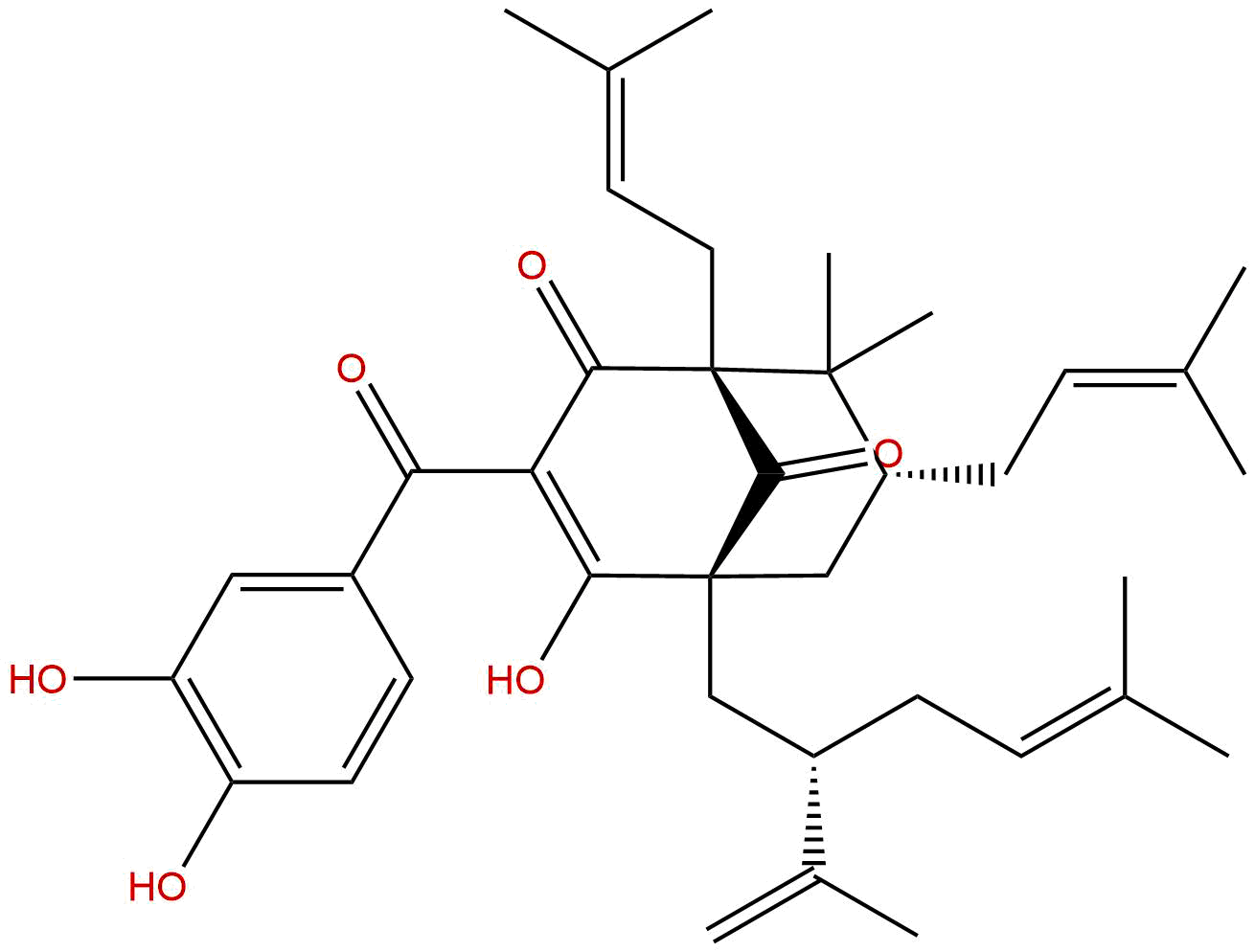


Product name: Garcinol
Synonym name: Guttiferone F
Catalogue No.: BP5480
Cas No.: 78824-30-3
Formula: C38H50O6
Mol Weight: 602.812
Botanical Source:
Type of Compound: Miscellaneous
Purity: 95%~99%
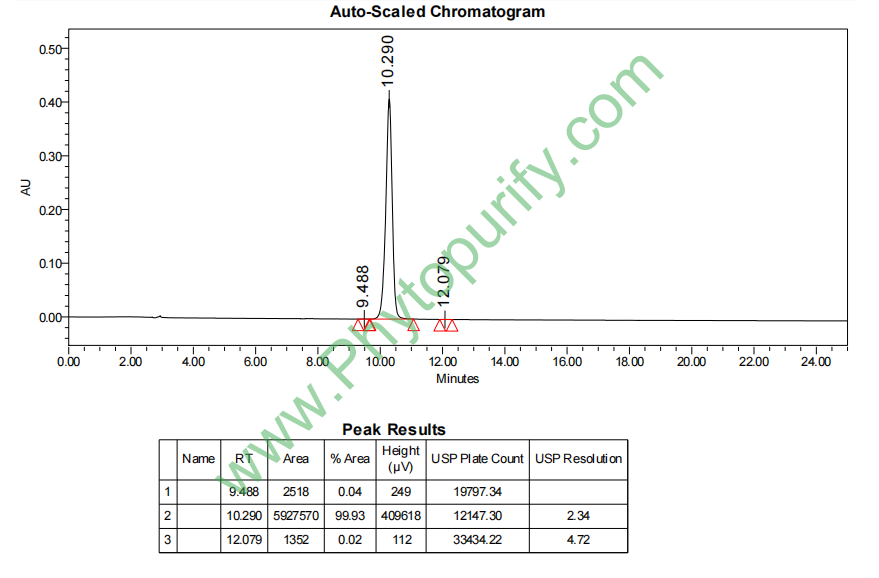
Analysis Method: HPLC-DAD or/and HPLC-ELSD
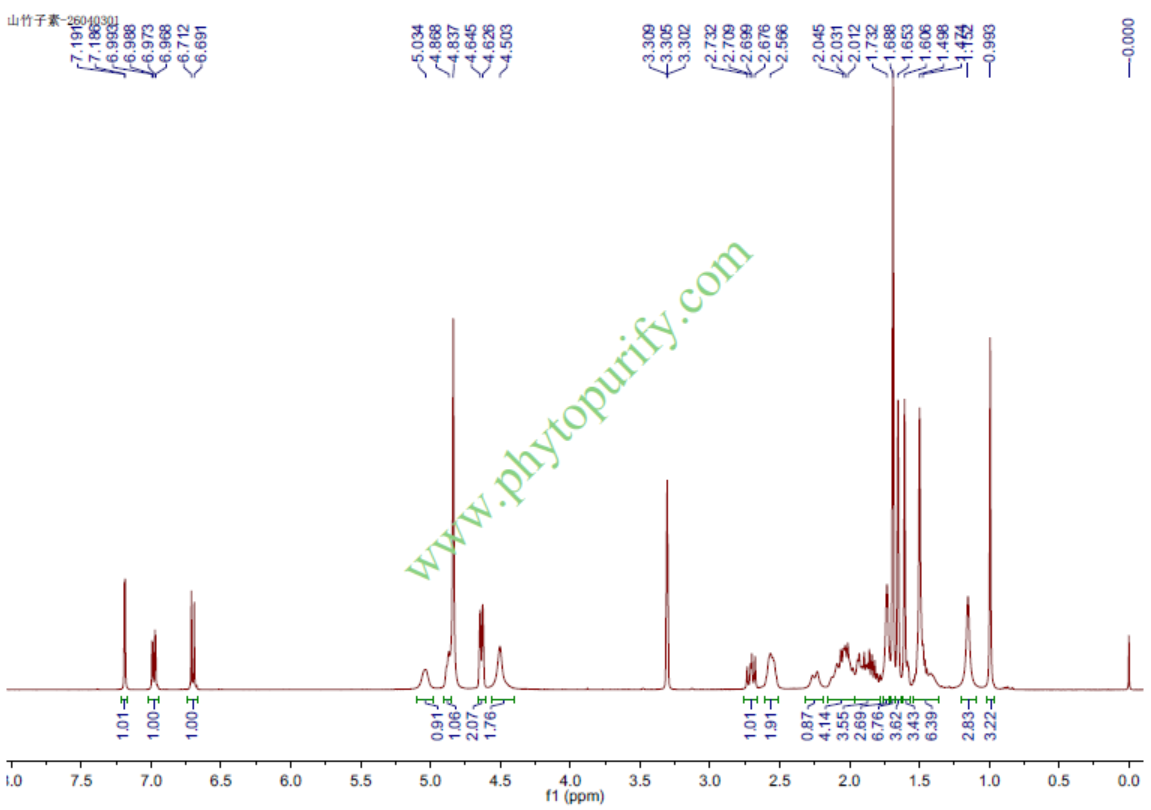
Identification Method: Mass, NMR
Packing: Brown vial or HDPE plastic bottle
Storage: Store in a well closed container, protected from air and light. Put into refrigerate or freeze for long term storage.
Whenever possible, you should prepare and use solutions on the same day. However, if you need to make up stock solutions in advance, we recommend that you store the solution as aliquots in tightly sealed vials at -20℃. Generally, these will be useable for up to two weeks.
The product could be supplied from milligrams to grams
Inquire for bulk scale.
For Reference Standard and R&D, Not for Human Use Directly.
HPLC of Garcinol
HNMR of Garcinol
Storage conditions:Short-term storage at 2~8℃, long-term storage at -20 ~ -80℃
111.9600
6.0000
No
Unknown
Unknown
Unknown
Unknown
Unknown
Unknown
Natural products, as an important source of drug discovery, have played an irreplaceable role in the long history of human struggle against diseases. From ancient plant therapies to modern target based drug screening, the diverse secondary metabolites in nature continue to provide unique chemical frameworks and lead compounds for the development of innovative drugs. Among numerous biologically active natural products, Garcinol has attracted great attention from medicinal chemists, pharmacologists, and natural product researchers in recent years due to its unique chemical structure and extensive pharmacological activities.
Shanzhuzi Su is a polyisoprene based benzophenone compound, mainly derived from the genus Tenghuang(Garcinia)Separated from the bark, fruit, and resin of plants, especially from Indian rattan(Garcinia indica)The medium content is the most abundant. As early as the ancient Indian Ayurvedic medical system, extracts of rattan were used to treat diseases such as inflammation, ulcers, and parasitic infections. Modern scientific research has gradually revealed the molecular basis of mangosteen as its core active ingredient. Shanzhuzi Su not only exhibits significant anti-inflammatory, antioxidant, and anticancer activities, but also has become a hot topic in the research fields of neurodegenerative diseases and epigenetic regulation due to its dual inhibitory effects on acetylcholinesterase (AChE) and butyrylcholinesterase (BChE), as well as its specific inhibition on histone acetyltransferases (HATs) and p300/CBP related factors (PCAF).
This article aims to provide a systematic professional review of mountain bamboo extract, starting from its chemical structure and physicochemical properties, and deeply exploring its plant origin and extraction process. It comprehensively sorts out its pharmacological activities in anti-inflammatory, anticancer, neuroprotective and other aspects, and focuses on elucidating its molecular mechanism of action on key targets such as acetylcholinesterase, butyrylcholinesterase and histone acetyltransferase. Meanwhile, based on its pharmacological parameters and pharmacokinetic characteristics, objectively evaluate its potential and challenges as a lead compound or candidate drug, and look forward to its application prospects in future clinical translation.
The chemical structure of Garcinol (CAS number: 78824-30-3) belongs to the polyisoprenylated benzophenone class, and its core skeleton consists of a benzophenone core and multiple isoprene side chains. Specifically, the molecule of mountain bamboo contains a highly oxidized benzoyl-p-phenylglucinol core, to which three isoprene units are attached. This unique structure endows mangosteen with abundant chemical properties and diverse biological activities.
From the molecular formula, the molecular formula of mangosteen is C ∝₈ H ₅₀ O ₆, with a molecular weight of 594.8000 Da. Its lipid water partition coefficient LogP is as high as 6.0000, indicating that the compound has strong lipophilicity. This characteristic is closely related to the presence of multiple hydrophobic isoprene side chains in its molecule. A high LogP value means that the solubility of mangosteen in water is extremely low, but it is easy to penetrate biological membranes and interact with lipid bilayers or hydrophobic protein pockets on cell membranes. The topological polar surface area (TPSA) is 111.9600 Å ², which is at a moderate level and suggests that it may have some potential for oral absorption. However, a higher TPSA also suggests that it may be limited by the barrier effect of tight junctions in intestinal epithelial cells.
In terms of hydrogen bond donors and acceptors, mangosteen contains six hydrogen bond acceptors (mainly carbonyl and hydroxyl oxygen atoms), as well as several phenolic hydroxyl groups that can form hydrogen bonds. These functional groups are the key structural basis for their specific interactions with target proteins such as acetylcholinesterase and histone acetyltransferase. It is worth noting that the molecular structure of mangosteen contains multiple chiral centers, but its naturally occurring configuration is usually a specific optical isomer. In addition, the phenolic hydroxyl groups in the molecule endow it with certain reducibility and free radical scavenging ability, which is closely related to its antioxidant activity.
From the perspective of chemical stability, mangosteen is sensitive to light, heat, and oxygen, especially in solution, and is prone to oxidative degradation. The double bond in its isoprene side chain is also a potential chemical reaction site, which may participate in cyclization or addition reactions. Therefore, in the process of experimental research and formulation development, it is necessary to adopt storage conditions such as avoiding light, low temperature, and inert gas protection to maintain its chemical integrity.
Shanzhuzi Su mainly comes from the genus Tenghuang(Garcinia)Plants, belonging to the Clusiaceae family, are widely distributed in tropical and subtropical regions of Asia, Africa, and South America. Among them, Indian rattan(Garcinia indica Choisy is the most abundant and classic source of mangosteen, with high concentrations of mangosteen found in its fruits, bark, and resin. In addition, other plants of the Tenghuang genus such as Garcinia cambogia、Garcinia xanthochymus、Garcinia cowa and Garcinia mangostana There have also been reports of the presence of mangosteen or its structural analogues in (mountain bamboo). In Indian rattan, mangosteen is mainly enriched in the skin and seeds, with a content of 2% to 5% of dry weight, making it an ideal raw material for industrial extraction.
The traditional extraction method mainly relies on organic solvent extraction. Due to its high lipophilicity, commonly used extraction solvents include methanol, ethanol, ethyl acetate, dichloromethane, and chloroform. Usually, dry and crushed plant materials are mixed with solvents and subjected to multiple extractions at room temperature or under heating conditions. After combining the extracts, the crude extract is concentrated under reduced pressure. Subsequently, preliminary purification is carried out through liquid-liquid distribution extraction (such as petroleum ether methanol water system) to remove polar impurities. Further separation and purification require the use of column chromatography techniques, such as silica gel column chromatography, reverse phase C18 column chromatography, and preparative high-performance liquid chromatography (HPLC). In silica gel column chromatography, gradient elution is usually used, such as n-hexane ethyl acetate or chloroform methanol systems, to gradually separate berberine. Due to the characteristic absorption of mangosteen under ultraviolet light (approximately 280-320 nm), it can be monitored online through a UV detector.
In recent years, in order to improve extraction efficiency and purity, while reducing the use of organic solvents, some green extraction techniques have also been applied to the extraction of mangosteen. For example, Supercritical Fluid Extraction (SFE) uses CO ₂ as the extraction solvent and selectively extracts non-polar to moderately polar compounds by adjusting pressure and temperature. Research has shown that SFE technology can obtain high-purity mountain bamboo extract and avoid the problem of residual organic solvents. In addition, ultrasound assisted extraction (UAE) and microwave-assisted extraction (MAE) disrupt plant cell walls through physical field effects, accelerate the dissolution of target compounds, significantly shorten extraction time, and improve yield.
In terms of quality control, high-performance liquid chromatography (HPLC) combined with mass spectrometry (LC-MS) is the most commonly used method for identifying and quantifying berberine. Usually, a C18 reverse phase chromatography column is used, with acetonitrile water or methanol water (containing 0.1% formic acid) as the mobile phase for gradient elution, monitored at 280-320 nm under a UV detector. The retention time, UV absorption spectrum, and mass spectrometry fragment information (such as [M+H] ⁺ m/z 595.4) of mangosteen can serve as the basis for its qualitative identification. Quantitative analysis is carried out through external standard method, and a standard curve is drawn using a known concentration of kaempferol standard for calculation.
The pharmacological activity spectrum of mangosteen is extremely broad, covering multiple fields such as anti-inflammatory, anticancer, neuroprotective, antioxidant, antibacterial, etc. Among them, anti-inflammatory, anticancer, and neuroprotective activities are particularly prominent.
anti-inflammatory activity Mangkhut extract has shown significant anti-inflammatory effects in various in vitro and in vivo inflammatory models. In macrophages, berberine can inhibit the release of pro-inflammatory factors such as tumor necrosis factor - α (TNF - α), interleukin-1 β (IL-1 β), and interleukin-6 (IL-6) induced by lipopolysaccharide (LPS). The mechanism involves inhibition of the nuclear factor kappa B (NF - κ B) signaling pathway, which blocks the nuclear translocation and transcriptional activity of NF - κ B by inhibiting the phosphorylation and degradation of I κ B α. In addition, mangosteen can inhibit the expression of cyclooxygenase-2 (COX-2) and inducible nitric oxide synthase (iNOS), reduce the production of prostaglandin E ₂ (PGE ₂) and nitric oxide (NO). In animal models, oral administration of mangosteen extract can effectively alleviate carrageenan induced paw swelling in rats and acetic acid-induced increased intra-abdominal capillary permeability in mice, demonstrating efficacy comparable to classical nonsteroidal anti-inflammatory drugs.
anticancer activity: Caryophyllin has cytotoxic effects on a variety of human cancer cell lines, including breast cancer, prostate cancer, lung cancer, colon cancer, liver cancer, melanoma and leukemia. Its anti-cancer mechanism is multi-target and multi pathway. Firstly, mangosteen can induce cell cycle arrest by upregulating cyclin dependent kinase inhibitors such as p21 and p27, which can block cells in the G1/S or G2/M phase. Secondly, mangosteen extract is a powerful inducer of apoptosis, which can activate the caspase cascade through the mitochondrial pathway (endogenous pathway) and death receptor pathway (exogenous pathway). Specifically, it promotes the release of cytochrome c from mitochondria, upregulates the Bax/Bcl-2 ratio, activates caspase-9 and caspase-3, and increases the expression of death receptors DR4 and DR5. In addition, mangosteen can also inhibit the PI3K/Akt/mTOR signaling pathway, which plays a central role in cell survival and proliferation. It is worth noting that the toxicity of mangosteen to normal cells is usually lower than that to cancer cells, demonstrating a certain degree of selectivity.
Neuroprotective activity This is one of the research hotspots of mangosteen in recent years. Mangosteen has dual inhibitory activity against acetylcholinesterase (AChE) and butyrylcholinesterase (BChE), with IC ₅₀ values of 0.66 μ M and 7.39 μ M, respectively. AChE and BChE are key enzymes that hydrolyze the neurotransmitter acetylcholine. In the brains of Alzheimer's disease (AD) patients, the activity of these two enzymes is abnormally elevated, leading to a decrease in cholinergic neurotransmission function. Therefore, as a dual acetylcholinesterase inhibitor, mangosteen is expected to improve cognitive function by increasing synaptic acetylcholine levels. Compared with single AChE inhibitors used clinically, such as donepezil, dual target inhibition may have a more comprehensive therapeutic effect, especially in cases of compensatory elevation of BChE activity in late stages of the disease. In addition, mangosteen can also inhibit the aggregation of β - amyloid protein (A β) and the excessive phosphorylation of tau protein, both of which are core pathological features of AD. Meanwhile, its antioxidant and anti-inflammatory activities also help alleviate neuroinflammation and oxidative stress damage, thereby protecting neurons.
Other activities Mangkhut extract also exhibits significant antioxidant activity, directly scavenging free radicals such as DPPH and ABTS ⁺, and enhancing the activity of endogenous antioxidant enzymes such as superoxide dismutase (SOD) and glutathione peroxidase (GPx) in cells. In addition, the study also reported its antibacterial (especially against Helicobacter pylori and methicillin-resistant Staphylococcus aureus), antiviral (such as against HIV and influenza virus), and anti ulcer activities.
The pharmacological activity of mangosteen stems from its direct or indirect interactions with multiple key protein targets. A deep understanding of these molecular mechanisms is crucial for their further drug development.
Acetylcholinesterase inhibition mechanism The inhibitory effect of mangosteen extract on acetylcholinesterase (AChE) and butyrylcholinesterase (BChE) is the core of its neuroprotective activity. Molecular docking and dynamic simulation studies have revealed that kaempferol can embed into the active site ridge of AChE. Its massive polyisoprene benzophenone skeleton forms π - π stacking and hydrophobic interactions with residues such as tryptophan (Trp86), tyrosine (Tyr337), and phenylalanine (Phe338) in the enzyme's aromatic ridge. At the same time, the hydroxyl groups in the molecule form hydrogen bonds with key residues in the catalytic triad (Ser203, His447, Glu334), competitively inhibiting the hydrolysis of acetylcholine. For BChE, kaempferol also binds to its active site in a similar manner, but due to the wider canyon of BChE's active site compared to AChE, the binding mode of kaempferol may be slightly different, which explains why its inhibitory activity on AChE (IC ₅₀=0.66 μ M) is much stronger than on BChE (IC ₅₀=7.39 μ M). This dual target inhibitory property, especially the highly selective inhibition of AChE, makes it a powerful candidate molecule for the treatment of Alzheimer's disease.
Inhibition mechanism of histone acetyltransferase (HAT)Caryophyllin is a known natural HAT inhibitor, particularly exhibiting selective inhibitory effects on p300 and PCAF, with IC ₅₀ values of 7 μ M and 5 μ M, respectively. HATs are a class of epigenetic modifying enzymes responsible for transferring acetyl groups from acetyl CoA to histone lysine residues, thereby relaxing chromatin structure and promoting gene transcription. P300 and PCAF play a crucial role in regulating the expression of genes related to inflammation, cancer, and neurodegenerative diseases. Caryophyllin competitively binds to the acetyl CoA binding pocket of p300/PCAF, blocking its enzymatic activity. Specifically, the phenolic hydroxyl group of mangosteen forms hydrogen bonds with key amino acids in the active site of p300, such as Tyr1467 and Trp1436, while its hydrophobic side chains interact with surrounding hydrophobic residues to stabilize the binding conformation. By inhibiting p300/PCAF, mangosteen can downregulate the acetylation levels of transcription factors such as NF - κ B and STAT3, thereby inhibiting the expression of pro-inflammatory genes and oncogenes. This mechanism is an important epigenetic basis for its anti-inflammatory and anticancer activities.
Inhibition of NF - κ B signaling pathway Caryophyllin inhibits the NF - κ B signaling pathway through various mechanisms. Firstly, it can inhibit the activity of I κ B kinase (IKK), prevent the phosphorylation and ubiquitination degradation of I κ B α, and anchor NF - κ B (p65/p50 dimer) in the cytoplasm. Secondly, mangosteen can directly bind to the p65 subunit, preventing its nuclear translocation and binding to DNA. In addition, by inhibiting p65 acetylation mediated by p300, mangosteen further weakened the transcriptional activity of NF - κ B. NF - κ B is a core regulatory factor in inflammation and cancer, and its downstream target genes include COX-2, iNOS, TNF - α, IL-6, Bcl xL, cyclin D1, and VEGF. Therefore, the multi-level inhibition of NF - κ B by mangosteen is the key hub for its broad-spectrum anti-inflammatory and anticancer activities.
Inhibition of PI3K/Akt/mTOR pathway Shanzhuzi Su can inhibit the activity of PI3K, leading to a decrease in the phosphorylation level of Akt, which in turn inhibits the activation of downstream effector molecules mTOR and S6K1. Inhibition of this pathway leads to downregulation of cyclin D1 expression and upregulation of p21 and p27 expression, thereby inducing cell cycle arrest. At the same time, the decrease in Akt activity also promotes the dephosphorylation of the pro apoptotic protein Bad, which is released from its binding with Bcl xL, thereby activating the mitochondrial apoptosis pathway.
Other targets Caryophyllin has also been reported to inhibit the Wnt/β - catenin signaling pathway, STAT3 signaling pathway, and telomerase activity. In addition, it can directly bind to various kinases such as Src and EGFR and inhibit their activity. This multi-target mode of action makes mangosteen potentially advantageous in the treatment of complex diseases such as cancer and neurodegenerative diseases, but it also increases the complexity of its toxicology and pharmacokinetic studies.
To transform mangosteen from a natural product into a clinically usable drug, strict evaluation of its drug like and pharmacokinetic (ADME) properties is necessary.
Analysis of drug properties parameters According to Lipinski's "Rule of Five", the molecular weight of mangosteen (594.8 Da) exceeds the threshold of 500 Da, and the LogP (6.0) is also greater than 5. Although the number of hydrogen bond donors (phenolic hydroxyl groups) and acceptors (6) is within an acceptable range, overall, mangosteen violates two of the "Five Rules" (molecular weight and LogP), indicating that it may have low oral bioavailability. Although high lipophilicity (LogP=6.0) is beneficial for its penetration of cell membranes, it may also lead to extremely poor solubility in the intestine, thereby limiting its absorption. The TPSA is 111.96 Å ², and it is generally believed that molecules with a TPSA greater than 140 Å ² have poor oral absorption. The TPSA of mangosteen is at a critical value. In addition, the blood-brain barrier (BBB) penetration assessment is rated as' No ', which poses a significant challenge for its application as a neuroprotective agent, such as in the treatment of Alzheimer's disease. Although it exhibits potent inhibition of AChE and BChE in vitro, its actual efficacy in the brain will be greatly reduced if it cannot effectively penetrate the BBB. The evaluation results of hepatotoxicity, cardiotoxicity (hERG inhibition), and Ames test (mutagenicity) are all "unknown", indicating a lack of systematic toxicological research data, which is a gap that needs to be filled as a priority in future development.
Pharmacokinetic characteristics At present, there is relatively limited data on the pharmacokinetics of mangosteen in vivo, but existing studies have revealed some key characteristics. After oral administration, the absorption of mangosteen is poor, and its absolute bioavailability may be very low. This is mainly attributed to its extremely low water solubility and large molecular weight. After intravenous injection, the half-life of mangosteen in plasma is relatively short, indicating that it may be rapidly cleared. Its high lipophilicity makes it tend to be distributed in organs rich in lipids such as the liver and adipose tissue. In terms of metabolism, mangosteen mainly undergoes phase I metabolism (such as oxidation and reduction) and phase II metabolism (such as glucuronidation and sulfation). The cytochrome P450 enzyme system (especially CYP3A4) in the liver may be involved in its oxidative metabolism. The combination reaction of II generates metabolites with higher water solubility, promoting their excretion through bile and urine. It is worth noting that mangosteen may undergo extensive metabolism in the intestine, which further reduces its oral bioavailability.
Formulation strategy Given the poor medicinal properties of mangosteen, developing a suitable drug delivery system is the key to overcoming its application bottleneck. New formulation technologies such as liposomes, nanoparticles, solid lipid nanoparticles (SLN), and phospholipid complexes have been explored to enhance the solubility and oral bioavailability of berberine. For example, encapsulating mountain bamboo extract in poly (lactic acid glycolic acid) copolymer (PLGA) nanoparticles can significantly improve its dispersibility in water and achieve sustained release effect. In addition, by preparing the Shanzhuzi Su phospholipid complex, its affinity with biofilms can be enhanced, promoting transmembrane transport. For neuroprotective applications that require penetration through the BBB, targeted nanocarrier systems (such as nanoparticles with surface modified transferrin receptor antibodies or apolipoprotein E) may be a future research direction.
Due to its unique chemical structure and multi-target pharmacological activity, mangosteen has shown broad clinical application prospects in multiple therapeutic fields.
Neurodegenerative diseases This is one of the most promising application directions for mountain bamboo extract. Its dual inhibitory activity on AChE and BChE, combined with its anti A β aggregation, anti tau phosphorylation, antioxidant, and anti-inflammatory effects, makes it an ideal multi-target candidate molecule for the treatment of Alzheimer's disease (AD). Compared with current AChE inhibitors that only target a single target in clinical practice, mangosteen may provide a more comprehensive disease modifying effect. However, its poor BBB penetration is the biggest obstacle. Future research needs to focus on developing formulations that can effectively deliver mangosteen through the BBB, or designing derivatives with better BBB penetration. In addition, the potential of mangosteen in other neurodegenerative diseases such as Parkinson's disease (PD) and Huntington's disease (HD) is also worth exploring.
cancer treatment The broad-spectrum cytotoxicity of mangosteen to various cancer cell lines and its relatively low toxicity to normal cells make it a promising chemotherapy adjuvant or chemopreventive agent. It regulates epigenetics by inhibiting HATs (p300/PCAF), providing a new approach for cancer epigenetic therapy. Caryophyllin can be used in combination with existing chemotherapy drugs such as cisplatin, paclitaxel, and 5-fluorouracil to enhance efficacy and reduce the occurrence of drug resistance through synergistic effects. For example, studies have shown that berberine can enhance the sensitivity of colon cancer cells to 5-fluorouracil. In addition, its role in inhibiting tumor angiogenesis and metastasis also deserves further research.
Inflammatory diseases The potent anti-inflammatory activity of mangosteen makes it potentially applicable in the treatment of chronic inflammatory diseases such as rheumatoid arthritis, inflammatory bowel disease, and asthma. It can effectively control the inflammatory response by inhibiting the NF - κ B and COX-2/iNOS pathways. Local administration (such as topical application on the skin or rectal administration) may be an effective strategy to avoid systemic toxicity and increase local drug concentration.
Future research directions:
1. Research on Structural Optimization and Structure Performance Relationship Systematically study the contribution of various functional groups (especially isoprene side chains and phenolic hydroxyl groups) in the molecular structure of mountain bamboo extract to its biological activity, and design and prepare a series of structurally similar compounds through semi synthetic or total synthetic methods, in order to obtain derivatives with stronger activity, higher selectivity, and better pharmacokinetic properties. For example, introducing polar groups to reduce LogP, or modifying isoprene groups to improve metabolic stability.
2. In depth in vivo pharmacological and toxicological studies Systematically evaluate the pharmacological effects of mangosteen and its derivatives in various animal models, such as AD transgenic mice, tumor xenograft models, and inflammation models. At the same time, comprehensive acute and chronic toxicology studies will be conducted, including toxicity assessments of the liver, kidneys, heart, and reproductive system, as well as genetic toxicity (Ames test) and hERG channel inhibition activity testing.
3. Development of advanced drug delivery systems Targeting the bottleneck of poor solubility and low BBB penetration of mountain bamboo extract, we will focus on developing targeted nano delivery systems, liposomes, phospholipid complexes, etc. to improve their bioavailability and targeting. Especially for neurodegenerative diseases, the development of brain targeted nanomaterials that can efficiently penetrate the BBB is the key to breakthroughs.
4. Clinical translational research After completing sufficient preclinical research, promote the clinical trial phase of mangosteen or its derivatives. It is crucial to establish an extraction, purification, and quality control system that complies with GMP standards, as natural products often face issues such as dosage, purity, and batch consistency in clinical trials.
As a polyisoprene benzophenone derived from traditional medicinal plants, mangosteen extract has demonstrated extraordinary value in the field of modern drug discovery due to its unique chemical structure and multi-target pharmacological activity. From inhibiting acetylcholinesterase to improve cognitive function, to regulating histone acetylation to intervene in epigenetics, and to inhibiting inflammation and tumors through multiple pathways, the mechanism network of action of berberine profoundly reveals the potential of natural products in the treatment of complex diseases.
However, the road from laboratory to clinical translation is not smooth. The inherent high lipophilicity, low water solubility, poor BBB penetration, and unclear toxicological characteristics of Shanzhuzi Su constitute the main challenges in its medicinal development. These obstacles are both bottlenecks that limit its development and indicate directions for future research. Through structural optimization, advanced formulation technology, and in-depth pharmacokinetic and toxicological studies, it is expected to overcome these difficulties.
Looking ahead, mangosteen and its structural derivatives are highly likely to play an important role in the treatment of major diseases such as neurodegenerative diseases, cancer, and chronic inflammation. Especially in the face of the global health challenge of Alzheimer's disease, mangosteen, as a natural acetylcholinesterase inhibitor and epigenetic regulator, provides valuable lead structures for the development of a new generation of multi-target disease modifying drugs. We have reason to believe that with the continuous deepening of research and the advancement of technology, the ancient natural product of mangosteen will eventually shine on the stage of modern medicine.
