Introduction/Overview
Natural products, as an important source of drug discovery, play a crucial role in the long struggle between humans and diseases. Especially alkaloids derived from traditional medicinal plants, due to their structural diversity and significant biological activity, have always been a hot topic in the development of new drugs. Among numerous natural products with pharmacological potential, tetrahydrocoptisine, also known as (±) - Xylopine, as an isoquinoline alkaloid, has attracted widespread attention from researchers in recent years. This compound is mainly derived from the genus Corydalis in the Papaveraceae family(Corydalis)Obtained from the tubers of plants, it is a traditional Chinese medicine such as Corydalis yanhusuo(Corydalis yanhusuo)Not with summer(Corydalis decumbens)One of the important active ingredients.
According to traditional Chinese medicine theory, plants of the genus Corydalis have the functions of promoting blood circulation, regulating qi, relieving pain, and calming, and are commonly used to treat various pain, inflammation, and neurological diseases. Modern pharmacological research has gradually revealed its material basis, among which tetrahydrocoptisine has been confirmed to be one of the key components mediating these pharmacological effects. Early research mainly focused on its anti-inflammatory and analgesic effects, but as research deepened, its pharmacological spectrum continued to expand, covering multiple fields such as anti-tumor, neuroprotective, anti anxiety, anti depression, and anti ulcer. Especially its multi-target regulatory role in the anti-inflammatory pathway and inhibitory activity against various tumor cell lines make it a highly valuable and promising lead compound for research and development.
This review aims to systematically review the research progress of tetrahydrocoptisine, starting from its chemical structure and physicochemical properties, and deeply explore its plant origin, extraction process, wide pharmacological activities, complex molecular mechanisms of action, and evaluate its pharmacokinetic characteristics and development potential in combination with pharmacological parameters. By comprehensively analyzing existing research results, this review will look forward to the clinical application prospects of tetrahydrocoptisine in the future, and point out the shortcomings and future directions of current research, in order to provide theoretical basis and scientific reference for the in-depth development and transformation of this natural product.
Chemical structure and physicochemical properties
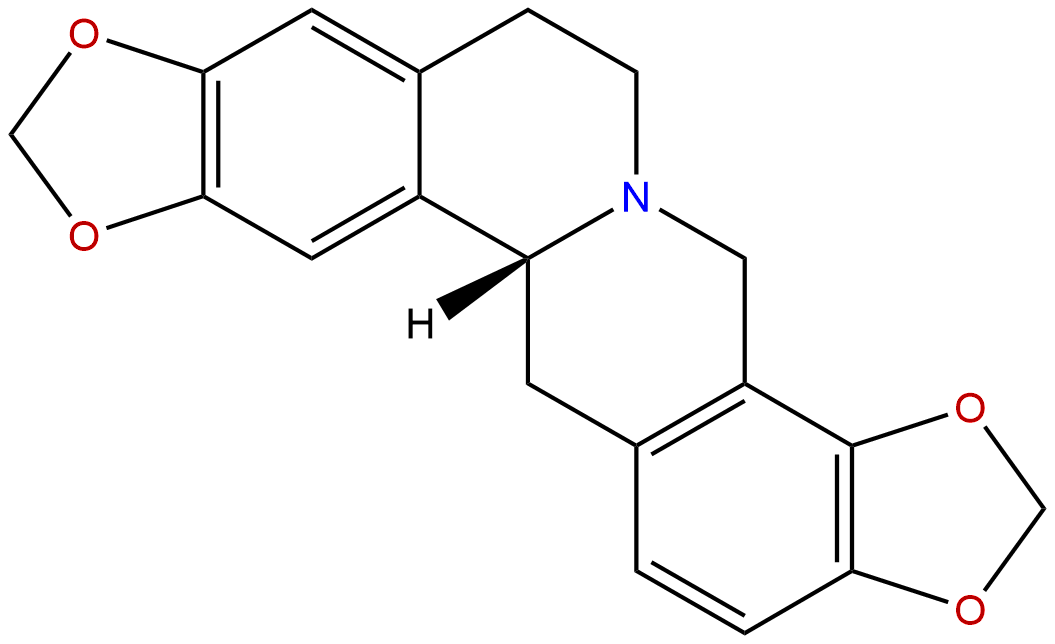
The chemical name of tetrahydrocoptisine is (±) - Stolopine, which belongs to the protoberberine alkaloid class. Its core skeleton is composed of a tetracyclic isoquinoline structure, specifically 5,6,7,8-tetrahydro [1,3] dioxolano [4,5-g] isoquinoline [3,2-a] isoquinoline. This molecule has a highly reduced tetrahydropyridine ring (C ring), which contrasts sharply with the fully aromatic structure of quaternary ammonium type berberine alkaloids such as berberine. There are two methylene dioxy (- O-CH ₂ - O -) bridging structures in the molecule, which are respectively connected to the C2-C3 positions of the A ring and the C9-C10 positions of the D ring, giving the molecule a certain degree of rigidity and planarity. The molecule of tetrahydrocoptisine contains a chiral center (C14 position), therefore there exists a pair of enantiomers, namely (±) - Xylopine. Natural products usually exist in the form of racemates or a specific configuration (such as (+) - or (-) -), and their biological activity may vary depending on the enantiomer. However, most pharmacological studies currently use racemates.
From the perspective of physicochemical properties, the molecular formula of tetrahydrocoptisine is C ₁₉ H ₁₇ NO ₄, with a molecular weight of 323.3480 Da. Its lipid water partition coefficient (LogP) is 2.4925, indicating that the compound has moderate lipophilicity, which is conducive to its penetration into biological membranes. The topological polar surface area (TPSA) is 40.1600 Å ², which is lower than the recommended upper limit of 140 Å ² for oral drugs, indicating its good oral absorption potential. However, its water solubility (0.0053 mg/mL) is extremely poor, making it a poorly soluble compound, which may be one of the main factors limiting its oral bioavailability. It is worth noting that the pharmacological parameters show that tetrahydrocoptisine has high blood-brain barrier (BBB) penetration ability, which is highly consistent with its protective effect in neurological diseases such as anxiety and depression. In addition, the predicted result of hERG inhibition is "no", indicating that it has a low risk of causing QT interval prolongation in the heart; The Ames test predicted a value of 0.6, indicating a low potential genetic toxicity risk, but further experimental verification is needed. These physicochemical properties and preliminary pharmacological evaluations provide important references for subsequent formulation design and pharmacokinetic studies.
Plant sources and extraction methods
Tetrahydrocoptisine is relatively limited in distribution in nature and mainly exists in the Papaveraceae family of the genus Corydalis(Corydalis)In plants. The purple violet genus is a vast family of over 400 plant species, widely distributed in northern temperate and mountainous regions, especially in East Asia (such as China, Japan, and South Korea) where resources are abundant. In China, Yanhusuo(Corydalis yanhusuo)Not available in summer(Corydalis decumbens)Northeast Yanhusuo(Corydalis ambigua)And the dental valve and Corydalis yanhusuo(Corydalis turtschaninovii)The tubers of various species of Corydalis are the main source of tetrahydrocoptisine. In addition, this compound is also present in small amounts in the poppy genus(Papaver)Plants like poppies(Papaver somniferum)Medium, but the content is much lower than that of the genus Corydalis. The content of tetrahydrocoptisine varies significantly among plants of different genera, origins, and harvest seasons, with the highest content usually found in tubers and lower content in aboveground parts.
Traditional extraction methods are mostly based on the acid-base properties of alkaloids, using solvent extraction. The typical process involves crushing dried plant tubers, percolating or soaking them in an acidic aqueous solution (such as 0.5% -1% hydrochloric acid or sulfuric acid) to dissolve alkaloids into salts. After filtration, adjust the acidic extract to alkaline (pH 9-10) with alkaline solution (such as ammonia or sodium hydroxide) to precipitate free alkaloids, and then perform liquid-liquid extraction with organic solvents such as chloroform, ethyl acetate, or n-butanol. Combine the organic phases and concentrate under reduced pressure to obtain a crude extract of total alkaloids. Subsequently, the crude extract was separated and purified using silica gel column chromatography, alumina column chromatography, or preparative high-performance liquid chromatography (pre HPLC). Due to the similar polarity of tetrahydroberberine and other structurally similar alkaloids in the genus Corydalis, such as tetrahydropalmatine and protopine, the separation process usually requires gradient elution and tracking detection using thin-layer chromatography (TLC) or high-performance liquid chromatography (HPLC).
In recent years, in order to overcome the disadvantages of traditional methods such as high solvent consumption, cumbersome steps, and low efficiency, some modern extraction techniques have been applied to the extraction of tetrahydrocoptisine. For example, ultrasound assisted extraction (UAE) and microwave-assisted extraction (MAE) can significantly improve extraction efficiency and shorten extraction time by disrupting cell walls and accelerating solvent penetration. Supercritical fluid extraction (SFE), especially using carbon dioxide as a solvent, has shown promising application prospects due to its green, environmentally friendly, and highly selective characteristics. In addition, high-speed countercurrent chromatography (HSCCC), as a liquid-liquid distribution chromatography technique, does not require a solid stationary phase and can effectively avoid irreversible adsorption of samples on the column, making it particularly suitable for large-scale separation and preparation of medium polarity alkaloids such as tetrahydrocoptisine. The application of these modern technologies not only improves the extraction rate and purity of target compounds, but also provides material guarantees for subsequent pharmacological activity research and industrial development.
Pharmacological activity research
The pharmacological activity spectrum of tetrahydrocoptisine is extensive, covering multiple aspects such as anti-inflammatory, anti-tumor, neuropsychiatric system protection, digestive system protection, etc., demonstrating the characteristics of a multi effect drug.
1. Anti inflammatory activity
Anti inflammation is one of the core pharmacological activities of tetrahydrocoptisine. Numerous in vitro and in vivo experiments have confirmed that this compound can effectively inhibit various inflammatory models. In the macrophage RAW264.7 model stimulated by lipopolysaccharide (LPS), tetrahydrocoptisine can significantly reduce the production of pro-inflammatory cytokines such as tumor necrosis factor - α (TNF - α), interleukin-6 (IL-6), and nitric oxide (NO). In addition, it can also inhibit the expression of cyclooxygenase-2 (COX-2) and inducible nitric oxide synthase (iNOS). In vivo, tetrahydrocoptisine exhibits protective effects on various acute and chronic inflammation models. For example, in the rat toe swelling model induced by carrageenan, it can effectively reduce the degree of edema; In the acetic acid-induced model of increased peritoneal capillary permeability in mice, it can inhibit the exudation of inflammatory mediators. More importantly, tetrahydrocoptisine has a significant protective effect on acute lung injury (ALI) models, which can reduce alveolar wall thickening, inflammatory cell infiltration, and pulmonary edema, improve lung function, and provide a basis for its application in respiratory inflammatory diseases.
2. Antitumor activity
Tetrahydrocoptisine exhibits growth inhibitory and apoptosis inducing activities on various tumor cell lines. Studies have shown that it can inhibit the proliferation of many kinds of cancer cells, such as human liver cancer cells (HepG2), human breast cancer cells (MCF-7), human lung cancer cells (A549), human colon cancer cells (HT-29), and human leukemia cells (HL-60). Its anti-tumor mechanism involves multiple aspects: firstly, it can induce tumor cell apoptosis by regulating Bcl-2 family proteins (such as upregulating pro apoptotic protein Bax, downregulating anti apoptotic proteins Bcl-2 and Mcl-1) and activating the Caspase cascade reaction. Secondly, tetrahydrocoptisine can inhibit the phosphorylation of signal transduction and transcription activator 3 (STAT3), thereby blocking the expression of downstream target genes such as cyclin D1 and vascular endothelial growth factor (VEGF), and inhibiting tumor cell proliferation and angiogenesis. In addition, it can also inhibit the expression and activity of matrix metalloproteinase 2 (MMP-2), thereby reducing the invasion and migration ability of tumor cells. The inhibitory activity of topoisomerase I (TOP1) and topoisomerase II α (TOP2A) also suggests that they may exert anti-tumor effects by interfering with DNA replication and transcription.
3. Protective effect on the nervous and mental system
Given its high blood-brain barrier penetration ability, tetrahydrocoptisine has been particularly studied in the field of neurological and psychiatric disorders. In animal models of anxiety and depression, tetrahydrocoptisine exhibits significant anti anxiety and antidepressant like effects. In the mouse tail suspension test (TST) and forced swimming test (FST), it can significantly shorten immobility time, and its effect is comparable to the positive drug fluoxetine. Its antidepressant mechanism may be related to regulating the levels of monoamine neurotransmitters such as serotonin, norepinephrine, and dopamine. In addition, tetrahydrocoptisine also has neuroprotective effects, which can alleviate neuronal damage induced by glutamate, hydrogen peroxide, or beta amyloid protein (A β). In the model of cerebral ischemia-reperfusion injury, it can reduce the volume of cerebral infarction, improve neurological function scores, and its mechanism may be related to inhibiting oxidative stress, reducing inflammatory response, and anti apoptosis.
4. Digestive system protection function
Tetrahydroberberine also has a protective effect on the digestive system. In various gastric ulcer models, such as ethanol induced, stress-induced, or nonsteroidal anti-inflammatory drug (such as indomethacin) induced gastric ulcer models, tetrahydrocoptisine can significantly reduce ulcer index, increase gastric mucosal blood flow, and promote mucus secretion. Its gastric protective mechanism may be related to enhancing gastric mucosal barrier function, inhibiting gastric acid secretion, antioxidant and anti-inflammatory effects. In addition, it can also inhibit Helicobacter pylori(Helicobacter pylori)The growth of this substance adds new weight to its application in the treatment of peptic ulcers.
Mechanism of action and molecular targets
The pharmacological activity of tetrahydrocoptisine is not mediated by a single target, but is achieved through the synergistic action of multiple targets and pathways. Its core mechanism of action can be summarized as follows:
1. Regulating the inflammatory signaling pathway
The anti-inflammatory effect of tetrahydrocoptisine mainly stems from its inhibition of key inflammatory signaling pathways. The most in-depth research is on the regulation of mitogen activated protein kinase (MAPK) and nuclear factor kappa B (NF - κ B) pathways. In LPS stimulated macrophages, tetrahydrocoptisine can significantly inhibit the phosphorylation of p38 MAPK and extracellular signal regulated kinase 1/2 (ERK1/2), thereby blocking the synthesis of downstream inflammatory mediators. At the same time, it can also inhibit the nuclear translocation and DNA binding activity of NF - κ B, which may be achieved by inhibiting the activity of I κ B kinase (IKK), preventing the phosphorylation and degradation of I κ B α, and locking NF - κ B in the cytoplasm, preventing it from entering the nucleus to initiate the transcription of pro-inflammatory genes (such as TNF - α, IL-6, iNOS, COX-2). This dual inhibition of MAPK and NF - κ B is the molecular basis for its powerful anti-inflammatory effect.
2. Inducing tumor cell apoptosis and inhibiting proliferation
In terms of anti-tumor effects, tetrahydrocoptisine induces cell apoptosis through multiple pathways. Firstly, it directly acts on the mitochondrial apoptosis pathway. By downregulating the expression of anti apoptotic proteins Mcl-1 and Bcl-2, while upregulating the expression of pro apoptotic protein Bax, the mitochondrial membrane potential (Δ PSI m) decreases, releasing cytochrome c (Cyt c), which in turn activates Caspase-9 and Caspase-3, ultimately leading to cell apoptosis. Secondly, tetrahydrocoptisine is an effective inhibitor of the STAT3 signaling pathway. STAT3 is continuously activated in various tumors and is a key transcription factor that promotes tumor proliferation, survival, and angiogenesis. Tetrahydroberberine inhibits JAK kinase or directly interacts with STAT3 protein, blocking the phosphorylation of the Tyr705 site of STAT3, inhibiting its dimerization and nuclear translocation, thereby downregulating the expression of its target genes such as Cyclin D1, Survivor, VEGF, and MMP-2. In addition, the inhibition of topoisomerases I and II α interferes with the topological structure of DNA, leading to DNA damage and cell cycle arrest, which is also an important component of its anti-tumor mechanism.
3. Regulating neurotransmitters and neurotrophic factors
The anti anxiety and anti depressive effects of tetrahydrocoptisine are closely related to its regulation of the central nervous system. Research has shown that it can increase the levels of monoamine neurotransmitters (5-HT, NE, DA) in brain regions such as the prefrontal cortex and hippocampus, which may be achieved by inhibiting the activity of monoamine oxidase (MAO) or blocking the reuptake of neurotransmitters by the presynaptic membrane. In addition, tetrahydrocoptisine can upregulate the expression of brain-derived neurotrophic factor (BDNF) and activate its downstream TrkB receptor and PI3K/Akt and MAPK/ERK signaling pathways, thereby promoting neuronal survival, synaptic plasticity, and neurogenesis. This dual regulation of the neurotransmitter system and neurotrophic factors is key to its antidepressant and neuroprotective effects.
4. Antioxidant and anti apoptotic effects
The methylenedioxy group contained in the molecular structure of tetrahydrocoptisine has certain antioxidant potential. It can directly eliminate reactive oxygen species (ROS), increase the activity of intracellular superoxide dismutase (SOD) and glutathione peroxidase (GSH Px), reduce malondialdehyde (MDA) levels, and thus alleviate oxidative stress damage. In gastric ulcer and cerebral ischemia models, its antioxidant activity is one of the important mechanisms for protecting tissues from damage. Meanwhile, by inhibiting the activity of Caspase-3 and regulating Bcl-2 family proteins, tetrahydrocoptisine can effectively suppress cell apoptosis and protect normal cells from damage.
Evaluation of drug properties and pharmacokinetics
Based on the aforementioned physicochemical properties and pharmacological activity, it is crucial to conduct a systematic pharmacological evaluation of tetrahydrocoptisine. Its molecular weight (323.35 Da) and LogP value (2.49) conform to Lipinski's "five rules" (molecular weight<500, LogP<5), indicating that it has the basic chemical properties to become an oral drug. The TPSA value (40.16 Å ²) also indicates good membrane permeability. However, its extremely poor water solubility (0.0053 mg/mL) is the biggest bottleneck restricting its medicinal properties. Low water solubility not only affects oral absorption, but also poses challenges for the development of injectable formulations. Therefore, improving its solubility and dissolution rate is a key direction for future formulation research, such as using technologies such as solid dispersions, cyclodextrin inclusion complexes, nanoliposomes, or phospholipid complexes.
In terms of pharmacokinetics (PK), there is currently insufficient research on the in vivo processes of tetrahydrocoptisine. Limited animal experiments have shown that oral administration of tetrahydrocoptisine results in poor absorption and possibly lower absolute bioavailability, which is closely related to its low water solubility. Its high blood-brain barrier penetration ability suggests that it has a high distribution volume in the central nervous system, which provides favorable conditions for it to exert neuroprotective effects. In terms of metabolism, as an isoquinoline alkaloid, tetrahydrocoptisine is mainly metabolized in the liver by cytochrome P450 enzyme systems (such as CYP3A4, CYP2D6), and may undergo phase I reactions such as O-demethylation and hydroxylation, as well as phase II reactions such as glucuronidation and sulfation. The biological activity of its metabolites remains to be elucidated. The main excretion pathways may be through the kidneys and bile. It is worth noting that the low risk of hERG inhibition and negative Ames test in the pharmacological parameters indicate a lower risk of cardiac and genetic toxicity, which is an important safety advantage. However, these predicted results still need to be validated through rigorous in vitro and in vivo toxicology experiments. In the future, more comprehensive PK studies are needed, including absorption, distribution, metabolism, excretion (ADME) characteristics in different species of animals, as well as food effects, dose linear relationships, etc., to provide data support for their clinical development.
Clinical application prospects and prospects
Tetrahydrocoptisine has shown broad application prospects in multiple therapeutic fields due to its pleiotropic pharmacological activity and relatively good safety.
1. Anti inflammatory and immune regulation Given its strong anti-inflammatory activity, tetrahydrocoptisine has the potential to be developed as a novel drug for the treatment of chronic inflammatory diseases such as rheumatoid arthritis and inflammatory bowel disease. Its protective effect on acute lung injury also suggests its application value in the treatment of acute respiratory distress syndrome (ARDS). In the future, it can be explored to develop it into oral or inhalation formulations.
2. Anti tumor adjuvant therapy The inhibitory effect of tetrahydrocoptisine on various tumor cells, especially its mechanism of inhibiting STAT3 and inducing apoptosis, makes it a highly promising anti-tumor lead compound. It can be used as a monotherapy or in combination with existing chemotherapy drugs such as cisplatin and paclitaxel, becoming a new choice for adjuvant therapy of tumors through synergistic enhancement, reduction of drug resistance, and alleviation of toxic side effects.
3. Treatment of neurological and psychiatric disorders Its anti anxiety, anti depression, and neuroprotective effects, combined with its high BBB penetration, give it unique advantages in the field of mental and neurological disorders. It can be developed as a candidate drug for the treatment of chronic neurodegenerative diseases such as depression, anxiety, Alzheimer's disease (AD), and Parkinson's disease (PD). Especially its multi-target action characteristics are in line with the current concept of "multi-target" in the treatment of mental illnesses.
4. Treatment of digestive system diseases Its protective effect on gastric ulcers and inhibitory effect on Helicobacter pylori give it a dual advantage in the treatment of peptic ulcers. Can be developed as a novel drug for treating gastric ulcers and chronic gastritis.
Future research directions:
Despite the bright prospects, the clinical translation of tetrahydrocoptisine still faces many challenges. Future research should focus on the following aspects:
- Improve bioavailability Developing advanced drug delivery systems (such as nanoparticles, liposomes, phospholipid complexes) is the key to solving their poor water solubility and low oral absorption.
- In depth mechanism research By utilizing modern omics technologies such as proteomics and metabolomics, as well as gene knockout/knock in animal models, we can more comprehensively reveal their target genes and signaling networks.
- Study on Structure Activity Relationship By chemical synthesis or semi synthesis methods, structural modification of the parent nucleus of tetrahydrocoptisine is carried out to search for derivatives with stronger activity, higher selectivity, and better pharmacokinetic properties.
- Systematic Toxicological Evaluation Conduct comprehensive preclinical safety evaluations on long-term toxicity, reproductive toxicity, immune toxicity, etc. to ensure the safety of medication.
- Clinical translational research After completing sufficient preclinical research, design rigorous clinical trials to validate their effectiveness and safety in the target indication.
Conclusion
Tetrahydroberberine, as a natural isoquinoline alkaloid derived from traditional Chinese medicine plants of the genus Corydalis, occupies an important position in the field of natural product drug development due to its unique chemical structure and extensive pharmacological activity. This review systematically summarizes the research progress in chemistry, botany, pharmacology, mechanisms, and drug properties. It exerts multiple effects such as anti-inflammatory, anti-tumor, neuroprotective, and anti ulcer by regulating multiple key signaling pathways such as MAPK/NF - κ B and STAT3, demonstrating great potential as a multi-target drug. Although poor water solubility and low oral bioavailability are the main challenges currently faced, these obstacles are expected to be overcome through modern formulation technology and structural modification strategies. With the continuous deepening of research, especially the detailed analysis of its mechanism of action and the comprehensive elucidation of its pharmacokinetic characteristics, tetrahydrocoptisine and its derivatives are expected to be transformed into new drugs for the treatment of inflammation, tumors, neurological, psychiatric, and digestive system diseases in the future, contributing to human health. The core value of natural product medicine research lies in excavating treasures from traditional Chinese medicine and verifying and developing them using modern scientific methods.