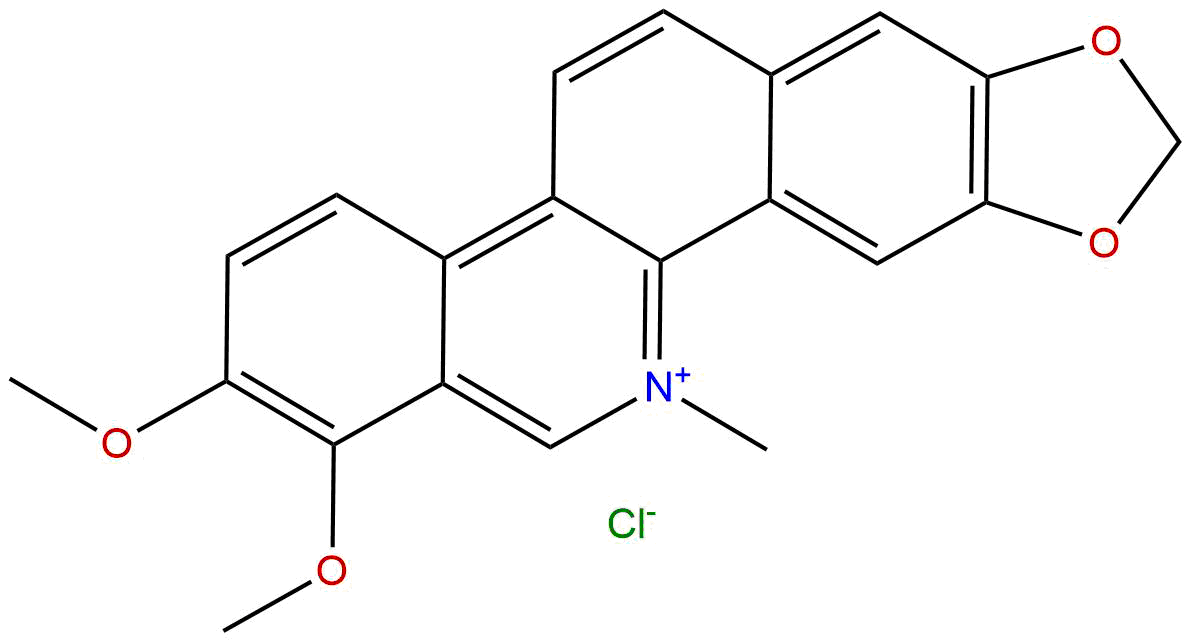


Synonym name:
Catalogue No.: BP0341
Cas No.: 3895-92-9
Formula: C21H18ClNO4
Mol Weight: 383.828
Botanical Source:
Purity: 95%~99%
Analysis Method: HPLC-DAD or/and HPLC-ELSD
Identification Method: Mass, NMR
Packing: Brown vial or HDPE plastic bottle
Can be supplied from milligrams to grams.
For Reference Standard and R&D, Not for Human Use Directly.
Inquire for bulk scale.
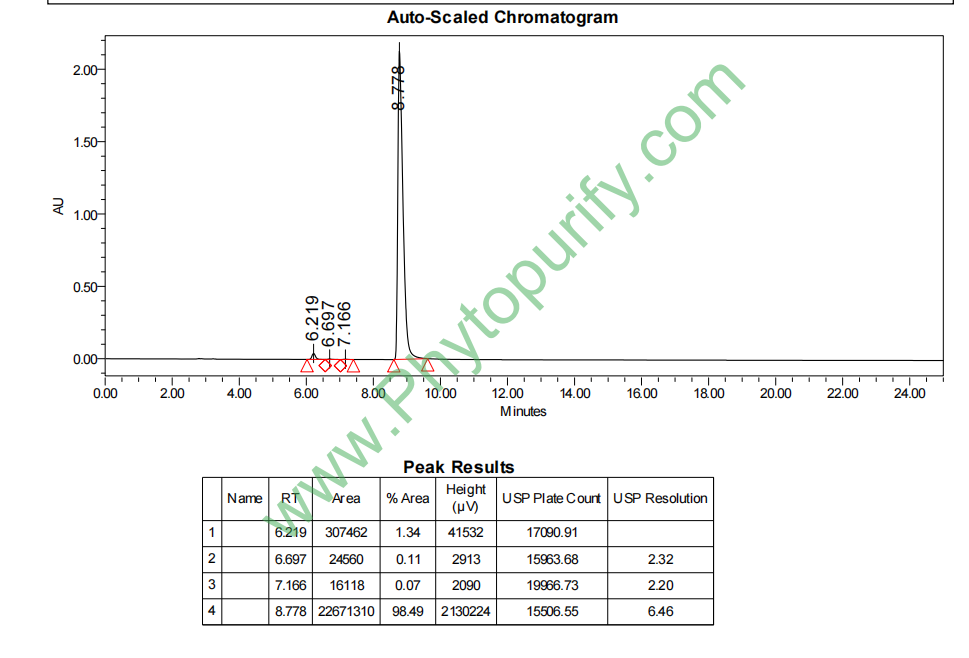
HPLC of Chelerythrine chloride
Storage conditions:Short-term storage at 2~8℃, long-term storage at -20 ~ -80℃
Chelerythrine chloride (CAS number: 3895-92-9) is a compound derived from the natural plant Chelidonium alkaloids, which has attracted much attention due to its significant biological activity and unique molecular mechanism of action. As an effective inhibitor of protein kinase C (PKC), berberine chloride can penetrate cell membranes, regulate multiple signaling pathways, induce cell apoptosis and autophagy, and demonstrate broad pharmacological potential. In recent years, with the deepening development of tumor biology and molecular pharmacology, chloroquercetin has shown important therapeutic value in the study of malignant tumors such as liver cancer, and has become a research hotspot in the field of natural product pharmacology.
This article aims to provide a systematic review of the chemical structure and physicochemical properties, plant sources and extraction methods, pharmacological activity and mechanism of action of chlorinated quercetin. Combining its pharmacological evaluation and pharmacokinetic characteristics, it explores its potential clinical application prospects in diseases such as liver cancer, and provides theoretical basis and research direction for subsequent drug development and clinical translation.
Chloroquercetin is a benzoisoquinoline alkaloid with the molecular formula C21H18ClNO4 and a molecular weight of 387.83. Its structural features include a benzisoquinoline skeleton with multiple methoxy substituents and a chloride ion coordination, endowing it with good lipophilicity and cell membrane permeability. Its LogP value is 1.89, indicating that it has moderate lipid solubility, which is beneficial for the action of intracellular targets.
The topological polar surface area (TPSA) of chlorinated quercetin is 55.84 Å ², with 4 hydrogen bond acceptors, indicating its polarity and hydrogen bonding ability in intermolecular interactions, which facilitates binding to protein targets. Its high blood-brain barrier permeability suggests that this compound also has potential value in the study of central nervous system diseases.
However, chloroquercetin has certain hepatotoxicity and cardiotoxicity, and has inhibitory effects on hERG channels. The Ames test showed a positive result, indicating a genetic toxicity risk, which poses a safety challenge for its clinical application.
Chlorinated Chelidonium majus alkaloids mainly come from the poppy family plant Chelidonium majus L. and related plant species. As a traditional Chinese medicinal herb, Bai Qu Cai is widely distributed in parts of Europe and Asia. Its roots, stems, and aboveground parts contain abundant isoquinoline alkaloids.
The commonly used methods for extracting chlorinated quercetin include:
Solvent extraction method Extract dried plant materials using organic solvents such as methanol, ethanol, or ethyl acetate, and then enrich alkaloid components through liquid-liquid distribution and acid-base regulation.
Column chromatography separation Separate and purify the crude extract using silica gel or C18 reverse phase column, and obtain high-purity chloroquercetin by gradient elution.
High performance liquid chromatography (HPLC) detection Used for qualitative and quantitative analysis of the content of chlorinated quercetin in extracts, ensuring the stability and repeatability of the extraction process.
In recent years, the application of ultrasound assisted extraction and microwave-assisted extraction technologies has improved extraction efficiency and purity, providing technical support for industrial production.
Chloroquercetin, as a PKC inhibitor, exhibits various pharmacological activities, mainly including anti-tumor, anti-inflammatory, antibacterial, and neuroprotective effects.
Chloroquercetin exhibits significant cytotoxicity in various tumor cell lines, particularly in liver cancer cells, by inhibiting PKC activity (IC50 of approximately 660 nM) and regulating the function of Bcl-2 family proteins, inducing apoptosis and autophagy. Its IC50 for inhibiting the binding of Bcl XL Bak BH3 peptide is 1.5 μ M, which can replace Bax from Bcl XL, disrupt the protective effect of anti apoptotic proteins, and promote programmed cell death of cancer cells.
In addition, berberine chloride can regulate tumor related signaling pathways such as STAT3, PI3K/AKT, NF - κ B, etc., inhibit tumor cell proliferation, migration, and invasion, reduce MMP9 expression, and suppress malignant progression of the tumor microenvironment.
By inhibiting the PKC and NF - κ B signaling pathways, chloroquercetin exhibits anti-inflammatory activity, reduces the secretion of inflammatory factors such as TNF - α and IL-6, alleviates inflammatory responses, and has potential therapeutic value for immune related diseases.
Partial studies have shown that chloroquercetin has a protective effect on nerve cells, possibly by regulating cell apoptosis and autophagy mechanisms, slowing down the progression of neurodegenerative diseases. In addition, its antibacterial activity also provides a possibility for its application in infectious diseases.
The main mechanism of action of chlorinated quercetin is focused on the inhibition of the protein kinase C (PKC) family. PKC, as a key enzyme in cell signaling, is involved in cell proliferation, differentiation, apoptosis, and metabolic regulation. Chloroquercetin binds competitively to the catalytic site of PKC, blocking its kinase activity and inhibiting downstream signal transduction.
In addition, the regulation of Bcl-2 family proteins by chlorinated quercetin is particularly critical. It can inhibit the binding of Bcl XL to Bak BH3 peptide, promote the release of Bax from Bcl XL, and activate mitochondrial pathway for cell apoptosis. This mechanism is particularly significant in liver cancer cells, promoting programmed cell death of cancer cells.
Molecular targets also include:
In summary, the synergistic effect of chloroquercetin on multiple targets and pathways achieves its anti-tumor and cellular regulatory functions.
The molecular weight (387.83) and LogP (1.89) of chlorinated quercetin comply with Lipinski's rule, theoretically exhibiting good oral bioavailability and cell permeability. Its TPSA value is moderate, which is beneficial for target binding and in vivo distribution.
However, multiple safety hazards have been exposed in the evaluation of drug properties:
In terms of pharmacokinetics, chloroquercetin has high blood-brain barrier permeability, indicating its potential application value in central nervous system diseases, but central toxicity also needs to be considered.
At present, there is still incomplete data on its metabolic pathways, half-life, excretion mode, etc. In the future, systematic pharmacokinetic studies are needed to provide support for clinical dose design and safety evaluation.
Chloroquercetin, with its significant PKC inhibitory activity and multi-target regulatory effects, has shown broad application prospects in the treatment of malignant tumors such as liver cancer. The dual mechanism of inducing cell apoptosis and autophagy provides a new approach for overcoming tumor drug resistance and improving therapeutic efficacy.
However, its potential hepatotoxicity, cardiotoxicity, and genetic toxicity limit its direct clinical application. Future research should focus on:
Taking all factors into consideration, as a candidate molecule for the development of natural product drugs, chloroquercetin has important research and development value, but its clinical translation still needs to overcome multiple challenges.
Chloroquercetin, as a natural source PKC inhibitor, has shown significant pharmacological activity in the field of anti-tumor, especially liver cancer treatment, due to its unique chemical structure and multi-target regulatory mechanism. Its ability to induce cell apoptosis and autophagy provides a new strategy for tumor treatment. However, safety issues in the formulation of drugs, especially hepatotoxicity and cardiotoxicity, have become the main bottlenecks in their clinical application.
Future research should focus on structural optimization, targeted delivery, and combination therapy strategies, while strengthening pharmacokinetic and toxicological studies, to promote the translation of chloroquercetin from laboratory research to clinical applications. As an important representative in the field of natural product pharmacology, in-depth research on chlorinated quercetin not only helps enrich the natural product drug library, but also provides new ideas and possibilities for the treatment of major diseases such as liver cancer.
