| Catalog No | Package | Original Price | Price | Inventory | Quantity | Operating |
|---|---|---|---|---|---|---|
| BPF0293-5mg | 5mg | $250.00 | Sign in |
|


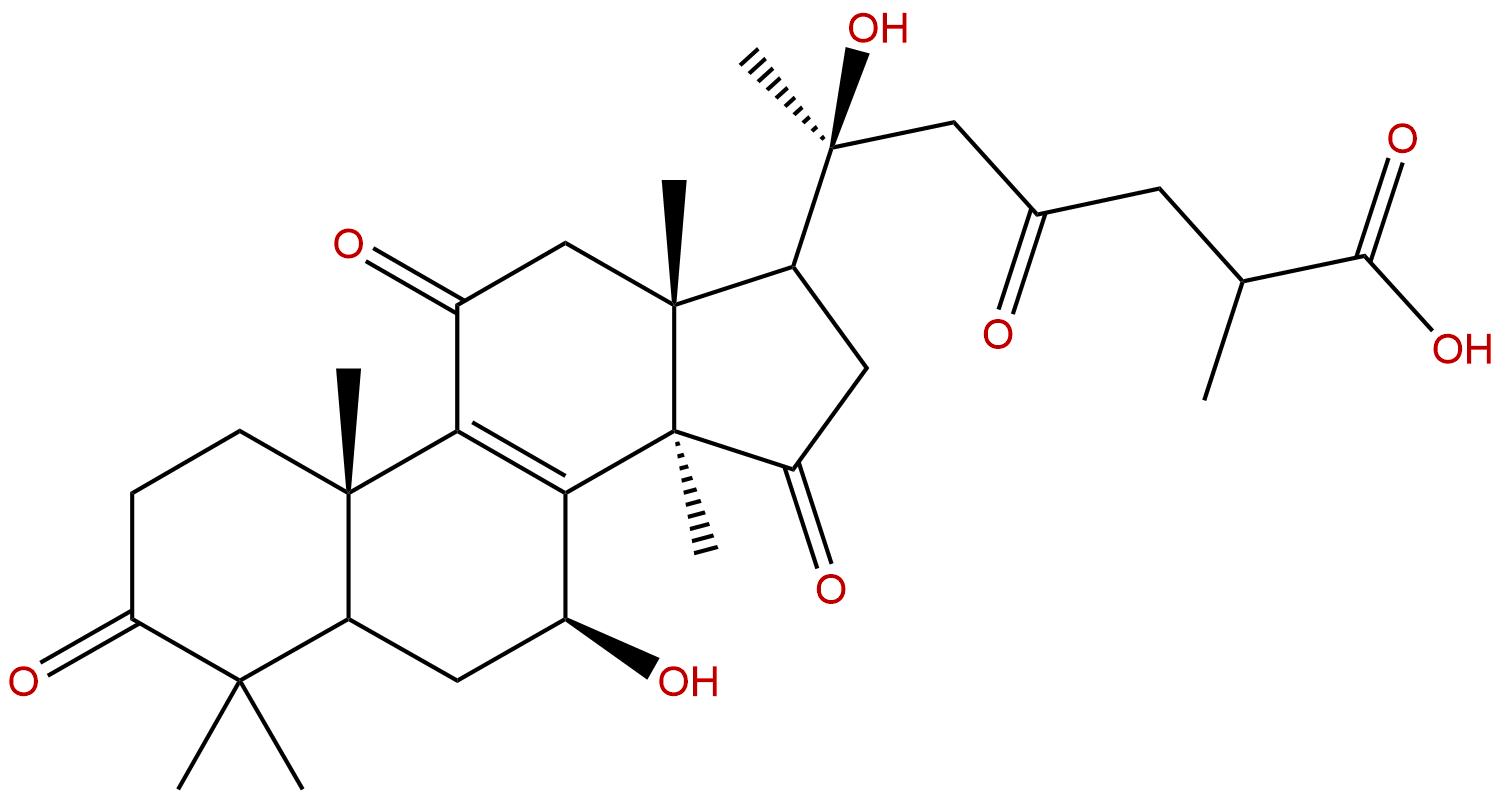
Product name: Ganoderic acid N
Synonym name:
Catalogue No.: BPF0293
Cas No.: 110241-19-5
Formula: C30H42O8
Mol Weight: 530.658
Botanical Source:
Physical Description:
Type of Compound: Triterpenoids
Purity: 95%~99%
Analysis Method: HPLC-DAD or/and HPLC-ELSD
Identification Method: Mass, NMR
Packing: Brown vial or HDPE plastic bottle
Storage: Store in a well closed container, protected from air and light. Put into refrigerate or freeze for long term storage.
Whenever possible, you should prepare and use solutions on the same day. However, if you need to make up stock solutions in advance, we recommend that you store the solution as aliquots in tightly sealed vials at -20℃. Generally, these will be useable for up to two weeks.
The product could be supplied from milligrams to grams, up to kilograms
Inquire for bulk scale.
Storage conditions:Short-term storage at 2~8℃, long-term storage at -20 ~ -80℃
146.0400
2.2557
-.0827
.0497
1.6159
2.7448
Low
76.8259
5.2111
No
No
No
No
No
No
0.0
Yes
No
No
No
Ganoderma lucidum(Ganoderma lucidum)As one of the oldest medicinal fungi in traditional Chinese medicine, it is known as the "fairy grass" and "auspicious grass". For thousands of years, Ganoderma lucidum has been widely used in East Asia for nourishing and strengthening the body, prolonging life, and treating various chronic diseases, including tumors, hepatitis, hypertension, and immune disorders. Modern pharmacological research has confirmed that the medicinal value of Ganoderma lucidum is mainly attributed to its abundant secondary metabolites, among which ganoderic acids, as a highly oxidized lanostane type triterpenoid compound, are considered the core material basis for Ganoderma lucidum to exert anti-tumor, anti-inflammatory, antioxidant, and immune regulatory activities.
The ganoderic acid family has diverse structures, and over 150 different triterpenoid compounds have been isolated and identified from Ganoderma lucidum fruiting bodies, mycelium, and spore powder. Ganoderic acid N (GA-N) is an important member of this family, and its chemical structure was first elucidated in the late 1980s. With the advancement of separation and purification technology and the improvement of biological activity screening systems, GA-N gradually exhibits a unique pharmacological activity spectrum, which has attracted widespread attention from researchers in the field of anti-tumor. Compared with other members of the ganoderic acid family (such as ganoderic acid A, B, D, etc.), GA-N exhibits differentiated characteristics in inducing tumor cell apoptosis, inhibiting tumor metastasis, and regulating multidrug resistance.
In recent years, with the development of systems biology and chemical biology, the study of the mechanism of action of GA-N has shifted from a single target to a multi-target network regulation mode. Research has shown that GA-N can simultaneously act on multiple molecular targets closely related to tumor development, including apoptosis regulatory proteins (MCL1, BCL2), signal transduction factors (STAT3), extracellular matrix degrading enzymes (MMP2), DNA topoisomerases (TOP1, TOP2A), hypoxia inducible factor (HIF1A), mitogen activated protein kinase (MAPK1), estrogen receptor (ESR1), and aromatase (CYP19A1). This multi-target synergistic mode provides unique advantages for GA-N as an anti-tumor candidate drug, while also posing new challenges for its drug efficacy evaluation and clinical translation.
This article will provide a systematic review of the research progress of ganoderic acid N from the aspects of chemical structure and physicochemical properties, plant sources and extraction methods, pharmacological activity, mechanism of action, drug evaluation, and clinical application prospects, in order to provide reference for the in-depth development and utilization of this natural product.
The chemical name of ganoderic acid N is (7 β, 15 α, 20E) -7,15-dihydroxy-3,11,2,3-trioxolanostane-8,20 (22) - diene-26-acid, with a molecular formula of C ∝₀ H ₄₂ O ₈ and a molecular weight of 530.6580 g/mol. Its core skeleton is lanostane type tetracyclic triterpenoids, with a typical 6/6/6/5 ring structure. Compared with the basic lanostane skeleton, GA-N undergoes significant oxidative modifications at multiple sites: C-3, C-11, and C-23 are carbonyl (=O), C-7 and C-15 are hydroxyl (- OH), and C-26 are carboxyl (- COOH). In addition, there are two double bonds in the molecule, located at positions C-8/C-9 and C-20/C-22, with the C-20/C-22 double bond being in the trans configuration (E configuration).
This highly oxidized structural feature endows GA-N with abundant hydrogen bond donor/acceptor sites, enabling it to interact with various biomolecules. The carboxyl group at position C-26 is a key group for GA-N to form salt bridges or hydrogen bonds with the target protein, while the hydroxyl groups at positions C-7 and C-15 may participate in ligand receptor directed recognition. The carbonyl groups at positions C-3, C-11, and C-23 not only affect the polarity distribution of the molecule, but may also serve as receptor sites for Michael addition reactions, covalently binding to the thiol groups of protein cysteine residues. This may be the chemical basis for GA-N to exert certain irreversible pharmacological effects.
Based on computational chemistry predictions and experimental measurements, the physicochemical properties of GA-N are as follows:
Lipid water partition coefficient and solubility The LogP value of GA-N is 2.2557, indicating that it has moderate lipid solubility and theoretically can penetrate the phospholipid bilayer of the cell membrane well. However, its water solubility (0.0497 mg/mL, approximately 93.6 μ M) is low, mainly due to the presence of multiple hydrophobic rings in the molecule and limited polar surface area (TPSA=146.04 Å ²). Low water solubility is one of the main challenges faced by GA-N in formulation development and in vivo delivery.
acid-base properties The carboxyl group at position C-26 (pKa approximately 4.5-5.0) allows GA-N to exist mainly in ionic form under physiological pH conditions (pH 7.4), which can improve its water solubility to some extent, but may also affect its transmembrane transport efficiency.
Stability There are multiple oxidation sensitive groups (such as enol hydroxyl groups and conjugated double bonds) in GA-N molecules, which may degrade under light, high temperature, or strong oxidative conditions. In addition, the trans double bond at positions C-20/C-22 may undergo isomerization under acidic conditions. Therefore, the storage and formulation process of GA-N requires avoidance of light, low temperature, and strong acid environment.
Blood-brain barrier permeability The predicted results show that the blood-brain barrier permeability of GA-N is low, which limits its application in central nervous system diseases. However, for the treatment of peripheral solid tumors, this characteristic may actually reduce the toxic side effects on the central nervous system.
Toxicity prediction The Ames test result is 0.0, indicating that GA-N does not have significant mutagenicity. HERG inhibition prediction is negative, indicating a low risk of cardiac toxicity. These preliminary safety evaluation results provide favorable conditions for the further development of GA-N.
GA-N mainly comes from fungi of the Ganoderma genus in the Polyporus family, including Ganoderma lucidum(Ganoderma lucidum)Purple Zhi(Ganoderma sinense)And Songshan Lingzhi(Ganoderma tsugae)Wait. There are significant differences in the content of GA-N among different varieties of Ganoderma lucidum, with the highest content usually found in the fruiting body of Ganoderma lucidum. It is worth noting that the distribution of GA-N in different growth stages and tissue parts of Ganoderma lucidum is not uniform: the content in mature fruiting bodies is higher than that in mycelia, while the extraction rate of GA-N in spore powder can be significantly improved after wall breaking treatment.
The cultivation conditions of Ganoderma lucidum, such as medium composition, temperature, humidity, and light cycle, have a significant impact on the accumulation of GA-N. Research has shown that adding an appropriate amount of inducers such as methyl jasmonate or salicylic acid to the culture medium can significantly upregulate the expression of key enzyme genes in the triterpenoid biosynthesis pathway of Ganoderma lucidum, such as squalene cyclooxygenase and lanosterol synthase, thereby increasing GA-N production by 2-5 times. In addition, the use of liquid deep fermentation technology combined with a two-stage cultivation strategy (promoting mycelial growth first and inducing secondary metabolism later) can achieve large-scale production of GA-N, providing a stable source of raw materials for subsequent research.
The extraction of GA-N usually follows the technical route of "solvent extraction liquid-liquid distribution chromatographic separation".
Crude extraction After crushing the dried fruiting body or mycelium of Ganoderma lucidum, reflux extraction is carried out using ethanol (70% -95%) or methanol, with extraction temperature controlled at 60-80 ℃ and extraction time of 2-4 hours, repeated 2-3 times. The crude extract of total triterpenoids was obtained by vacuum concentration of the extraction solution. In order to improve the extraction efficiency of GA-N, ultrasound assisted extraction and microwave-assisted extraction techniques have been widely used in recent years, which can shorten the extraction time to less than 30 minutes and increase the extraction rate by 10% -20%.
Preliminary separation The crude extract was suspended in water and subjected to liquid-liquid extraction using petroleum ether, ethyl acetate, and n-butanol in sequence. GA-N is mainly enriched in the ethyl acetate extraction layer, which is rich in moderately polar triterpenoids. The ethyl acetate layer was subjected to silica gel column chromatography using a chloroform methanol gradient elution (100:1 to 10:1) to preliminarily enrich GA-N.
Efficient purification Further purification requires the use of high-performance liquid chromatography (HPLC) or preparative thin layer chromatography. Reverse phase C18 column is the preferred stationary phase for GA-N purification, and the mobile phase is usually acetonitrile water or methanol water system (containing 0.1% formic acid), using isocratic or gradient elution. The maximum UV absorption wavelength of GA-N is about 254 nm (π →π * transition of conjugated double bonds), which can be used for online monitoring. By semi preparative HPLC, 5-15 mg of GA-N monomer with a purity greater than 98% can be obtained from 1 g of crude extract.
Structural Confirmation The purified GA-N needs to be structurally confirmed by nuclear magnetic resonance spectroscopy (¹ H-NMR, ¹ ³ C-NMR, DEPT, HSQC, HMBC, NOESY) and high-resolution mass spectrometry (HR-ESI-MS). Its characteristic NMR signals include: δH 5.68(1H, s, H-22)、δH 4.52(1H, m, H-7)、δH 4.28(1H, m, H-15); δC 199.5(C-3)、δC 198.2(C-11)、δC 205.8(C-23)、δC 178.6(C-26)。
The anti-tumor activity of GA-N is its most concerned pharmacological effect, which has been validated in various tumor cell lines and animal models.
In vitro cytotoxicity GA-N showed a dose and time-dependent inhibitory effect on the proliferation of human liver cancer cells (HepG2, Huh-7), breast cancer cells (MCF-7, MDA MB-231), lung cancer cells (A549, H1299), colorectal cancer cells (HCT-116, SW480), and prostate cancer cells (PC-3, DU145). Its half maximal inhibitory concentration (IC ₅₀) is usually in the range of 10-50 μ M, and its toxicity to normal liver cells (L-02) and normal fibroblasts (NIH-3T3) is relatively low (IC ₅₀>100 μ M), demonstrating certain selective anti-tumor activity.
Inducing apoptosis After GA-N treatment of tumor cells, typical morphological features of apoptosis can be observed, including cell shrinkage, chromatin condensation, nuclear fragmentation, and formation of apoptotic bodies. Flow cytometry analysis showed that GA-N can cause cell cycle arrest in G0/G1 phase or G2/M phase (depending on cell type), and increase the proportion of cells in the sub-G1 phase (apoptosis peak). The Annexin V-FITC/PI double staining experiment further confirmed the pro apoptotic effect of GA-N.
Inhibit migration and invasion Scratch healing experiments and Transwell chamber experiments have shown that GA-N can significantly inhibit the migration and invasion ability of various tumor cells at non-toxic concentrations. Gelatinase spectrum analysis showed that GA-N can reduce the activity of matrix metalloproteinases MMP-2 and MMP-9, suggesting that it may hinder tumor metastasis by inhibiting extracellular matrix degradation.
In vivo anti-tumor activity In nude mouse xenograft tumor models, intraperitoneal injection or oral administration of GA-N (10-50 mg/kg/d) can significantly inhibit the growth of HepG2 and MCF-7 xenografts, with an inhibition rate of 40% -65%. Histopathological analysis showed that the number of apoptotic cells increased and microvascular density decreased in the tumor tissues of the GA-N treatment group. It is worth noting that GA-N did not cause significant weight loss or major organ damage at effective doses, indicating its good in vivo tolerance.
In addition to anti-tumor effects, GA-N also exhibits various other biological activities:
anti-inflammatory activity GA-N can inhibit the production of nitric oxide (NO) and prostaglandin E ₂ (PGE ₂) in macrophages stimulated by lipopolysaccharide (LPS), and downregulate the expression of inducible nitric oxide synthase (iNOS) and cyclooxygenase-2 (COX-2). In the acute inflammation model induced by carrageenan, GA-N can reduce the degree of toe swelling.
antioxidant activity GA-N has the ability to scavenge DPPH radicals and ABTS ⁺ radicals, and can reduce oxidative stress levels induced by hydrogen peroxide, protecting cells from oxidative damage.
Immune regulatory activity Low concentration GA-N can promote the proliferation of T lymphocytes and natural killer (NK) cells, enhance the phagocytic function of macrophages, suggesting that it may exert indirect anti-tumor effects by regulating the immune microenvironment.
The anti-tumor mechanism of GA-N involves the synergistic regulation of multiple signaling pathways and molecular targets, exhibiting typical multi-target and multi pathway action characteristics.
BCL2 family proteins GA-N can downregulate the expression of anti apoptotic proteins MCL1 and BCL2, while upregulating the expression of pro apoptotic proteins BAX and BAK, leading to increased mitochondrial outer membrane permeability, release of cytochrome c into the cytoplasm, and activation of caspase-9 and caspase-3, initiating mitochondrial pathway apoptosis. Molecular docking simulations showed that the C-26 carboxyl group of GA-N can form hydrogen bonds with the Arg263 residue of MCL1 protein, while the C-7 hydroxyl group interacts with Asn260. This binding mode may interfere with the interaction between MCL1 and BAK protein, thereby relieving MCL1's inhibition of apoptosis.
STAT3 signaling pathway GA-N can inhibit the phosphorylation of STAT3 (Tyr705 site), reduce its nuclear translocation and transcriptional activity. The downstream target genes of STAT3, including Cyclin D1, Survivin, and Vascular Endothelial Growth Factor (VEGF), are all inhibited in expression. It is worth noting that GA-N has a selective inhibitory effect on STAT3, with little impact on STAT1 and STAT5.
MMP2/MMP9 GA-N downregulates the expression of transcription factors AP-1 (c-Fos/c-Jun) by inhibiting the activity of the MAPK/ERK signaling pathway, thereby reducing the transcription of MMP2 and MMP9. In addition, GA-N can directly bind to the catalytic domain of MMP2 (with a binding constant Kd of approximately 8.5 μ M), inhibiting its enzymatic activity.
HIF1A pathway Under hypoxic conditions, GA-N can accelerate the ubiquitination degradation of HIF1A protein and reduce its protein stability. This effect may be achieved by inhibiting the PI3K/AKT/mTOR signaling pathway, leading to a decrease in the translation efficiency of HIF1A. The downregulation of HIF1A further inhibits the expression of its target genes (such as VEGF, GLUT1, CA9), exerting anti angiogenic and anti glycolytic effects.
GA-N exhibits inhibitory activity against both TOP1 and TOP2A topoisomerases. Unlike the classic TOP1 inhibitor camptothecin, GA-N does not exert its effect by stabilizing the TOP1-DNA cleavage complex, but directly binds to the catalytic site of TOP1, competitively inhibiting its DNA cleavage activity. For TOP2A, GA-N can inhibit its ATPase activity and interfere with the DNA unwinding process. This dual target inhibition mode may help overcome the resistance of tumor cells to a single topoisomerase inhibitor.
In estrogen receptor positive breast cancer cells, GA-N can down regulate the protein expression of ESR1 (ER α) and inhibit ER α nuclear translocation induced by estradiol. Meanwhile, GA-N can inhibit the activity of aromatase CYP19A1 (IC ₅₀ about 12 μ M), reducing the conversion of androgens to estrogens. This dual role makes GA-N have potential advantages in the treatment of hormone dependent breast cancer.
System pharmacology analysis shows that the target network of GA-N involves multiple biological processes such as apoptosis, proliferation, metastasis, angiogenesis, and metabolic reprogramming. This multi-target synergistic mode enables GA-N to simultaneously block multiple survival signaling pathways of tumor cells, reducing the risk of drug resistance caused by compensatory activation of a single pathway; On the other hand, it also increases the complexity of predicting pharmacological effects and evaluating toxic side effects.
The pharmacological evaluation based on Lipinski's "Five Rules" and Veber's Rules shows that the molecular weight of GA-N (530.66 Da) is slightly higher than the threshold of 500 Da, the LogP value (2.26) is within an acceptable range (<5), and the number of hydrogen bond donors (3 hydroxyl+1 carboxyl=4) and acceptors (8 oxygen atoms) meet the requirements. However, the TPSA value (146.04 Å ²) is greater than 140 Å ², which may affect its oral absorption efficiency. Overall, the physicochemical properties of GA-N are at the edge of drug development and need to be optimized through formulation methods.
absorb The oral bioavailability of GA-N is relatively low (about 5% -15% in animal experiments), mainly limited by its low water solubility and the efflux of intestinal P-glycoprotein (P-gp). By using formulation technologies such as nanoliposomes, phospholipid complexes, or cyclodextrin inclusion complexes, the oral bioavailability of GA-N can be increased by 3-5 times.
distribution After intravenous administration, the distribution of GA-N in plasma conforms to a two compartment model, with a large distribution volume (Vd about 3-5 L/kg), indicating its widespread distribution in tissues and organs. Organizational distribution studies have shown that GA-N has higher concentrations in liver, kidney, and tumor tissues, while its concentration in brain tissue is extremely low, consistent with the prediction of low blood-brain barrier permeability.
Metabolism GA-N is mainly metabolized in the liver, and the enzymes involved in metabolism include CYP3A4, CYP2C9, and UGT1A1. The main metabolic pathways are hydroxyglucuronidation at C-7 and C-15 positions, methylation of C-26 carboxyl group, and reduction of C-3 and C-11 carbonyl groups. Some metabolites still retain certain biological activity, suggesting that GA-N may exert its therapeutic effects in the form of both the original drug and metabolites.
excretion GA-N and its metabolites are mainly excreted through bile into the intestine and excreted through feces (accounting for about 60% -70% of the administered dose), with an additional 20% -30% excreted through the kidneys in the form of urine. The plasma half-life (t ₁/₂) is about 4-8 hours, and the clearance rate (CL) is about 0.5-1.0 L/h/kg.
GA-N has a moderate inhibitory effect on CYP3A4 and CYP2C9 (IC ₅₀ about 15-25 μ M), indicating a potential risk of drug interaction when used in combination with drugs metabolized by these enzymes, such as statins, warfarin, and certain anti-tumor drugs. In addition, GA-N is a substrate and weak inhibitor of P-gp, which may affect the absorption and distribution of other P-gp substrate drugs.
Preliminary safety evaluation shows that the acute toxicity of GA-N is relatively low, with oral LD ₅₀ greater than 2000 mg/kg in mice. In the 28 day repeated dose toxicity experiment, no significant liver and kidney dysfunction or histopathological changes were observed at a dose of 50 mg/kg/day. However, high doses (>100 mg/kg/d) can cause mild gastrointestinal reactions and elevated liver function indicators (ALT, AST), indicating the need to pay attention to dose control in clinical applications.
The potential indications for GA-N based multi-target anti-tumor activity mainly include:
Given the multi-target mechanism of action of GA-N, its combination with existing anti-tumor drugs may produce synergistic effects:
To overcome the low water solubility and oral bioavailability of GA-N, the following formulation strategies are worth exploring:
Although GA-N exhibits good anti-tumor activity and safety, its clinical translation still faces several challenges:
Lingzhi acid N, as an important member of the Ganoderma triterpenoid family, has attracted widespread attention for its unique chemical structure and multi-target anti-tumor activity. From a chemical perspective, the highly oxidized lanostane skeleton of GA-N provides a structural basis for its interactions with various biological targets; From a pharmacological perspective, GA-N exhibits systemic anti-tumor effects by regulating multiple pathways such as apoptosis, metastasis, angiogenesis, and hormone signaling; From the perspective of drug development, although GA-N has shortcomings such as low water solubility and poor oral bioavailability, these problems are expected to be solved through reasonable formulation design and structural modification.
With a deeper understanding of the mechanism of action of GA-N and continuous advances in formulation technology, this natural product is expected to develop into a new type of anti-tumor candidate drug, providing more treatment options for cancer patients. Meanwhile, the research on GA-N also provides valuable ideas and methods for the development of other natural triterpenoid compounds. In the future, interdisciplinary collaborative research, including natural product chemistry, pharmacology, pharmacy, and clinical medicine, will be the key to driving GA-N from the laboratory to clinical applications.
Batch can search by a CAS number,one per line
