


Product name: Sesamin
Synonym name: Asarinin; Episesamin; Fagarol; Sezamin
Catalogue No.: BP1296
Cas No.: 607-80-7
Formula: C20H18O6
Mol Weight: 354.358
Botanical Source: Sesamum indicum L.
Physical Description:
Type of Compound: Lignans
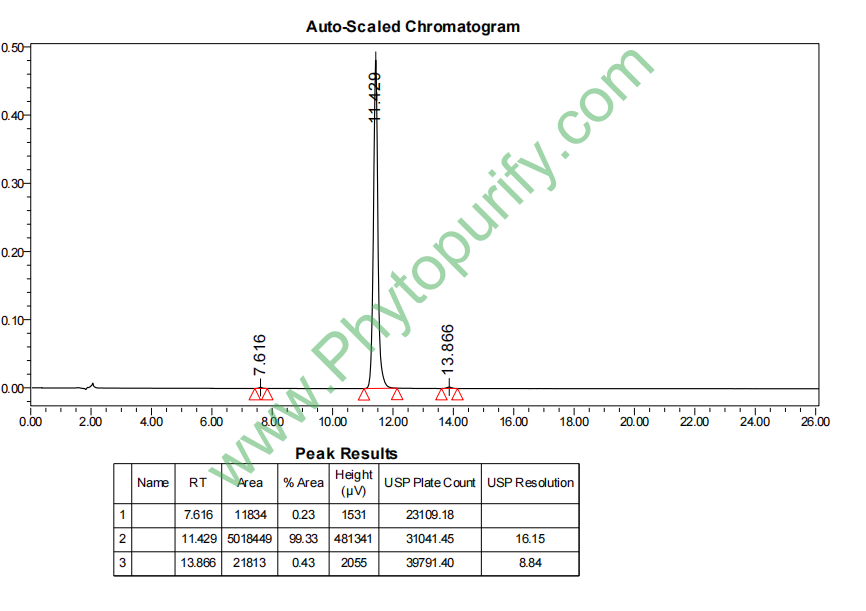
Purity: 95%~99%
Analysis Method: HPLC-DAD or/and HPLC-ELSD
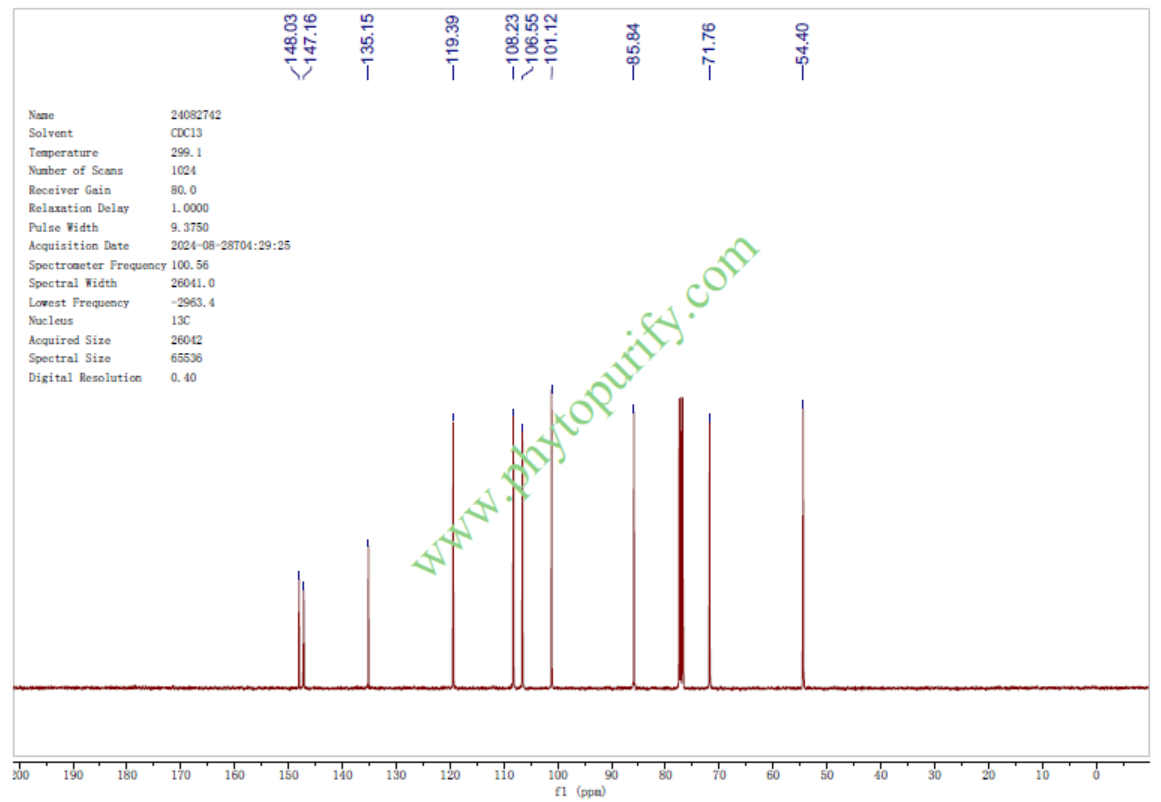
Identification Method: Mass, NMR
Packing: Brown vial or HDPE plastic bottle
Storage: Store in a well closed container, protected from air and light. Put into refrigerate or freeze for long term storage.
Whenever possible, you should prepare and use solutions on the same day. However, if you need to make up stock solutions in advance, we recommend that you store the solution as aliquots in tightly sealed vials at -20℃. Generally, these will be useable for up to two weeks.
The product could be supplied from milligrams to grams
Inquire for bulk scale.
Chengdu Biopurify Phytochemicals Ltd. is a leading company in the research, development, manufacture and marketing of High Quality Phytochemicals and Extracts(especially Active Ingredients from Traditional Chinese Medicine,TCM), Natural Active Pharmaceutical Ingredients worldwide.
The main services:
A. Supply active ingredients and reference standards of TCM, from mgs to kgs scale
B. Custom extraction and purification, target Herb Active Ingredients
C. Custom synthesis and semi-synthesis for Natural Active Ingredients
D. CR(contract research), CM(contract manufacture) and PD(process development) services from lab scale, pilot scale to commercial scale(GMP is also available)
E. TCM compounds library for drug screen,more than 3000 compounds available, many of them are rare and unique.
HPLC of Sesamin
NMR of Sesamin
Storage conditions:Short-term storage at 2~8℃, long-term storage at -20 ~ -80℃
Sesamin, CAS number 607-80-7, is a natural lignan compound mainly found in sesame oil. As one of the main active ingredients of sesame oil, sesamin has attracted much attention in both traditional medicine and modern nutrition. In recent years, with the deepening of pharmacological research on natural products, sesamin has become a hot topic in natural product pharmacology research due to its significant biological activity, especially its potential in antioxidant, anti-inflammatory, and neuroprotective aspects. Sesamin is not only an effective and selective delta-5 desaturase inhibitor in the biosynthesis of polyunsaturated fatty acids, but also exhibits significant protective effects against neurological diseases such as cerebral ischemia. This article provides a systematic review of the chemical structure and physicochemical properties, plant sources and extraction methods, pharmacological activity and mechanism of action, pharmacological evaluation, pharmacokinetic characteristics, and clinical application prospects of sesamin, aiming to provide theoretical basis and research direction for the drug development of this natural product.
The chemical name of sesamin is 3,4-methylenedioxy-1,4-diphenylbutane, which is a typical lignan compound. Its molecular formula is C20H18O6 and its molecular weight is 354.3580. The structure of sesamin contains two aromatic rings connected by a methylenedioxy bridge, forming a stable bicyclic structure that endows it with good chemical stability and biological activity. Its LogP value is 2.5422, indicating that sesamin has moderate lipid solubility, which is beneficial for cell membrane penetration and bioavailability. The topological polar surface area (TPSA) is 55.38 Å ², indicating its suitability for penetrating the blood-brain barrier (BBB), which is closely related to its neuroprotective effect. Sesame extract has low water solubility (0.0026 mg/mL), which limits its oral bioavailability, but its high lipid solubility is beneficial for distribution in lipid environments. The hERG channel inhibition experiment result was negative, indicating that sesamin has low potential toxicity to cardiac ion channels. The Ames test result is 1.5, indicating a low risk of genetic toxicity.
Sesamin mainly exists in sesame seeds and their oils, and is a high content lignan component in sesame oil. The content of sesamin is greatly affected by variety, planting environment, and processing technology. In the traditional sesame oil extraction process, sesamin is retained as a fat soluble component in the oil.
The common methods for extracting sesamin include solvent extraction, supercritical CO2 extraction, and column chromatography purification. Solvent extraction often uses organic solvents such as ethanol, methanol, or ethyl acetate, combined with ultrasonic assisted extraction technology to improve extraction efficiency and purity. Supercritical CO2 extraction has gradually become the mainstream technology due to its environmental friendliness, residue free nature, and strong selectivity. After extraction, high-purity sesamin is purified by silica gel column chromatography or high-performance liquid chromatography (HPLC).
The pharmacological activity research of sesamin covers multiple aspects such as antioxidant, anti-inflammatory, neuroprotective, anti-tumor, lipid-lowering, and blood pressure lowering.
Sesamin, as a natural antioxidant, can effectively eliminate free radicals and alleviate oxidative stress damage. It enhances the antioxidant defense ability of cells by activating the intracellular antioxidant enzyme system, such as superoxide dismutase (SOD1, SOD2), catalase (CAT), and glutathione peroxidase (GPX1). In addition, sesamin can upregulate the expression of heme oxygenase-1 (HMOX1) and exert a cell protective effect.
Cerebral ischemia and reperfusion injury are important pathological processes in neurological diseases. Sesamin inhibits delta-5 desaturase activity, regulates fatty acid metabolism, reduces neuronal membrane lipid peroxidation, and protects neurons from oxidative damage. It also activates the nuclear factor erythroid 2-related factor 2 (NFE2L2/NRF2) signaling pathway, induces antioxidant gene expression, reduces oxidative stress and inflammatory response caused by cerebral ischemia, and significantly improves neurological deficits.
Sesamin can inhibit the expression and release of various pro-inflammatory factors, such as tumor necrosis factor alpha (TNF - α), interleukin-1 β (IL-1 β), and cyclooxygenase-2 (COX-2), reducing inflammatory response. Its anti-inflammatory effect partially relies on the inhibition of the NF - κ B signaling pathway, blocking the inflammatory cascade reaction.
Sesamin also exhibits multiple biological activities such as regulating blood lipids, lowering blood pressure, anti-tumor, and anti osteoporosis. In terms of lipid metabolism, sesamin inhibits delta-5 desaturase, regulates the synthesis of polyunsaturated fatty acids, and improves blood lipid abnormalities. Some studies have shown that sesamin has inhibitory effects on proliferation and induces apoptosis in certain cancer cells.
The multiple pharmacological effects of sesamin mainly depend on its regulation of intracellular signaling pathways and key enzymes.
Sesamin activates NFE2L2/NRF2 transcription factors, promotes the expression of downstream antioxidant enzyme genes (such as SOD1, SOD2, CAT, GPX1, HMOX1), enhances the ability of cells to clear reactive oxygen species (ROS), and reduces oxidative damage. NRF2, as a core regulatory factor for cellular antioxidant stress, is activated as a key step in the antioxidant protective effect of sesamin.
Sesamin, as an effective and selective inhibitor of delta-5 desaturase, blocks the biosynthesis pathways of polyunsaturated fatty acids such as eicosapentaenoic acid (EPA) and docosahexaenoic acid (DHA), affecting lipid metabolism balance. This regulation helps to reduce the production of inflammatory mediators and improve the pathological state related to metabolic syndrome.
In the cerebral ischemia model, sesamin protects neuronal structure and function by reducing lipid peroxidation and inflammatory response. Meanwhile, the high permeability of sesamin to the blood-brain barrier ensures its effective concentration in the central nervous system, enhancing its neuroprotective effect.
Sesamin inhibits the NF - κ B signaling pathway, reduces the expression of pro-inflammatory factors, and alleviates inflammatory responses. In addition, its regulation of the MAPK pathway is also involved in the realization of anti-inflammatory effects.
Sesamin has ideal pharmacological parameters. Its molecular weight of 354.3580 conforms to Lipinski's rule, and its LogP value of 2.54 shows moderate lipid solubility, which is beneficial for cell membrane penetration and oral absorption. The TPSA is 55.38 Å ², which supports its crossing of the blood-brain barrier and meets the requirements for its neuroprotective function. The low water solubility (0.0026 mg/mL) is the limiting factor for its oral bioavailability, which needs to be improved through formulation optimization.
Sesamin does not inhibit hERG channels, indicating a lower risk of cardiac toxicity. The Ames test result is 1.5, indicating a low risk of genetic toxicity and good safety.
Pharmacokinetic studies have shown that sesamin is absorbed quickly after oral administration, with a moderate plasma half-life, and can effectively distribute in brain tissue. Its main metabolic pathways include liver oxidation and binding reactions, and the metabolites have certain biological activity. In the future, further systematic research is needed on its in vivo metabolic kinetics and drug interactions.
Sesamin, as a natural product with good safety and rich biological activity, has broad clinical application prospects. Its potential therapeutic value in cerebral ischemia, neurodegenerative diseases, metabolic syndrome, and chronic inflammatory diseases is increasingly being recognized.
Future research should focus on:
In summary, sesamin, as a multi-target and multifunctional natural lignan compound, has the potential to become a novel neuroprotective agent and metabolic regulator.
Sesamin, as an important active ingredient in sesame oil, exhibits significant multiple pharmacological activities such as antioxidant, neuroprotective, and anti-inflammatory effects due to its unique chemical structure and excellent physicochemical properties. It exerts multi-level biological effects by regulating the NFE2L2/NRF2 antioxidant signaling pathway and delta-5 desaturase activity, especially showing good therapeutic potential in neurological diseases such as cerebral ischemia. The pharmacological evaluation shows that sesamin has good safety and blood-brain barrier penetration ability, but its insufficient water solubility limits its clinical application. In the future, through formulation optimization and in-depth mechanism research, sesamin is expected to become an important candidate molecule for the development of natural product drugs, providing new strategies and ideas for the treatment of related diseases.
