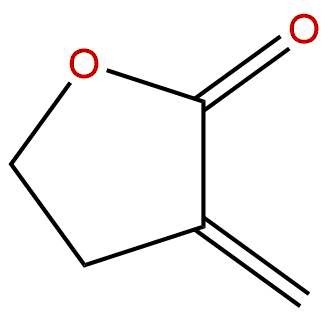


Product name: Tulipalin A
Synonym name: 2-Methylene-gamma-butyrolactone
Catalogue No.: BP0031
Cas No.: 547-65-9
Formula: C5H6O2
Mol Weight: 98.1
Botanical Source:
Purity: 95%~99%
Analysis Method: HPLC-DAD or/and HPLC-ELSD
Identification Method: Mass, NMR
Packing: Brown vial or HDPE plastic bottle
Can be supplied from milligrams to grams.
For Reference Standard and R&D, Not for Human Use Directly.
Inquire for bulk scale.
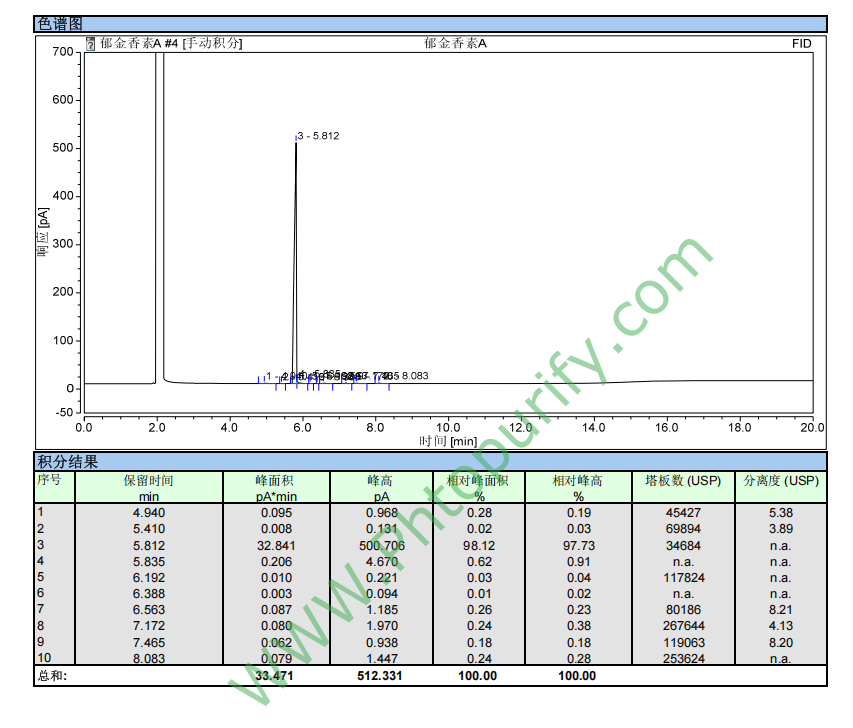
HPLC of Tulipalin A
Storage conditions:Short-term storage at 2~8℃, long-term storage at -20 ~ -80℃
37.3000
-.0900
Unknown
Unknown
Unknown
Unknown
Unknown
Unknown
Unknown
Unknown
Unknown
Tulipalin A (CAS number: 547-65-9) is a natural product belonging to the 4-butanolactone class compounds with a methylene group at the 3-position. As a small molecule with a unique structure, tulipin A has attracted widespread attention due to its significant anti ulcer and gastrointestinal pharmacological activities. In recent years, with the deepening of pharmacological research on natural products, the potential value of tulip extract A in the prevention and treatment of gastrointestinal diseases has gradually emerged, becoming a research hotspot in the field of drug development.
This article aims to systematically review the chemical structure and physicochemical properties, plant sources and extraction methods, pharmacological activity and mechanism of action, pharmacological evaluation and pharmacokinetic characteristics of tulip A, as well as its clinical application prospects and development trends. By integrating existing literature, comprehensively evaluate the research progress and future potential of tulip A, and provide reference for researchers in related fields.
Tulip A is a 4-butanolide derivative with a methylene bridged structure, with a molecular formula of C6H8O3 and a molecular weight of 100.10. Its core structure is a butyrolactone ring, with a methylene group attached to the third carbon atom, giving it a unique spatial configuration and chemical activity. The LogP value of this compound is -0.09, indicating its strong hydrophilicity and good water solubility, which is beneficial for absorption and distribution in vivo. The topological polar surface area (TPSA) is 37.3 Å ², indicating moderate polarity that may affect its cell membrane penetration ability.
Tulip extract A contains two hydrogen bond receptor sites, which may form stable hydrogen bond interactions with biological targets, enhancing its biological activity. There is currently no clear data on its safety indicators such as blood-brain barrier penetration, hepatotoxicity, cardiotoxicity, and hERG channel inhibition, and further research and verification are needed.
Tulip A is mainly present in plants of the tulip genus (Tulipa spp.), especially in tulip petals and bulbs where its content is relatively high. This compound, as a secondary metabolite of plants, participates in the defense mechanism of plants and has certain antibacterial and antioxidant functions.
Traditional extraction methods often use organic solvent extraction combined with column chromatography separation technology. Common solvents include ethanol, methanol, and ethyl acetate, and their polarity differences are utilized to achieve preliminary separation of crude extracts. Subsequently, high-purity tulipin A was purified by silica gel column chromatography or high-performance liquid chromatography (HPLC). In recent years, the application of ultrasound assisted extraction and microwave-assisted extraction techniques has improved extraction efficiency and purity, reduced solvent usage and extraction time.
In addition, the research on plant cell culture technology and biosynthetic pathways provides new ideas for the large-scale production of tulip A, especially in optimizing yield under controlled environmental conditions, showing promising prospects.
The pharmacological activity of tulip extract A mainly focuses on its anti ulcer and gastrointestinal protective effects. Multiple in vitro and in vivo experiments have shown that this compound can effectively inhibit gastric mucosal damage, promote gastric mucosal repair, and alleviate symptoms of gastric ulcers caused by excessive gastric acid secretion.
Anti ulcer effect
Tulip extract A exerts anti ulcer effects through various mechanisms, including enhancing gastric mucosal barrier function, inhibiting gastric acid secretion, promoting mucus secretion, and antioxidant stress response. Animal model experiments have shown that tulip extract A can significantly reduce the area of gastric ulcers induced by nonsteroidal anti-inflammatory drugs (NSAIDs) and alcohol, and reduce the infiltration of inflammatory cells in the gastric mucosa.
Gastrointestinal regulatory effect
This compound also exhibits the potential to regulate gastrointestinal motility and protect intestinal mucosa. Research has found that tulip extract A can regulate the contraction function of intestinal smooth muscle, improve gastrointestinal peristalsis, and alleviate gastrointestinal dysfunction. In addition, its anti-inflammatory effect helps to alleviate intestinal inflammation and promote intestinal barrier repair.
Antioxidant and anti-inflammatory effects
Tulip extract A has certain antioxidant activity, which can clear free radicals and alleviate the damage of gastrointestinal tissues caused by oxidative stress. At the same time, its anti-inflammatory effect reduces gastrointestinal inflammation by inhibiting the release of inflammatory mediators and inflammatory signaling pathways.
The pharmacological effects of tulip extract A involve multiple signaling pathways and molecular targets, and the specific mechanism is still under further investigation. Existing evidence suggests that its main mechanism of action includes:
Regulating gastric acid secretion
Tulip extract A may reduce gastric acid secretion and acid damage to the gastric mucosa by inhibiting H+/K+- ATPase activity in gastric parietal cells. In addition, it may also regulate histamine H2 receptors and cholinergic receptors, indirectly affecting gastric acid secretion levels.
Enhance gastric mucosal defense
This compound promotes the secretion of gastric mucus and bicarbonate, enhances the barrier function of the gastric mucosa, and prevents the erosion of the gastric wall by gastric acid and digestive enzymes. Meanwhile, tulipin A can activate the prostaglandin synthesis pathway, promote gastric mucosal blood flow, and maintain mucosal integrity.
anti-oxidative stress
Tulip extract A upregulates the activity of antioxidant enzymes such as superoxide dismutase and glutathione peroxidase, clears reactive oxygen species (ROS), and reduces cellular damage caused by oxidative stress.
Regulation of anti-inflammatory signaling pathway
Tulip extract A can inhibit the activation of the nuclear factor kappa B (NF - κ B) signaling pathway, reduce the expression of pro-inflammatory cytokines (such as TNF - α, IL-1 β, IL-6), and alleviate gastrointestinal inflammation.
Regulating intestinal smooth muscle function
By affecting calcium channels and neurotransmitter release, tulip A regulates the contraction and relaxation of intestinal smooth muscle, improving gastrointestinal motility abnormalities.
Although the above mechanism is the mainstream view in current research, the specific molecular targets of tulip A are not yet fully understood. In the future, molecular docking, proteomics, and gene editing techniques need to be combined to further elucidate its functional network.
The pharmacological parameters of tulip extract A indicate that it has certain potential for drug development. The molecular weight is only 100.10, which meets the requirements for drug molecular weight in Lipinski's rules. The LogP value is -0.09, indicating that it has strong hydrophilicity and is beneficial for oral absorption, but may affect its ability to penetrate lipid membranes. The TPSA is 37.3 Å ², suitable for cell membrane permeation, and has 2 hydrogen bond receptors, indicating its specificity in binding to the target.
At present, there is a lack of safety evaluation data on the blood-brain barrier penetration, hepatotoxicity, cardiotoxicity (including hERG channel inhibition), and genotoxicity (Ames test) of tulip A, which limits its preclinical development process. In the future, systematic toxicology research is needed to assess its safety risks.
There are few existing literature reports on pharmacokinetics. Based on its physicochemical properties, tulip extract A is expected to have good oral absorption, but its metabolic pathway, half-life, distribution, and excretion mechanism in vivo are not yet clear. Given its simple molecular structure, it may be metabolized through the liver enzyme system, and the specific enzyme species and metabolites need further identification.
Tulip extract A, as a natural anti ulcer and gastrointestinal protective agent, has broad clinical application potential. At present, the incidence rate of gastrointestinal diseases continues to rise, especially gastric ulcer, gastritis and functional gastrointestinal diseases, which urgently need safe and effective drugs. The multi-target mechanism of action and good safety hypothesis of tulip A make it a strong candidate for developing novel gastrointestinal drugs.
Future research directions include:
In depth mechanism research
Using modern molecular biology techniques, identify the key molecular targets and signaling pathways of tulip A, and reveal its pharmacological substance basis.
Safety and Toxicological Assessment
The system conducts acute, subchronic, and chronic toxicity tests to evaluate its hepatorenal toxicity, cardiac toxicity, and genetic toxicity, providing safety guarantees for clinical applications.
Pharmacokinetics and formulation development
Clarify its absorption, distribution, metabolism, and excretion characteristics in the body, optimize the administration route and dosage form, and enhance bioavailability and therapeutic efficacy.
Preclinical and clinical trials
Based on animal models, preclinical efficacy and safety evaluations will be conducted, gradually advancing to human clinical trials to verify its effectiveness and safety in treating gastrointestinal diseases.
Combination therapy strategy
Explore the synergistic effect of tulip extract A with existing anti ulcer drugs, reduce drug dosage, minimize side effects, and improve treatment efficacy.
Tulip extract A, as a unique natural product, exhibits significant anti ulcer and gastrointestinal protective activities, and has great potential for drug development. Although its mechanism of action and safety research are not yet perfect, with further research, tulip A is expected to become an important candidate for the new generation of gastrointestinal disease treatment drugs. In the future, it is necessary to strengthen its pharmacological mechanism, toxicology, and pharmacokinetic research, promote its clinical translation and application, and provide more safe and effective treatment options for gastrointestinal disease patients.
