Introduction/Overview
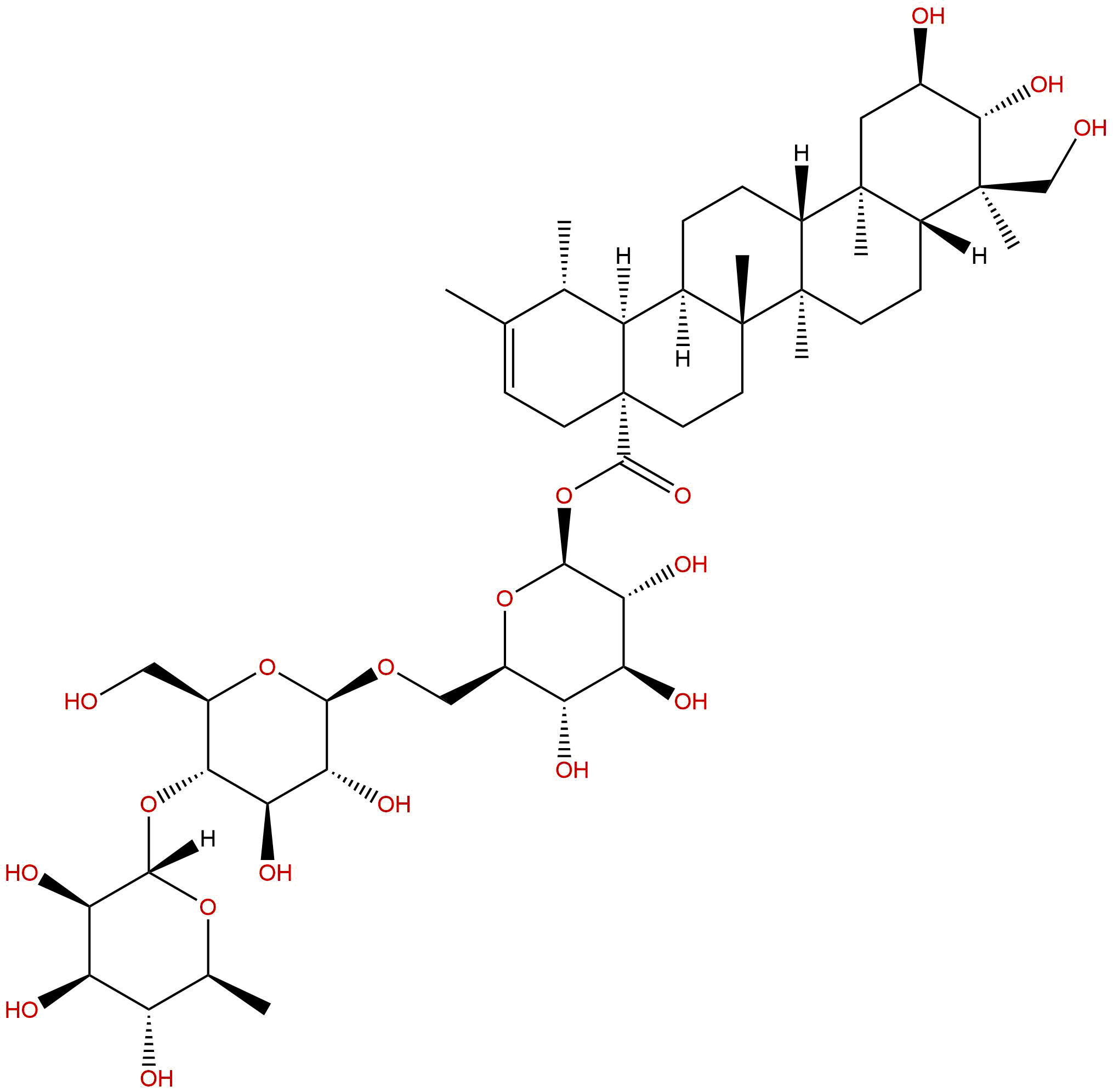
Isoasiaticoside (CAS number: 948827-09-6) is a traditional medicinal plant derived from centella asiatica(Centella asiatica)Natural products of pentacyclic triterpenoid saponins. Snow grass, as a widely used medicinal plant in traditional Asian medicine, has attracted much attention due to its multiple pharmacological effects such as promoting wound healing, anti-inflammatory, antioxidant, and neuroprotective effects. As one of the important active ingredients, isoxuecao glycoside has gradually demonstrated its unique biological activity and potential clinical application value in the field of pharmacology research in recent years. Especially in the fields of neuroprotection and skin wound repair, isoxuecao glycoside has shown great therapeutic potential.
This article aims to systematically review the chemical structure and physicochemical properties, plant sources and extraction methods, pharmacological activity and mechanism of action, pharmacological evaluation, and future clinical application prospects of isocentella asiatica glycoside. It is expected to provide scientific basis and reference for the in-depth research and development of this natural product.
Chemical structure and physicochemical properties
Yexuecao glycoside belongs to the pentacyclic triterpenoid saponin class, with a molecular weight of 959.1330 and a complex molecular formula. Its structure contains multiple glycosidic groups connected to the triterpenoid nucleus. Its core skeleton is a pentacyclic triterpenoid structure, typical of snow grass saponins, and the presence of sugar chains endows it with high polarity.
In terms of physical and chemical properties, the LogP value of isocentella asiatica glycoside is 1.7771, indicating that it has moderate lipid solubility and is conducive to cell membrane permeability. However, at the same time, its polarity is high, with a TPSA (topological polar surface area) of 315.2100, suggesting that its polarity is strong and may affect its oral bioavailability and ability to penetrate the blood-brain barrier. Its water solubility is 0.2264, which belongs to the category of moderately low water soluble compounds.
Pharmacokinetic safety indicators show that isoxuecao glycoside has no hERG channel inhibitory effect, reducing its risk of inducing arrhythmia; The Ames test result is 0.0, indicating no significant genotoxicity. In addition, the low permeability of the blood-brain barrier suggests that its direct role in the central nervous system may be limited, but it still has potential in peripheral nerve protection or local applications.
Plant sources and extraction methods
Snow grass(Centella asiatica)It is a perennial herbaceous plant in the Umbelliferae family, widely distributed in tropical and subtropical regions of Asia. Its whole plant or rhizome is a traditional Chinese medicinal herb, rich in triterpenoid saponins, including asiaticoside, asiatic acid, isoasiaticoside, etc.
The separation of isocentella asiatica glycoside is usually based on the ethanol extract of centella asiatica. Common extraction processes include:
- Crude extraction Using 70% -95% ethanol or methanol for reflux extraction of dried snow grass powder to obtain crude extract.
- Liquid liquid distribution Using solvents of different polarities such as ethyl acetate and n-butanol for layered extraction to enrich triterpenoid saponins.
- chromatographic separation:
- Separate and purify using silica gel column chromatography or reverse phase C18 column chromatography.
- High performance liquid chromatography (HPLC) combined with mass spectrometry (MS) or nuclear magnetic resonance (NMR) techniques is used for component identification and purity detection.
In recent years, modern technologies such as ultrasound assisted extraction (UAE) and microwave-assisted extraction (MAE) have also been applied to improve the extraction efficiency and purity of isoxuecao glycoside.
Pharmacological activity research
The pharmacological activity research of isoxuecao glycoside mainly focuses on two directions: neuroprotection and skin wound repair.
1. Neuroprotective effect
In the PC12 cell model induced by 6-hydroxydopamine (6-OHDA), isopicroside showed significant neuroprotective effects. 6-OHDA, as a classic neurotoxin, is commonly used to simulate the neural damage mechanism of Parkinson's disease. Isocentella asiatica glycoside can alleviate 6-OHDA induced oxidative stress and cell apoptosis, protect neuronal survival, indicating its potential therapeutic value in anti Parkinson's disease and neurodegenerative diseases.
Specifically manifested as:
-Inhibit intracellular reactive oxygen species (ROS) generation and alleviate oxidative damage.
-Regulate mitochondrial function and maintain stable cellular energy metabolism.
-Inhibit the expression of apoptosis related proteins and promote the survival of nerve cells.
2. Skin trauma repair
There is a rich research foundation on the promotion of skin wound healing by centella asiatica and its triterpenoid saponins. As one of the active ingredients, isoxuecao glycoside can regulate various molecular targets related to wound repair, promote cell proliferation, collagen synthesis, and angiogenesis.
The relevant targets include:
- MMP2 and MMP9 Matrix metalloproteinases are involved in the degradation and remodeling of extracellular matrix (ECM), and isoxuecao glycoside can regulate their expression, promoting moderate ECM remodeling.
- FGF2 (fibroblast growth factor 2)Promote fibroblast proliferation and angiogenesis.
- TGFB1 (Transforming Growth Factor β 1)Regulating cell proliferation, differentiation, and collagen synthesis.
- VEGFA (vascular endothelial growth factor A)Promote angiogenesis and improve wound blood supply.
- COL1A1 (type I collagen)Key structural proteins that maintain skin tone and elasticity.
- TIMP1 (tissue inhibitor of matrix metalloproteinase 1)Regulate MMP activity and maintain ECM balance.
By regulating the aforementioned molecules, isoxuecao glycoside promotes cell migration, proliferation, and matrix reconstruction during wound repair, significantly shortening healing time and improving wound quality.
Mechanism of action and molecular targets
The biological activity of isocentella asiatica glycoside is mainly achieved through multi-target and multi pathway synergistic effects.
1. Antioxidant and anti-inflammatory mechanisms
Isocentella asiatica glycoside reduces oxidative stress and inflammatory response by clearing free radicals and inhibiting the expression of inflammatory factors. It can regulate the nuclear factor E2 related factor 2 (Nrf2) signaling pathway, activate the intracellular antioxidant enzyme system (such as superoxide dismutase (SOD) and glutathione peroxidase (GPx)), and reduce ROS levels. In addition, isoxuecao glycoside inhibits the nuclear factor kappa B (NF - κ B) pathway, reduces the production of pro-inflammatory cytokines (such as TNF - α, IL-1 β, IL-6), and slows down the inflammatory process.
2. Regulating cell apoptosis and survival signals
In neuroprotection, isoxuecao glycoside regulates the expression of Bcl-2 family proteins, inhibits the apoptotic signaling pathway, and promotes cell survival. Simultaneously activate the PI3K/Akt signaling pathway, enhance cellular stress resistance, and maintain neuronal function.
3. Molecular mechanisms promoting wound repair
Isocentella asiatica glycoside promotes dynamic remodeling of ECM by regulating the expression balance of MMPs and TIMPs. It activates the FGF2, VEGFA, and TGFB1 signaling pathways, promotes fibroblast proliferation, angiogenesis, and collagen synthesis, and promotes wound healing.
In addition, isoxuecao glycoside may affect cell migration and differentiation by regulating transcription factors and cytokine networks, promoting skin regeneration.
Evaluation of drug properties and pharmacokinetics
The pharmacological evaluation of isoxuecao glycoside shows that it has good safety and certain pharmacokinetic advantages.
- High molecular weight (959.1330)It may affect oral absorption, but moderate LogP (1.7771) is beneficial for cell membrane permeation.
- High TPSA (315.2100)This suggests that its polarity is strong, which may limit its oral bioavailability and ability to cross the blood-brain barrier.
- Moderate water solubility (0.2264)Beneficial for solubility regulation in formulation design.
- Low permeability of blood-brain barrier It limits its direct action as a central nervous system drug, but can be improved through local administration or structural modification.
- No hERG channel inhibitory effect Reduce the risk of cardiac toxicity.
- Ames test negative, indicating no significant genotoxicity and high safety.
At present, there is limited in vivo pharmacokinetic data on isocentella asiatica glycoside. In the future, further research on absorption, distribution, metabolism, and excretion (ADME) is needed to clarify its in vivo behavior and metabolic pathways, providing a basis for clinical development.
Clinical application prospects and prospects
Due to its unique pharmacological activity and good safety, isoxuecao glycoside has broad clinical application prospects.
1. Neurological disorders
The neuroprotective effect of isoxuecao glycoside in the 6-OHDA induced neural injury model provides a theoretical basis for its adjuvant therapy in neurodegenerative diseases such as Parkinson's disease. In the future, nanocarrier technology can be combined to improve the blood-brain barrier permeability and expand the therapeutic applications of central nervous system diseases.
2. Skin trauma and beauty field
The regulation of target genes related to skin wound repair by isoxuecao glycoside supports its development as a wound healing promoter. Its properties of promoting collagen synthesis and angiogenesis also make it potential in anti-aging and skin repair beauty products. In the future, local preparations such as wound dressings and repair creams can be developed.
3. Other potential applications
Given the antioxidant and anti-inflammatory properties of isoxuecao glycoside, its potential in chronic inflammation, metabolic diseases, and immune regulation deserves further exploration.
4. R&D Challenges and Strategies
The high molecular weight and polarity of isoxuecao glycoside limit its oral absorption and central nervous system penetration, and strategies such as structural modification, drug carrier or administration route optimization are needed to enhance its bioavailability and targeting. In addition, in vivo pharmacokinetic and toxicological studies of the system are crucial for clinical translation.
Conclusion
As an important active ingredient of pentacyclic triterpenoid saponins in centella asiatica, isoxuecao glycoside has shown significant potential in the fields of neuroprotection and skin wound repair due to its multi-target and multi mechanism pharmacological activities. Its excellent safety and unique biological functions provide valuable resources for the development of natural product drugs. In the future, by combining modern medicinal chemistry, pharmacy, and molecular biology techniques, we will deeply explore the mechanism of action of isoasiaticoside and optimize its pharmacokinetic properties, laying a solid foundation for its clinical application and promoting it as an important candidate for new natural medicines.