Lycium barbarum A: A systematic review from natural cyclic peptides to multi-target hypertension and retinal protectants
Introduction/Overview
Hypertension, as one of the most common chronic non communicable diseases worldwide, is a major risk factor for cardiovascular and cerebrovascular events, renal failure, and retinopathy. According to the World Health Organization, approximately 1.3 billion adults worldwide suffer from hypertension, with a significant proportion of patients experiencing target organ damage, particularly retinal microvascular disease. As an extension of the central nervous system, the microcirculation structure and function of the retina are extremely sensitive to blood pressure fluctuations. Long term hypertension can lead to retinal arteriosclerosis, exudation, bleeding, and even optic nerve atrophy. Therefore, the search for drugs with dual effects of lowering blood pressure and protecting the retina has become an important direction in current drug development.
Natural products, as an important source of drug discovery, have contributed many classic drugs in the field of cardiovascular disease treatment, such as reserpine and digoxin. In recent years, cyclic peptide compounds isolated from traditional medicinal plants have received widespread attention due to their unique chemical space and biological activity. Lycium A is one of the shining pearls. This compound was originally derived from the Solanaceae plant Ningxia wolfberry(Lycium barbarum L. It is a novel cyclic octapeptide isolated from the root bark. In 1993, Japanese scholars Yahara et al. first reported its chemical structure and found that it had significant inhibitory activity against angiotensin-converting enzyme (ACE), thus opening the research curtain for goji berry extract A in the field of hypertension treatment.
With the deepening of research, the biological activity spectrum of goji berry extract A continues to expand. In addition to ACE inhibitory activity, it has also been found to inhibit renin and protease activity, suggesting that it may exert its antihypertensive effect through a multi-target mechanism. More notably, recent studies have shown that goji berry extract A exhibits great potential in retinal protection, by regulating key signaling molecules such as HIF1A, NRF2, SOD1, VEGF, etc., improving the retinal microenvironment, and combating oxidative stress and ischemic damage. This dual effect of "lowering blood pressure and protecting the eyes" makes it an ideal candidate molecule for treating hypertension combined with retinopathy.
This article will provide a systematic review of the research progress of goji berry extract A from the aspects of chemical structure, plant origin, pharmacological activity, mechanism of action, medicinal evaluation, and clinical application prospects, in order to provide reference for the in-depth development and transformation of this natural product.
Chemical structure and physicochemical properties
Chemical structural characteristics
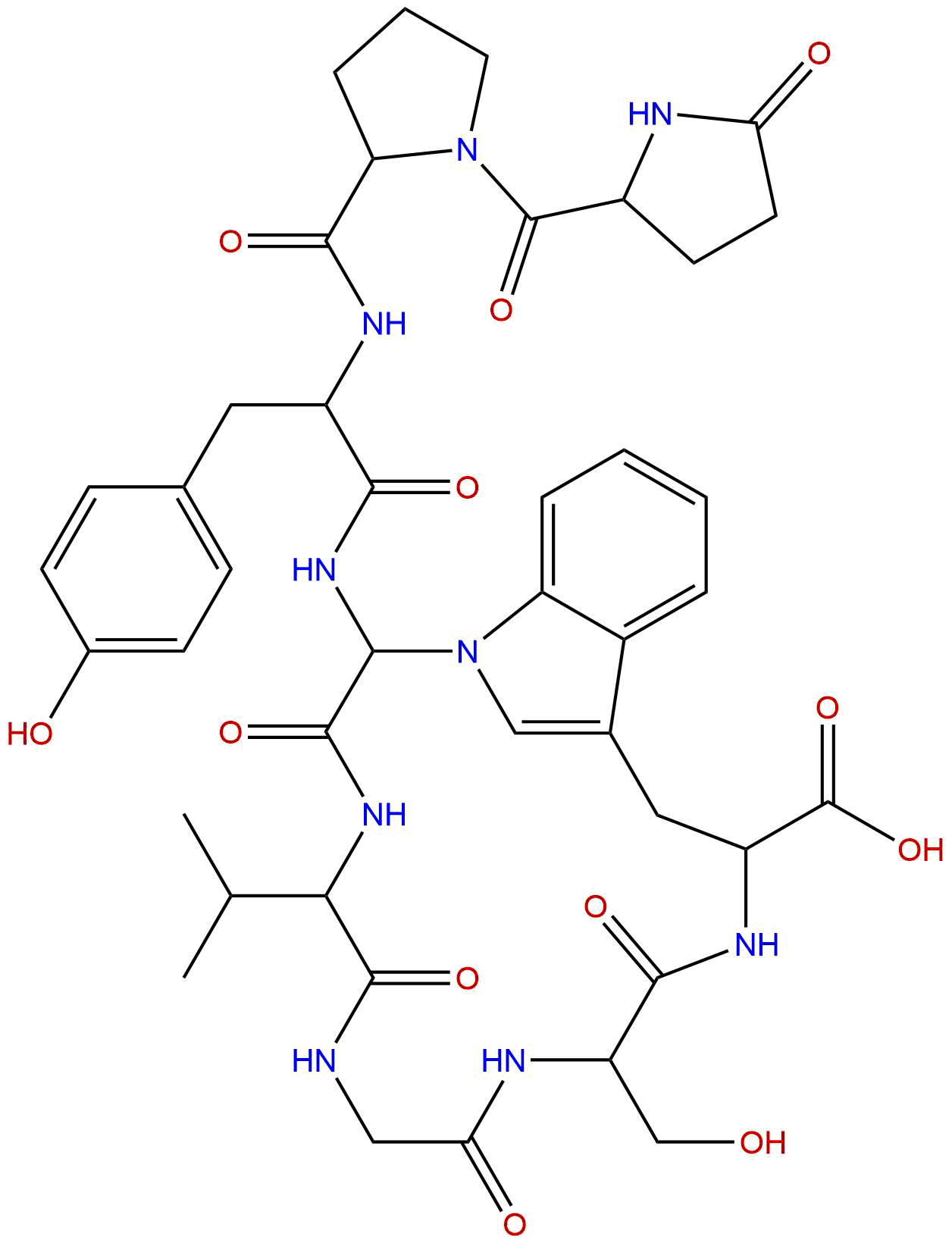
The chemical formula of Goji berry extract A is C ₄₂ H ₅₉ N ₉ O ₁₁, with a molecular weight of 873.9210 Da. Its structure belongs to a cyclic octapeptide, consisting of eight amino acid residues connected by peptide bonds to form a cyclic skeleton. Compared to linear peptides, cyclic peptides have higher conformational rigidity and metabolic stability, which provides a structural basis for their biological activity. Specifically, the cyclic structure of goji berry extract A is composed of the following amino acids: proline (Pro), glycine (Gly), leucine (Leu), serine (Ser), glutamine (Gln), phenylalanine (Phe), tyrosine (Tyr), and a non protein amino acid -3-hydroxy-4-methylproline. The presence of this non-standard amino acid endows goji berry extract A with unique stereochemical characteristics, which may be closely related to its target binding specificity.
From a three-dimensional conformation perspective, the cyclic skeleton enables the peptide chain to form a stable β - angled structure, which facilitates interaction with the hydrophobic pocket and hydrogen bonding network of the enzyme active site. Especially the aromatic side chains of tyrosine and phenylalanine may form stable complexes with aromatic residues of ACE or renin through π - π stacking.
Physical and chemical property parameters
The physicochemical properties of goji berry extract A exhibit typical "peptide like" characteristics, while also possessing certain medicinal properties. The lipid water partition coefficient (LogP) of the compound is -0.6947, indicating that it has good hydrophilicity, which is related to the presence of multiple polar amino acid residues (such as serine, glutamine, tyrosine) and unclosed peptide bonds in its molecule. The polar surface area (TPSA) is as high as 306.7000 Å ², far exceeding the usual threshold for oral drugs (140 Å ²), indicating limited membrane permeability and possibly low oral bioavailability. The water solubility parameter is 1.9209, which belongs to moderate solubility, providing the basic conditions for the development of its formulation.
In terms of blood-brain barrier penetration, goji berry extract A is evaluated as having "low" penetration. This characteristic may have dual significance for the treatment of hypertension: on the one hand, low brain penetration can reduce central nervous system related side effects (such as cough and angioedema commonly seen with ACE inhibitors); On the other hand, its application may be limited for diseases that require central intervention, such as neurodegenerative diseases. It is worth noting that goji berry extract A has no inhibitory effect on hERG potassium channels (hERG inhibition: No), and the Ames test result is negative (0.0), indicating a low risk of cardiac and genetic toxicity, which is a favorable condition for its candidate drug.
Plant sources and extraction methods
Plant-based
Goji berry extract A mainly comes from plants of the Lycium genus in the Solanaceae family, among which Ningxia wolfberry is one of them(Lycium barbarum L. ) and Chinese wolfberry(Lycium chinense Mill. is the primary source species. These two plants have a long history of medicinal use in East Asia, and their fruit (goji berries) is widely used to nourish the liver and kidneys, improve eyesight and essence. However, goji berry extract A mainly exists in the root bark (ground bone bark) of goji berries, rather than in the fruit. Di Gu Pi has the effects of cooling blood, removing steam, clearing the lungs, and reducing fire in traditional Chinese medicine theory. It is commonly used to treat symptoms such as yin deficiency, hot flashes, and lung heat cough. Modern pharmacological research has confirmed that both the water extract and alcohol extract of Radix Rehmanniae have antihypertensive activity, and goji berry extract A is considered one of the main material bases for its antihypertensive effect.
It is worth noting that the content of Lycium barbarum extract A varies significantly in the root bark of Lycium barbarum from different regions and harvest periods. Research has shown that the content of wolfberry extract A is relatively high in the ground bone bark of Zhongning production area in Ningxia, which may be related to the unique climatic conditions of the area (sufficient sunshine, large temperature difference between day and night). In addition, the optimal time for collecting root bark is in spring or autumn, when the accumulation of secondary metabolites is most abundant.
Extraction and purification methods
The extraction of Lycium barbarum extract A is usually carried out using solvent extraction combined with modern chromatographic techniques. The classic process is as follows: Dry ground bone skin powder is refluxed and extracted with ethanol water (70:30, v/v), and the extract is concentrated and then extracted with petroleum ether, ethyl acetate, and n-butanol in sequence. The n-butanol extraction site is rich in cyclic peptides, which are further separated and purified by silica gel column chromatography, Sephadex LH-20 gel column chromatography and preparative high-performance liquid chromatography (HPLC). Finally, a white amorphous powder was obtained, which was identified as goji berry extract A by mass spectrometry and nuclear magnetic resonance spectroscopy.
In recent years, with the promotion of green extraction concepts, ultrasound assisted extraction and microwave-assisted extraction technologies have been applied to the extraction of wolfberry extract A. Ultrasonic treatment can destroy the cell wall structure, accelerate solvent penetration, shorten the extraction time from several hours in traditional methods to less than 30 minutes, and increase the extraction rate by about 20%. In addition, macroporous adsorption resins such as HPD-100 and AB-8 have been used for the enrichment of wolfberry extract A, and rapid purification of the target compound can be achieved through gradient elution, which is suitable for industrial production.
In terms of quality control, the high-performance liquid chromatography-mass spectrometry (HPLC-MS/MS) method has been established and can be used for quantitative analysis of wolfberry extract A. This method has high sensitivity, strong specificity, and a detection limit of up to the Danak level, providing a reliable means for evaluating the quality of medicinal materials and controlling the formulation process.
Pharmacological activity research
Antihypertensive activity
The antihypertensive activity of goji berry extract A is its earliest discovered and most extensively studied function. In 1993, Yahara et al. first reported the inhibitory activity of goji berry extract A on angiotensin-converting enzyme (ACE), with an IC50 value of 1.2 × 10 ⁻⁵ M. ACE is a key enzyme in the renin-angiotensin system (RAS), catalyzing the conversion of angiotensin I into the potent vasoconstrictor angiotensin II. goji berry extract A competitively inhibits ACE activity, reduces the production of angiotensin II, and thus exerts a hypotensive effect. Compared with commonly used ACE inhibitors in clinical practice, such as captopril and enalapril, the inhibitory activity of goji berry extract A is slightly lower. However, as a natural cyclic peptide, it has a unique chemical skeleton and lower risk of side effects.
Further research has found that goji berry extract A can directly inhibit renin activity. Renin is the rate limiting enzyme of the RAS system, catalyzing the conversion of angiotensinogen to angiotensin I. Goji berry extract A inhibits renin with an inhibitory IC ₅₀ of approximately 5.6 × 10 ⁻⁶ M, suggesting that it may achieve a synergistic hypotensive effect through dual inhibition of the RAS system (renin+ACE). This multi-target mode of action is relatively rare in natural products, providing a theoretical basis for its development as a new type of antihypertensive drug.
In animal models, intravenous injection of wolfberry extract A (1-5 mg/kg) can significantly reduce systolic and diastolic blood pressure in spontaneously hypertensive rats (SHR), with a blood pressure reduction range of 20-30 mmHg, and the effect lasts for 4-6 hours. Oral administration (10-50 mg/kg) is equally effective, but the onset time is delayed and the bioavailability is low, which is consistent with the characteristics of high TPSA and poor membrane permeability in the aforementioned physicochemical properties.
Retinal protective activity
In recent years, breakthrough progress has been made in the research of goji berry extract A in retinal protection. The retina, as a high oxygen consuming tissue, is extremely sensitive to ischemia and hypoxia. Hypertension can lead to retinal microvascular spasm, reduced blood flow, oxidative stress, and inflammatory response, ultimately resulting in retinal ganglion cell apoptosis and visual impairment. Goji berry extract A exerts retinal protective effects through multiple pathways:
anti-oxidative stress Goji berry extract A can significantly upregulate the expression of nuclear factor E2 related factor 2 (NRF2) and its downstream antioxidant enzymes such as superoxide dismutase 1 (SOD1). NRF2 is the main transcription factor for cellular antioxidant defense, and its activation can induce the expression of a series of antioxidant and detoxification genes. In the model of retinal pigment epithelial (RPE) cell damage induced by hydrogen peroxide (H ₂ O ₂), pretreatment with wolfberry extract A can reduce reactive oxygen species (ROS) levels by about 40% and improve cell survival rate.
Regulating hypoxia response Goji berry extract A can inhibit the overexpression of hypoxia inducible factor 1 alpha (HIF1A). HIF1A is the core response factor of cells to hypoxic environments. In ischemic retinopathy, abnormal activation of HIF1A promotes excessive secretion of vascular endothelial growth factor (VEGF), leading to pathological neovascularization. Goji berry extract A inhibits retinal neovascularization by downregulating the stability of HIF1A protein and reducing VEGF expression. This mechanism differs from the target of anti VEGF drugs such as ranibizumab, but can produce a synergistic effect.
Protecting cone cell function Cone cells are responsible for color vision and fine vision, and their function depends on the normal expression of visual proteins. Goji berry extract A can upregulate the expression of short wave sensitive visual protein (OPN1SW), medium wave sensitive visual protein (OPN1MW), and long wave sensitive visual protein (OPN1LW), suggesting that it may protect color vision function by maintaining the integrity of the outer segment structure of cone cells. In addition, goji berry extract A can increase the expression of RPE65 (a 65 kDa protein specific to retinal pigment), a key enzyme in the visual cycle that catalyzes the conversion of all trans retinol to 11 cis retinal, which is crucial for visual pigment regeneration.
Improve lipid metabolism Mutations in ATP binding cassette transporter A4 (ABCA4) in the retina are associated with hereditary retinal diseases such as Stargardt's disease. Goji berry extract A can upregulate the expression of ABCA4, promote the clearance of toxic lipid metabolites (such as N-subretinoyl-N-retinoethanolamine, A2E) in the retina, and alleviate lipid peroxidation damage.
Other pharmacological activities
In addition to the main activities mentioned above, goji berry extract A also exhibits certain anti-inflammatory and anti fibrotic activities. In glomerular mesangial cells, goji berry extract A can inhibit extracellular matrix deposition induced by transforming growth factor beta 1 (TGF - β 1), suggesting its potential protective effect against hypertensive kidney damage. In addition, preliminary studies have shown that goji berry extract A has inhibitory activity against certain proteases such as trypsin and chymotrypsin, but its clinical significance still needs further verification.
Mechanism of action and molecular targets
Multi target inhibition of renin-angiotensin system
The inhibitory effect of goji berry extract A on the RAS system is the core mechanism of its antihypertensive activity. Molecular docking simulations showed that the cyclic skeleton of Lycium barbarum A can be embedded into the active site of ACE. The phenolic hydroxyl group of its tyrosine residue coordinates with the zinc ion of ACE, while the hydrophobic side chains of phenylalanine and leucine undergo van der Waals interactions with the S1 and S2 hydrophobic pockets. Unlike captopril, goji berry extract A does not directly form covalent bonds with zinc ions, but achieves reversible inhibition through hydrogen bonding and hydrophobic interactions, which may be one of the reasons for its lower side effects.
The inhibition mechanism of renin involves the formation of a hydrogen bond network between goji berry extract A and aspartic acid residues (Asp32 and Asp215) at the active site of renin, which blocks renin's recognition and cleavage of angiotensinogen. This dual inhibition mode can simultaneously act on two key nodes of the RAS system, theoretically producing a more thorough antihypertensive effect and reducing compensatory renin elevation caused by single target inhibition.
Multi pathway regulation of retinal protection
The protective effect of Lycium barbarum extract A on the retina involves cross regulation of multiple signaling pathways. Firstly, the NRF2/ARE pathway is the core of its antioxidant activity. Goji berry extract A can promote the dissociation of NRF2 from Keap1 complex and translocation into the nucleus by activating upstream kinases such as PI3K/Akt and ERK. It binds to antioxidant response elements (ARE) and initiates the expression of antioxidant enzymes such as SOD1, HO-1, and NQO1. This mechanism has been validated in both RPE cells and M ü ller cells.
Secondly, the regulation of the HIF1A/VEGF pathway is crucial for the anti angiogenic effect of goji berry extract A. Goji berry extract A can inhibit the protein synthesis and stability of HIF1A, and its mechanism may involve inhibiting the mTOR signaling pathway or promoting the ubiquitination degradation of HIF1A. In a mouse model of oxygen induced retinopathy (OIR), intraperitoneal injection of wolfberry extract A significantly reduced the area of non perfused retina and neovascularization plexus, with an effect comparable to that of anti VEGF antibodies.
In addition, the protection of retinal neurons by goji berry extract A also involves the maintenance of mitochondrial function. Research has shown that goji berry extract A can upregulate the expression of PGC-1 α (peroxisome proliferator activated receptor gamma co activator 1 α), promote mitochondrial biosynthesis, and improve the energy metabolism status of retinal cells.
Target Network Analysis
Based on systems pharmacology methods, the potential target network of goji berry extract A has been preliminarily constructed. In addition to ACE, renin, NRF2, and HIF1A, goji berry extract A may also act on matrix metalloproteinases (MMPs), endothelial nitric oxide synthase (eNOS), and calmodulin dependent protein kinase II (CaMKII). The synergistic regulation of these targets may explain the multiple effects of goji berry extract A on blood pressure reduction and retinal protection. It is worth noting that there are differences in the affinity of goji berry extract A for multiple targets, and its selectivity may be determined by the flexibility of the cyclic peptide conformation, which provides direction for subsequent structural optimization.
Evaluation of drug properties and pharmacokinetics
Drug Evaluation
The pharmacological evaluation of Lycium barbarum extract A needs to be considered from two dimensions: "drug like properties" and "peptide like properties". According to the Lipinski Five Rules, the molecular weight of Goji berry extract A (873.92 Da) exceeds 500, the LogP (-0.69) is less than 5, and the number of hydrogen bond donors (NH groups of peptide bonds) and acceptors (carbonyl and hydroxyl groups) both exceed the upper limit of the rules, therefore it does not meet the standards of traditional oral drugs. However, cyclic peptide compounds hold a special position in drug development due to their unique conformational and metabolic stability. In fact, multiple cyclic peptide drugs have been successfully marketed, such as cyclosporine A (molecular weight 1202 Da), octreotide (molecular weight 1019 Da), etc., all of which have broken through the limitations of Lipinski rule.
The TPSA of goji berry extract A is as high as 306.7 Å ², indicating poor membrane permeability and oral bioavailability may be less than 5%. However, its water solubility is moderate (1.92 mg/mL) and there is no risk of hERG inhibition or genotoxicity, which provides favorable conditions for its development as an injection or transdermal drug formulation. In addition, the cyclic structure endows it with higher metabolic stability, and its plasma half-life may be better than that of linear peptides.
Pharmacokinetic characteristics
At present, there is insufficient pharmacokinetic research on Lycium barbarum extract A, but preliminary data is available for reference. After intravenous injection of wolfberry extract A (2 mg/kg) in rats, its plasma clearance showed a two compartment model, with a distribution half-life (t ₁/₂ α) of about 15 minutes and an elimination half-life (t ₁/₂ β) of about 2.5 hours. The apparent distribution volume (Vd) is approximately 0.8 L/kg, indicating that it is mainly distributed in the extracellular fluid. After oral administration, the absolute bioavailability is about 3-5%, mainly limited by intestinal permeability and first pass metabolism.
In terms of metabolism, goji berry extract A mainly undergoes hydrolysis and oxidation metabolism in the liver. Its cyclic skeleton can resist hydrolysis by most peptidases, but can be partially degraded by certain proline specific endopeptidases (such as prolyl oligopeptidases). The main metabolites are open-loop linear peptides and monoxides, and their activity remains to be studied. The main excretion pathway is bile excretion, with about 60% of the original drug and metabolites excreted through feces and 30% excreted through urine.
Formulation strategy
Various formulation strategies are being explored to improve the bioavailability of goji berry extract A. Liposome encapsulation can increase oral bioavailability to 15-20%, and its mechanism is that the lipid bilayer can protect cyclic peptides from degradation by gastrointestinal enzymes and promote lymphatic absorption. Nanoemulsions and phospholipid complexes have also been shown to improve their membrane permeability. In addition, transdermal drug delivery systems (such as microneedle patches) can bypass the gastrointestinal barrier and achieve sustained release, which may become the preferred route of administration for goji berry extract A.
Clinical application prospects and prospects
Treatment of hypertension combined with retinopathy
The most direct clinical application prospect of goji berry extract A is in the treatment of hypertension combined with retinopathy. Currently commonly used antihypertensive drugs in clinical practice, such as ACE inhibitors ARB、 Although calcium channel blockers can effectively control blood pressure, their reversal effect on retinal lesions is limited. Goji berry extract A is expected to achieve an integrated treatment of "blood pressure lowering eye protection" by simultaneously inhibiting the RAS system and protecting the retinal microenvironment. Especially for patients with hypertensive retinopathy (HR), goji berry extract A may delay or prevent the progression of the disease from mild (Keith Wagner grades I-II) to severe (grades III-IV).
Potential application of diabetes retinopathy
In view of the overlap of pathological mechanism between diabetes retinopathy (DR) and hypertensive retinopathy (such as oxidative stress, overexpression of VEGF, activation of HIF1A), Lycium barbarum A may also have therapeutic value for DR. Preliminary studies have shown that goji berry extract A can inhibit NF - κ B activation and inflammatory cytokine release in RPE cells cultured in high glucose, suggesting that it may have an intervention effect on the inflammatory stage of DR. In the future, its efficacy needs to be verified in diabetes animal models (such as STZ induced diabetes rats).
Age-related macular degeneration
Age related macular degeneration (AMD) is the main cause of blindness in the elderly. Its dry type is characterized by RPE cell atrophy and deposition of vitreous membrane warts, while the wet type is characterized by choroidal neovascularization (CNV). Goji berry extract A may intervene in the pathological processes of both dry and wet AMD by upregulating NRF2 and ABCA4 and inhibiting VEGF. Especially its regulatory effect on ABCA4 provides a new approach for the treatment of genetic macular degeneration such as Stargardt's disease.
Challenges and Prospects
Despite the encouraging clinical application prospects of goji berry extract A, its development still faces many challenges. Firstly, the low oral bioavailability is the main bottleneck limiting its clinical application. In the future, it is necessary to improve its membrane permeability and metabolic stability through prodrug design, nano formulations, or structural modifications (such as introducing non natural amino acids, N-methylation). Secondly, although the multi-target properties of goji berry extract A are its advantages, they also increase the complexity of toxicological evaluation. It is necessary to systematically evaluate its potential impact on normal tissues, especially the safety of long-term medication.
From the perspective of structural optimization, the cyclic skeleton of goji berry extract A provides abundant sites for chemical modification. For example, phosphorylation or glycosylation of tyrosine residues may improve their water solubility and targeting; Introducing D-amino acids or β - amino acids can enhance its metabolic stability. In addition, based on the study of the structure-activity relationship of goji berry extract A, it is expected to design simulated peptides or non peptide small molecules with smaller molecular weight and higher oral bioavailability.
Conclusion
Goji berry extract A, as a natural cyclic octapeptide discovered from traditional Chinese medicine Di Gu Pi, has shown significant research value in the fields of hypertension and retinal protection due to its unique chemical structure and multi-target biological activity. From the perspective of basic pharmacology, it exerts its antihypertensive effect by dual inhibition of the renin-angiotensin system, while protecting the retinal microenvironment by regulating multiple signaling pathways such as NRF2, HIF1A, VEGF, etc. This "one drug, multiple targets" mode of action is in line with the pursuit of modern drug development for multi effect treatment strategies. From the perspective of translational medicine, although its low oral bioavailability and drug defects need to be overcome, the advancement of formulation technology and the improvement of structural modification strategies are gradually clearing these obstacles.
The research process of goji berry extract A vividly illustrates the unique value of natural products in modern drug discovery - they are not only a treasure trove of lead compounds, but also molecular probes for understanding the regulatory mechanisms of complex disease networks. With the advancement of systems biology and chemical biology technologies, we have reason to believe that goji berry extract A and its derivatives have the potential to become new therapeutic drugs for complex diseases such as hypertension and retinopathy in the future, bringing more treatment options to patients. At the same time, this study also provides a successful example for exploring natural products with multi-target activity from traditional Chinese medicine, inspiring more researchers to devote themselves to this promising research field.